This photo was presumably taken in the 1940’s-1950’s
of a woman underwater in the Weeki Wachee Spring, FL.
I heard the old, old men say,
‘Everything alters,
And one by one we drop away.’
They had hands like claws, and their knees
Were twisted like the old thorn-trees
By the waters.
I heard the old, old men say,
‘All that’s beautiful drifts away
Like the waters.’
The Old Men Admiring Themselves In The Water
by William Butler Yeats

the waters are not so much drifting as they are evaporating away. Look at these
recent pictures of Lake Travis at the Lakeway City Park.

Photo’s courtesy of:
Sam Chapman, www.austinrealestateguy.com.

Click for a clearer look.
This rosemary just seems to get bigger,
the hotter and dryer the weather gets. The only
sign that it is also thirsty is a slight tinge of
yellow to the green, but it doesn’t like to complain.


I wish I could say the same for this poor Primrose Jasmine,
Jasminum mesnyi
It is hanging onto life by it’s leaf-tips. I must say though, it does have
an interesting aesthetic all of its own in this crispy state, like a firework
or a water-fountain in a water-purification plant?
What?


This Giant Timber bamboo culm is ripping it’s own shirt off in an attempt to cool down.


The odd twisting culms continue to writhe and twist upward from
the underworld, they are growing at a staggering rate
at the moment.


The intensity of the August “Day Star” has even been too much for
this aptly named Ghost Plant.
Graptopetalum paraguayense,

It looks like something has singed
the top of it with a
blow-torch…oh wait, it has.
One badly stressed out succulent!

Houston, we have touch down…
Stabilizer clamps engaged.

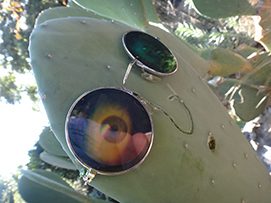
“Look into my eyes, into my eyes, the eyes, the eyes,
eyes, not around the eyes, don’t look around the
eyes, look into my eyes…you’re under”.


The eyes of this Skimmer dragonfly mimick the
gords hanging under my “purple martin” nest box. I put
quotations around purple martin because it is invariably
full of irritating nesting sparrows…I have told the Nabooboo tribe
to hunt these birds with their blow darts, but even that has not
seemed to make a dent on their numbers. I also suspect that the
tribe have been pre-occupied of late, hunting down some escaped
Whip Scorpions, Thanks for that Bob at Draco Gardens.
Brrrr.

My blunder with the martins this year was that I opened the
doors to the inn as soon as I saw the first birds flying around
the neighborhood…
BIG mistake!
The overtly aggressive sparrows immediately
gate-crashed the nest-box, and held a massive party
in honor of my complete ignorance.
“Why you little”
Next year I will wait until a scout actually
lands on the nest-box, and stays on it for
a while before I open the doors.
This is a male Flame Skimmer dragonfly,
situated on my Spruce Cone Cholla,
or aptly named Pine Cone Cactus…

…Tephrocactus articulatus.

Like a multi-eyed monster from mythical Greece, (it is actually
a native to western Argentina). It is one of the stranger looking cacti
that resides in the patch. It also, it seems, has an intrinsic design flaw,
it is easily broken. Segments of T. articulatus easily separate from the main cactus,
the good news is they readily root, mmm, perhaps it is not a design flaw afterall!
This plant requires no supplemental water, a definite plus right now.


You can see how the sections are extremely fragile due to
a rather obvious “off-setting”. There are five species in the
genus Tephrocactus, sometimes classified under the
Opuntia genus. All varieties of this species are frost hardy…
I love this plant, just don’t bump into it, if you want it to reach
any height.

Talking of bumps:

One of my goldfish is about to pop.
She is so pregnant and distended that even
her scales are sticking out!!!
It is rather disturbing looking.

Staying with the pond for a moment…
This puddle of death was to spell the end for these gulf-toad tadpoles,
a couple had already died in this quickly evaporating hot tub.

Also darting around on the lilies are lots of these:
Long Legged Fly
A great beneficial fly in the garden and a prolific insect predator.
These little flies are the Jason Bournes of the fly world.


“Oh, I see how it is ESP!”
“Just because I am not shiny and jewel-like, like he is, I am no
longer an ESP reference?”.
Rest easy Seth, you will be published again before you have
chance to vomit.
Long-legged flies are members of the Order Diptera (true flies) and
the family Dolichopodidae, a very large and diverse group. In general,
flies in this family are very small, characterized by 2 long wings
and long slender legs. The bodies are beautifully colored with green,
blue, metallic gold or silver,
flying jewelry!

The best thing about these little jewels is that they love to devour
copious amounts of spider mites. Both larvae and adults are
predaceous on many other insects and small arthropods,
including mites, thrips, psocids, aphids, and other insects larvae.
These flies hardly ever stay still, flitting around on my lily pads,
looking for the next meal – at least this is my excuse
for my bad photography, and I am sticking with it.
Moving on…
Aloe variegata, also known as Tiger Aloe and
Partridge-breasted Aloe, is a species of aloe indigenous to South Africa.
Looking like a futuristic tower block, the plant’s leaf margins, have a wide,
ornamental white line that looks like it has been painted on.
Spotting on leaves is often in horizontal bands in a ‘tiger-stripe’ pattern,
the white spots look like windows and go great set against the back-drop of
my texas holey rocks. This was one of the plants that I purchased from the
50% off sale at “The Great Outdoors” I managed to get four divisions from
this plant, straight out of the pot.


I am finally ready for yet another delivery of decomposed granite to finish
off this section of pathway. It is all leveled and devoid of life and weeds, the
sun has been good for frying anything that once lived in here. A few inches
of granite on top of this should hold most weed germination back pretty well.
At one time I was considering planting this area up with Tech Turf. Marketed
under the corporate name Turffalo, and perhaps I still may, later down the line.
The decomposed granite will, in the meantime benefit the soil and smother
any lurking weeds that may germinate when (and should it ever) rain again.

The latest craze in the patch…
…state-of-the-art transportation, scooted, (and pushed), at the highest possible velocity
around my circular succulent bed…It amazes me so much hilarity can be born from
such a basic endeavor. I am not undermining the activity though, oh no,
it means I can garden and weed in peace, AND they wear
themselves out!


“You just don’t get it, old man!…You need to wake up and smell the lemon basil.”


All the scooting and pushing came to an abrupt halt when my
youngest stopped dead in his tracks, he started pointing into
this nearby patch of grass…his excitement told me he was onto
something major. I always have my camera in my pocket and
went in closer to investigate the now twitching ornamental grass.
I was surprised to see a baby possum, and judging from it’s
expression, (I have the same one), I think he must have just
woken up, a little too early it seems.

And finally:

100% pup-survival rate from my agave spike from last year… like this
is any surprise! They are finally starting to look like small versions
of their mother.


A couple more dragons to finish…

A pre-historic insect on a pre-historic horse-tail reed.
Very similar forms.

The sun is setting in the patch but
be sure to tune in for next weeks new Discovery show…

“Deadliest Patch”

All material © 2009 for east_side_patch. Unauthorized
intergalactic reproduction strictly prohibited, and
punishable by late (and extremely unpleasant)
14th century planet Earth techniques.
Inspirational Images of the Week:
Soekershof, Botanical Gardens, S.Africa.


A true mermaids garden!