ESPatch

"Staring through Windows"


“M m must have water”!


The frosting on this window, at least viewed through
squinted eyes with a healthy imagination, offers the
fragile illusion that if you ventured outside, you would

a) survive and
b) be met with an icy blast of inclement weather.

Not to me though, I know exactly what life is like “OUT THERE”
and I refuse to go there anymore. The heat is only barely
tolerable inside the long-leaf pine log cabin,
that we call our house, and that is with the AC cranking
at full velocity!

Windows are for watching, little areas of transparency to
look through and let your mind wander, a place to day-dream
of frosty mornings, and not think about our umpteenth day
of hundred degree heat.


The vultures are circling around the ESP.


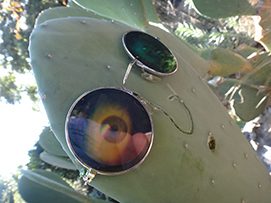
I often push an eye (if the glass isn’t too hot) against this little magnifying glass.
It is like peering through a badly prescribed monocle.
I cannot really see what is going on in the garden through this spy-glass
but it does look like you are witnessing the world
through the mechanical eye of a Darlek!


That alone keeps me coming back for another peek.
(I have given up ever seeing rain through it after all).

My garden may look sort of green through the looking glass,
but a closer inspection, and a life threatening venture
outside reveals…


the stark condition of my side bed.
This strip of land had a foot of mulch on it at the
start of the year to regulate the soil temperature.
Sure!


For squawking out loud, even the Grackles are gasping out for air.
This dark lord always lies in waiting for me to fill up the birdbaths
that evaporate in approximately 6.5 minutes, the birds have to be fast.
The squirrels are so desperate right now that they
practically jump on my back,
canteens at the ready.


“Hey cut it out ESP…not funny”


I will try to make this the last time I will moan
about the heat, at least for this year.
I am beginning to bore my feather spitting self!

I am off to cool off in my redneck pool! Well perhaps one more little moan…
I had my fist pool leak / duct-tape incident this last week.
Well, It just wouldn’t be summer unless I was having a
heat related, near-death experience hunting for a tiny tear
in the plastic fabric of a rather large and
cumbersome object. I always seem to be
involved in these types of futile activities every
year during the hottest part of a Texas afternoon!

Remember this relaxing activity I performed about this time last year?
I was almost devoured alive, even before the heat-stroke got me.

http://east-side-patch.livejournal.com/11450.html

De ja vous.


Looking out of the back window.

The large post oak really helps to regulate the temperatures for at least half
of my property, and it does help to slow evaporation in my pond down.


These cast iron plants, or Iron Plant, Barroom Plant,
Aspidistra elatior
do not look like they have such a tough demeanor
at the moment, post oak or no post oak shade protection.

These plants have a bit of a reputation around town:

But right now they are looking considerably more…

I have seen patches of this hard-case dropping all
around my neighborhood, completely erased to a
grilled heap of crispy bacon on the ground.


Aspidistra is Greek, meaning “small round shield”,
(The name actually describes the stigma of the plant).


Looking out of the front window.
All these drought show-offs (a lot of rosemary) have
fared really well, with the minimum of water
through these troubled times.


Naturally it is still too cold for my opuntia!
I continue to keep hacking away at the base of this monster, to
get more of a vertical “tree-like” growth habit.
I still have a long way to go before I get to the
size and form of the specimen Germi found:

http://thegerminatrix.com/?p=306

This succulent is faring the temperatures so well,

it is even developing pups…
Bryophyllum daigremontianum.
(Mother of Thousands) “Alligator”
I thought it worthy of a few more shots, just for it’s valor, in the face of hardship.


“Aye that it does, was it’s valor
against the English by any chance?”

Don’t start William.


Little lines of small molars are painfully waiting to fall out of it’s gum-line,
ready to grow their own roots.


This plant originates from southwestern Madagascar, and it is prolific!
The mother of thousands is considered viviparous. This means it
grows plantlets along the leaf’s edges. When each plantlet can survive
on its own, it then falls off the main leaf to grow.


Look at how much “Bill and Ben, the holey rock
men”
have grown!
It looks like they may have adopted some new children of their own.

This canna lily is still looking as hot as the weather in my front bed.


It has got huge this year due to the trickle water-feed I have
been administering to a bog cyprus I transplanted earlier
in the year. It looked like the cyprus was going to survive
its upheaval, then I made the fatal mistake of moving the
“dripping” to the stock tank that contains my golden bamboo.
Within two days the poor thing looked like this, once again!


The light brown areas are where the new growth used to be.
I have the drip feed back on it…but I am not holding my breath.

Moving On…

The highly toxic seeds in these mountain laurel seed pods
are almost ready to be cracked open and strung into fine,
albeit deadly, necklaces and bracelets.
I have it on the highest authority that the ESP witches have
condoned this activity, and want to offer “suggestions” as to
the specific individuals that should receive one for Christmas.
I am a little concerned.


What crazy gnarled hands and fingers these seed pods have.


I never cease to be amazed at the speed of growth from the culms on this Giant Timber
Bamboo. The monster culm, right, has for some reason developed an urge to head right…
who is going to argue!
On its current trajectory, it is expected to miss my neighbors roof by about three feet.
I cannot believe that it is already approaching six feet in height.


A couple more culms from the same clump, these are aiming
toward my house!


The relatively new succulent and cactus “middle bed” continues to thrive,
it is filling in quite nicely with only a few major casualties. Here it is in the
dappled shade of the post oak, late afternoon.


And ooohh for the cooling power of green!


An indoor grasshopper disrupted a couple nights of TV and had
us all ducking for cover on our lazy-boys. It was so fast you could
not see it.
I was just happy that it was a grasshopper!


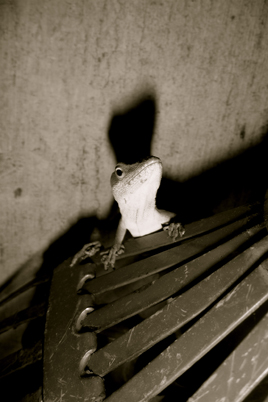
Baby anoles are all over the place right now. This one was tiny.

Finally…
I recently found a whole buch of these:


Okay I exaggerate, but they do look like impact craters nonetheless,
and there were lots of them.
As I got in close with my phone to take the picture,
I thought about that really bad movie “Tremors.”


There was movement when I approached, in the very bottom
of one of the craters.

Brrrr (left knee twitch).
What is going on here?
Is this the work of some type of crater ant?
Spiders perhaps?
Anyone?

And I know it is not the Clangers!

Stay Tuned For:


The Wind That Shakes the Barley


All material © 2009 for east_side_patch. Unauthorized  intergalactic reproduction strictly prohibited, and punishable by  late  (and extremely unpleasant) 14th century planet Earth techniques.

Inspirational Image of the Week:


Rooftop Design: Christopher Bradley Hole.

"Harry Potting Mix".


“Muad’ Dib”!


Sorry, I meant “Mud Dauber”! (Trypoxylon politum)
“dirt dauber,” “dirt dobber,” “dirt diver”, or “mud wasp” .

The organ-pipe mud dauber, as the name implies,
builds nests in the shape of a cylindrical tube
resembling an organ pipe or pan flute.
This nest I captured was orientated horizontally, but most
pipes are arranged vertically and look just like organ pipes.


(Photo courtesy of Wikipedia).
Organ pipe mud daubers are an exceedingly
docile species of wasp, and quite colorful too.


They also play amazing peruvian music
on their pan flutes.

What amazing mud architects and builders these
Frank Lloyd Wasps (ahem) are. I caught a couple
more “show homes” hiding under the
eaves of this house. More on this house later.


Check out this muddy palace,
a damsel would most definitely be in distress locked up in here.


Can you see the “Thestral” looking down on
you in ESP’s previous mud dauber nest image Harry?


Mud Daubers have a much darker side to their existence…
as a special risk to aircraft operations. They are prone to nest in the
small openings and tubes that compose critical aircraft systems.
(Yes, one more thing to worry about, careering along in a metal tube at
forty thousand feet).
I Quote:
“Their presence in these systems can disable or impair
the function of the airspeed indicator, the altimeter, and/or the
vertical speed indicator “
… Well nobody tells you that at check-in!

It is thought that mud dauber wasps were ultimately responsible
for the crash of Birgenair Flight 301,
which sadly killed 189 passengers and crew.


One disadvantage to making nests is that most
of the nest-maker’s offspring are concentrated
in one place, making them highly vulnerable to predation.
Once a predator finds a nest, it can plunder it cell by cell.
A variety of parasitic wasps, ranging from extremely tiny
chalcidoid wasps to larger, bright green chrysidid wasps
attack mud-dauber nests.

They pirate provisions and offspring as
food for their own offspring.


Adults of both sexes frequently drink flower nectar,
but they stock their nests with spiders, yes spiders, which serve
as food for the mud-daubers’ offspring.
Like Culinary connoisseurs, they prefer particular kinds of spiders,
and particular sizes of spiders for their larders. Brrrr.
Instead of stocking a nest cell with one or two large spiders,
mud-daubers cram as many as two dozen small
spiders into a nest cell.
What creative little creatures.

Talking of wasps, (and bees)
drinking nectar…


they have recently been going crazy over the blooms on this coral vine…

Antigonon leptopus.

Watch out for this vine though, it is quite the sprawler, it is now considered a
Category II invasive species by the Florida Exotic Pest Plant Council. This one has been
popping up on my neighbors fence-line for years. I usually allow a few vines to creep over my
evergreen wisteria (Milletia reticulata). I have a love/hate relationship with this plant, but
when one blooms like this one, I always think I should allow more to “invade”.


You can see the actual flowers are tiny but the sepals
are larger and provide the brilliant colors that range
from white to rose-pink to deep coral flowered varieties.


Another “colorful” collision took place about three feet above my head.
A loud “thwack” followed by some extremely poor navigation and
uncustomary bad flying skills, had me ducking for cover in my Inland Sea Oats.

It must be really hard to fly with eight wings, all pushing in
multiple directions. It is a wonder how they manage to
maneuver to solid ground at all.

Do they decide who he is going to take the lead?
These two love-birds finally crash-landed on top of this canna lily,


“Snort”!


Want to see some really amazing dragonfly photography! …
http://www.birdcrossstitch.com/dragonflies/
Be sure to click on the first image…a stunning emergence sequence.

I thought at this point I would share some local  neighborhood horror with you…

The next scene comes with a warning from the
“Don’t ever do things like this” brigade.


A tragic sequence of events led to this sad scene around the corner from my house.
This is a strip of land that borders a parking lot and the sidewalk,
and this is what regretfully happened:
First of all the soil was turned over, then some poor plants were planted.
The dormant bermuda seeds lurking in the soil were quickly
activated and naturally assimilated the newly turned soil…they felt good… and grew.
A work crew was then brought in to “rip” out the now emerging bermuda, but as we know…
..


“Shhhh, you will learn to embrace Bermuda Grass, Locutus of Borg”.
Resistance is futile.
An “optimistic” layer of mulch was placed on top of
the “topically” removed bermuda. Naturally it looked good for about a week.
A couple of weeks later the Borg seeds had emerged and grown above the
mulch, once again engulfing the planting scheme.
A complete disaster.


The only thing to be done here is to rip it all out and start from scratch.
Mulch
WILL not stop bermuda grass…EVER!

There is nothing worse than a bed gone awry. Concrete with a couple of
large “Whole Foods” planters would have been a better solution here,
and a lot less expensive.

Hell strips are always an issue though. Even if they are done right with weed
barrier and the ever popular decomposed granite xeriscaping. By the third
year seeds will have blown in, and weeds will have germinated. What to do?
What to do?

Other things baking in the ESP this past week…


The Inland Sea oats have quickly gone into their Autumn coloration,
or are they just pan seared?

But does this vine care?

Due to our extremely mild winter last year, this red passion flower
vine did not die back to the ground as it usually does. It now
threatens to engulf my entire front porch, it is going totally berserk!
This is how it looks after multiple prunings starting in the early
spring, and I have not watered it once,
hence the middle section declining.

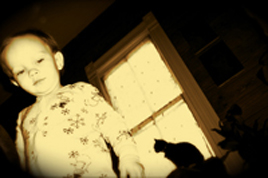
On the subject of watering…here is our resident hobbit walking
out into the “Shire” after arriving home from pre-school.


I wonder what has caught his attention?
I can tell you this, it is not the gazing ball …
Completely transfixed…

“m..m..must get to the water stream”.


This foxtail fern Asparagus densiflorus


has started to bloom this week. There seems to be a lot of on-line
confusion about the name of this plant, as the foxtail fern is very
similar to Asparagus Fern only its growth habit is very dense,
and it creates “green tails”.

Foxtail fern is actually not a fern at all, it does not have spores
like a fern but actual seeds. It is a member of the Asparagus
genus, as in the vegetable.

These small white flowers will be followed by bright red berries.

And here is my Asparagus Fern or Emerald Fern or Emerald Feather (top)
sprawling over an old cedar carcass.  (Also not a true fern).

Asparagus setaceus / Asparagus plumosus
I used to have this plant climbing up two large bamboo poles drilled,
with wooden dowels pushed into the holes to support the fern as it climbed.
Here they are, some years ago, before I ripped them down:


Wow have things changed somewhat since this picture was taken.


An extremely prolific succulent!
Almost every plantlet from this bryophyllum plant,
no matter the soil conditions, germinates.


Potato Vine…really interesting brown leaf margin – looks like a defining pencil line.


I finally got round to measuring the mammoth giant timber culm …
four inches diameter for anyone remotely interested.


This area seems to be naturally turning into a rounded shrub area – interesting,
because I have an aesthetic problem with almost anything topiary.
I cannot even tolerate commercially pruned boxwoods!
The only rationale I can think of as to how this scene has come to be,
is that the cherry barbados (left) needs to be pruned tight to stop it
interfering with the pathway. The Texas sage shrub (in front of the canna lily)
simply looks bad if left to its own devices – all gangly and such, and the copper
canyon daisy (right) will sprawl out naturally for its fall “show-off” period…
or I am just in topiary denial?
Notice I did not mention the rosemary shrubs.

Stay Tuned For:
Staring through Windows”
All material © 2009 for east_side_patch. Unauthorized  intergalactic reproduction strictly prohibited, and punishable by  late  (and extremely unpleasant) 14th century planet Earth techniques.

Inspirational Images of the Week:


Designed by Lizzie Taylor and Dawn Isaac
RHS Silver Gilt medal winners at Chelsea 2005
from England, this HG Wells looking garden
would be perfect
for…

1 2 129 130 131 132 133 171 172