I must say to all the Austin bloggers who attended the event on Sunday, a big thank you, and again to Pam for organizing it, and your card!
We had a really fun time at the patch, so much so, we did not get round to taking a single photo of the shindig! not one! But I have had a lot of entertainment this week, looking at the pictures ever one else has snapped, and hearing all your personal accounts, and comments about both our gardens, on your blogs.
Oh and Annie, I saw your comment on Pam’s blog:
The remainder of the agave stalk only just
fit in here, if you catch my drift!
I will have to copy a few of your pictures taken on this day and place
them in my scrapbook for future reminiscing, if no one minds!

I must admit the “quickening” to the Austin “gathering” was
quite an intense time for me. I decided at the last minute to
do some intensive aesthetic fixes, mostly to my moonscape.
It just looked terrible! shards of glass here and there, a lot here,
and even more over there!

Ah Yesh! The Easht-shide-Patch
has enough glass shards
in there to kill even
us immortals.

It was the eleventh hour, no time for a “Custom Stone” delivery.
I rushed to H/Depot, which to my luck was having a moving sale,
and bought a brand new, plastic handled shovel, (I was not about to start shoveling gravel with my “half shovel”) .
My new shovel is heavier than my last one but I like that, and anyway, I was just looking for one that would not try to kill me like the last one did, using the extraction of a pampas grass as an excuse.
Here is the filled in moonscape, the gravel will form the base of my drainage for this future lavender bed. More on this experimental bed later.

“So much gravel he has, the force is strong in this bed, but lavender?
So brash is he.”

The transition of the Mexican bush sage into the lavender bed will happen via this new planting of various salvias. I am not sure how this will work aesthetically …the future will tell.
I caught this chap after our recent rains on our front stained concrete porch…I really tried to link to “the orb” song:
“The slug dub” (even though it is a snail) but with zero success. Great album though if you like ambient, atmospheric British accents talking about slugs and snails! you can get it on I -Tunes, the album is called “Orbus Terrarum,” it is a few years old but still a total classic.


Wet Hoja Santa, and giant timber bamboo. This is one of the few plants in my yard that we inherited. This plant always has done so well in this spot. Give it decent moisture and rich soil (just like the timber bamboo) …they both seem pretty happy in this bed.

Ahh, rain in the Lone Star State!
This downspout catches rain into a stock tank that I use for
manual watering, I usually incorporate fish emulsion from the
natural gardener into my watering regimen from this tank. The plants,
especially the newly planted ones seem to thrive on this.


On the subject of thriving, this Swallow Tail was laying some serious eggs on one of my fall asters, at least I hope that was what it was doing.

I was lucky to snap this caterpillar at a recent visit to the natural gardener. I would love an identification. The horns on this one were huge. I have never seen this variety on the east-side of Austin. Has anyone else?


Amazing dark color and amazing contrasting orange spots! It looks totally toxic, so I ate this one, and this is what happened to me:
I felt so bad.


Monarch Butterfly – Danaus plexippus


The Monarch is easily North America’s best recognized butterfly. Common throughout the U.S. and southern Canada, the Monarch is found just about everywhere there are open, sunny areas. The Monarch’s caterpillars feed almost exclusively on milkweed plants which contain toxins that render both the larva and adult butterflies extremely distasteful to predators.
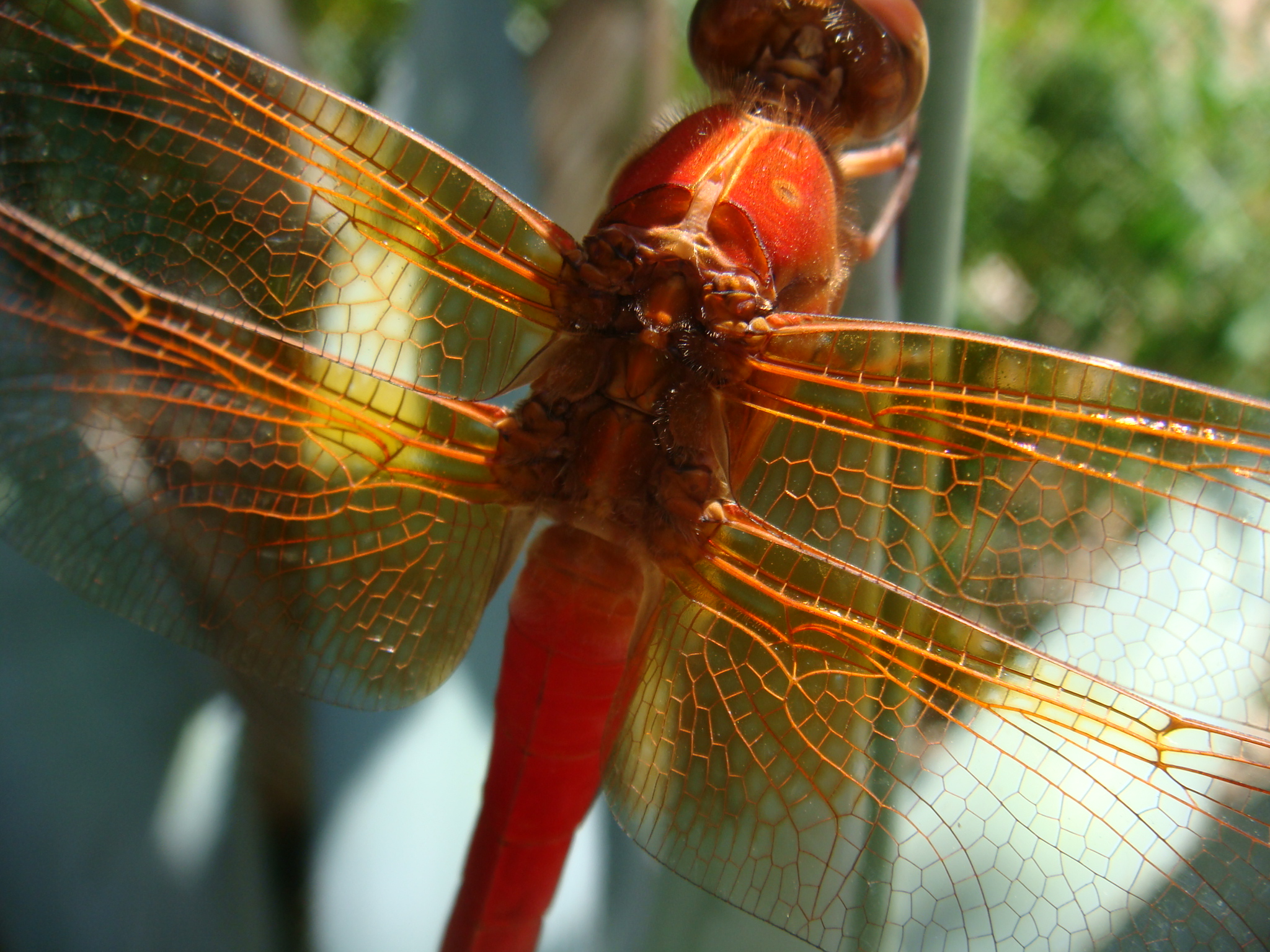
Annually, hundreds of millions of monarch butterflies from the eastern U.S. and Canada migrate to central Mexico – a trip of as much as 2,000 miles. There, they overwinter in protected areas in the mountains in a state of diapause, living off fat reserves much the same way hibernating mammals do. This one was a totally trusting – It is funny how some species of butterflies (and dragonflies, come to think of it) are really shy and spooky and some just simply seem not to really care.
Amazing display of fall aster at the Natural Gardener.

Staying with purple, this potato vine vein caught my attention with the sun shining behind it.

A new water feature, on top of a new hill. The glass chunk
really catches the westerly setting sun… it illuminates like a coal ember.


Amaranth in full flight.
Amaranth has an important future in U.S. agriculture. It is particularly well suited to the dry areas of the Western United States. Its outstanding nutritional qualities make it appealing to an increasingly health conscious American public. Processors could improve the taste of amaranth products by following the indigenous practice of popping the seeds prior to processing. Amaranth is a new crop with enormous potential for U.S. as well as Third World agriculture.


Giant elephant ear. This bulb got enormous last year due to the copious amounts of rain at regular intervals. Even with the addition of good, slow, deep soakings from the hose this year, it just never responded in quite the same way… just proves that there is no substitute for rain!

Shell Ginger at it’s fall peak. I love the jungle aesthetic of this plant.

Jane, your eyes remind me of shell ginger…so cool
and exotic.
Oh Tarzan, your eyes remind me of

Beady little ornamental peppers?

Tarzan loves ornamental peppers.

I do as well Tarzan.
Once again, a big thank you Austin bloggers for a truly memorable day, and I look forward to planting all of your seedlings and transplants.
Stayed tuned for:

A Scottish haunting: “Outerlands”.
All material © 2008 for east_side_patch. Unauthorized reproduction prohibited.