I recently visited the infamous Fairchild tropical botanical garden in Coral Gables, Florida, adorning completely inappropriate flip flops and shockingly long toenails.

I only became aware of my rather hostile toenail situation when I had a little time to kill before hopping onto the tour cart that was to ferry myself and some other visitors around the garden’s grounds. I am not an unhygienic person but cutting my toenails requires some thoughtful planning, soaking, a few makeshift medieval implements and some pairs of industrial goggles for everybody’s safety in the local vicinity. It was an ordeal that apparently, of late, I had regretfully neglected.
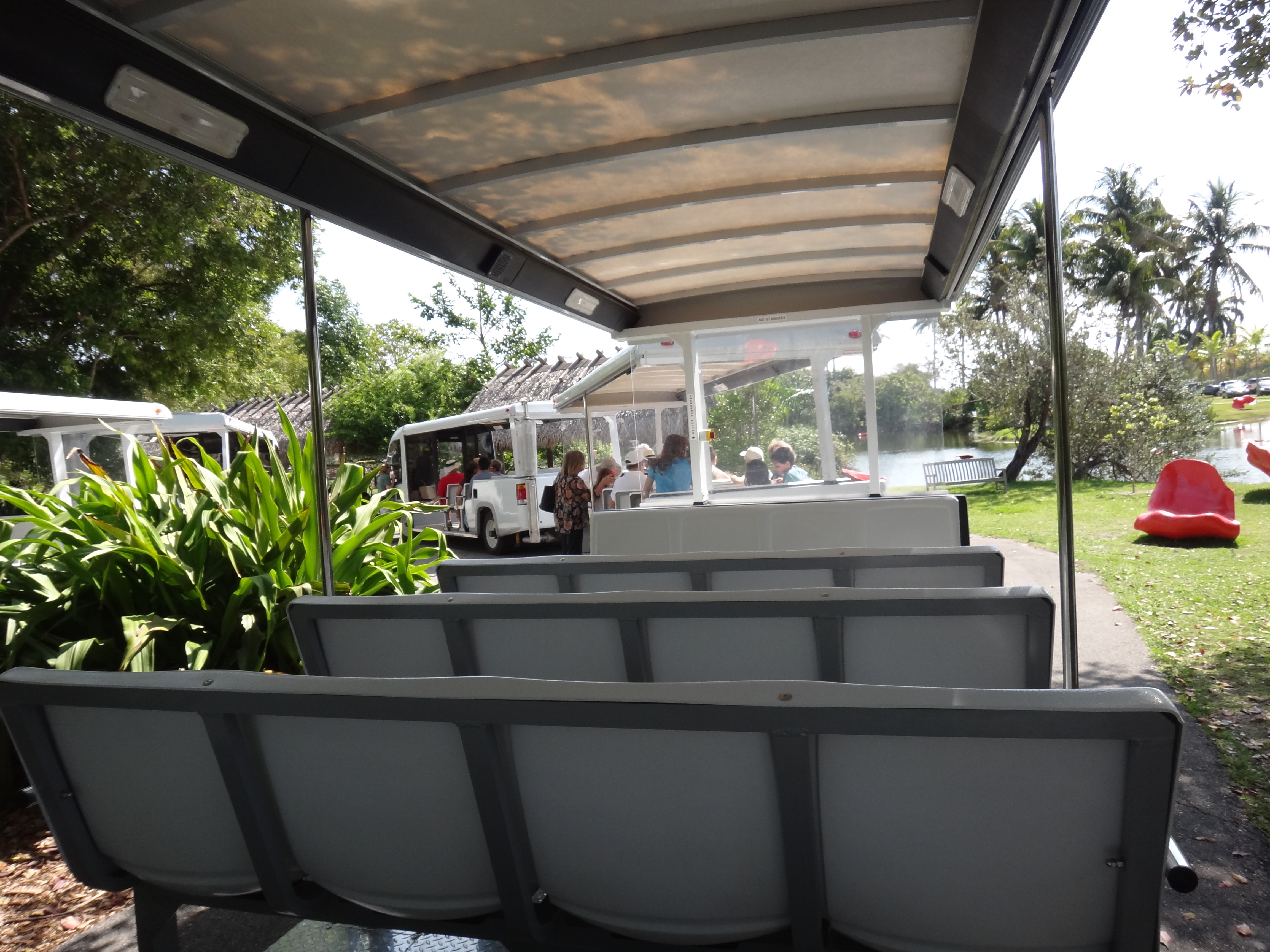
In an attempt to hide my enhanced talons I dashed (as best as I could) to the very end row of the last carriage and immediately stretched my legs out, subtly hiding my Nosferatoes underneath the seats in front of me.

I even offered up a fake stretch just to render more credence to my lounging actions…we were almost off, but not before a spot of history:

Fairchild was founded in 1936 and gets its name from one of the most famous plant explorers in history, David Fairchild (1869-1954). David was an American writer, botanist and plant explorer who introduced more than 20,000 exotic plants and varieties of established crops into the United States. Dr. Fairchild retired to Miami in 1935 and three years later, the Fairchild Tropical Botanic Garden opened its 83 acres to the public for the first time.
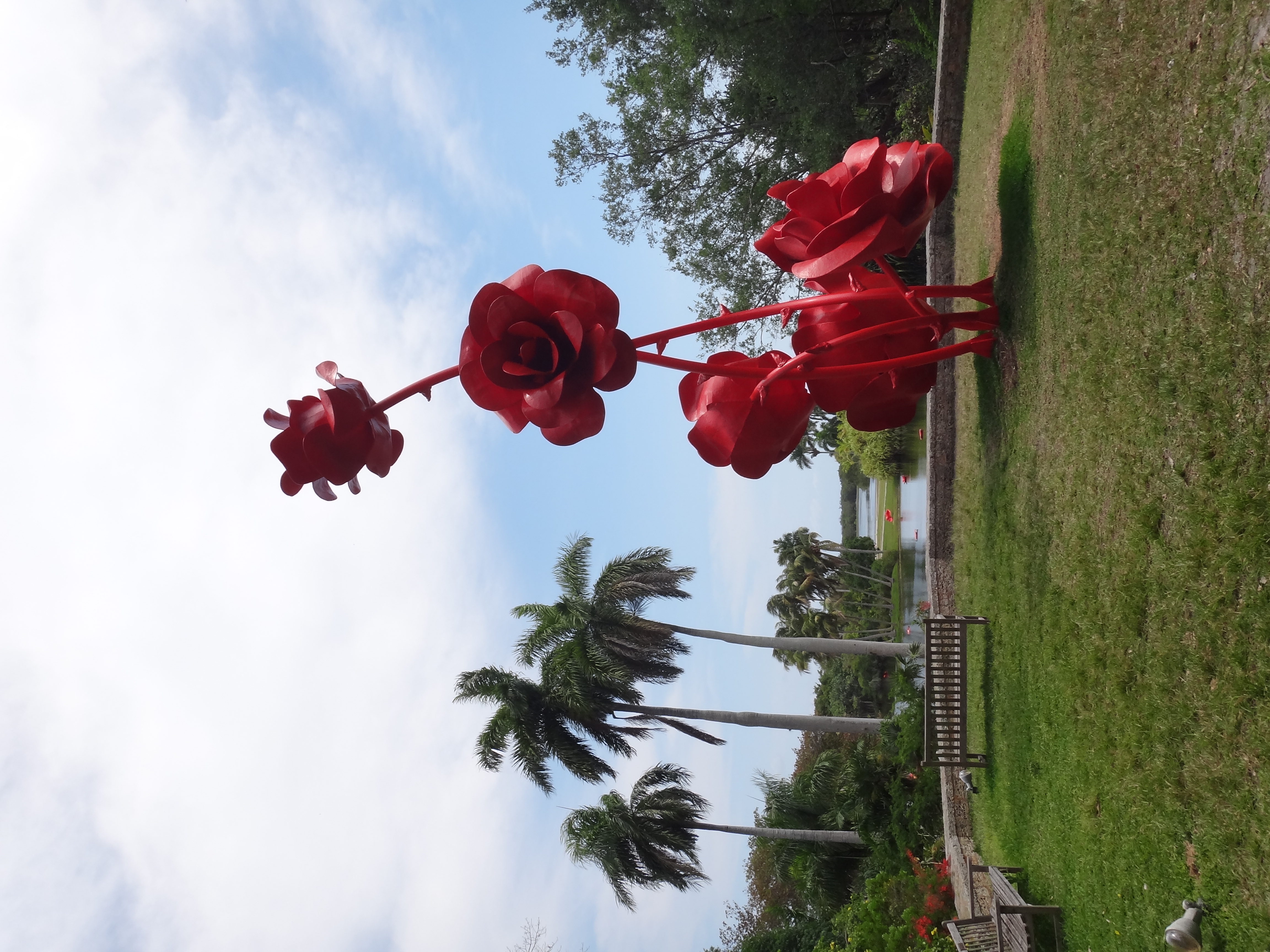
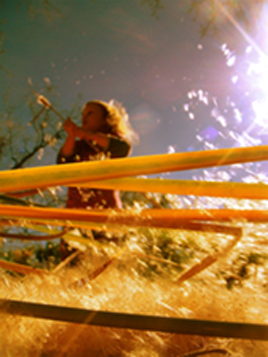
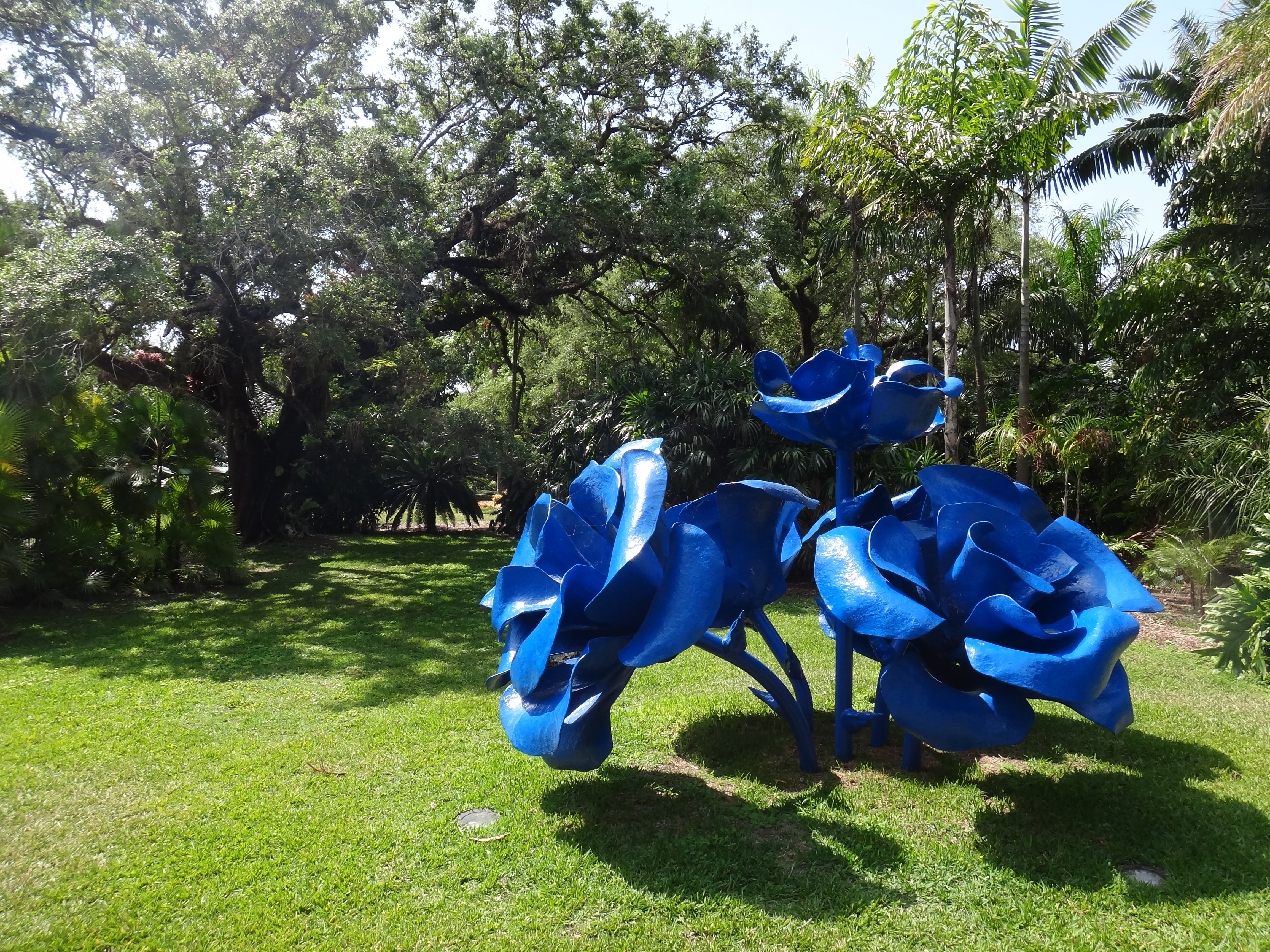
The garden featured colorful sculptures by artist Will Ryman, this installation is called ICON, and it is constructed from fiberglass, stainless steel and colored with marine paint. His work was scattered all around the gardens.
Just before the tour cart set off, I took full advantage of a short delay as some tourists shuffled around playing musical chairs. I totally related to their psychological plight after having countless ordeals myself with my family when faced with the formidable and apparently daunting phenomena of the ubiquitous empty restaurant table.
I jumped off the train and quickly captured this…
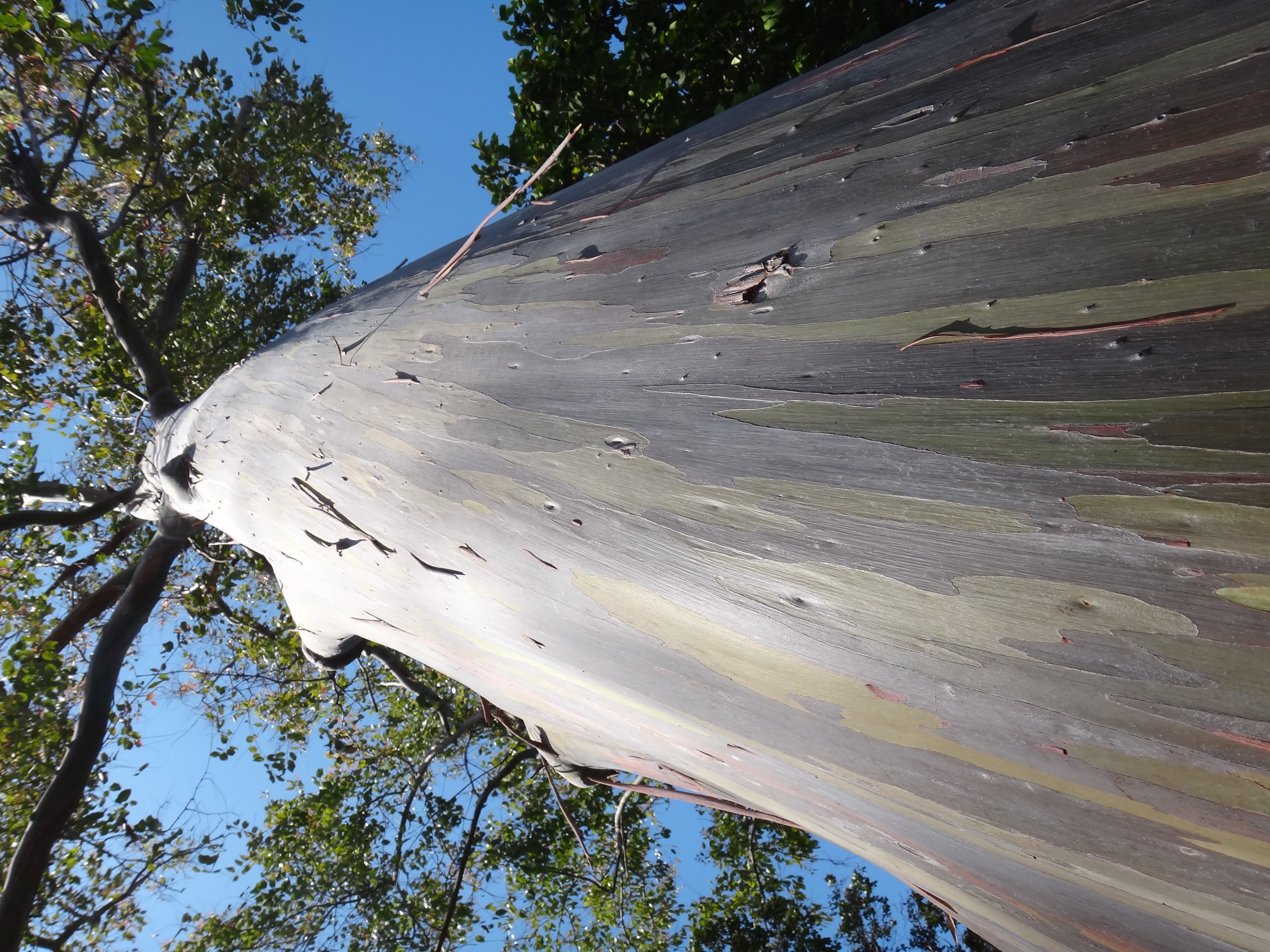
…a massive Rainbow Eucalyptus tree,
Eucalyptus deglupta
Most Eucalyptus trees are native to Australia, this one originates from Papua New Guinea and the colors were really something.

The bark peels off layer by layer, the olive surface inside the tree gradually turns blue then purple then and finally brick red as it is exposed to air,

giving it a very painted Edvard Munch quality. It reminded me of the winter skies on those paint-by-number kits I used to do when I was young. (Snort)

Edvard Munch, The Scream, 1893
After the guided tour, I went off on a flip-flop-footed adventure of my own. In no time I was passing all manner of new and interesting forms.
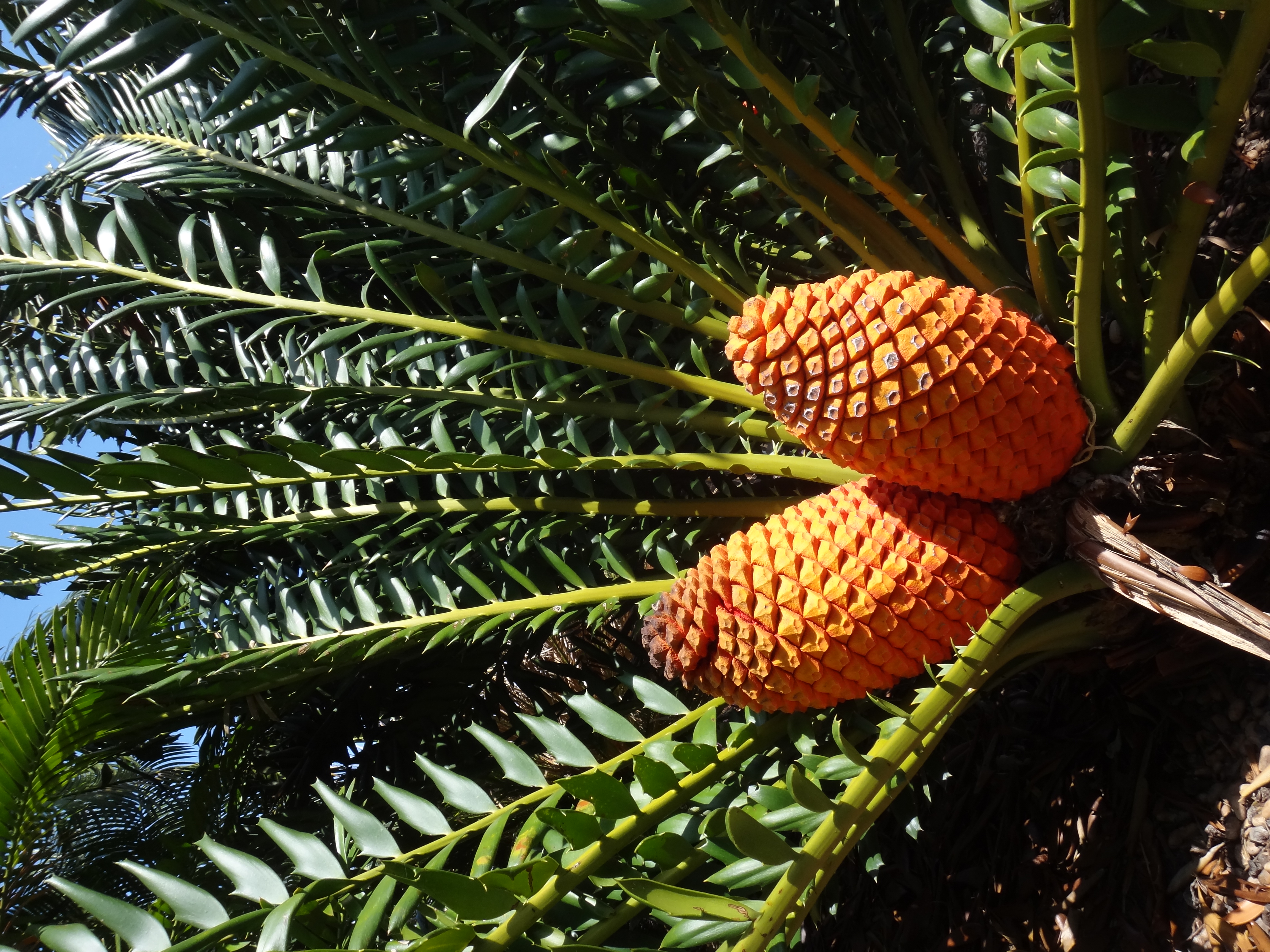
Like the female cones of this Encephalaetos Ferox cycad from South Africa,
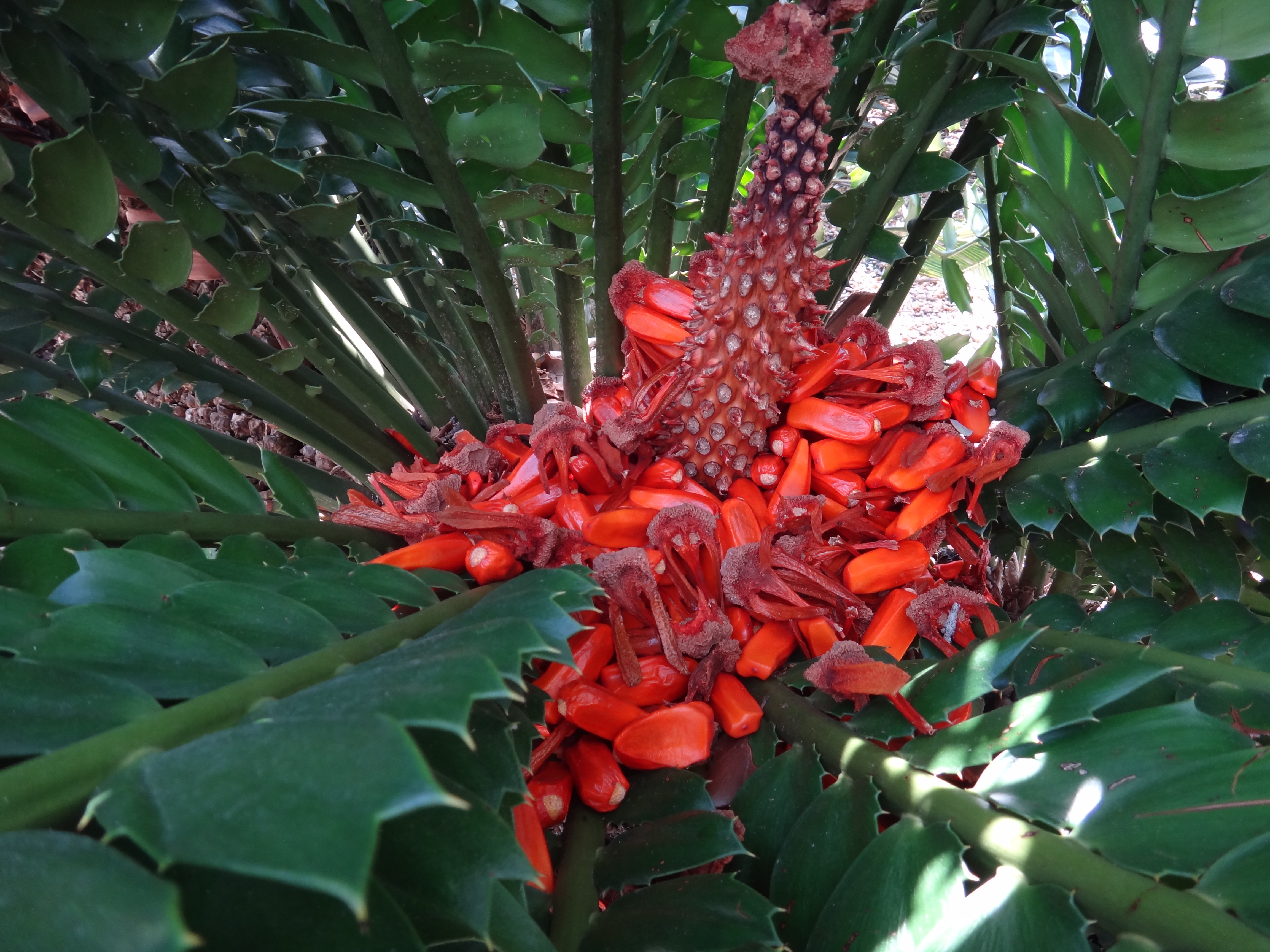
here is another one dropping its large crimson colored glossy seeds.
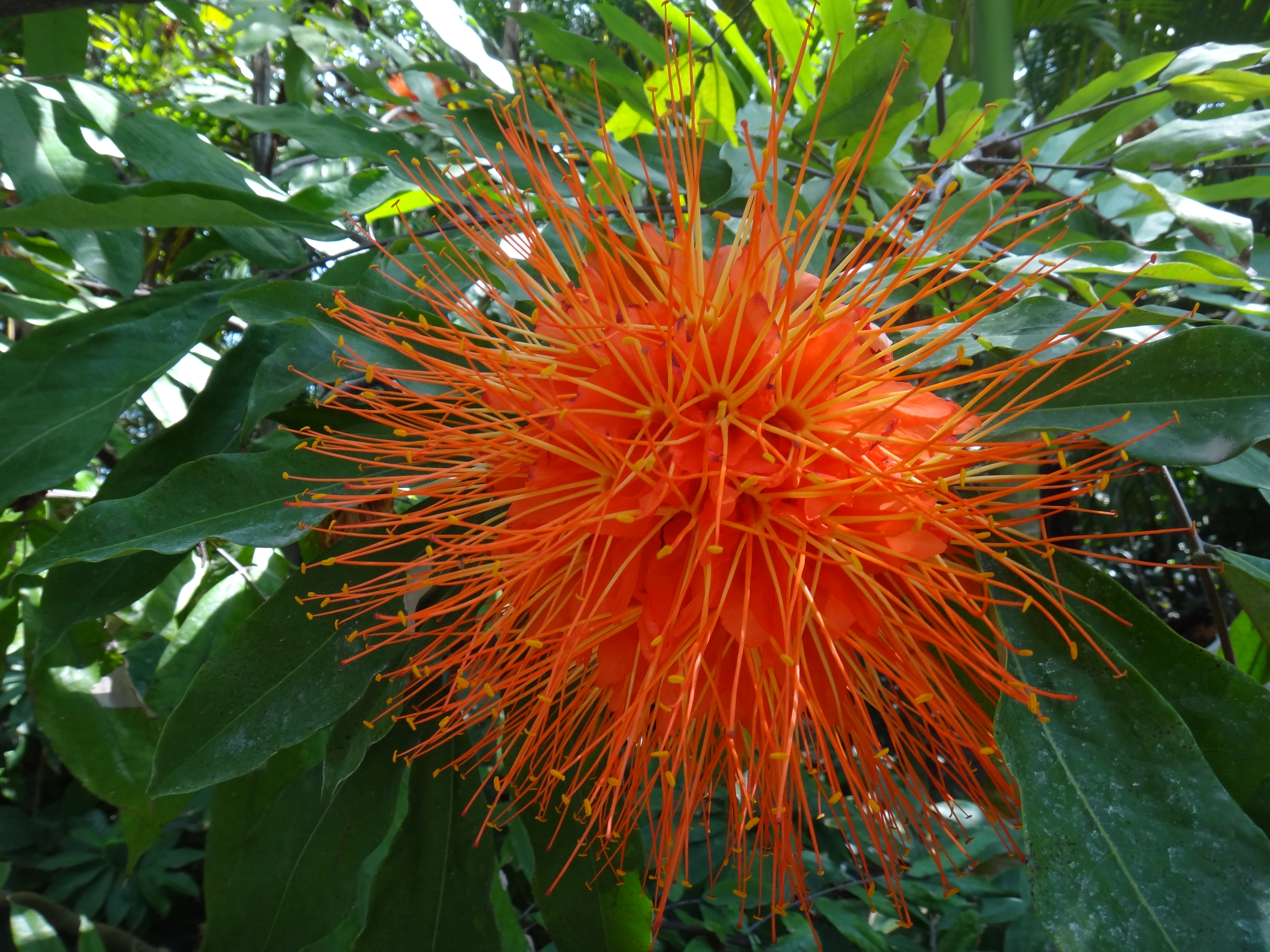
The large colorful blooms on this Brownea or handkerchief tree (so called because the drooping tassels of its young leaves resemble limp handkerchiefs). Brownea trees grow well in gardens all over southern Florida and are hummingbird magnets, naturally.
The question is…can it really beat frost-bitten hoja santa in the soiled handkerchief looking department?

…surely (s)not (ahem)!
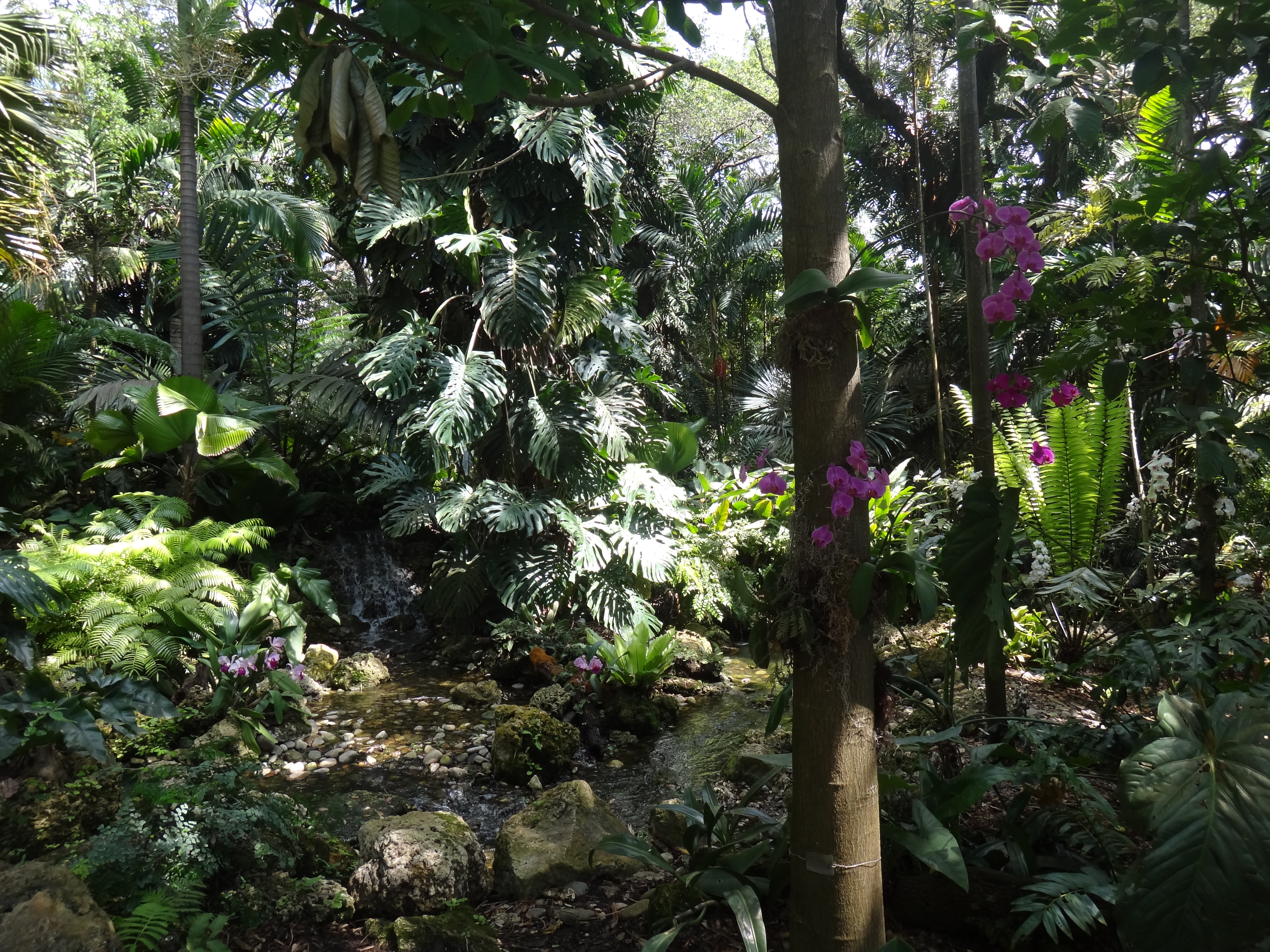
I passed through large rain forests,
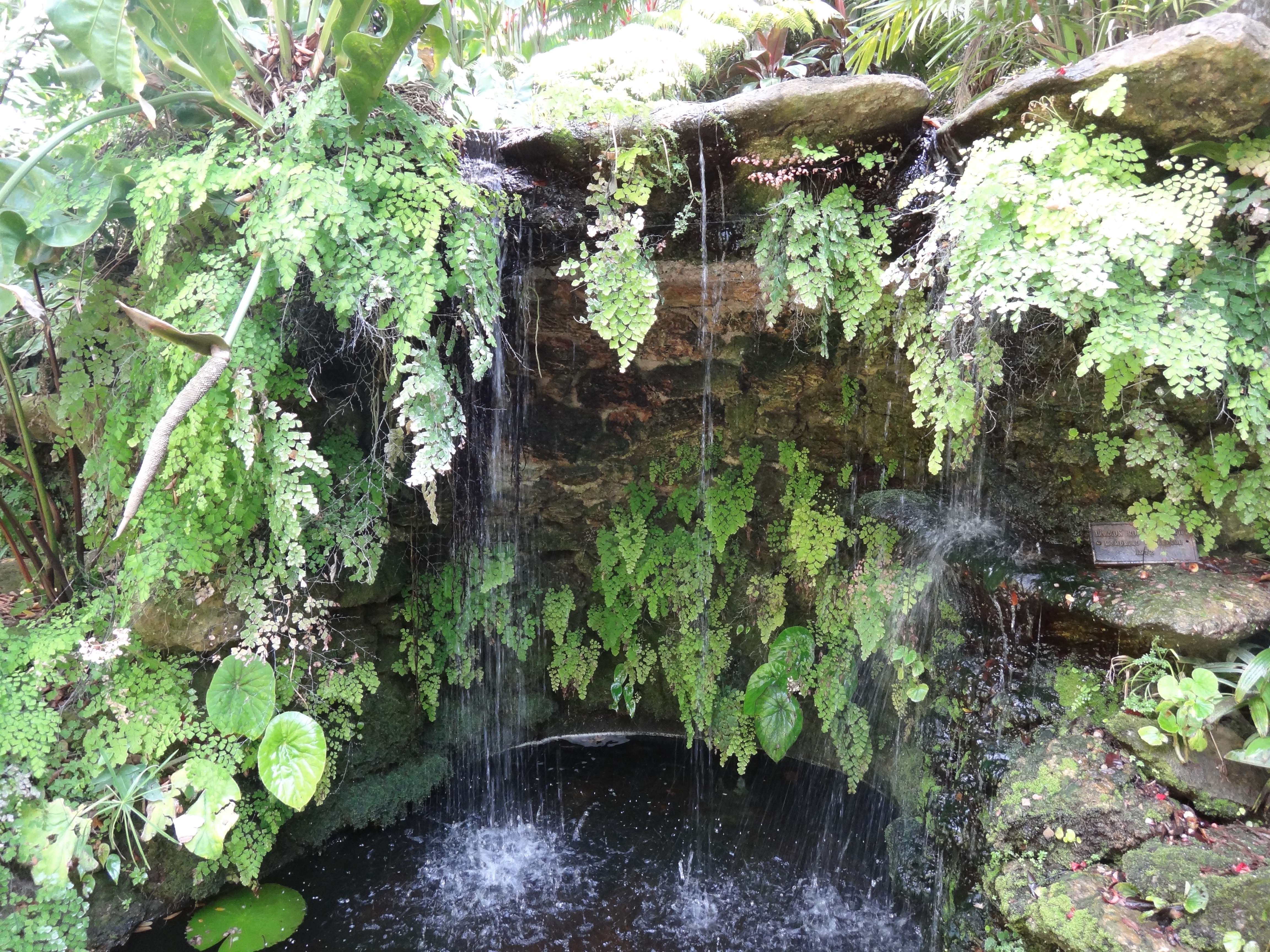
with secluded water groves.
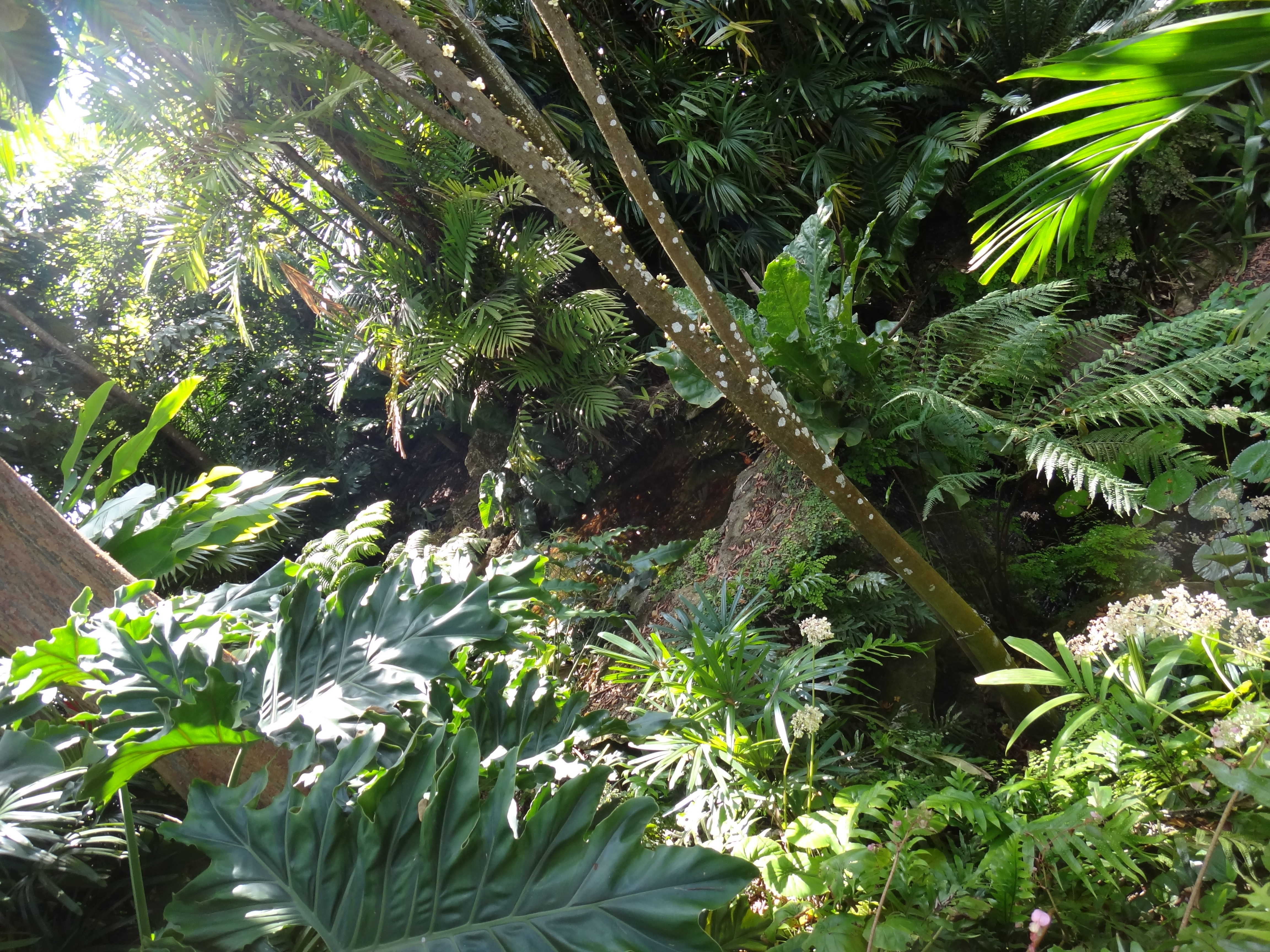
The rainforest area housed lots of epiphyte orchids and exotic coral-like blooms and fruit,
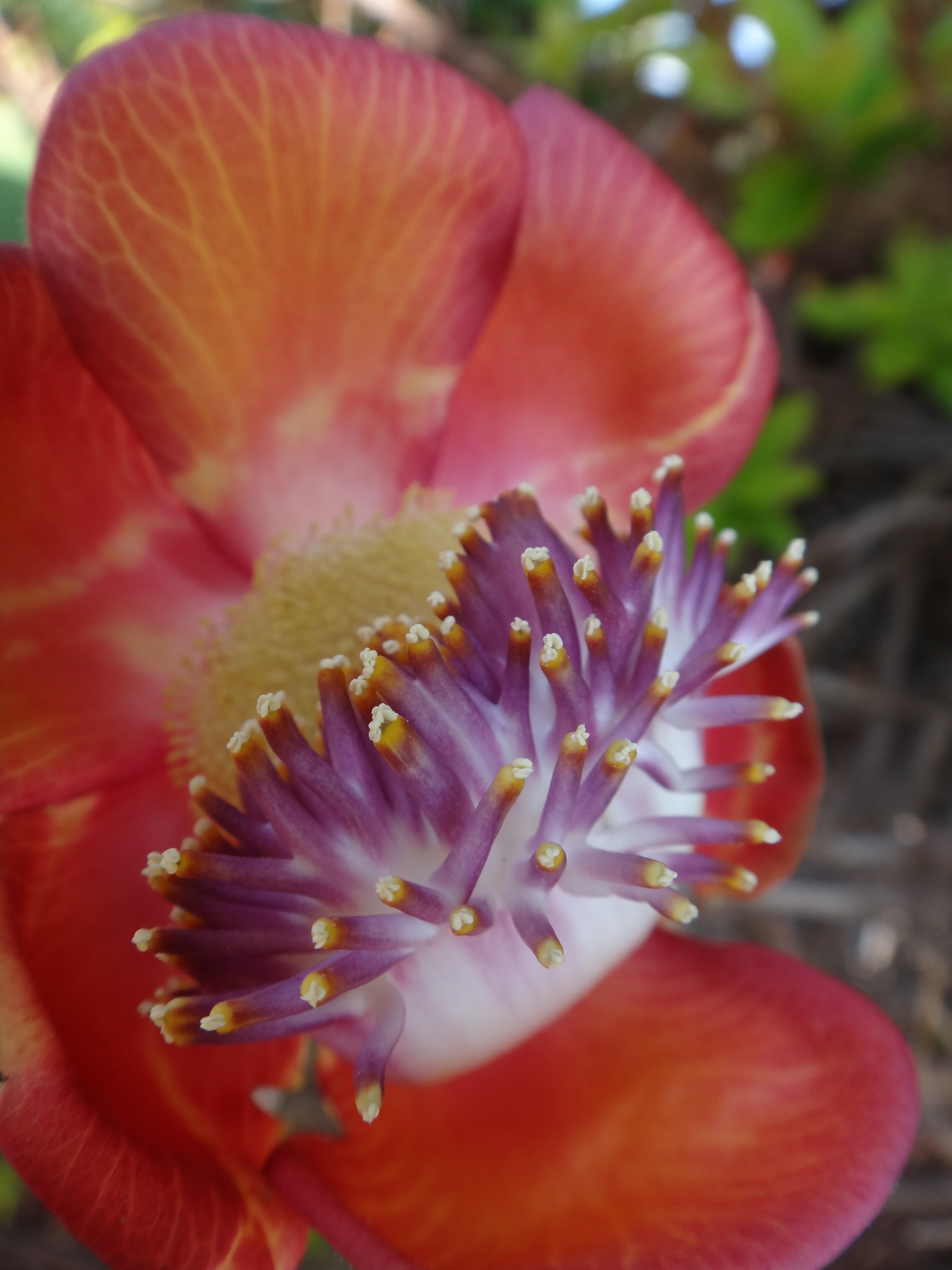
from the likes of this Cannonball Tree.
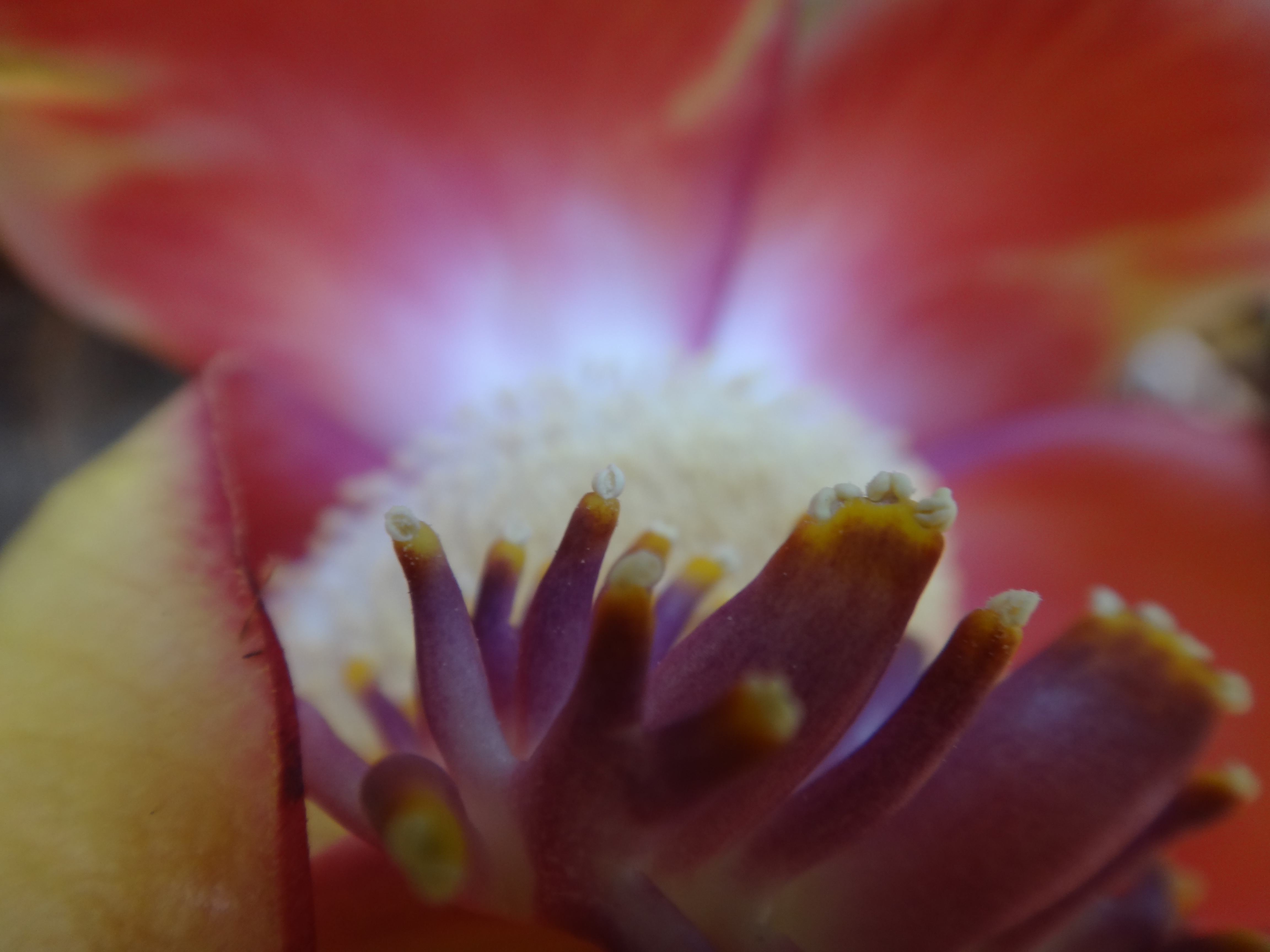
At night the flowers become particularly pungent to attract swift flying pollinators.

When the tree’s cannonballs clash in the wind they sound like artillery fire.

“Oh come on Sid”!
When the fruit falls (hopefully well away from anyone’s noggin…they do kill) and cracks open, it emits a rather foul stench. Passing animals whiff the aroma, eat the fruit and pass the seeds through their digestive system, you know how that all goes.
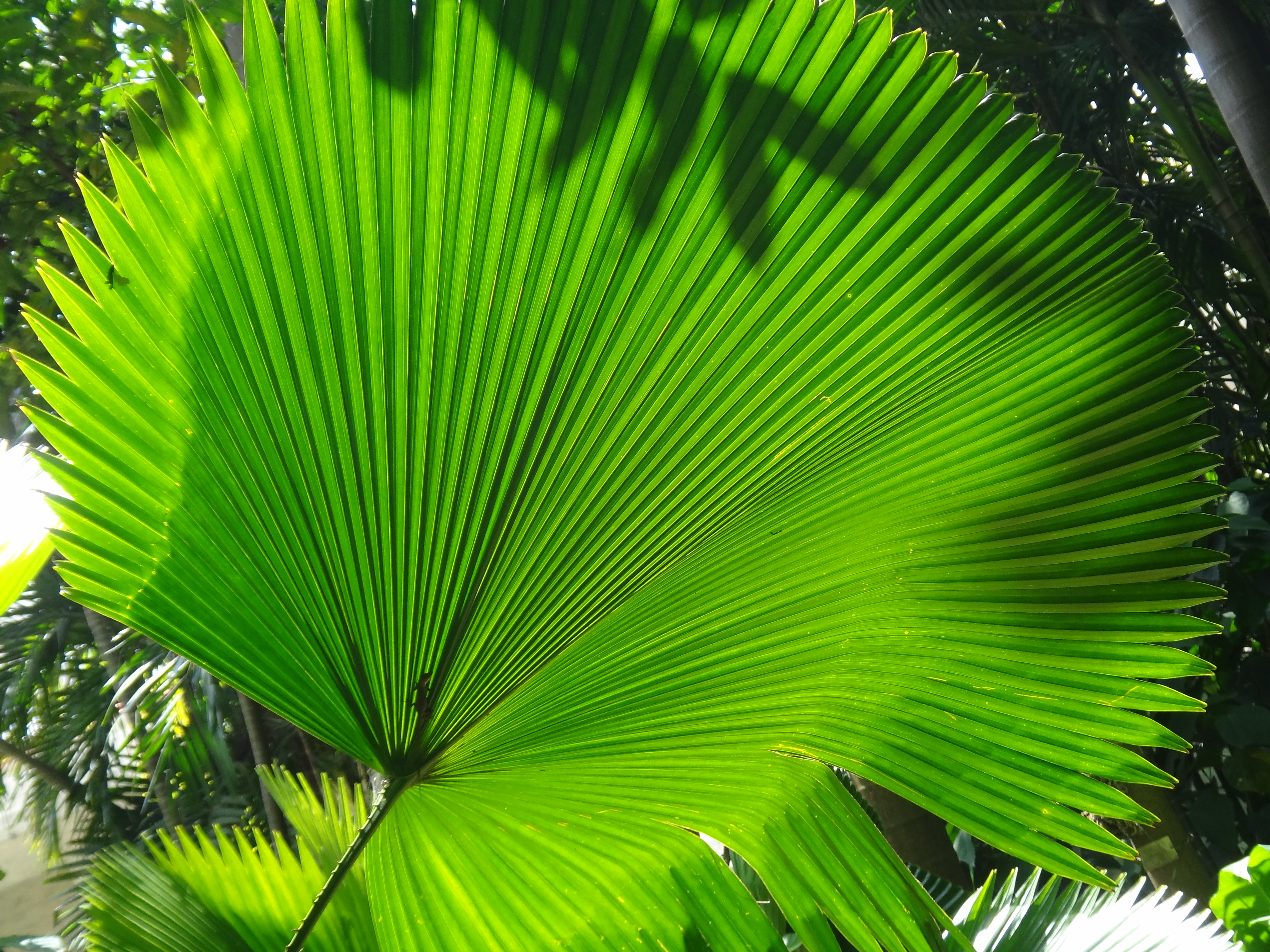
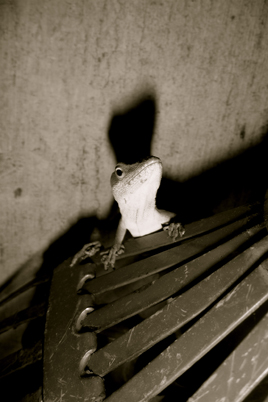
Massive palm fronds…and tiny anoles were also abundant.
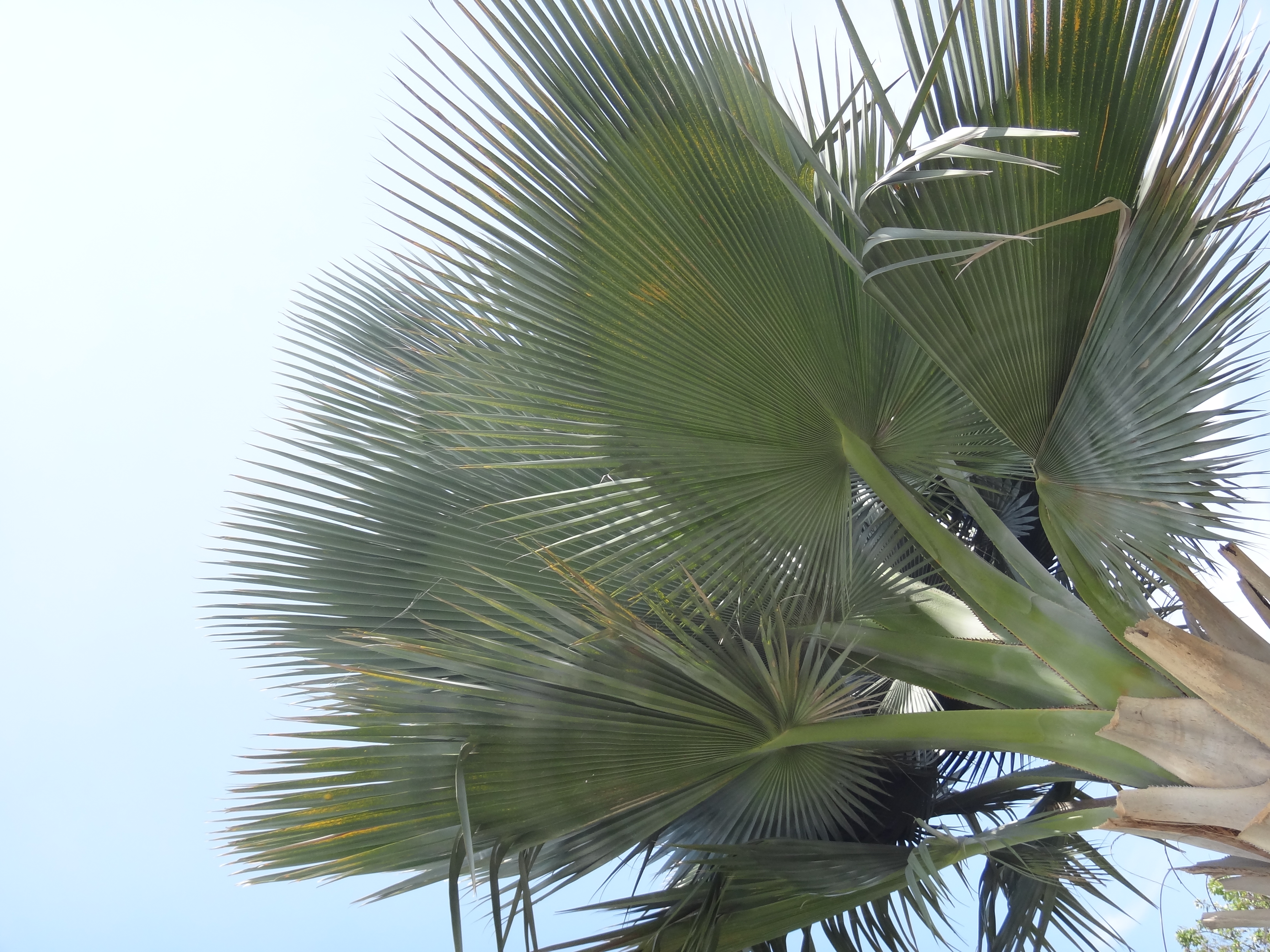
Fairchild garden is a must-stop,
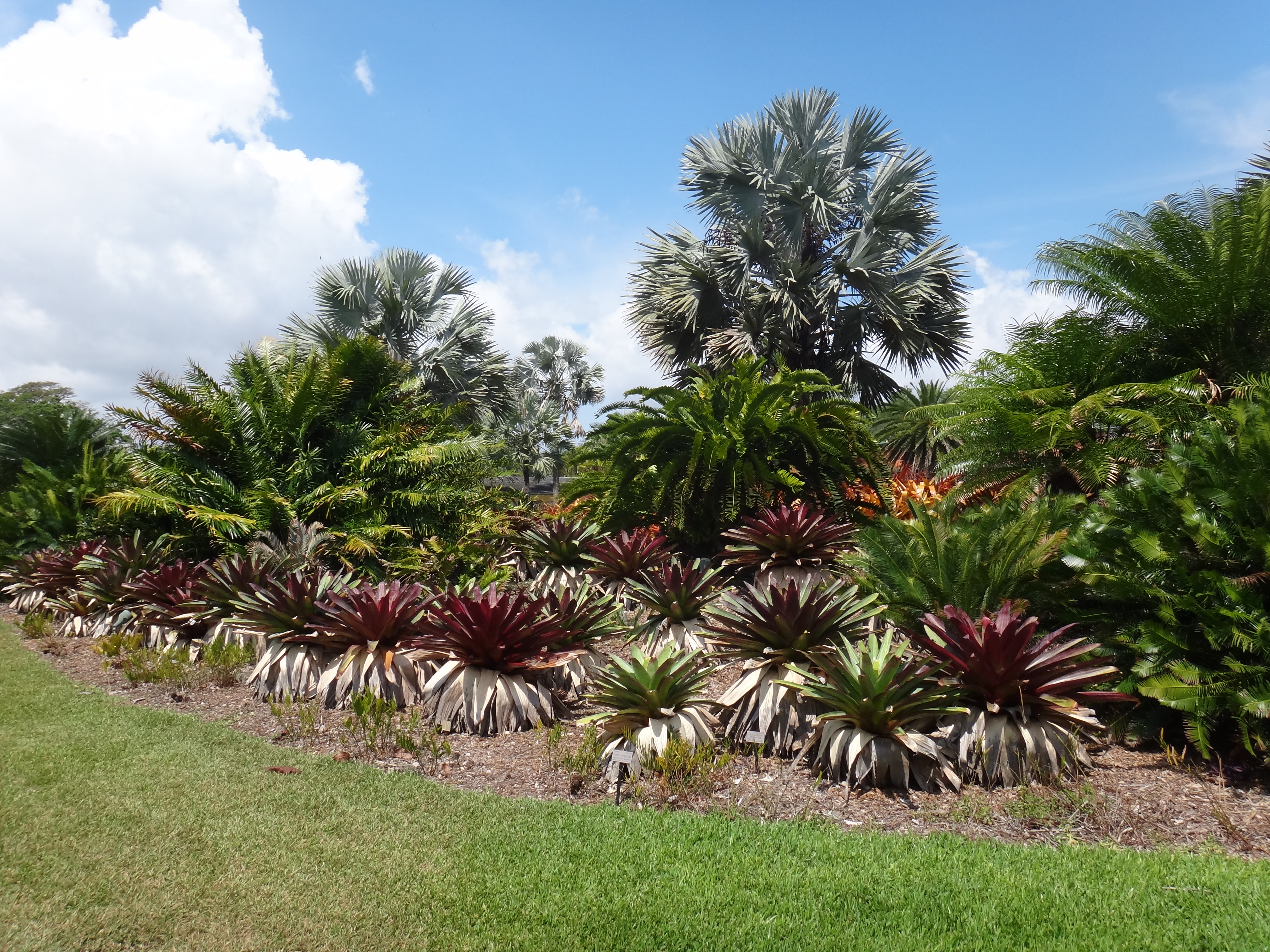
especially if you like cycads and palms, (I am now really coveting the gunmetal Bismark Palm).
Bismarckia nobilis

The genus is named for the first chancellor of the German Empire, Otto von Bismarck, and not for the color of the warship as I had assumed.
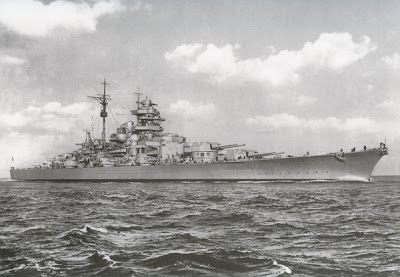 When I saw the palm paired with a mass-planting of purple heart around its base, I was immediately sold. Now why did I not take that picture?
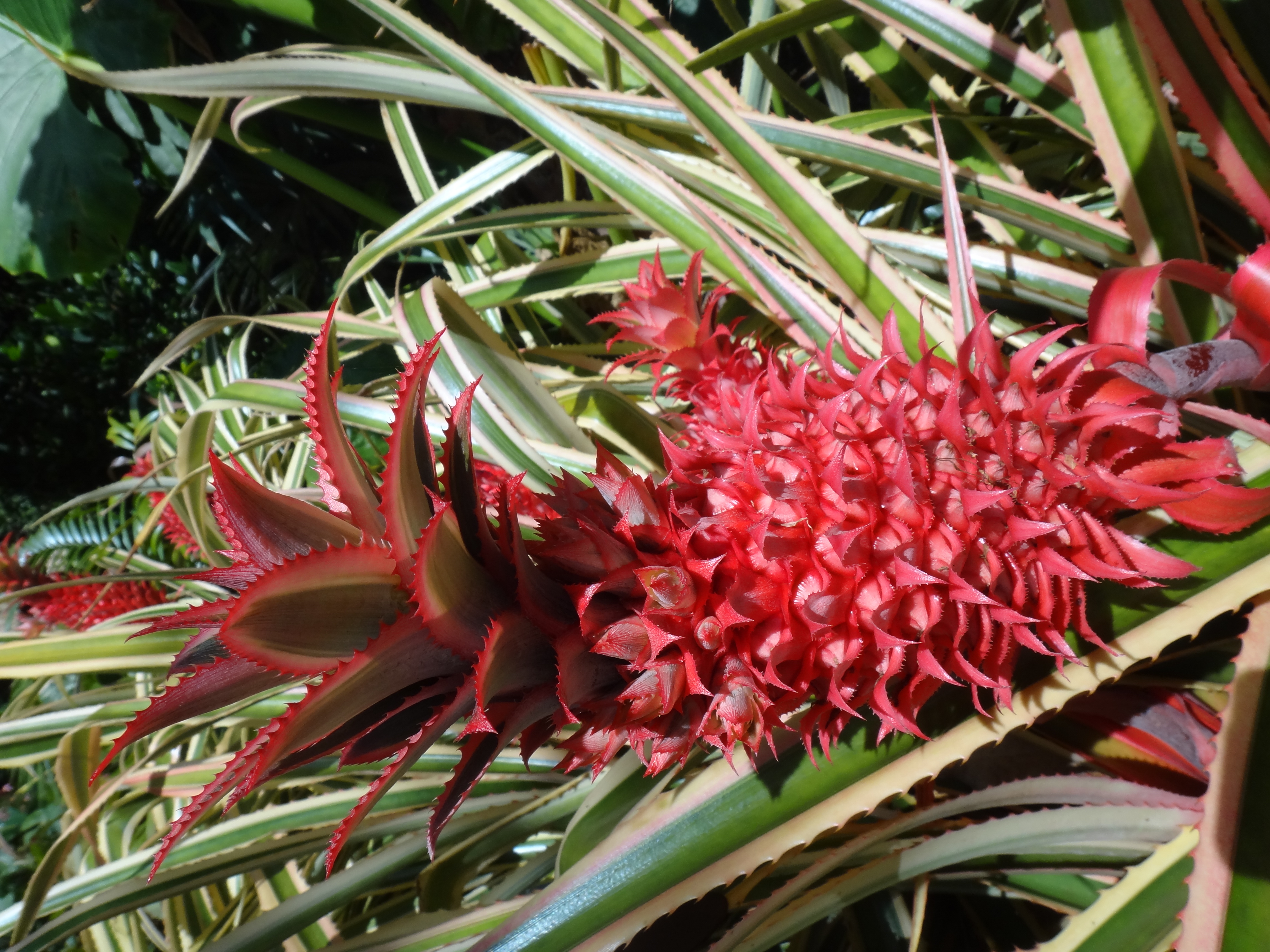 More exotics…
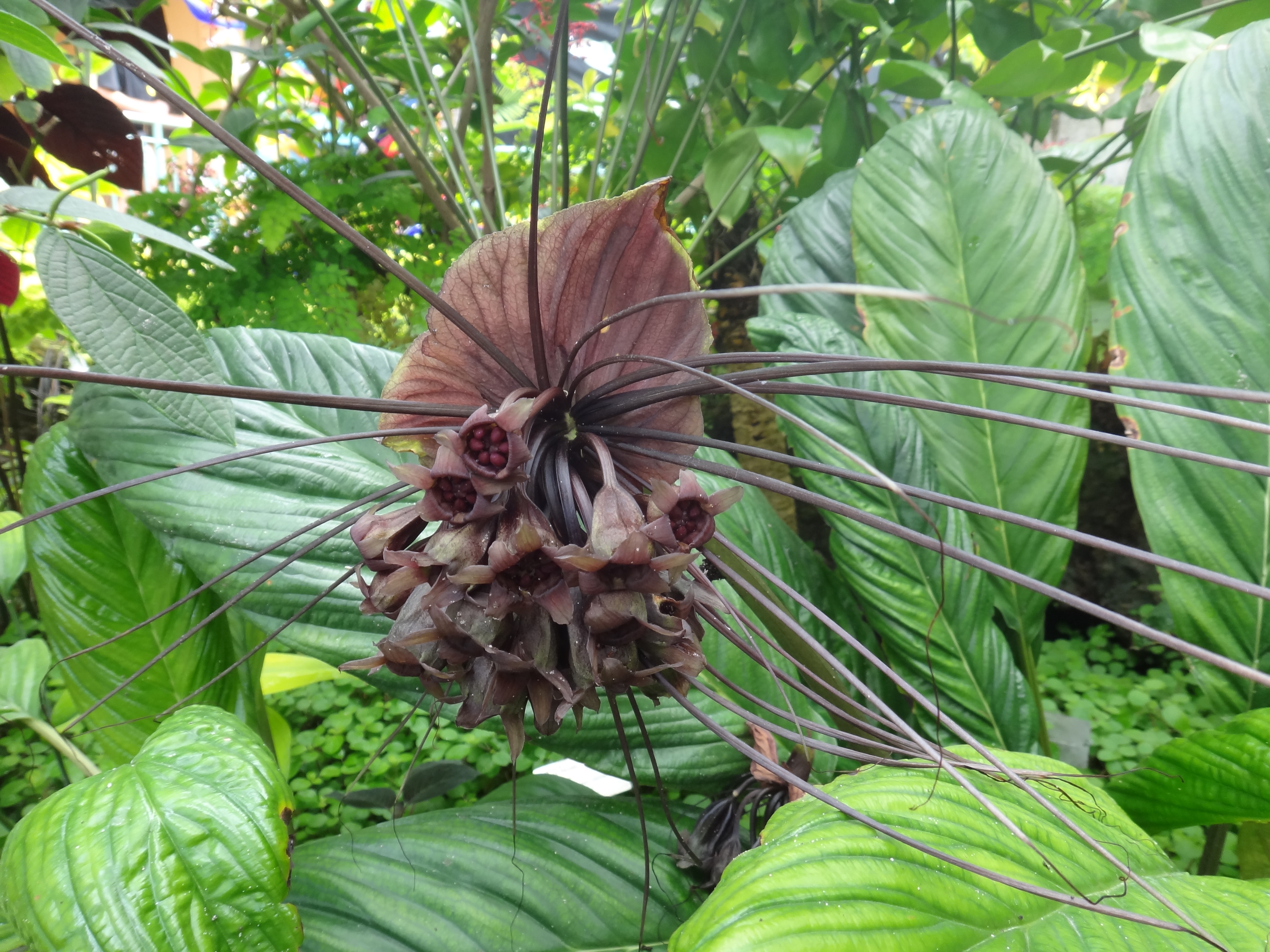
this bat flower,
Tacca chantrieri
was one of the more flamboyant, as was this incredible glass sculpture by Dale Chihuly.
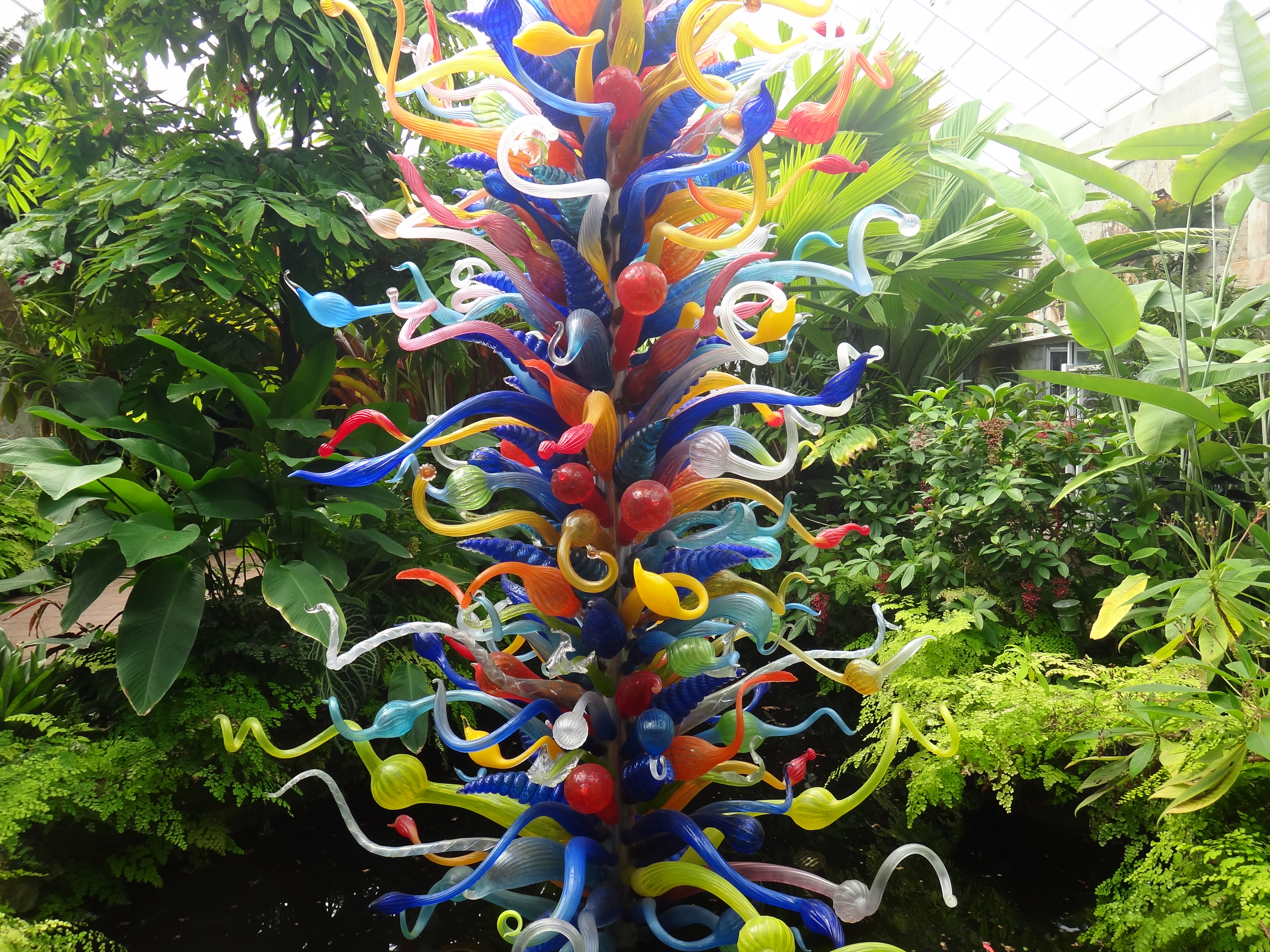
End of the Day Tower, 2005
Now THAT is a bottle-tree!
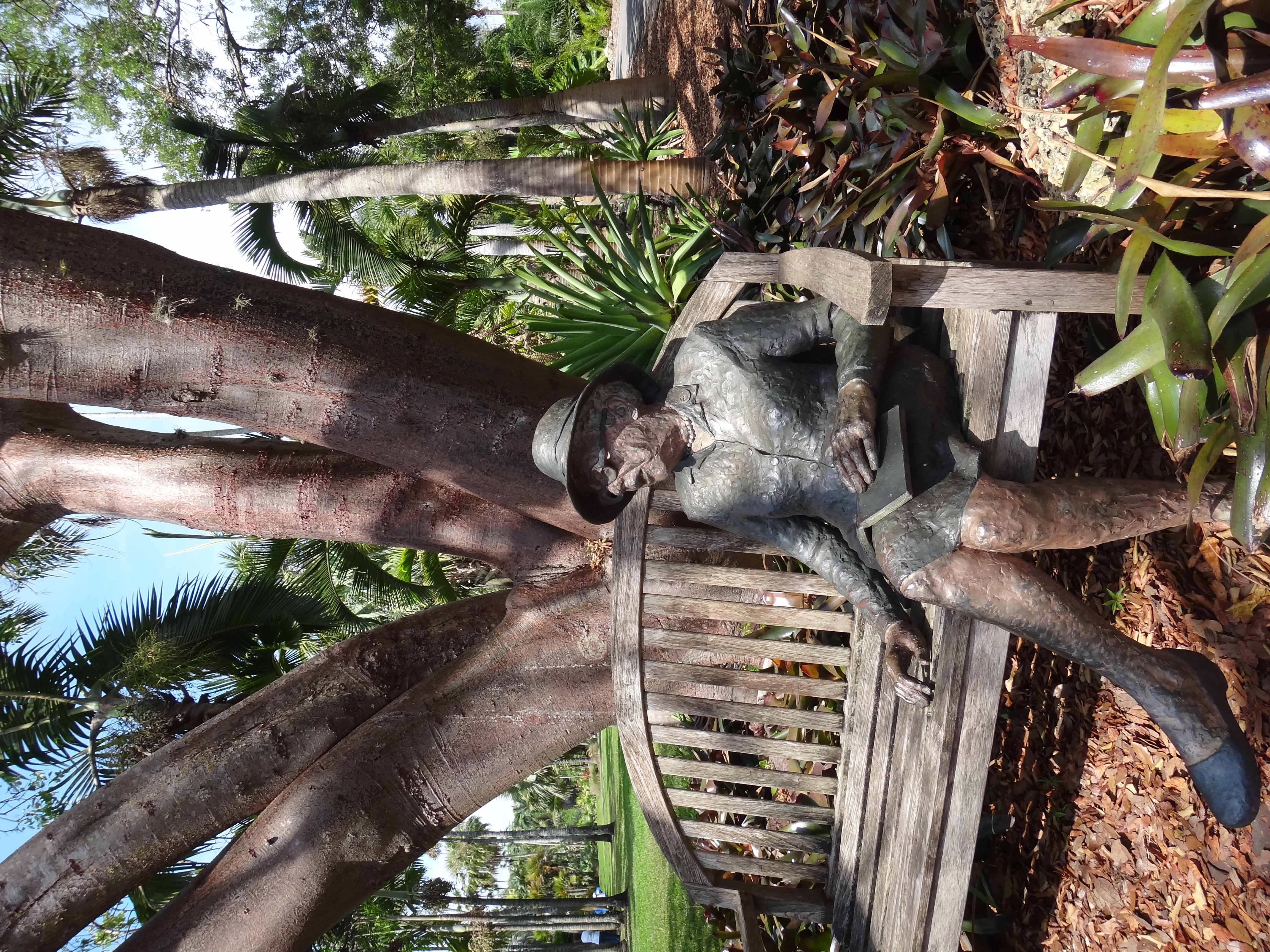
I will leave you with this life-sized sculpture of Majory Stoneman Douglas, one of America’s greatest conservationists. The existence of the Everglades National Park is largely due to her efforts.

Douglas lived until age 108, working until nearly the end of her life for Everglades restoration.
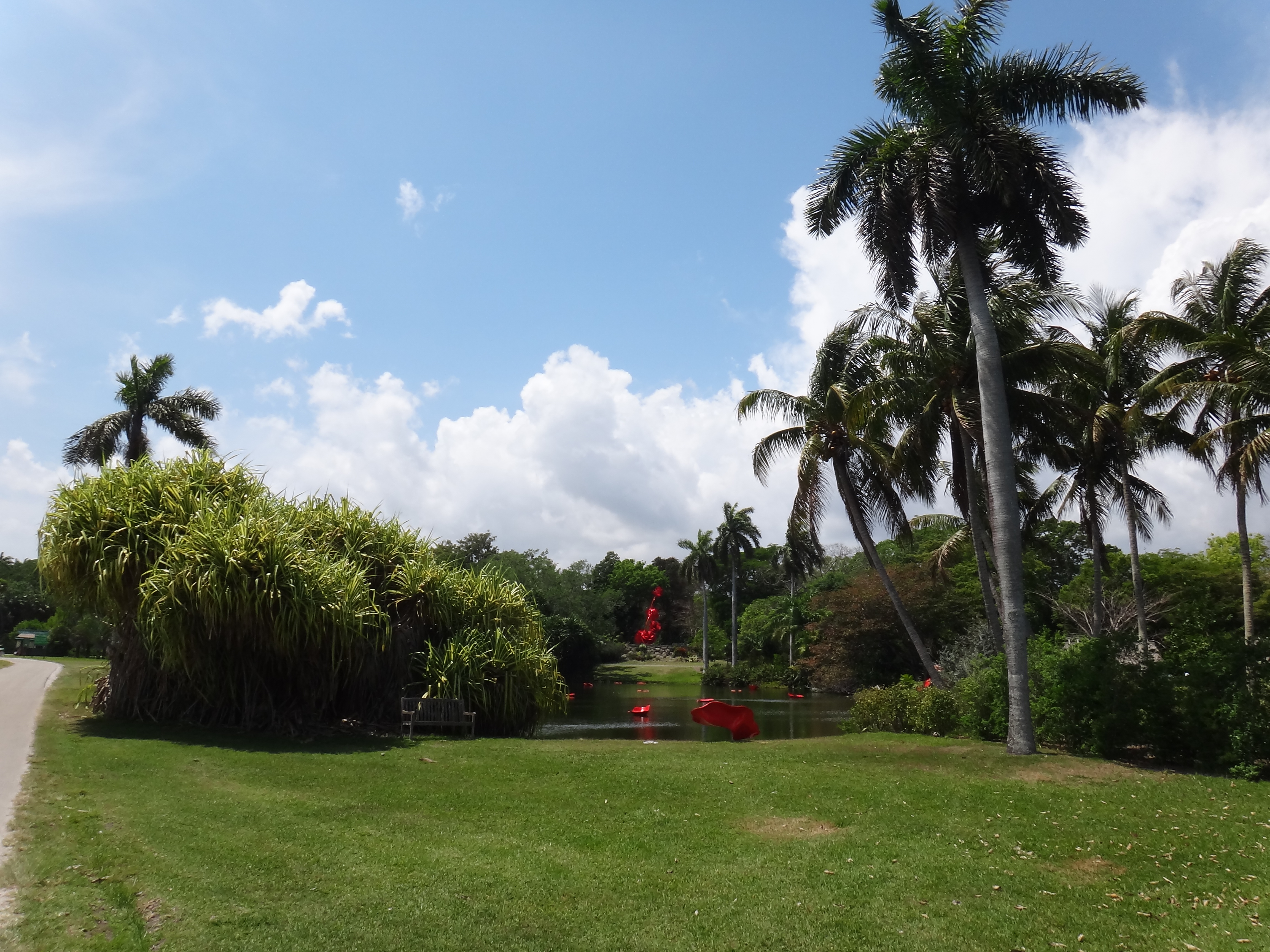
I walked around Fairchild for about four hours straight and covered numerous miles. I witnessed an alligator lounging at the side of one of the remote walkways and had a large, and I do mean large, lizard scare me into a ridiculous Ministry-of-Silly-Walks stumble out of the Madagascar garden and into the full sight of the people on the next tour cart.
 Some of them waved at me nervously as they passed, my disheveled appearance affording the look of a potential tourist-cart highwayman, I am sure. My flip-flopped feet hurt, I was dripping with sweat, but at least my Nosferatoe nails had significantly diminished in size, I assume to abrasion…it was time to go home.

Stay Tuned for:
“I Sand Corrected”
All material © 2012 for eastsidepatch. Unauthorized
intergalactic reproduction strictly prohibited, and
punishable by late (and extremely unpleasant)
14th century planet Earth techniques.