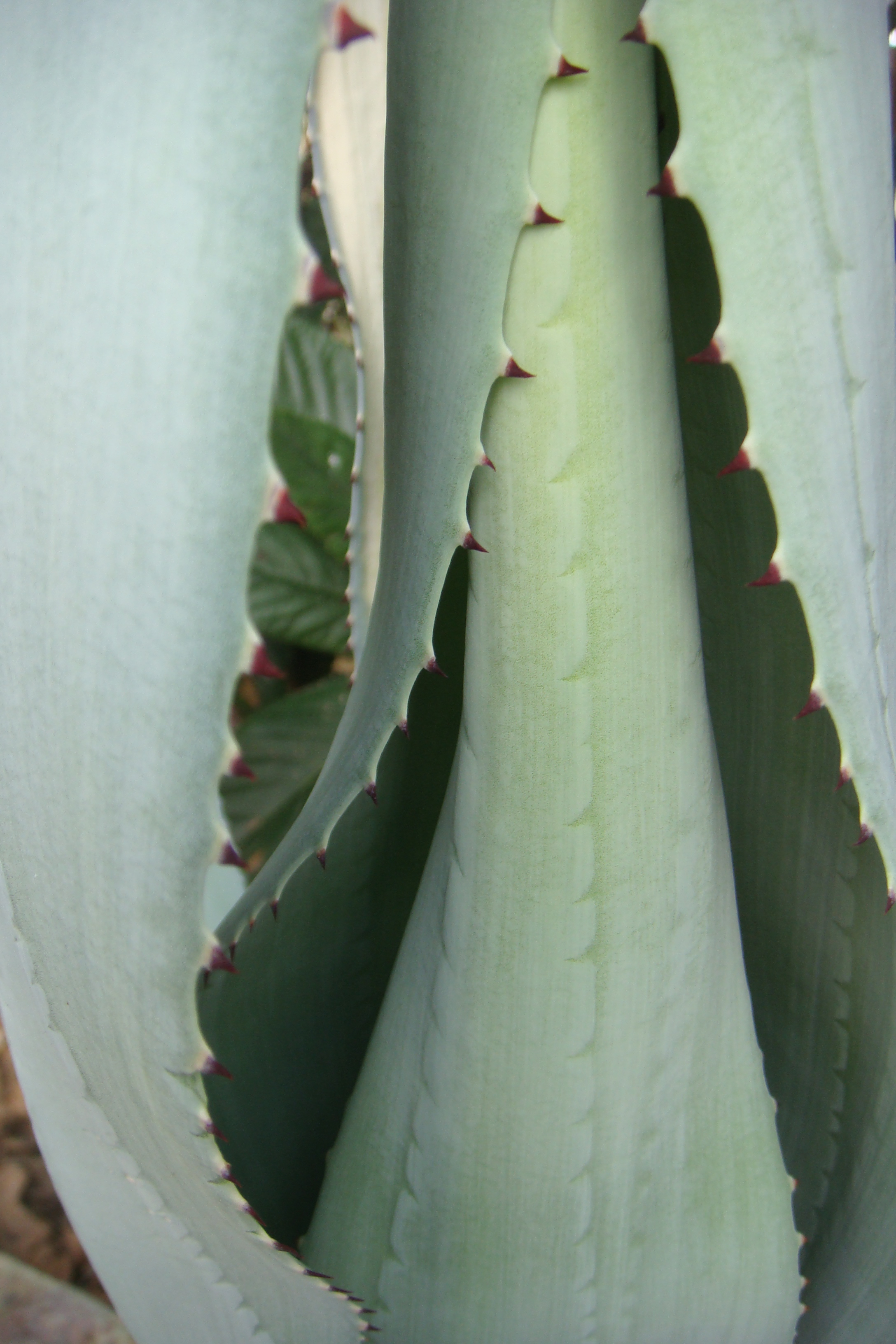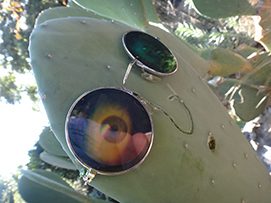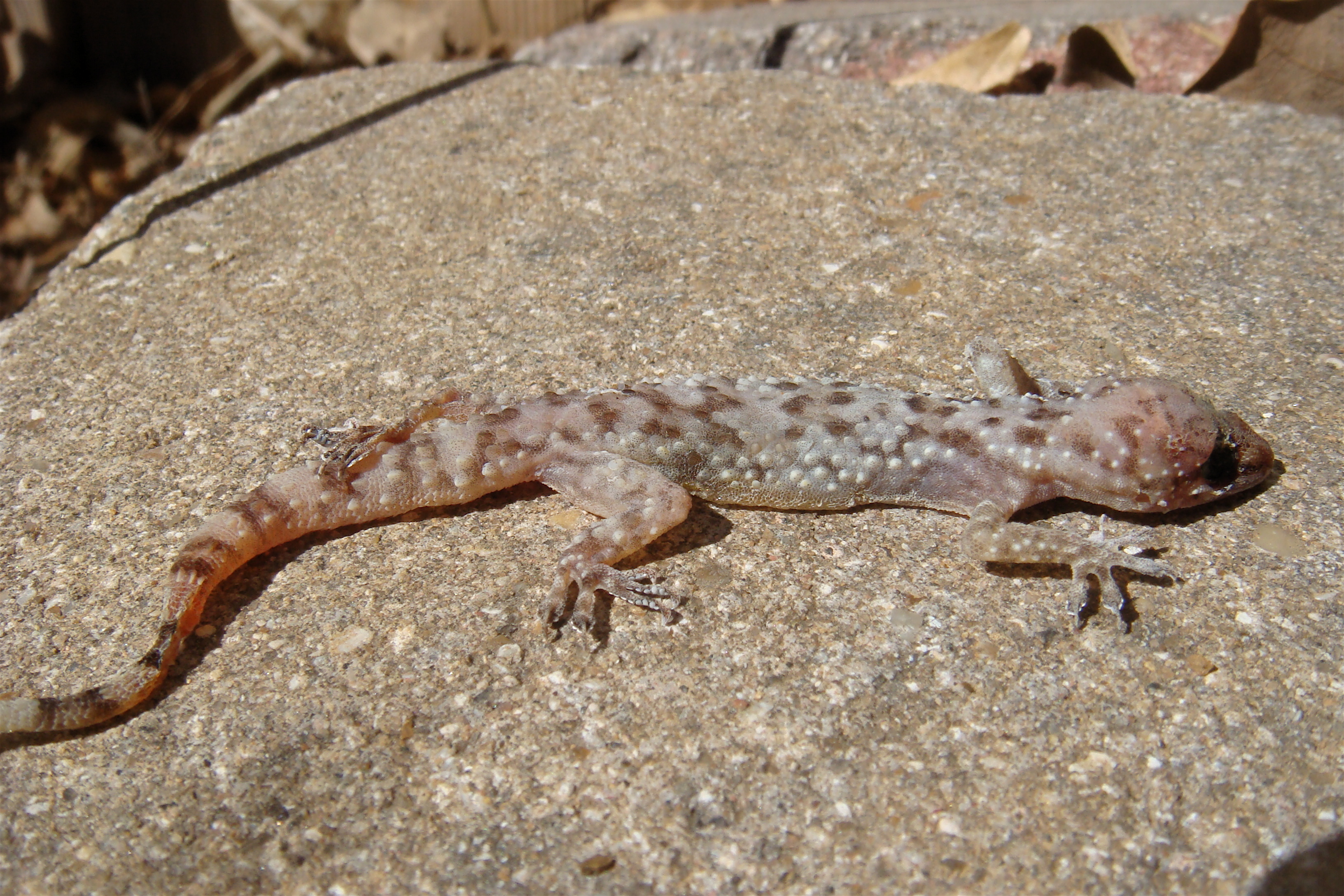
 “Planetary surface topography now visible on main viewer captain.”
“Magnify…”

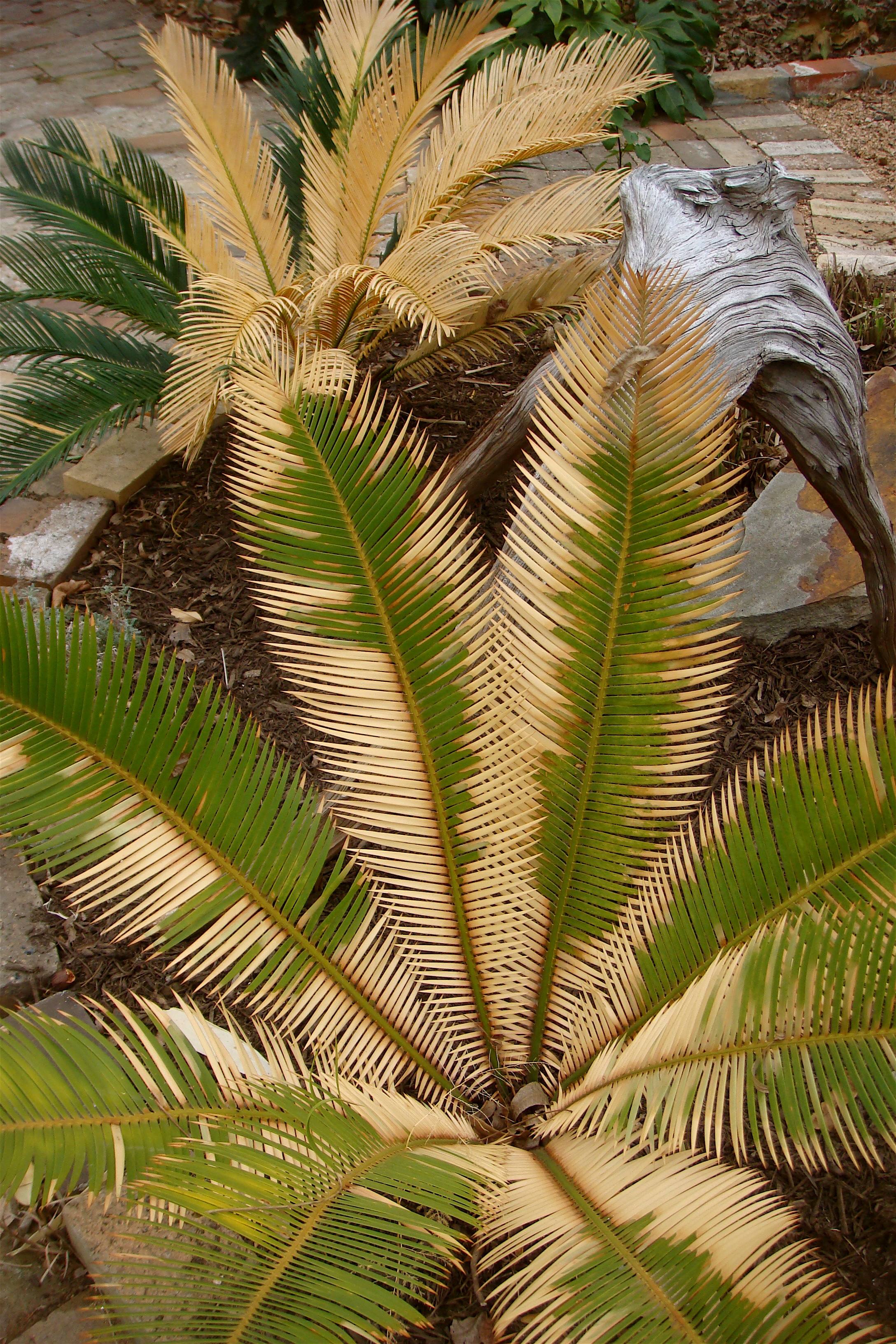
“More detail is now coming in sir, it appears that the planet’s surface has suffered major trauma, probably the result of a sustained hard freez…”

“Spock, this is the dead leaf of a frost-bitten agave Americana, isn’t it? I should know, I just pruned one back on the hydroponic deck…look at my face! And besides we are still in space-dock.”
“Your logic is of sound origin captain.”

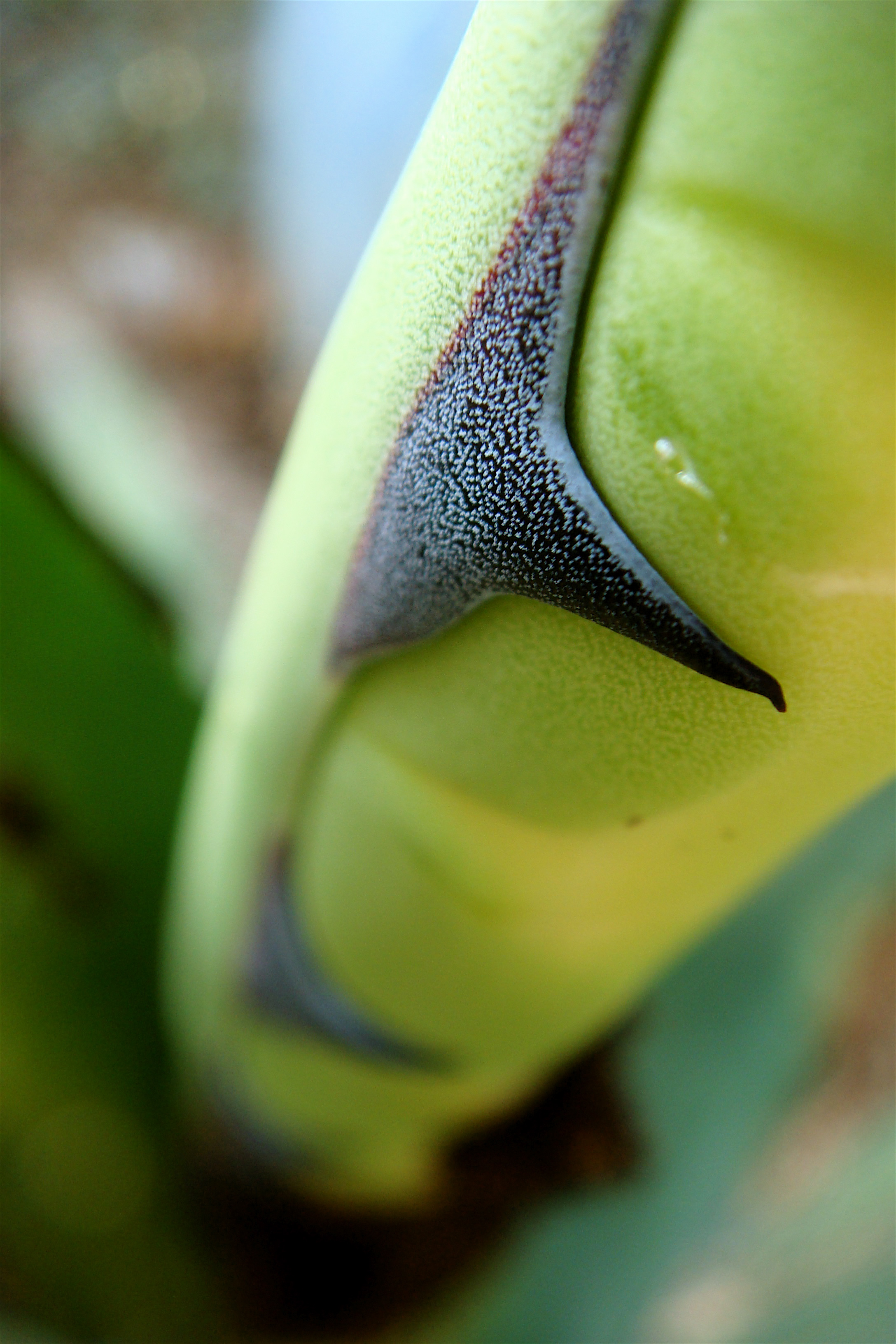 I have not had too much luck with agaves of late it seems.
All of my mature Americana agaves will ultimately pull through, but I have lost a lot of younger ones in pots. Well hasn’t everyone? I see the remains of their sad bodies drooped all over Austin like sad drunks – flopping over retainer walls, buckled over and grumbling nonsense in hell-strips, most should now be cut back to their short and curlies to stimulate new growth. As if the frost was not quite enough, I believe I have another, much “graver” agave issue…
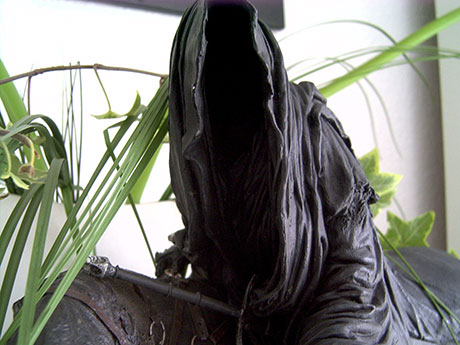
Remember this Nazgûl?
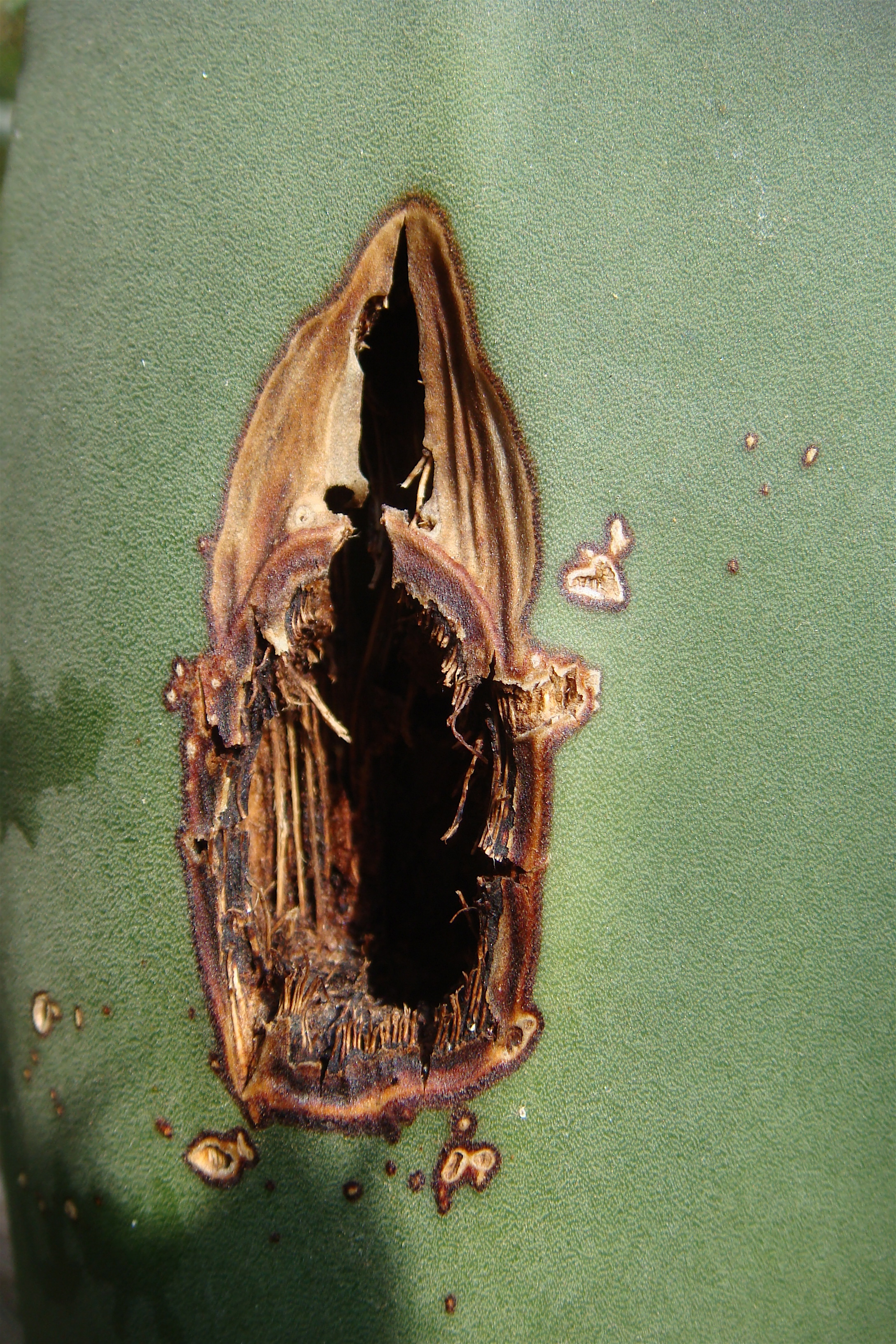
Well things have got worse.

…the dreaded Agave Weevil.

What started as small brown scratch marks last year, has turned into ominous black holes and now dark cavernous pits. This borer has gone to the center of the plant and the terminal damage has already been inflicted.
 “Scyphophorus acupunctatus!”
This creature ultimately tunnels into the base and root system of the agave. Adults chew into the lower leaves of agave and introduce a bacterial rot that is believed to be necessary for larval development. They lay eggs into these holes and the larvae then burrow deep into the plant’s heart carrying the bacterial rot with them.
 Image by: Machele White
Adults are dusty black weevils about an inch long, with a long snout, they do not have wings. The larvae are whitish grubs without legs.
To help prevent this from happening to you:
If you notice an adult innocently whistling and lurking around one of your agaves with it’s dark collar turned up, immediately apply diazinon granules to the soil around the base of your plants every two weeks mid-May through June. Remove and destroy infected plants as soon as damage is evident. Remove larvae and adults from the soil around the area where the plant was removed, and do not replant another agave in a hole where a plant has died from this borer, chances are it may happen again.
Moving more happily on:
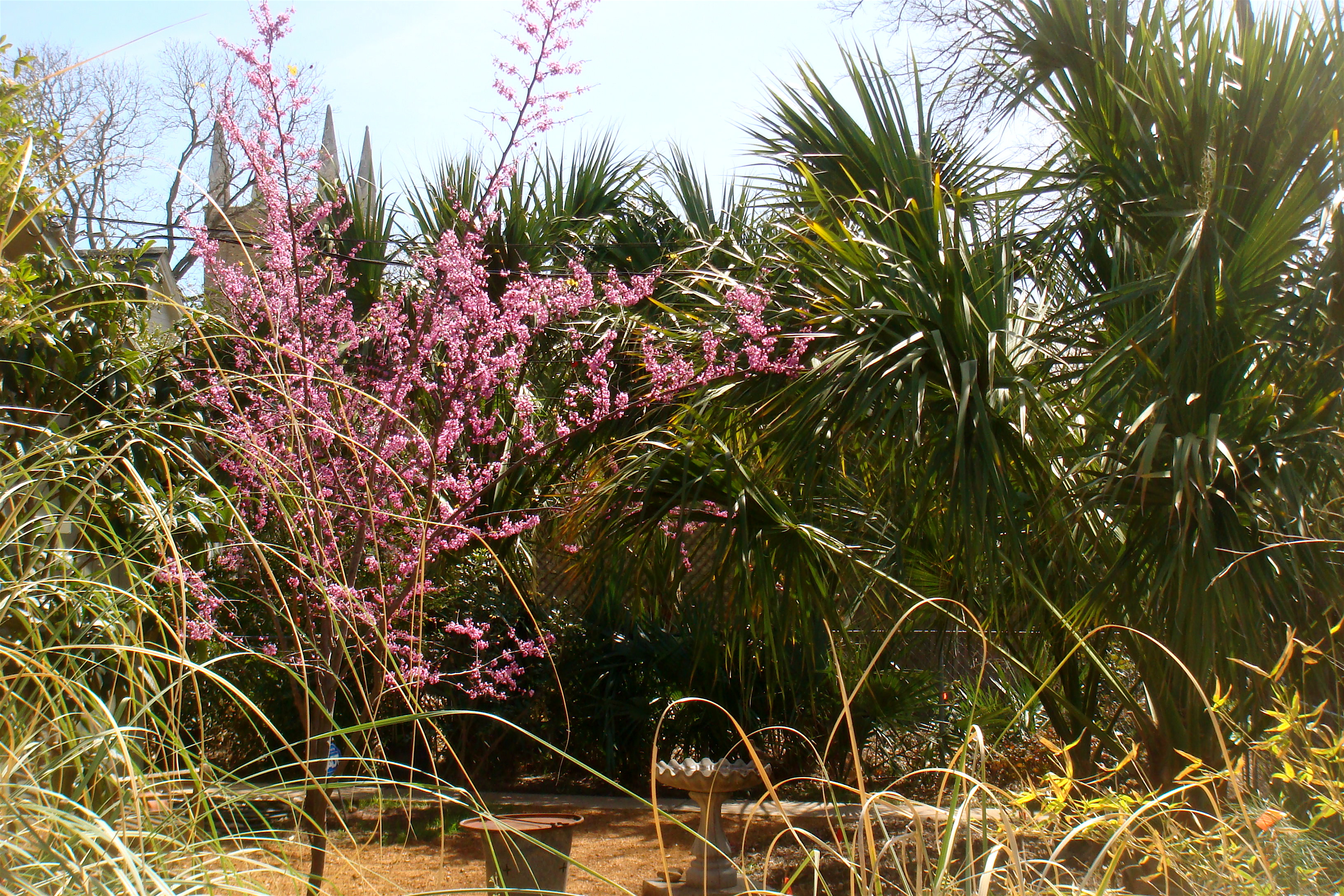
One of the ESP’s “borrowed’ scenes. I love the way the Texas red bud looks set against the contrasting foliage of Texas sabal major (with an understory planting of Texas sabal minor to continue the foliage theme all the way down to ground level) – a very tropical planting scheme, and one that is totally frost-proof. The pink emerging blooms of the red bud are punched out set against this dark olive backdrop.
 The tropical look is further enhanced by the use of decomposed granite that hints at a beach. This would make a stunning scene against a pool setting…note to self.
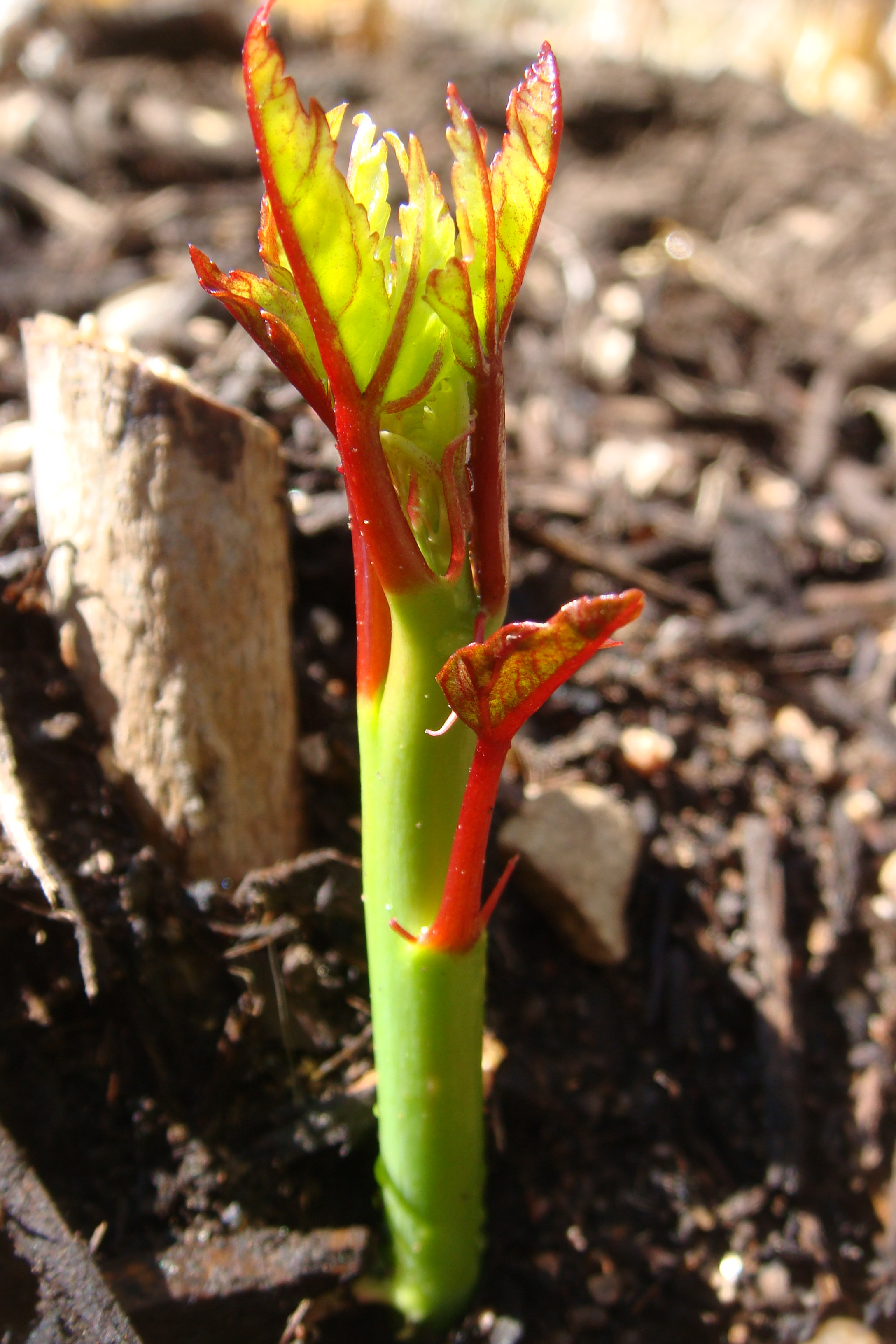
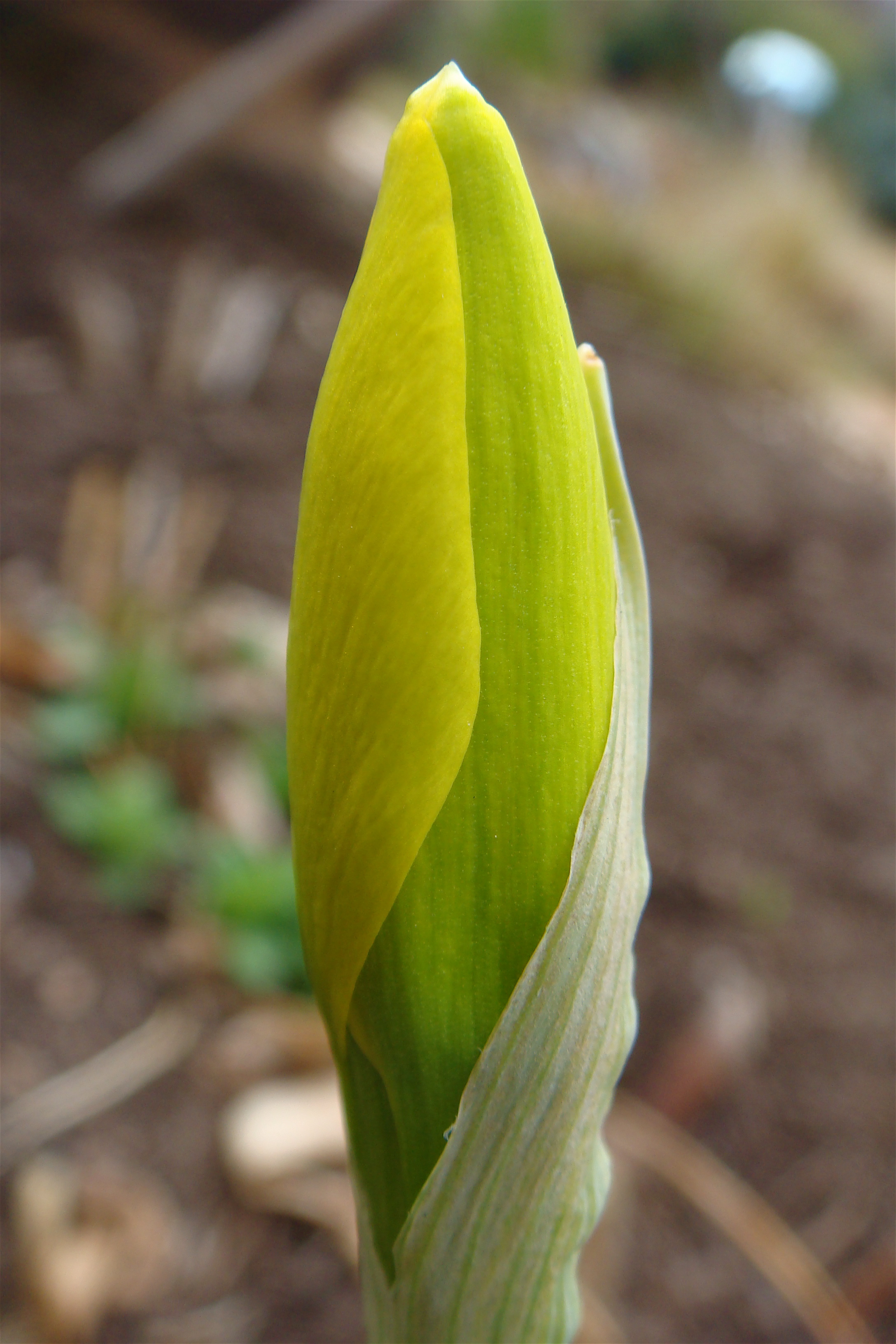
Everything is emerging fast with spring officially in the air,
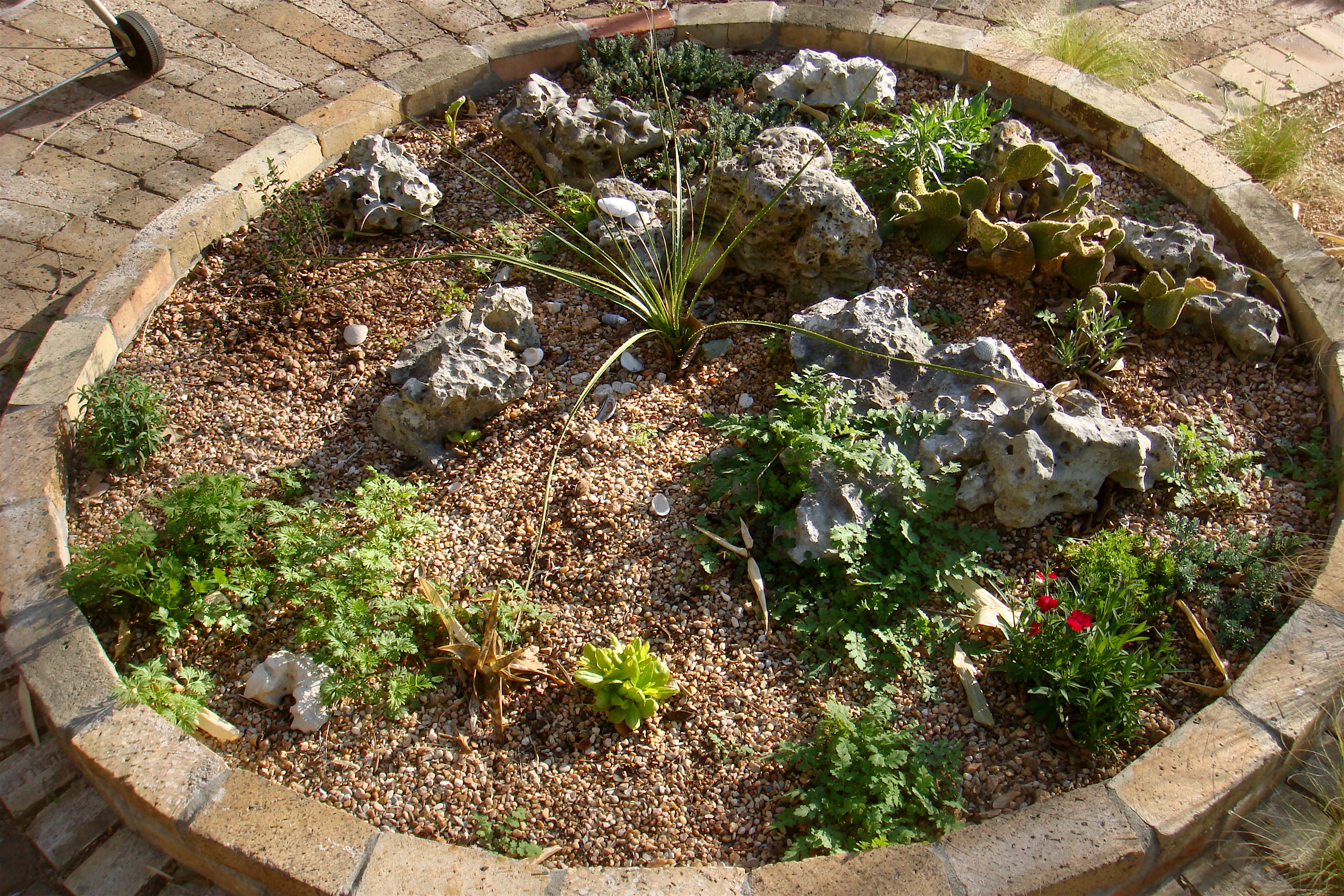
even this tiny sotol in my circular bed seems to finally moving into it’s gangling adolescent phase. All manner of plants are popping up in here, some known, some volunteers and even some mysteries waiting to be solved.

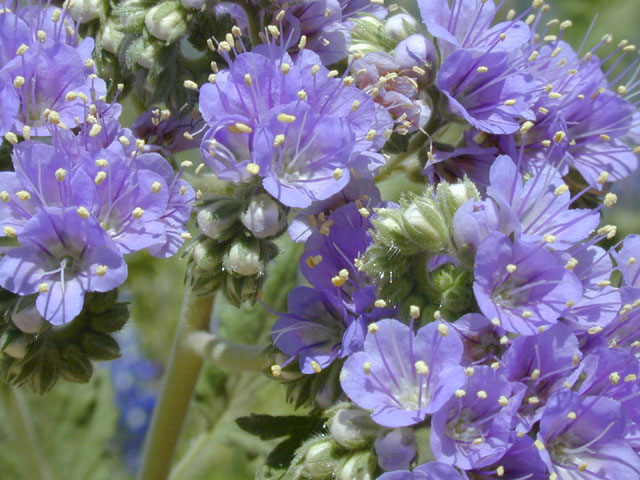
“What is that pass-along plant from Bob at Draco gardens that is growing over that Texas holey rock to the south-east of the sotol Watson”?
“I believe it to be
phacelia congesta
or blue curls, it is a great plant with great blue flowers…
 it is also a prolific seeder, usually found in large colonies”.
A great plant and easy to keep in check by pulling up the unwanted small plants.
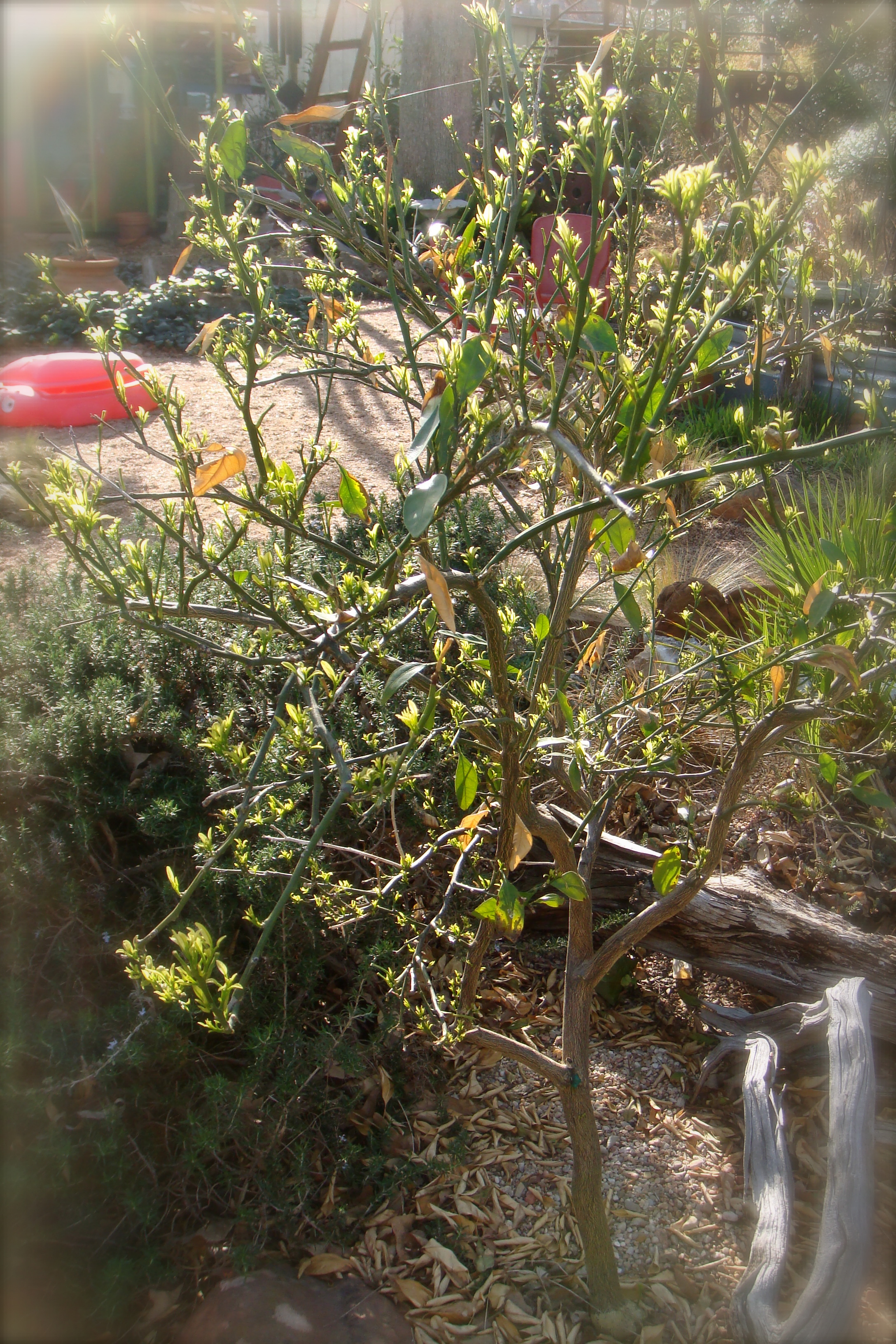
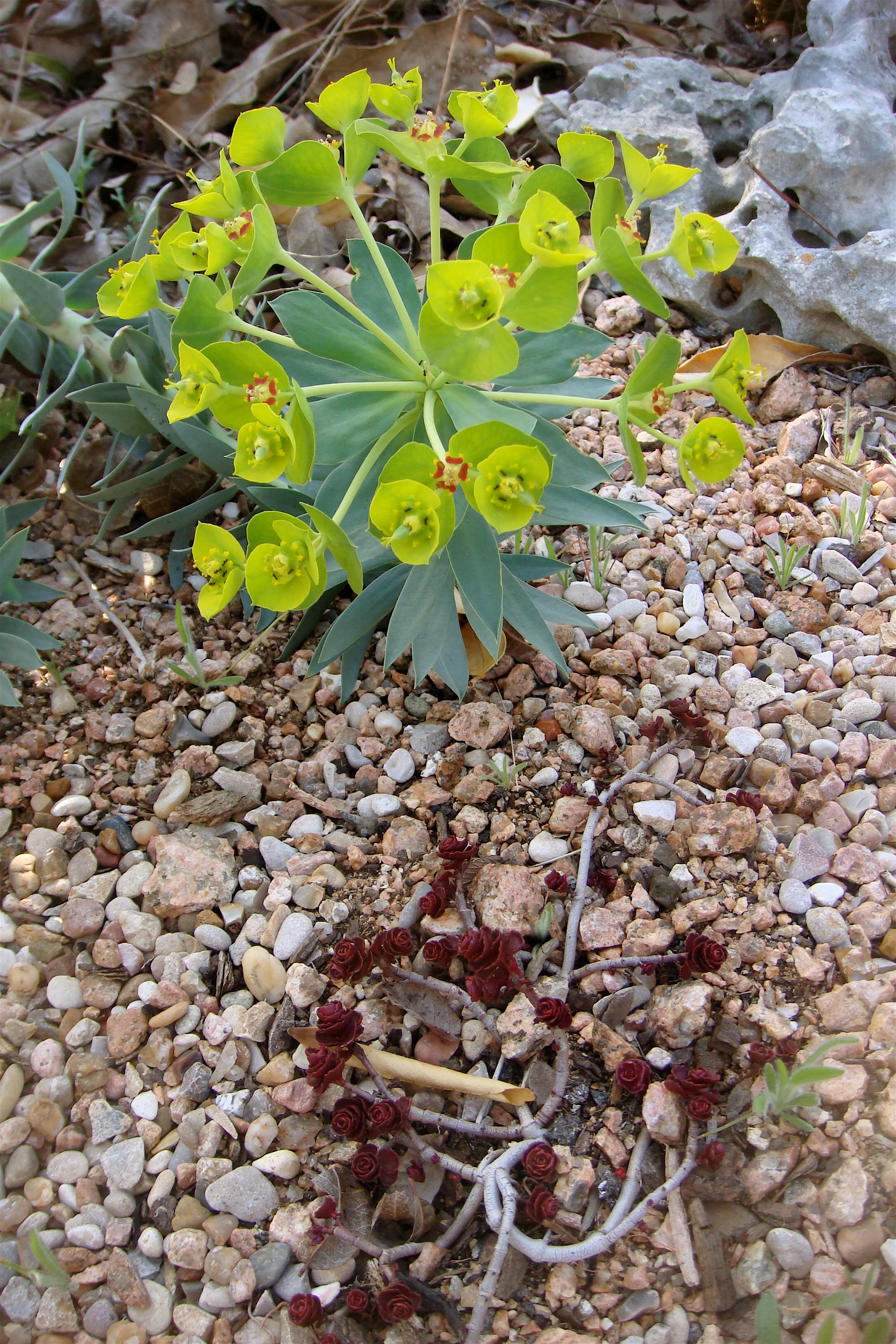
My frost stripped satsuma is making a new and really fast foliage rally (as it always does), and my gopher plants, with their strange flower heads are once again showing-off. These signs of spring in the Patch always coincide with our now annual family outing to the Sunshine Gardens plant sale, and this can only mean one thing, actually quite a few things…
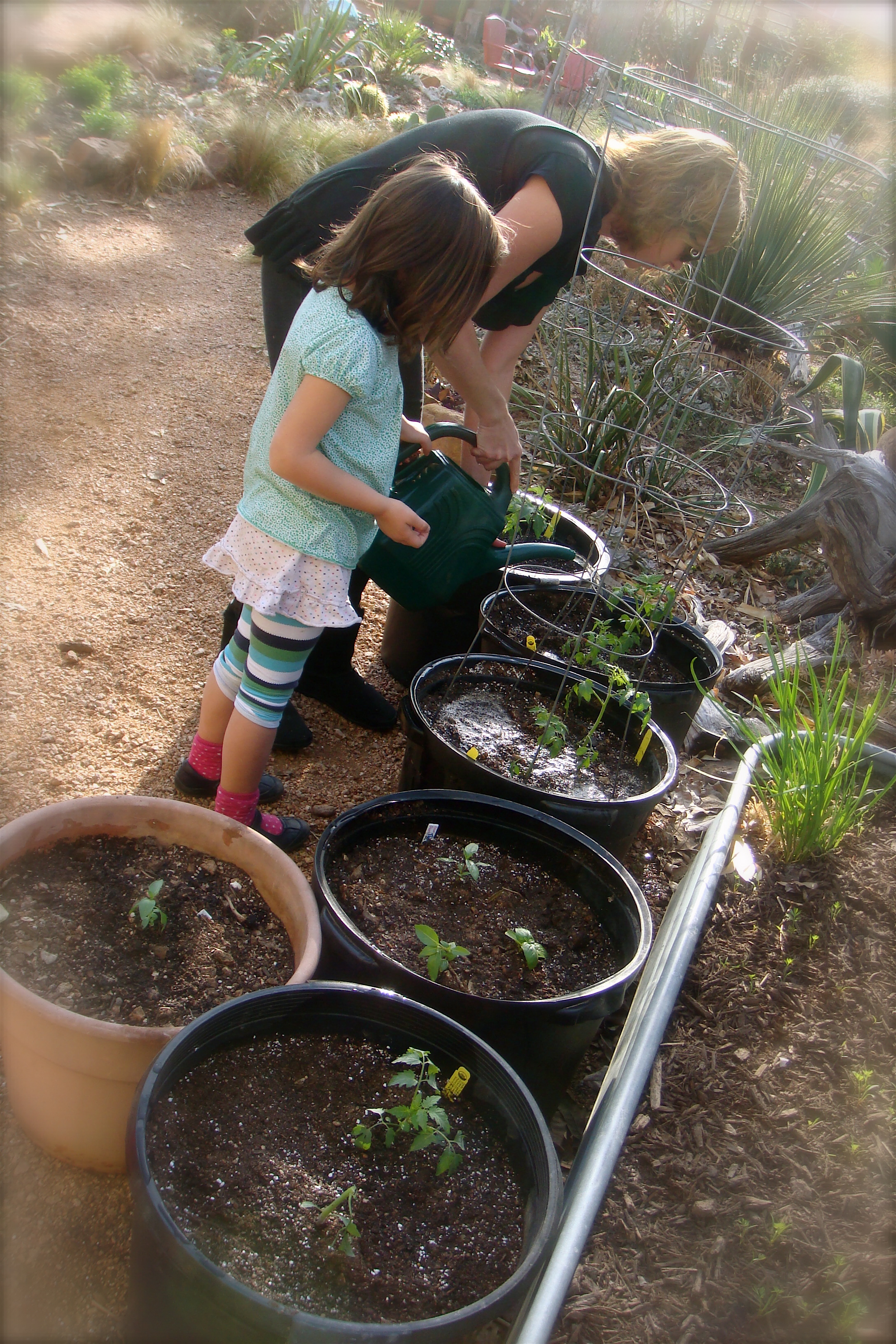
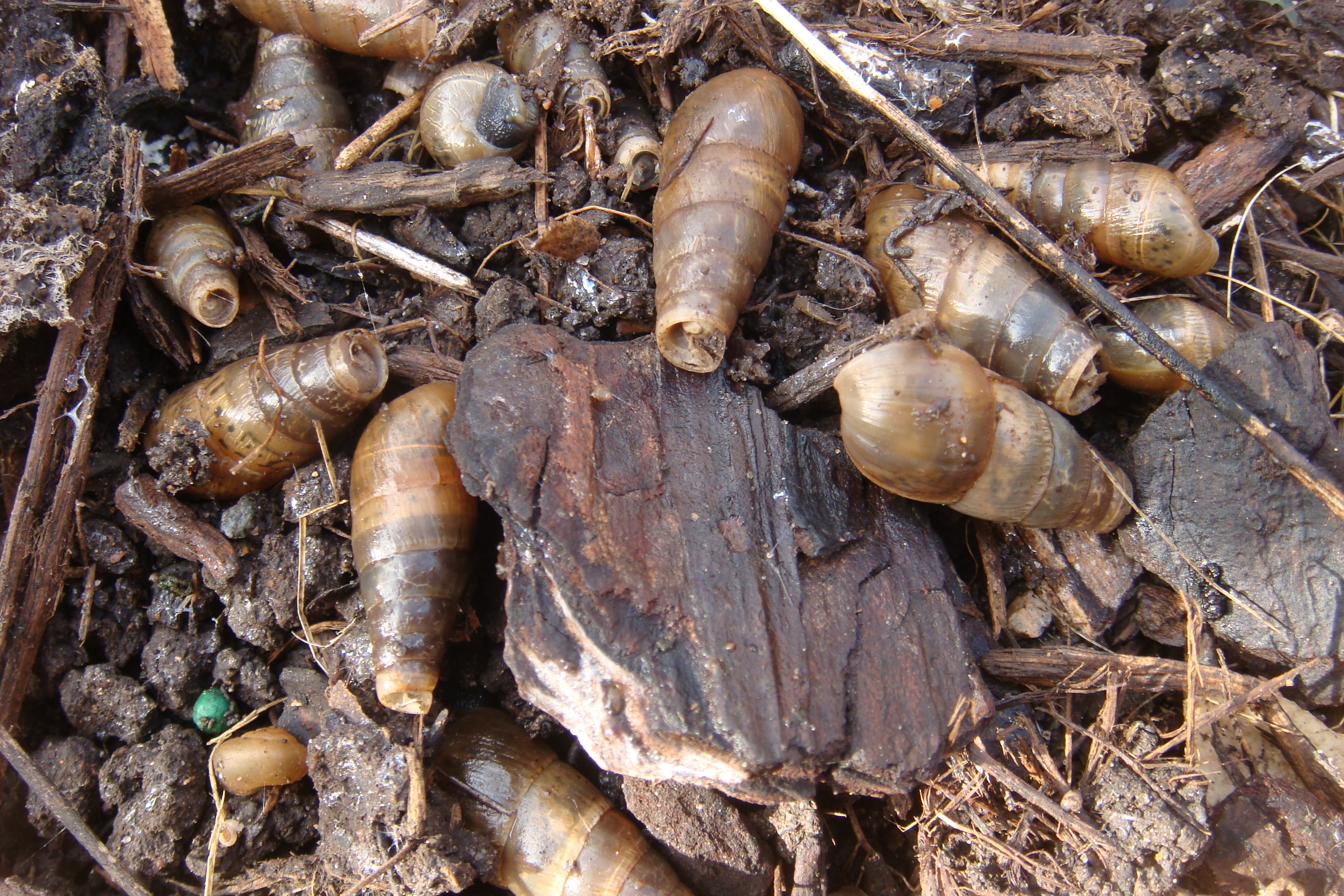
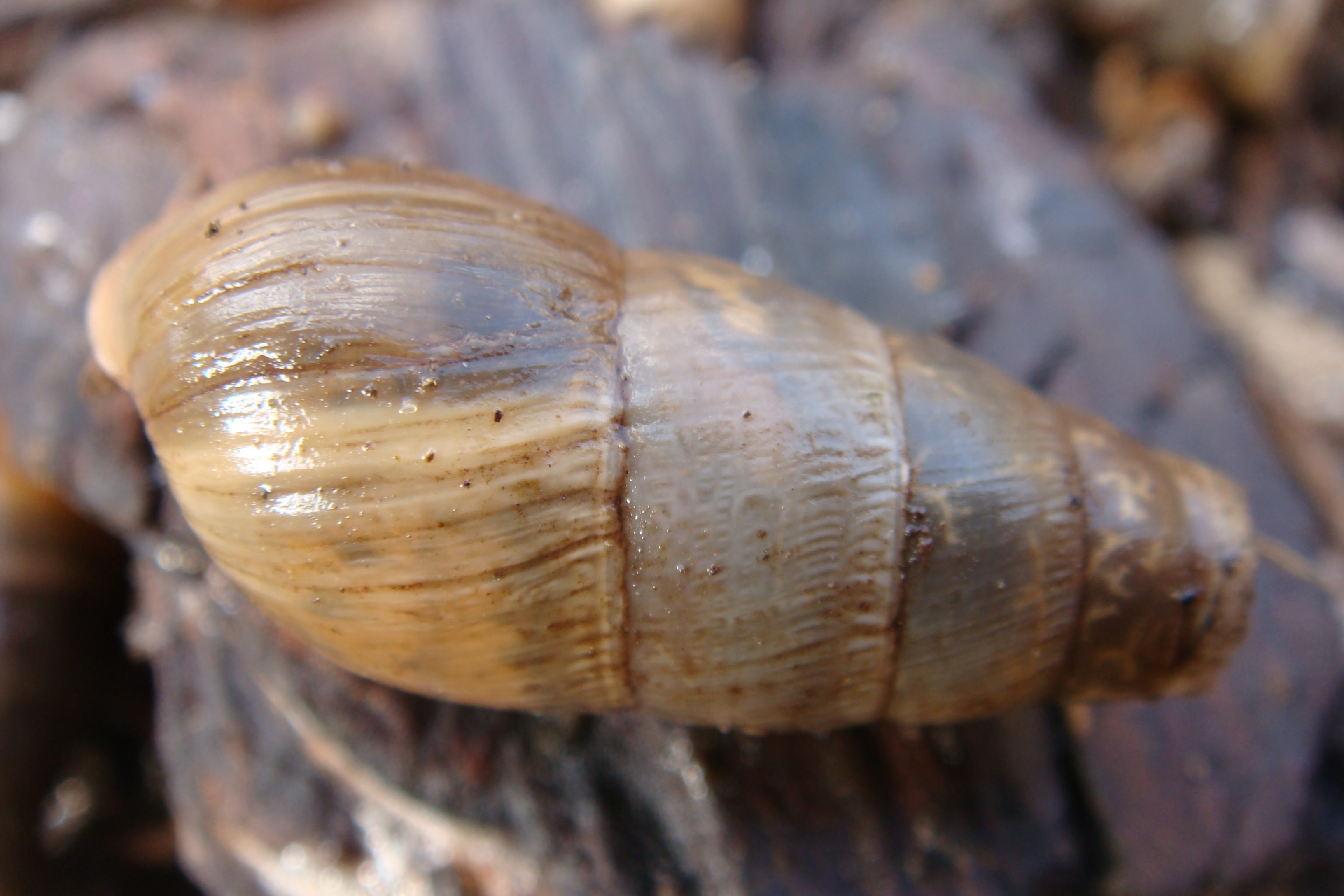
…tomatoes, peppers, basil and fennel to name a few. I knew that the soil from all of my dead aloes and agaves would go to a good home.
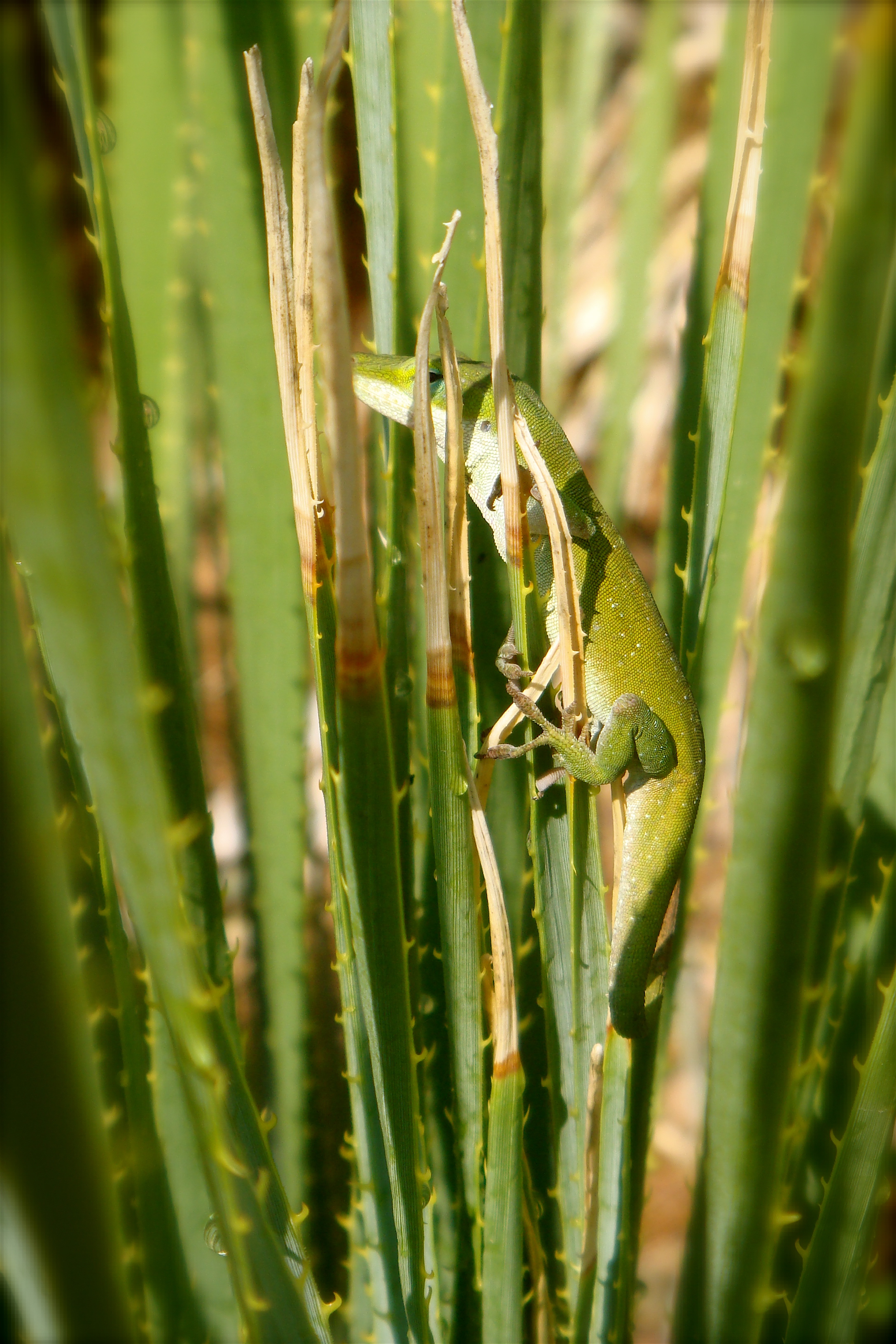
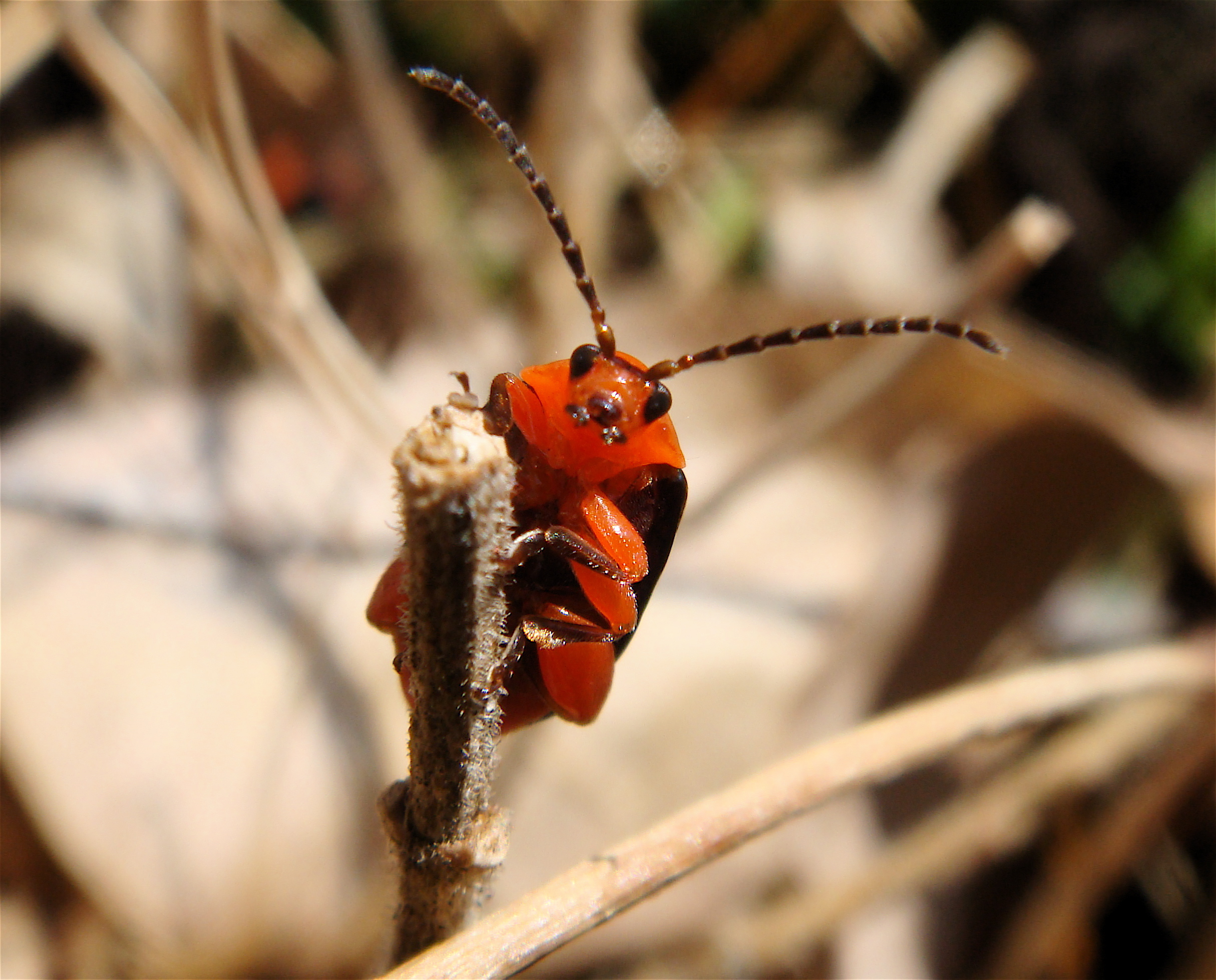
The milder weather also brings some of the years first flies:
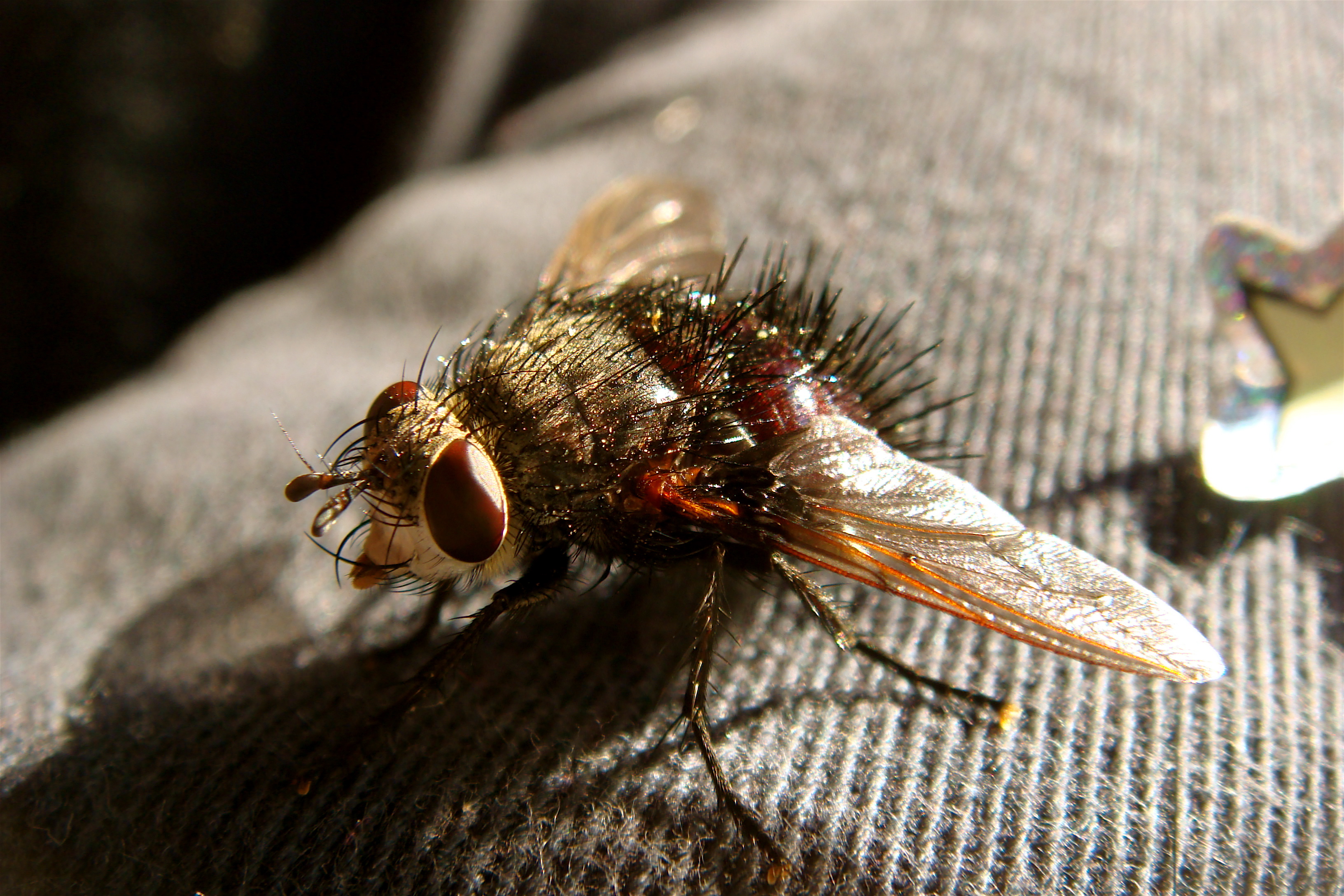
and this one, that alighted on my wife’s knee was an absolute whopper…Brrr
Finally:
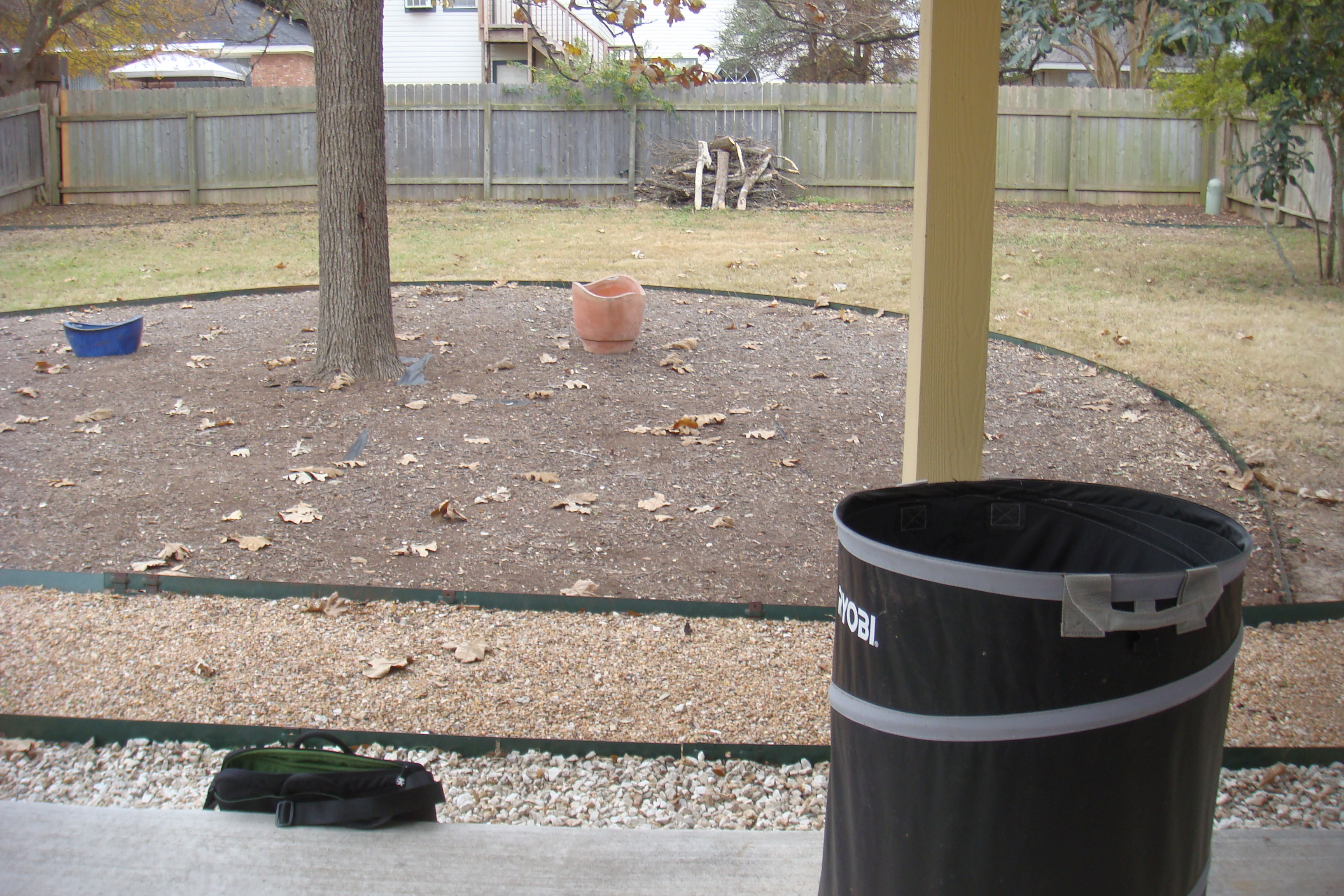
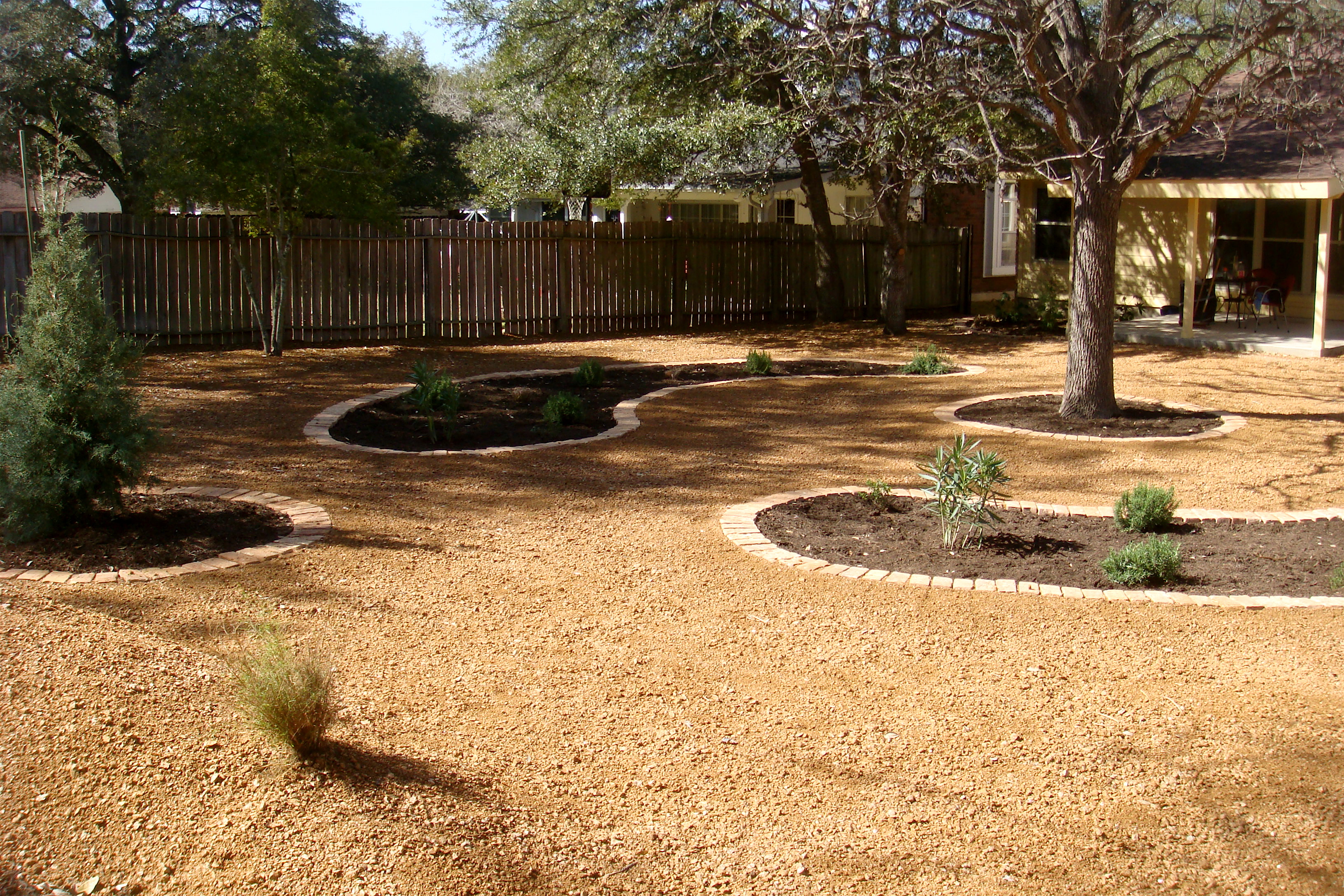
I will leave you with this front garden design that I am about to install for some very good friends of mine around the corner from the Patch in East Austin. The client wanted some ‘loose’ privacy from the street and to retain their existing pathways and eliminate their weedy grass, (I seem to be doing a lot of this of late). It is a low cost design scheme with the minimal of plants that packs a punch in all the appropriate places.
 Before picture.
My goal here was to create loose privacy looking from the house to the street and to open up the entryway into the property to make it more inviting. The small existing pathway was visually widened by using gray shingle which complements the color scheme of the house, breaking up the linear pathways. Boulders were also chosen for their complimentary gray color with softening plant selections to integrate the gate and hardscaping. If you are thinking you have seen that gate before you are of course correct…it is the same as the one in the Patch, a prop from the “Spy Kids” movie. These are the great folks that gave me it!
Oh just one last story:
 A recent visit to the now famous sarcophagus restaurant yielded another priceless moment that almost rivaled the infamous “nose boulder” incident of last year http://www.eastsidepatch.com/2010/07/12865/ .
On entering the establishment, our usual family chair shuffle ensued with the accompanying condiment knocking over glitches, the shuffle moving each of us from one chair to another until we were all comfortable psychologically. All was relatively normal, a waitress came, took our order, our youngest played “Plants Vs Zombies” to keep him quiet before the food arrived, I looked on enviously…etc. Suddenly my eldest decided that she needed to go to the rest room, she left the table and came back a while later with some interesting information that would normally not be shared in a dining environment, but she is six.
“Did you wash your hands?”
“Of Course”
“Everything Okay?”
“Muhhuh”…Oh, and there was a paper thingy on the door, it spelled…o..u..t..o..f..
“Order?”
Yes! (Accompanied with a how did you know? Look)
Is that the one you used?
“Yes, but the handle was broken and it was full of water, it was DISGUSTING!”
I really hope nobody from that restaurant ever finds this blog.
Stay Tuned for:
“The Evil Weevil”
All material © 2011 for eastsidepatch. Unauthorized
intergalactic reproduction strictly prohibited, and
punishable by late (and extremely unpleasant)
14th century planet Earth techniques.