Amaranth

"Purple Harvest"


What could this be? “This image perplexes me”
Bruised fingers perhaps?
A rare exotic disease?
No, today was my purple harvest day and it was a bumper year,
and this was the state of my fingers after picking the illustrious bounty.


I shook one of my amaranth seed heads and a few plack pearls fell into my hand…it was picking time.


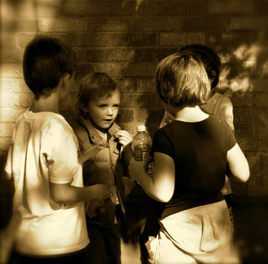
I went down to Home Depot and picked up these two day laborers to
help me for a very reasonable price. Half an hour later we had a couple
of vessels filled with picked seed heads…now for the fun part…not.


Amaranth seeds are plentiful, each seed head has hundreds of tiny seeds buried deep in tiny little husks. On initial inspection it seems like you would be able to simply turn the seed head up side down and shake? Oh no, that would be way too easy. I have developed a unique shelling technique, but it is way to nerdy to get into detail here. This extracting process is labor and time intensive, it took myself (and my day laborers) a full morning to shell these containers.


This was how the tray looked after extracting the seed, a lot of color and a lot of empty husks.


Here is a close up of the shiny seeds looking remarkably like Hematite. I also developed an interesting technique for separating the empty husks from the seeds, this resembled a “panning” movement of the tray. I felt like a gold prospector. This scene on my porch must have looked totally mad, note to self:
I must invest in one of those old prospector hats for next year’s harvest, that, and a rock tumbler.


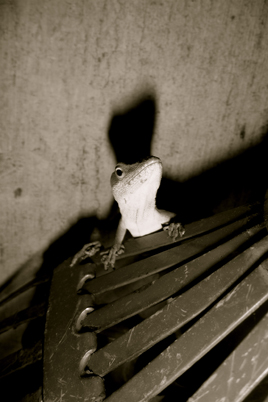
“I’ve got my good eye on you ESP, you little whippersnapper”.

Here are the husks separated into a bucket


After taking a brief break, I walked back outside to catch one of the day laborers acting like Groucho Marx, messing around in the discarded seed head bucket. I had to let them go…ridiculous!

And the end result of all this labor?

A full bag of amaranth seeds, I would have sown these today if it wasn’t for all the wind we have been having.

Moving along…

The Post Oak tree is starting to show it’s winter structure again, it’s final leaves are falling fast. Still some decent color in the yard considering it is mid-december.

Talking of color:

My first cayenne peppers are now turning brilliant red.

“Sharing the stillness of the unimpassioned rock, they share also its endurance; and while the winds of departing spring scatter the white hawthorn blossoms like drifted snow, and summer dims on the parched meadow the dripping of its cowslip-gold — far above, among the mountains the silver lichen-spots rest, star-like, on the stone.
— John Ruskin

I’m a “Lichen” these miniature plants(Oh Dear) , I think that old prospector must have accidentally dropped some gold dust out of his pan on this one.


Looking like a hubble telescope topographical image, the colors on this lichen on one of my moss boulders is incredible. Lichens are important partners in nature’s ecosystem. They are an early colonizer that reestablishes life on rock and barren disturbed sites. Lichens play an important role in soil formation over much of the earth. As lichens colonize rocks, they trap dust, silt, and water. I believe this type of lichen is a Crustose lichen. I can’t believe I am identifying lichen!


Oh and I forgot to mention they have great names too, (snort) (adjusts glasses):
Powder-tipped antler lichen; black-eye lichen; bloody heart lichen; cowpie lichen; elf-ear lichen; five-o-clock shadow lichen; hairball lichen; naked kidney lichen; tattered rag lichen; and blackened toadskin lichen; rock pimples, earth wrinkles, angel’s hair, freckle pelts, fog fingers, dragon’s funnel, tar-jelly, and old man’s beard, and fuddy dunster to name but a few!
Okay so I made the last one up.
Phew!


I have some bad news, my Donkey’s Ear has become infected!  Poor thing.  The good news is something has started to happen on the flowering front, though it is not what I was anticipating at all. I was expecting the blooms to pop open more like flowers instead of this slow alienesque emergence. This plant has done so many unusual things this year…


…from its unusual martian looking self-propagation technique, to the more recent hoisting up of this fine burgundy candelabra (right).


My Dwarf Miscanthus is now over half way through its transition from green to painted streaks of purple and brown. Ornamental grasses are a mainstay in my yard, they keep a winter garden looking full when most things have died back.

Other things witnessed this week:


Wizened yucca seed pods.


Pink Salvia fangs…the final flower of the year.


An agave spike pulling his spikey coat tightly around him in anticipation of colder weather to come.


And a really disturbing picture to end!
Ten points for guessing what this chap has landed on?


Stay Tuned For:
“Bah HumBugs”

All material © 2008 for east_side_patch. Unauthorized reproduction prohibited.


Ok, not really a Nutria but a rather
large rat!


I tried and tried to catch Ratatouille in a picture, but either I would freak out, stumbling and knocking things off my shed shelves, or he would,  bolting up through this grate! I did manage to catch the end of his tail though . . . Ewww!  I considered grabbing the tail with a glove on – then I recounted reading about all those rabies injections into the stomach some years ago in a National Geographic magazine – mmm, perhaps not such a good idea.

I hate to whack the little chap, but I have to. He is slowly consuming my shed and filling it up floor to ceiling with crap. . . . .George Foreman Grills, Swiffers, BowFlexes, Putting aids, self-sharpening sushi knives, Cialis tablets etc, etc  . . . no seriously,  he is filling it with. . .  just crap.


more ewww.

Like dealing with Bermuda grass, I do not mess around here, when my 3 year old says “Daddy, is that a wiggily wrat,” my hand twitches immediately for the green poison sticks strategically positioned on the top shelf with my other instruments and harbingers of death: hornet spray, round-up, man-traps etc etc. Sad though it may be, this is to be Ratatouille’s fate – no culinary education for him I am afraid. I am sure he will give me the pleasure of meeting him one last time, floating like Millais “Ophelia”  in one of my ponds, – his brother did.


I hate using poison, and like the previous “Round-Up” tale, I have tried different “more humane” approaches in the past. My expensive, “reusable” electrical rat exterminator touted a “fast and humane” death for the rodent, – “simply tip up the cage and the electrocuted rodent will just fall into the trash can”. . . . mmm, well not from my electric chamber it didn’t.  I remember going in there with an old metal camping spatula, scraping away until I gagged and ended up throwing the whole thing into the trash. Now I want to change the subject. . . . . . . . . .to. .


this “Brundell Fly”.  It was enormous and spiky, it just sat there, someone please tell me it wasn’t created in a pod with some of Jeff Goldblum’s DNA. I got this Terradactyl off the inside of my front door and onto a piece of paper, I released him outside where he cast a shadow as he flew off with obligatory “swooshing” noise. (The photo does not do scale justice to this beastie). What is this?


Now I really want to change the subject!


Cat-tails get their name from their brown cylindrical flower spikes which can be more than 1 ft. long. They are among the most common of all aquatic and wetland plants anywhere. Cattails grow in dense stands. Like most colonial plants, they arise from rhizomes—thick stems, growing in the mud, usually connecting all the stalks. A cattail stand is like a branching shrub lying on its side under the mud, with only the leaves and blossoms visible.Once fertilized, the female flowers transform into the familiar brown “cigars”—also called candlewicks, punks, duck-tails, and marsh beetles—consisting of thousands of tiny developing seeds. They whiten over the winter after the leaves die, and the cycle repeats. I love this plant – and you cannot kill it! – be sure to keep it in a container though. Looks great in a strong breeze.

Talking of breezes . .


Here is my Cyprus tree that was in a container in my pond – the recent winds blew it over and split the pot – just great!. I am thinking of planting it in the ground – totally the wrong time of year I know, but I think I have to chance it. I need to extract it from the pond immediately – hopefully no fish were under it when it fell!.


Must keep swimming, swimming swimming.
“Ahhh! – the great tree, it falls”


Other things worth a second glance:


Amaranth leaf – all colors of the spectrum.

Beach Vitex in bloom. This plant is causing all sorts of problems
in Carolina right now. As the name implies it grows in the dunes,
crowding out the more naturalised Sea Oats – considered very
invasive in coastal environments. I just bought this, did a little
research, now thinking I need a “Sand Dune” to plant it on – does
it ever end?


Santolina is a
genus of flowering plants in the family Asteraceae, native to the Mediterranean region.
Gray Santolina, has many uses in residential landscapes. Also known as Gray Lavender Cotton, this plant is actually a small shrub, but it acts like a ground-cover and smells like an herb. It offers attractive foliage, small flowers, texture and durability. Properly located in the yard, it has no serious pest or disease problems.
A dwarf form of gray santolina called `nana’ grows to about 1 foot. It is much slower growing, this is what I have – I planted 5 more this spring to offer a wave of silver to my decomposed granite pathway. These are great drought tolerant plants for central Texas – the silver feels frosty even in August! think Mexican Bush Sage in the background, Santolina up front.


View from inside the house looking out to the back yard in what feels like a way too early Texas Summer.

My Post Oak has been a trouper through all the recent high winds, hail and more winds.


Henry Fothergill Chorley-from “The Brave Old Oak”

A song to the oak, the brave old oak,
Who hath ruled in the greenwood long!…

Then here’s to the oak, the brave old oak,
Who stands in his pride alone!
And still flourish he, a hale green tree,
When a hundred years are gone!


Stay Tuned for:

“Texas Bugs are from Outer Space”


All material © 2009 for eastsidepatch. Unauthorized
intergalactic reproduction strictly prohibited, and
punishable by  late  (and extremely unpleasant)
14th century planet Earth techniques.


1 2 24 25 26 27