What do you see in the clouds? Is that a mosquito he is trying to swat?
From what seemed like endless Texas blue skies to…

…sustained deep soakings, a few new rivers have materialized in the ESPatch this week, courtesy of Tropical Storm Alex.


I waded to my shed and launched an old punt boat that I had picked up in Cambridge some years back. It was a lot of fun punting around my decomposed granite pathways, the activity also gave me a whole new and unique perspective on my entire garden, in terms of flow and continuity… Oh dear.
Yes it felt like I was in Venice. I ran into the house for a striped tee-shirt, then down to my corner store to purchase a Cornetto ice cream…I had to make the most of this rare event after all…

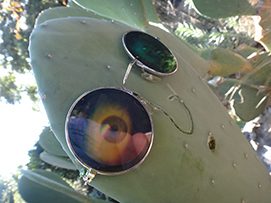
As with any summer rains in Texas, they happen about as regularly as the appearance of the genie in this “lamp”.
 “I grant you three wishes”.
Mmm, let me see, rain, rain and more rain?
 Be careful what you wish for!
 I have quite a few of these dead giant timber culms that have turned jet black as a result of last winters prolonged freezes, their colors now reflecting the colors on the background container…What are the chances of that!

…they look very Balinese in the rains!

The Hoja Santa immediately responded to the unexpected influx of moisture. I think they grew almost a foot overnight!
Great shadow casting foliage for the shade…this is my “hosta” of Texas, (well, as you all know, everything IS bigger in Texas.)

Oh yes, I had a great time picking up the hobbits at the bottom of the steps and taking them on a leisurely punt around the garden paths…“Just a’ one Cornetto…give it too me, delicious ice cream from etc, etc”.

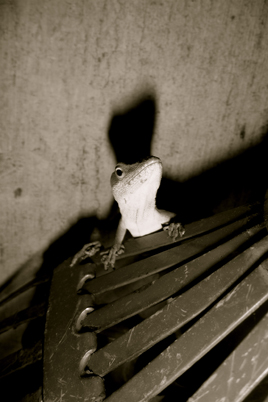
…as we floated around we witnessed a brand new Patch anole, an anole with pronounced spinal ridging, this is a Brown Anole, or at least I believe it is.
Anolis sagret, Norops sagrei
Some male brown anoles like this one are able to extend a crest of skin that runs down the length of their body along their spine. All of these techniques are thought to make the male anole look larger and more intimidating to any invaders he may come across, like me. People often refer to anoles as “chameleons,” though they are actually quite different than chameleons. True chameleons, which belong to the family Chamaeleonidae, are native to Africa, Madagascar, and India and have curly prehensile tails and independently movable eyes. Like chameleons though, anoles are able to change their body color in response to mood or temperature. This anole had great Avatar coloration and spotting on it’s sides and legs.

We rounded another corner to see the first Moi Grande Hibiscus bloom getting ready to pop…

…a little further and we encountered a soft leaf yucca beaded with moisture, it looked like an advertisement for Turtle wax! And still the rains came down.
 After a few dark days, (a welcome break from the Day Star), the rains subsided, and the sun is once again intermittently coming out, it is a sauna out there! With the sun came a burst of life, everyone was hungry after the three day hunker from the rains…an immediate feeding and growth frenzy ensued…creature hunting creature, bugs eating bugs, creatures hunting bugs…it was all going on, and it was all going on everywhere.

Climbing the ladder for success, this green anole had its free-fall dive all planned out to capture this swallowtail butterfly.

Butterflies have been all over my pride of Barbados recently, this is a Striated Queen butterfly

“Danaus gilippus strigosus”!
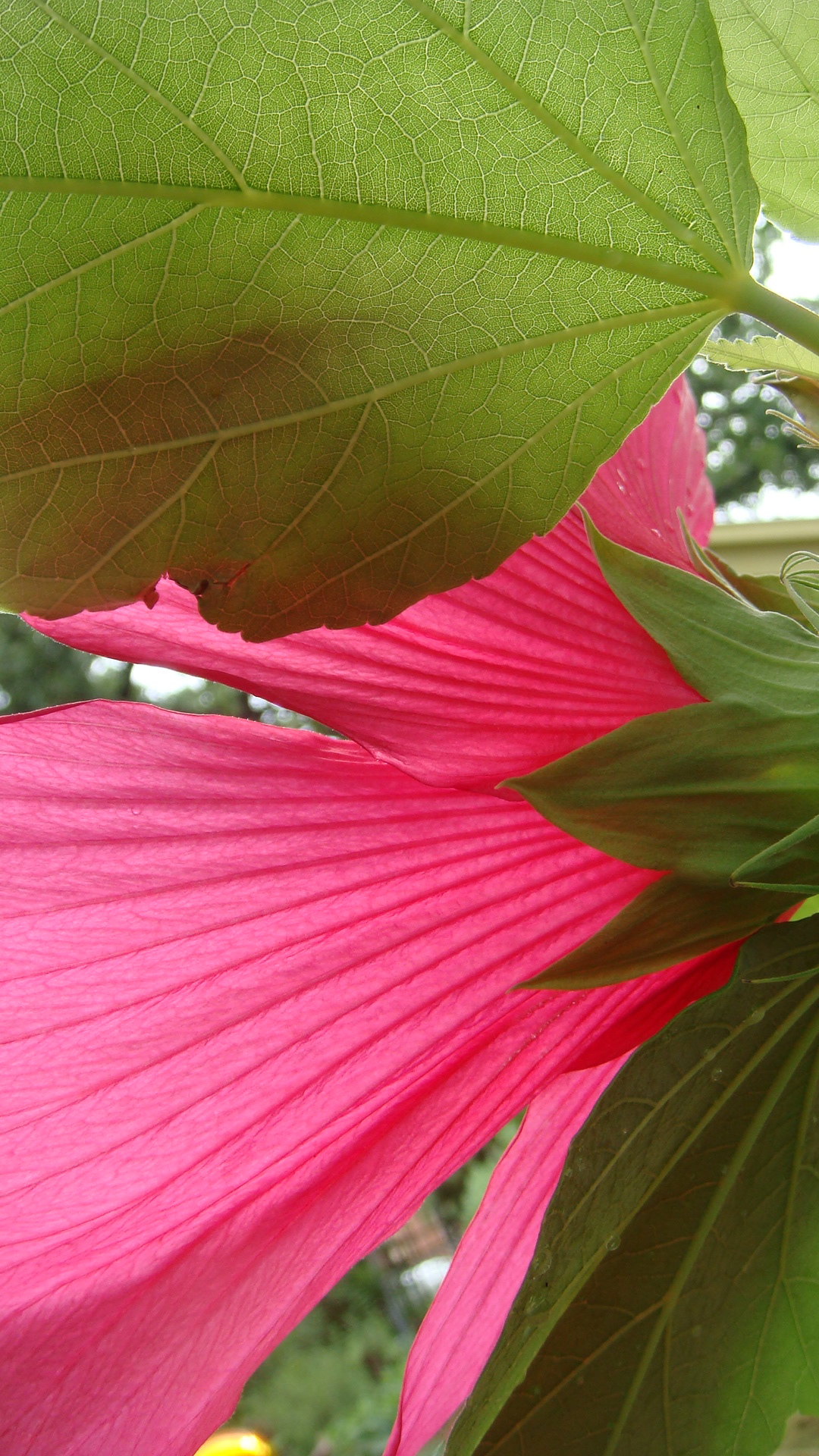
Along with the sunlight came the first Moi Grande hibiscus bloom…

…and it was a beauty! I have no idea how she seems to always match the bloom colors, but she does!
Along with these butterflies and blooms came some new moths:

This velvet curtain is know as a Southern Pink/crimson Moth
Pyrausta inornatalis
The tiny Southern Crimson Moth’s larval food is salvia, this one matched the purple on the amaranth foliage perfectly.

another bright character, a Crambidae or
crambid snout moth
One of the many visitors that my Agastache has brought in.
And finally…

A Hawkmoth perhaps? This was incredibly camouflaged nestled deep inside a rosemary.

“What big eyes you have”.
And yet another first in the ESP…
 …a female Eastern Pondhawk.
Erythemis simplicicollis
Pondhawks are aptly named being fearsome predators, they catch butterflies and many other kinds of insects, and can often be found devouring them. The male of the species is blue and the female green.
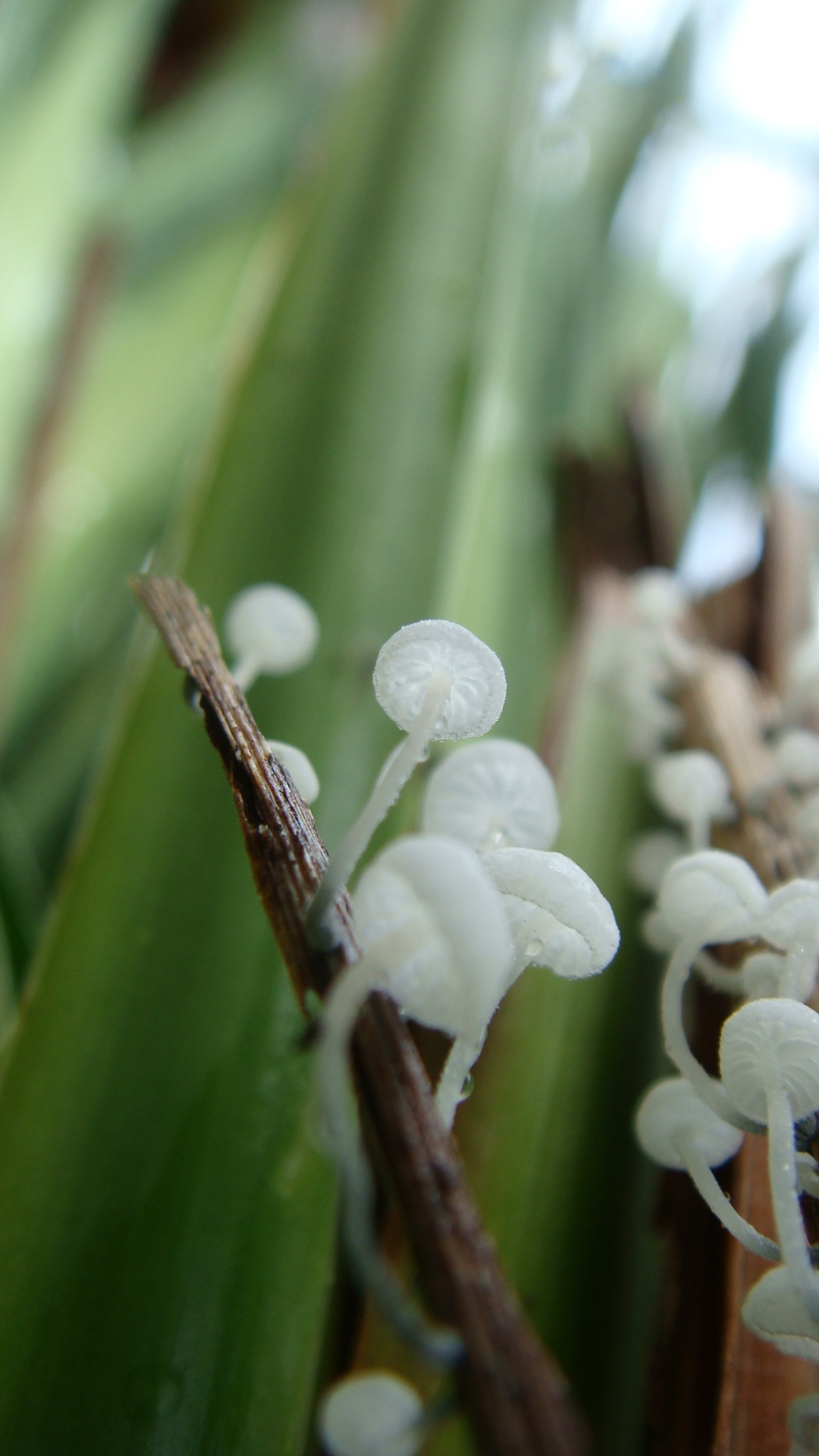
 The rains also created hundreds of these tiny translucent spores at the base of this iris. It was a whole other ethereal world down in there! A world where the mosquitoes fly in formations and can strip flesh from bone in seconds.
 I managed to get these two shots in of these minute toadstools before running and screaming for the cover of the house, slapping myself as I ran.
 Finally…

Rain in Texas at this time of year makes everyone feel like dancing.
 Inspirational ‘moment of zen’ design of the week: Technology touches nature:
Description from Tomomi Sayuda:
Oshibe means stamen in Japanese which is where my inspiration came from. But Oshibe is also inspired by other optimistic elements of life: eggs, plants, light and the moon. This is a playful interactive lighting sculpture. When you put eggs on stamens, Oshibe plays tender ambient sounds and lights up. Each stamen plays a different sound. The sounds change according to the number and position of the eggs.
I am hearing Oshibe all around the Patch right now, I am! Especially at dusk, in and around my pampas grasses.

“This confirms my hypothesis that the Naboo, although small in stature are huge in sound manipulation as a sophisticated form of communication between adjacent tribes”.
 Stay Tuned for:
“Garden Coffins”
All material © 2010 for eastsidepatch. Unauthorized
intergalactic reproduction strictly prohibited, and
punishable by late (and extremely unpleasant)
14th century planet Earth techniques.