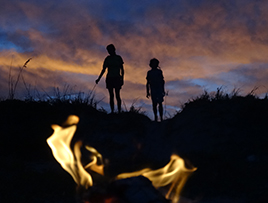
I wish I was, with the onset of our hot weather comes thoughts of coastal breezes…knotted handkerchiefs (have to be British)….

beaches, jerk chicken, huge fires, hammocks..zzz…ZAP!..My thoughts were quickly interrupted as a particularly aggressive mosquito took a pound of flesh from the inside of my ankle, always in the same place…the predominant capillary, no, I was most definitely still in central Texas. On noticing that both ankles were covered in the blood sucking needles, I immediately went into a slapping frenzy… causing my poorly tied, (yet satisfyingly comforting), iced “urban” turban to fall onto the ground. I then began turning around, apparently to face my enemy?
There was no real reason to turn around at all, it was as though there might have been a huge mosquito sneaking up on me from behind, I just had to make sure… arrgh the scratching…the spittle, the itch, the scratching, the…

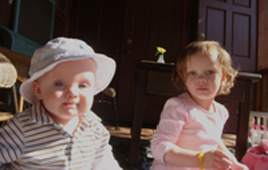
“What IS he doing big sis? Look….whats h’ doin’?”
“It appears he is performing some type of tribal dance, now where were we, ah yes, I was winning at Quidditch…”

Back on the sanctity of higher ground and with our industrial fan aimed directly at our ankles, we decided to engage in an activity that can keep my elder hobbit quiet for at least an hour and a half (pretty impressive)…shelling stuff, she loves it! This time the shelling was to extract a pile of bluebonnet seeds that were kindly given to us by Rock Rose http://wwwrockrose.blogspot.com/ at the last GG get-together and plant swap. Wow!…Did these small seedpods keep us busy. It took an awful lot of shelling to even cover the bottom of the container we were putting them in. We continued to shell and shell, then we started to sing and shell…“She’ll be shelling all the seedpods when she comes, she’ll be shelling all the seedp”…etc,etc…What the shell?
 Then we entered a quiet period which had a sort of resigned “this is going to take us hours” undertone…but we persevered…we prevailed, and with the lash of the whip and quite a lot of moaning toward the end (mostly from me) we had emptied every single seed into the pot. I had even worn a groove in my thumbnail!
 My youngest kept running his fingers through the seeds in a sinister Fagin-like fashion, needless to say, I was keeping my eye closely on him and his fiendish grin. If these seeds were prematurely ejected out of their container, after all we had been through, they might not be the only thing to go flying off the back deck! (A whole new ESP interpretation of the game : Quidditch)!

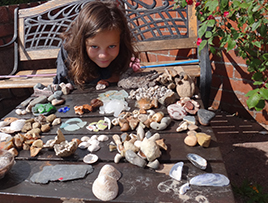
The seeds look like pebbles on Brighton beach!

‘Go and get me a tub of pickled whelks George, be a love”!

Now if these chaps washed up onto the beach, there would be total mayhem!


The total count of my dragonfly larvae is now up to six in my small stock tank, all eerily bobbing around like low-budget special effects props.
Moving quickly on…

My Vitex tree has formed this dark tunnel, leading all the way back to my really attractive metal chain-link fence…(we used to have two old springer spaniels roaming around the Patch).

it adds just enough privacy from our front porch swing-seat to the sidewalk.

My hell-strip opuntia, yucca and sago, warming up to our now summer like temperatures.

As the day star warms up in Texas, artemesia and purple verbena help to cool things back down.

The day star has its uses though. My tomatoes are doing well this year (famous last words).
 Also in the tomato family, though you most certainly want to steer clear away from eating any part of this one…


Datura getting ready to pop open up one of its lethal white linen napkins…don’t be wiping your gravy face with this, unless you want to end up acting ‘a wee bit strange’ like the platoon members at the end of this post!

Datura wrightii
Do not be fooled by the waxy icing-sugary beauty of this plant…Datura belongs to the classic “witches’ weeds,” along with deadly nightshade, henbane and mandrake. Most parts of these plants contain toxic hallucinogens, Datura has a long history of use for causing delirious states and death. It was well known as an essential ingredient of love potions and witches’ brews. The leaves,stem,root and fruits of datura contain a battery of tropane alkaloids, the most potent of which are atropine, hyoscyamine and scopolamine. One autonomic response of atropine is the dilation of pupils, once considered to be a beautiful and mysterious look in Italian women. The word Belladonna or “beautiful lady” came about because sap from the closely related belladonna plant (Atropa belladonna) was used as eye drops to dilate the pupils. Today, doctors rarely perform any type of eye surgery without using atropine, one of the poisons in deadly nightshade, to dilate the patient’s pupils.
The large, trumpet-shaped flowers on the plant are sometimes tinged with purple like this one, and resemble huge morning glory blooms. It is one of the largest and most striking of all native wildflowers.
Datura can also be used to induce hallucinations, the plant can induce auditory and visual hallucinations, however, the hallucinations are sometimes fatal due to panic that overcomes the person.
 Scopolamine in the plant takes away a person’s vision, (can’t be good). As the person panics and attempts to run to safety, the person cannot see and frequently becomes involved in an accident and ends up in the hospital, which surprisingly is not such a good place to end up for a datura ingester. Why is that you ask?
Well, scopolamine induces respiratory depression at hallucinogenic doses, and the combination of anesthesia (administered in the hospital) and Datura is usually fatal due to combined respiratory depression.
 Scopolamine was also one of the active principles in many of the “flying ointments” used by witches, sorcerers and fellow travelers of many countries and cultures from millennia ago ostensibly down to the late 19th century or even to the present day. Scopolamine and related tropanes contributed both to the flying sensations and hallucinations sought by users of these compounds.
 Datura has been a popular poison for suicide and murder. From 1950–1965, the State Chemical Laboratories in Agra, India investigated 2,778 deaths that were caused by ingesting Datura.
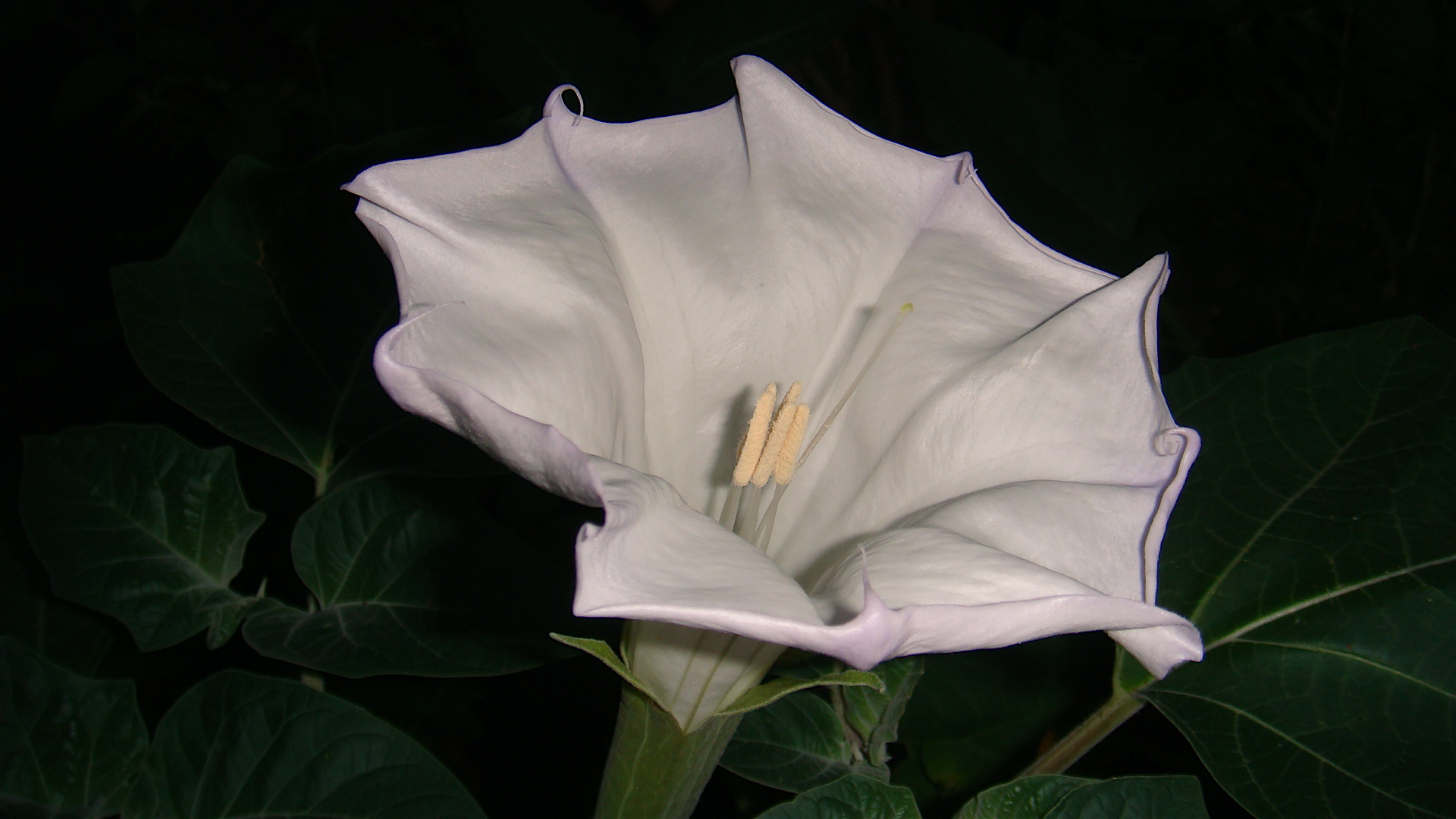 Common names for the plant include Thorn Apple (from the spiny fruit), Pricklyburr, Jimson Weed, Moonflower, Hell’s Bells, Devil’s Weed, Devil’s Cucumber, and Devil’s Trumpet.
 During mid and late summer the white, fragrant blossoms are frequently visited by large nocturnal hawk moths. They are sometimes called sphinx moths because the alarm posture of the larva resembles the Egyptian sphinx.

I will finish with this humorous eye-witness account of the effects of datura:
“The James-Town Weed (which resembles the Thorny Apple of Peru, and I take to be the plant so call’d) is supposed to be one of the greatest coolers in the world. This being an early plant, was gather’d very young for a boil’d salad, by some of the soldiers sent thither to quell the rebellion of Bacon (1676); and some of them ate plentifully of it, the effect of which was a very pleasant comedy, for they turned natural fools upon it for several days: one would blow up a feather in the air; another would dart straws at it with much fury; and another, stark naked, was sitting up in a corner like a monkey, grinning and making mows (grimaces) at them; a fourth would fondly kiss and paw his companions, and sneer in their faces with a countenance more antic than any in a Dutch droll.
In this frantic condition they were confined, lest they should, in their folly, destroy themselves — though it was observed that all their actions were full of innocence and good nature. Indeed, they were not very cleanly; for they would have wallowed in their own excrements, if they had not been prevented. A thousand such simple tricks they played, and after eleven days returned themselves again, not remembering anything that had passed”. – The History and Present State of Virginia, 1705
Finally:

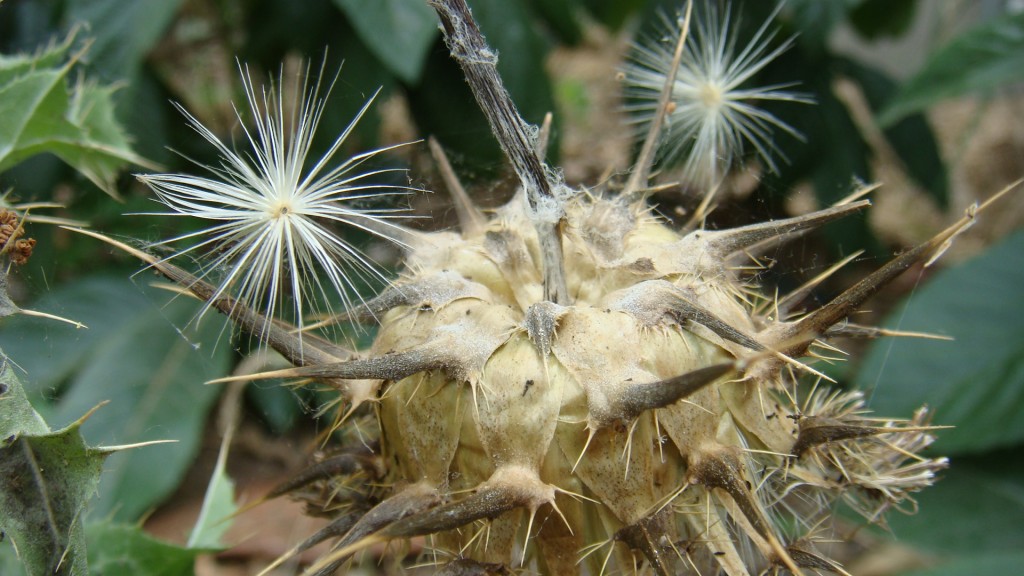
My milk weed thistle is finally going to seed, and quite impressive they are.
 There are a bunch of these seeds around the base of the plant, waiting for a gust of wind to send them on their next journey.
 “Oh come on”!


Our Patch cabin has been full of pictures the past week that are now on display in Crimson Hair and Skin: 806 West Ave.
If you are downtown Austin please feel free to pop in and take a look.
Image of the week:

A typical night collecting moths at Pena Blanca, Santa Cruz County Arizona (18 July 2000). Photo by Howard Byrne.
I must try this in the Patch!
Stay Tuned for:
“Carry on up the Nile”
All material © 2010 for eastsidepatch. Unauthorized
intergalactic reproduction strictly prohibited, and
punishable by late (and extremely unpleasant)
14th century planet Earth techniques.
DISCLAIMER: Some of the plants discussed in this article contain very poisonous alkaloids which can be lethal if ingested in sufficient quantities. Native people, witches, and all manner of little goblin folk developed time-tested religious rituals using these plants that were passed down through countless generations.