Big voodoo no-no’s:
- If you lay a broom across the doorway at night, a witch can’t come in and hurt you.
- Having a woman visit you the first thing on Monday mornings is bad luck for the rest of the week.
- Don’t borrow or lend salt because that is bad luck.
- If you sweep trash out of the house after dark you will sweep away your luck.
- Don’t shake a tablecloth outside after dark or someone in your family will die.
- To stop a Voodoo spell being placed upon you, acquire some bristles from a pig cooked at a Voodoo ritual, tie the bristles into a bundle and carry them on you at all times.
- If a woman sprinkles some salt from her house to yours, it will give you bad luck until you clean the salt away and put pepper over your door sill.
- If a woman wants her husband to stay away from other woman, she can do so by putting a little of her blood in his coffee, and he will never quit her.
- If a woman’s husband dies and you don’t want her to marry again, cut all of her husband’s shoes all in little pieces, just as soon as he is dead, and she will never marry again.
- You can give someone a headache by taking and turning their picture upside down.
- You can harm a person in whatever way you want to by getting a lock of his hair and burning some and throwing the rest away.
- You can make a farmer’s well go dry by putting some soda in the well for one week, each day; then drawing a bucket of water out and throwing it in the river to make the well go dry.
- Never wear the same iced turban more then two consecutive summer days or you will certainly get involved in an automobile accident.

In Voodoo spells, the “cure-all” was very popular among followers. The cure-all was a Voodoo spell that could solve all problems. There were different recipes in Voodoo spells for the cure-all; one recipe was to mix…
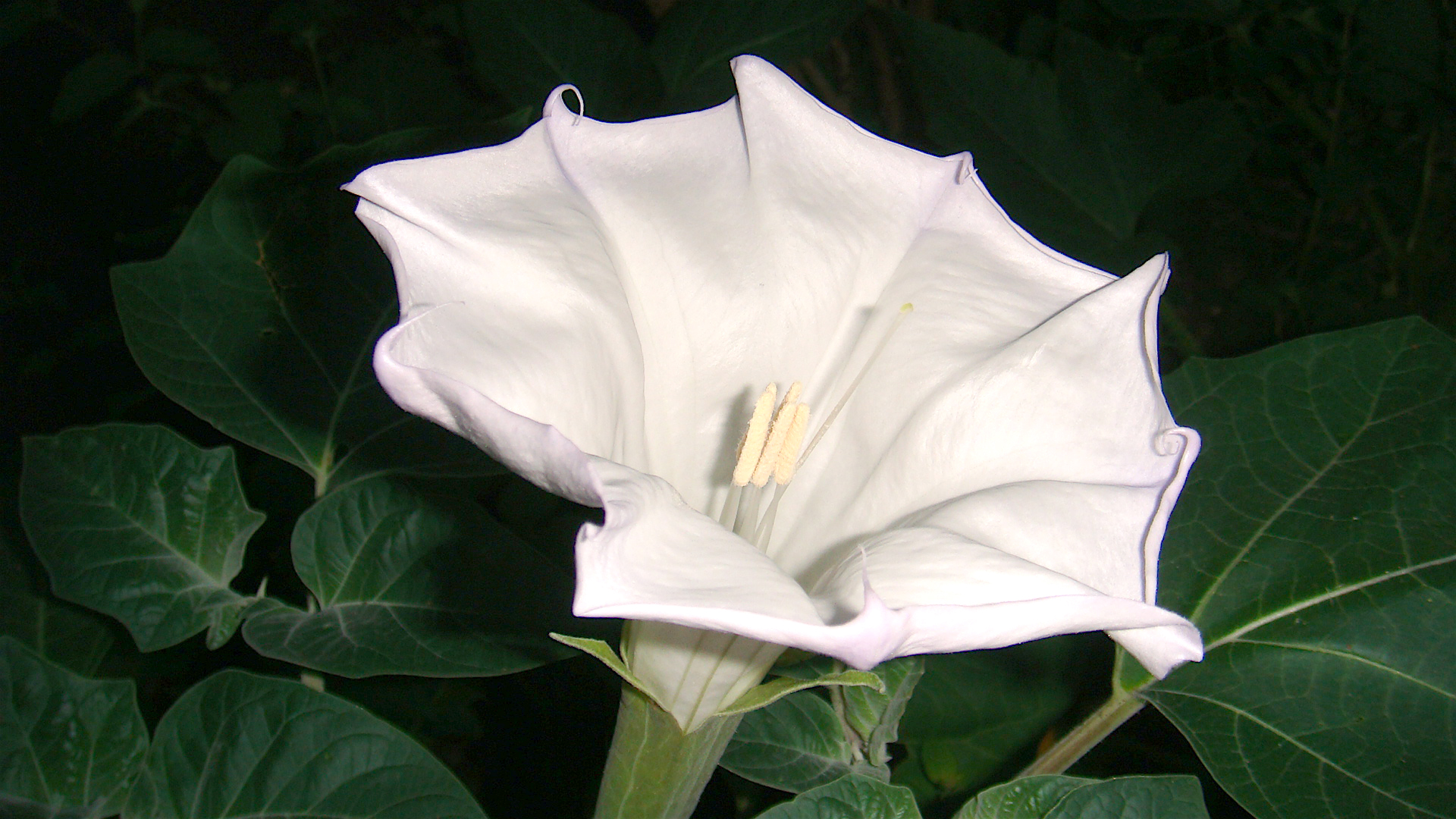 naturally, with sulfur and honey. The mixture was placed in a glass, which then had to be rubbed against a…
 and then the mixture was required to be sipped slowly…I would imagine so!

This little spider looked like it was wearing a serious voodoo mask. These tiny spiders have large eyes considering the size of their bodies and are very active hunters, their excellent eyesight is used for stalking prey. Before pouncing on the victim, jumping spiders attach a line of silk from which they can dangle should they fall.
 Here is a diagram depicting exactly how these little creatures have evolved to their all-encompassing vision:

Not much gets by this chap.
 Like a drone on an alien moonscape, very martian.
Their well-developed internal hydraulic system extends their limbs by altering the pressure of body fluid within them. This enables the spiders to jump without having large muscular legs like a grasshopper. Most jumping spiders can jump several times the length of their body.
This photo shoot was going well until I made a sudden lumbering movement due to the circulation being cut off in my left leg trying to get some decent shots.
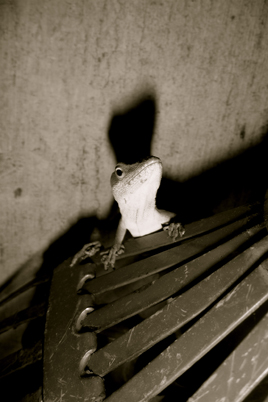
 At which point it turned and decided to jump directly onto the lens of my camera, I got this shot in as a panicked reaction, then it appeared over the top edge of the camera right next to my face,,,and silhouetted against the sun, it looked 10 x its size… a customary conniption naturally ensued, complete with camera-drop, which was actually more of a throw then a drop. Jumping spiders will turn to examine objects like my camera with the more accurate anterior median eyes, with which they identify the interloper as prey, natural phenomenon, possible threat, or potential mate. This leads them to behave in a manner suggestive of curiosity, since they are highly visual creatures that use their anterior median eyes to assess objects of interest, they must, by necessity, bring anything of interest into their visual field, including my face.

“Lettin’ a tiny spider get you all r r r rilled up ESP, you need to chill in the Patch and get me some of dat Jimson weed”.
How about you tryin’ some of dat toothpaaaste?
Remember my puzzling imploding and mealy tomatillos?

This was my harvest before I took great delight in pulling out the shriveled plants that have annoyed me for ages.
 Zanthan Gardens http://www.zanthan.com/gardens/gardenlog/ suggested that I may be picking them too late. I took her advice and even though the fruit was not at all close to filling their husks I picked a few and cut them open…they were perfect, small but good.
 This batch did go on to make a great spicy salsa.

My celosia is creating a shimmering burgundy and white hue in the front of the Patch, many of these plants are listing after the recent winds. I will put up with them a little while longer.

Fire and ice.
With temperatures ducking down low at night the first frost damage is visible, yes folks it is time once again for the traditional hanging of the green hoja santa hankerchiefs…

This is the first plant in the Patch to visually inform me that it got cold the night before. Some other plants appear to relish the cooler night temperatures…

more artemesia and
 ghost plant always seem to have a spring in their roots when temperatures dip.
 Fatsia japonic getting ready to bloom, surprisingly there is little fly activity so far this year. These blooms are usually completely covered in flies even at this stage.

“Hey, I have been busy dealing with my loosening fingernails”!
Err…Brrrr, Jeff!

The cactus fruit on this opuntia has obviously not yet been discovered by the Naboo, it is the traditional drum preference of the tribe.

Bluebonnets on the rise.
Finally:
A visit to Inner Space Cavern…

We went down a dark tunnel, some small knuckles turned white, and little faces got very serious as the light dimmed.

Almost immediately we were in another dimension. It is amazing to think dreary I35 was right above us, if you listen carefully you can hear the 18 wheelers very quietly above, two very different worlds so close together.

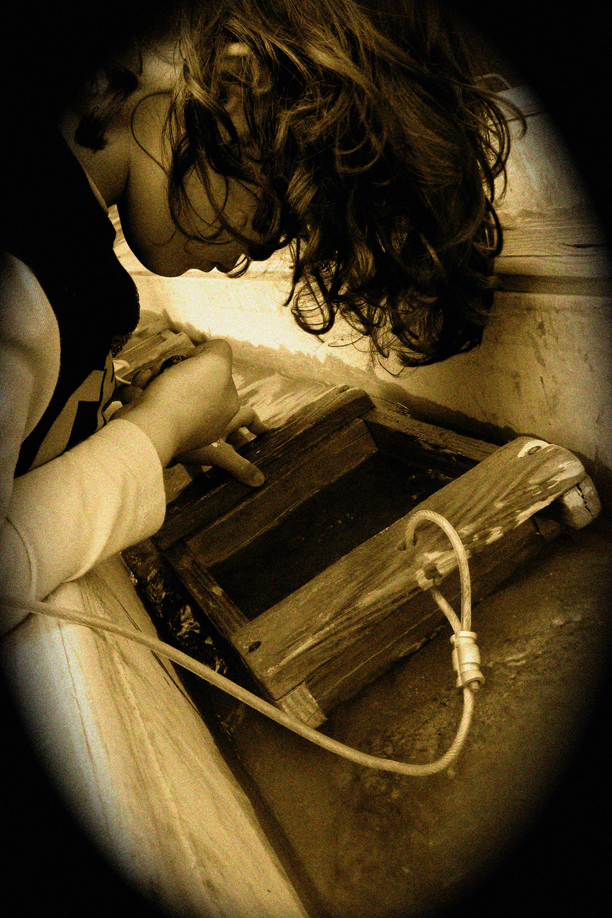
The best part of the day was some good old-fashioned panning for gold:


It is time, emotionally prepare yourselves:
Oh yes, the awful moment has finally caught up with us I am afraid…I can barely bring myself to embed it…b…bu…but, well I am afraid it just has to be done – this is a voodoo post after all, it would, COULD not be completed without this “dodgy moment” from a rock legend (edited for you and me both garner) :-)
Inspirational Images of the week:
I am by no means a great proponent of having a large expanse of lawn, but if you do have a propensity for the dark St Augustine side, this intriguing product just may be somewhere in your future garden shed…

From the designer:
“The grass that is cut is considered to be the useless remainder while cutting grass. The product “Muwi” benefits the third party in numerous ways by the act of cutting grass in order to create fair grass. “Muwi” first acknowledges the entire size of the land and automatically cuts the grass. The cut grass, which is created upon cutting the grass, is stored inside. As the cut grass begins to accumulate inside the machine, “Muwi” constructs and compresses the cut grass into two types of blocks. Then this cut grass is no longer a remainder that needs extra efforts to be thrown out or cleaned up. It rather becomes balls for children to play with or a chair to sit on or any other opportunity. These newly created blocks give care without even realizing it. Furthermore, after these blocks are used and left behind, they naturally go back to its neighboring nature in time. It is circulated again through nature and gives nature and us the natural consideration”.


Discs can be used for compost.
Designer: Yuli Sung
Stay Tuned for:
“The Golden Ticket”
All material © 2010 for eastsidepatch. Unauthorized
intergalactic reproduction strictly prohibited, and
punishable by late (and extremely unpleasant)
14th century planet Earth techniques.