flowers

“Wings”

No…

butterfly wings. 

DSC09518

Some fine art courtesy of a dead Gulf Fritillary I uncovered.

I was happy to break up the monotony of the dreaded leaf pick up to take these pictures. 

DSC09516

If it hadn’t disintegrated a few minutes later, I may have still been taking them, anything is better than the dreaded leaf pick up.

DSC09524

Still a few more to go, but the Patch is almost back to its respectable self. A few more sunken limestone boulders to replace the small rocks on the right and I will sleep soundly once again…

Although…

DSC09494 woman-screaming-261010-large_newScreaming_Woman

There are always a few unmentionables to be found lurking inside the Patch, like this pinecone cactus which appears to have had it’s extremities nipped by the cold, and nobody wants that.


…just one more.

psycho-screaming-woman

Back to butterfly wings for a moment.

DSC09614

This is a Pipevine Swallowtail, freshly emerged.

Battus philanor


It has a pixelated,

amatrix1

Matrix coloration to it.

xlarge

“You can see the swallowtail, you can feel the air from its beating wings, but it too is only part of the construct. Ask yourself, did the butterfly fly to you or did yo…”

Okay, we get it Morpheus.

“You only think that you get it ESP, but your brain is really a prison, a trap, a..”

OKAY Morpheus!

colors eyes

My daughter rescued it from our rain gauge and made a new friend, well until she almost stepped on it.

DSC09623

I took this picture of the larva a few years back.

Pipevine Swallowtail

The males, like this one, have blue iridescent upper surfaces on their hind wings.

DSC09620

This crimson passion vine that is steadily engulfing my front porch was probably a host to this caterpillar.

DSC09484

I have also noticed some other bugs sucking juices from the plant.

DSC09490

These Largus bugs are showing up in large numbers in the Patch this year but they generally cause little injury to plants upon which they feed.

One final insect straight out of a science fiction movie is this soapberry bug:

DSC09329

Jadera haematoloma


Also known for obvious reasons as the red-shouldered bug and also the goldenrain-tree bug, I found this one in a hollow of a struggling redbud tree though, like Largus bugs, it does not cause any significant damage to plants (and trees) even with its somewhat menacing eyes.  

eyes red eyes selective coloring 1680x1050 wallpaper_www.wall321.com_31
On this rather melancholic note I will leave you to ponder the following when you next fill up your bird feeder:
 
Human Ash Bird Feeder by Nadine Jarvis:
death_feeder

While some designers aim to shock just for the sake of it, others are sensitively attempting to solve problems related to issues that were once considered taboo. “Death is taboo – in fact it is one of the last taboos in Western society,” says Nadine Jarvis, one of many designers exploring issues such as cremation and burial. “Death is something that everyone has to deal with, yet there aren’t many options for our treatment of the deceased, and certainly none are very challenging to our existing belief systems”

These bird feeders are made of bird food, beeswax and human ashes. As the birds peck away, the urn disintegrates, leaving behind a wooden perch inscribed with memorial details about the deceased. “The ash is mixed with the bird food, causing the bird to eat the person,” says Jarvis.

Designer: Nadine Jarvis

Stay Tuned for:

“Off the Beaten Track”


beatpath

All material © 2013 for eastsidepatch. Unauthorized
intergalactic reproduction strictly prohibited, and
punishable by late (and extremely unpleasant)
14th century planet Earth techniques.

Artemesia and copper canyon daisy,

Tagetes lemmonii


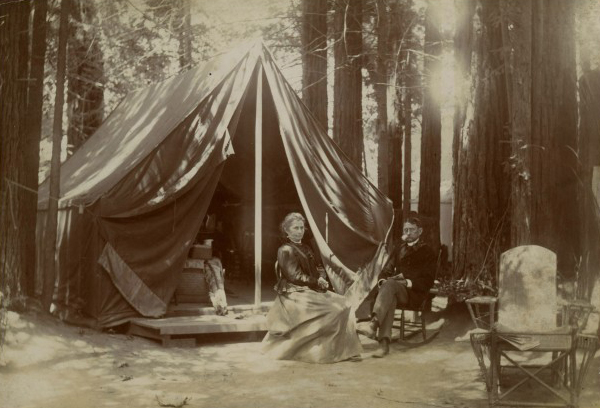
Sara and John Lemmon-camping on Mt Lemmon

John Gill Lemmon, a self-educated botanist, respectfully called the “professor” and his wife Sara collected Copper Canyon Daisy in southeastern Arizona sometime in the early 1880s. The descendants of these plants were then introduced into the nursery trade.

Sara and John met in 1876 at a lecture he gave in Santa Barbara, California. A keen botanist herself they were married four years later and, as you do, embarked on a “botanical wedding trip” to Arizona in 1881, a part of the world at that time very few botanists had visited.

Photo: Wikipedia

If running around collecting and cataloging plants was not enough, they also climbed to the peak of the mountain they christened Mount Lemmon, after Sara, the first European-descended woman to make the ascent.

Sarah was also responsible for the designation of the California Poppy as the state flower (1903), (another plant that pairs well with artemesia).

Both the Lemmon and Plummer surnames are used in the scientific names of many Arizona plants discovered by this prolific husband-and-wife team.

Red Admiral

Vanessa atalanta


These butterflies seem particularly fond of the copper canyon daisies. This species over-winters in southern Texas. They have descended in large numbers this week in the Patch, on the final stretch of their migration.

http://www.nj.com/news/index.ssf/2012/05/the_great_butterfly_migration.html

The pungent foliage of the copper canyon daisy is either liked (citrus-like, anise – licorice tones etc) or disliked

by humans, but it sure does a good job of deterring foraging deer from eating it…

…Jenny.

Moving along:

Short-lived mist flower blooms are now turning brown,

creating their unique “fluffy-cloud” aesthetic as they float through this basket grass in my front garden.

Basket grass takes a while to mature but when established it requires nothing, and I mean nothing, no water, no cutting back in the winter – it just looks steel-blue-good all year round. The only maintenance required is to cut back the occasional cream-colored bloom stalk at the base when they brown.

Mexican bush sage keeps on going with its

purple fuzzy flower spikes. Mine are now so leggy I have almost got two separate plants courtesy of the new central growth.

I cannot bring myself to cut it back quite yet as the bees are still swarming the old growth / flowers.

I think I can safely say that this red passion vine is doing quite well on my front porch:

Finally:

Celosia ranks up there with the mist flowers for attracting a wide variety of insects.

It will soon be time to bribe and set small pink stained fingers to work gathering seeds. The price unfortunately goes up with each passing year.

Inspirational image of the week:

Stay Tuned for:

“Biddy from Sligo”


All material © 2012 for eastsidepatch. Unauthorized
intergalactic reproduction strictly prohibited, and
punishable by late (and extremely unpleasant)
14th century planet Earth techniques.

1 2 22 23 24 25 26 44 45