Front Garden

“Toad in the Hole”

With the painting in the Patch almost finished, it was time I created some more work for myself, today the Eye of Sauron cast a cold gaze on this garden scene…
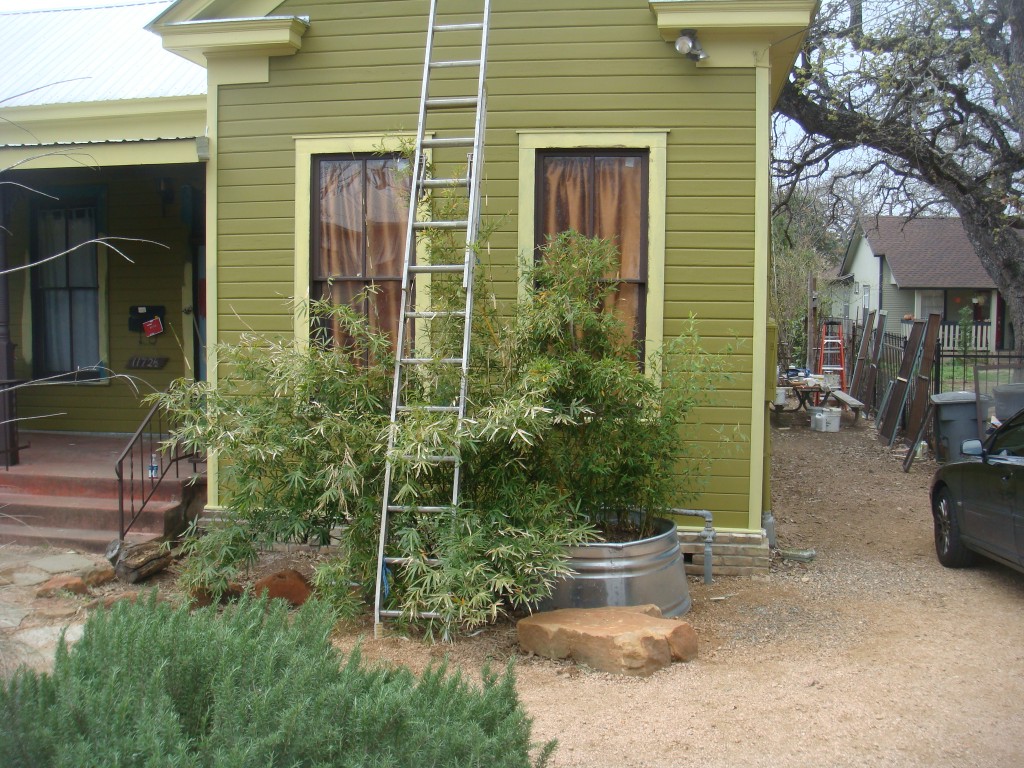
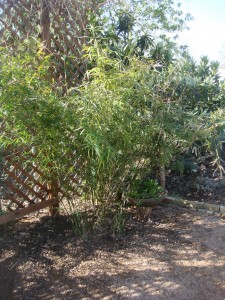
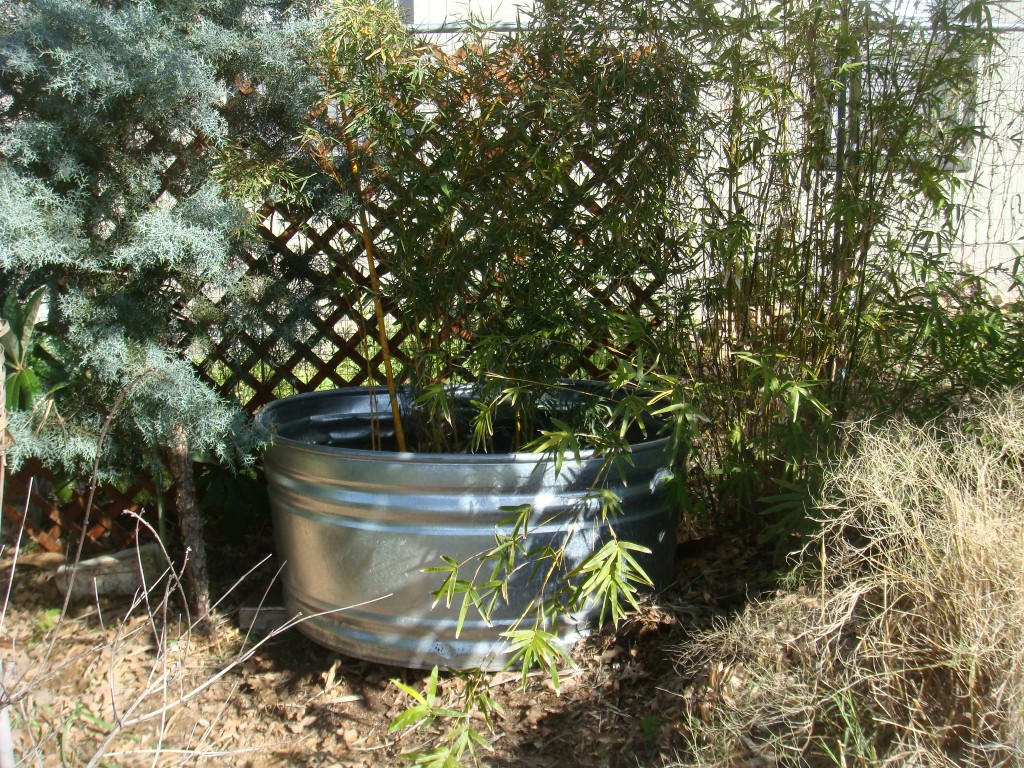
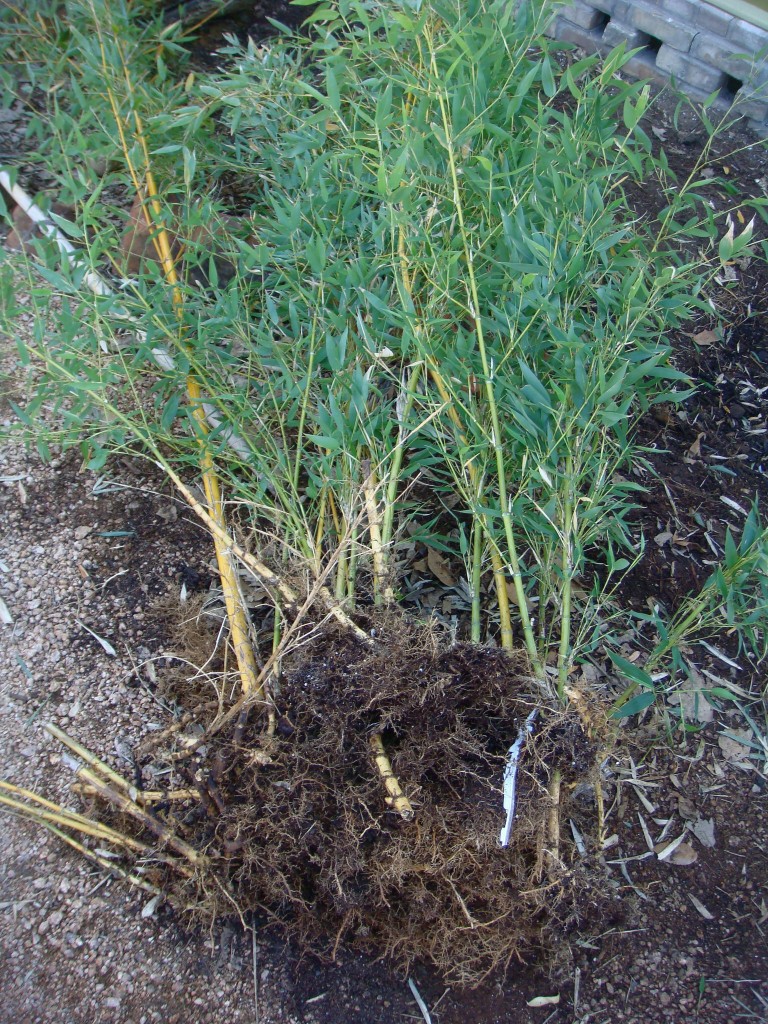
The scale of this Mexican weeping bamboo and the stock-tanked golden bamboo where the Tahoe hit has disturbed me for quite some time.  The plants are just too tall in front of the house, what had been my thought process here? A momentary loss of sanity?  Anyway, my primal Advil taking instinct told me this was going to be one tough dig!  The one-ton rock you can see in front of the feeder tank has not moved since it fell off the back of the wagon that delivered my last six yards of decomposed granite, six months ago.

“Fascinating ESP, your rock strangely resembles and parallels this similar unmovable rock on Vulcan.”

I was supposed to get a bunch of rocks that weighed in at a ton, I ended up with one, yes just the one, one that I have no chance of remotely moving by myself.

It is a really cool rock though and it looks like the shape of Texas from the right angle, with one eye shut, standing on your head, etc, etc.  Today I was overhauling this area.  I knew that the Mexican weeping bamboo was not going to go down, or out of the ground for that matter, without a major shovel fight, it was quite established after all…
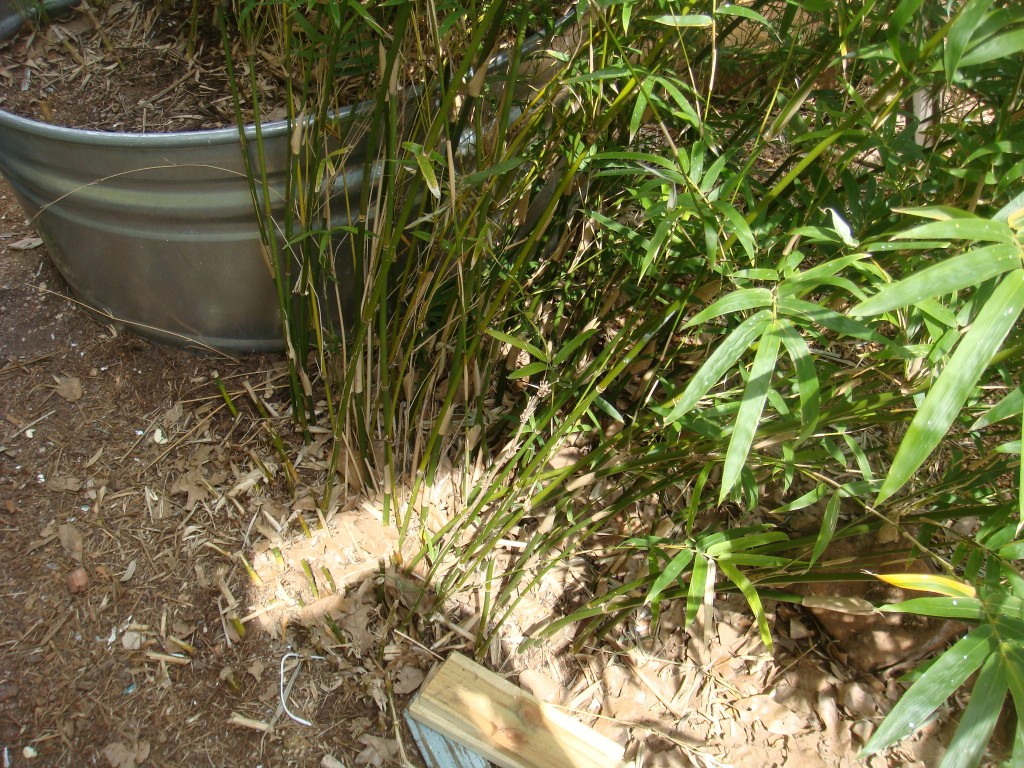
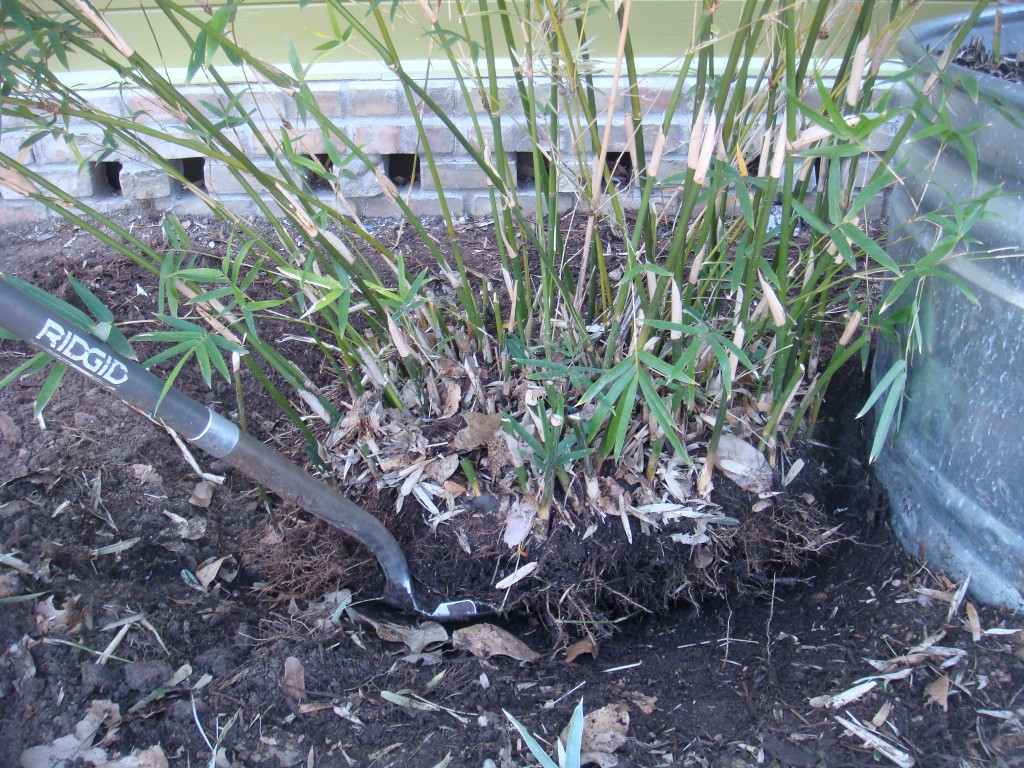
…quite established indeed.  The root-ball was about four feet around and about ten feet deep, okay I exaggerate.  My plan was to split this plant in half and relocate it to the back of my property. Splitting a bamboo’s root-ball seems good in theory, until you actually get into the actual splitting process.

Once again I was so happy I had a full steel shovel, nothing else would have taken the strain that I was subjecting this implement to as I worked my way around the root-ball.  I could hear things snapping and popping, I just hoped it was the plants roots rather then some of my tendons.

Oh yes you had better stay rigid trusty old shovel, because a Darwin Award could be awarded to me if you snap right now! The plant moaned and groaned, and my shovel and I followed suit with an occasional “why you little…” thrown in on my part for good measure.  Eventually I felt the final roots give and the beast was finally freed from the earth, it immediately started to scream and object like an unearthed mandrake root.  I laid on my back looking up at the sky, seeing stars.

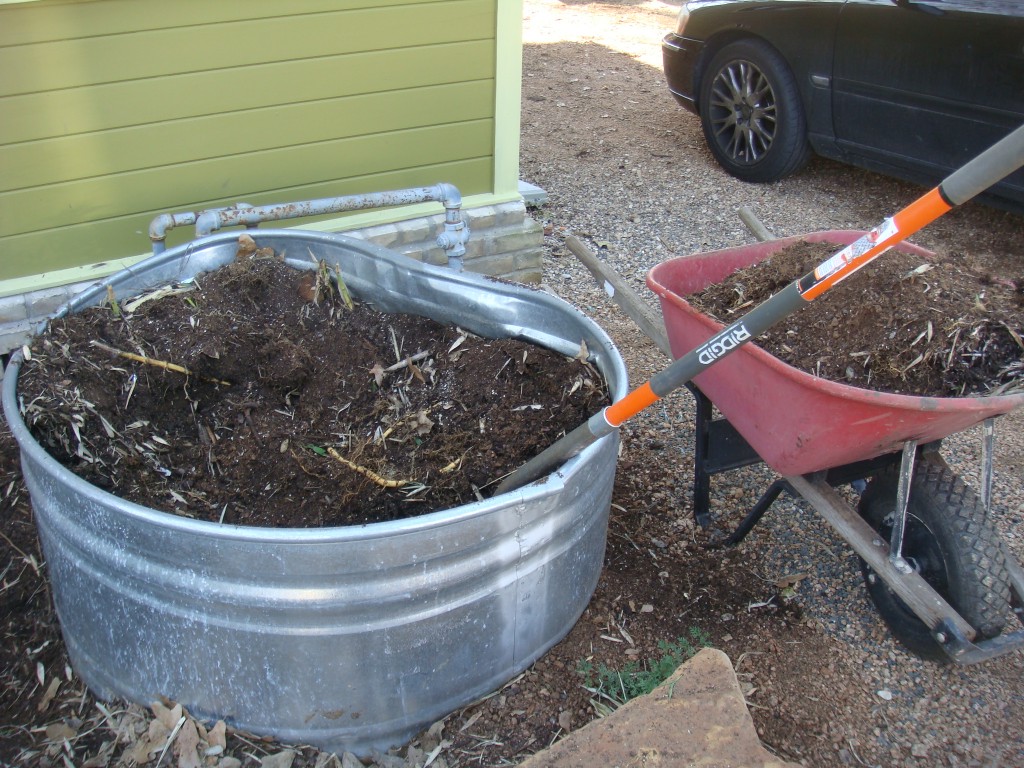
Next stop…the Tahoe dented stock-tank that housed my golden bamboo.

This extraction was easy in comparison.
I removed all of the soil and rocks out of the tank, then wheeled it to the back of my back garden to hunt for a relocation spot. I did have a surprise when I first moved the tank…

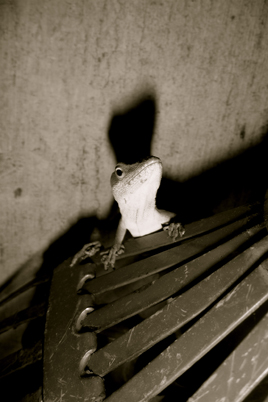
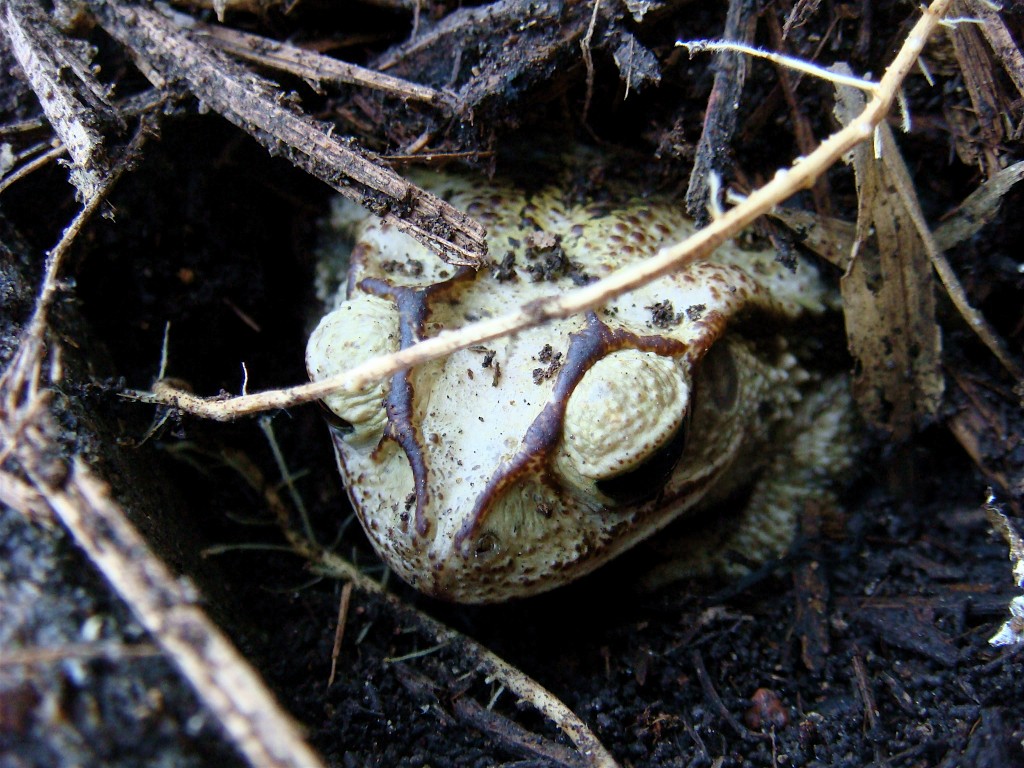
I found this poor pale Gulf-coast toad hunkered down, hibernating underneath it.  This ‘toad in the hole’ quickly retreated deeper into his winter sanctuary at my rude disturbance.  I feared for him as the ESP Witches have already hung up their nasty hessian sacks in the post oak in anticipation of the spring toad cull.

B. valliceps


has the most extensive ridging of any toad in its geographic range. The ridges extend from the nose, to the back of the head. With a branch that wraps around the back side of the eye. I placed a few strategic rocks around and over him to offer once again some semblance of privacy,  I just hope it was enough.

Here are both plants transplanted into their brand new homes:


And that takes the stock-tank count up to seven in my back garden.  Now if only I had a small Roman garrison to help me move that one-ton boulder at the front.

Moving on…

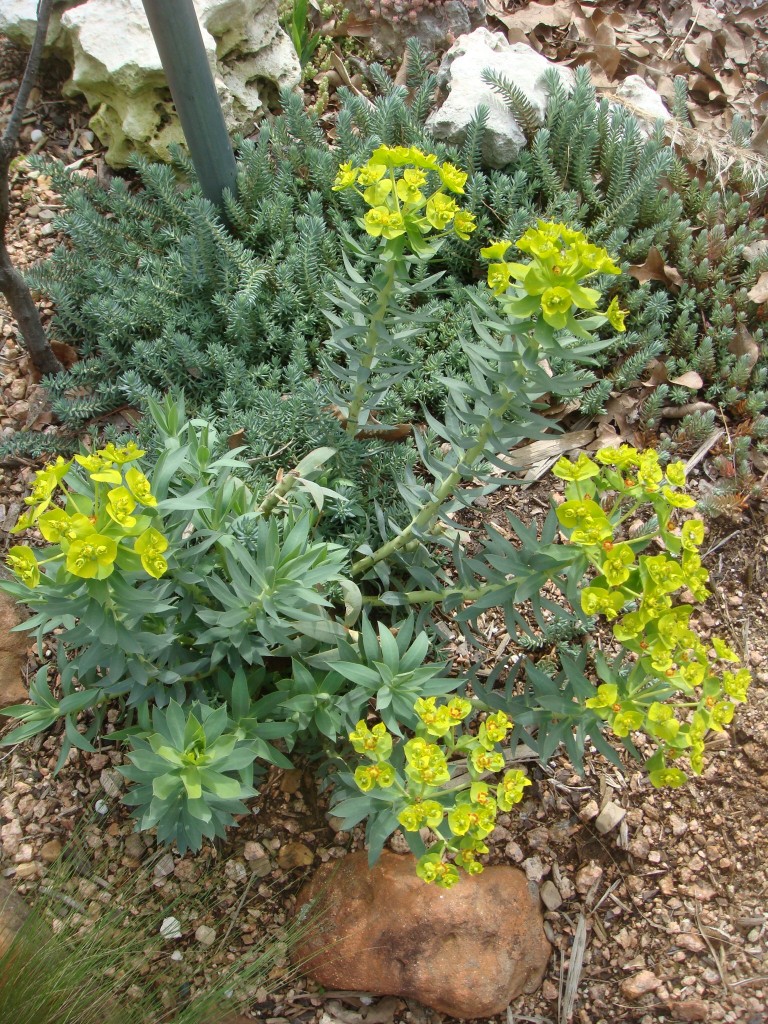
The Patch catching some late afternoon rays.  The post oak and giant timber bamboo create some interesting shadows on the house. The Gopher plant in the foreground is in full swing right now…

I like the way the blue – silver foliage echoes the color of the Sedum reflexum ‘Blue Spruce’.

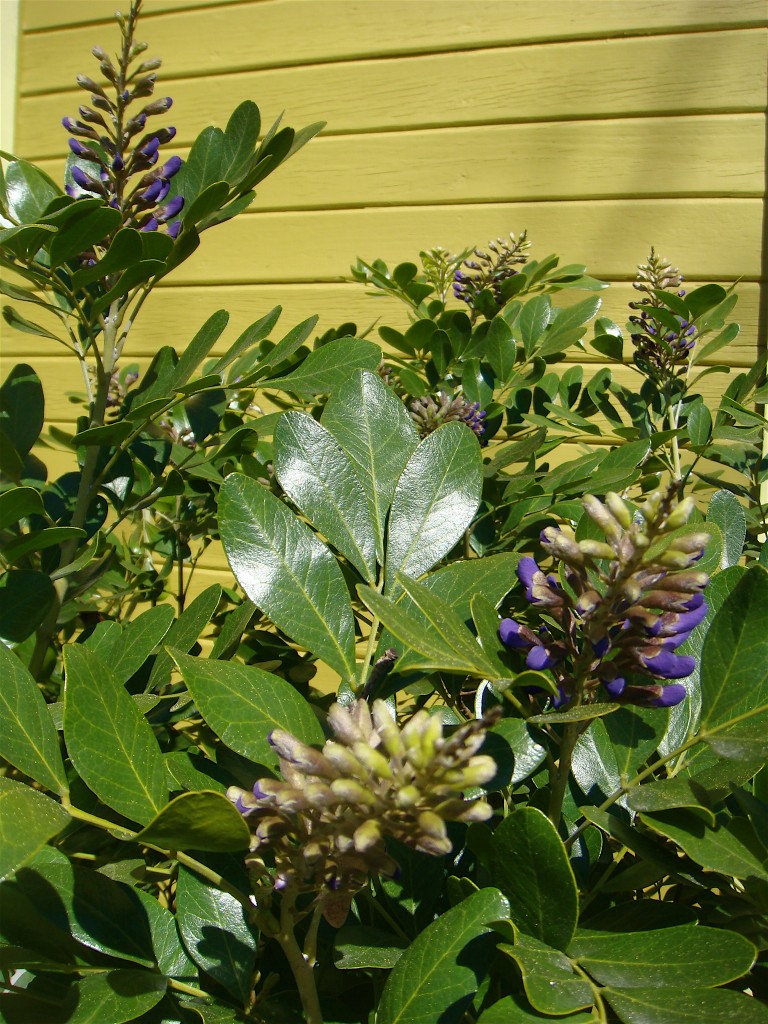
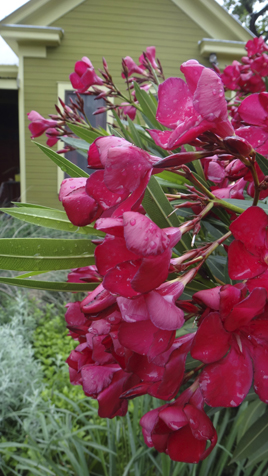
The emerging purple blooms of this mountain laurel looks great against the new green color of the house.  This confirmed to me that I need to a) get some more laurels around the Patch and b) plant a large bed of Mexican bush sage at the front of house to replace the bamboos that I have just ripped up.

Finally…

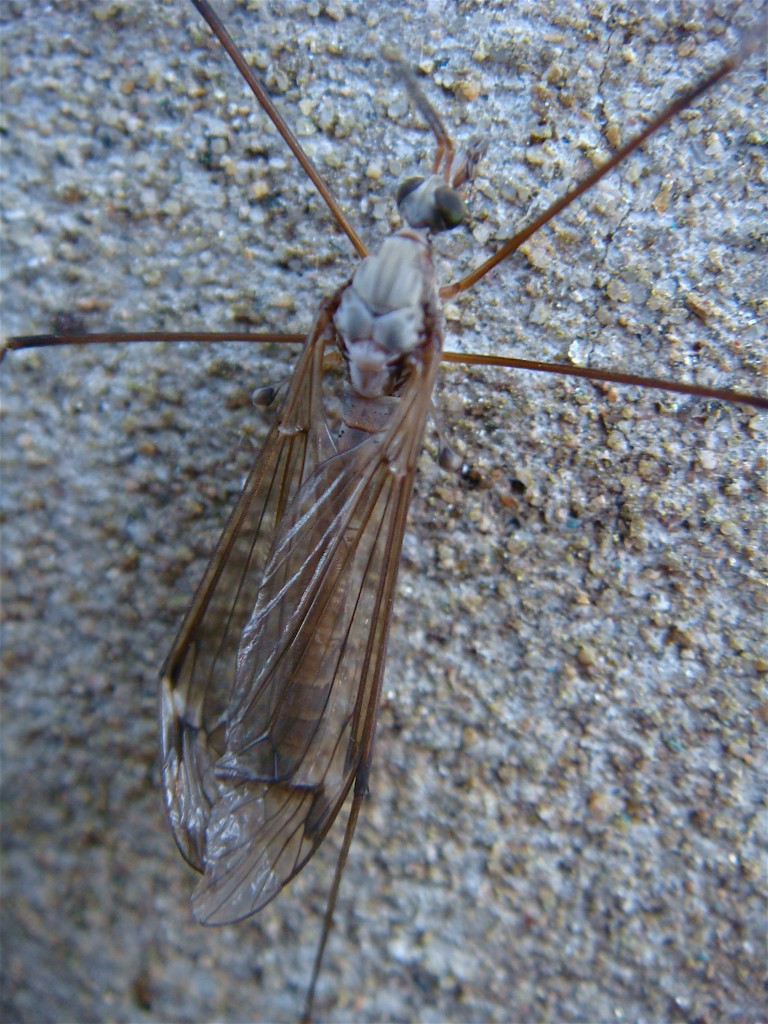
These gangly chaps are all over the Patch right now, both indoors and out.
Although some people think these flies look like Texas-sized mosquitoes, they are wrongly called “mosquito hawks.”  Crane flies are large tan-colored fragile flies with long legs. Adults and larvae do not feed on mosquitoes, in fact adult crane flies feed on nectar or they do not feed at all, once they become adults, these noble creatures exist only to mate and die. Crane fly larvae feed primarily on decomposing organic matter, in compost piles, they often occur on the soil surface below the pile of decaying vegetation.  Adults have long slender legs which are easily broken and may be missing in some specimens.
Crane flies are a food source for many birds and many other insects and carnivores…

“Well, we love them don’t we honey?”
“We certainly do George”.

To finish on a “Ewww” note…

Giant carnivorous plant

Nepenthes Attenboroughii


A plant that just happens to reflect the new color scheme of the Patch, and a plant I could have really used when all of this rat nonsense was going on in my shed: http://www.eastsidepatch.com/2008/11/dead-in-a-shed/

Botanists have uncovered a carnivorous plant in the Philippines that is large enough to digest a whole rat. (The plant is about a meter across with these cups at the end of stalks to catch prey).

Nepenthes northiana


Here is the carnivorous pitcher plant preparing to tuck into a rat.  Can you believe this?  Look at the remarkable painted coloration on the lips of these cups.

“Oh no! I told him he should have become a head-chef ” Brrr… (whiskers involuntary twitch and large teeth bite upper lip, tiny limb and small ear movements).

Stewart McPherson, one of the botanists who trekked deep into the Philippine forest to make the discovery, described the plant…

“Around the mouth of the pitcher are secretions of nectar which attracts insects and small animals. The rim has lots of waxy downward-pointing ridges which help prey fall directly into the pitcher.  The pitchers are half full of a liquid consisting of acids and enzymes which help break down its prey. These plants grow in really harsh areas where soil quality is very poor — often pure gravel or sand. Catching insects allows the plant to augment nutrients that it otherwise wouldn’t have access to.” … Mmmm perhaps a mass planting in the hell-strip? That would be novel!

Inspirational image of the week:

Talking about the top of a remote mountain!  I have decided that this is where I want to spend my Autumn years when they arrive, a house nestled up in the trees, a Heli-drop of deli produce and beer once a month, fast internet connection, and “raised” (ahem) vegetable beds…you get the absurd picture.

“I like that place Carl”
“Me too Ellie”!


Stay Tuned for:

“Life and Death”


All material © 2010 for eastsidepatch. Unauthorized
intergalactic reproduction strictly prohibited, and
punishable by  late  (and extremely unpleasant)
14th century planet Earth techniques.

“Feather Hugger”

This young feather hugger is totally into the feather grass, it jumps from clump to clump hugging and hiding under it.

This cat, according to it’s collar, is called “Nina Coconut,” and it seems like it has adopted the Patch as it’s playground, at least for the time being.

It can also scale my Douglas Fir in seconds to the delight of my youngest hobbit who thinks this is fantastic. It really is quite funny the way it sits on the small branches watching all the goings-on in the Patch with sharp head movements.

These Mexican feather grasses have supplied me with a good crop of babies that have been transplanted all around my pathways.  What I have left should be just enough for my front garden endeavors. The loquats are all having a simultaneous growth spurt right now.  The paler green new growth looks great set against the mature darker foliage.  The cloud-like Arizona cypress, ‘blue ice’ (left) has aromatic, blue-gray leaves/needles that are flecked with white resin. I love this tree and look forward every year to it developing chocolate brown cones, but so far none have ever materialized.  This cypress prefers full sun, and thrives especially well in hot, dry environments like Austin.  It has a silvery blue color all year round, I love the way this one looks reflected in my feeder pond. The tree gets up to 50ft tall.

Imagine one of these in a hell-strip, under-planted with a mass of artemisia , now that would be a silver statement!

Talking of the feeder pond, this body of water was recently the venue for the “2010 H S R”.

“Husk Sailing Race”.  These bamboo husks with their post oak leaf sails work great, flying across the pond on the slightest of breezes.

“That looks like fun Huck”!

“It sure does Tom.”

I did notice this strange bit of oily something-or-other floating on top of the water, perhaps one of the sailing vessels had developed a leak in it’s fuselage?

New martian growth in my main pond

March Kale Felling:

She planted this Kale when it was about an inch tall, it was barely visible above the soil. Today she used the big-girl snippers and cut it down for dinner. There was an element of sadness associated with cutting it down though, I had to keep telling her that she grew it to eat it, so we all could eat it, she just kept saying…”next week, we will eat it next week.” She had grown quite attached to having it around apparently.

And the light shoneth down on the cut kale and peace and order returned the Patch.

Who am I kidding…naturally the freshly cut kale started an immediate fight…“Its mine! “No Its mine!” “Get off”! “Its mine” (Repeat until nerves are completely frayed, and temporary insanity has set in.)

The kale was made into an Asian noodle dish, and the grower ate so much of it!  This was really surprising as it had quite a bitter taste, just goes to show, food always tastes better if you grow it yourself.

The warmer weather brought out the bees on this blooming rosemary today. He kept insisting that the bees needed a “drinky” from his watering can, which was just an excuse to pour water on a few of them. I grew and wrestled this prostrate rosemary over a cedar carcass while it was young.  I am now testing a theory with another young plant to see if this actually forces the plant into a higher growth habit.  This one has turned into a monster, it spent the first two years of it’s life braced painfully up on the side of a cedar stump. My theory is that once it has been forced skyward in it’s formative years, it remains like this when mature?

Here is my young test subject…Mohahahaha!

On a closer inspection of the interior I was shocked to find the wreckage of this yellow convertible hung up in it’s interior branches. A Naboo tribal member on a joy-ride perhaps? I couldn’t be sure.

“O,o, makes me so o,o, angry…I did warn them it was a stick-shift.”

Have the tribe succumbed to modern society to the extent that they are now using sports cars to circumnavigate their territorial boundaries? I scoured the ground around the wreck for tiny bodies, but I naturally found nothing.  And why the random, angry, Naboo-speaking monkey? I have no idea.

Disturbed, I looked up to see this dwarf conifer blooming it’s very strange flesh colored oddities…this was no comfort.


And finally, (drum roll),

the patch has had a face-lift:

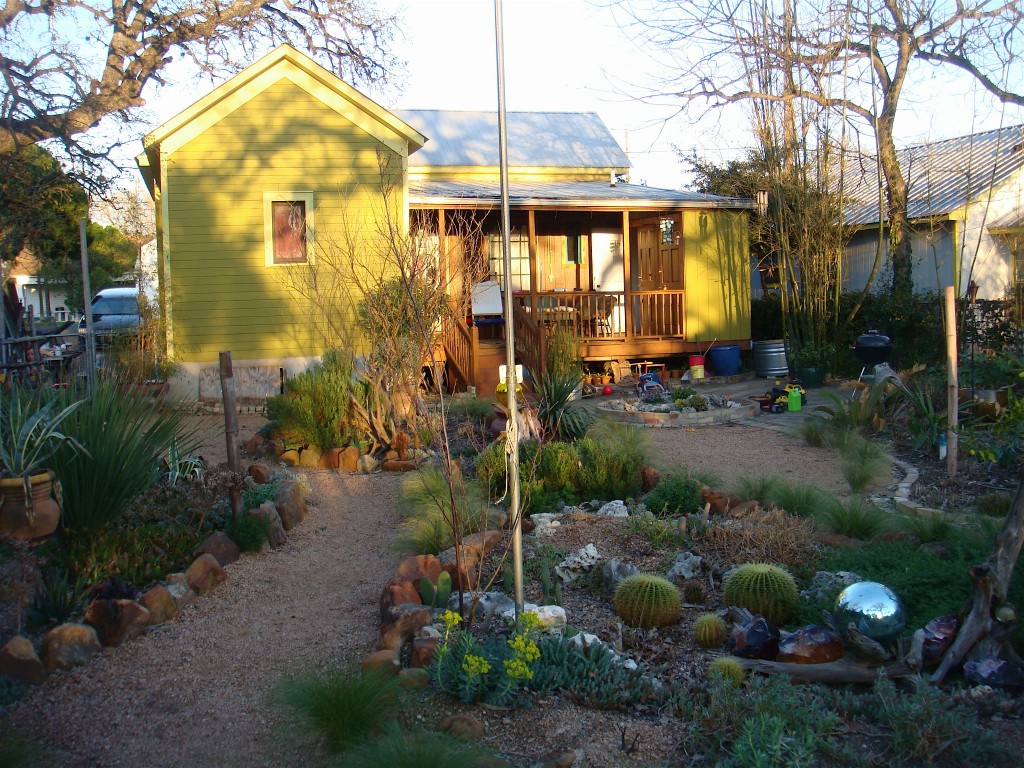
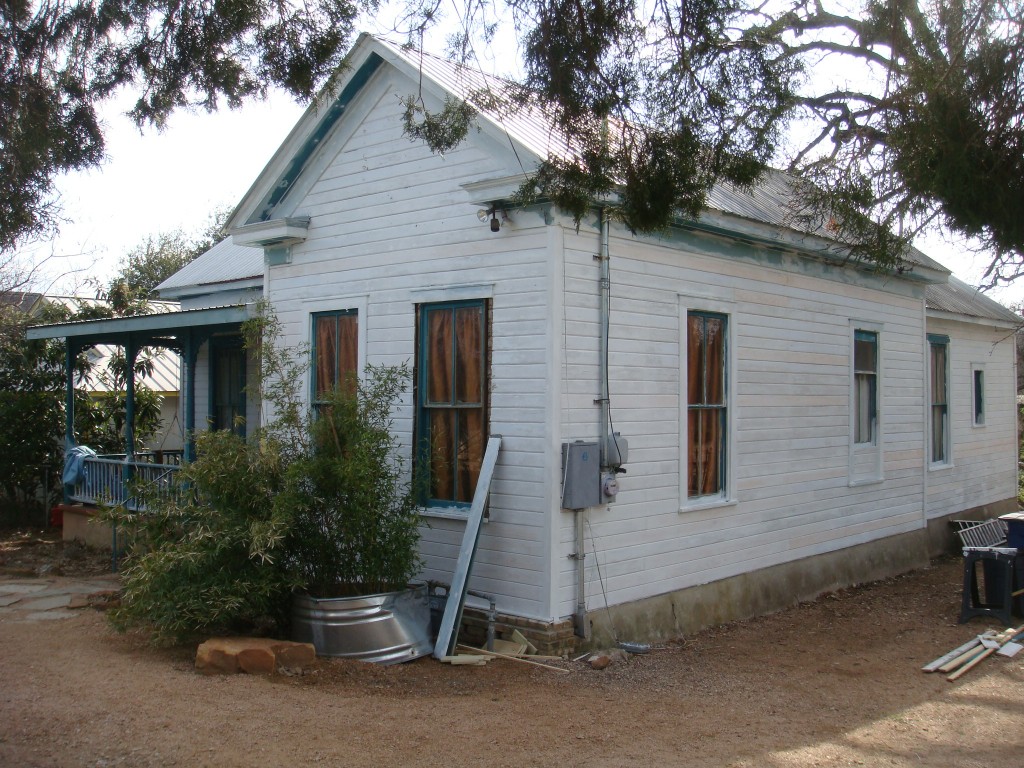
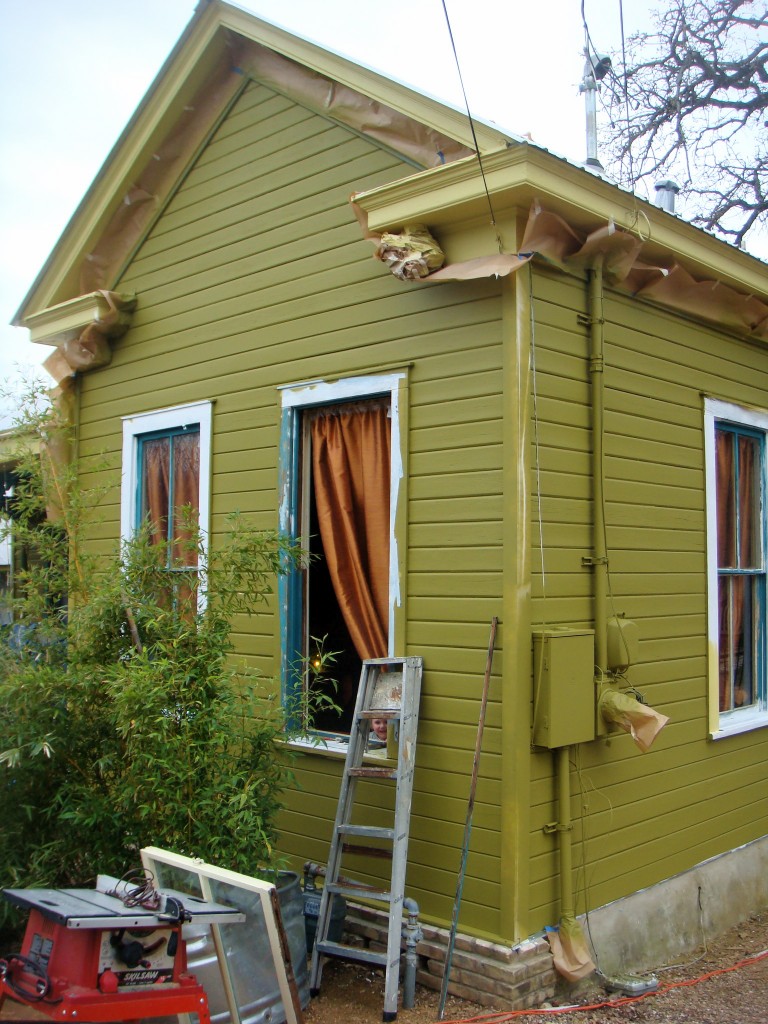
From a flaking white and horrific aqua, to shades of green and brown, oh yes we are all very excited. Spot the hobbit face in the right picture?

The stock tank where the Chevy Tahoe hit will be moved around in front of the now painted electrical boxes (flattened side against the house, naturally)…Well I may as well take advantage of it. I plan to stain the concrete foundation a dark brown to match the window trim. Not quite finished, but it feels so much more Patch-like already!

The containered golden bamboo culms and foliage look amazing set against this green color. An added bonus.


Blast from the Past:

Imagine if we still had to compose our blog content on this?

Released in 1981 by the Osborne Computer Corporation, the Osborne 1 is considered to be the first true portable computer – it closes for protection, and has a carrying handle.  It even has an optional battery pack.  While quite revolutionary, the Osborne does have its limitations. For example, the screen is only 5″ (diagonal) in size, and can’t display more than 52 characters per line of text.  To compensate, you can actually scroll the screen display back and forth with the cursor keys to show lines of text up to 128 characters wide.  A little bit like inserting images in WordPress!

Woohoo!


The Osborne was designed with transportation in mind – it had to be rugged and able to survive being moved about.  That is one reason that the screen is so small.  Designed as a true portable computer system – it can be considered airline carry-on luggage, and it will fit under the passenger seat of any commercial airliner.  I love that screen.

I would love to pull out an “Osborne” on a flight, struggle with it, insert the optional battery (you know this would be quite large) and start working on my airline tray. (I wonder if the tray could even take it’s weight)?

Over-sized headphones and some “work related” head shaking, followed by some repeated insertion/ejection of an old floppy disk would complete the in-flight nonsense.  Mr Bean could have a field day with this!


Stay Tuned for:

“Toad in the Hole”


All material © 2010 for eastsidepatch. Unauthorized
intergalactic reproduction strictly prohibited, and
punishable by  late  (and extremely unpleasant)
14th century planet Earth techniques.

1 2 27 28 29 30 31