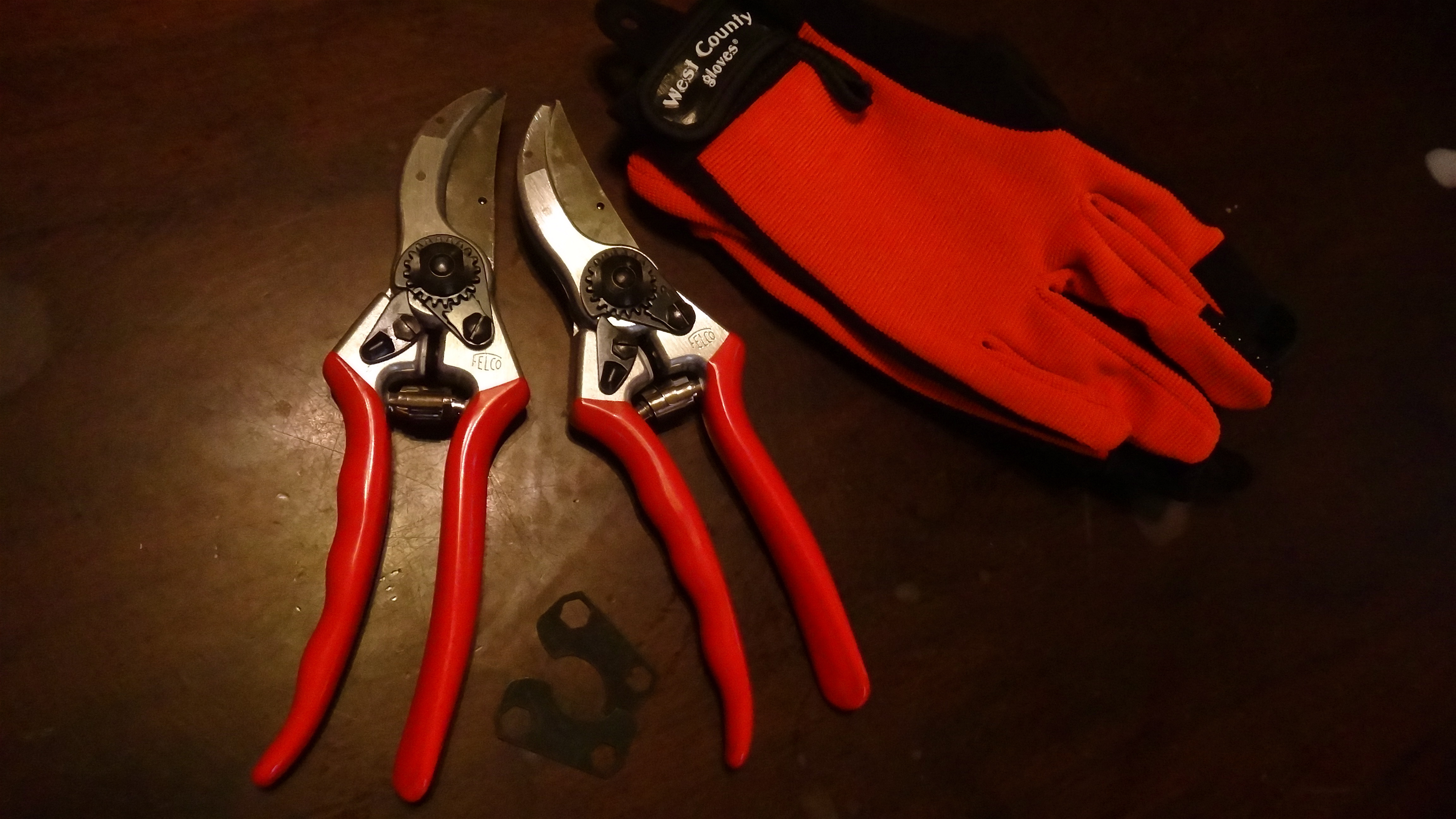
Oh yes, it was time to replenish my pruning tools with some sharp fresh blood, in this case a couple of pairs of brand spanking new Felco secateurs, courtesy of Hill Country Gardens. I even splashed out on a new pair of gloves! I go through gloves faster then the snout weevil goes through my agaves and generally buy a new pair at the start of each install (they usually only last about that long) we will see how these hold up. Oh yes the pruners…the smell of new forged steel and fresh oil.
 I was hunched over my new UPS delivery in my living room, inhaling deeply and rotating the new blades like Gollum would his ring. I whispered under my breath…“my preciouses”, and flicked the unlock mechanism, my wife caught me in the act and asked what on earth I was doing?
I love new tools almost as much as new electronic devices (which have an even better aroma), a loud nostril inhale always follows the automatic door opening when I enter Best Buy.
 I wasted no time trying out my new implements, the first heirloom tomato of the year seemed like fair game. While my head was buried deep inside my tomato plants I had the distinct impression that I was being watched.
“No-one would have believed in the early years of the twenty-first century, that our world was being watched by intelligences greater than our own. That as men busied themselves about their various concerns, they observed and studied.
With infinite complacency men went to and fro about the globe, confident of their empire over this world.
Yet, across the gulf of space, intellects vast and cool and unsympathetic regarded our planet with envious eyes. And slowly, and surely drew their plans against us”.
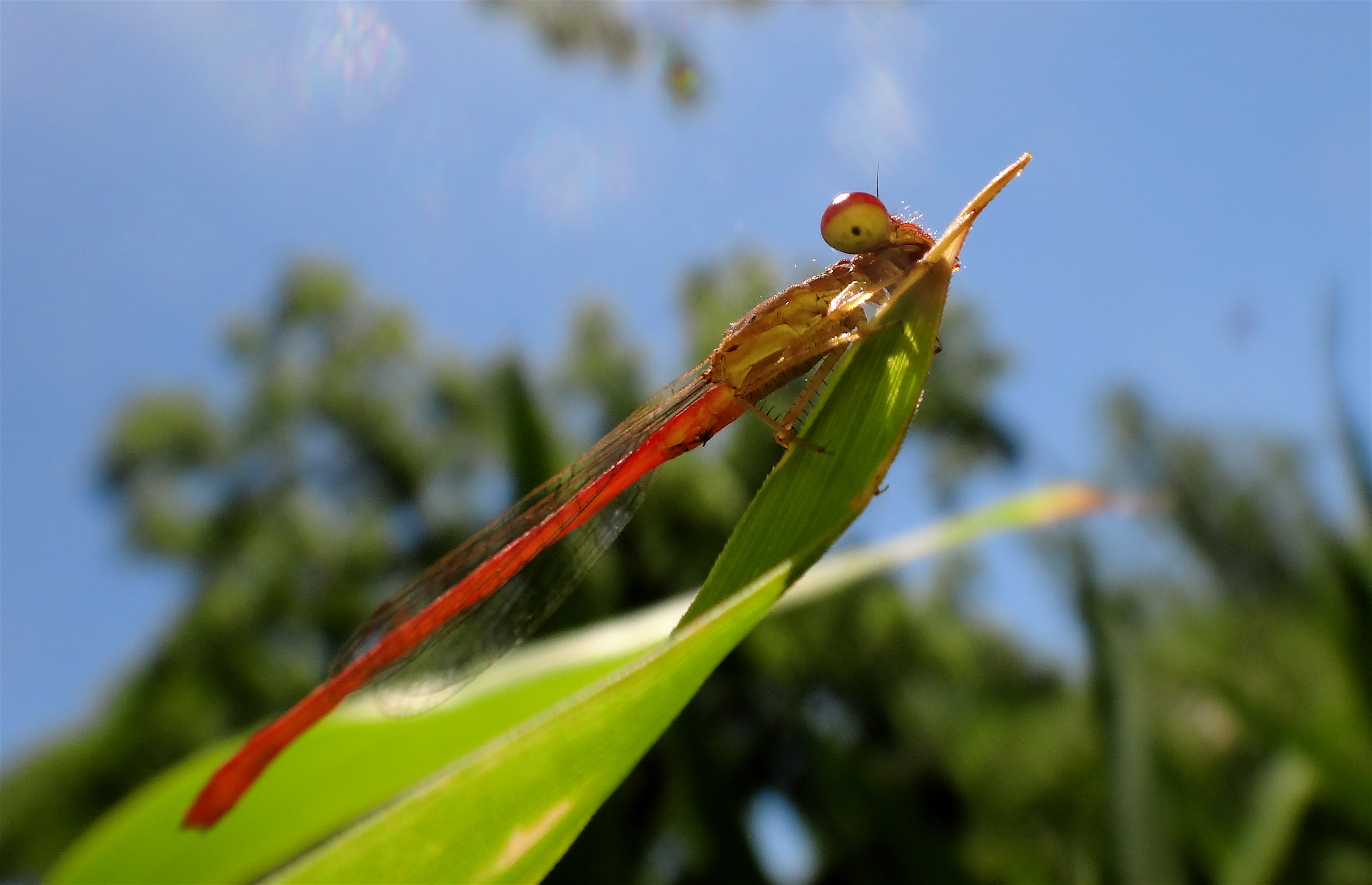
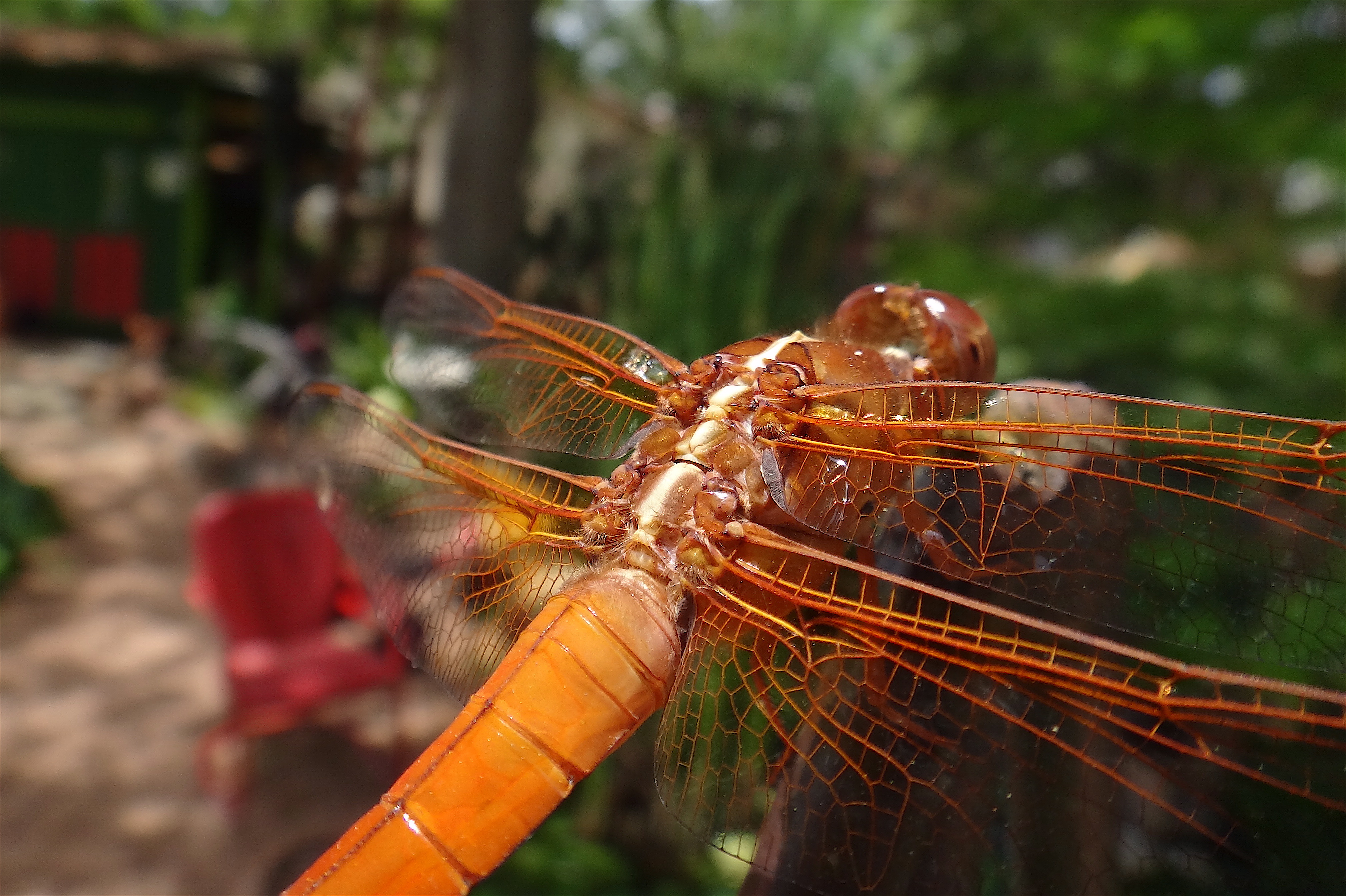
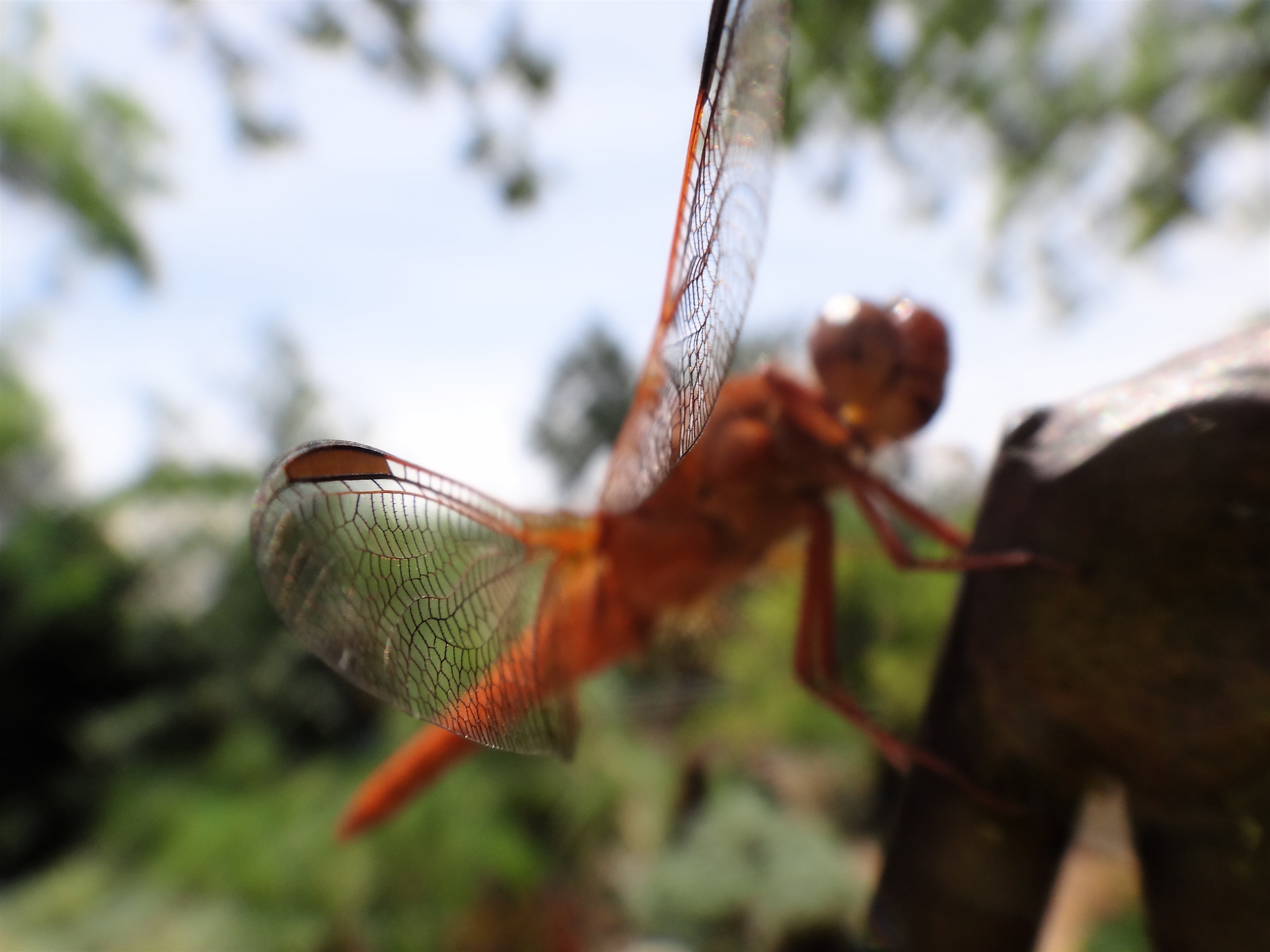
Ceriagrion aeruginosum
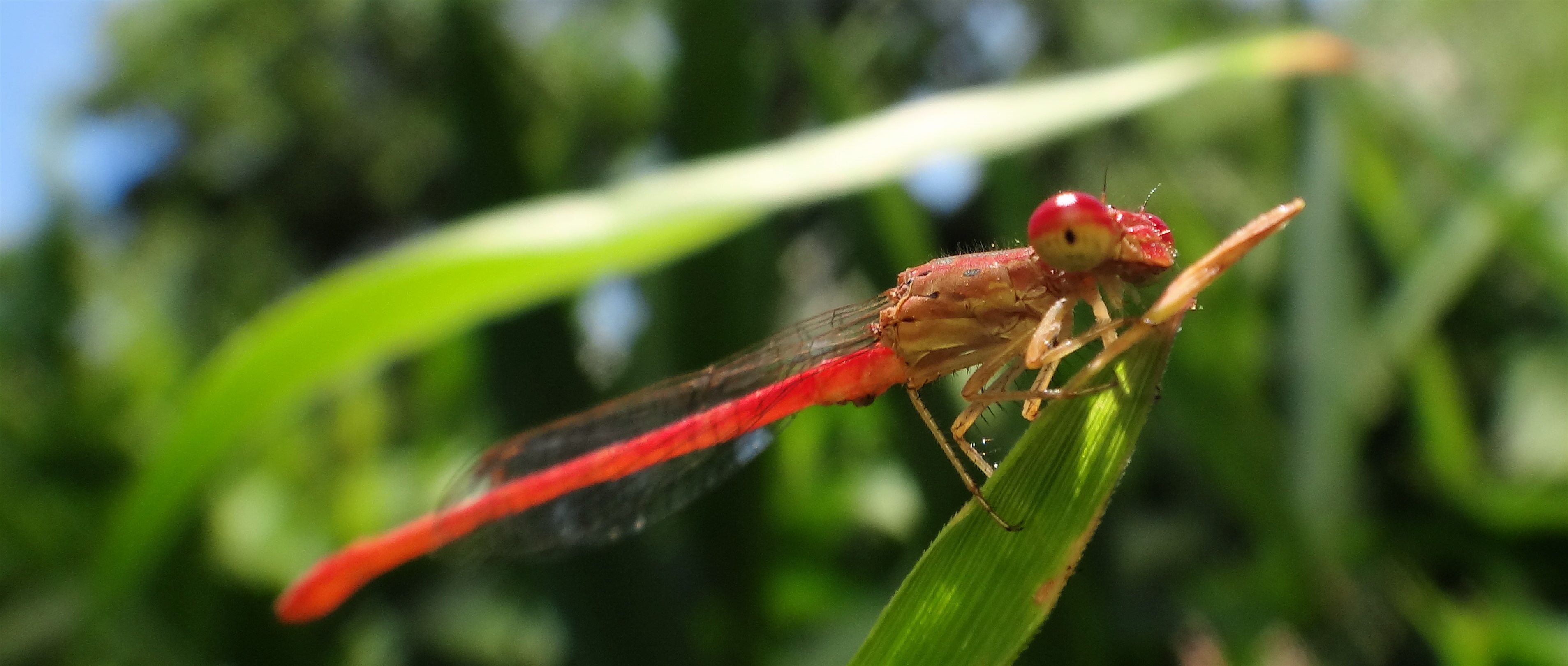 Wake Up!
They are also known as Big Red Damselflies, and although they are bright red, they are also very hard to spot. Damselflies are predators, they will eat nearly any other insect and are especially adept at picking aphids off plants, they are our garden friends…in stark contrast to this chap:
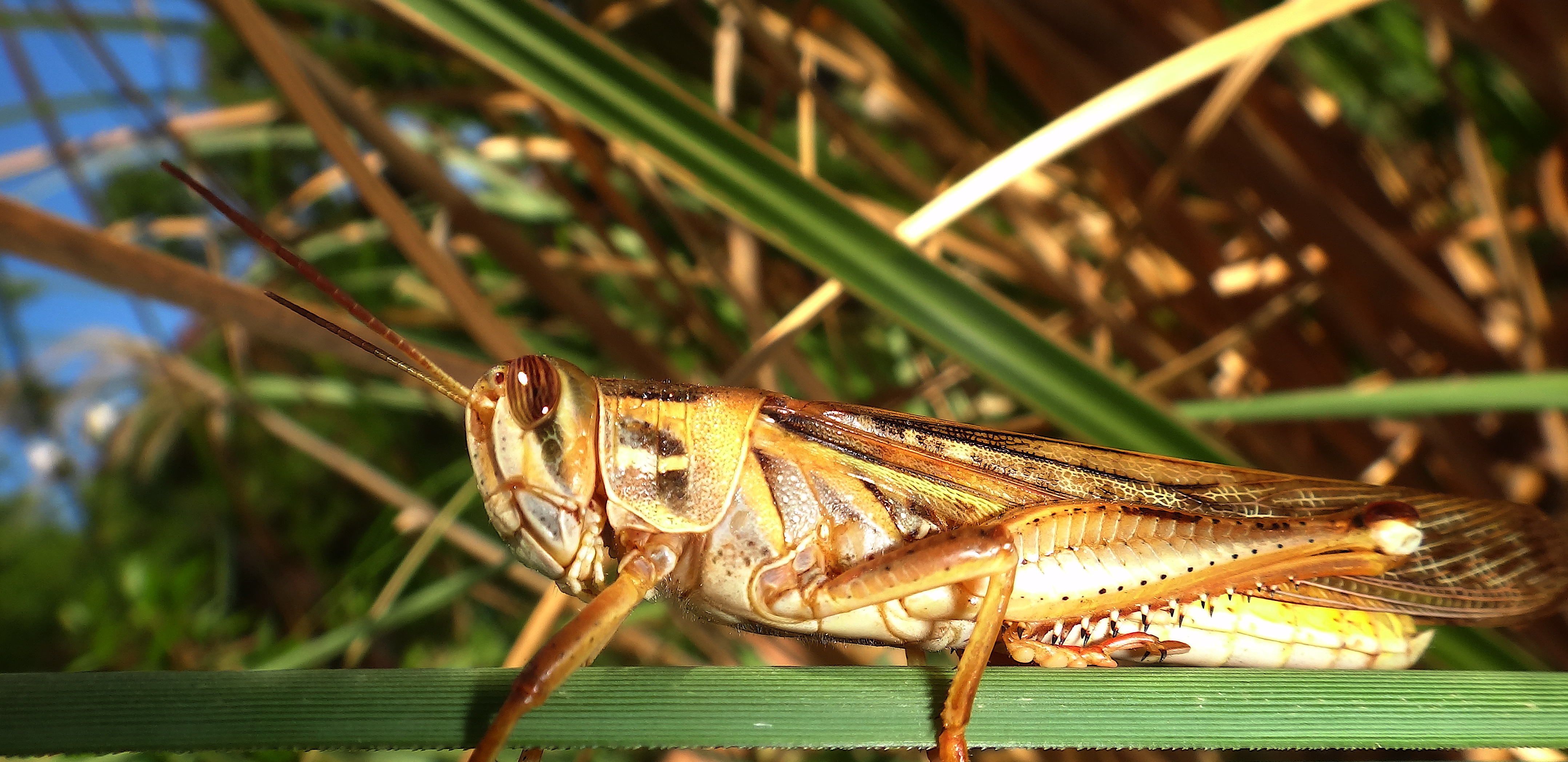
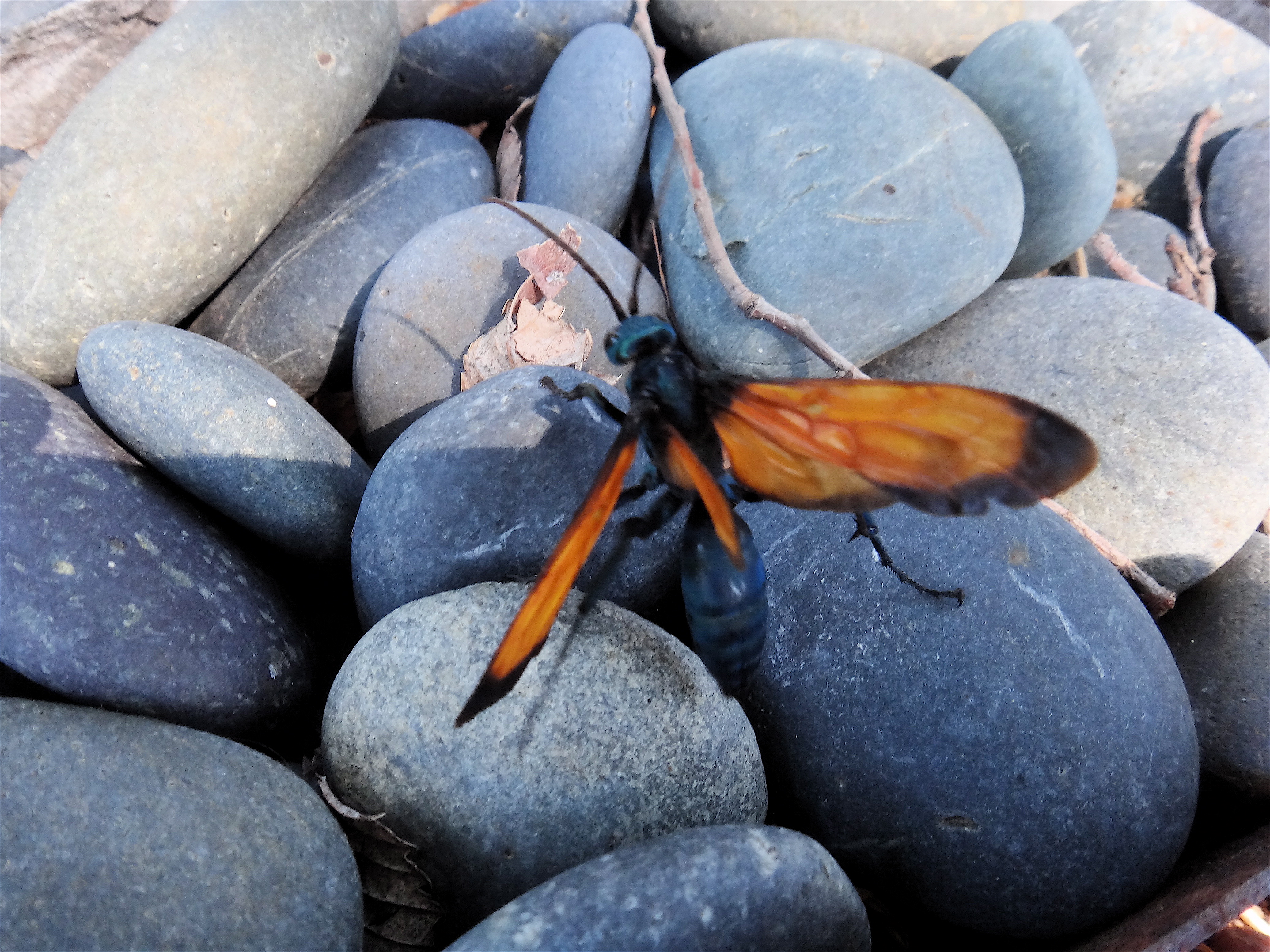
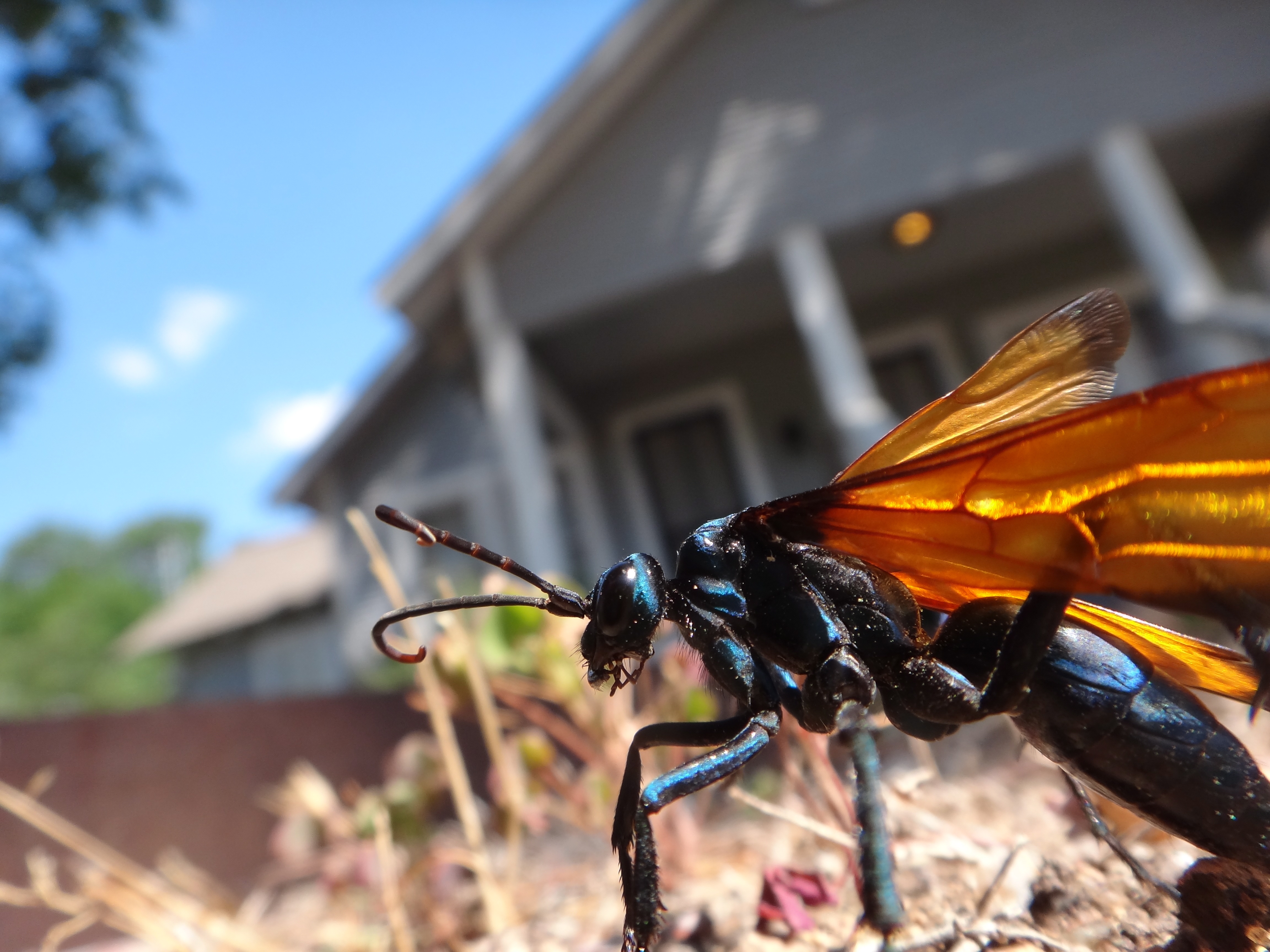
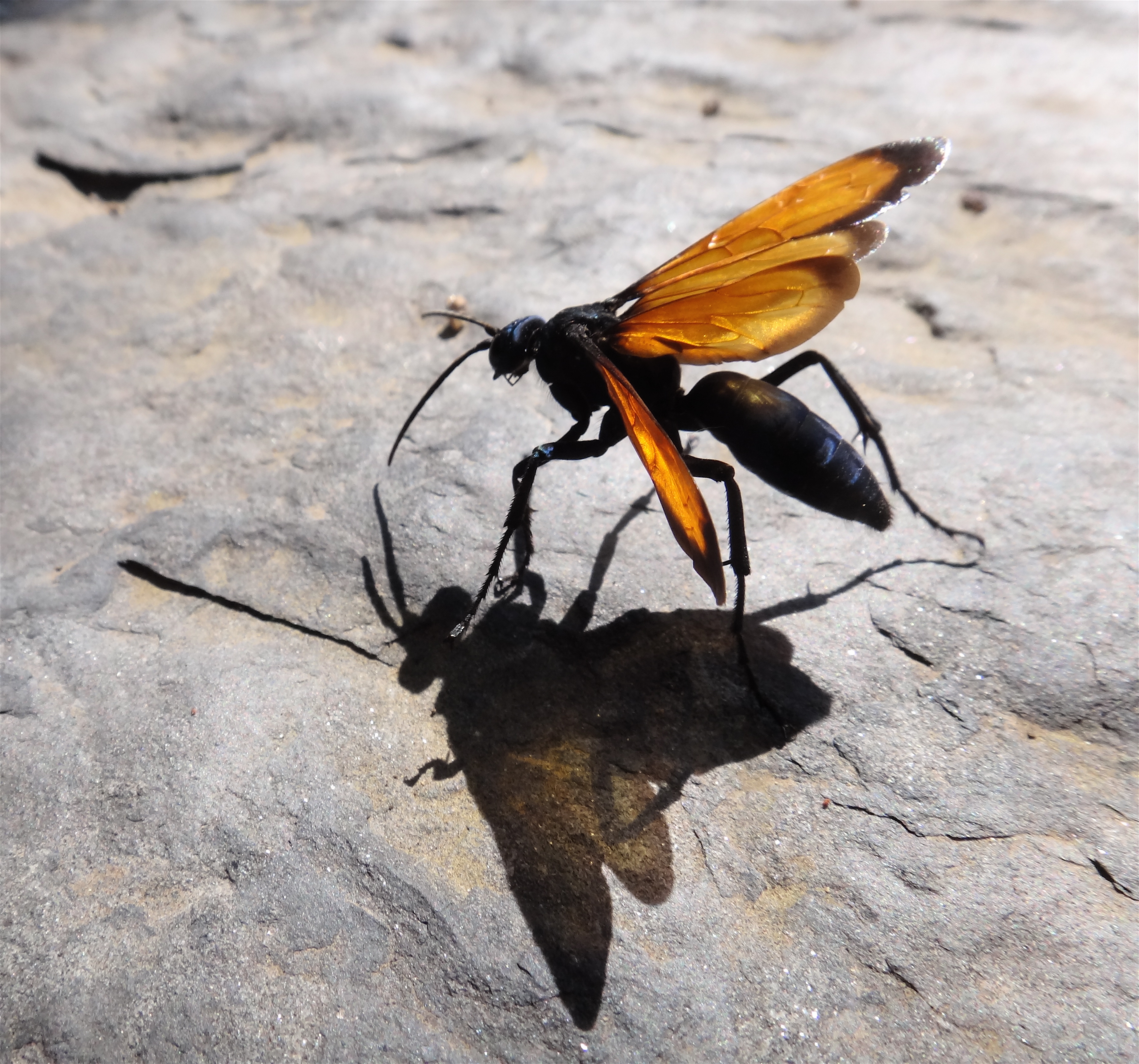
who showed up in my last remaining pampas grass this week,
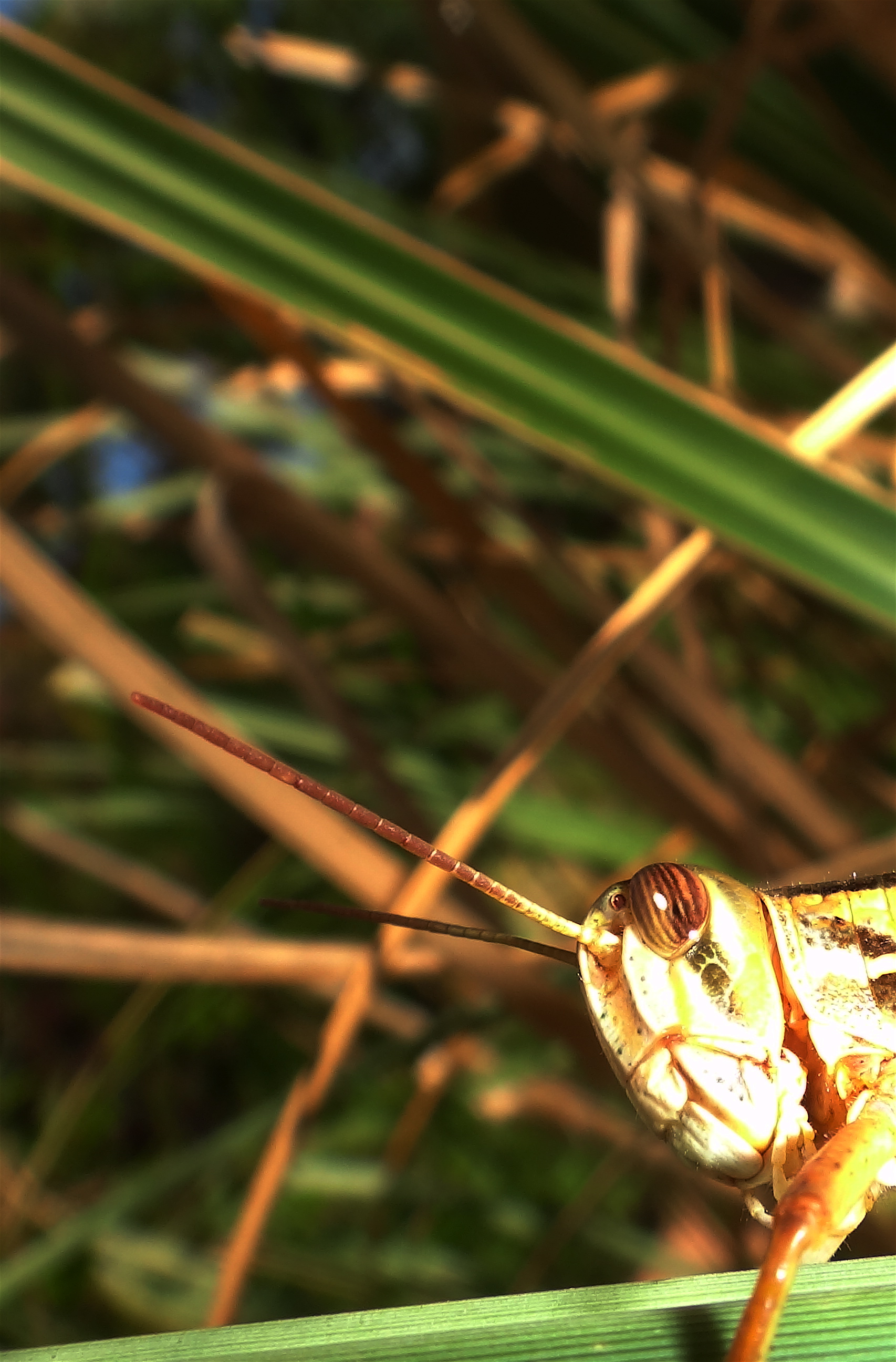
knifes, forks and jaws at the ready.
 The bee mimicking hoverflies are once again protecting their most prized bounty, this Barbados cherry.
 They get so annoyed and aggressive when I am around this plant, but I know they are the con-men of the insect world, the charlatans, always threatening to sting but having no stingers to deliver the punch. This particular one is a carpenter bee as it turns out… (thanks for the post post positive ID meredee).
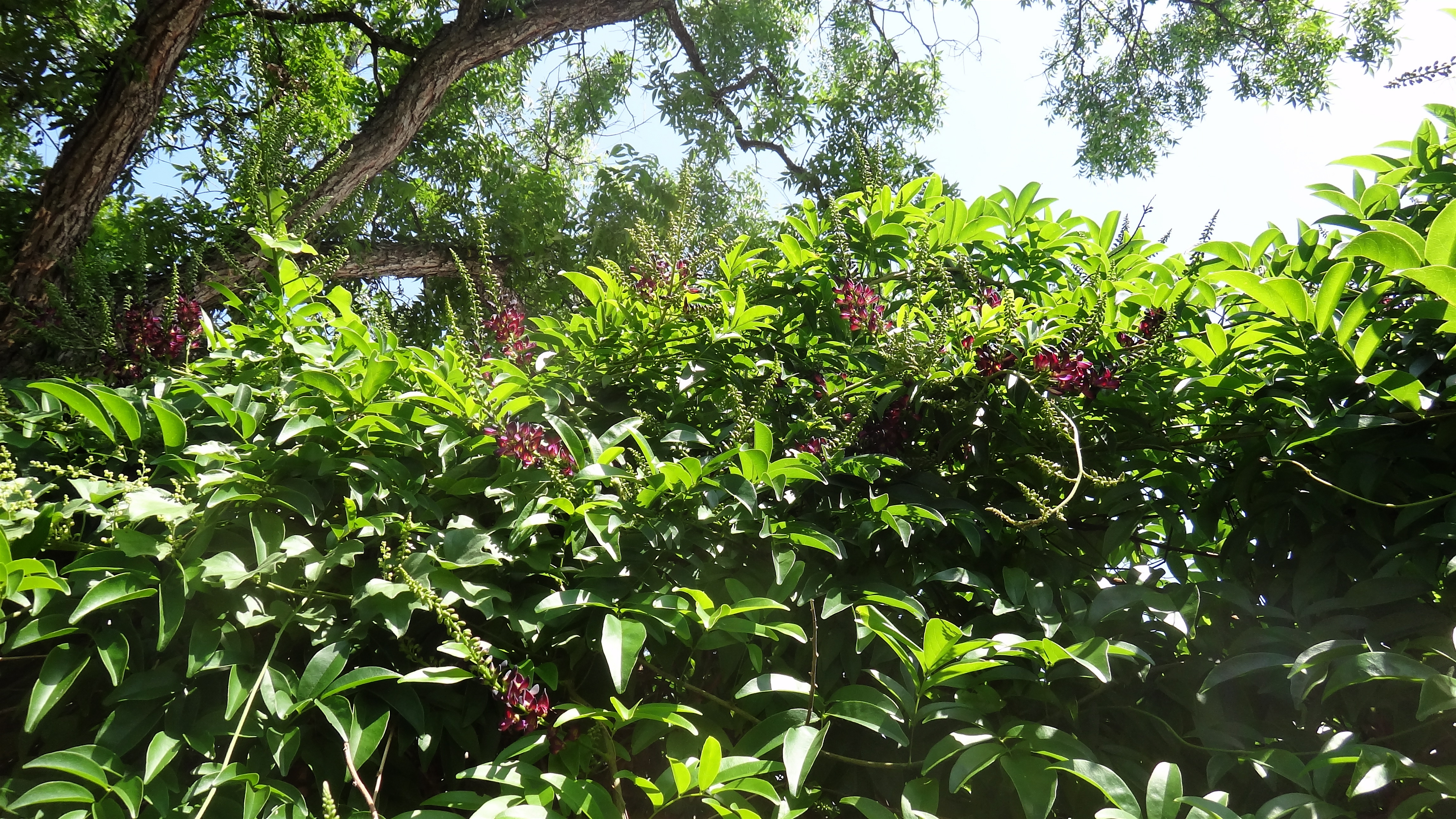
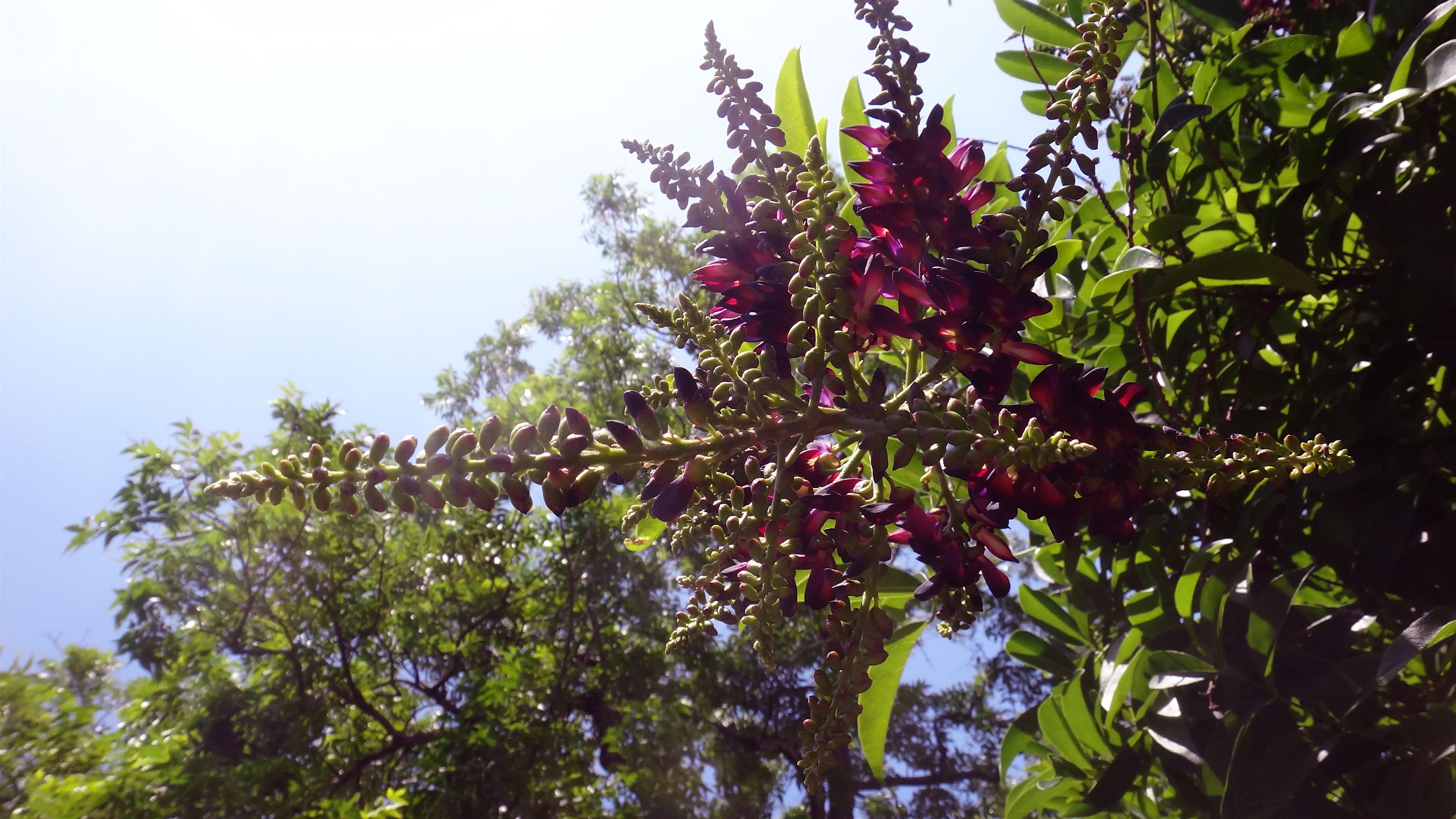
Evergreen wisteria,
Millettia reticulata
is forming blooms, and lots of them. This is one of my favorite vines so naturally I have three of them in different places all over the Patch. Give it plenty of room though, it will get quite large and very heavy, though it is not invasive…highly recommended.
 Here is the vine looming over two trellises that my bench is anchored to.
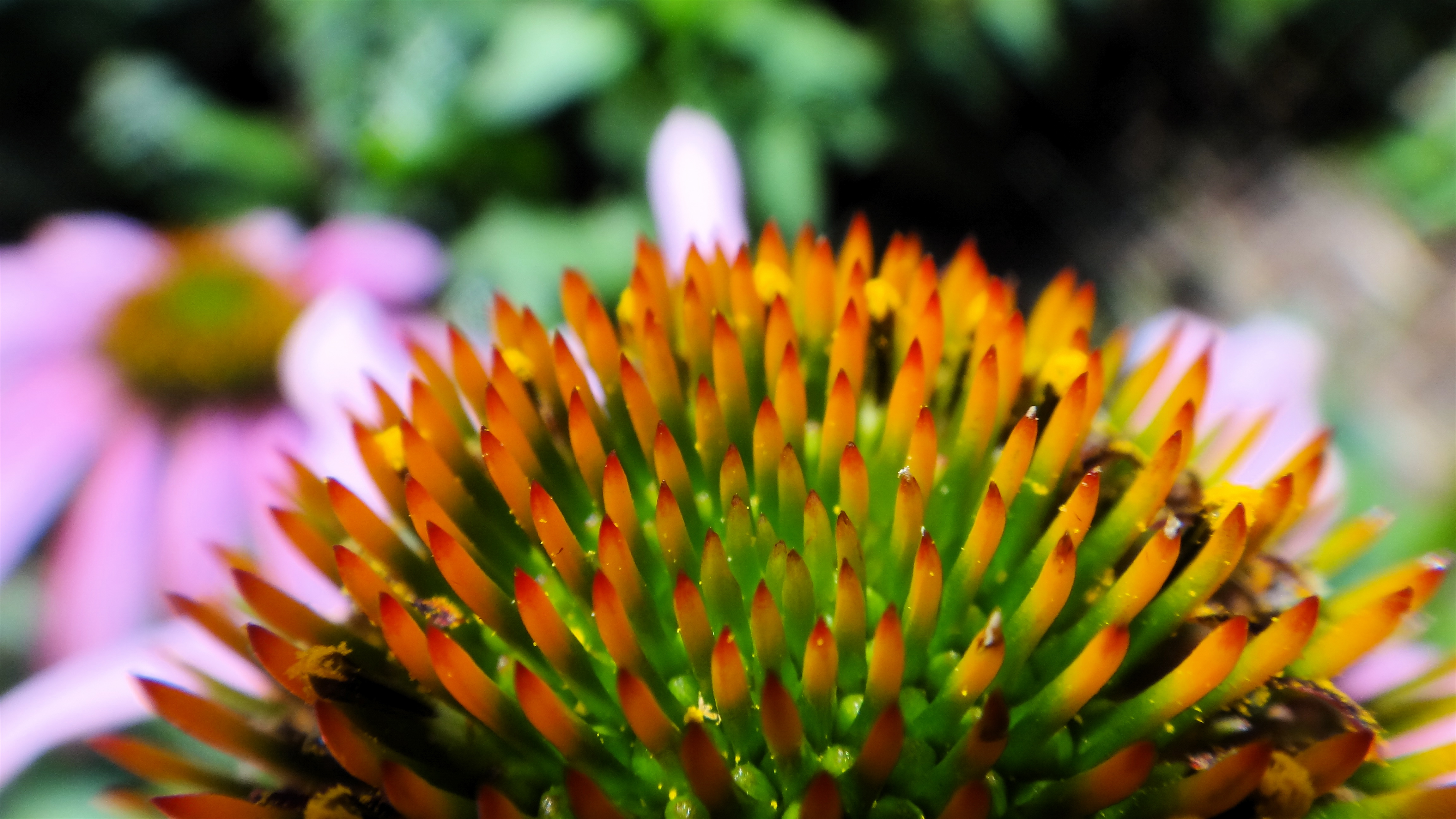
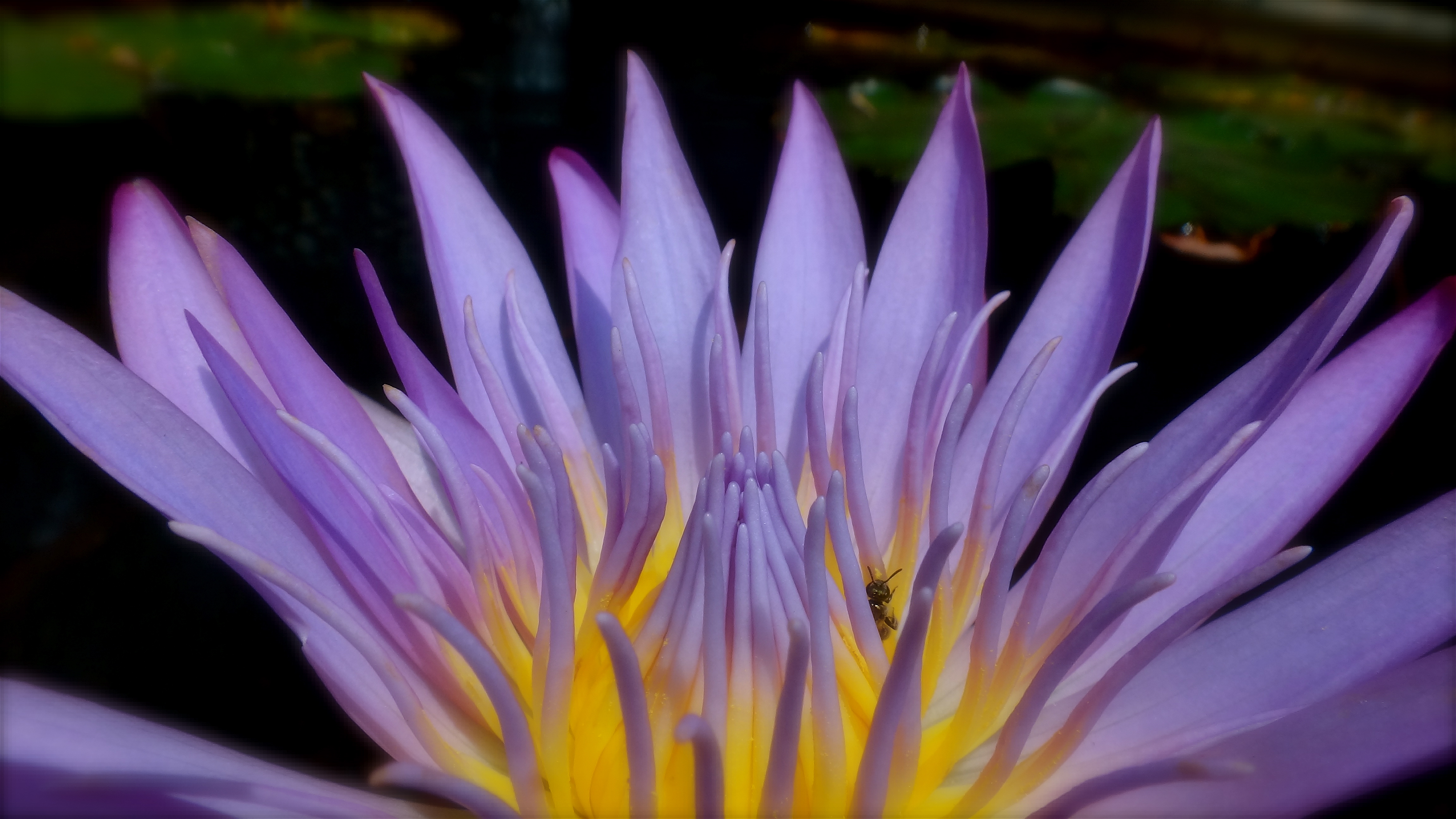 Echinacea and Madame Ganna Walska water lilies are also entering their prime this week.
I decided this stand of Mexican weeping bamboo needed some additional recognition for attaining such a substantial diameter. This semi-circular pattern of three different brick sizes worked out a treat, laid directly into decomposed granite. I had no idea what I was going to do when I started this, but the final free-form result works to draw attention to this specimen plant.
 My helper did a great job of handing me the bricks from the wheelbarrow, this made a huge difference, not having to do a hundred squats back and forth. The sabal major on the right will require another rainbow arc (which will ultimately join this one) as it matures.
And to finish…some Patch oddities this week:
Can you spot the green lynx spider?
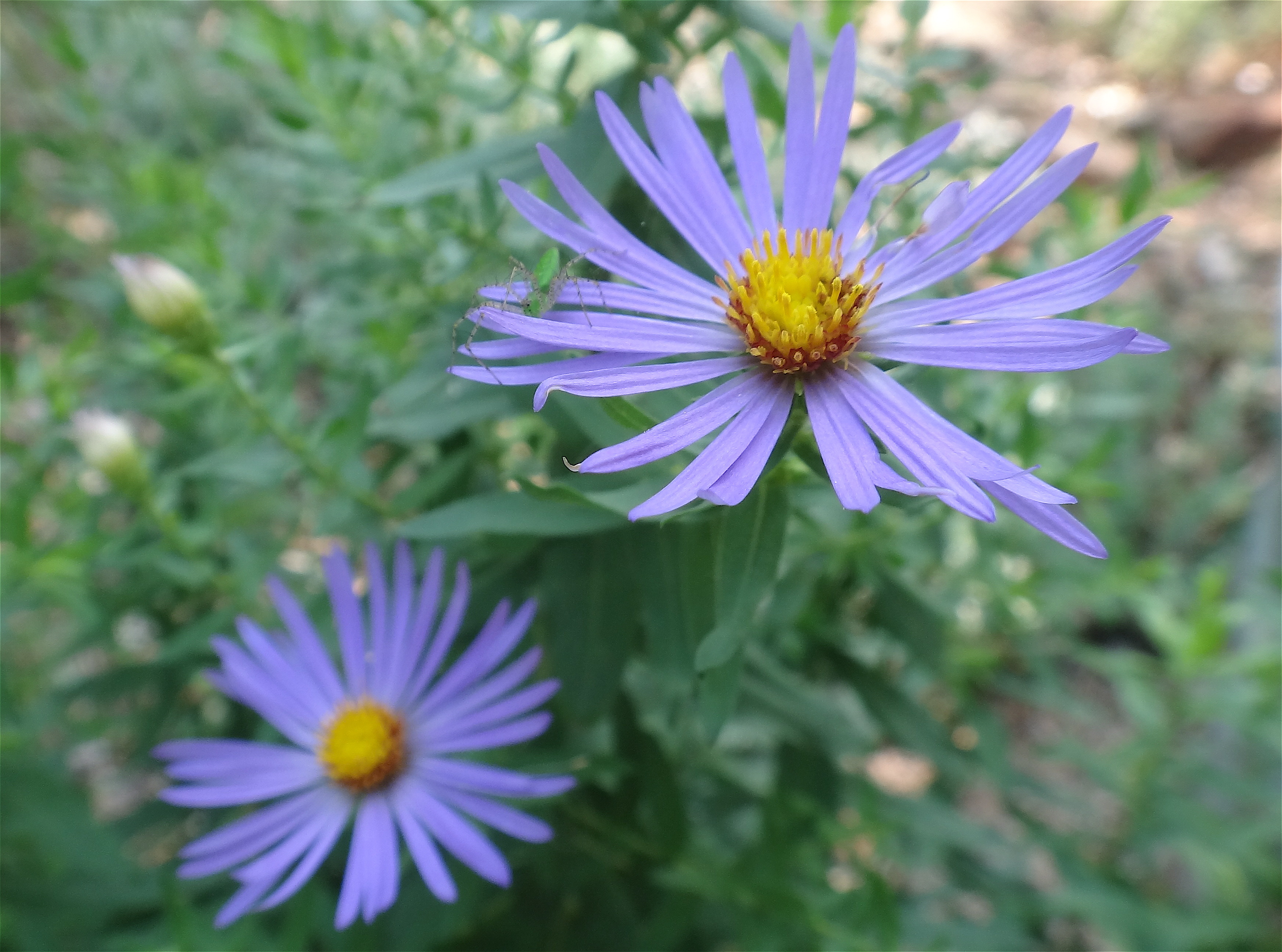 Fall Aster, in May?
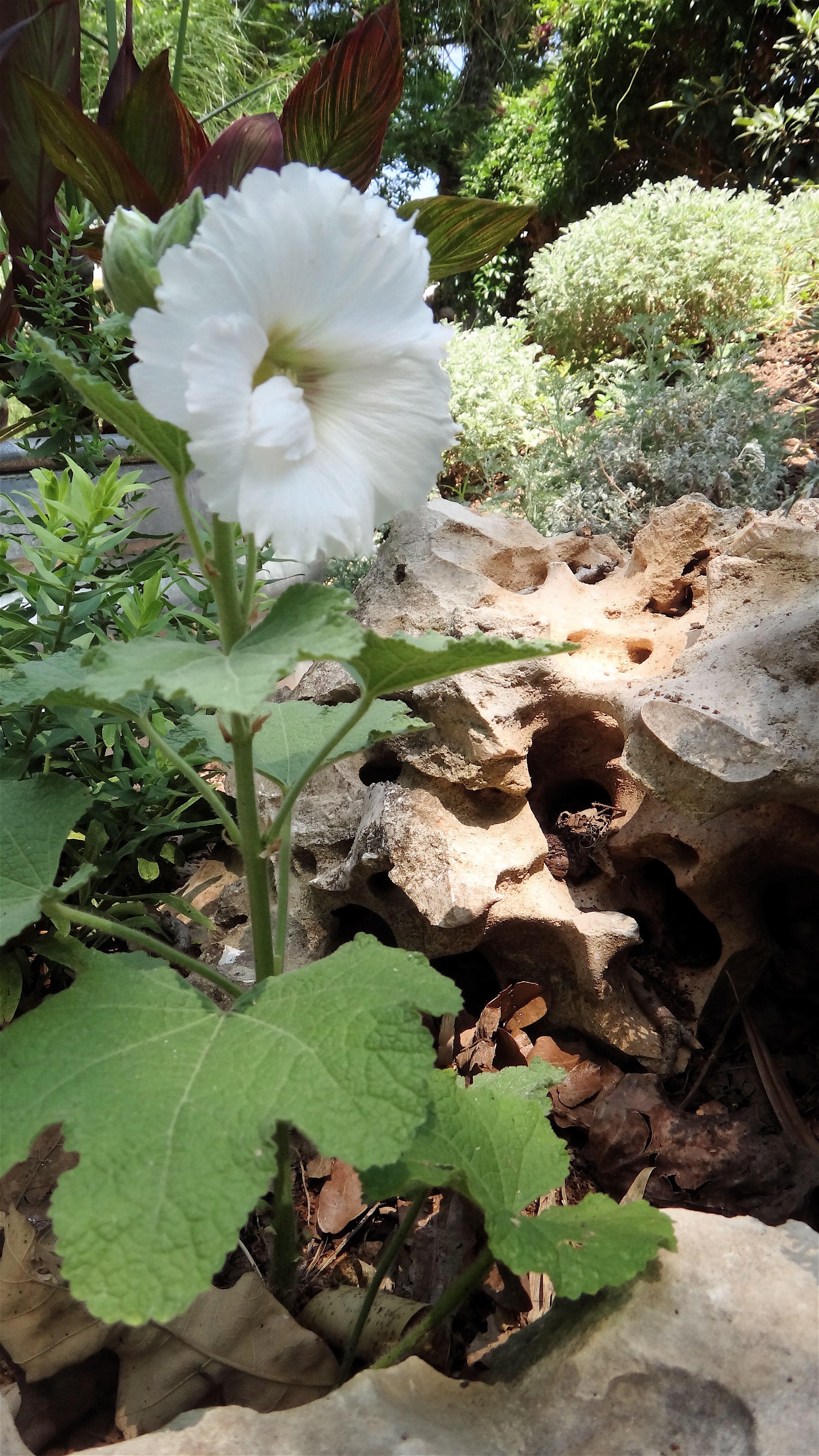 A stunted hollyhock, this has to be smallest ever.
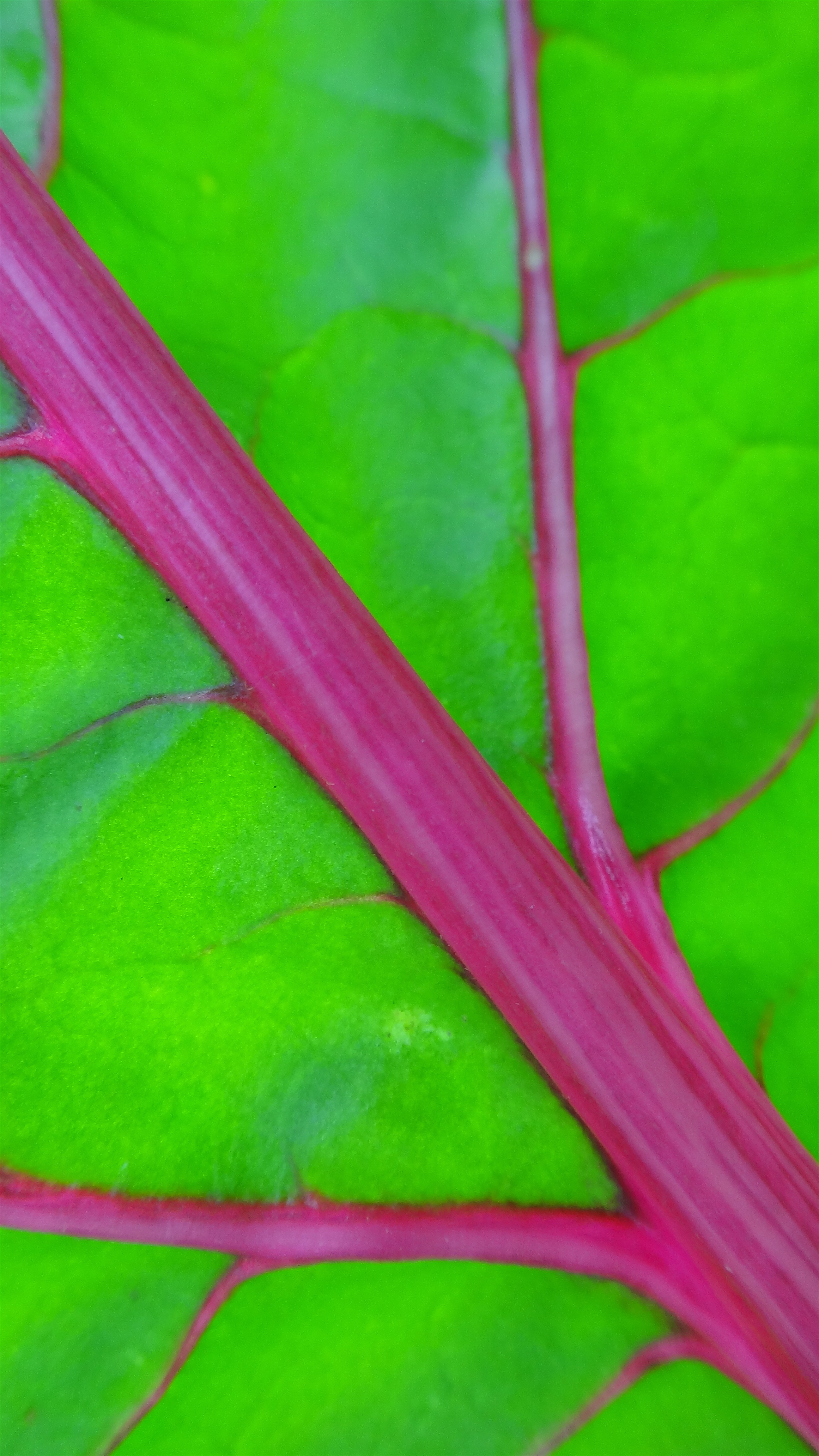
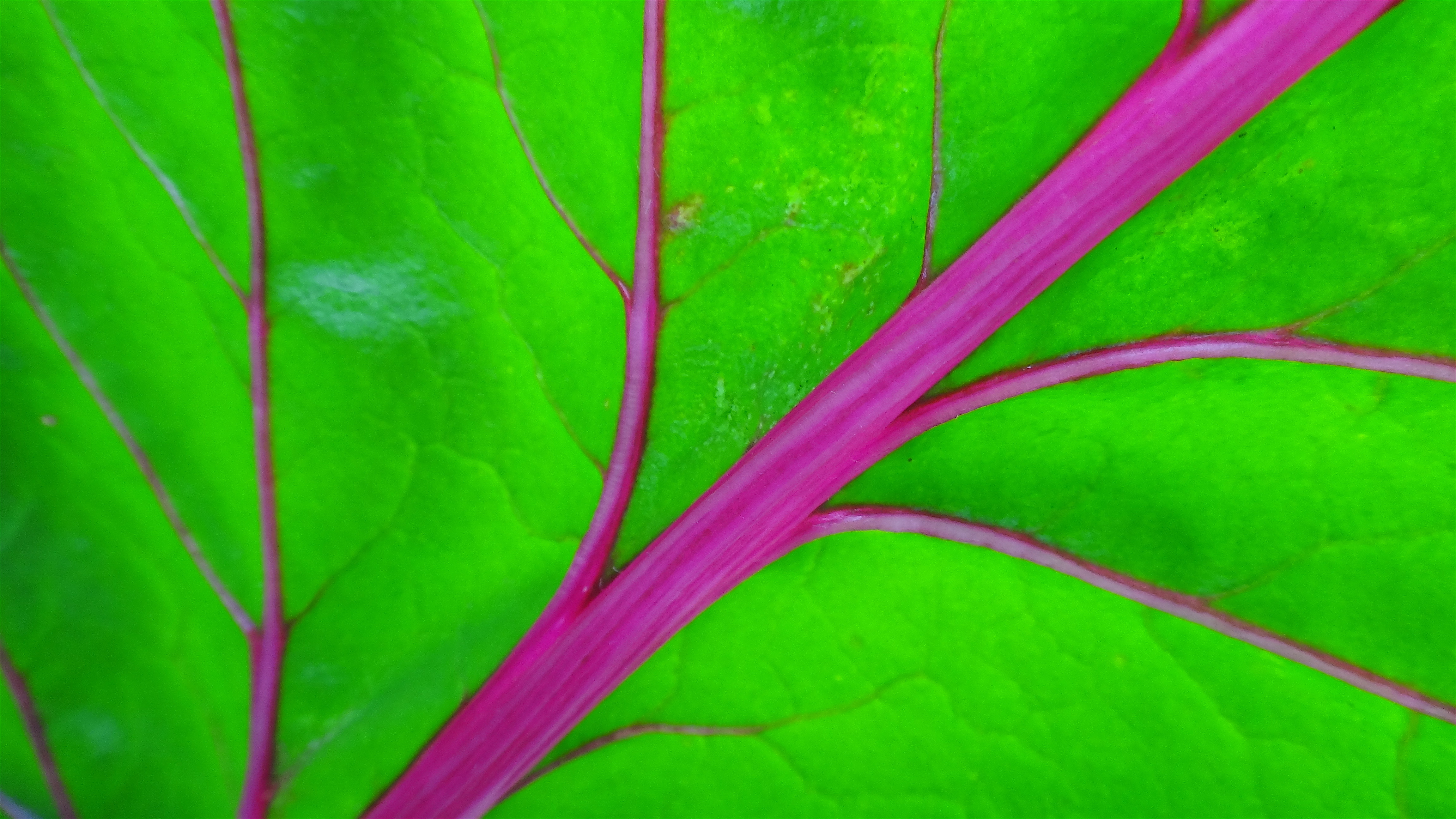
The magenta blood vessels on these chard leaves were amazing, these shots came from Sheryl Williams’ vegetable garden who was recently featured on the Inside Austin Gardens Tour
Here is her blog:
http://yardfanatic.blogspot.com/
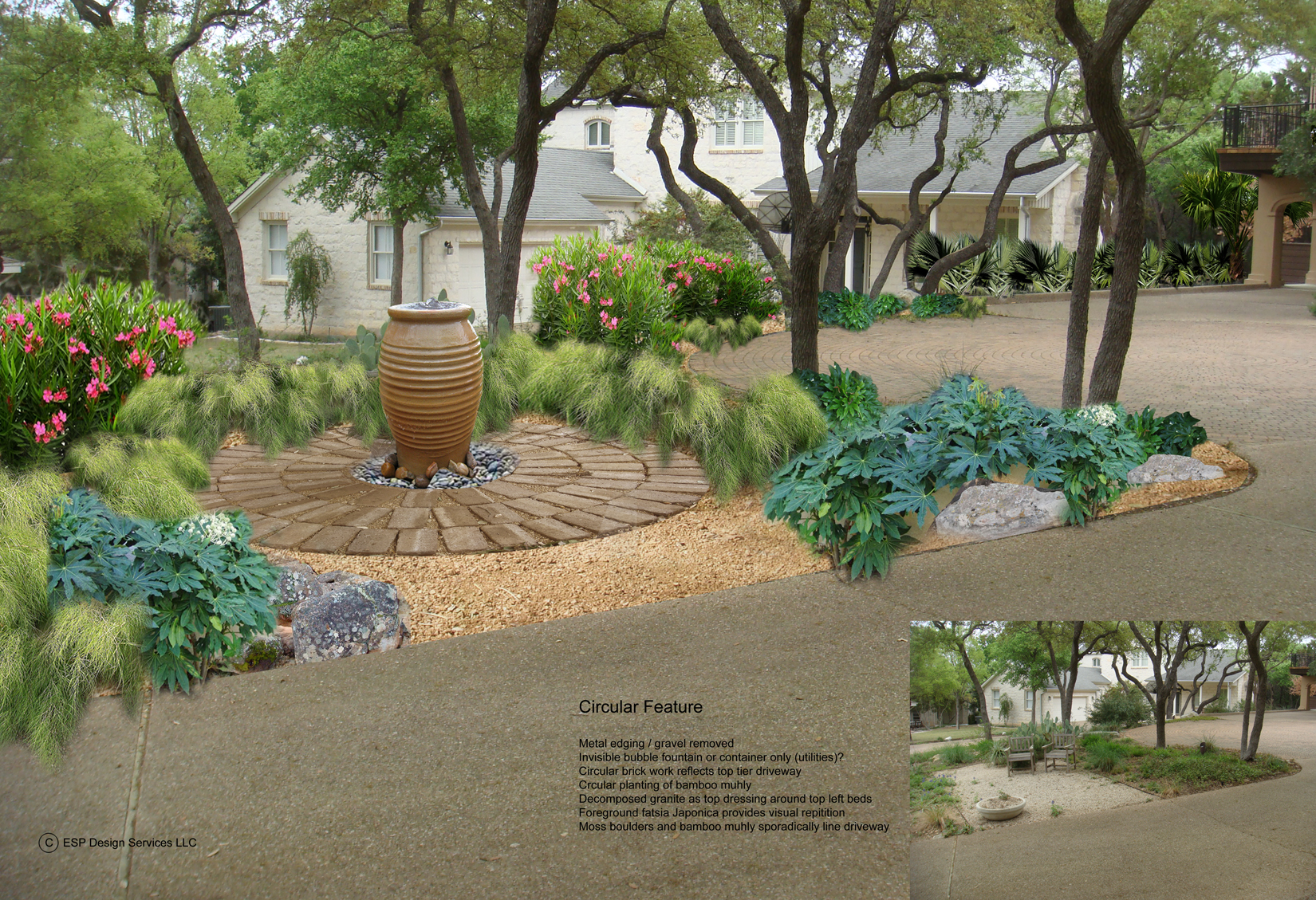
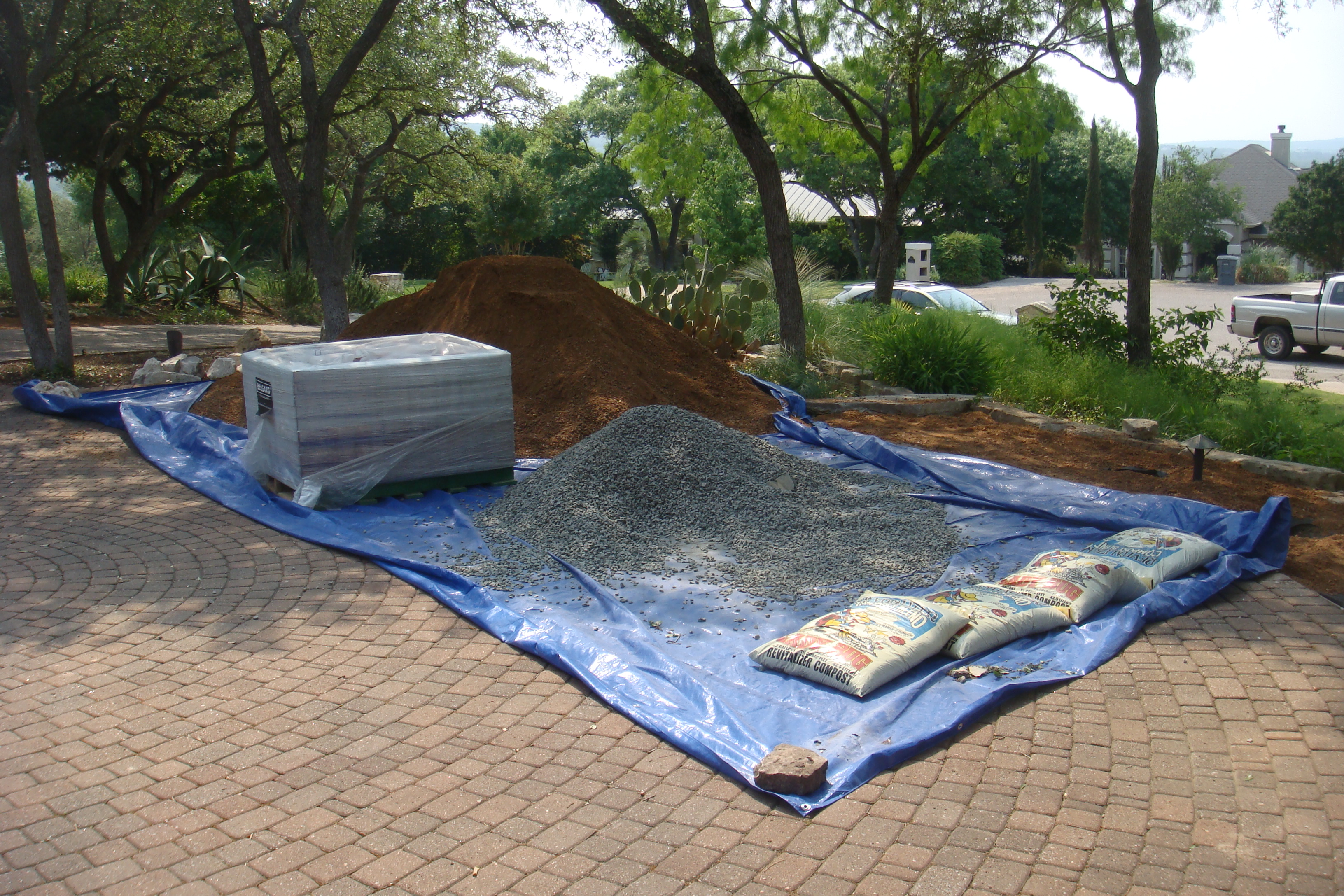
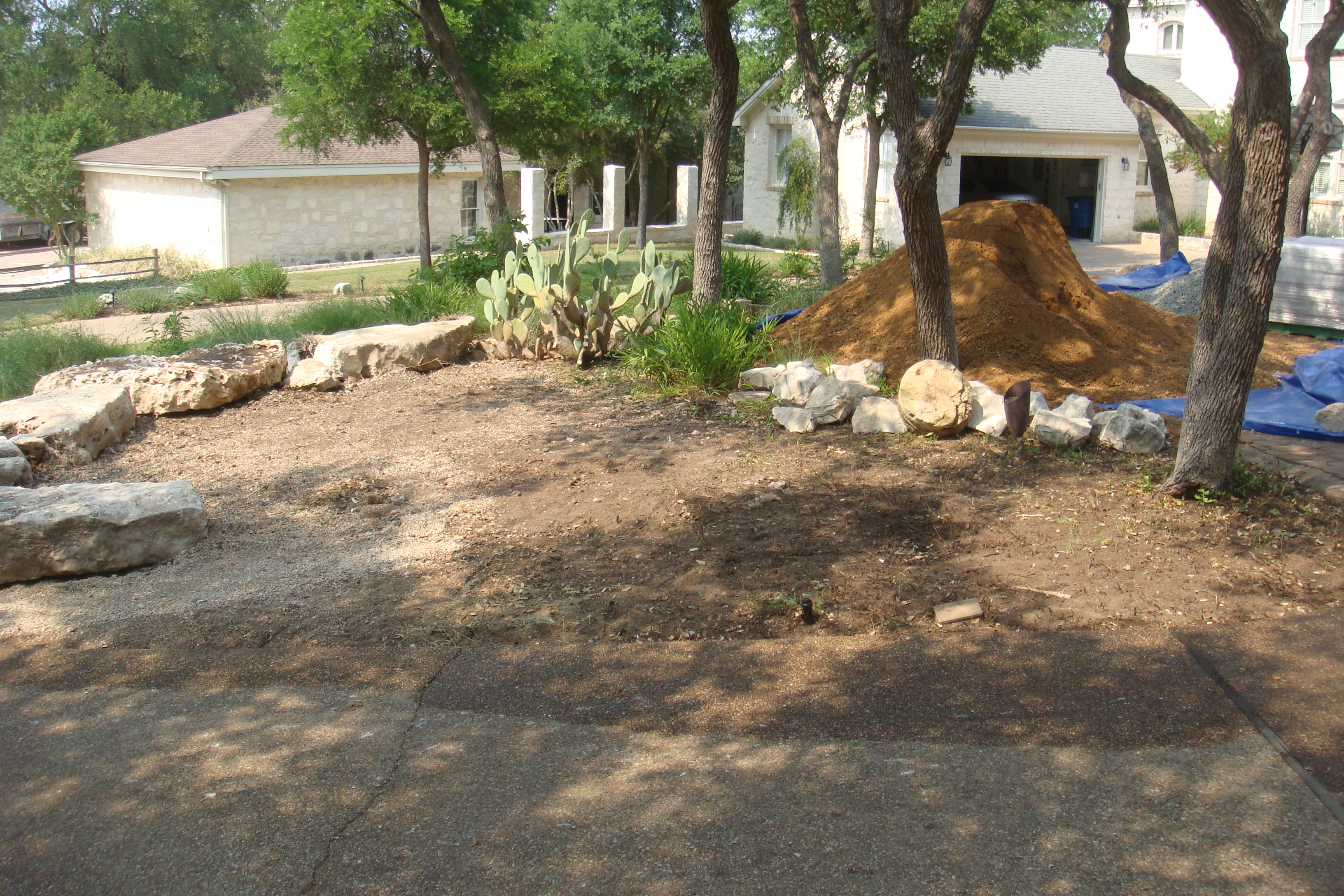
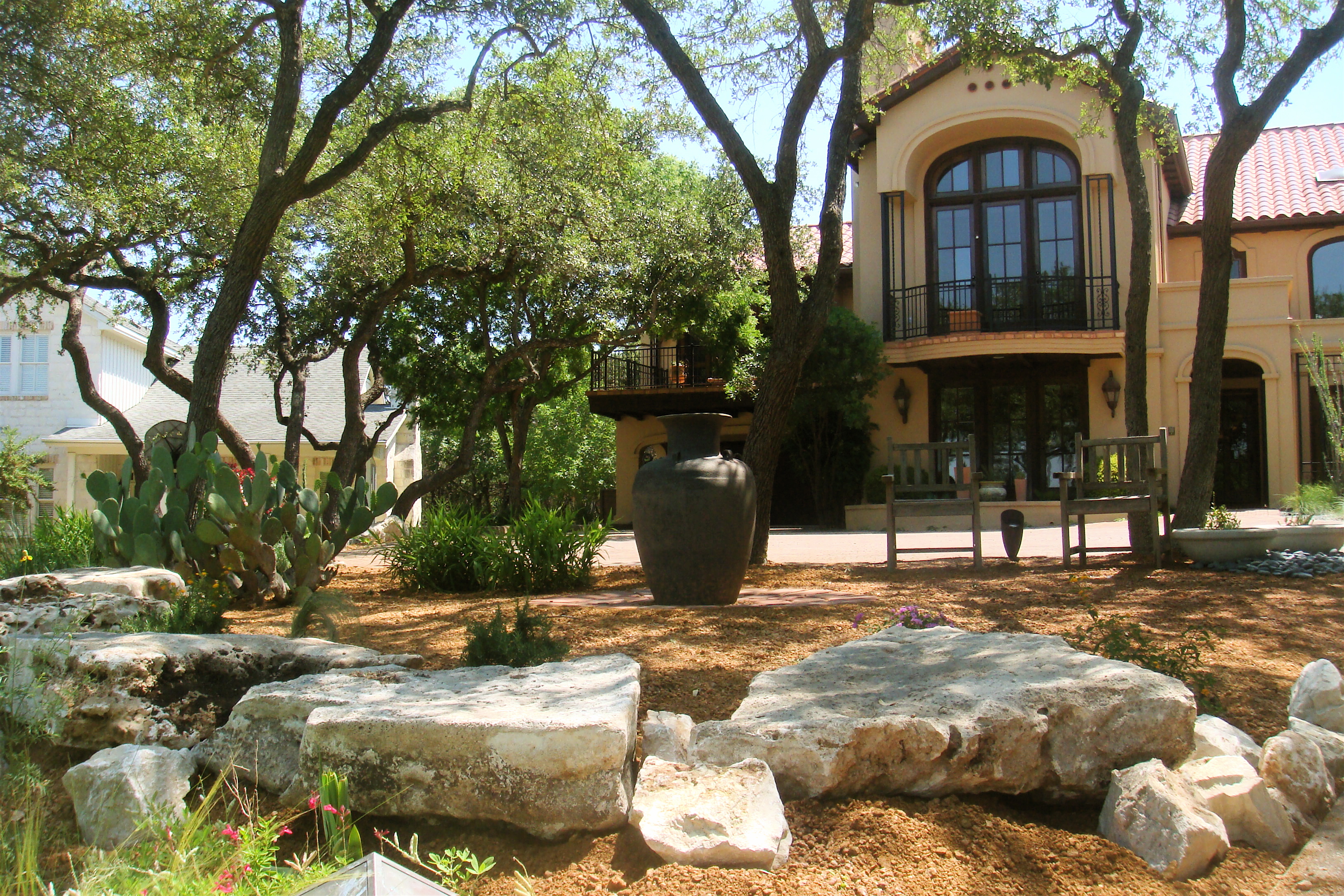
 Mount Bonnell, ESP Design Install…part two:
Front of house / Patio
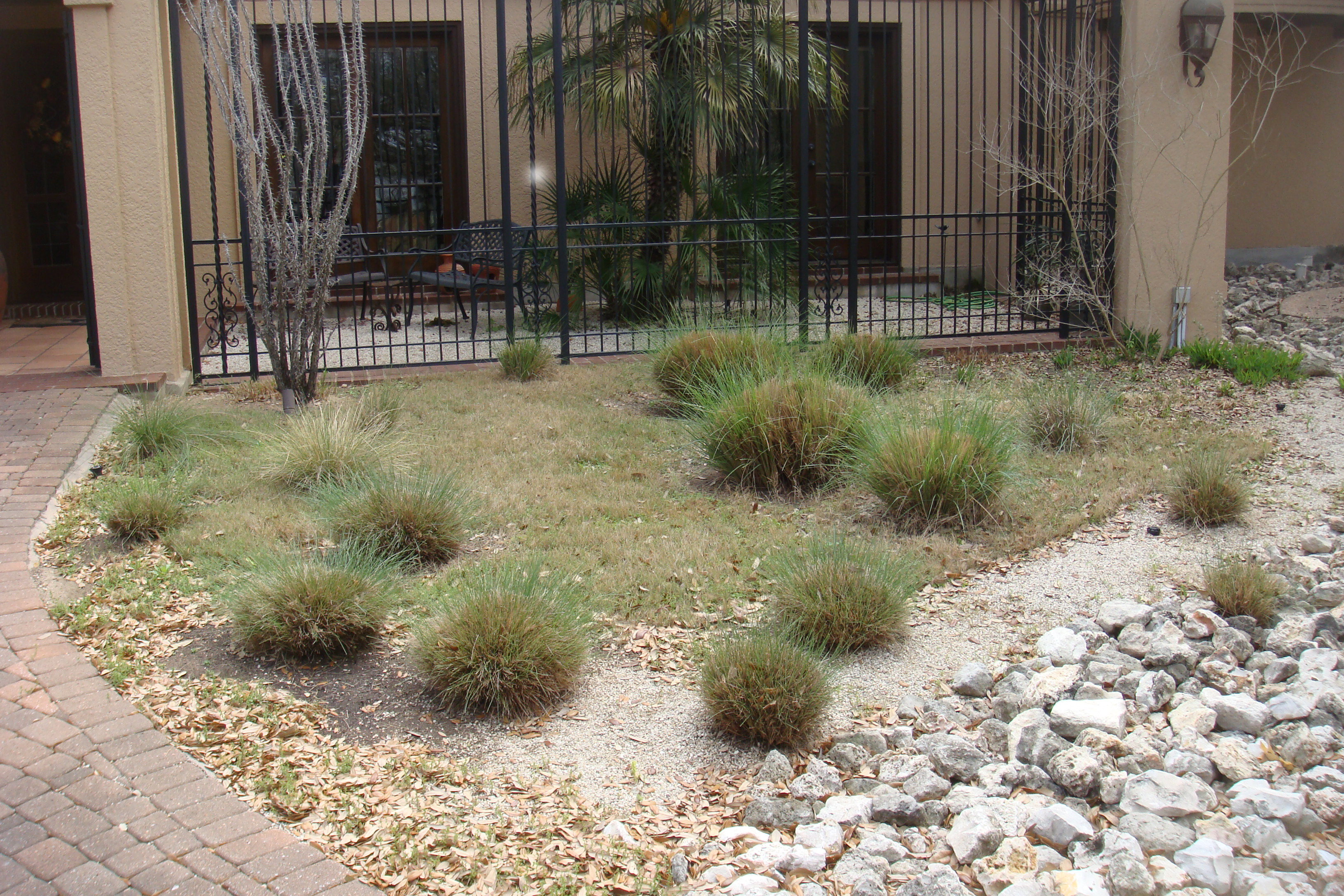
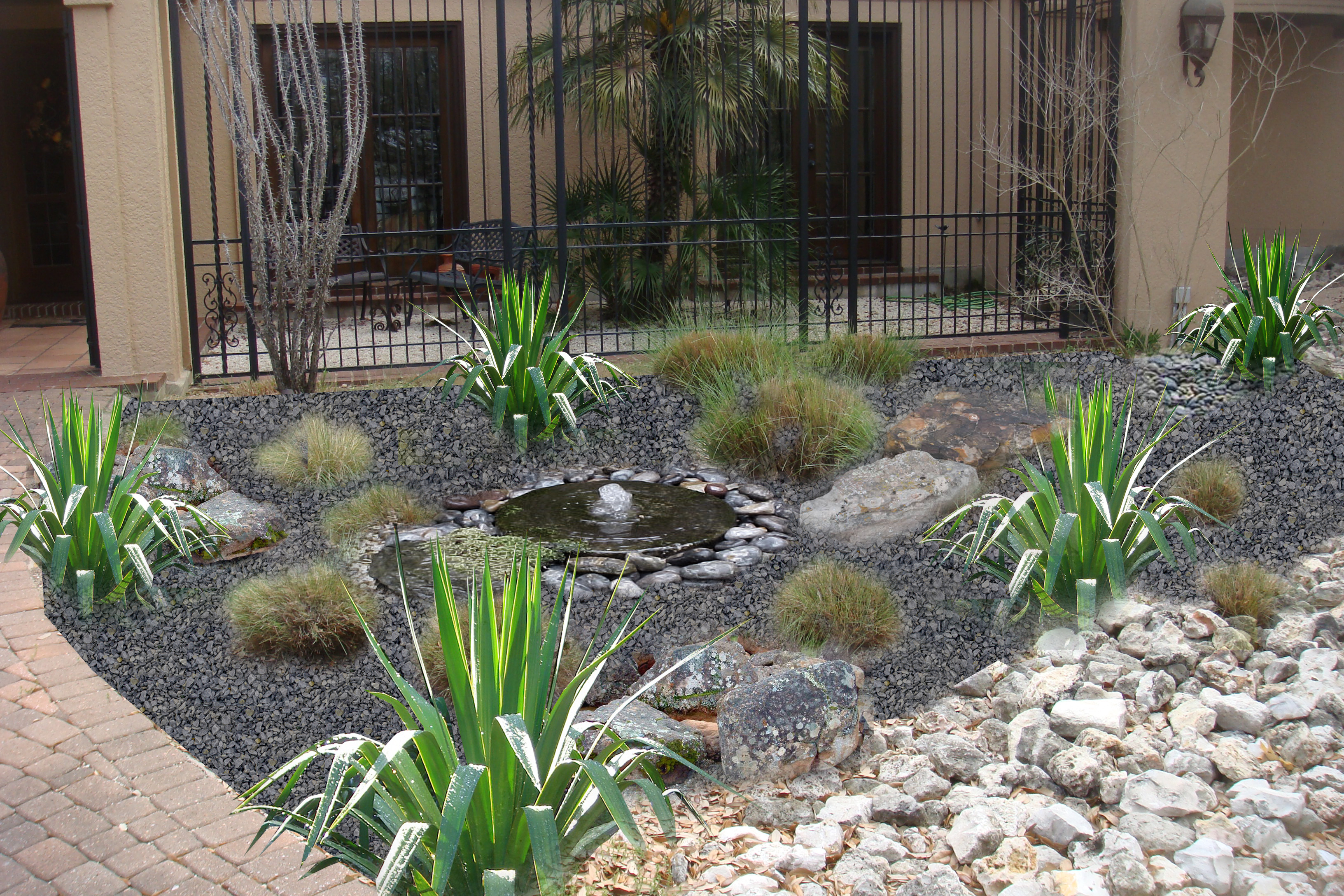
The fenced in courtyard has a magnificent Mediterranean fan palm growing in it, one of the largest I have seen…so you can grow them in Austin! The before image (left) was a rather random affair, lots of mediums doing visual battle with each other, and seemingly haphazard plantings of ornamental grasses in a bed of turfallo grass that was weak and full of weeds. The visualization on the right adds a bit of punch to the scene. I decided to replace the grass with Tejas black shingle to deepen the contrast and to reference the color of the wrought iron work on the enclosed patio. The focal point at this stage was a proposed bubble fountain that later became a planter. I went for a stand of soft leaf yucca to contrast the grasses that remained.
Here is the final result: The planter is populated by a baby Agave parryi huachucensis and is surrounded by accenting grey flagstone.
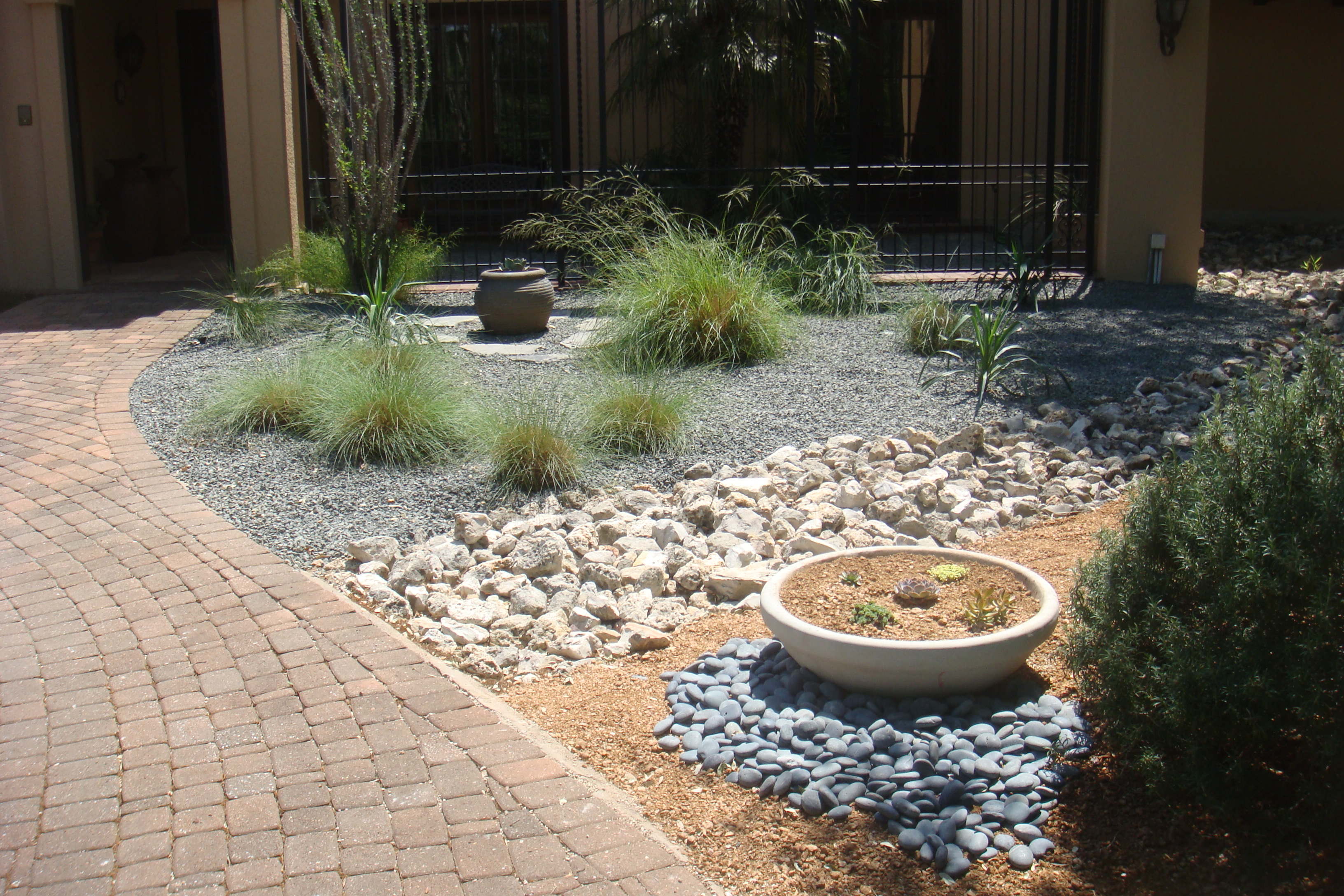
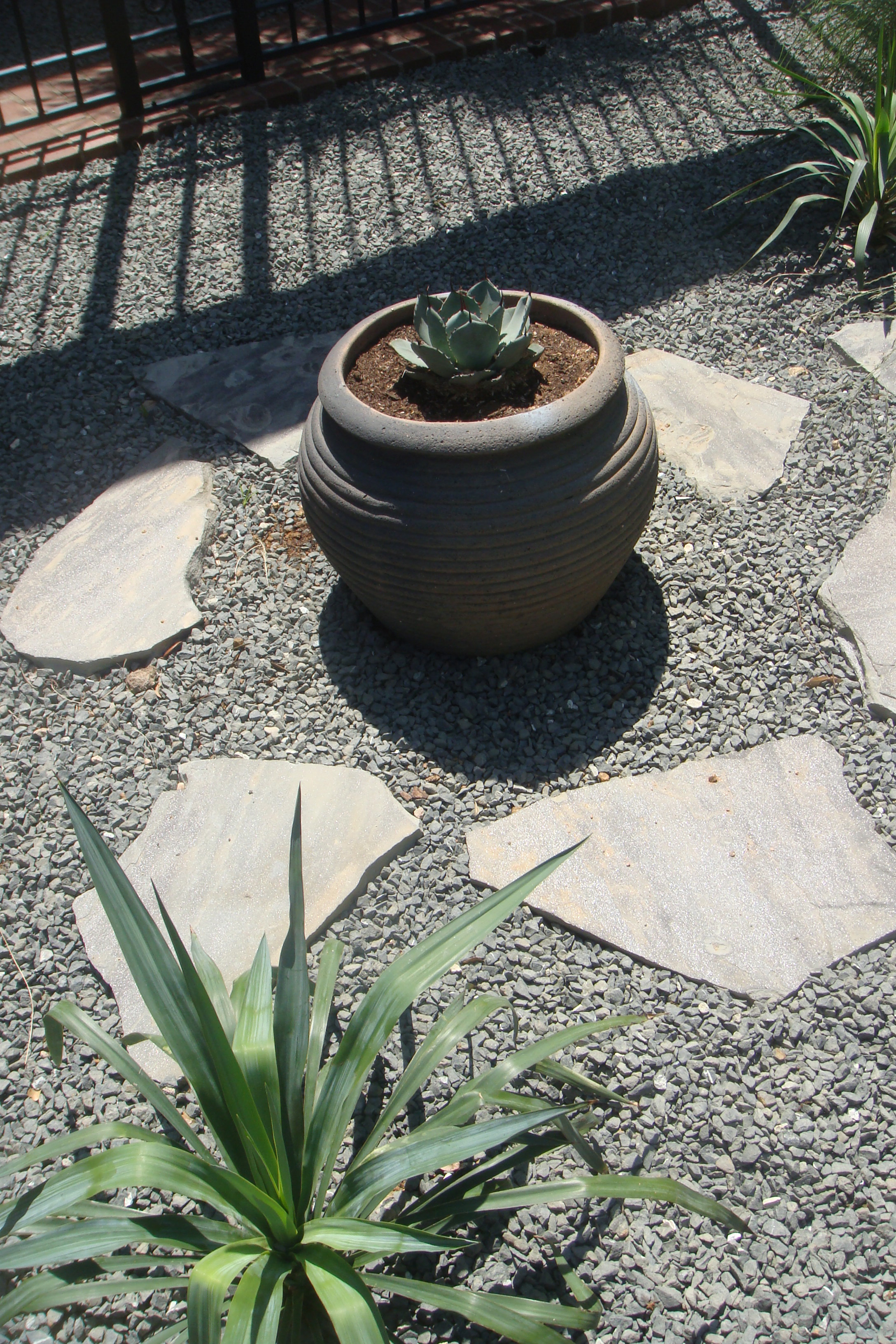 The white limestone rocks inside the enclosed patio area I also replaced with the Tejas black shingle to add further visual continuity through the scene to the house.
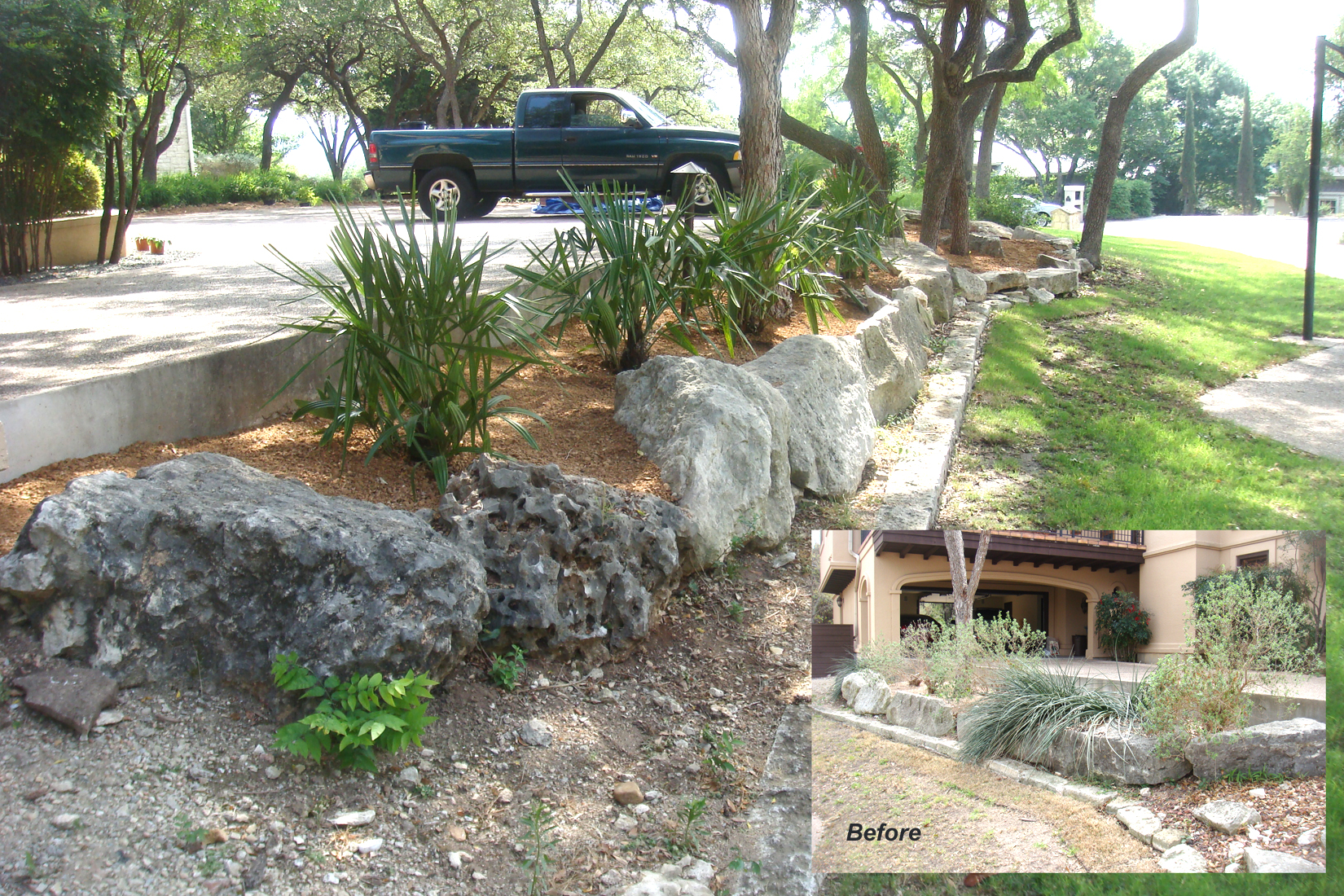
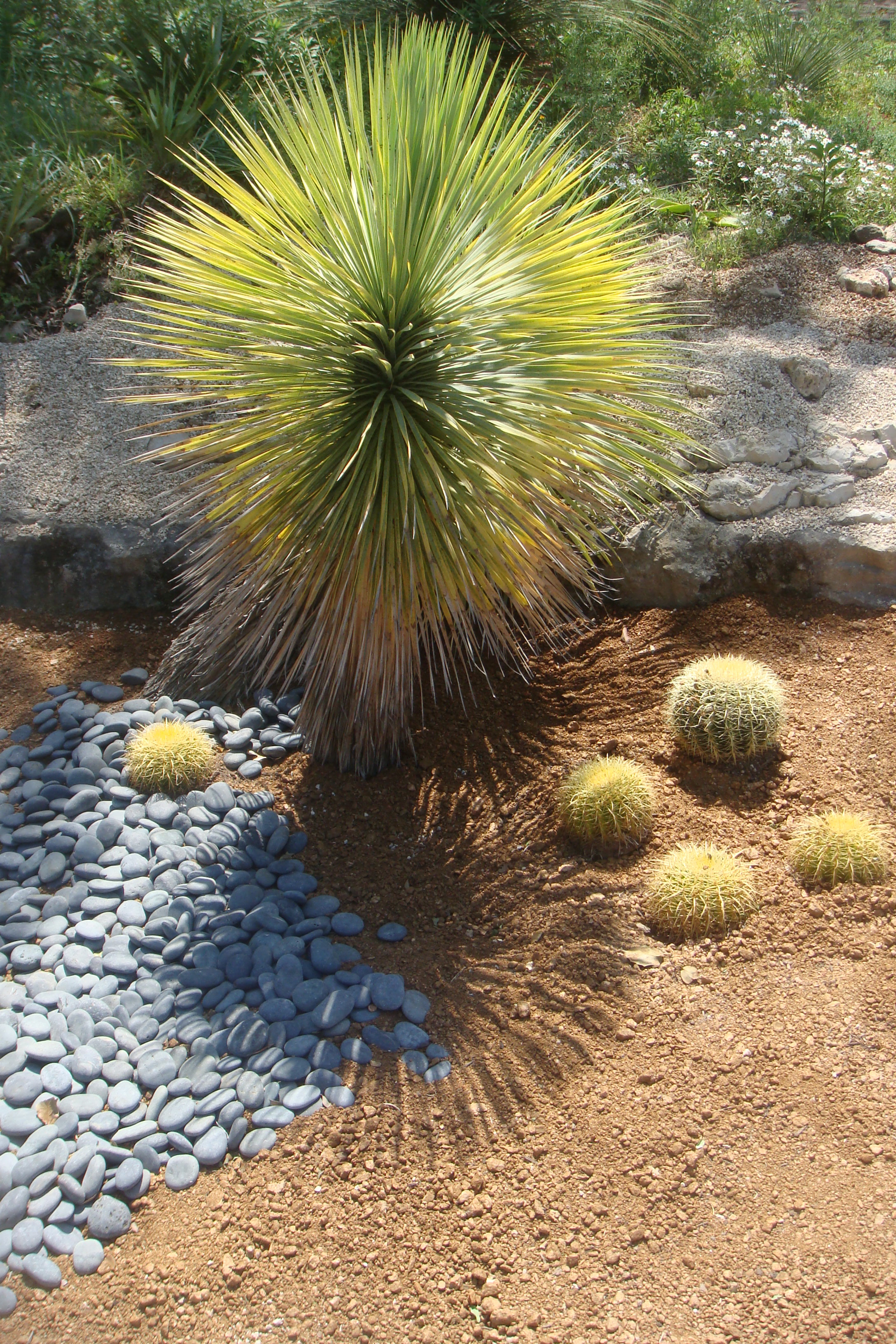
And some shots of the new Hell-strip:
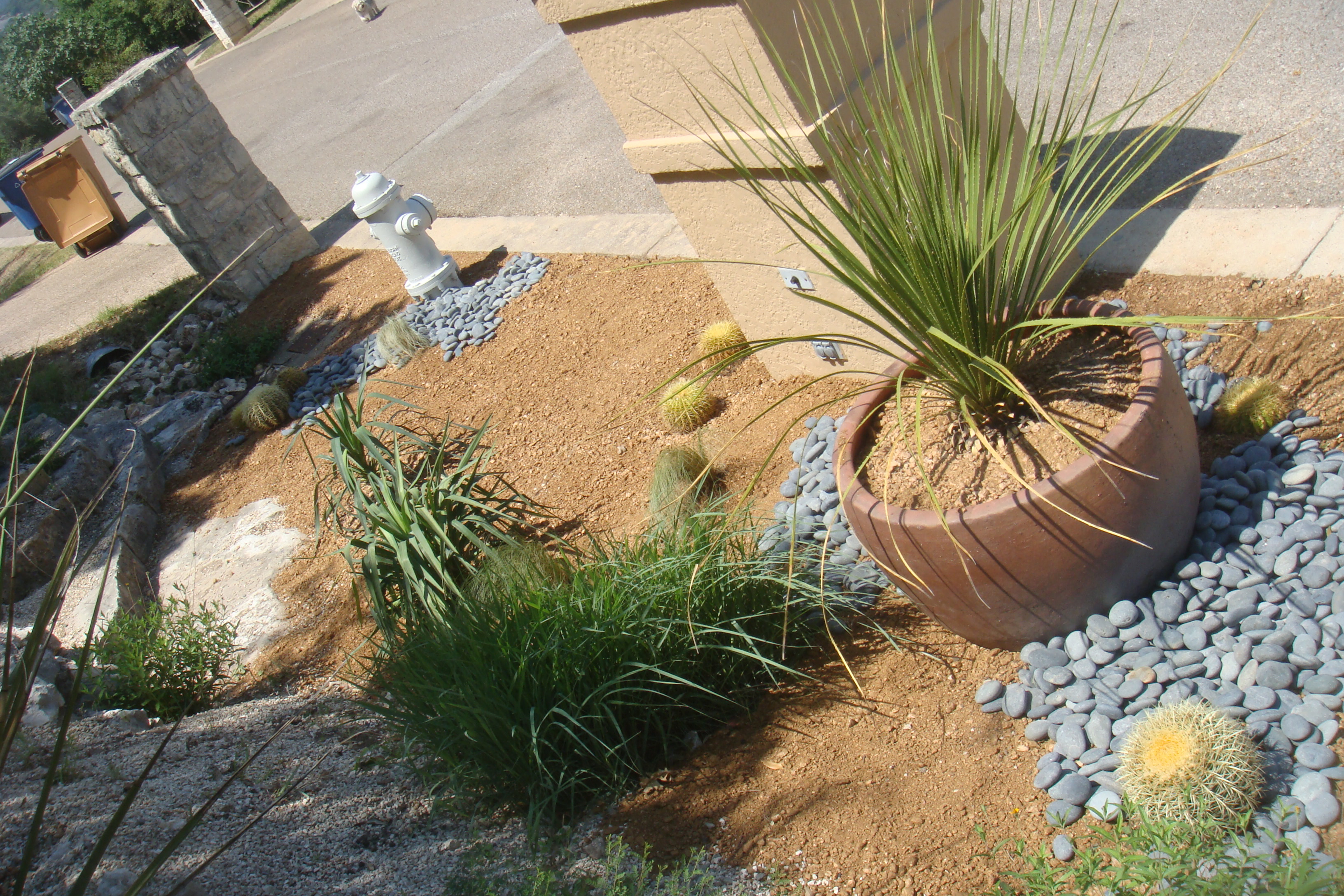
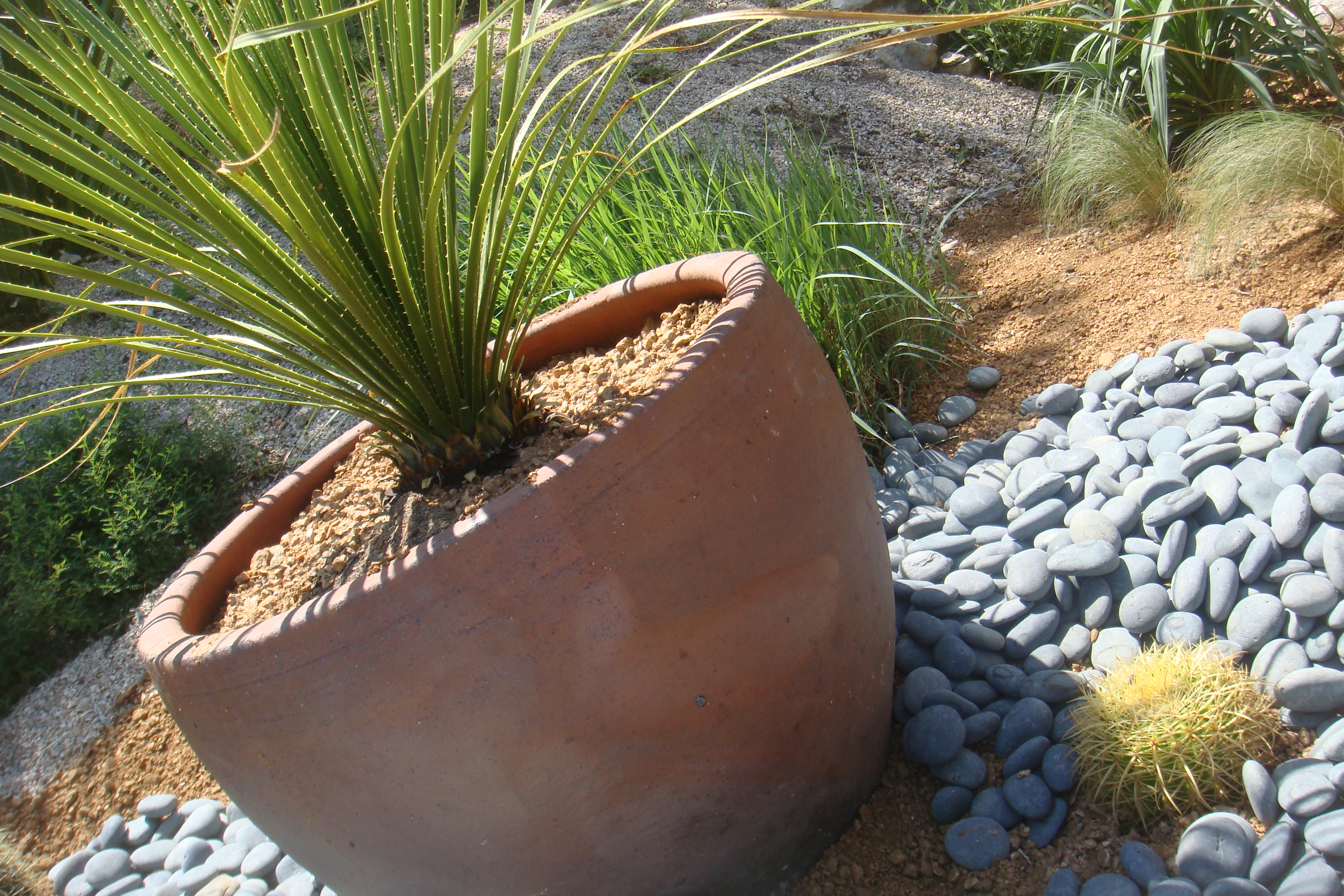 Stay Tuned for:
“Close Encounter”
 All material © 2011 for eastsidepatch. Unauthorized
intergalactic reproduction strictly prohibited, and
punishable by late (and extremely unpleasant)
14th century planet Earth techniques.