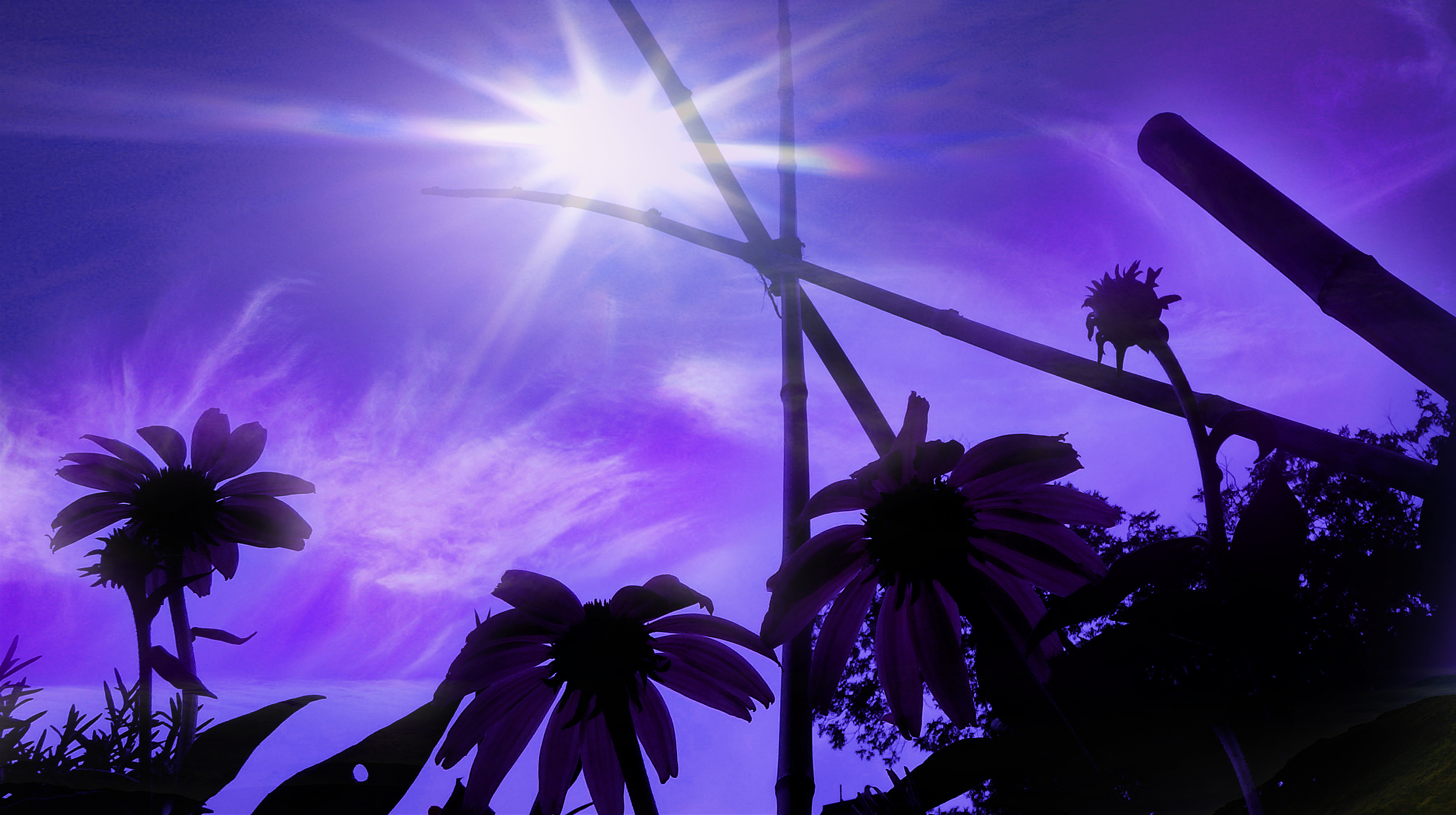
Echinacea…
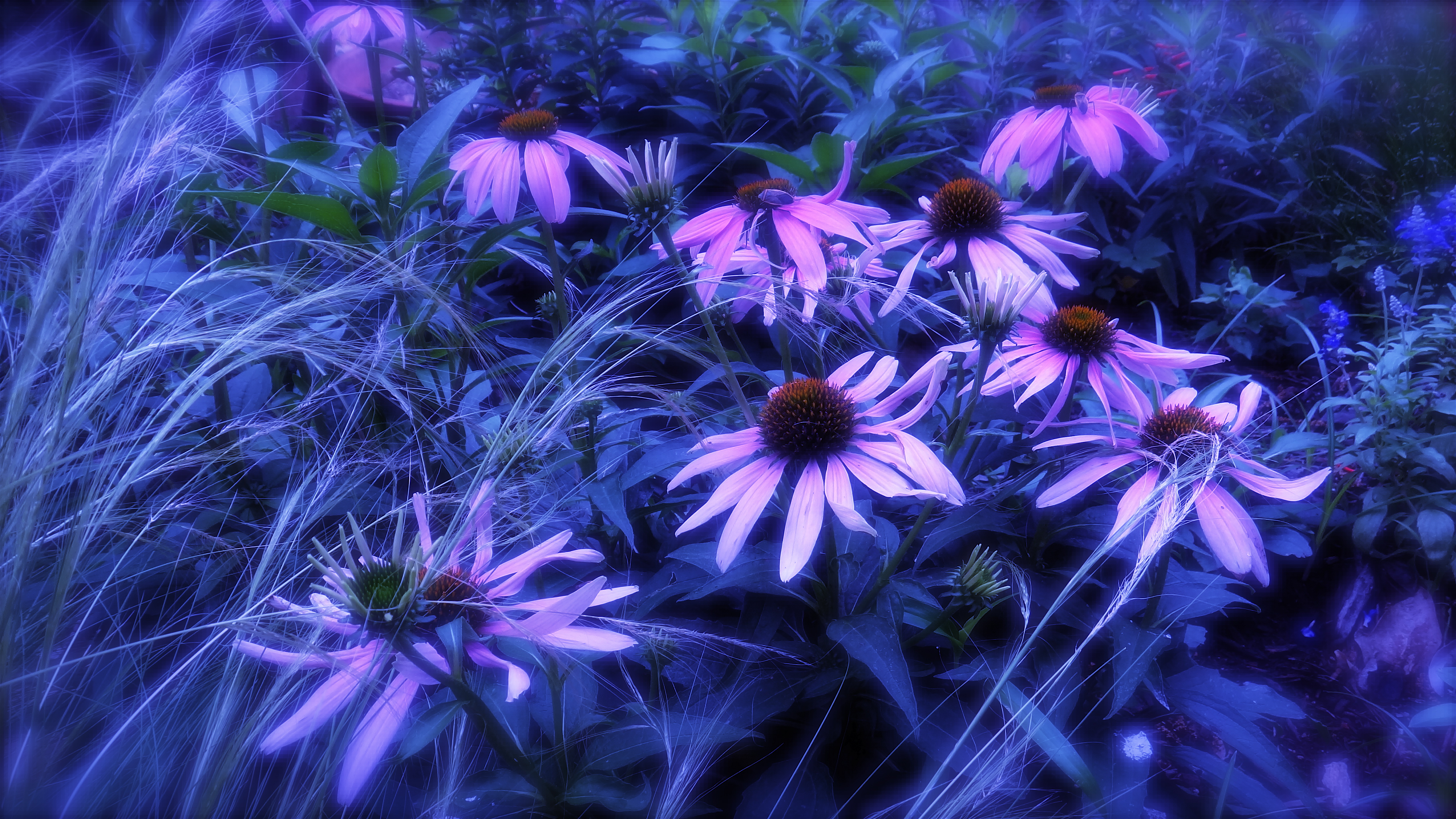 the story book flower.
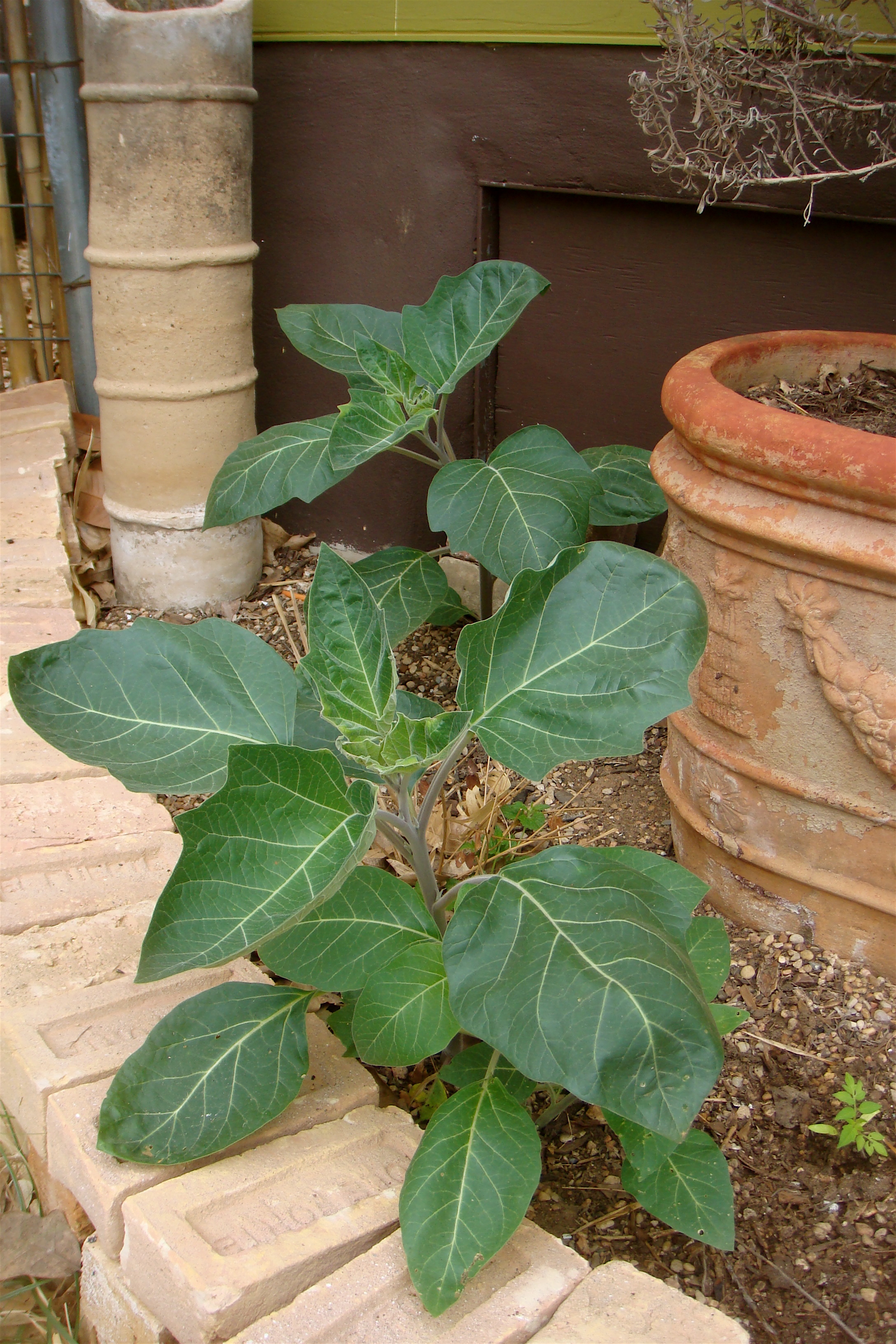
 mother nature must have been hitting the datura hard when she dreamed up this plant.
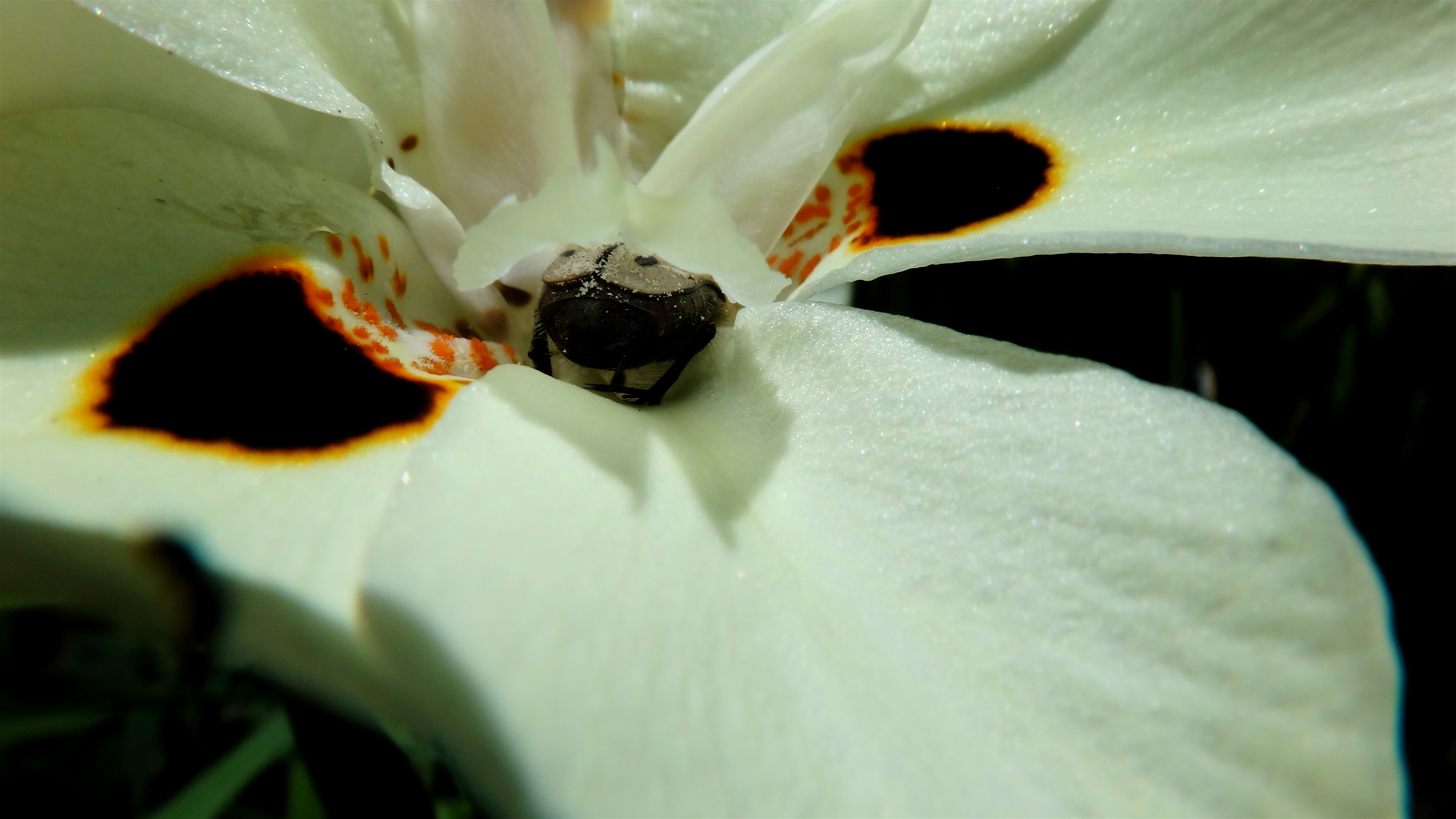 She also did pretty good on the frosty white and tropical coloration of this butterfly iris (also known as Peacock Flower, Bicolor Iris, Evergreen Iris, Spanish Iris and African Iris, phew!):
Dietes bicolor
This little beetle was hiding under one of the plant’s veils.
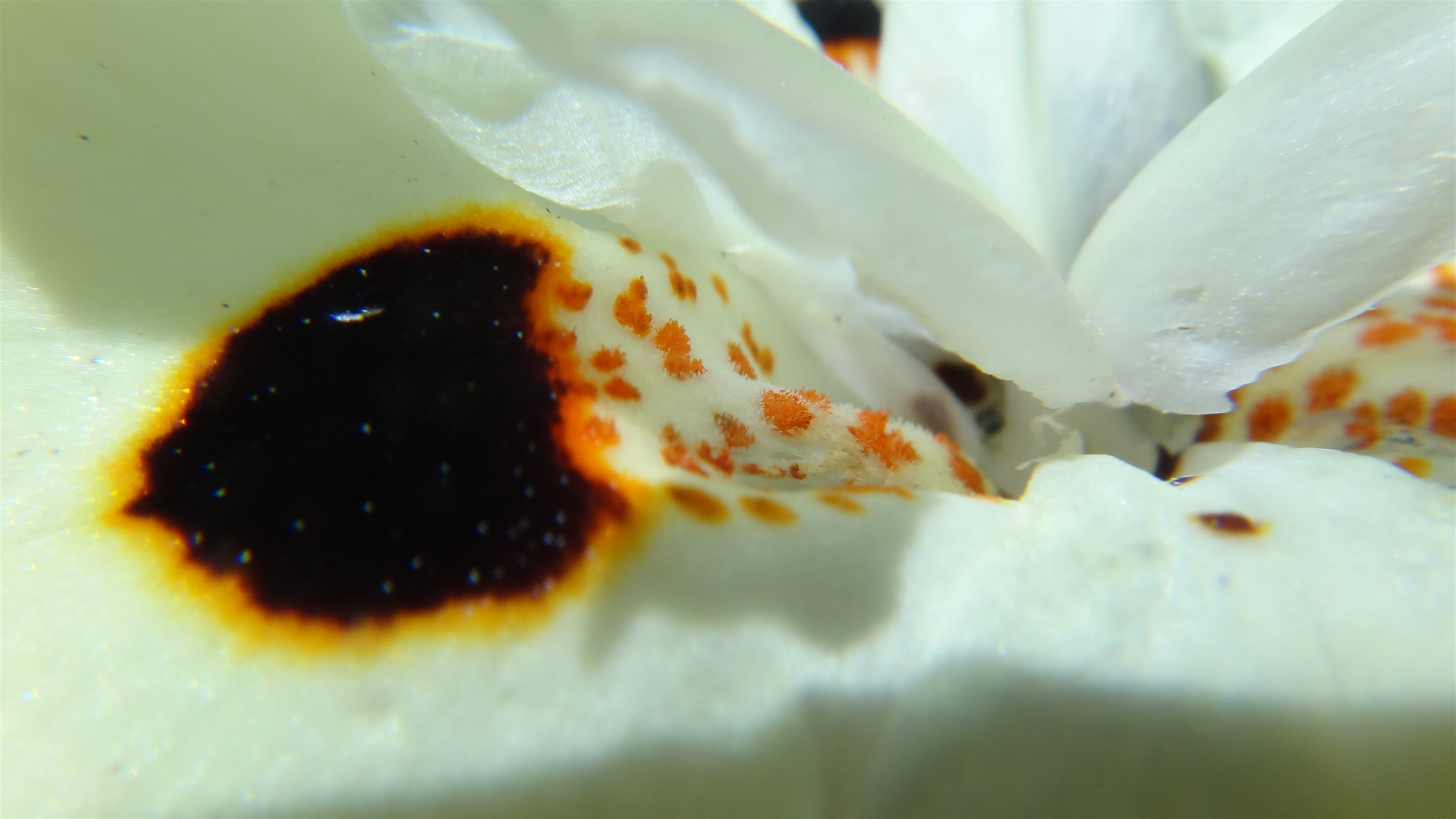
 This plant has been throwing out blooms for some time now…(full sun), it will be divided in the fall.
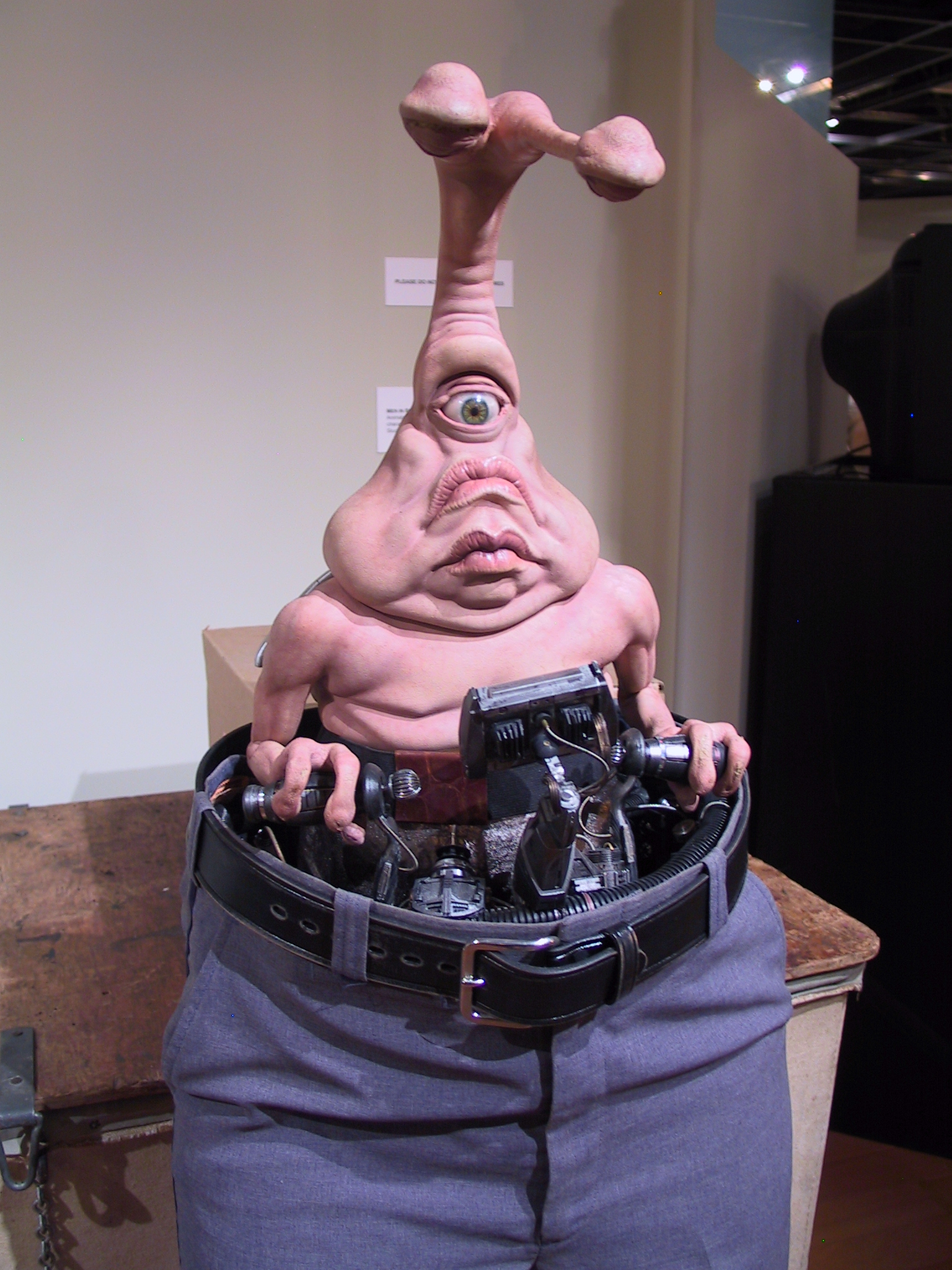 “uh oh!”
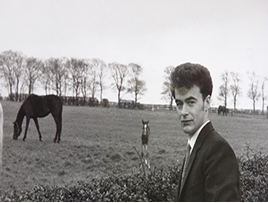
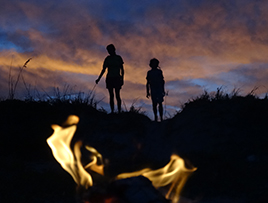
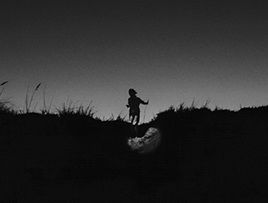
 This “Man in Black” pulled up in one of the innocuous grey vehicles the other day, for some reason he kept inspecting the ground below my opuntia tree which is in full bloom right now. As dusk fell he proceeded to venture deep inside the dangerous Naboo territories of my back garden.
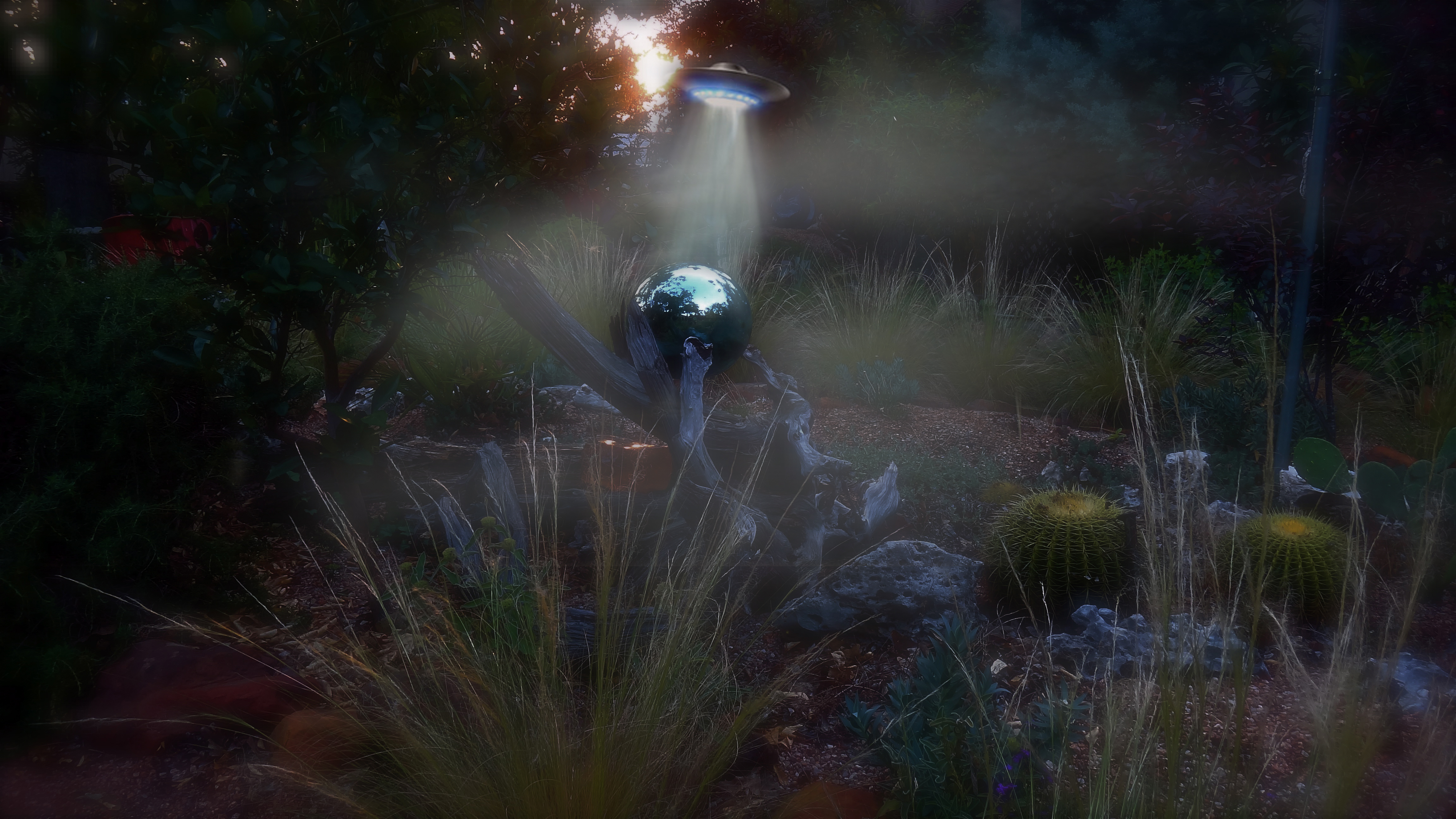 I have absolutely no idea why.
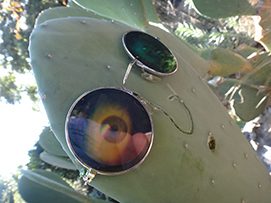
 “I knew it all along Scully, didn’t I tell you those Mexican gazing balls were in fact beacons”.

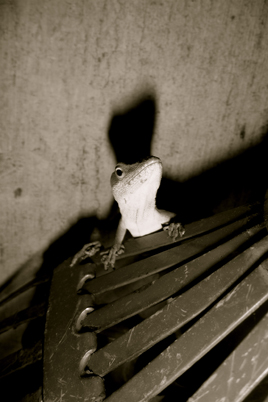
“We mean your species no croak…harm”.
 FLASH!
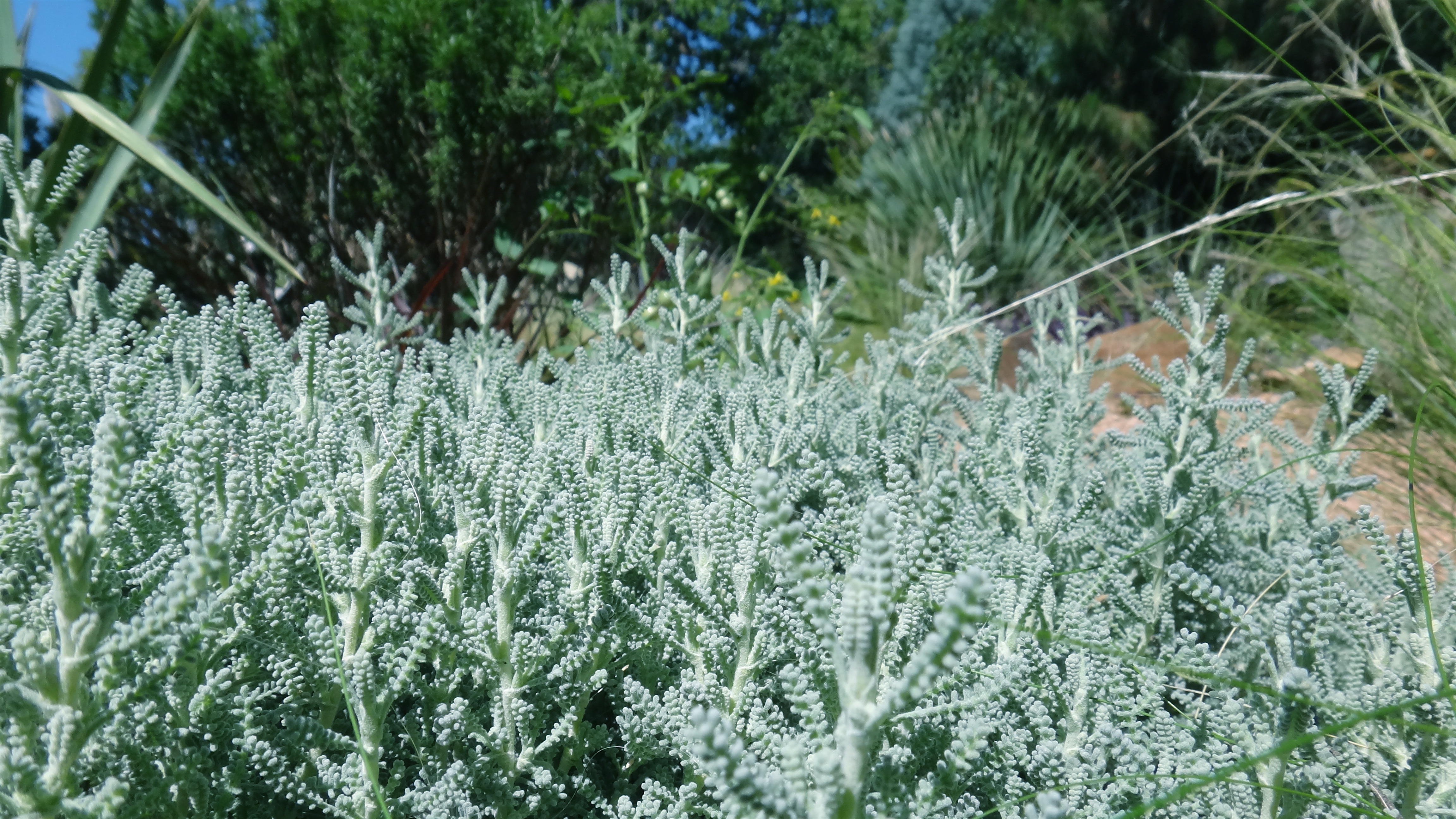 Santolina is in top frosty form right now. I always seem to worry about this plant at various times throughout the year, it gets leggy at times and occasionally browns in sections just to give me a scare. This slow growing plant requires some periodic pruning attention, but the results are well worth it. I need more of it.
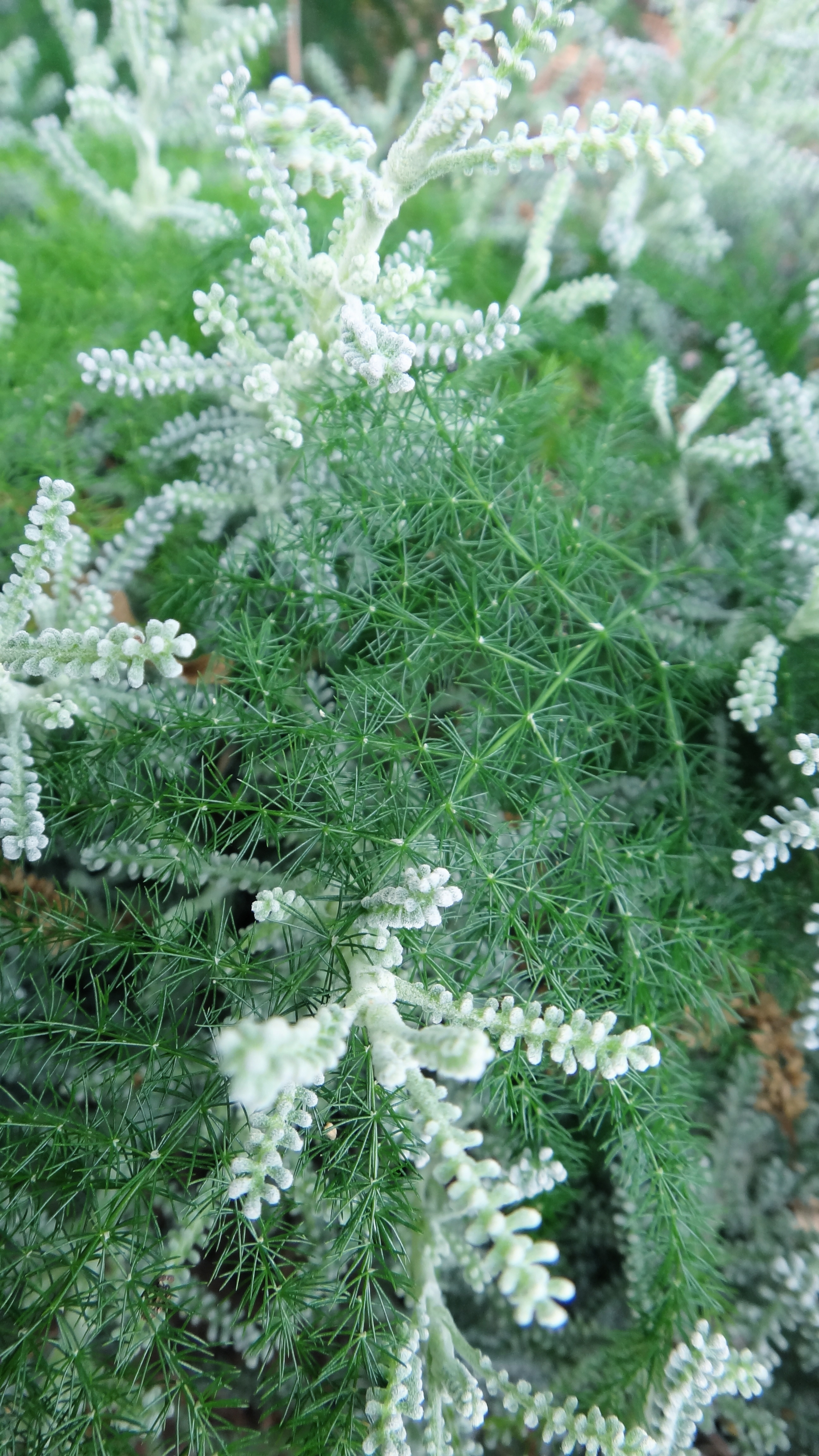 Here is another one decorating a tree fern.
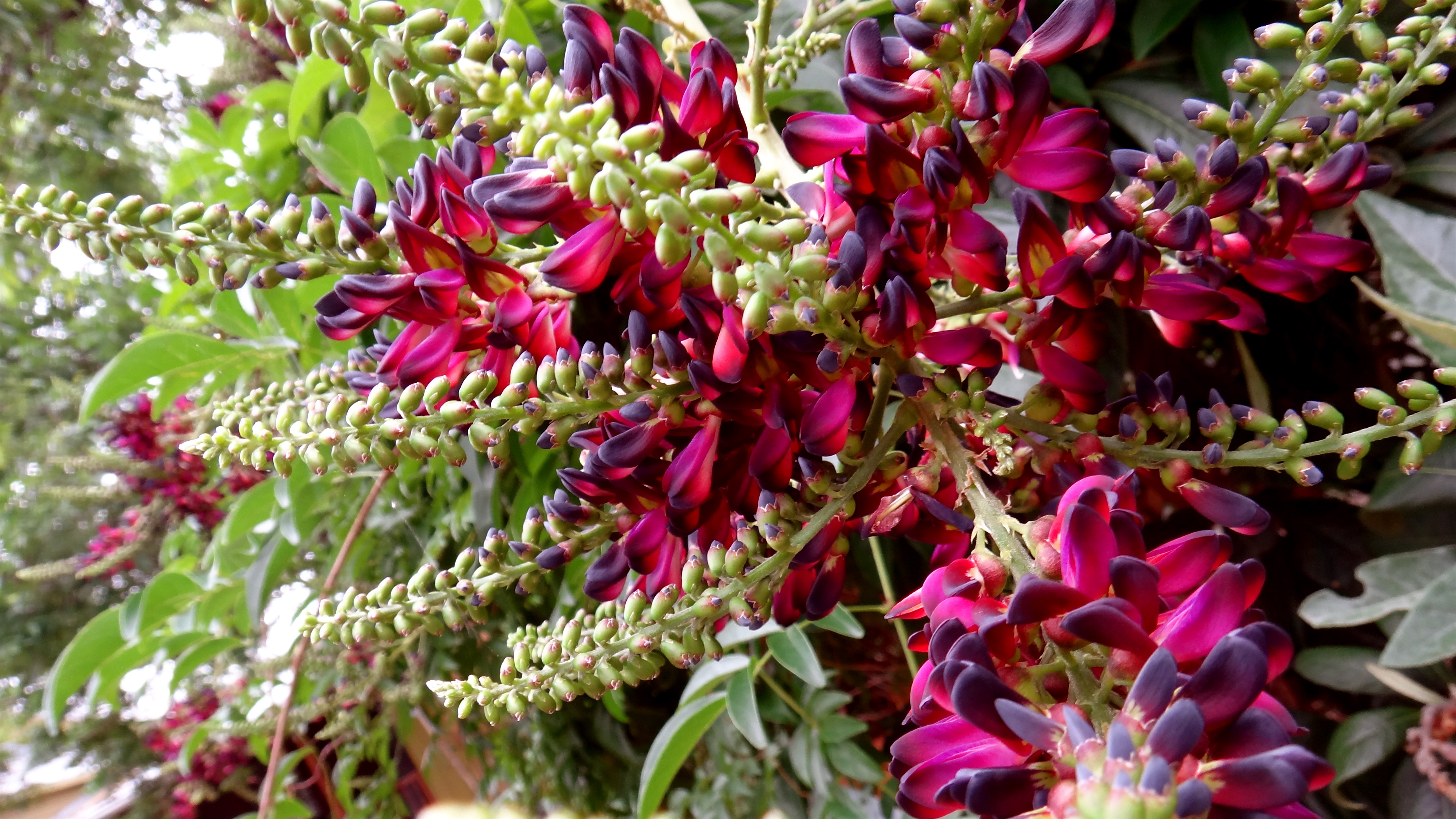 This evergreen wisteria
Milletia reticulata Benth
has more Gothic blooms on it this year then I have ever seen. It is covered in these old-suit-in-the-back-of-the-closet purple smelling blooms.
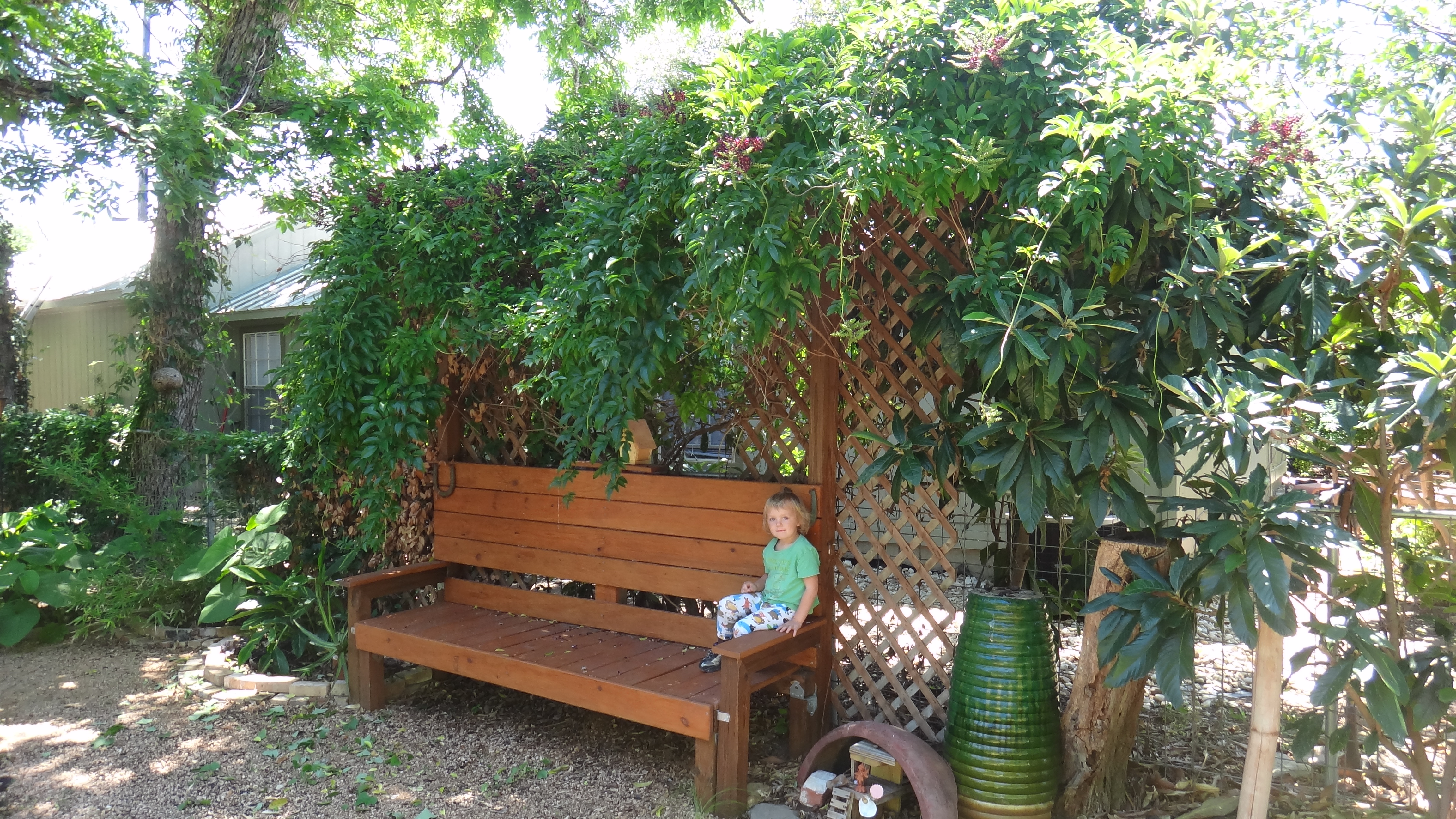 I like it. The heavy aroma fills up a good part of the Patch at this time of year. This plant, being the eldest always blooms first and it will keep on producing well into the summer, my other wisterias pick up the hard-to-describe smelling baton a little later.
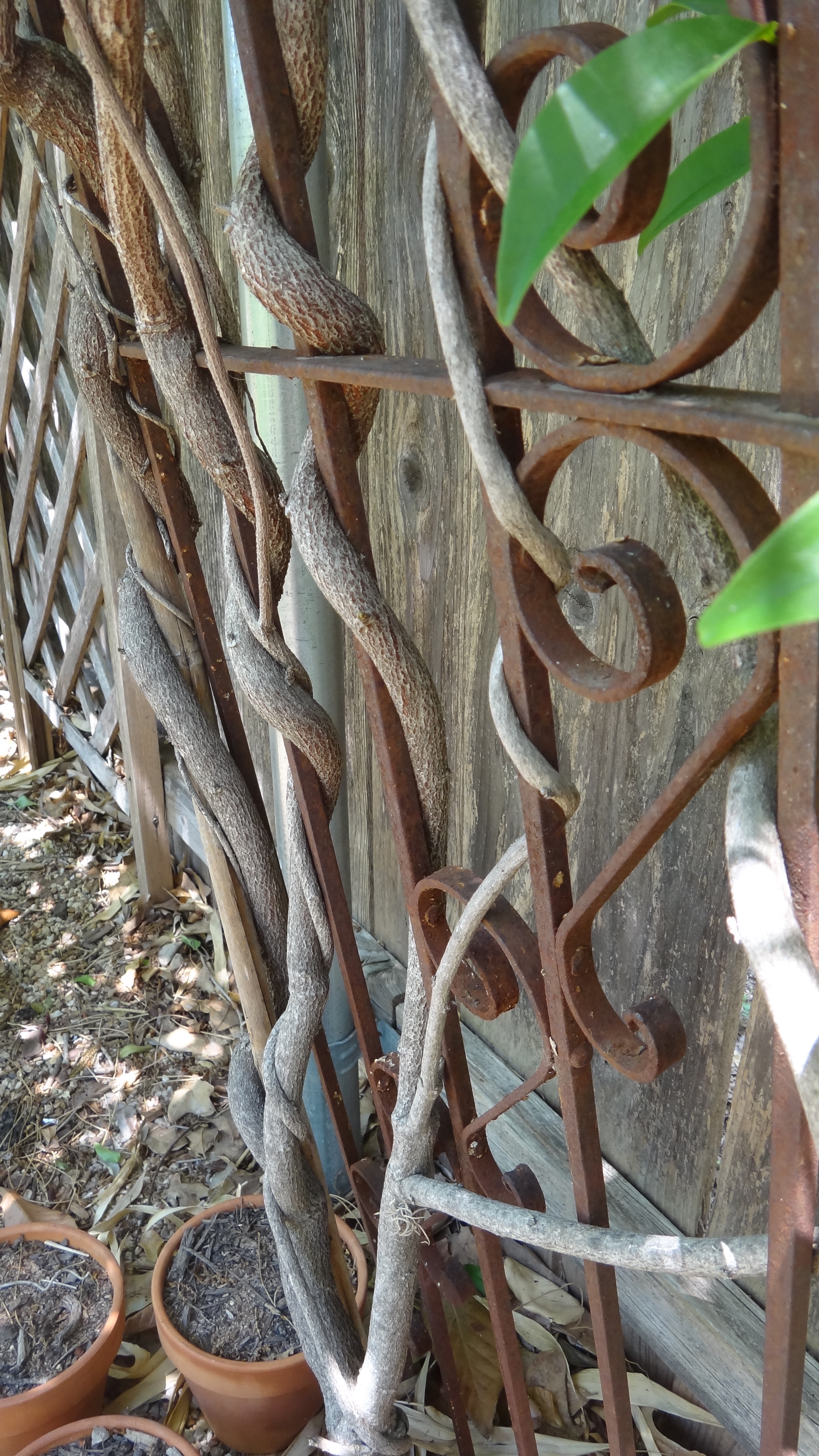
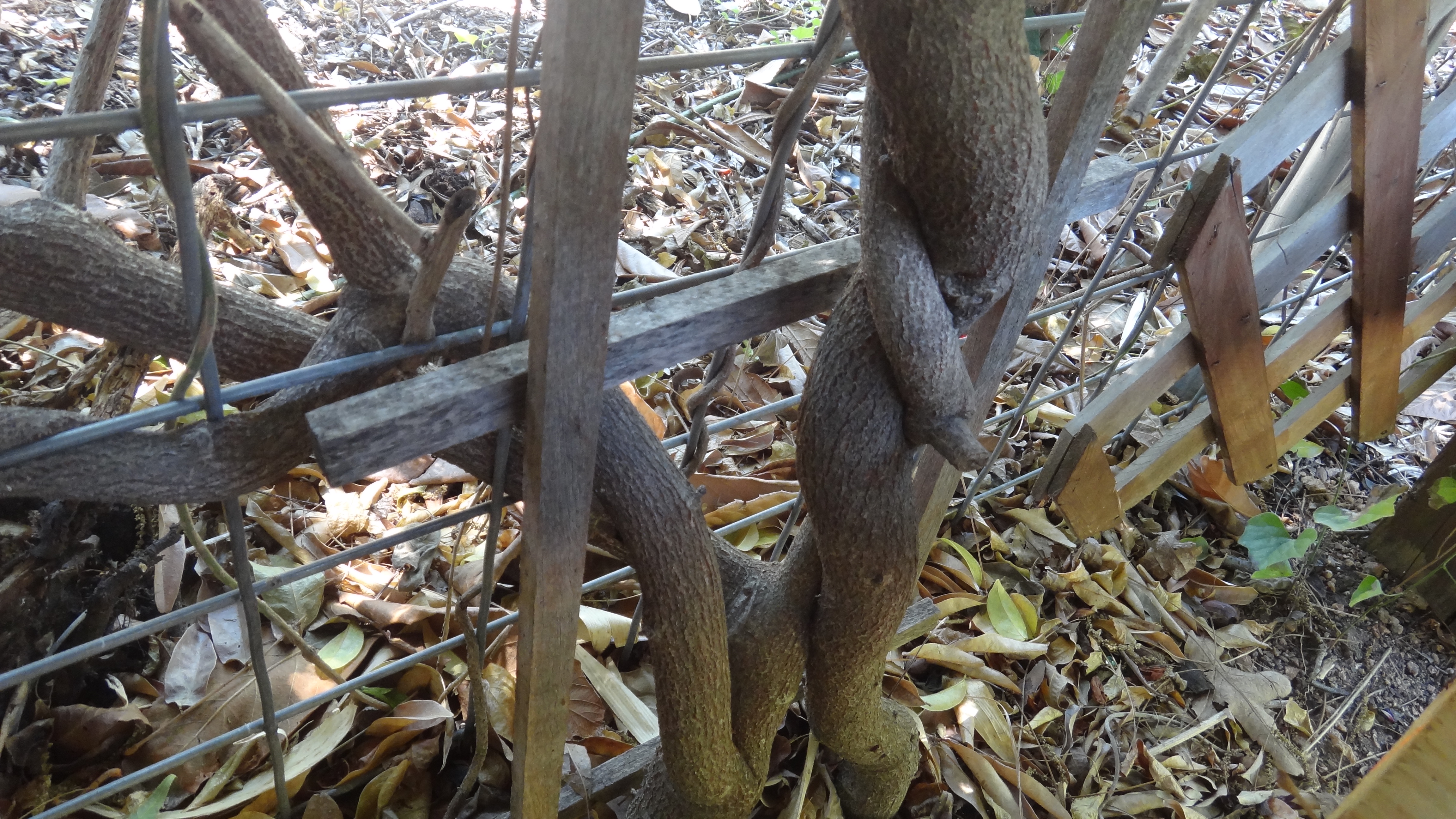
I made the fatal mistake of planting this one on a metal support which it has consumed and is now proceeding to drag skyward…word of warning.
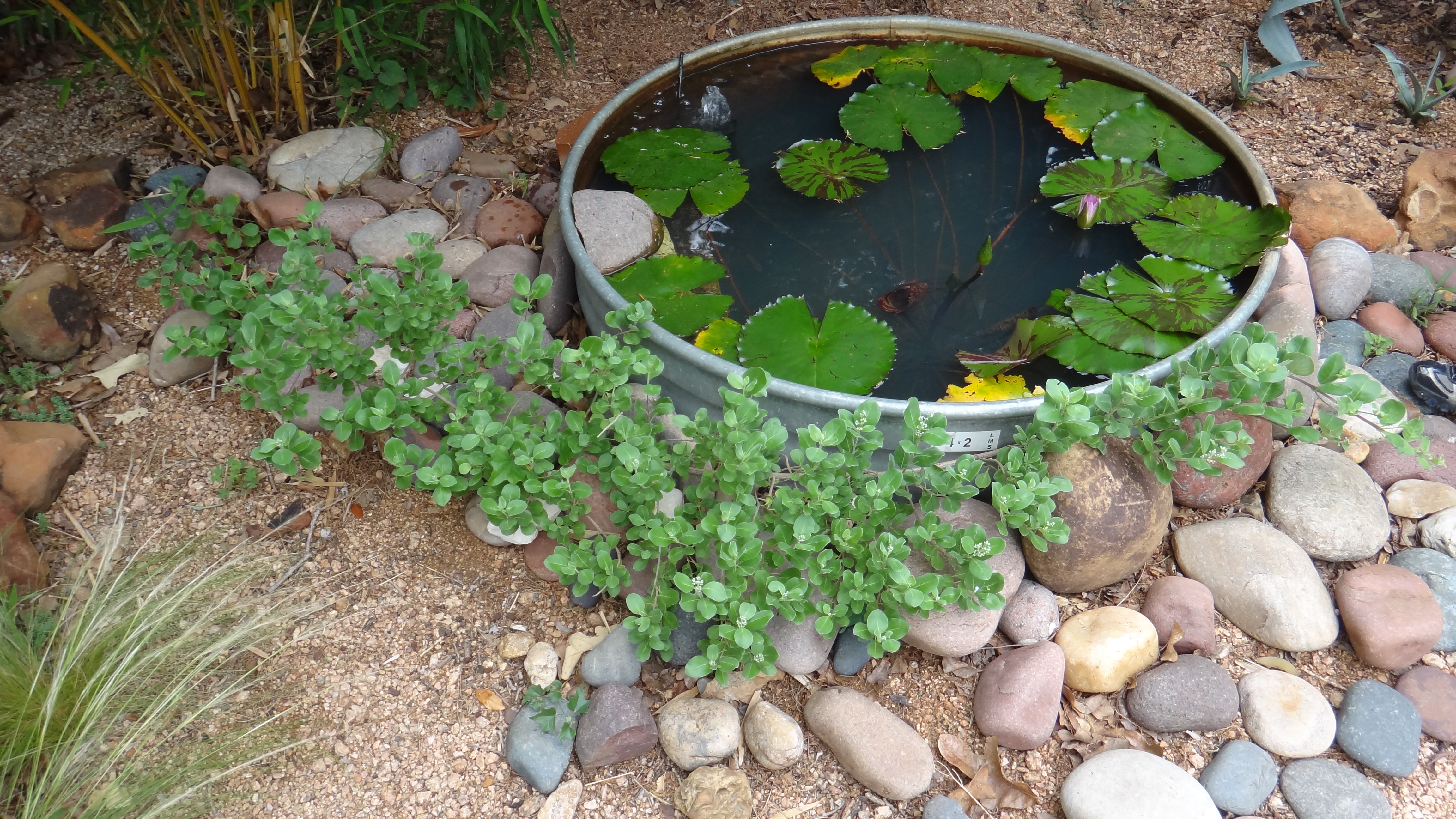 This beach vitex has almost made it half way round this stock tank, a couple more years should do it. It has also started to bloom.
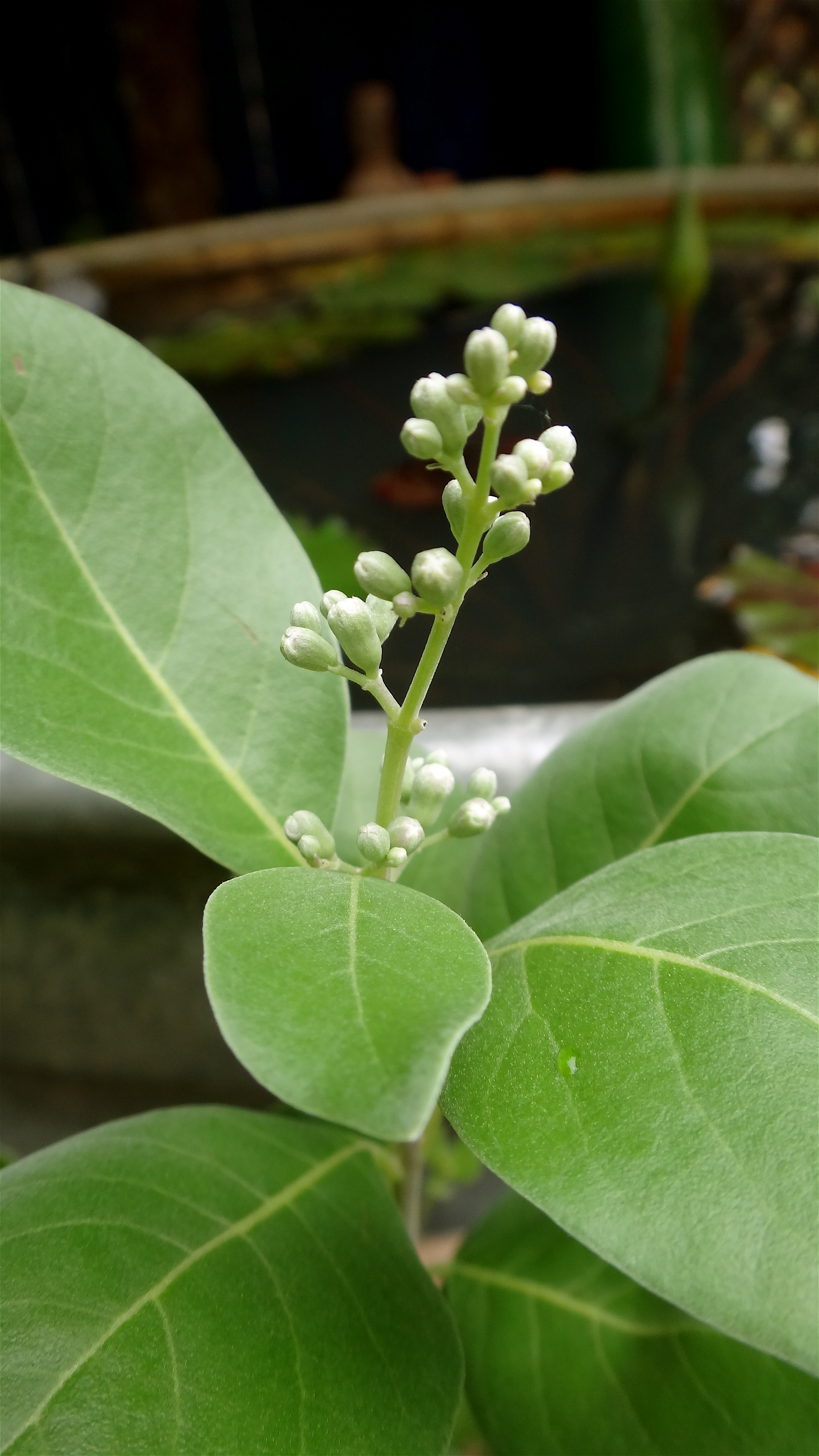 This plant is a major problem in many coastal regions where it flourishes and smothers native plant species.
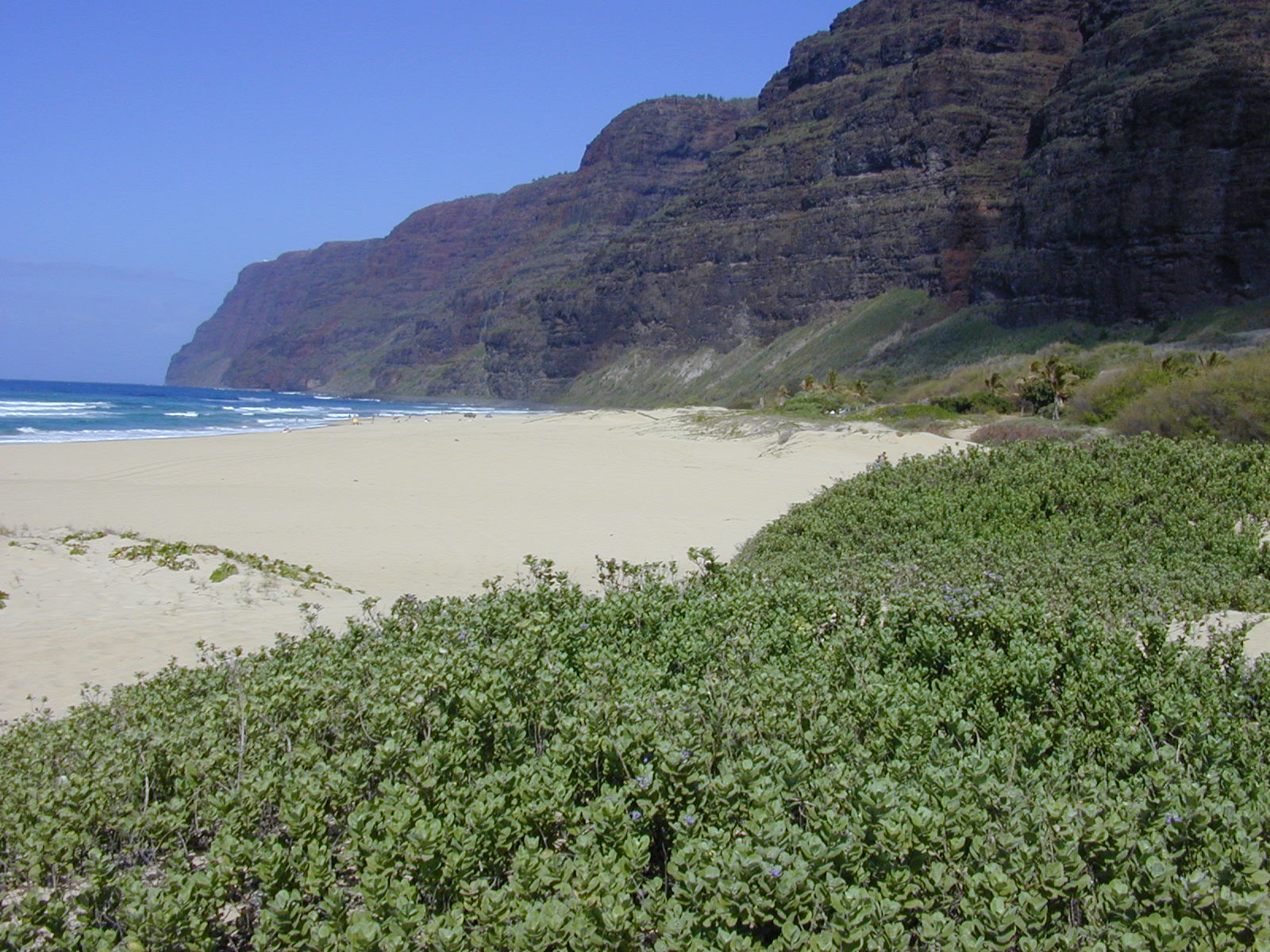
Polihale Beach, Kauai. Image by Forest & Kim Starr.
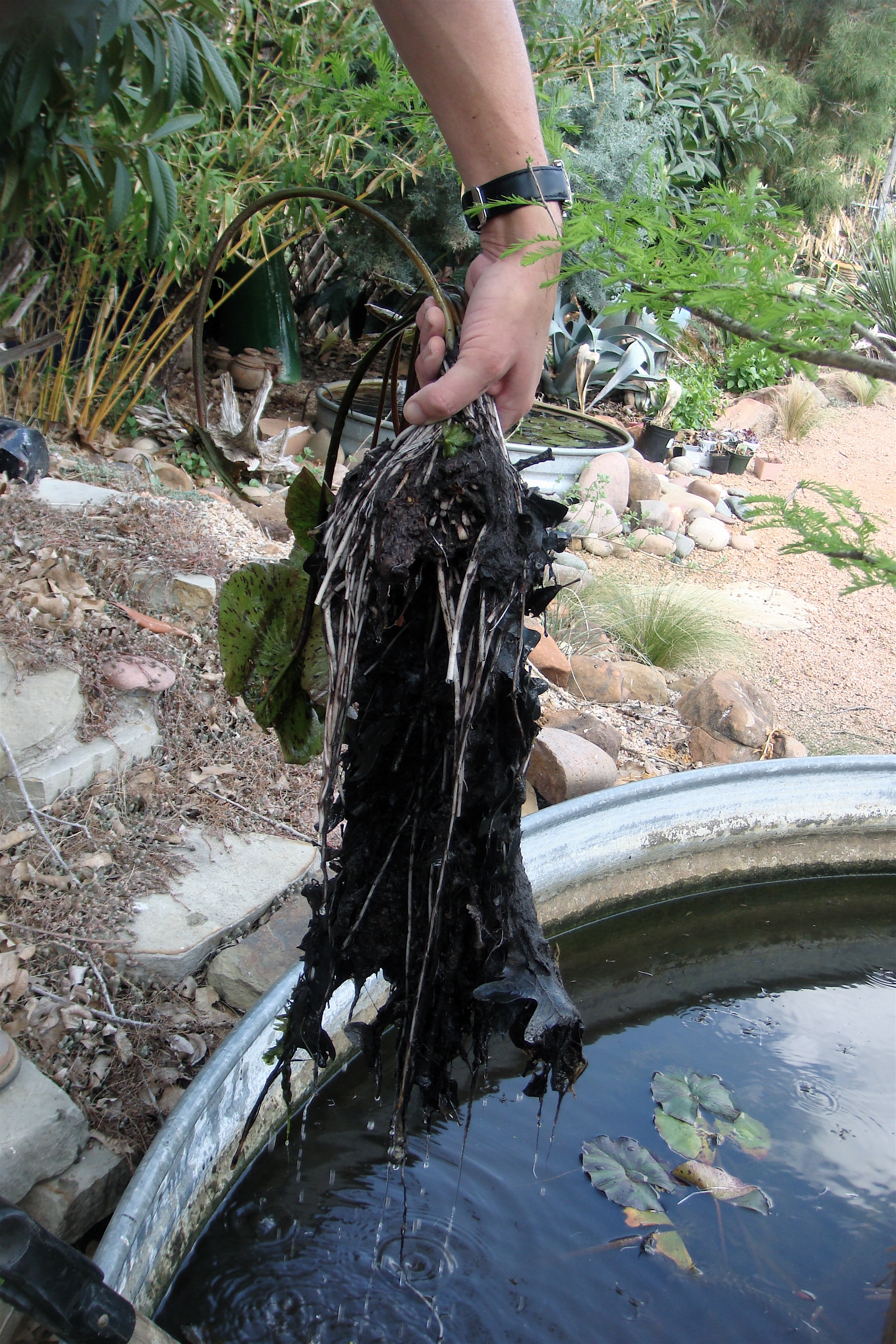
The same stock tank is also currently full of toad spawn,
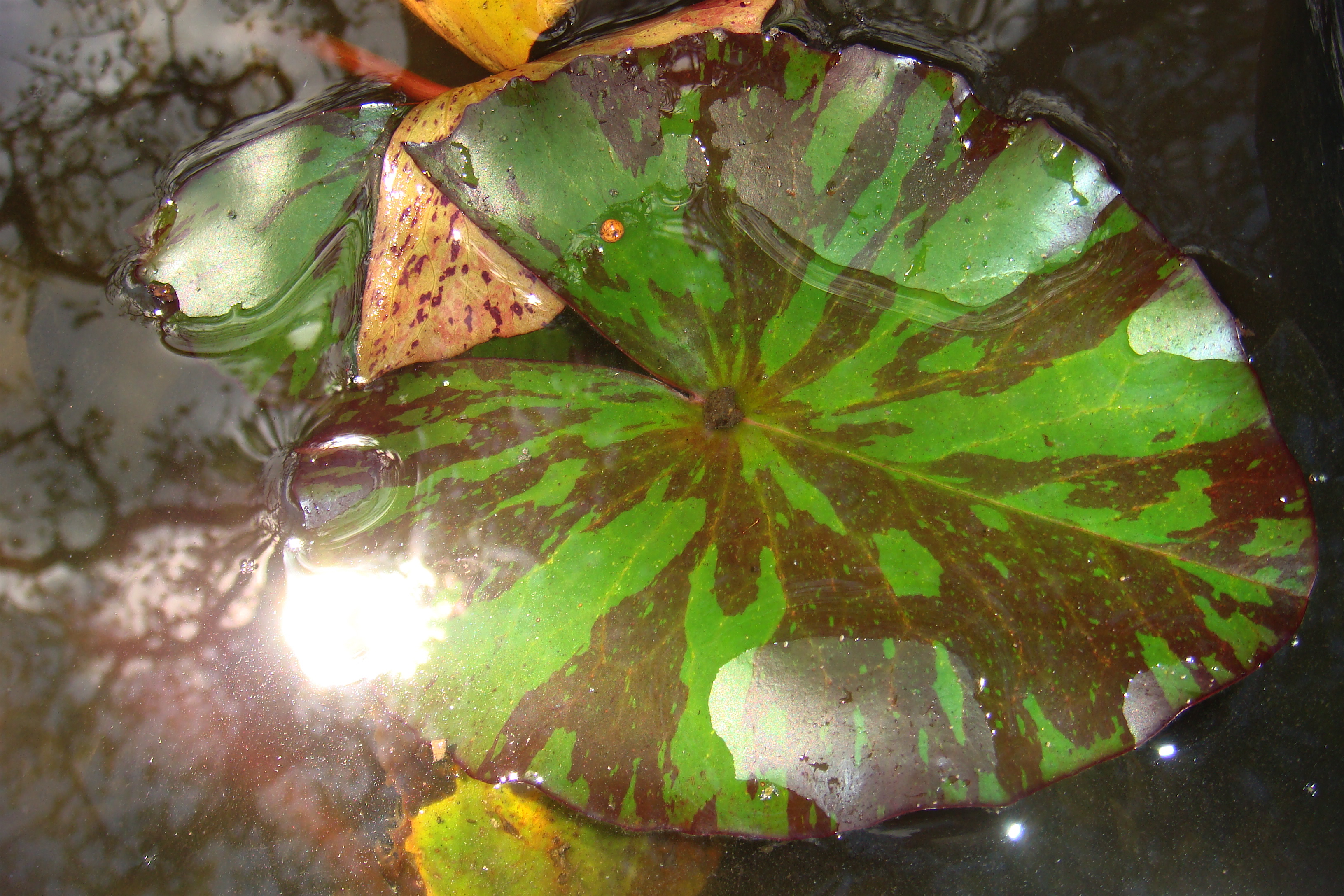
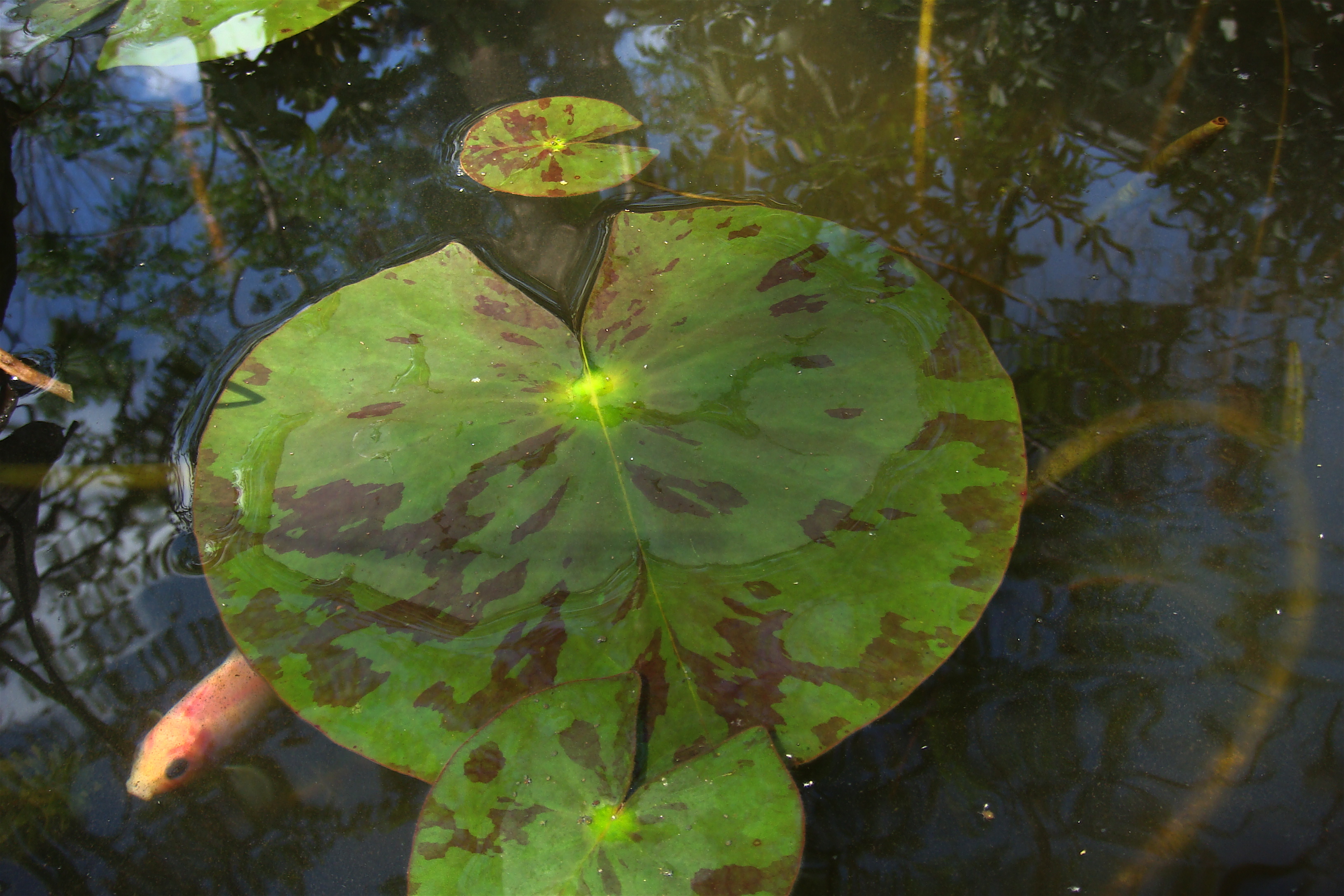
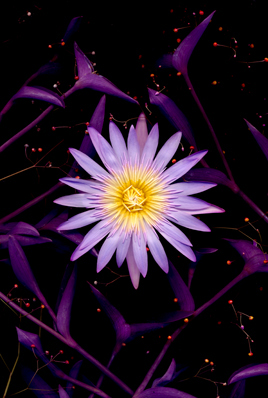
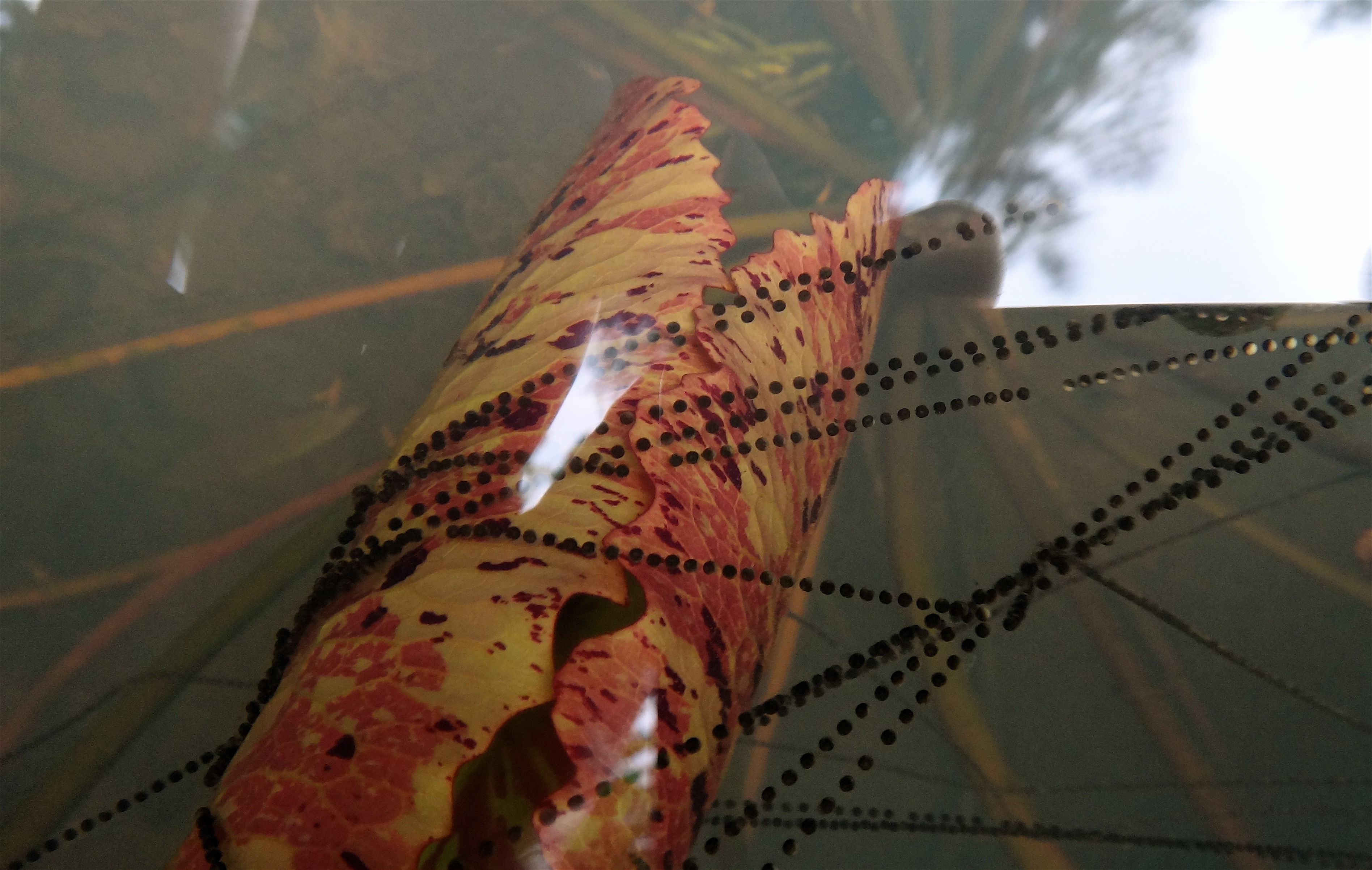 wrapping the emerging water lilies shut…Madame Ganna Burrito.
Finally:
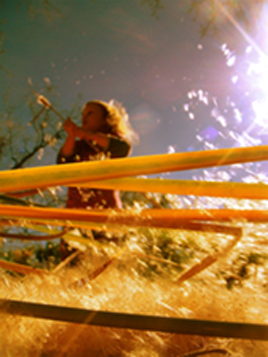
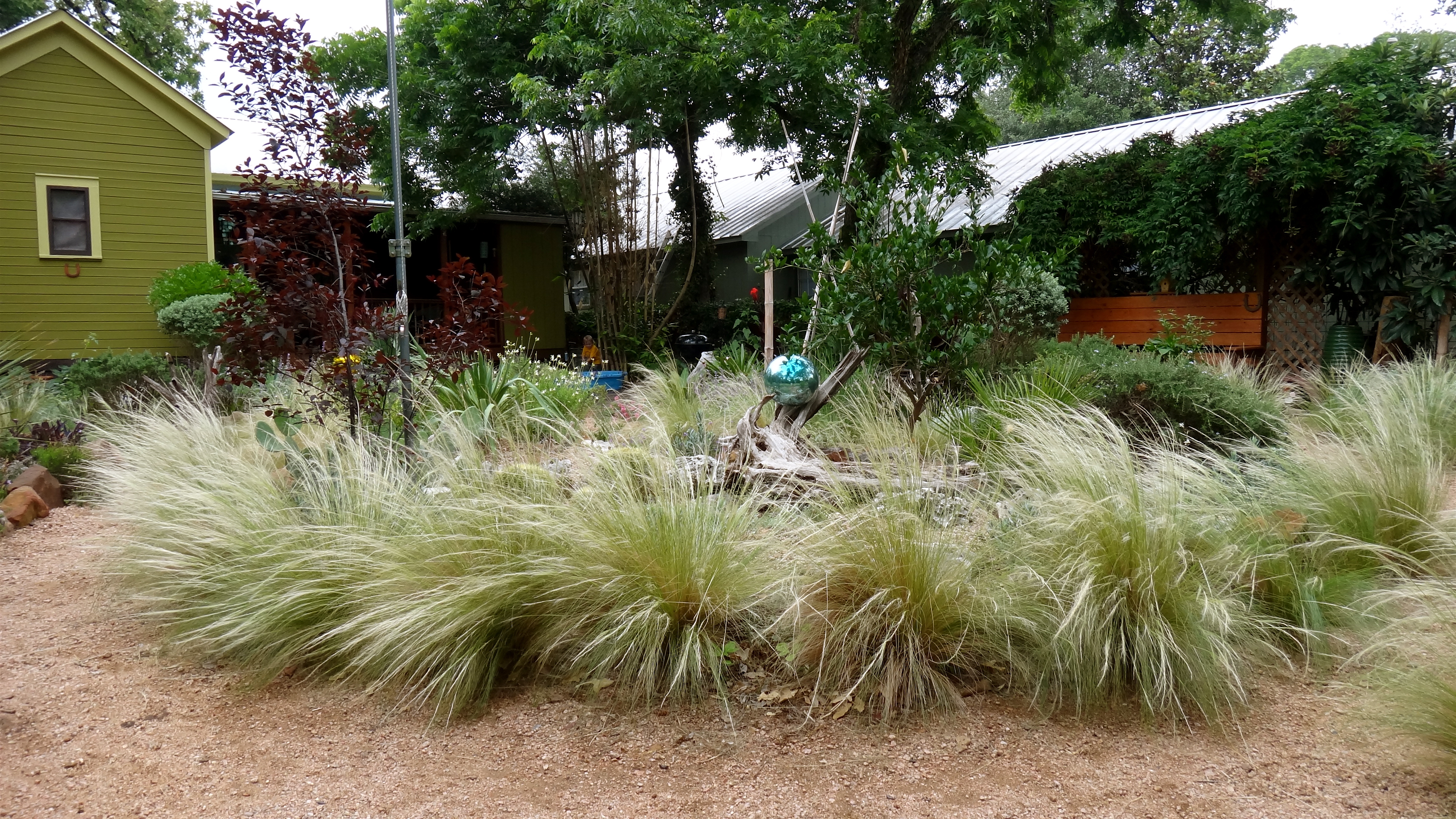 Feather grasses catching the breeze.
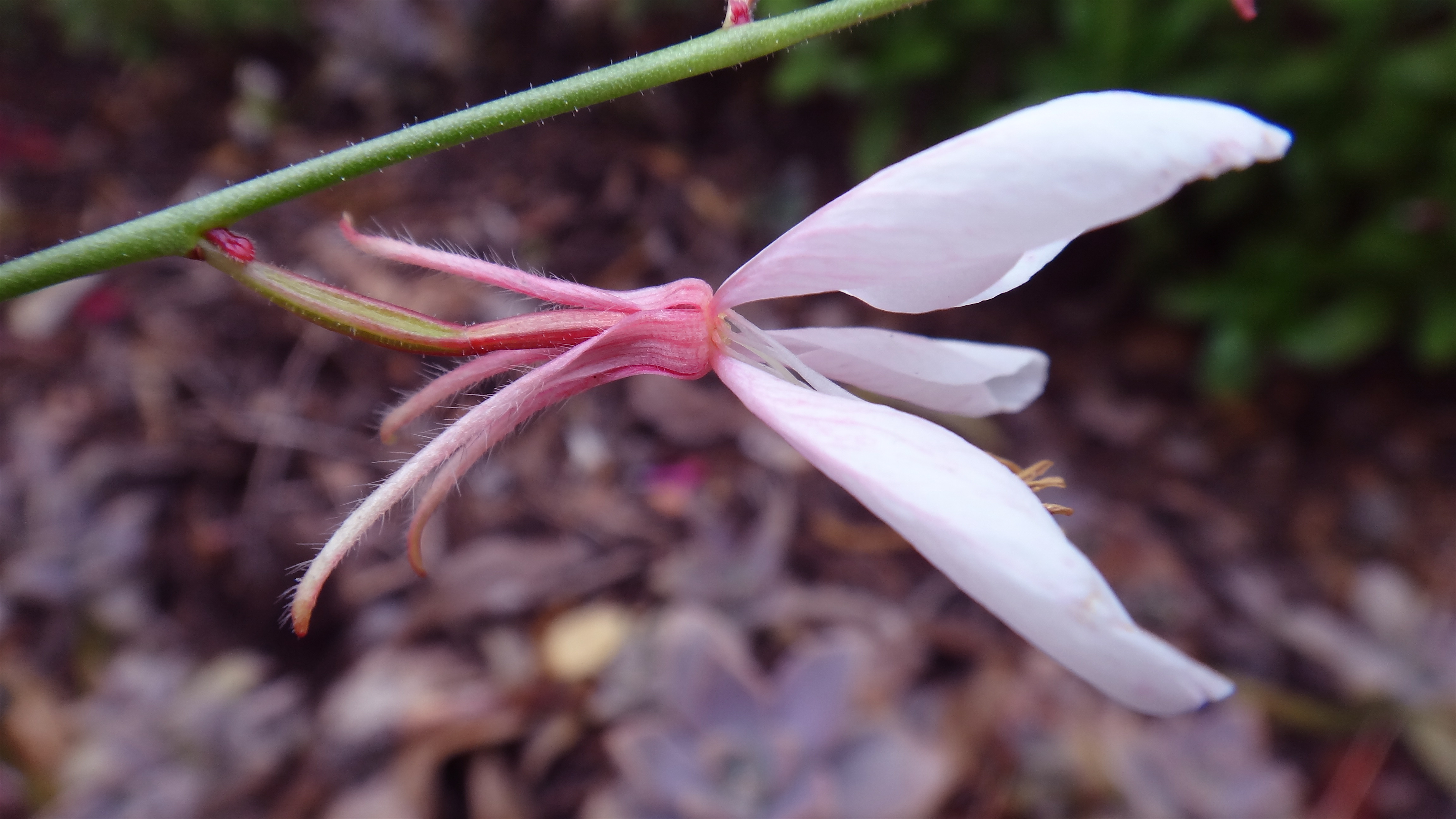 Gaura or aptly named “Whirling Butterflies”.
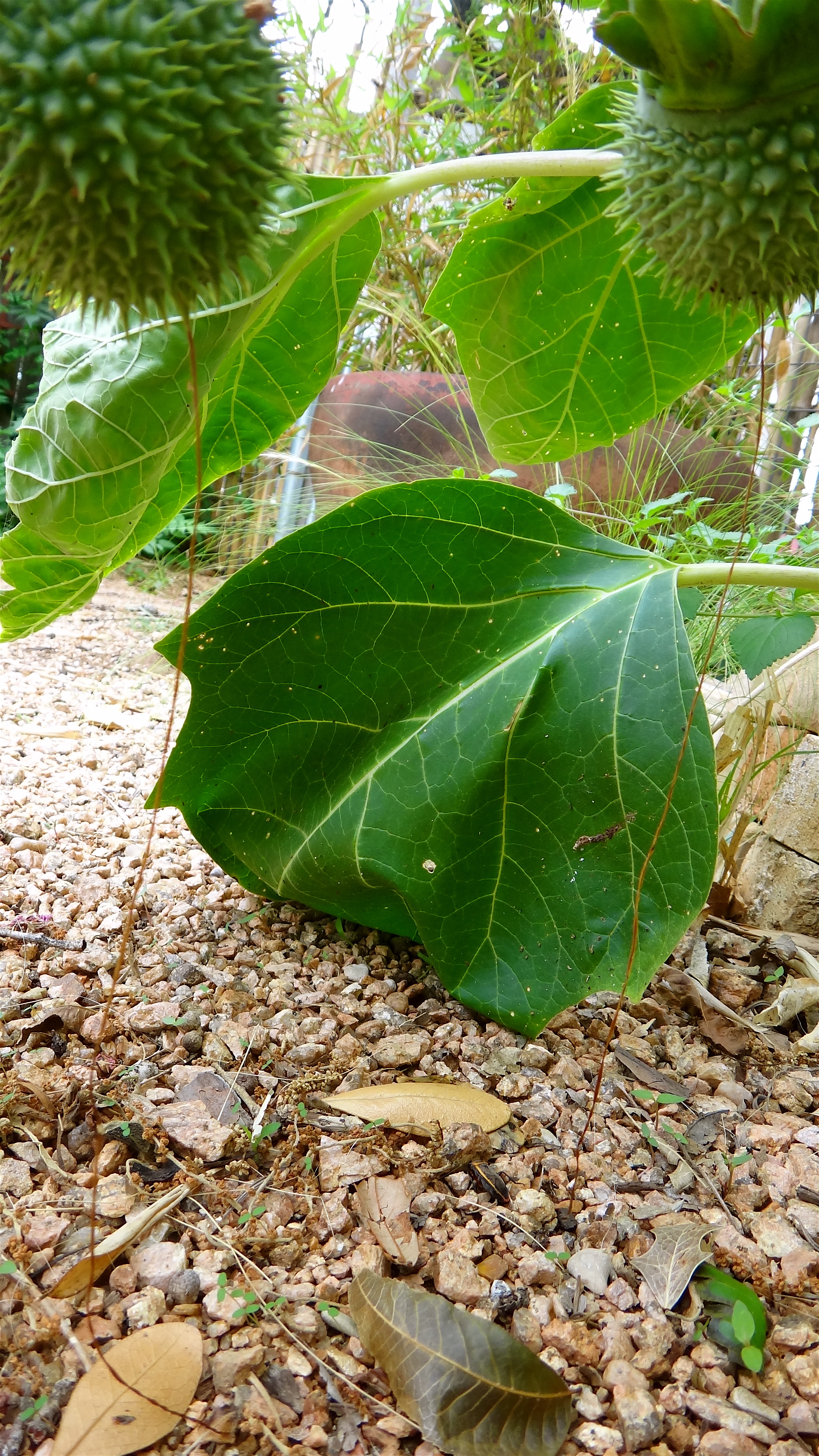 I am still trying to get to the bottom of these Datura seedpod strings that are touching the ground. What are they? Why are they there?
 Stay Tuned for:
“Rikky Ikky Ivy”
All material © 2011 for eastsidepatch. Unauthorized
intergalactic reproduction strictly prohibited, and
punishable by late (and extremely unpleasant)
14th century planet Earth techniques.