After weeks of denial I knew it was time.
I ventured to my shed to get my murderous hook saw and immediately smelled the fear from all things living in the Patch. I grabbed the saw from a dimly lit corner of the shed and noticed some green “blood” caked to the teeth from the implement’s last tragic victim…I believe it was some mushy aloe.

I approached this bed accompanied with ranting and screams from the B. Lady: “Its ze veevled agave, he is going for ze agave everyone…didn’t I tell ze, didn’t I te…?”
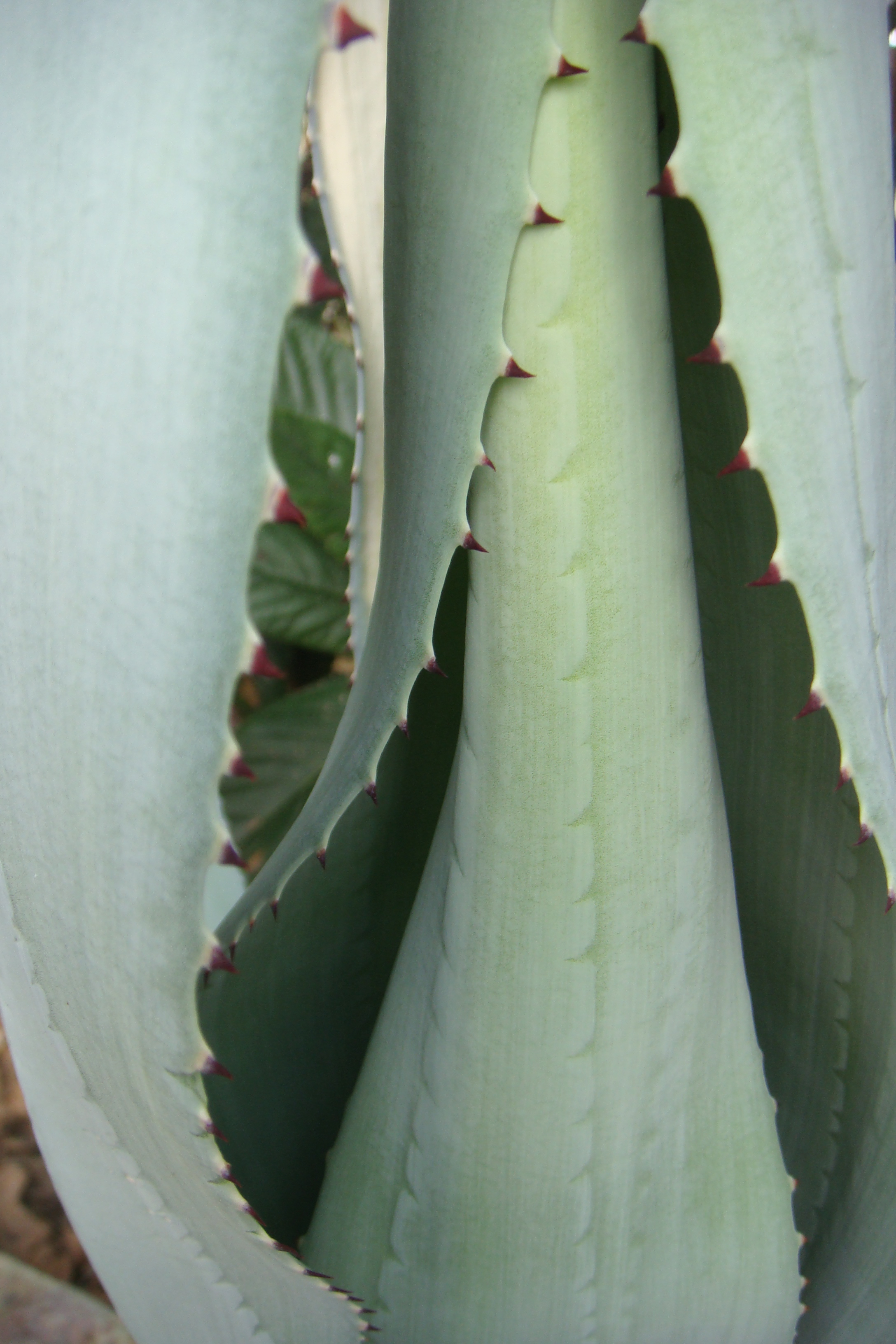
This agave needed to come out before my weevil had more weevils that would inevitably consume the Patch and everyone in it. I rolled down my sleeves, made peace with the plant and slowly started to amputate some of the lower limbs, not with the precision of a surgeon but more like:

Hey agaves are hard to cut! With equally as many sinuous fibers – brrr.
After hacking off the lower limbs I dug out the agave and hauled it out onto a nearby pathway for a rather unpleasant and messy postmortem.

After the removal of a few more limbs I had opened a pathway to allow my saw to go through the heart of the plant.

 Some frenzied sawing and facial expressions commenced.
 I had a few brief conniptions as a result of a rather large and unknown brown spider that kept appearing then disappearing back into the middle of the plant. Then, as if on cue, I glimpsed what I had been looking for under one of the dismembered leaves.
 “Stop it Vader! I already told you I will not pull your finger”!
I turned it upside-down and came face to face with the dreaded Darth Invader himself.

This was the culprit I had been searching for, the evil weevil…
Agave Snout Weevil
Scyphophorus acupunctatus
Many people believe that Agave americana is more susceptible to the weevil than other species, and may actually act as a weevil “magnet” to your garden however no agave may be totally immune to this evil weevil, even some species of Yucca have been attacked like Y. brevifolia and Y.elata.

Mary and Gary Irish suggest in their book: Agave,Yuccas and Related Plants: A Gardeners Guide (2000, Timber Press), that if one of your Agaves die from weevils, DON’T use its surviving pups in your landscape. Instead, try to locate pups or bulbils from an Agave that successfully flowered and may have had some genetic resistance to weevils and likely passed that resistance on to its offspring.

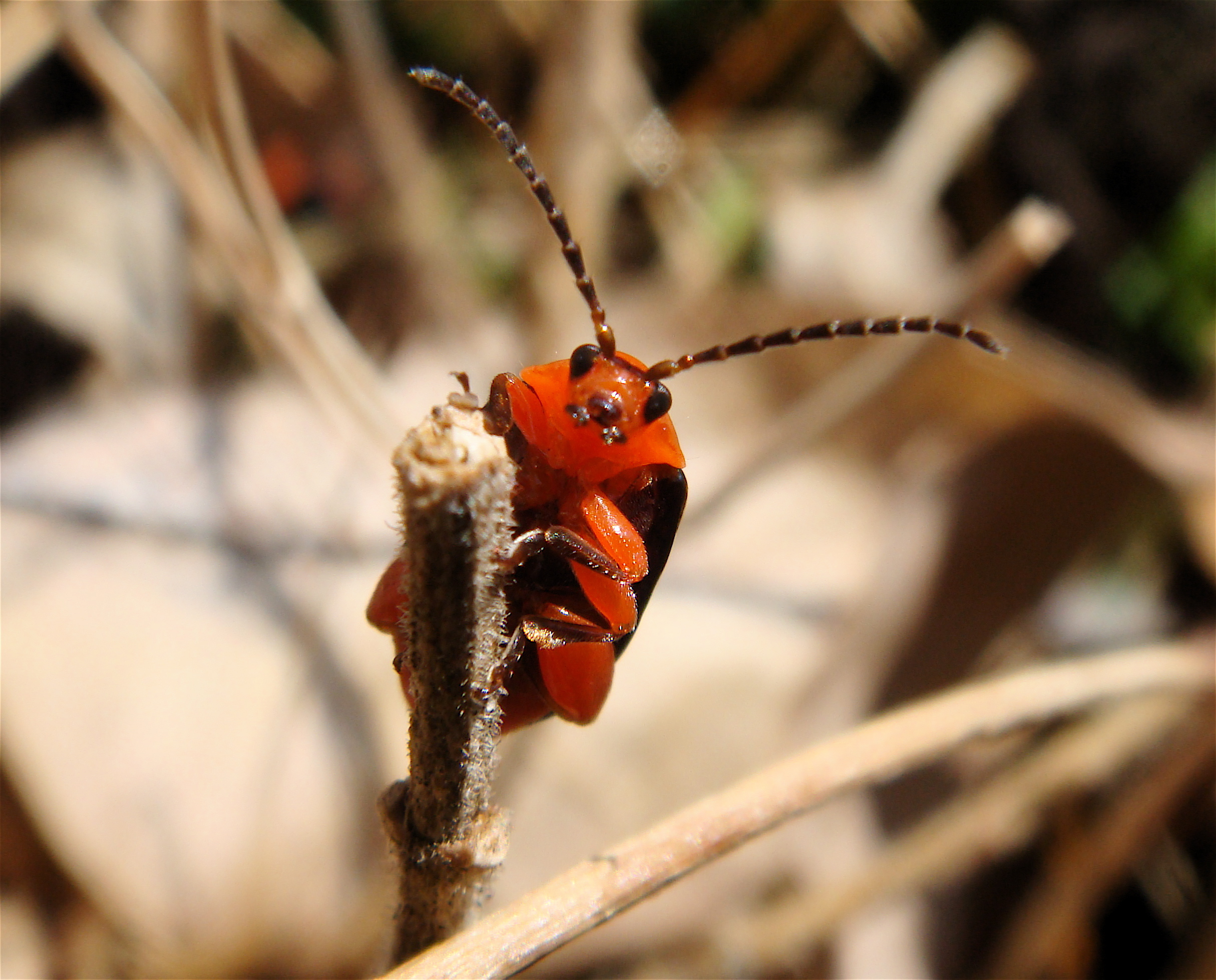
I did discover this poker-red chrysalis as I dug down where the agave came out, making sure I had not left any evils in the earth. I believe this to be a Mexican Tigermoth pupae:
Notarctia proxima
I put it back in the earth.
Going back to Agave americana for a moment:

 The specimens that did survive the freezes have recently adopted another odd trait – the agave lean. I suspect this can not be a good thing. I have wedged small boulders under a couple of them, but I fear the internal core rotting may worst than I initially anticipated, especially after I pushed on this one I have had for years in this container:
It wasn’t pretty…
 …its head rolled over and a whole bunch of small flies flooded out of the stinking cavity.
 The warmer weather has brought on insect hatches, the emergence of flies and the long dangly-leggy wasps that are now eagerly searching wooden decks and patios for suitable spaces to start new colonies. These wasps are causing some serious ducking mayhem on my back porch.
 I try to set a good example, putting on a brave face as one comes straight at me a couple of feet above my head, but as its swinging legs get closer and closer I can feel my face starting to twitch, my arms wanting to manically flail around above my head…
 I even let out a subtle audible noise the other day as one approached that strangely sounded very Hawaiian, it went something like “wha, ho-HAH”, the volume peaking with the end syllable and with the hanging legs of the wasp close enough to cast a shadow on my face.
This next creature caused my youngest halfling to face his own personal demons down at my main pond. I looked up after hearing his own audible conniption followed almost immediately by a retreating swagger away from the edge of the pond where he had witnessed the creatures, his hands moving in an erratic up and down motion against his chest. I shouted up the garden to him…“whats the matter”? he replied “there are spiders in the pond”…(he unfortunately hates spiders after prematurely witnessing the Harry Potter sequence)…naturally I had to investigate.
 Water Striders live throughout North America. Water Strider is a common name for the Slender Water Bug. Its family is Gerridae. In Canada they call the Water Strider “Skater” and here in Texas they call them“Jesus bugs” (walking on water and all that)…and I had had a good spring hatch.

They are quite horrible giant-tick looking creatures, I can relate to his frantic over-reaction.
Moving on to green, a bit of brown, then greener ground again:

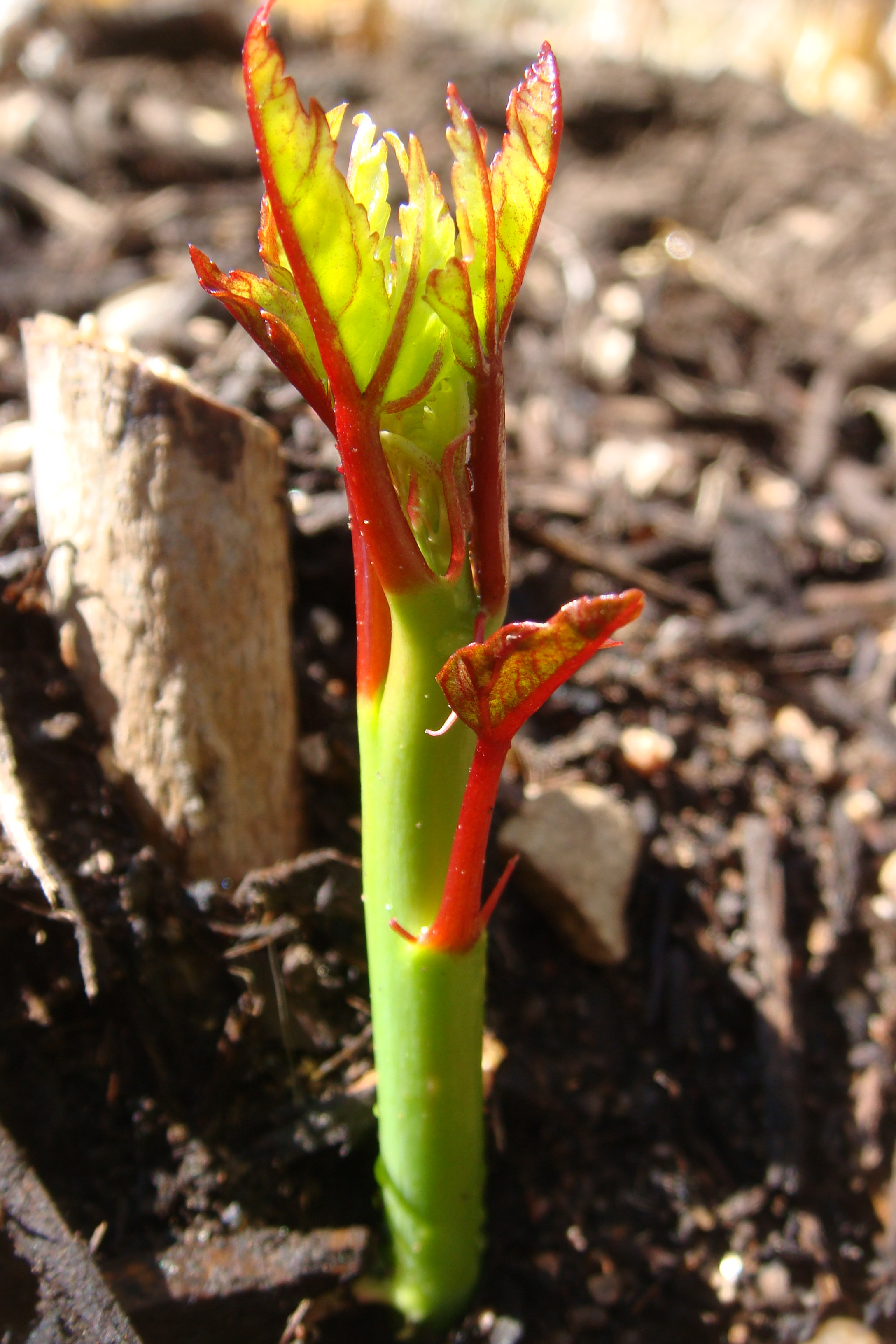
My beach vitex has recently sprouted new growth from a rather benign looking 6ft stem.

Even my little brown Barbados cherry has new growth breaking through:
 I am so glad I waited before cutting this plant back to the ground.

The years first fresh canna leaves are pushing through…

and the sea oats are new and chartreuse.

Blue bonnets have started to bloom curbside, but the best thing that happened this week…

 was the removal and hoisting up on the compost pile of this old pampas grass with only the minimal of lacerations. I am getting pretty adept at taking these monsters down at this point, (I am down to three now in the Patch). This plant was old and scraggly and besides I have been wanting a perimeter sabal texana for quite some time, it will create visual repetition down three adjacent back gardens.
I love the East Side.

A baby monster. Another one of these has also gone in at the front of the Patch.
 Stay Tuned for:
“Swaying in the Tree-Tops”
All material © 2011 for eastsidepatch. Unauthorized
intergalactic reproduction strictly prohibited, and
punishable by late (and extremely unpleasant)
14th century planet Earth techniques.