Mexican Bush Sage

“Toad in the Hole”

With the painting in the Patch almost finished, it was time I created some more work for myself, today the Eye of Sauron cast a cold gaze on this garden scene…
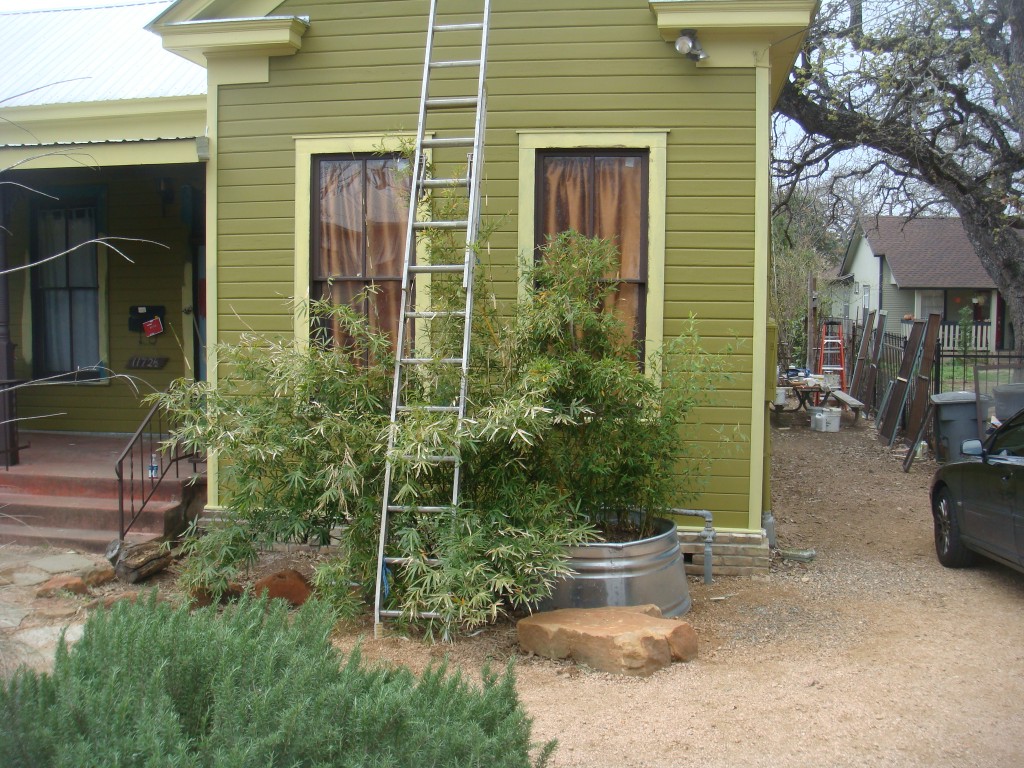
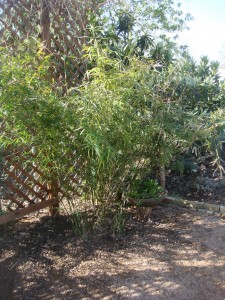
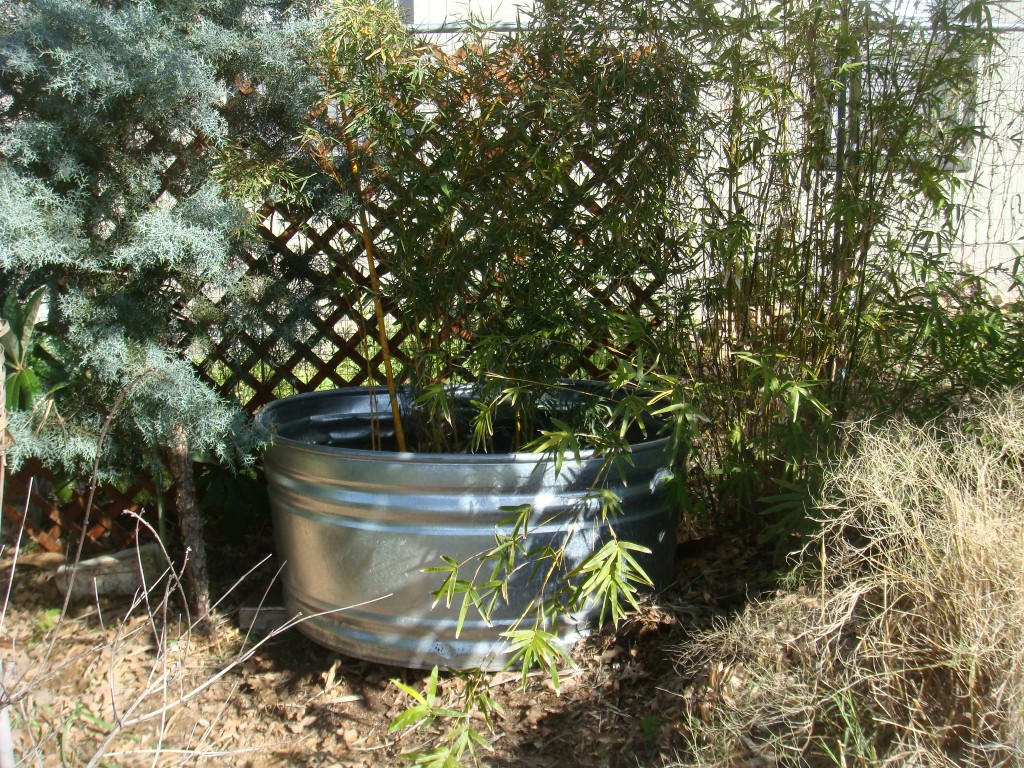
The scale of this Mexican weeping bamboo and the stock-tanked golden bamboo where the Tahoe hit has disturbed me for quite some time.  The plants are just too tall in front of the house, what had been my thought process here? A momentary loss of sanity?  Anyway, my primal Advil taking instinct told me this was going to be one tough dig!  The one-ton rock you can see in front of the feeder tank has not moved since it fell off the back of the wagon that delivered my last six yards of decomposed granite, six months ago.

“Fascinating ESP, your rock strangely resembles and parallels this similar unmovable rock on Vulcan.”

I was supposed to get a bunch of rocks that weighed in at a ton, I ended up with one, yes just the one, one that I have no chance of remotely moving by myself.

It is a really cool rock though and it looks like the shape of Texas from the right angle, with one eye shut, standing on your head, etc, etc.  Today I was overhauling this area.  I knew that the Mexican weeping bamboo was not going to go down, or out of the ground for that matter, without a major shovel fight, it was quite established after all…
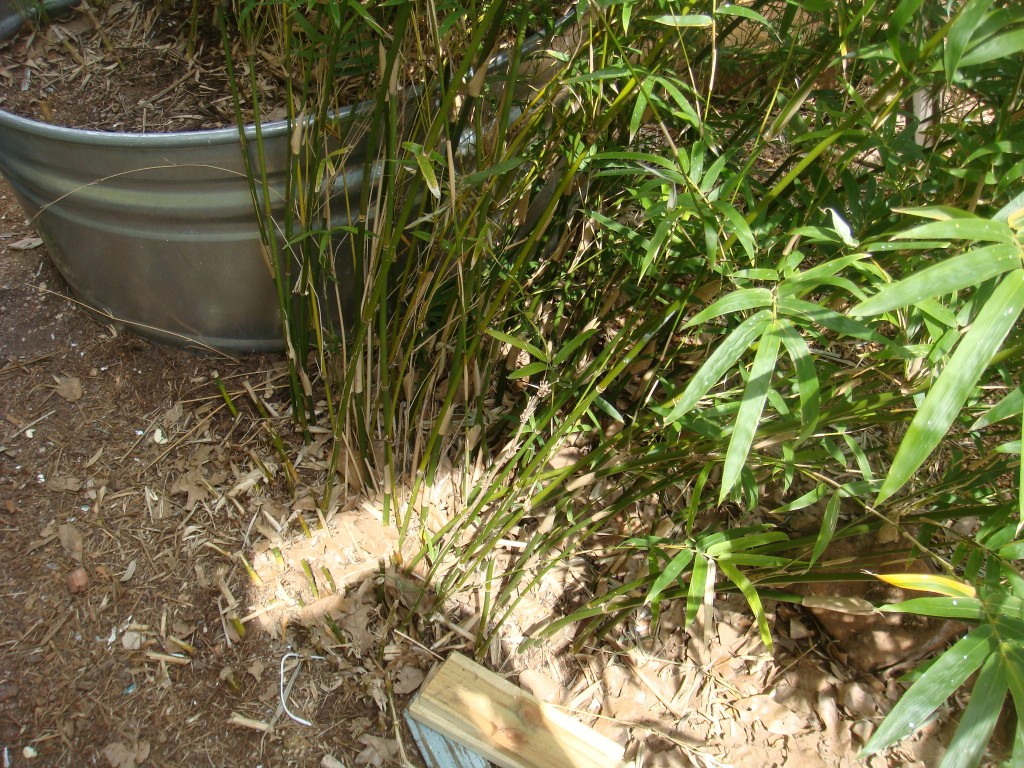
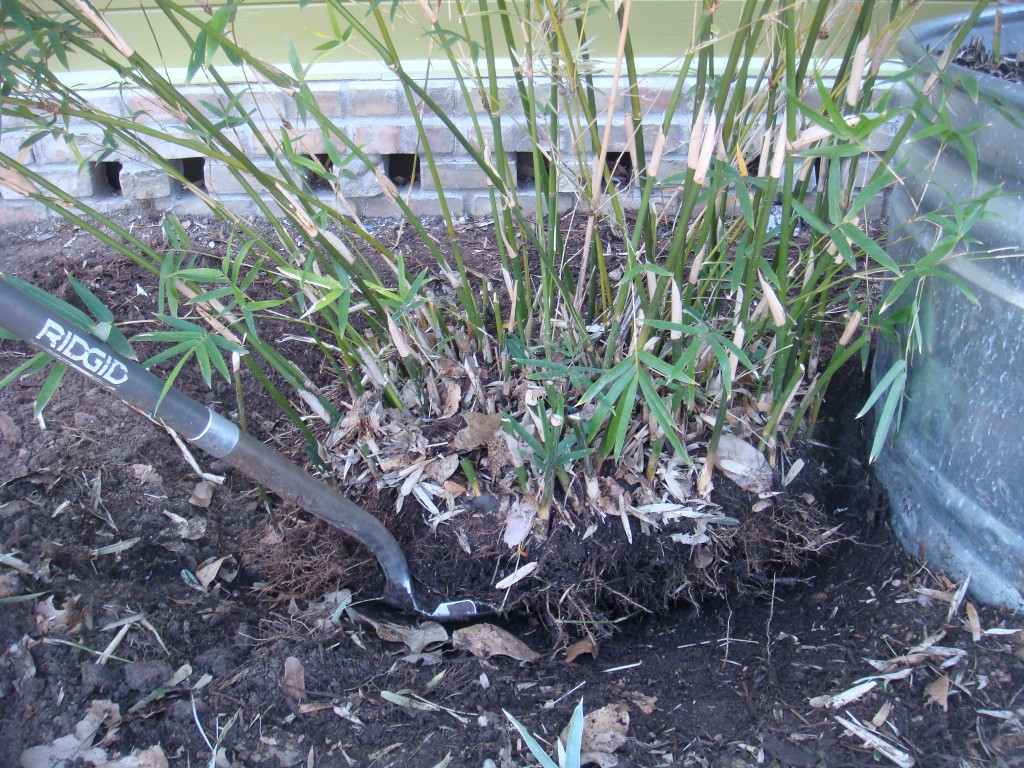
…quite established indeed.  The root-ball was about four feet around and about ten feet deep, okay I exaggerate.  My plan was to split this plant in half and relocate it to the back of my property. Splitting a bamboo’s root-ball seems good in theory, until you actually get into the actual splitting process.

Once again I was so happy I had a full steel shovel, nothing else would have taken the strain that I was subjecting this implement to as I worked my way around the root-ball.  I could hear things snapping and popping, I just hoped it was the plants roots rather then some of my tendons.

Oh yes you had better stay rigid trusty old shovel, because a Darwin Award could be awarded to me if you snap right now! The plant moaned and groaned, and my shovel and I followed suit with an occasional “why you little…” thrown in on my part for good measure.  Eventually I felt the final roots give and the beast was finally freed from the earth, it immediately started to scream and object like an unearthed mandrake root.  I laid on my back looking up at the sky, seeing stars.

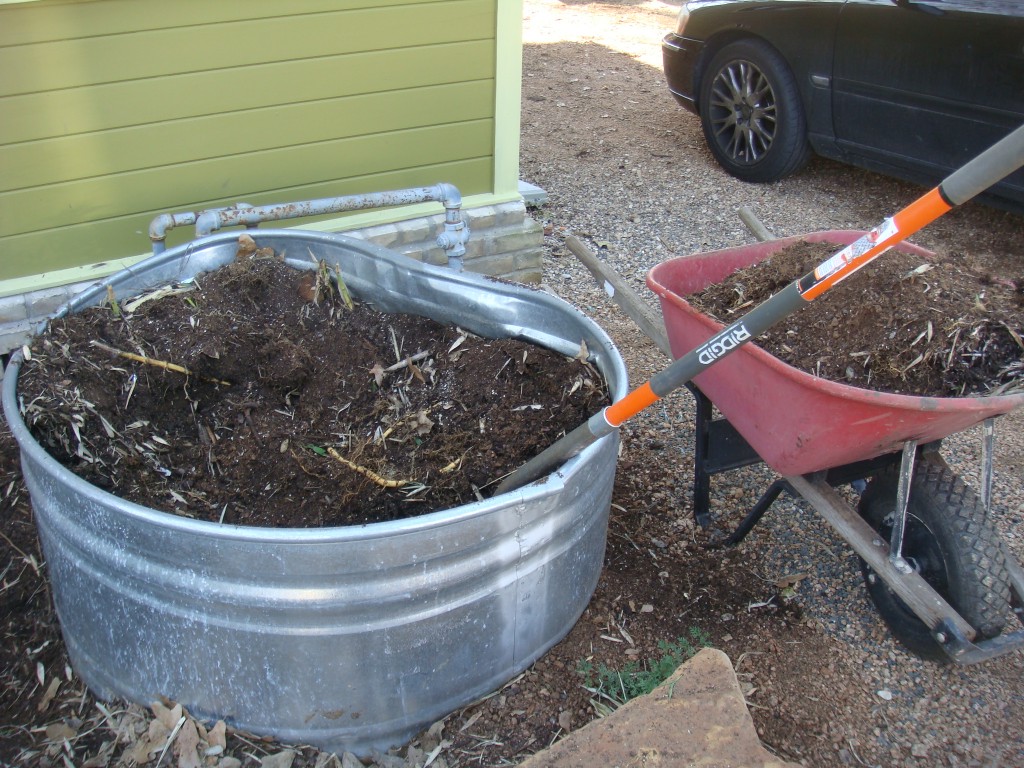
Next stop…the Tahoe dented stock-tank that housed my golden bamboo.

This extraction was easy in comparison.
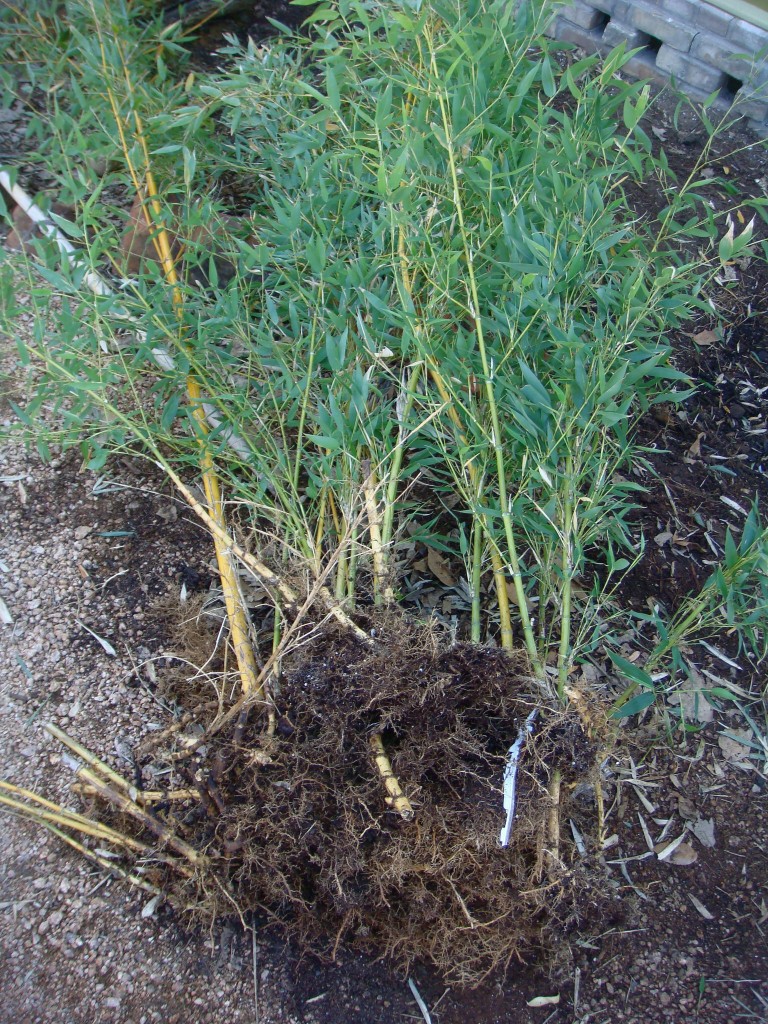
I removed all of the soil and rocks out of the tank, then wheeled it to the back of my back garden to hunt for a relocation spot. I did have a surprise when I first moved the tank…

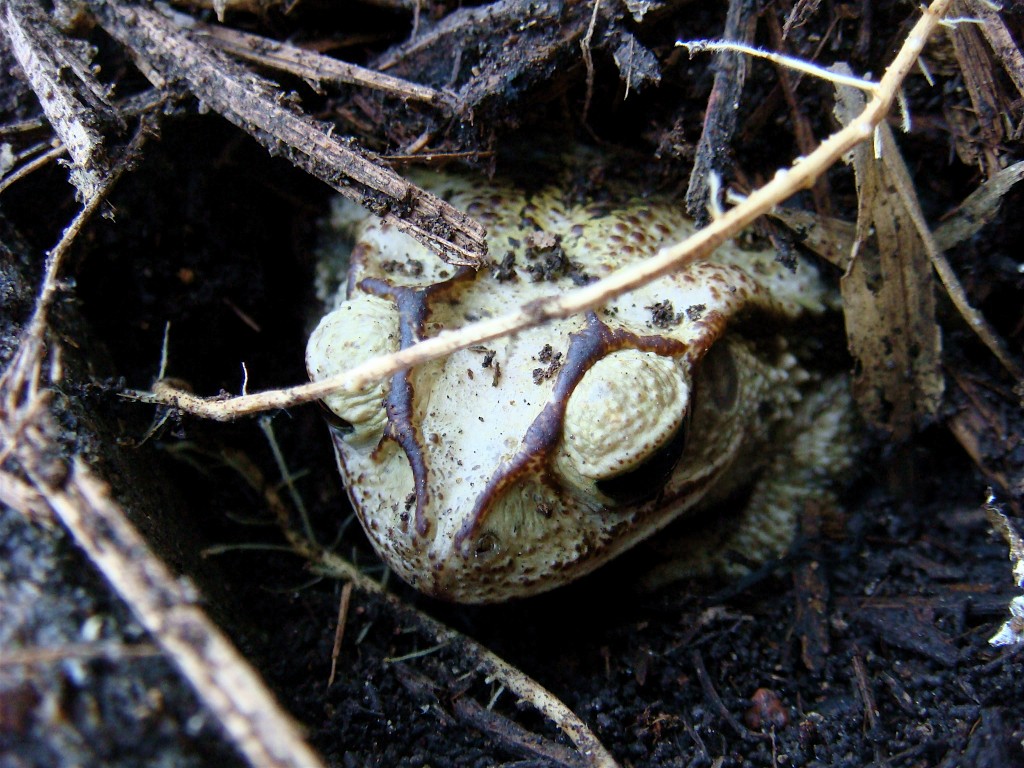
I found this poor pale Gulf-coast toad hunkered down, hibernating underneath it.  This ‘toad in the hole’ quickly retreated deeper into his winter sanctuary at my rude disturbance.  I feared for him as the ESP Witches have already hung up their nasty hessian sacks in the post oak in anticipation of the spring toad cull.

B. valliceps


has the most extensive ridging of any toad in its geographic range. The ridges extend from the nose, to the back of the head. With a branch that wraps around the back side of the eye. I placed a few strategic rocks around and over him to offer once again some semblance of privacy,  I just hope it was enough.

Here are both plants transplanted into their brand new homes:


And that takes the stock-tank count up to seven in my back garden.  Now if only I had a small Roman garrison to help me move that one-ton boulder at the front.

Moving on…

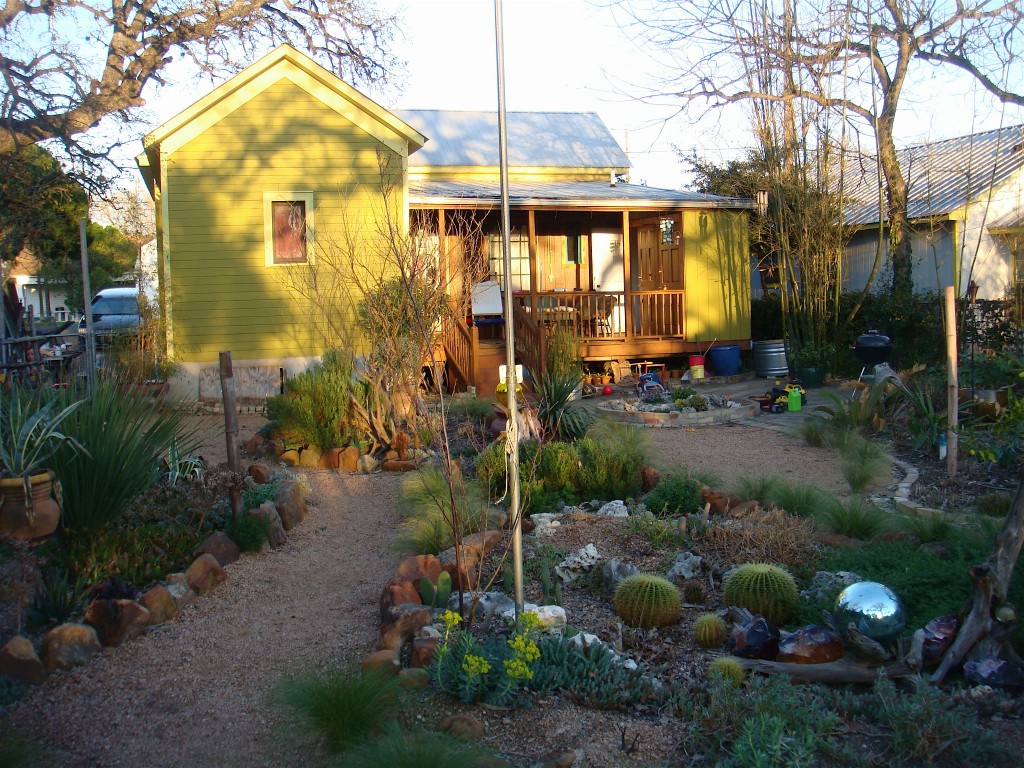
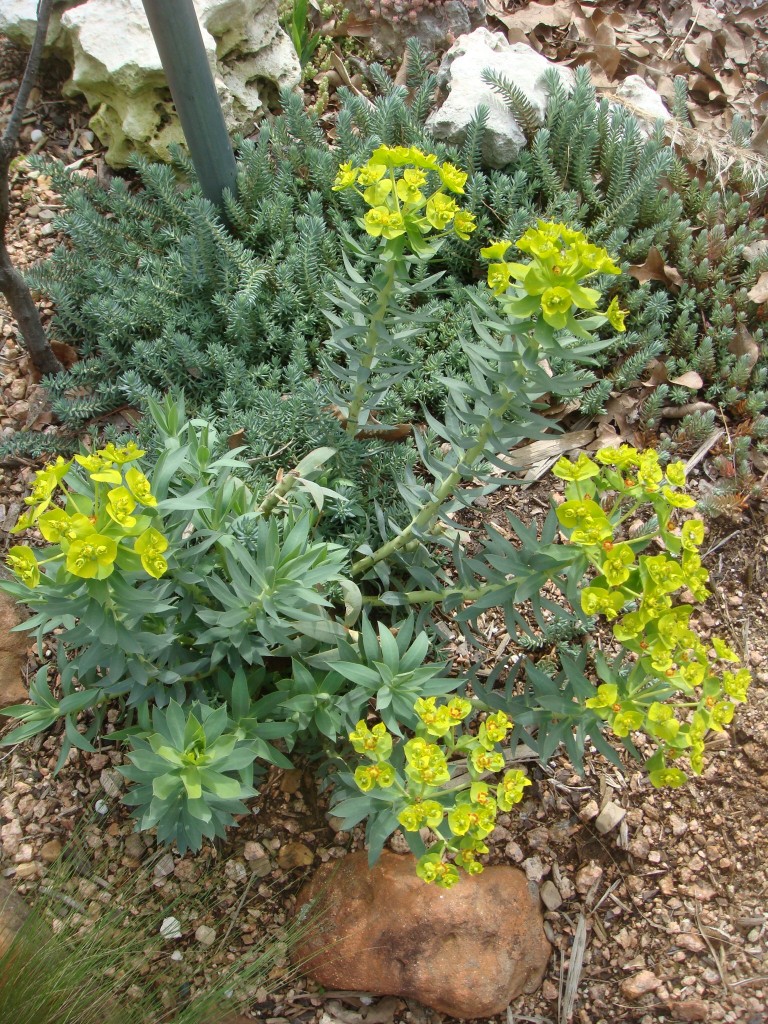
The Patch catching some late afternoon rays.  The post oak and giant timber bamboo create some interesting shadows on the house. The Gopher plant in the foreground is in full swing right now…

I like the way the blue – silver foliage echoes the color of the Sedum reflexum ‘Blue Spruce’.

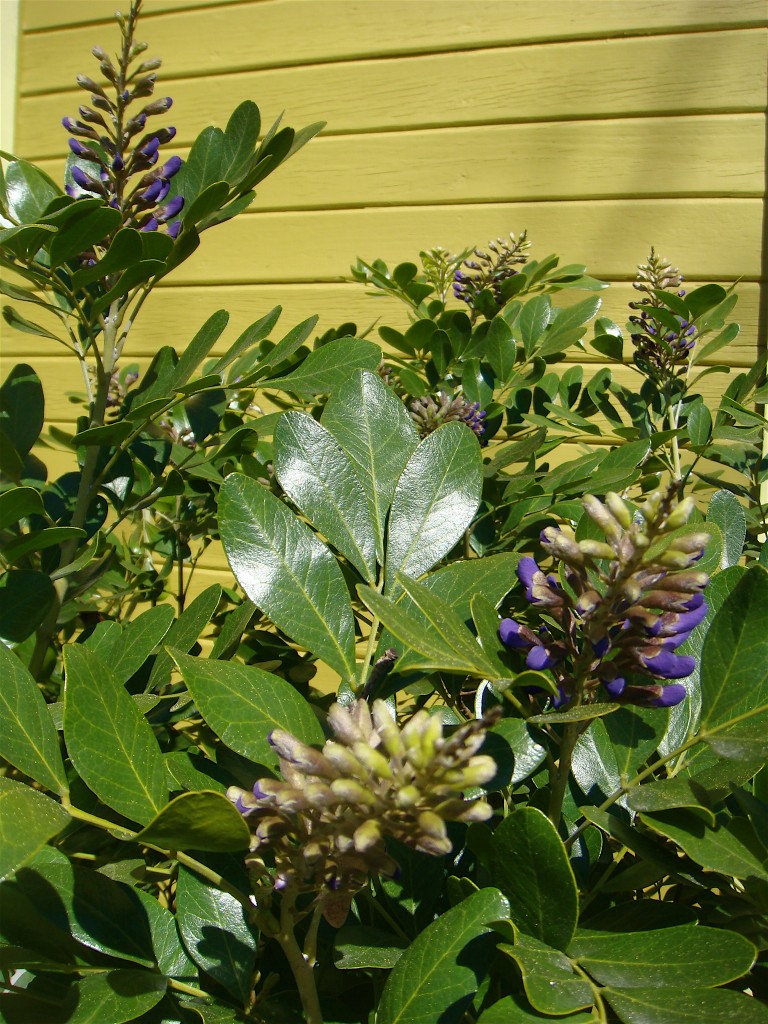
The emerging purple blooms of this mountain laurel looks great against the new green color of the house.  This confirmed to me that I need to a) get some more laurels around the Patch and b) plant a large bed of Mexican bush sage at the front of house to replace the bamboos that I have just ripped up.

Finally…

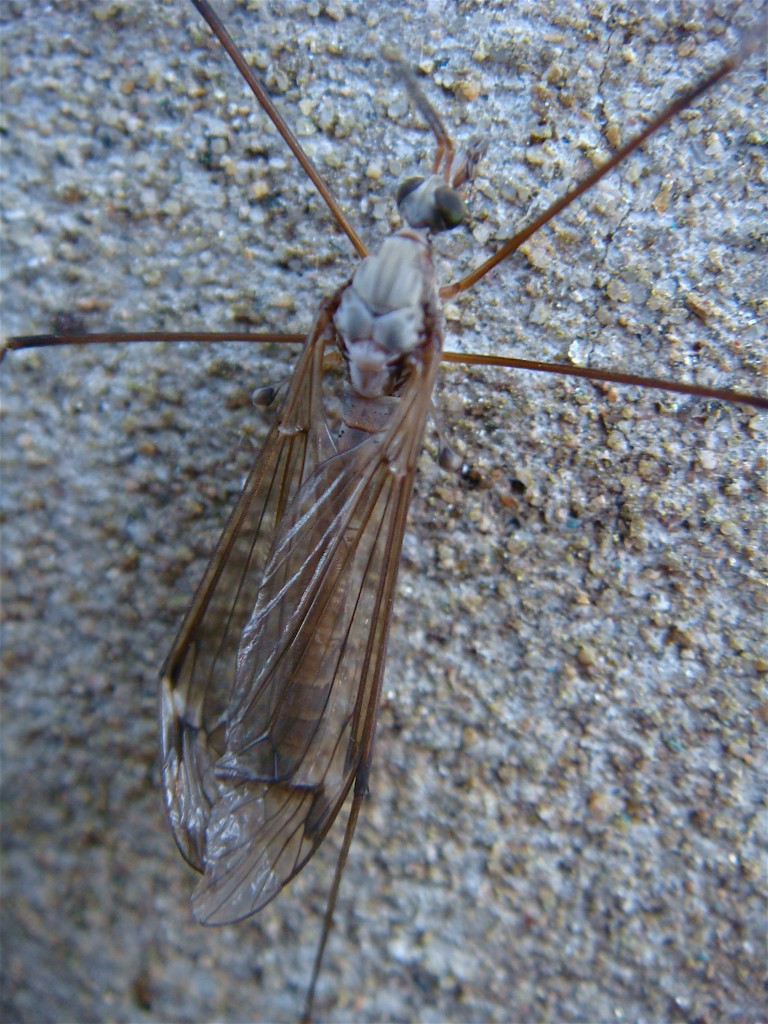
These gangly chaps are all over the Patch right now, both indoors and out.
Although some people think these flies look like Texas-sized mosquitoes, they are wrongly called “mosquito hawks.”  Crane flies are large tan-colored fragile flies with long legs. Adults and larvae do not feed on mosquitoes, in fact adult crane flies feed on nectar or they do not feed at all, once they become adults, these noble creatures exist only to mate and die. Crane fly larvae feed primarily on decomposing organic matter, in compost piles, they often occur on the soil surface below the pile of decaying vegetation.  Adults have long slender legs which are easily broken and may be missing in some specimens.
Crane flies are a food source for many birds and many other insects and carnivores…

“Well, we love them don’t we honey?”
“We certainly do George”.

To finish on a “Ewww” note…

Giant carnivorous plant

Nepenthes Attenboroughii


A plant that just happens to reflect the new color scheme of the Patch, and a plant I could have really used when all of this rat nonsense was going on in my shed: http://www.eastsidepatch.com/2008/11/dead-in-a-shed/

Botanists have uncovered a carnivorous plant in the Philippines that is large enough to digest a whole rat. (The plant is about a meter across with these cups at the end of stalks to catch prey).

Nepenthes northiana


Here is the carnivorous pitcher plant preparing to tuck into a rat.  Can you believe this?  Look at the remarkable painted coloration on the lips of these cups.

“Oh no! I told him he should have become a head-chef ” Brrr… (whiskers involuntary twitch and large teeth bite upper lip, tiny limb and small ear movements).

Stewart McPherson, one of the botanists who trekked deep into the Philippine forest to make the discovery, described the plant…

“Around the mouth of the pitcher are secretions of nectar which attracts insects and small animals. The rim has lots of waxy downward-pointing ridges which help prey fall directly into the pitcher.  The pitchers are half full of a liquid consisting of acids and enzymes which help break down its prey. These plants grow in really harsh areas where soil quality is very poor — often pure gravel or sand. Catching insects allows the plant to augment nutrients that it otherwise wouldn’t have access to.” … Mmmm perhaps a mass planting in the hell-strip? That would be novel!

Inspirational image of the week:
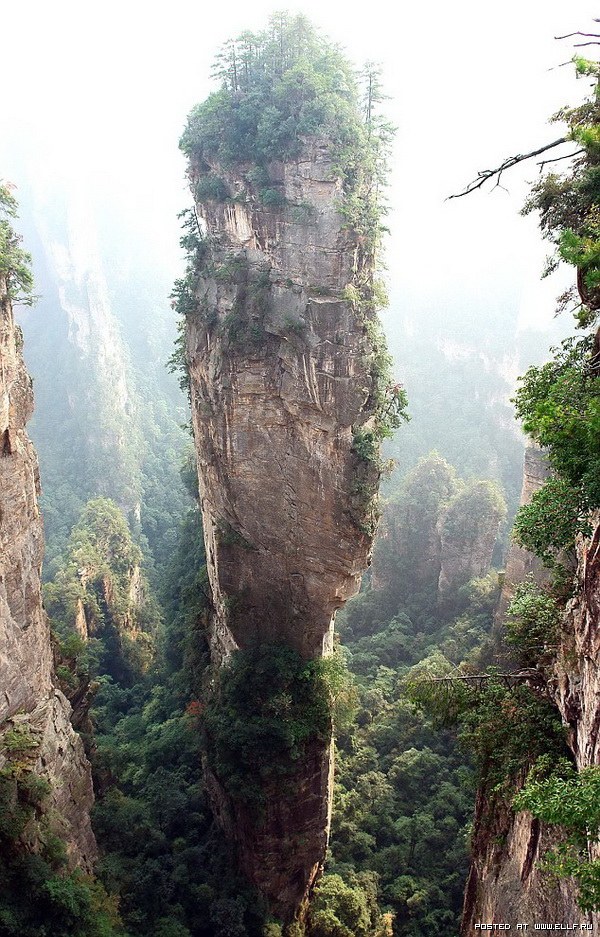
Talking about the top of a remote mountain!  I have decided that this is where I want to spend my Autumn years when they arrive, a house nestled up in the trees, a Heli-drop of deli produce and beer once a month, fast internet connection, and “raised” (ahem) vegetable beds…you get the absurd picture.

“I like that place Carl”
“Me too Ellie”!


Stay Tuned for:

“Life and Death”


All material © 2010 for eastsidepatch. Unauthorized
intergalactic reproduction strictly prohibited, and
punishable by  late  (and extremely unpleasant)
14th century planet Earth techniques.

“Baggins and Tape”

data-2

“In the event of a water landing, I have been designed to serve as a flotation device”

And even more rain in Central Texas…and even more mosquitoes, although I have noticed that they are getting slower, their desperation for the red matter making them easier to swat. There are also some mosquito-monsters, what is that? Is that a? You have got to be kidding me… some are so large, getting stung is like getting stabbed with a knitting needle. Hey, everything is bigger in Texas.

Wet Swallowtail

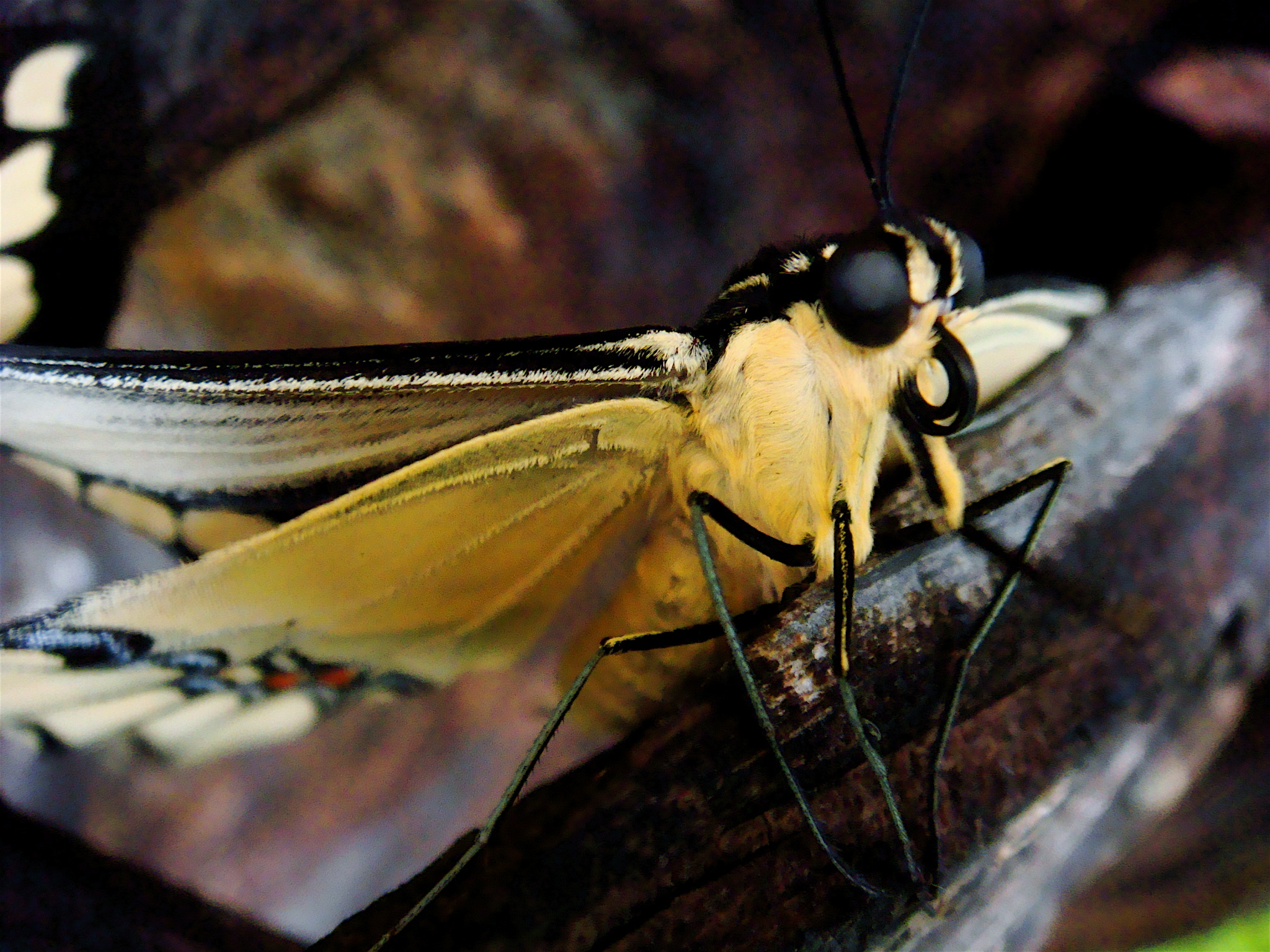
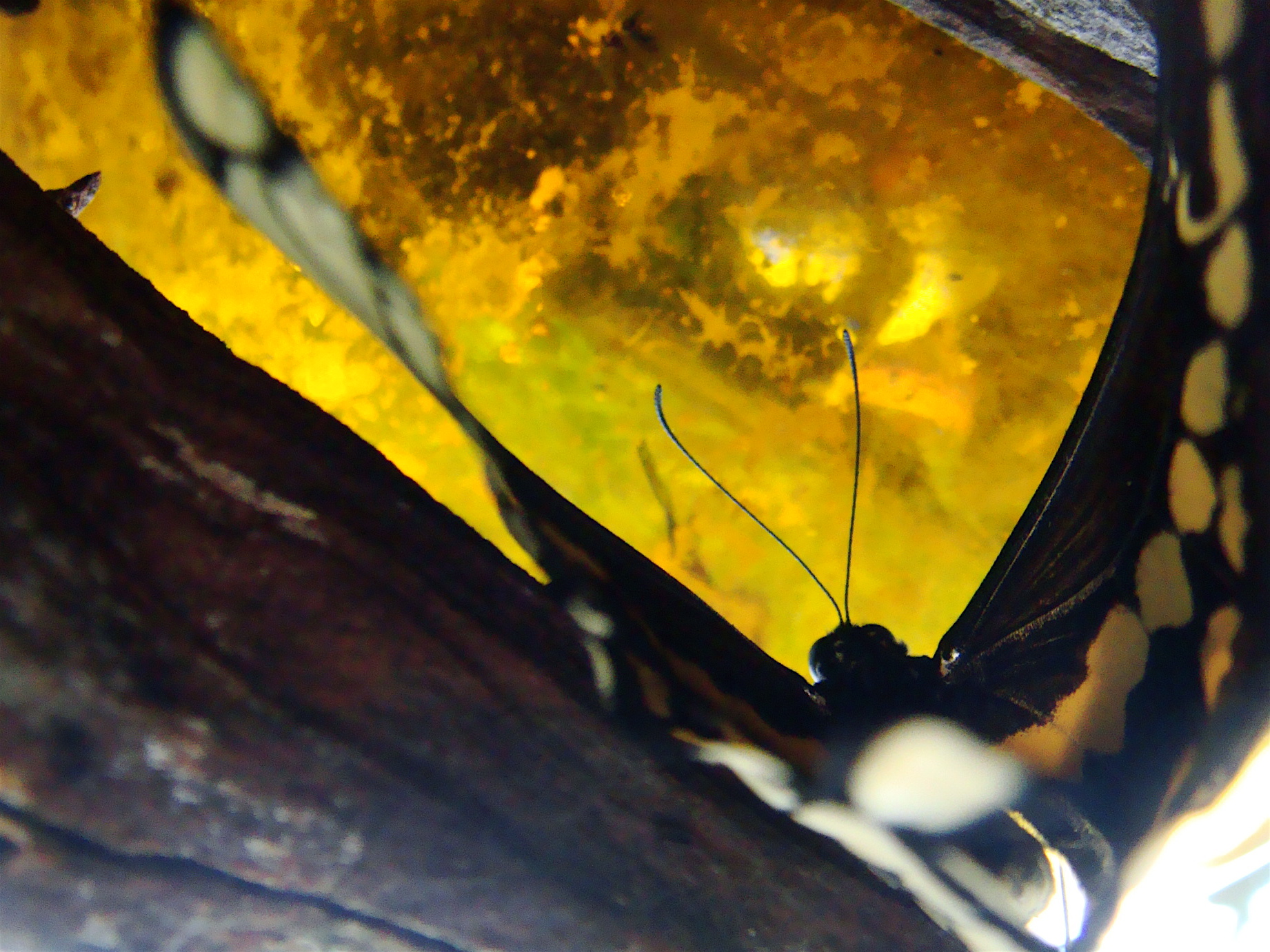
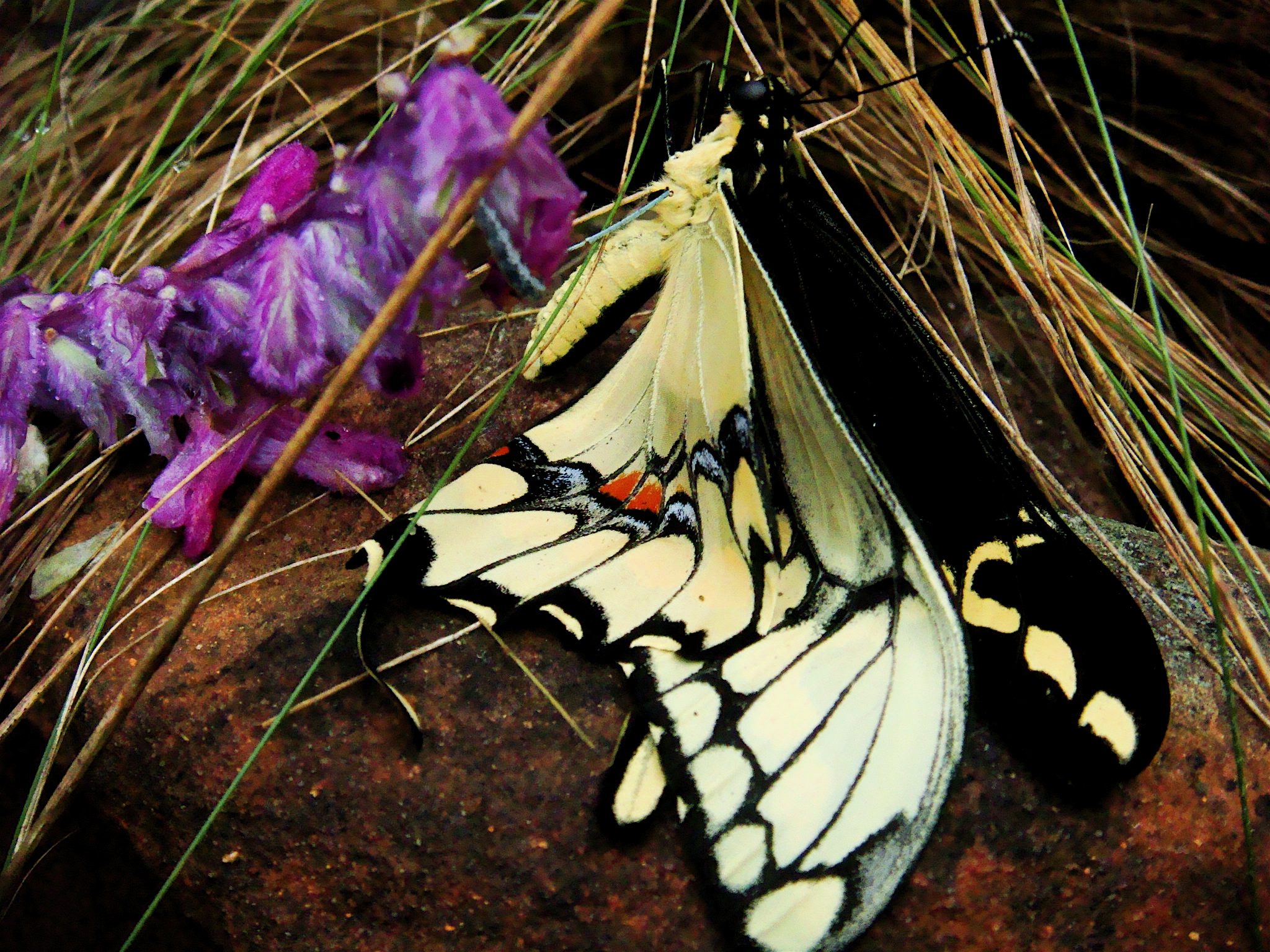
The rain had beaten down this swallowtail butterfly to the ground, along with some Mexican Bush Sage. When I approached, as if on cue, the bird moved a wing ever so feebly, like a surrender flag.  It was a tragic scene.

Swallowtail ButterflyI managed to get the butterfly on a small twig where I then placed it up higher, next to one of my gazing balls, to get a breeze and dry it’s wings off.  As soon as a breeze hit it’s wings, it immediately struck a pose.

Swallowtail and gazing ball

Like a huge flying mantra ray, or a solar sail in orbit around an alien sun, it sat in that spot for hours, slowly fanning it’s wings. The next day it had gone, perhaps an anole ate it? Perhaps it dried off and flew away? I will never know.

Uhh ohh…(sirens go off)

nerd

NERD Alert, NERD Alert, NE…

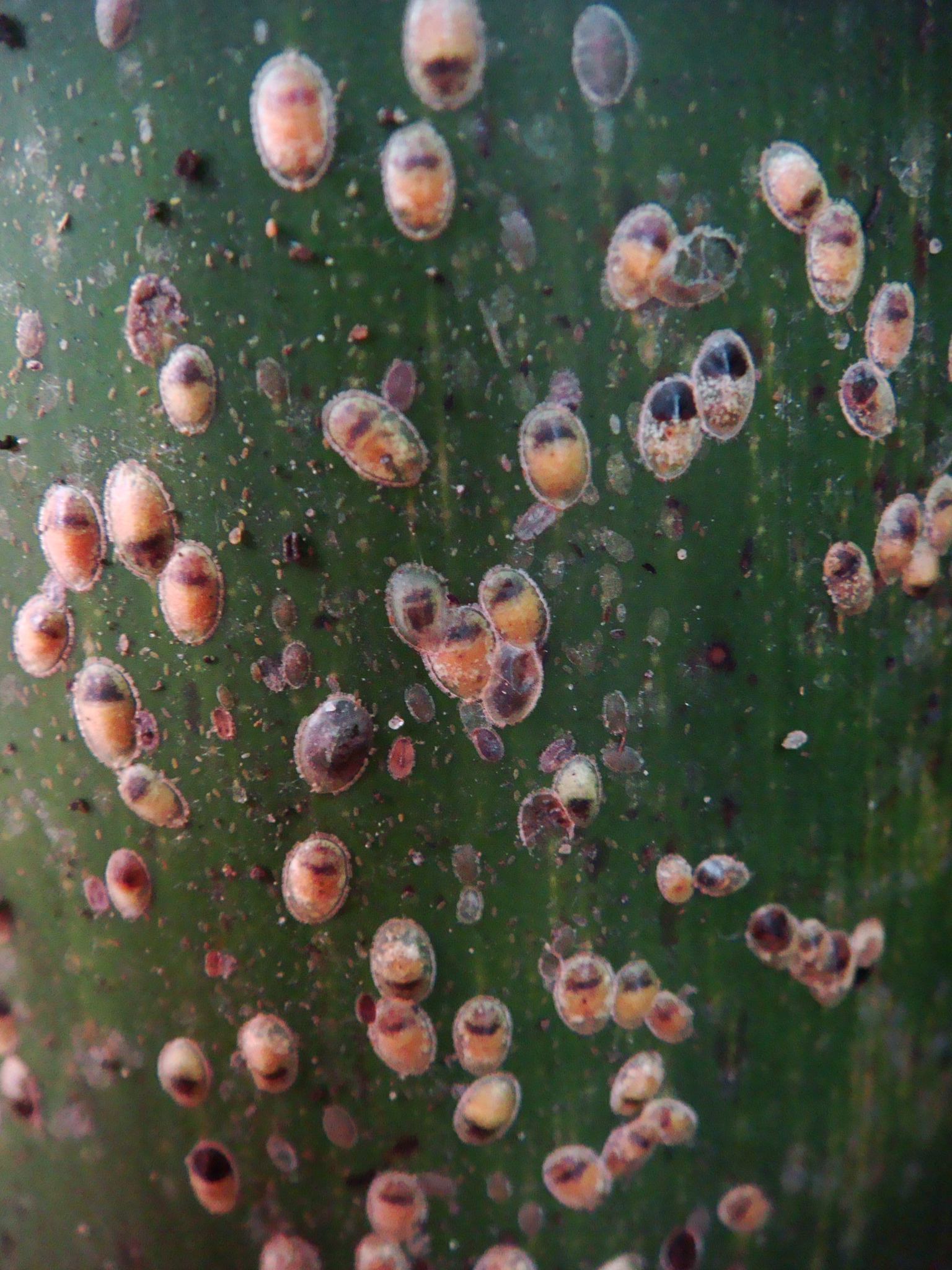
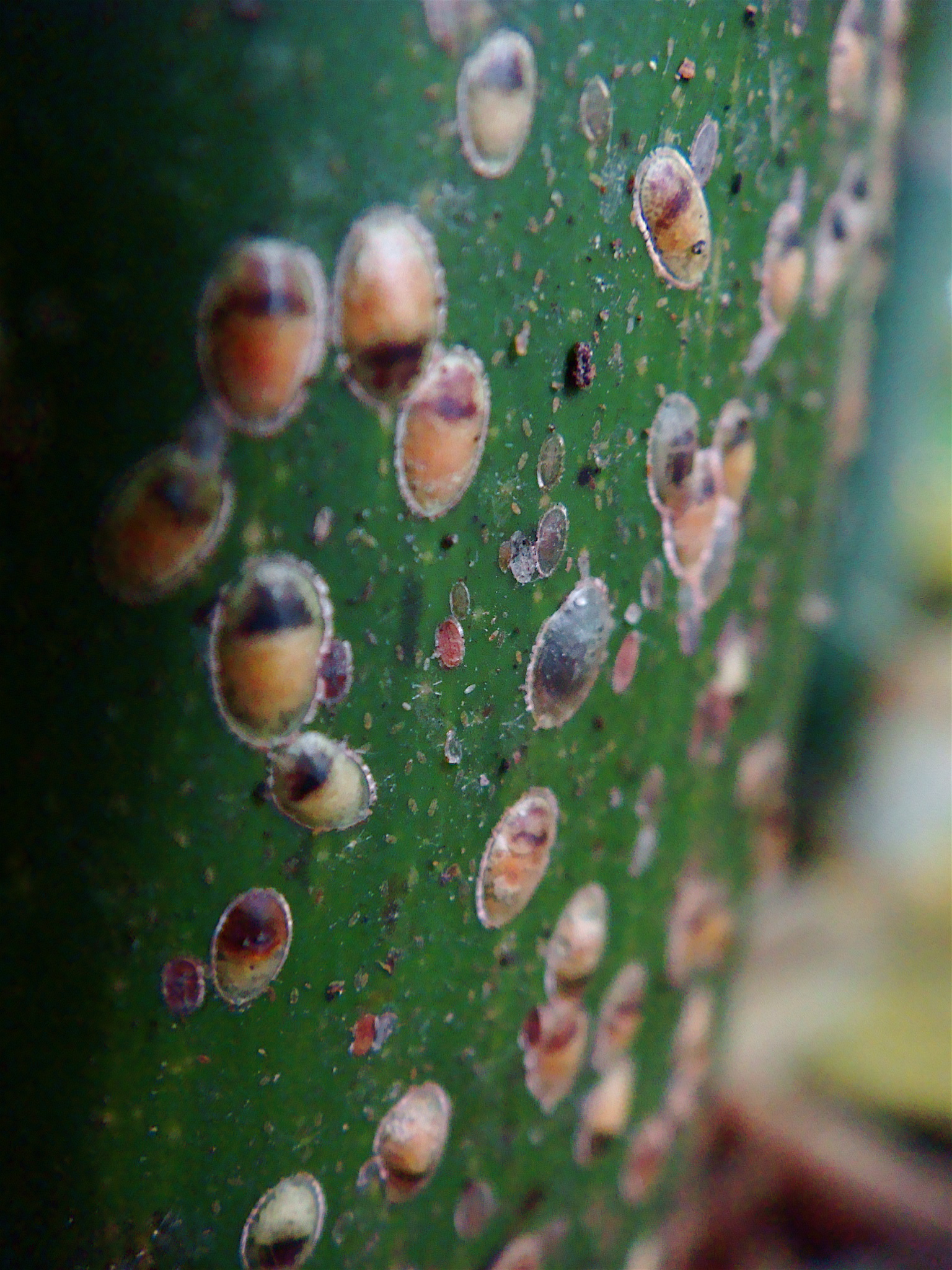
It seems as though my Giant Timber Bamboo has developed barnacles, bamboo barnacles!

Bamboo BarnaclesSmall ones, large ones, exploded ones, If you have Giant Timber, the chances are you have some of this, a US import from the East.


Asterolecanium bambusicola Boisduval


Try saying that one at a party to ensure everybody looks at you like a freak for the rest of the evening!  The Asterolecaniidae, or pit scales, are an unusual group in which many members can cause “pits” to occur on their host plants, usually Bambusa.

DSC01007Many are considered as damaging pests on their hosts, sucking the sap from the culm sheath and stems. (Adjusts glasses) This is one of the more common pit scales. The coloration of this scale is light green to light brown with a cream colored to orange margin.  It has a waxy covering making it difficult to eradicate…I don’t even try. Snort

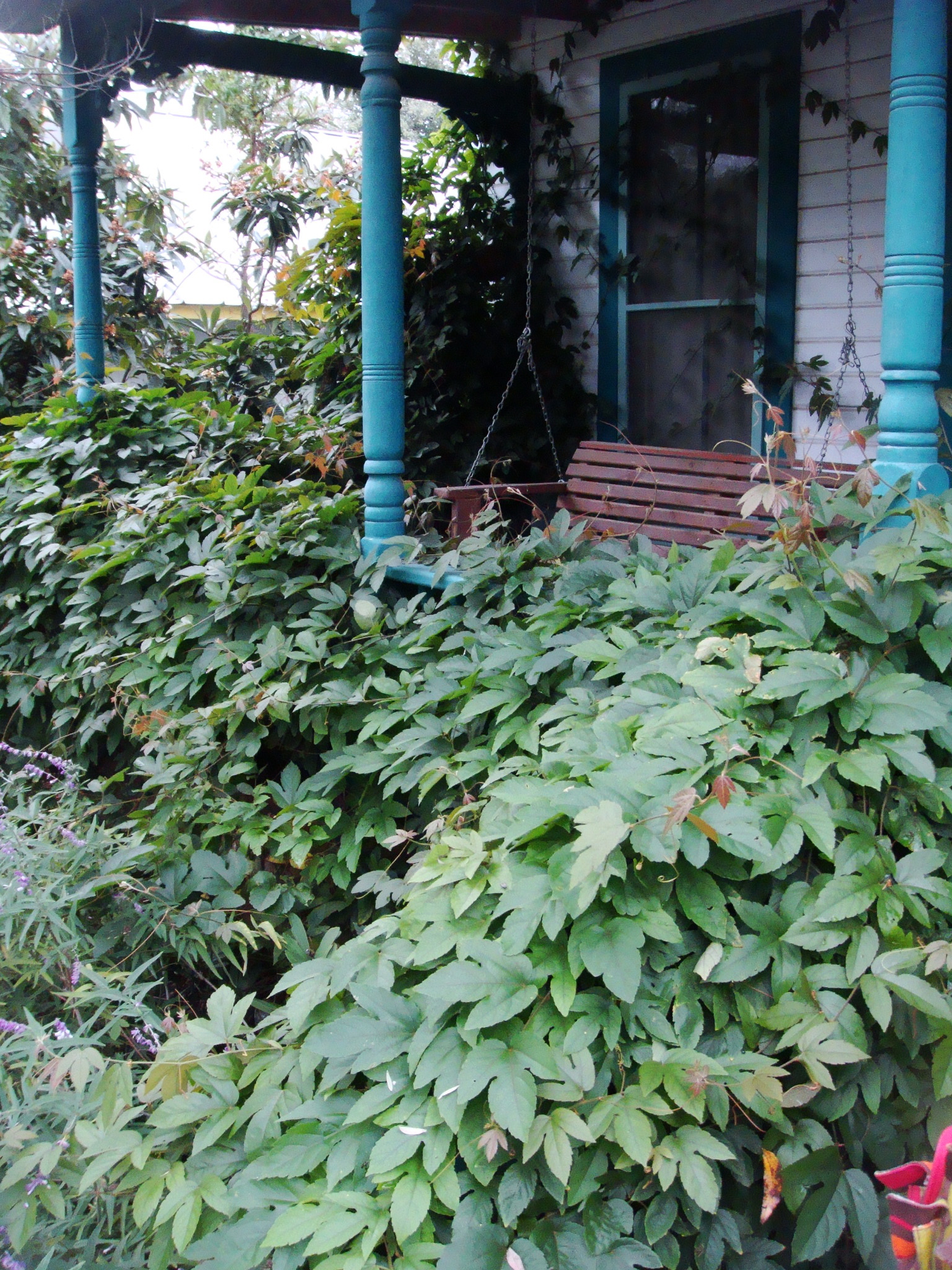
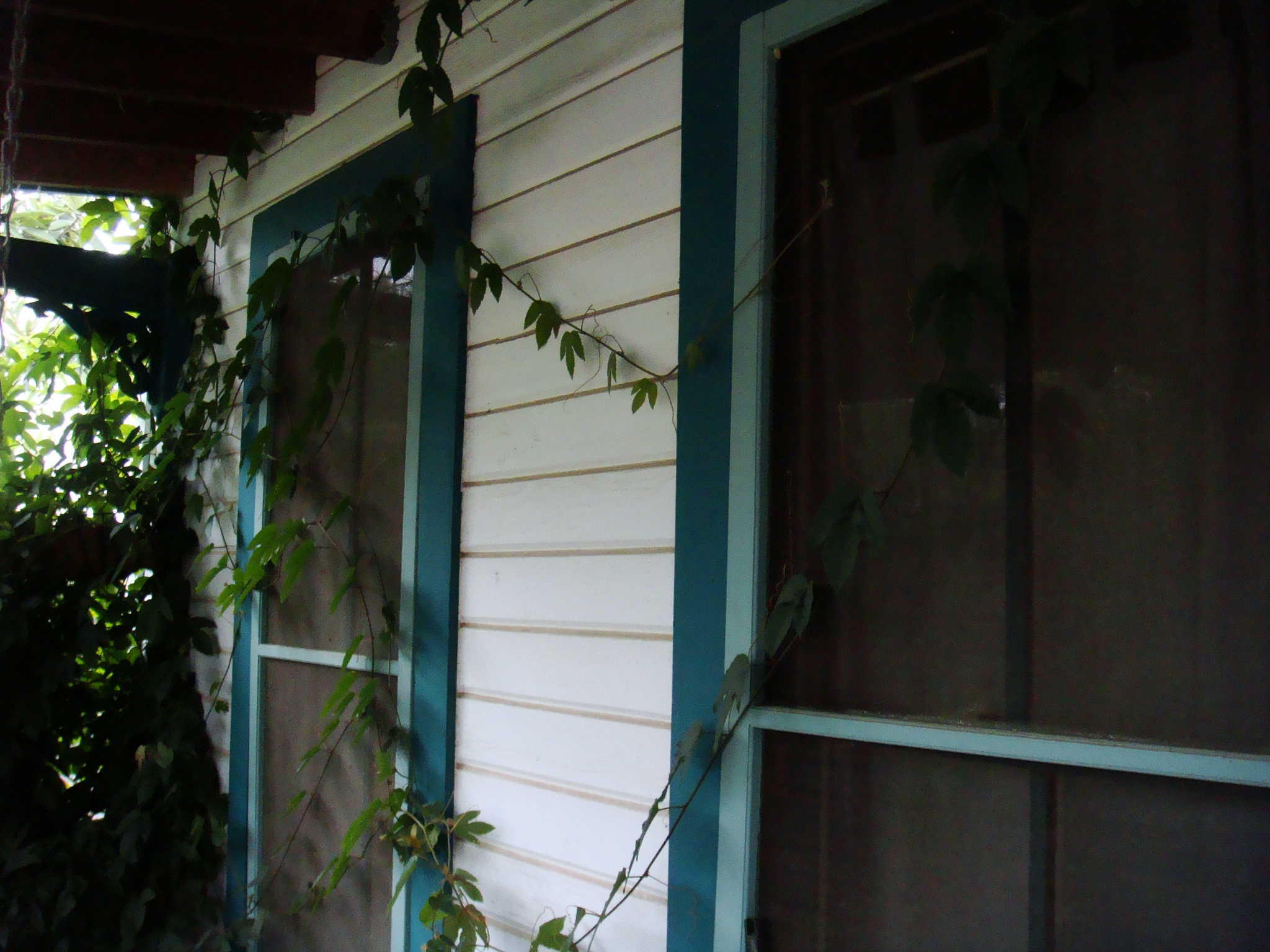
DSC00977My front porch has been consumed and I mean consumed by this Passiflora Coccinea or Red Passion Flower this year. The vine escaped its usual winter die-back fate last year due to the particularly mild winter we had. This years growth on top of the old growth has created a vine of monsterous proportions, it is attempting to engulf my entire front porch. If we do not have a cold winter this year I fear my front door may become unusable.

Red Passion FlowerIt is like the carnivorous Mexican vine in the movie “The Ruins”.  It is even trying to get into the windows!  I will let it for now because in the mornings when the sun shines on it, it creates the best shadows to wake to, very jungle like, and I do like jungle.  I am just happy that it is not planted on the side of our house with the Tahoe hole in it, or I firmly believe it would already be inside the house, covering the TV and our Lazy Boys with it’s green tendrils.

House of VinesHouse of Vines, originally uploaded by: jasohill

Could this be the fate of the Patch should we not get a good freeze this winter?

Tahoe Hole

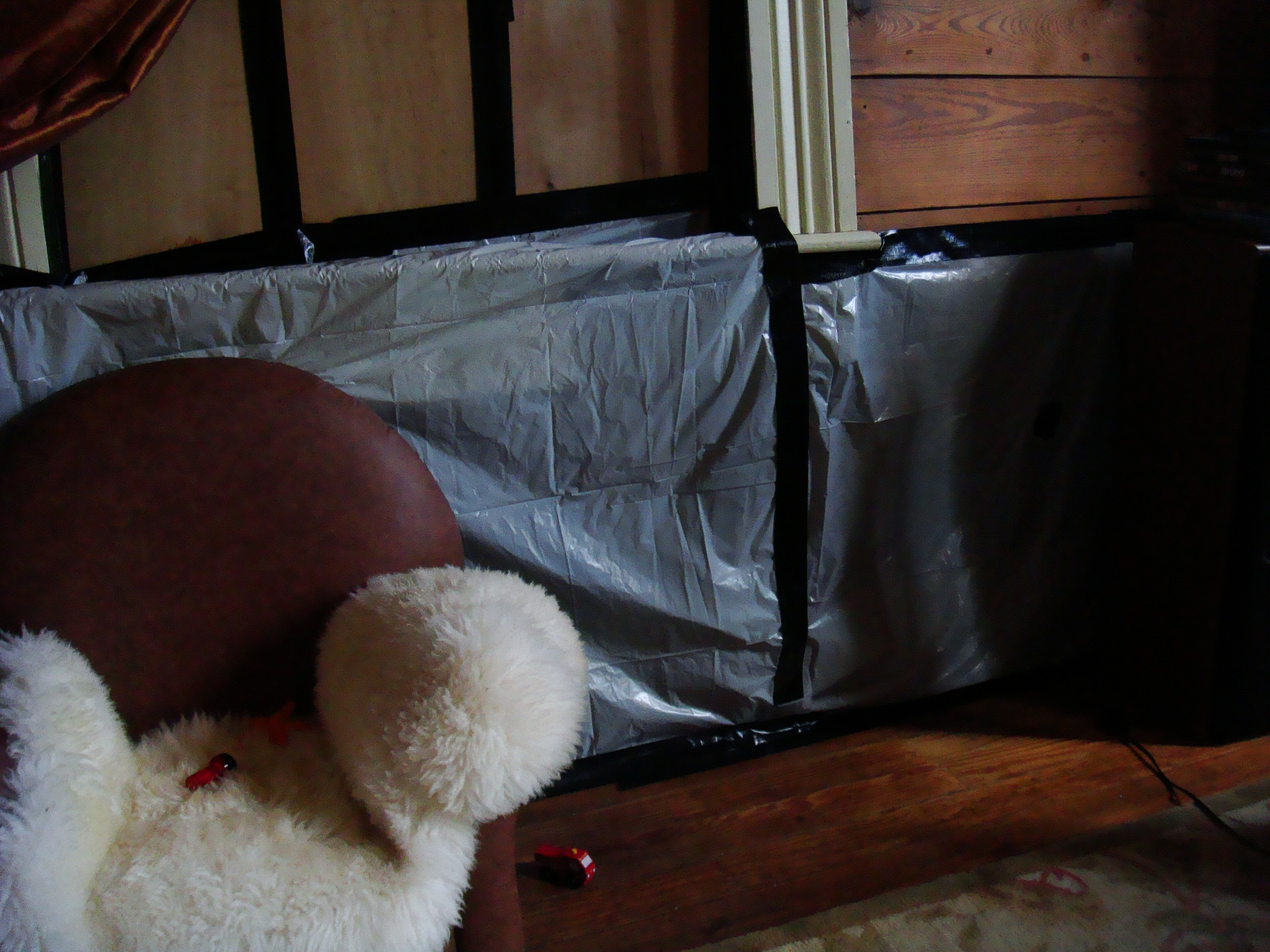
Staying on the subject of rather large vehicles, driving at high speed into the sides of houses, this is the current scene in our living room right now. The recent cold fronts we have been experiencing have created the need for some creative improvisation, oh yes when the colder wind picked up recently it was whistling through here. It made watching a movie feel more like an outdoor retreat. What was our creative improvisation?  Well as you can see, it involved copious amounts of Duct Tape and some plastic leaf bags to achieve this deconstructionist aesthetic. I have to mention that these bags are constantly sucking in and blowing out, it is like living inside of bellows.  The Botox Lady had a really strange look on her face when I walked past her from the shed carrying the roll of Duct Tape.


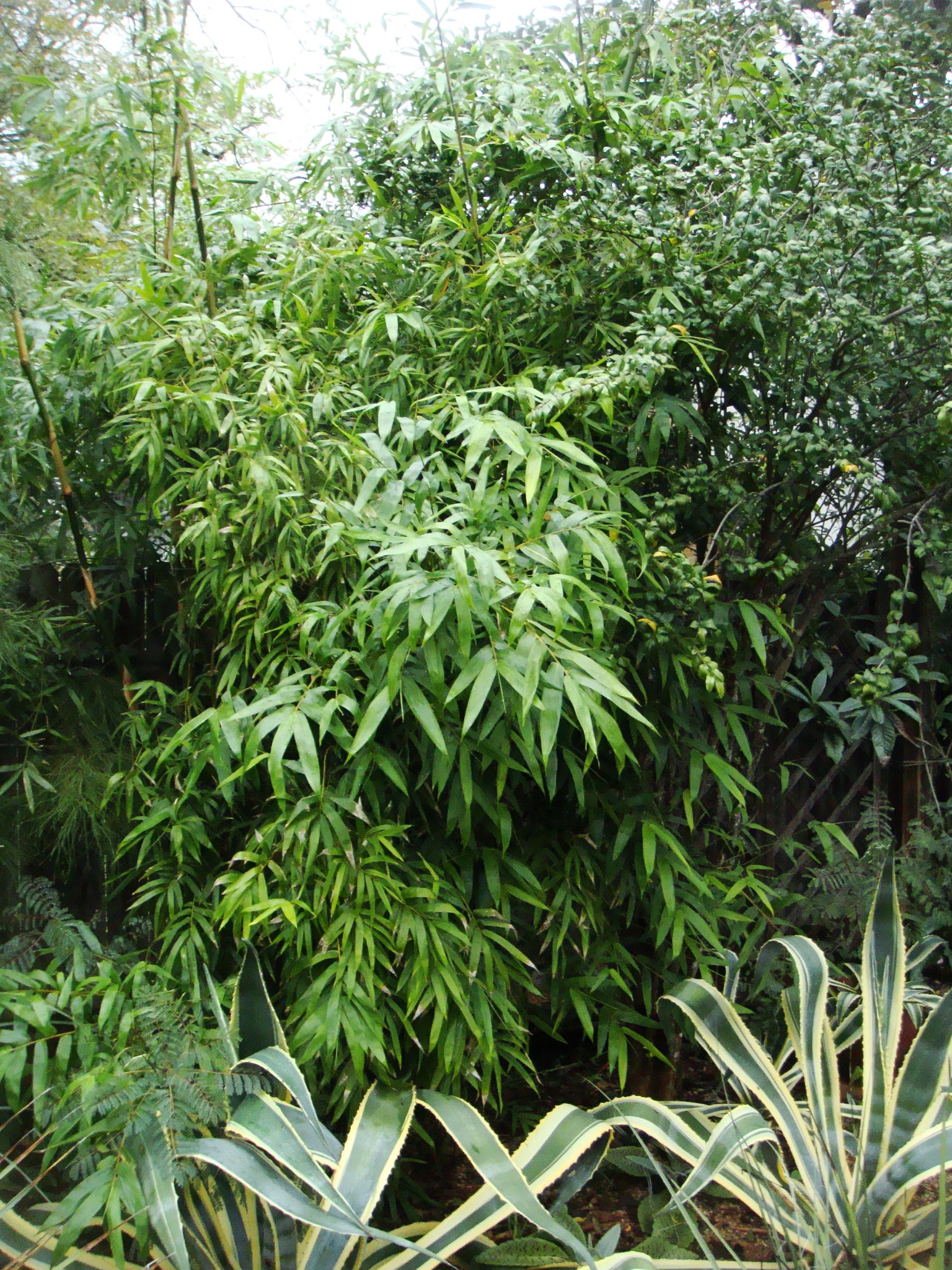
Buddha's Belly Bamboo (Bambusa tuldoides) 'Ventricosa'

Another over-achiever that has really sprung this year (its third year) is this Buddha’s Belly Bamboo,

Bambusa tuldoides ‘Ventricosa’


I am thinking of taking out the white pomegranate shrub on the right of it to offer the scene some more breathing space. I have never really cared for this shrub, it has a scrappy curled look to it’s foliage, like it is perpetually thirsty.  Apart from the white blooms it develops in the spring, it mostly just sits there, bothering me, yes, I am afraid the woodcutter will return with his sharpened axe in the very near future, what do you think? Do I just hate “curly foliage”?

It is not like the Belly Bamboo does anything more spectacular, but the foliage just works for me as an imposing tropical backdrop to these variegated agaves.

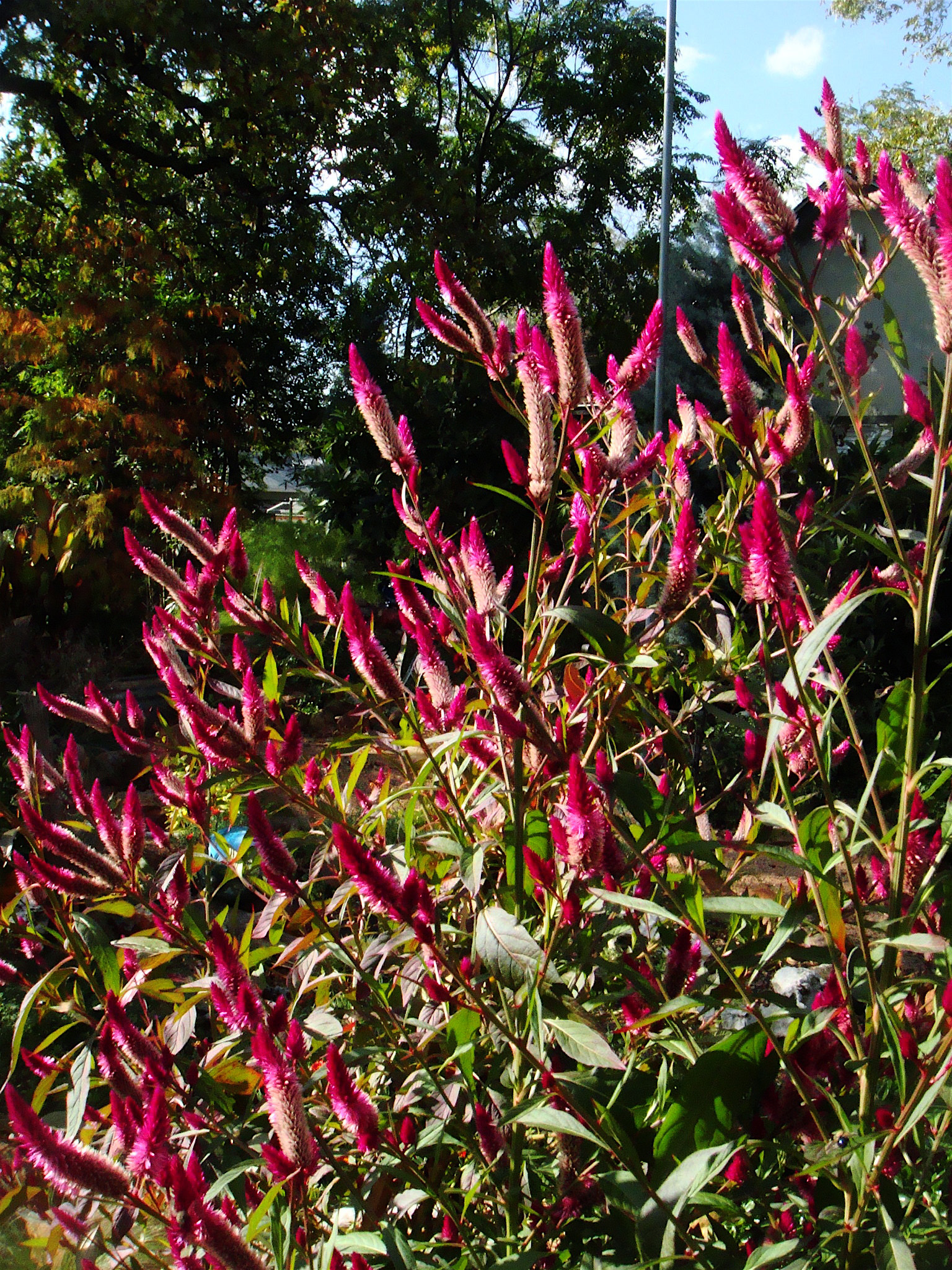
Amaranth

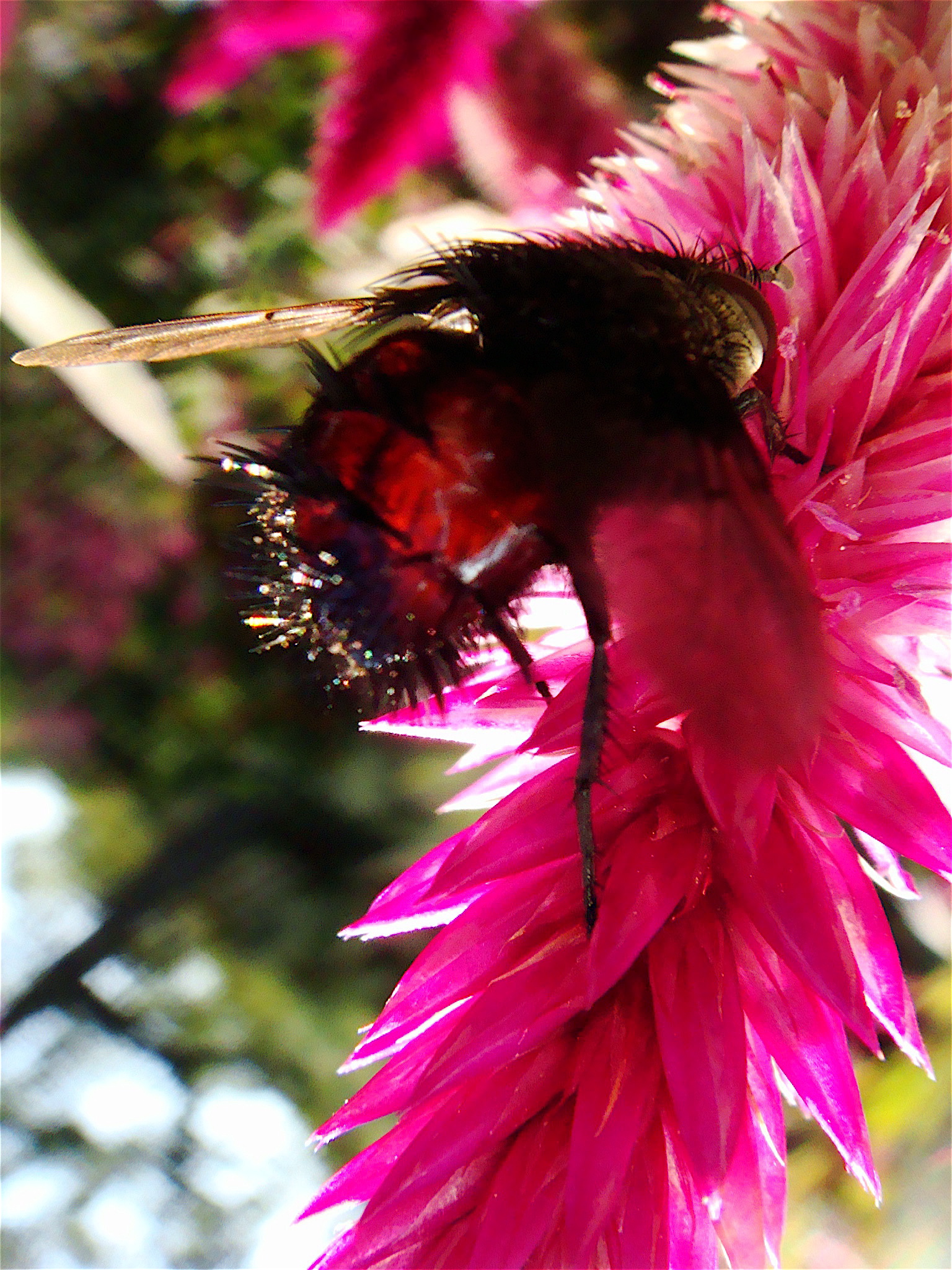
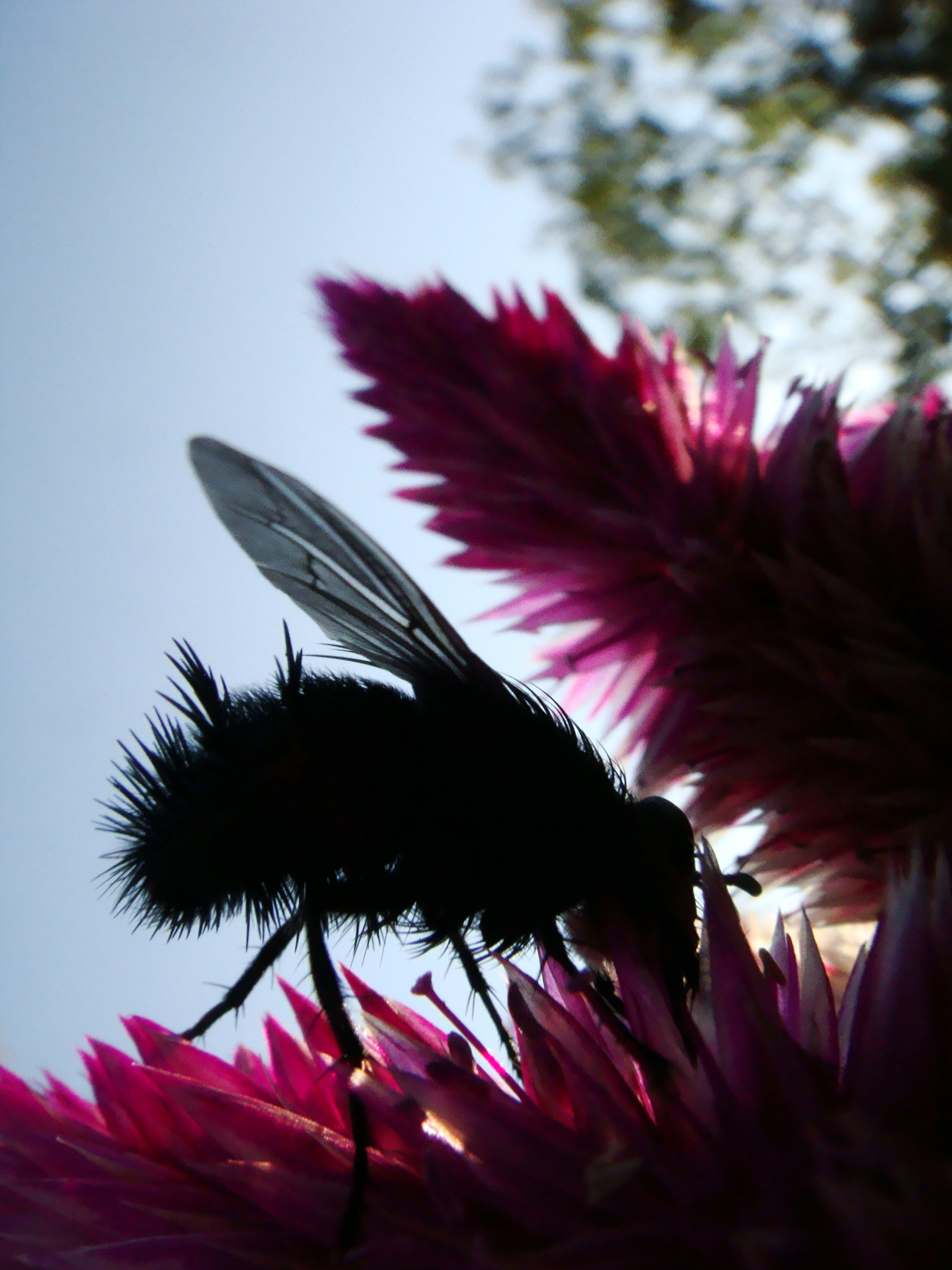
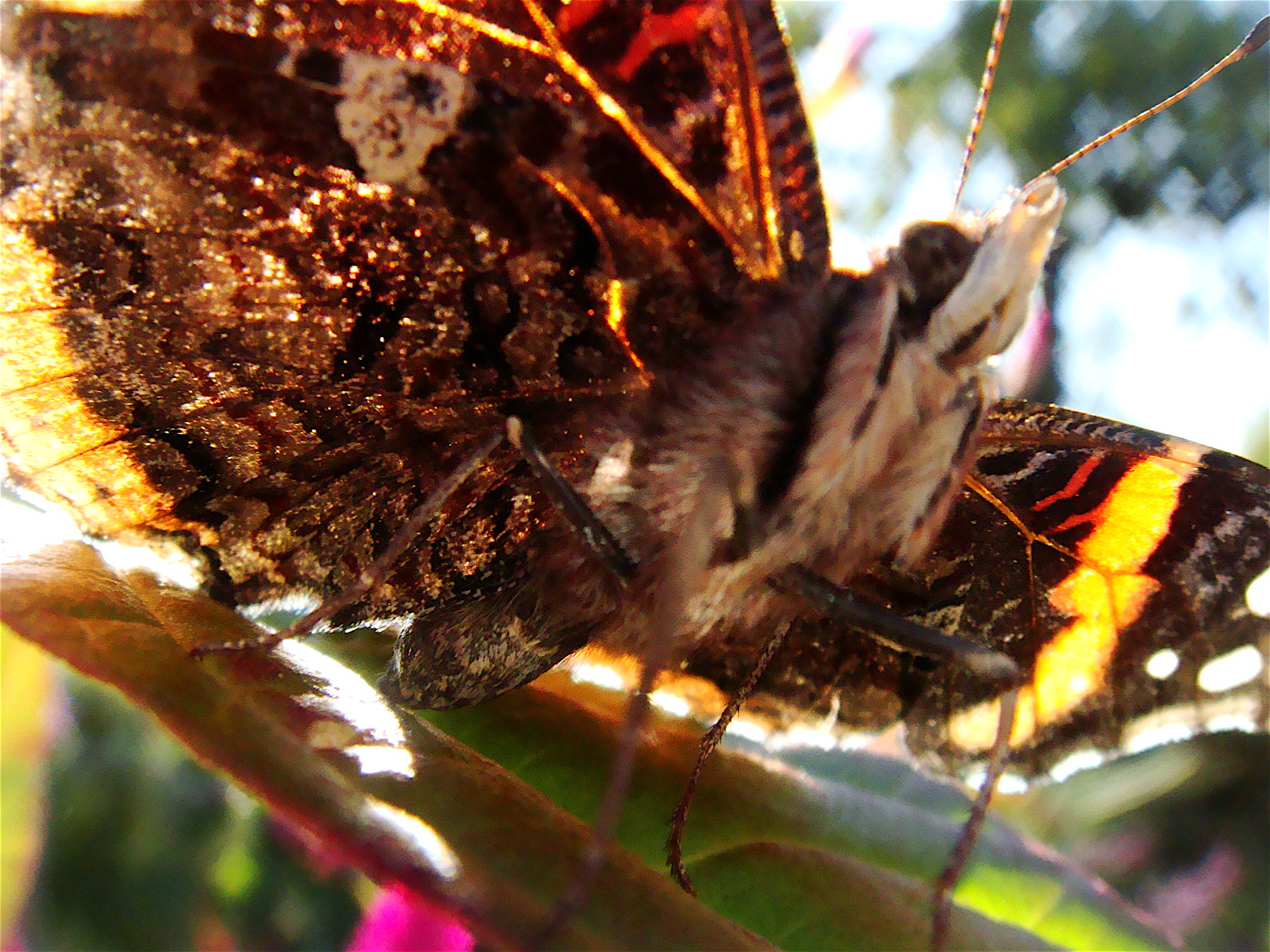
I cannot describe how many insects are on this Amaranth at the moment. It has rendered my center pathway almost unusable. Clouds of moths,wasps,hoverflies,wasps,butterflies,bees surround you should you sweep past the colorful plant. It is quite staggering.

HoverflyThis one was particularly large and spiky, the body of the fly glowed ruby red.

DSC00993


EdwardScissorhands

The insects seem to get drunk on the Amaranth necter, not caring at all about the camera.

Aroooo!

Arrooooooo!

DSC00939

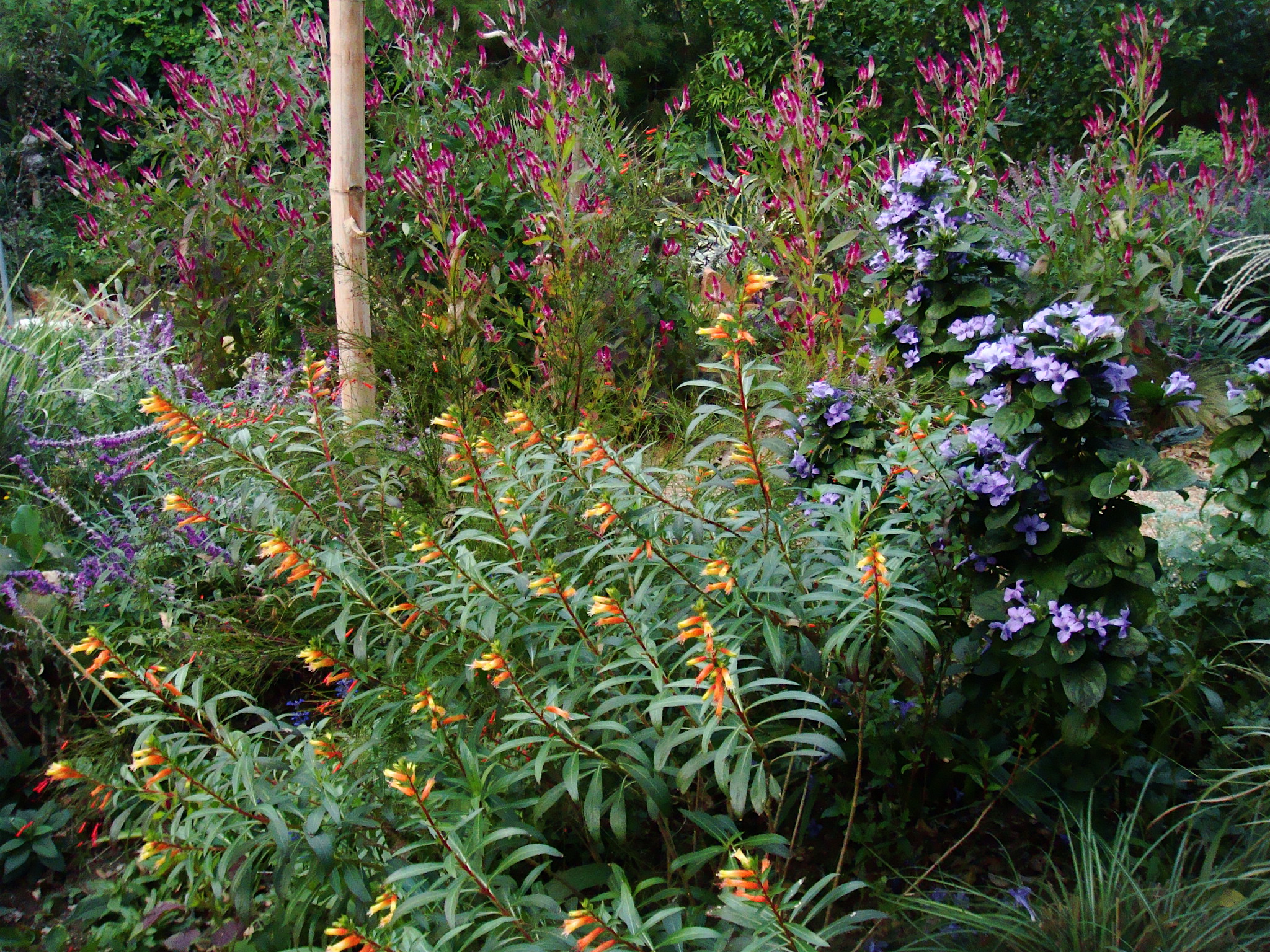
Lots of fall color right now in the Patch courtesy of Amaranth, cigar plant, Philippine violet and Mexican bush sage.

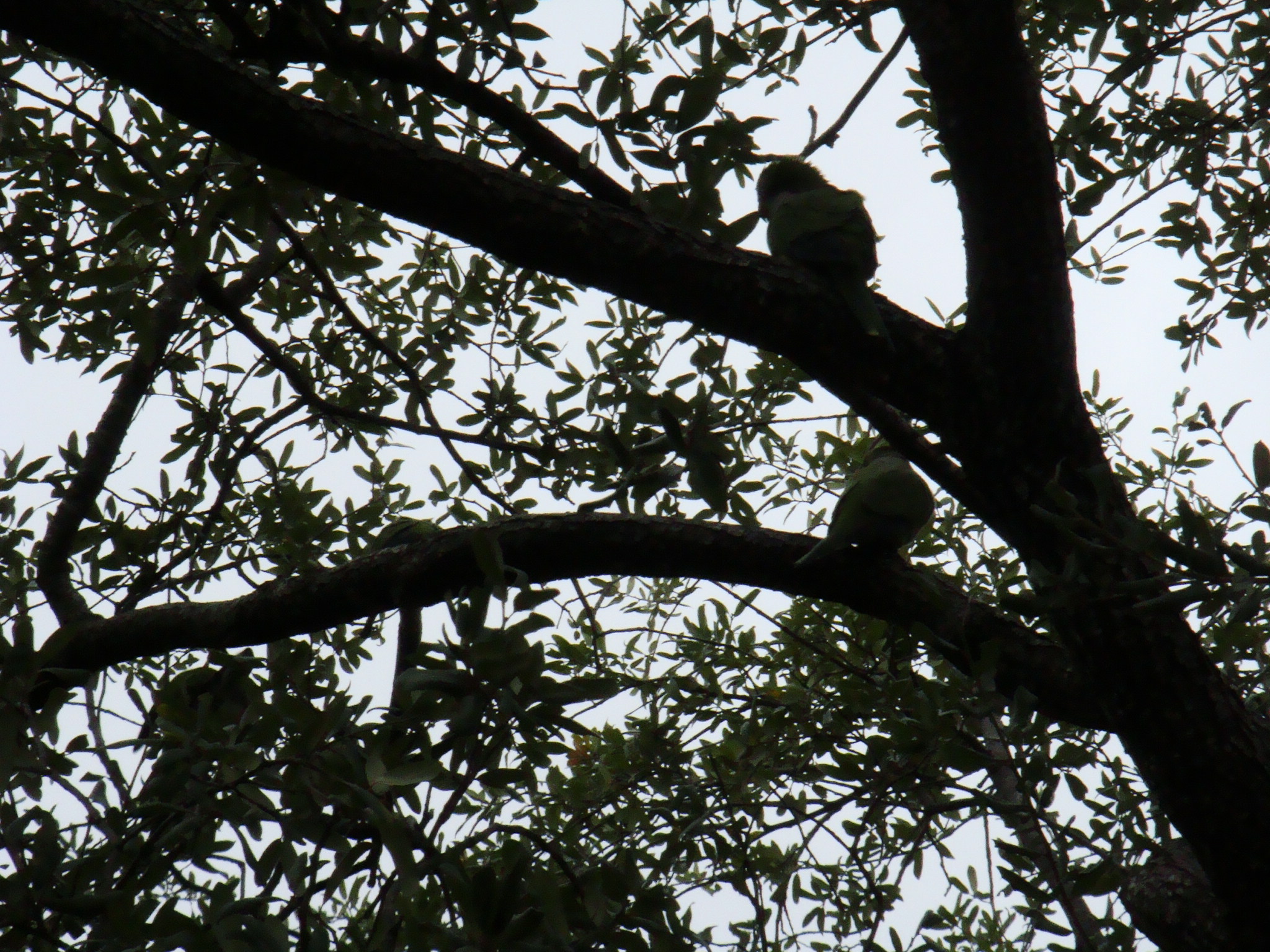
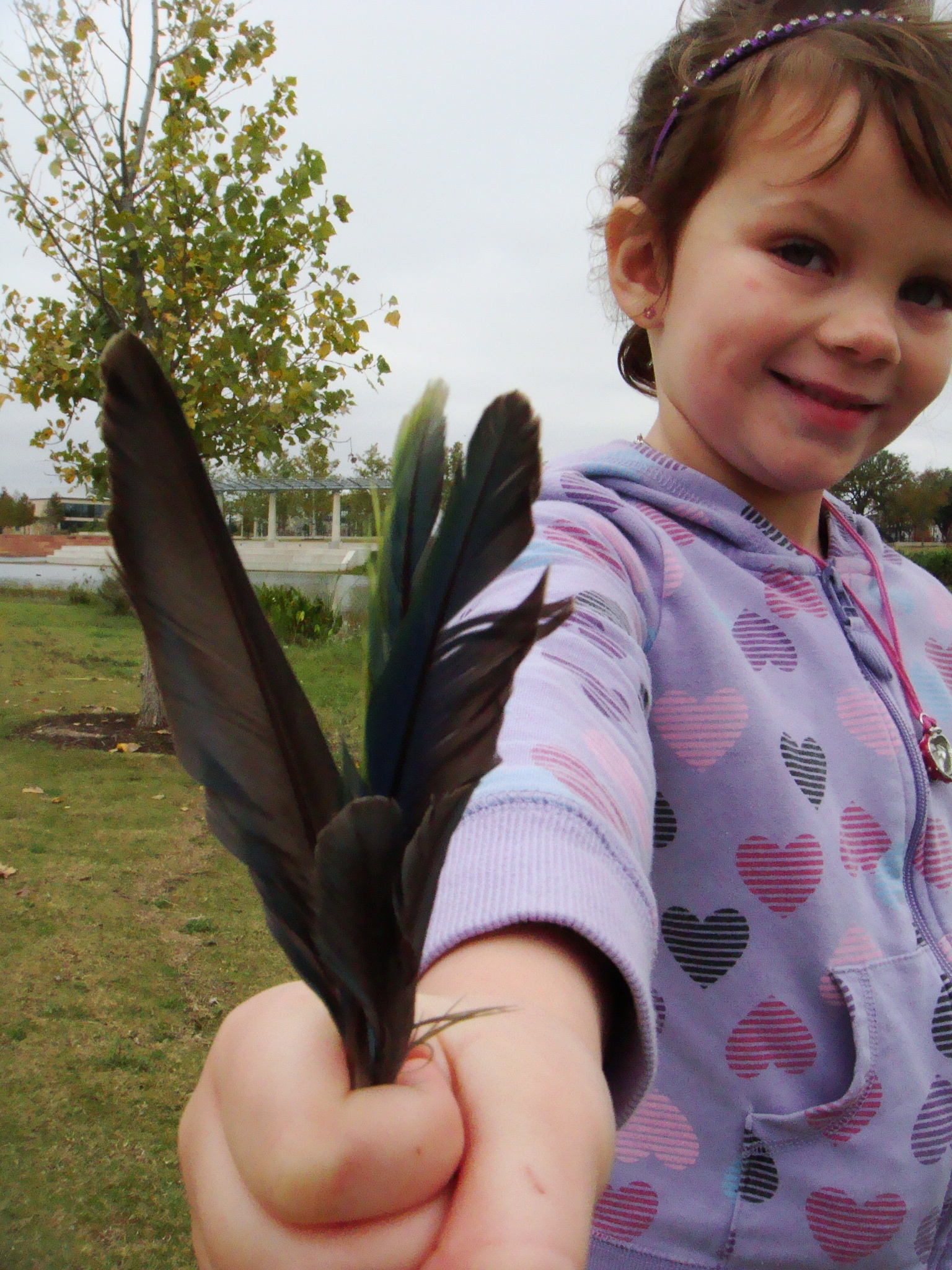
parrotsWe went to the Mueller playground at the weekend and spotted some of Austin’s very own Monk Parakeets, they were everywhere!  As were their feathers that kept falling out of the tree as I took this photograph.

Monk ParakeetsSomebody got to work immediately collecting the colorful feathers.

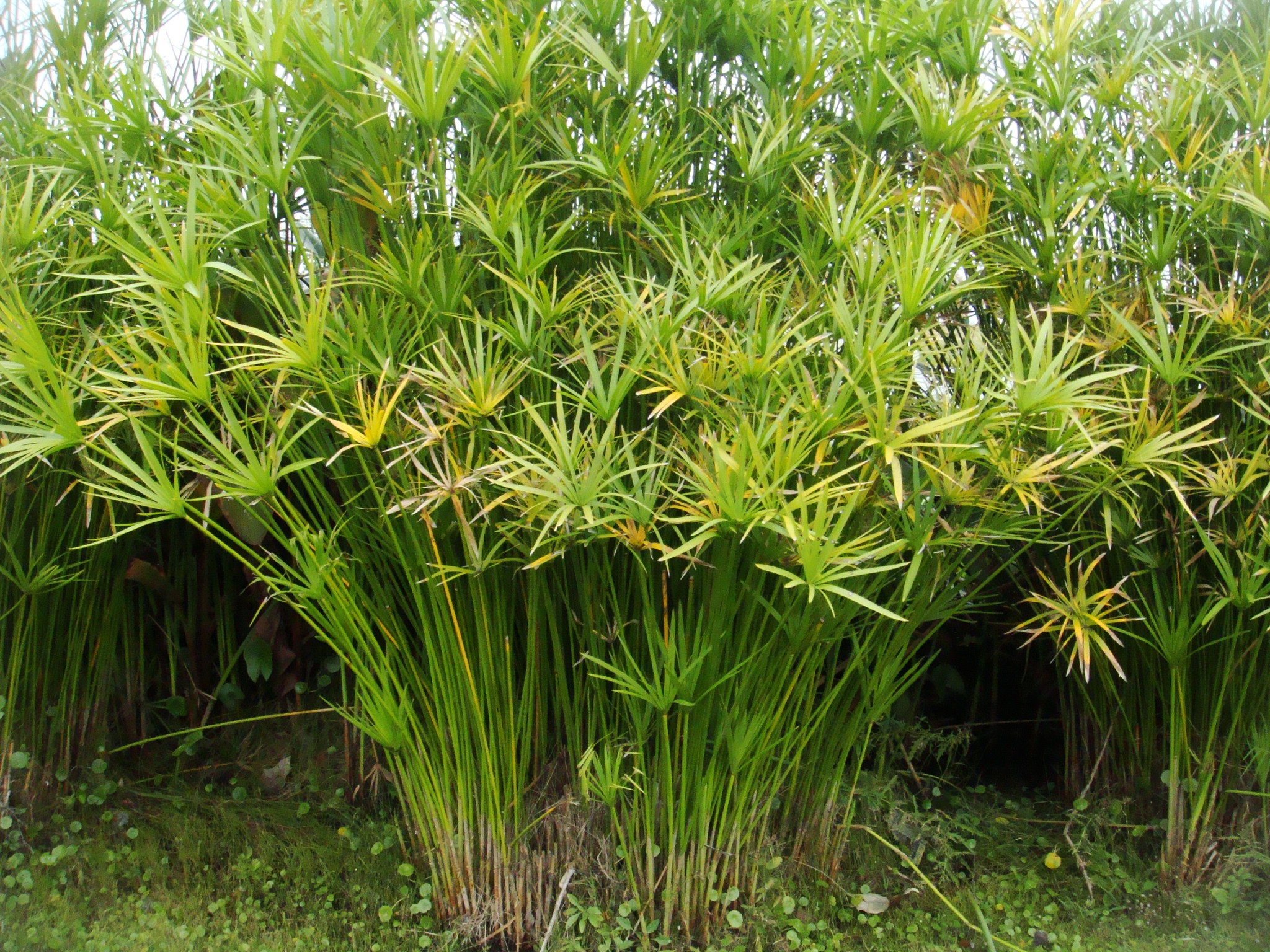
umbrella plantMyself?…Naturally I was hunkered down next to this amazing specimen of Umbrella Plant

Cyperus alternifolius (Unbrella Papyrus)


I may just have to bury yet another rather large rubber container and get this one going. It would look great buried in the middle of a bed as a center-piece with an under-planting of…wait, I think I know just the place!

Finally…

DSC00981

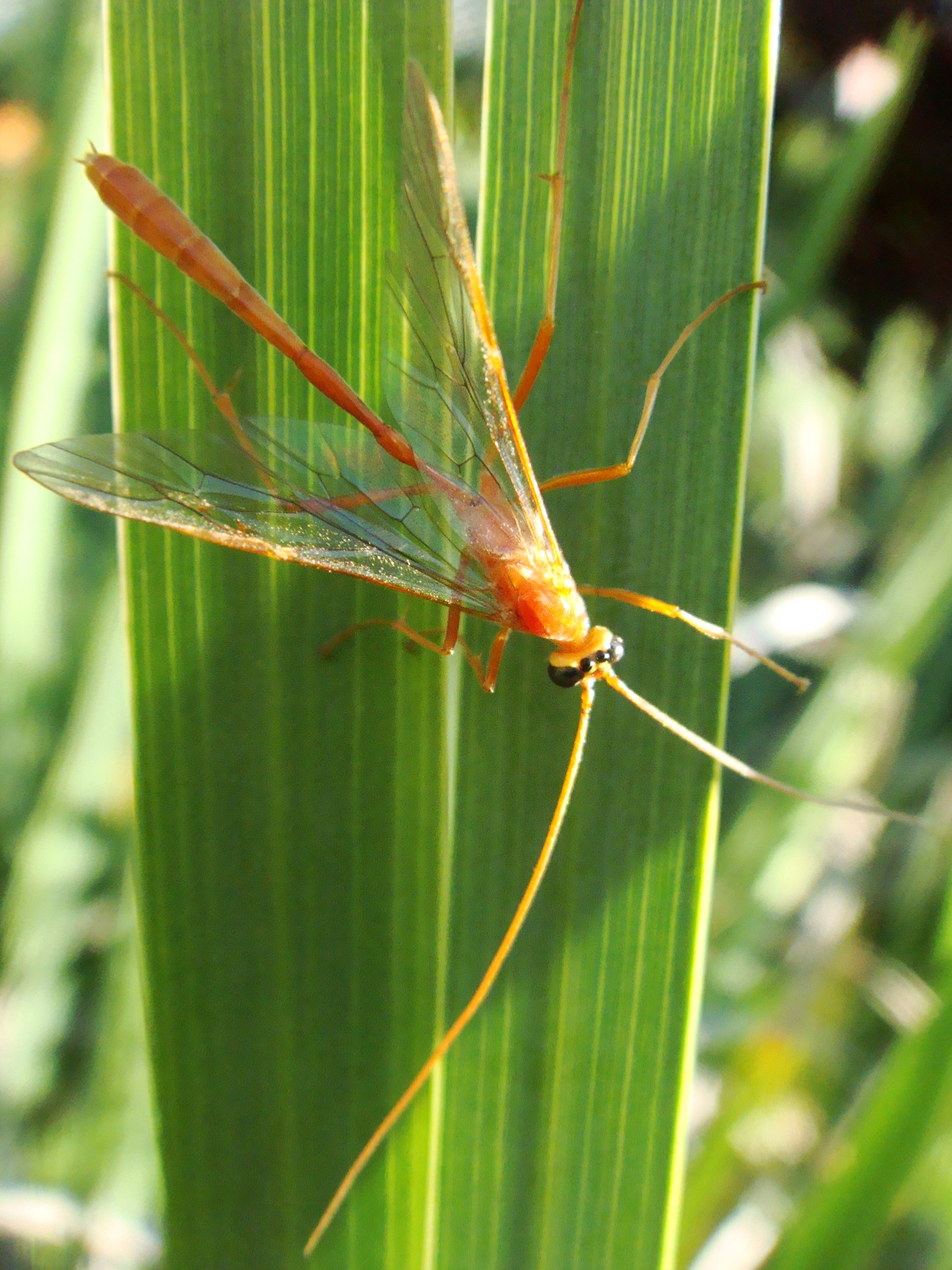
A freshly emerged damselfly?

DSC00979

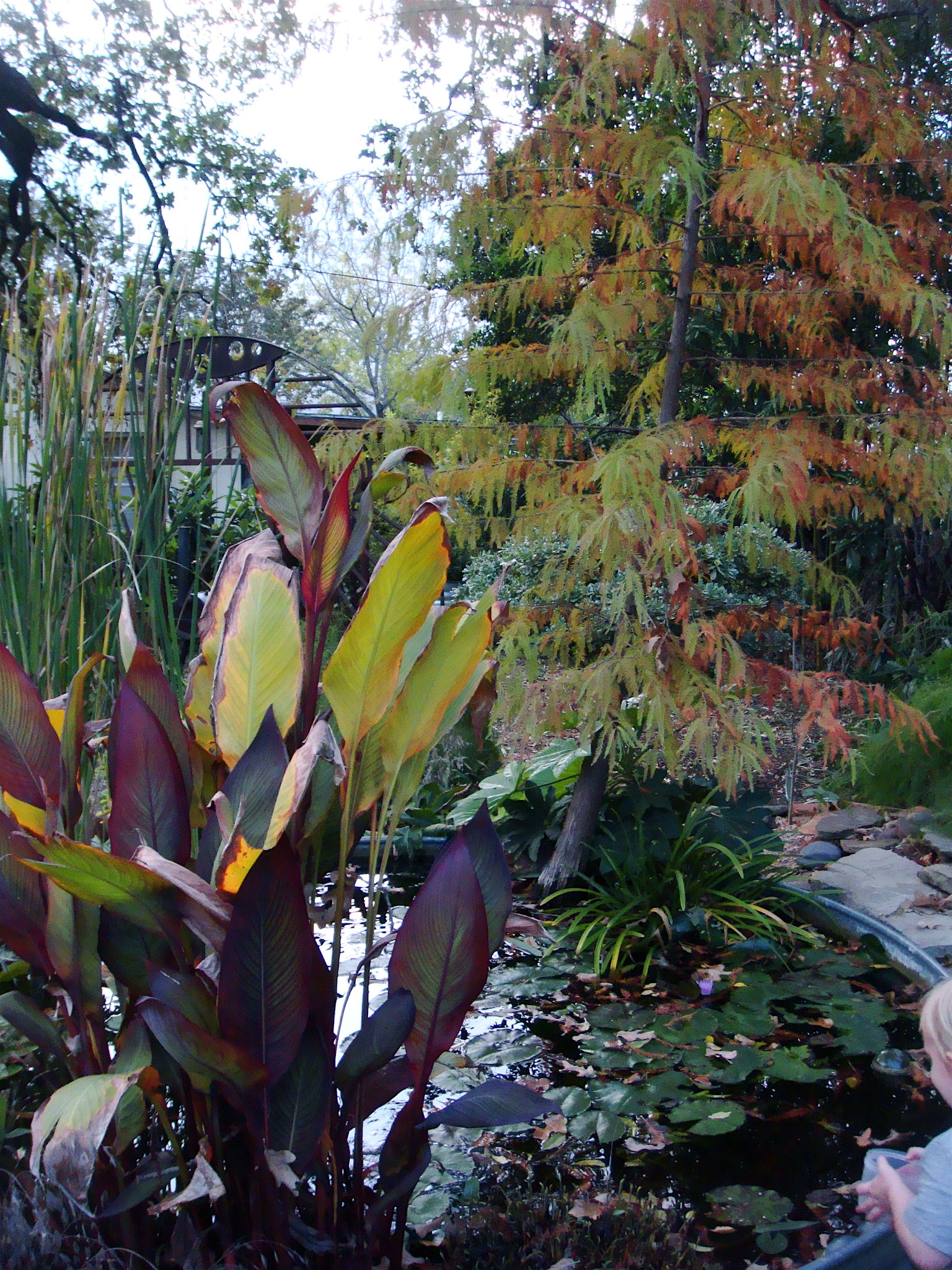
Bog CyprusThe Bog Cyprus in my main pond has started to brown and shed, so it is out with the net…

gladiator2

“Let the boring scooping begin!”

I hope you will check out the new ESP “character listings” at the top of the green side-bar under “Pages”. Let me know if I have missed any important details or if I have excluded anyone you think should have a presence there.

Cactus Man, Cactus Man where art thou?


Stay Tuned for:

“The Leaf, the Witch, and the Water-feature ”


All material © 2009 for eastsidepatch. Unauthorized
intergalactic reproduction strictly prohibited, and
punishable by  late  (and extremely unpleasant)
14th century planet Earth techniques.
1 2 11 12 13 14