From a sketchy starting point,

to a rendering…

…to 15 yards of granite, 2 tons of flag and 1.6 tons of boulders that all had to be pushed, carried and coaxed to the back yard on wheelbarrows or manually rolled (employing ancient Egyptian bolder moving techniques).

The Ancient Egyptians apparently adopted the use of iced turbans to excessive degrees when working out in the heat, to think I had the arrogance to think that this was actually my own invention!
Note to self: Must remember not to tie them too tight next summer…(hands frantically feel around skull for any abnormalities)

Plants were chosen,

and stock tanks were filled, oh yes there had to be a stock tank, okay two! Is that artemesia dotted on top of that mound? No it couldn’t be!

 This back garden has gone through quite the overhaul in the last two weeks, it now visually flows with the front garden that was finished with the help from numerous iced turbans in the brutal heat of the Texas summer.
http://www.eastsidepatch.com/2010/08/the-final-push-esp-on-tour/
This design scheme has been very rewarding. The home owners signed up for the full ESP treatment – front and back re-design, lawn elimination and design installation, including implementing a new color scheme developed for their house and shed.

Here is the house, masked and almost painted. The home owners were delighted to finally get rid of their lawnmower…no more mowing required here, ever.
While I was working this garden I was required to move a rather large tree stump, underneath it I found a myriad of creatures from the dank underworld…I love moving large structures like this and always have my little point-and-click on macro ready to capture some of the “Brrrs” invariably lurking below. On pushing over the stump, I performed my now customary “Highland (roach) Fling”,
 until they had all disgustingly dissipated. I then ventured down into the darkness with my camera to see what I could see…This tree stump did not disappoint:

First encounter came from this very colorful and very energetic millipede, and then this…

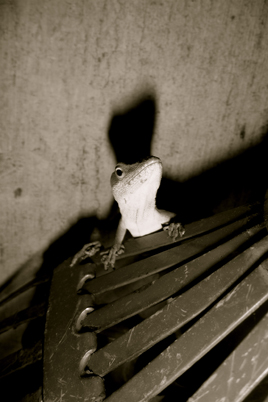
Ceuthophillus secretus
 hunkered down cave cricket caught my attention. Cave crickets are also known as camel crickets and spider crickets, they belong to the Family Rhaphidophoridae. As their name implies, these crickets are commonly found in caves, although some species (like this one) dwell in cool, damp areas such as beneath rotten logs, damp leaves and stones.
Cave crickets are wingless, brown in color and may measure up to one inch in length. They have large hind legs and a set of long antennae, which serve as guides through their darkened environments. Many cave cricket species live without sufficient food sources and to avoid starvation, they have been known to devour their own extremities, yes folks that is what I said, even though they cannot regenerate limbs.
 Obligatory Lector noises
Given their limited vision, cave crickets will often jump towards any perceived threat in an attempt to frighten it away. It appears I got lucky and did not have to break into another ridiculous Highland (cricket) Fling on this particular occasion. A couple more…
 This brown chrysalis inscribed with futuristic hieroglyphs looked like an ancient sarcophagus.
The next one looks as if I could have constructed it, lots of “flare” – some type of moth?
 Back in the Patch…


I promise this will be my last post on celosia this year, okay promise might be too strong a word. I have to post some images of these regal plants as they adorn their finest end-of-year purple robes.
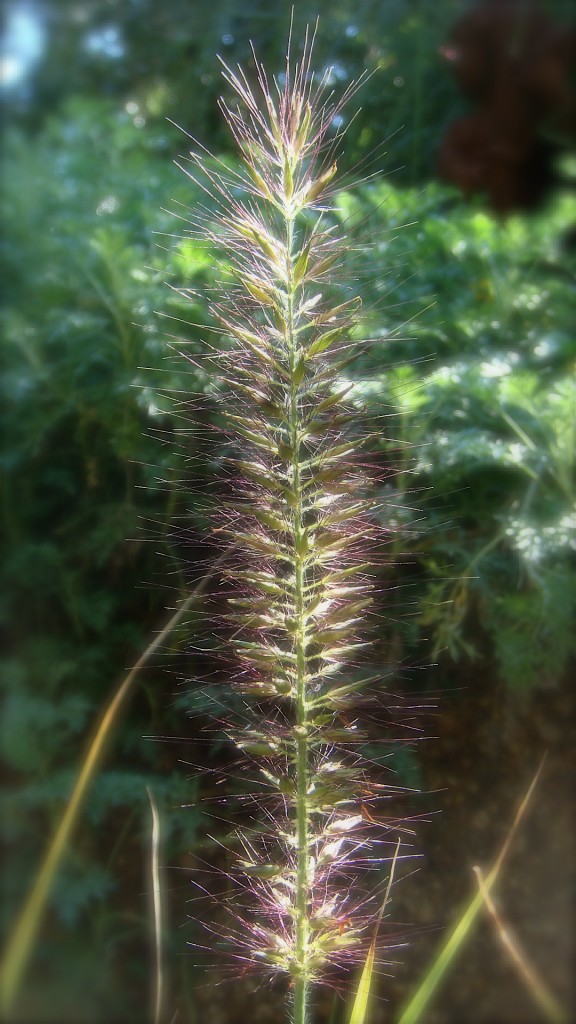
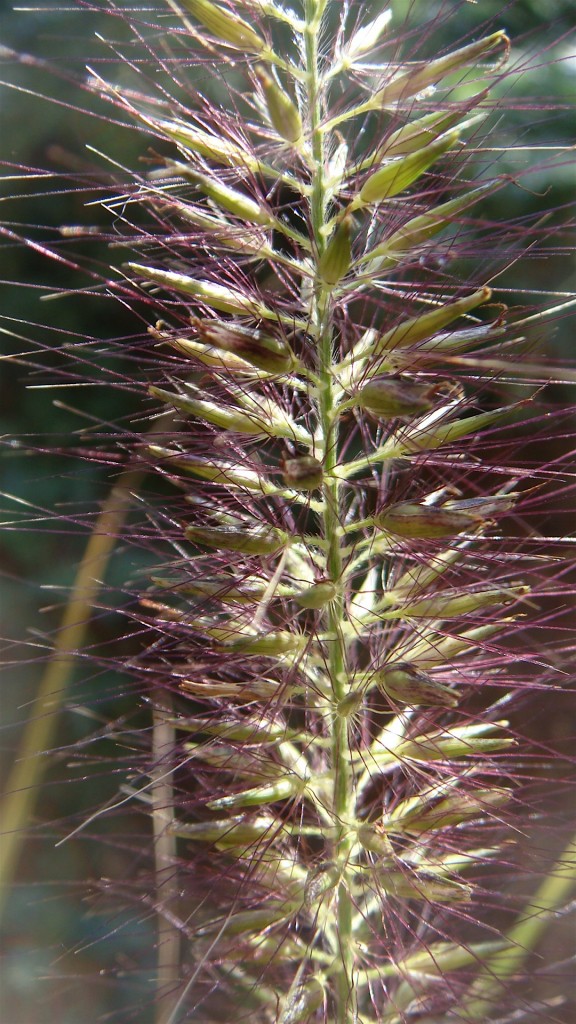
 My front garden and hell-strip is now transformed into a shimmering purple and crimson haze, it has taken on quite a fantasy aesthetic. Everybody who walks past reaches out to touch these seedpods.

The seed husks (after shelling) can also be a lot of fun.
 The leaves of the plant turn bright red at this time of year, a stark contrast to the crispy bacon that was once my moon flowers…


“Looking good now ESP!”

This sparkler sedge works well reflecting the random swirling forms of this wizened cedar carcass. I have coveted this plant ever since it was brought to my attention by Pam at http://www.penick.net/digging/ who kindly gave me a small transplant. I then inherited a few more of these plants from the nice folks from the Gardener’s supply company http://www.gardeners.com/.

I recently came across a picture of this part of the Patch when we first moved in. I had forgotten just how wild it was.
If you are like me, right now you and your garden are under siege from…

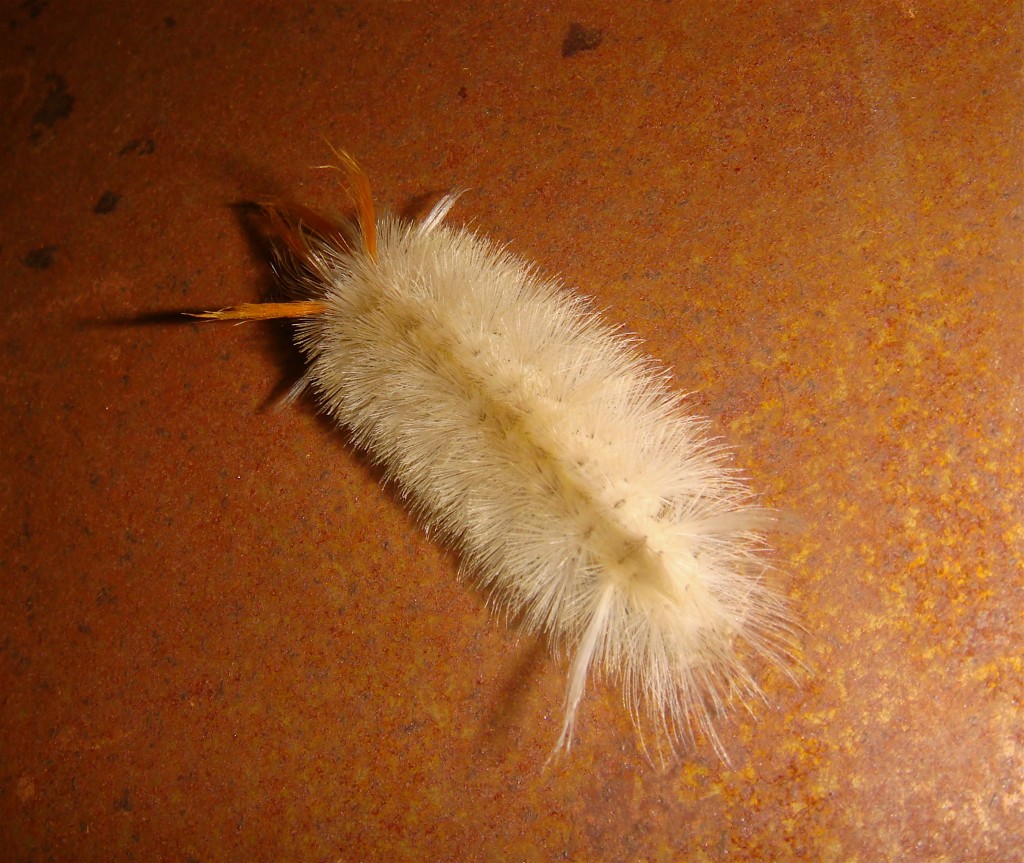
…tiger moth caterpillars, the infamous woolybears. When these show up in the fall, folk lore denotes that they are thought to indicate the severity of the oncoming winter by the proportion of red-brown to black on the body. They devour anything and everything, but apparently love gopher and dusty miller plants…must be that latex flavored sap! I have never seen so many of these caterpillars.
 Nice of them to leave me one top.
There are many different types of tiger moths and caterpillars, this one is a mature saltmarsh caterpillar, Estigmene acrea (Drury). The good news is these formidable munchers complete their life cycle in a matter of weeks, much longer and I would have no plants left.
And just what do these urchins mature into?
 Looks like we will be seeing a lot more of these next year.
Finally…

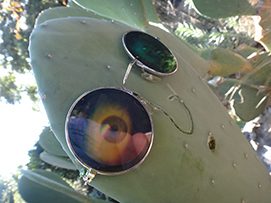
These reflective crystals got lots of attention at this year’s Celtic Festival at Fiesta Gardens.
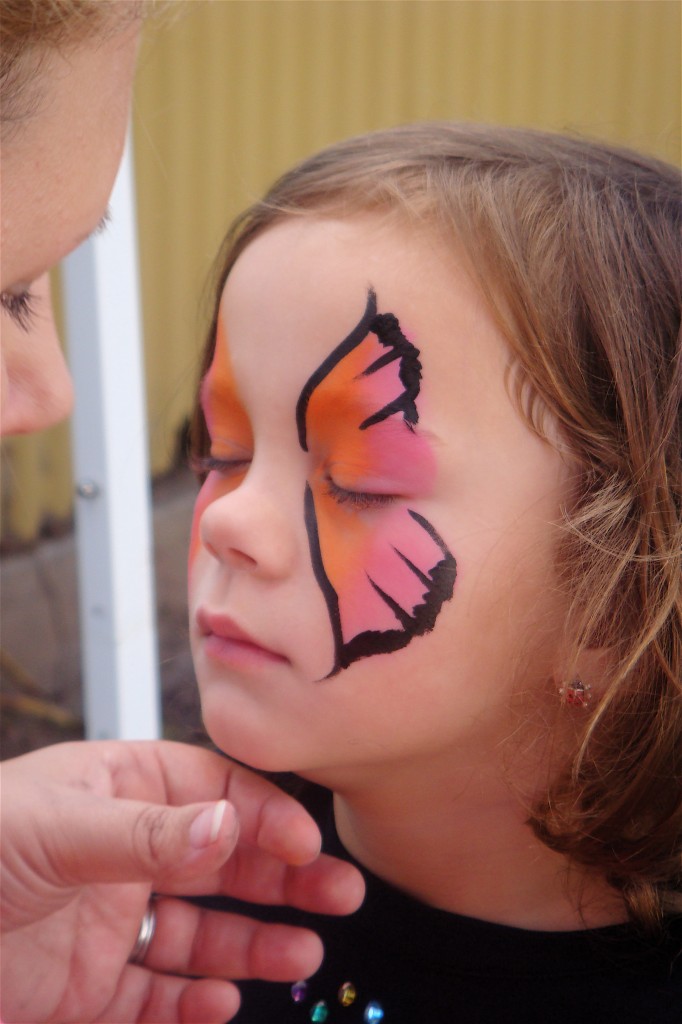

Faces were painted…she loves this experience, him? Perhaps not so! He held on, white knuckled, like he was in the dentist’s chair.
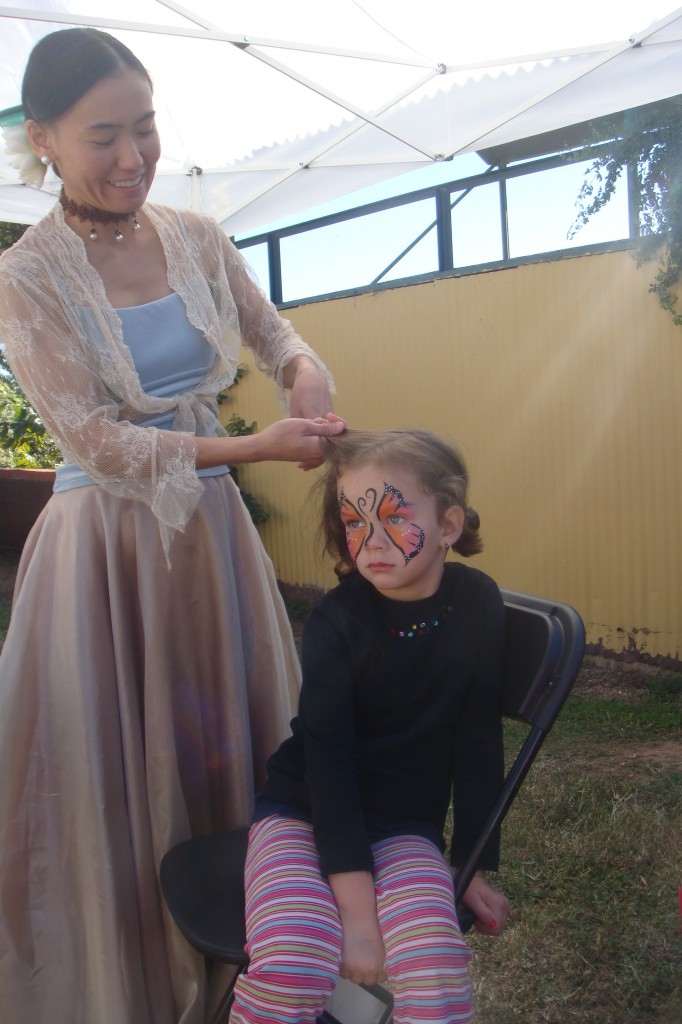

Then came the hair braiding, I thought she was going to fall asleep, it was like she was having a full day spa-treatment.

The final result was quite impressive but for him naturally it did not last:

He ended the day looking more like a deranged monocled mad scientist then a dalmatian, a look I personally preferred.
Stay Tuned for:
“Starsky and Husk”
All material © 2010 for eastsidepatch. Unauthorized
intergalactic reproduction strictly prohibited, and
punishable by late (and extremely unpleasant)
14th century planet Earth techniques.