And I thought I leaned toward the nerdy side of plants!..If you have not seen this clip, it is a classic. If you are interested in plants, you will be mesmerized by the book, “The Secret Life of Plants” …It changed my perspective of all things green forever…it is an absolute must-read to pamper the inner nerd in you.


I have even purchased my own polygraph machine from the flea market just north of San Antonio. I am currently in the process of recreating some of the experiments documented in the book. What?
The plant “alphabet training” toward the end of the clip?…I showed it to my daughter who will be starting kindergarten in the fall with a horticultural threatening… “Hey, come over here and look at this… a talking plant that will be most likely be in the same class as you..oh, and look…it knows the entire alphabet already.”
I just received an incredulous stare followed my an exaggerated eye-roll, then a premature teenage “what-EVER!”

Now here is a plant that will not likely be attacked by a lab technician wielding a large bread knife…Milk thistle.
Silybum marianum
Another name for it is St. Mary’s thistle. I have allowed this plant to mature in the Patch to see if it would develop and bloom, and it has, in fact it has developed two! The medicinal benefits of milk thistle have been valued for more than 2,000 years. Written records show that as early as the first century, Romans were using the plant as a liver-protecting agent.
 “Prepare thyself to be slain, thistle of milk”.
The plant was also frequently used throughout the Middle Ages, and it is in the herbal literature of this period that the medicinal properties of milk thistle seeds are first noted. Several scientific studies suggest that substances in milk thistle (especially a flavonoid called silymarin) protect the liver from toxins. The active ingredient of the herb, silymarin, is found in the ripe seeds of the plant. Milk thistle is native to the Mediterranean region, and is now found throughout the world.

This stout thistle usually grows in dry, sunny areas. The spiny stems branch at the top, and reach a height of 4 to 10 feet. The leaves are wide, with white blotches or veins. Milk thistle gets its name from the milky white fluid that comes from the leaves when they are crushed. The flowers are red-purple which true to its name, resembles a thistle.
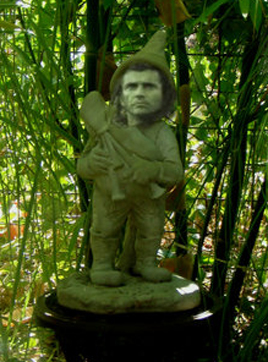
“Aye, it does look a wee bit like a Scottish thistle, I’ll give ye that ESP”!
As I walked to my “everything but the kitchen sink” rainwater collection tank of buckets, cups and saucers, vases etc, etc. I was greeted by an extensive web and this brightly colored little spider sitting proudly in the middle of it…

This is an Orchard Spider,
Leucauge venusta

This spider is super fast, and it will deliberately shake its web to try to scare you away. Oh and they will give you a bite if you really annoy them, a fact that I was only too well aware off as my camera lens was almost touching it. Orchard spiders are very similar to regular orb-weavers, they build their webs in strategic locations to catch flies, moths, and other insects. This spider web spanned the entire radius of my stock tank, catching mosquitoes no doubt.
Remember these?…
 Well now they are these…

The blooms on my Threadleaf ragwort have long since faded, being replaced by seed heads that are attractive in their own way, a large seed head for such small blooms!

After I had taken these shots I gave one of the plants a swift slap, sending thousands of the tiny seeds into the air. Who could resist?
 Staying on the subject of seeds for a moment, I love the way this unidentified plant holds it’s seeds in these tiny brown pouches, it is really quite effective.
I will find out what this Tinkerbell plant is and include it in a future post.

(Simultaneous ooo’s and ahhh’s)
I emptied out one of these small green pouches just to see its contents…

Amazing!

Now, time to gross you all out…yes it is that time folks, get your hurling buckets at the ready… this isn’t going to be pretty:
Are you ready?
Wait for it…
Wait for it…

This is insane, an emerging dragonfly…I think this is its back, the head sill being tucked up under the nymph head somewhere. This has to be one of the most amazing transformations in the insect realm. What makes it even more insane is that dragonflies spend most of their life in the water. A dragonfly has a life span of between one and six years (depending on size), but very little of that life is actually as an adult dragonfly. There are three stages of the dragonfly life cycle, the egg, the nymph, and the adult dragonfly. Flying adult dragonflies only live about two to four months.

Brrrr! You wouldn’t want to see this scene in the headlights, late at night on a country road.
 Another bizarre scene that I have never witnessed before, sadly resides on my mountain laurel:

This is a new one for me, web-worms eating my mountain laurel seeds?
Well I hope you all get poisoned!
On a more colorful traffic–light-note…

The tomatoes are beginning to ripen in the Patch…

…and it looks like a bumper crop this year! I have planted a variety of tomatoes this year from plants obtained from the sunshine garden’s annual plant sale.
They are all doing pretty well.

As is my Buddah’s belly bamboo. This bright bamboo has rebounded faster then all my giant timber bamboos from our harsh winter. My giant timber bamboos have suffered.
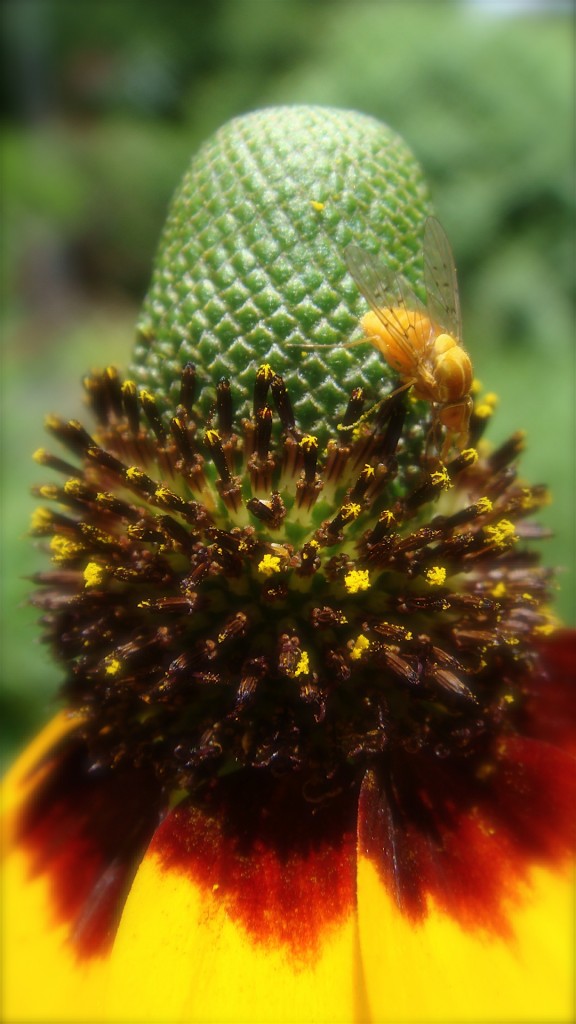 This is also a first in the Patch, a Lauxinid Fly
Neogriphoneura sordida
on my one and only Mexican hat, Ratibida columnifera.

Captains Log supplemental:
I have finally collected together my favorite photographs from the Patch and put them under one roof:
http://www.eastsidepatch.com/esphotography/
Inspirational image of the week, courtesy of my old friend and UK garden designer Paul Hensey at: http://paulhensey.blogspot.com/

Stay Tuned for:
“While the Neighbor’s Away…The Patch will Play”
All material © 2010 for eastsidepatch. Unauthorized
intergalactic reproduction strictly prohibited, and
punishable by late (and extremely unpleasant)
14th century planet Earth techniques.