Sago Palms

“Megasporophylls!”

school-out-for-summer“School’s out for Summer!”

And what better way to celebrate than a trip to Dave & Buster’s right after school.

As we approached the front door I naturally began eyeing up the two mature sago palms…hmm, I wonder?

Sago-Palm

After writing my previous post about my own strobilus exploits my awareness has been heightened to these ancient plants. I have stopped and peered into the hearts of multiple plants on my travels the past few weeks to look at their…ahem, organs.

benny-hill

I had seen numerous strobili but, as yet, no females / seeds.

strobili

I could see from the cone that the left hand sago was a male but I could not see anything in the right hand plant.

I held my breath, heart racing (okay not really)

and…

megasporophylls

There it was, sago palm coral, a heart of seeds.

It takes a couple of months for the seeds to develop and ripen in the feathery scales of the megasporophylls and about twice as long to learn how to pronounce and spell it.

As the female cone begins to disintegrate it releases all the seeds across the ground under the mother sago.

DSC01653 copy

Now I need to cut off my own strobilus and buy a trench coat and trilby for dramatic effect, (not necessarily in that order) for the subversive nocturnal act that I now feel compelled to perform in front of D&B.

British-Bobby

“Ello, ‘ello, ‘ello, what’s going on ‘ere then?”

I think I will stand less chance of getting apprehended if I perform the pollen shaking deed during the hours of darkness. The tricky part is going to be collecting all the seeds after pollination…

…”No, no, you don’t understand officer, you see I pollinated this plant some time ago and I was just climbing back in here to collect some of the seeds, you see cycads ar…”

I started to plan a better response in my head as we entered the building.

winnings

We played our usual games, won our usual 6K tickets and exchanged them for the usual array of cheap Chinese products that usually stop working somewhere between exiting the establishment and the opening of my car door in the parking lot, but they had fun, they were on summer vacation.

DSC01588

  DSC01589Moving On:

IMG_1761

My potential annual Darwin Award activity took place last week on the roof of my house as I cut off some post oak limbs that had been scraping and banging above our heads every time there was a breeze. I was also not delighted to find an enormous and foul smelling pile of raccoon excrement waiting for me under the eaves, directly above the blocked gutter.

Well that’s just great.

IMG_1760

My boots had zero traction on the metal roof so to get to the offending branches required a rather painful shimmy backwards down the length of the roof. I always choose an overcast day to get up here to avoid getting branded by the corrugated metal roof.

I should have taken some pictures up there.

DSC01578

A tiny grasshopper watching my rooftop kerfuffle.

bloom

Lots of humidity and lots of blooms this week,

Shell-Ginger

tropical looking shell flowers emerging from the husk.

Shell-ginger

Shell-flower,

Alpinia zerumbet


is commonly called shell ginger or shellflower due to it’s shell pink flowers and buds that look like sea shells.

Shell-flower

They remind me of the Coquina Clams she obsessively collected at South Padre Island:

http://www.eastsidepatch.com/2011/06/across-the-gulf/

S-Padre

Say ahh.

flower

Opuntia in full swing,

cactus

and a new one for the Patch:

Justicia betonica, J. pallidior

white shrimp plant,

Justicia betonica, J. pallidior


pink tubular blooms will eventually emerge from this spike of white calyxes.

This plant is zoned for 9, 10 & 11 so fingers crossed.

DSC01624

Coneflowers are popping up,

DSC01620

great against a dark foliage backdrop.

And the sunflowers

DSC01555

continue to attract a host of pollinators.

pollinator

Talking of which, I have some business to attend to.

6137-000082

Stay Tuned for:

borginandburkessign

All material © 2013 for eastsidepatch. Unauthorized
intergalactic reproduction strictly prohibited, and
punishable by late (and extremely unpleasant)
14th century planet Earth techniques.


“Takes Two to Tango”

images2 silver-king-artemesia

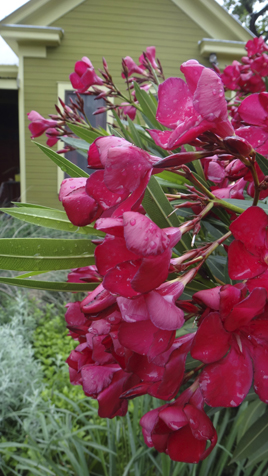
I went on my rounds the other day in the front of the Patch. Pulling on the the occasional 6ft strands of Bermuda grass that insist on growing through my rosemary urgh and admiring just how fast oleander grows and how prolifically it blooms when something caught my attention curbside.

front_garden

Below my opuntia tree,

cactus prickly-pear-cactus

which is covered in buds and a few blooms. I noticed something bright, something orange.

I moved in closer.

Ignoring the weeds and the seeding Mexican oregano (I do very little maintenance in my front garden), there it was, shining brightly in the heart of my King sago palm.

Cycas revoluta


Cycas revoluta

How could I have missed this golden egg?

bloom-cone

There were numerous other artifacts lying around the pollen coated base, I assume tribal offerings from the little folk who must now be worshiping the new Megalithic Structure on this plant that dates back at least 200 million years.

Sagos are cycads rather than actual palms as the name suggests, and they are dioecious, which means there are male plants and female plants and, like humans, to reproduce it takes both sexes.

Male sago palm flowers like this one produce a long (occasionally multiple), golden pollen cone-like structure called a strobilus. Most Sagos must be at least 15-20 years old before they are mature enough to bloom and reproduce.

Here is the female plant seedpod, about the size of a basketball,

2440469198_89aa99bb09_z

Photo credit: brewbooks

and here it is opening up, revealing the internal seeds:

seeds

In their native habitat of southern Japan Cycads are pollinated by wind or insects, but to ensure pollination here in Central Texas you can dust some of the male pollen into the seed basket.

This can be done by crudely cutting off the male appendage and shaking it over the female

austin-powers

to disperse the pollen…aw come on!

A single male strobilus has plenty of pollen and can be used on several females at a time, or on one several days in a row.

austin-powers

Enough Austin!

Researching this post I did come across some hilarious documentation that stated some home owners have been so ’embarrassed’ with their neighborhood-shocking male strobili that they actually threw towels over them to hide them.

259376

Imagine that scene?

male_pollen

I also found out that sago palm seeds contain two carcinogens, macrozamin and cycasin, which can apparently be absorbed through the skin – so use impermeable gloves when working with these seeds.

Now…to find a female plant!

Does anyone in Austin know of one / seen one / have one and are willing to get these plants together?

145736356_amazoncom-benny-hill-bw-matte-photograph---12x12-inches-

Finally:

More welcome spring rains are hitting us…at about an inch an hour!

inch-an-hour

When this happens,

leaning

this happens to my Buddha’s belly bamboo…

leaning

she’s a 40ft leaner.

feeder-pond

 This Alphonse Karr bamboo also lowers its much smaller culms when saturated.

Fragrant mist flowers

Fragrant mist flowers are out of control with the surprise moisture, as is this evergreen wisteria that threatens to consume anyone who lingers too long on my garden bench.

DSC01518 seeds seeds

Spent poppy heads have buckled in the rain, dispensing their royal seeds through their crowns and into the damp granite.

And we all know the next devious scene…

garden-snails

They know what to do when it rains…

f10051ceb15f2f55a88abe22693e212eStay Tuned for:

“Megasporophylls!”

All material © 2013 for eastsidepatch. Unauthorized
intergalactic reproduction strictly prohibited, and
punishable by late (and extremely unpleasant)
14th century planet Earth techniques.


1 2 4 5 6 7 8 11 12