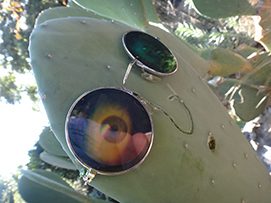
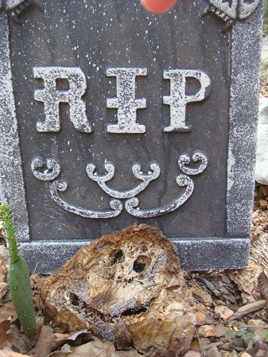
 Oh yes, we’re under starter’s-orders and we’re off to a very classy start…poor Ron, a mandrake looking root AND an elephant butt comparison shot. I am not sure which is scaring him most?
 We have had yet another week of hot temperatures in central Texas in tandem with some ridiculous humidity. My belt buckle (in reaction to the latest install I am executing) retracted one notch by Friday and my already full laundry basket is now officially out of control, yes best keep pulling that face Ron, I do every time I have to shimmy by it. It seems like the recent humidity has also triggered the Texas “barometer plant” to flush out its purple blooms all over town. Texas sage or…
Leucophyllum frutescens
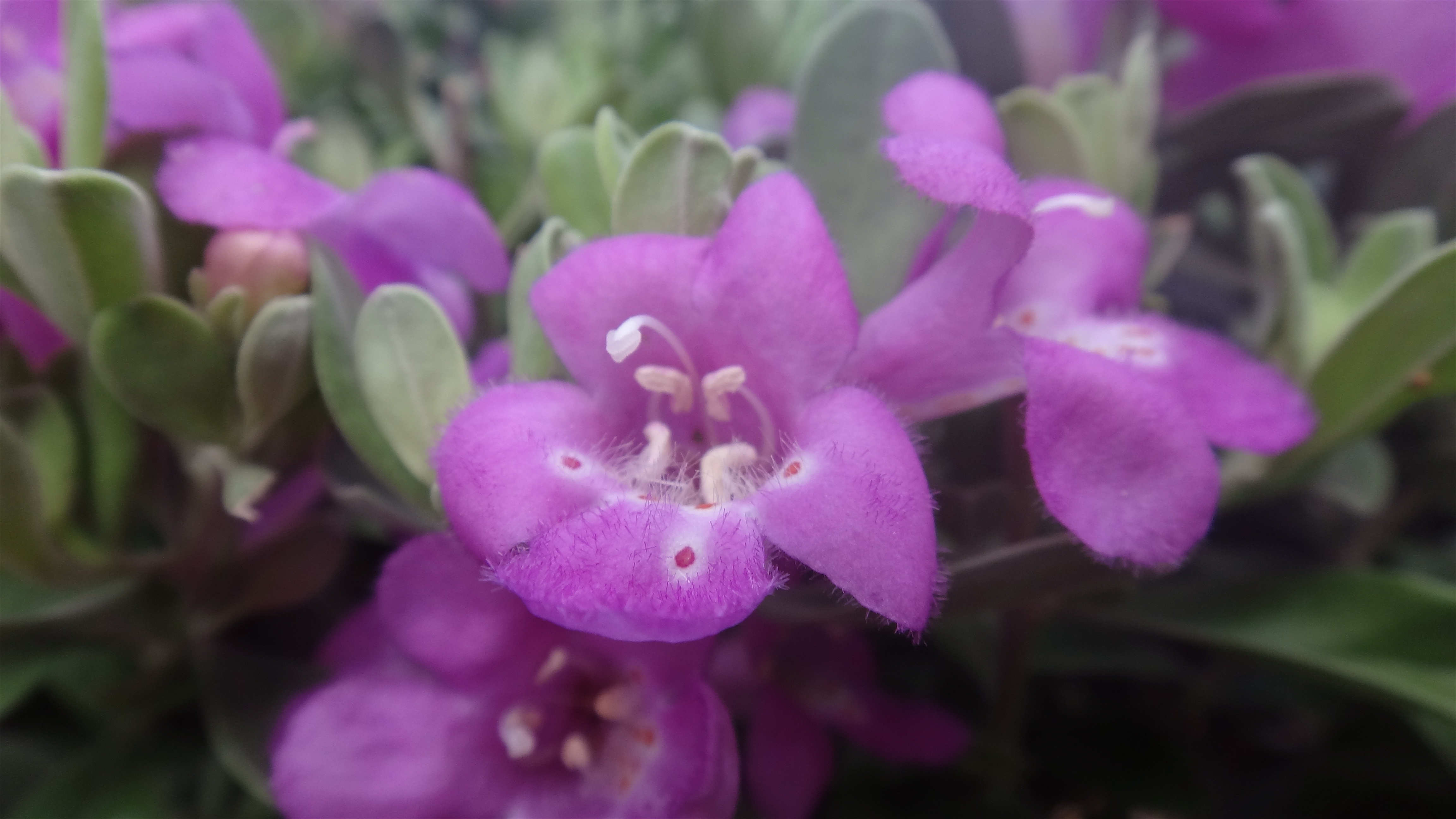 also called purple sage, texas ranger, silverleaf, white sage, ash bush and sensia. Purple sage comes from shrublands on limestone slopes in the Chihuahuan Desert of Texas, New Mexico, and northern Mexico. This is one tough plant, it can face droughts, freezes, high winds, salt spray, hungry deer, and blazing heat and keep right on performing beautifully. It can also apparently make for a good container plant, though I have no personal experience with it in this capacity…do you?
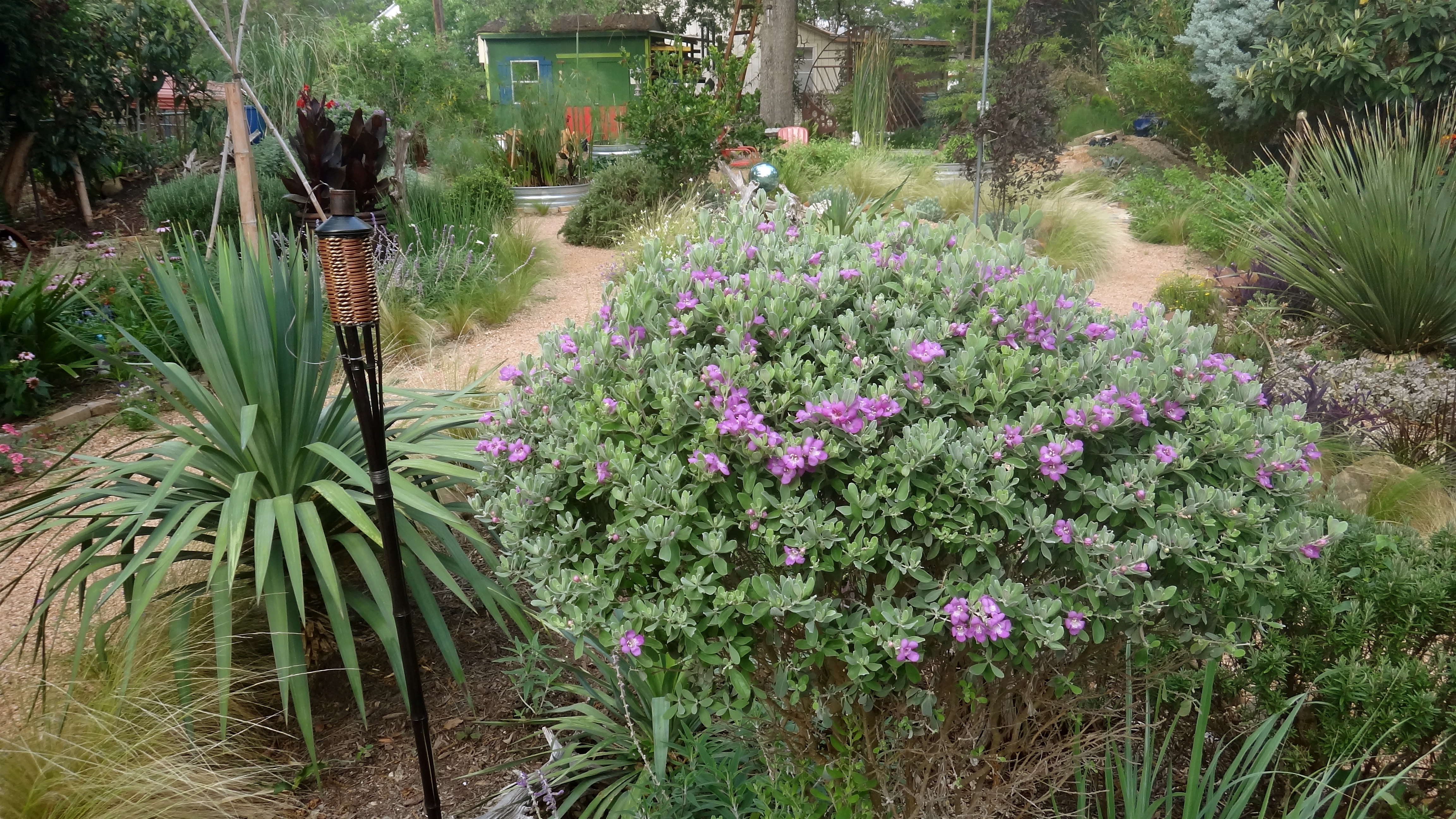
The plant does have a tendency to get very large and leggy. I keep both of mine trimmed extremely tight to promote a denser habit and I remove their lower branches for better form.
I grow other plants like Mexican bush sage and rosemary to obscure and detract from this plants lower ‘bare’ areas.
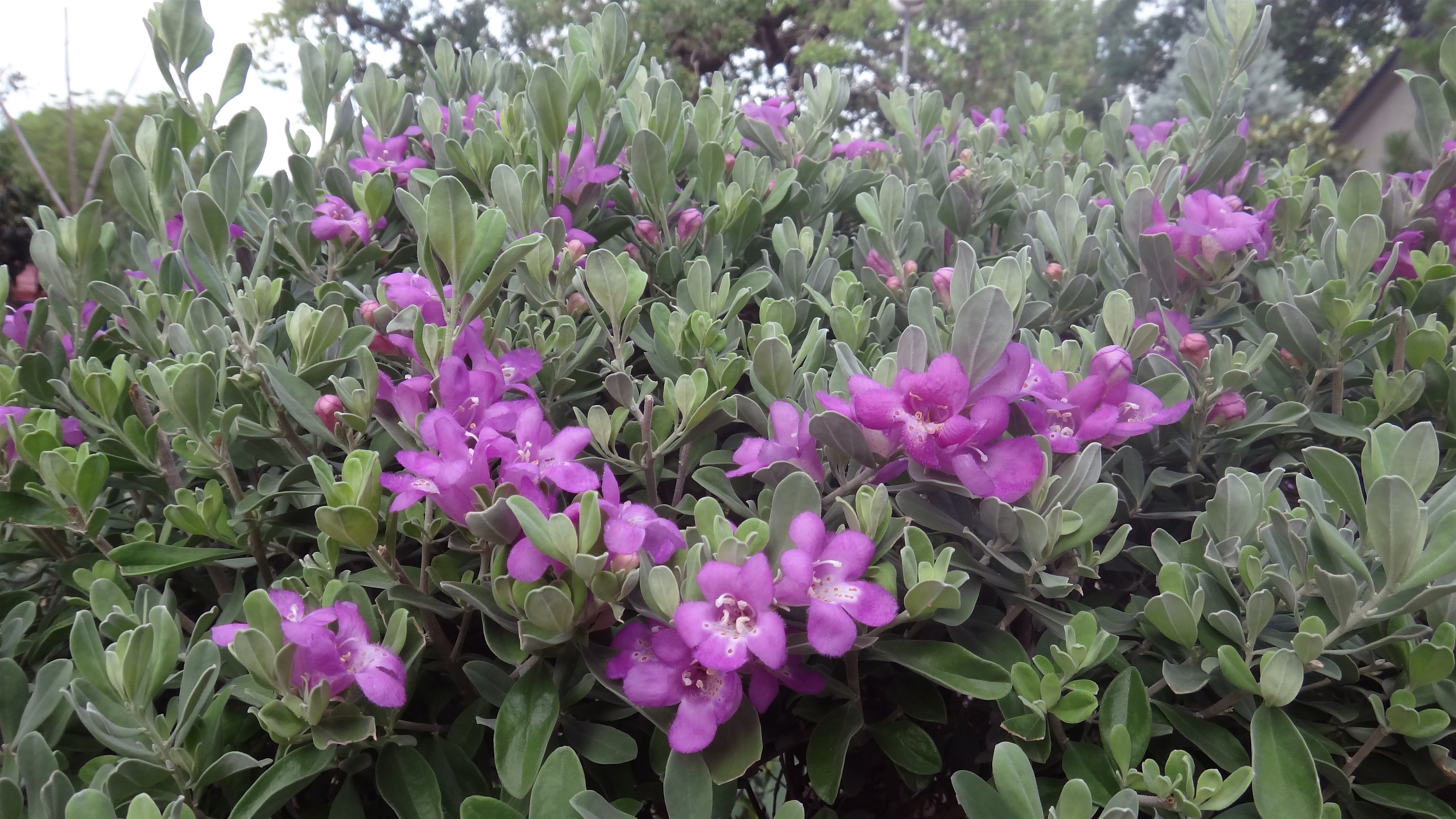
And when they do bloom their soft purple blooms…
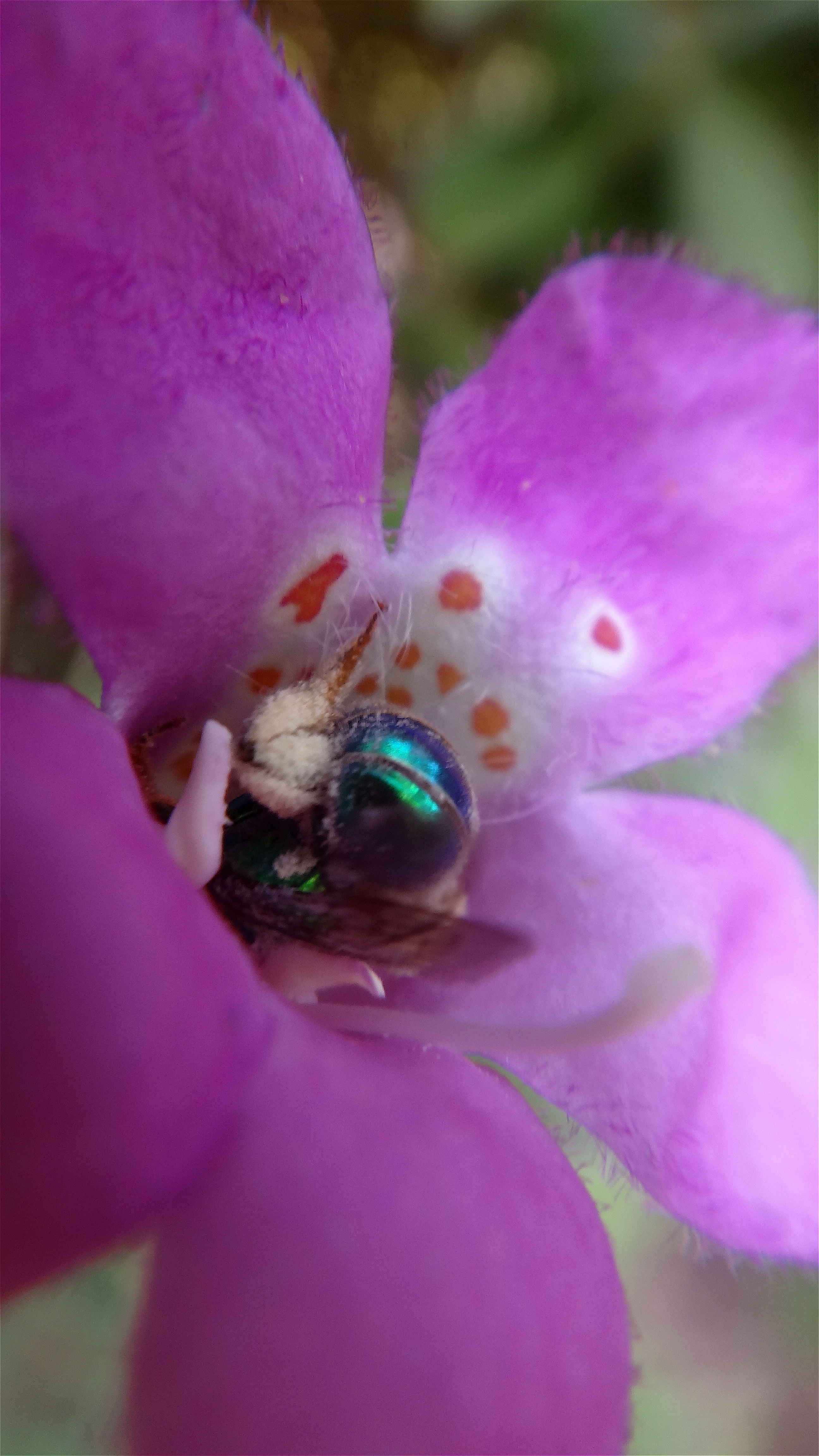
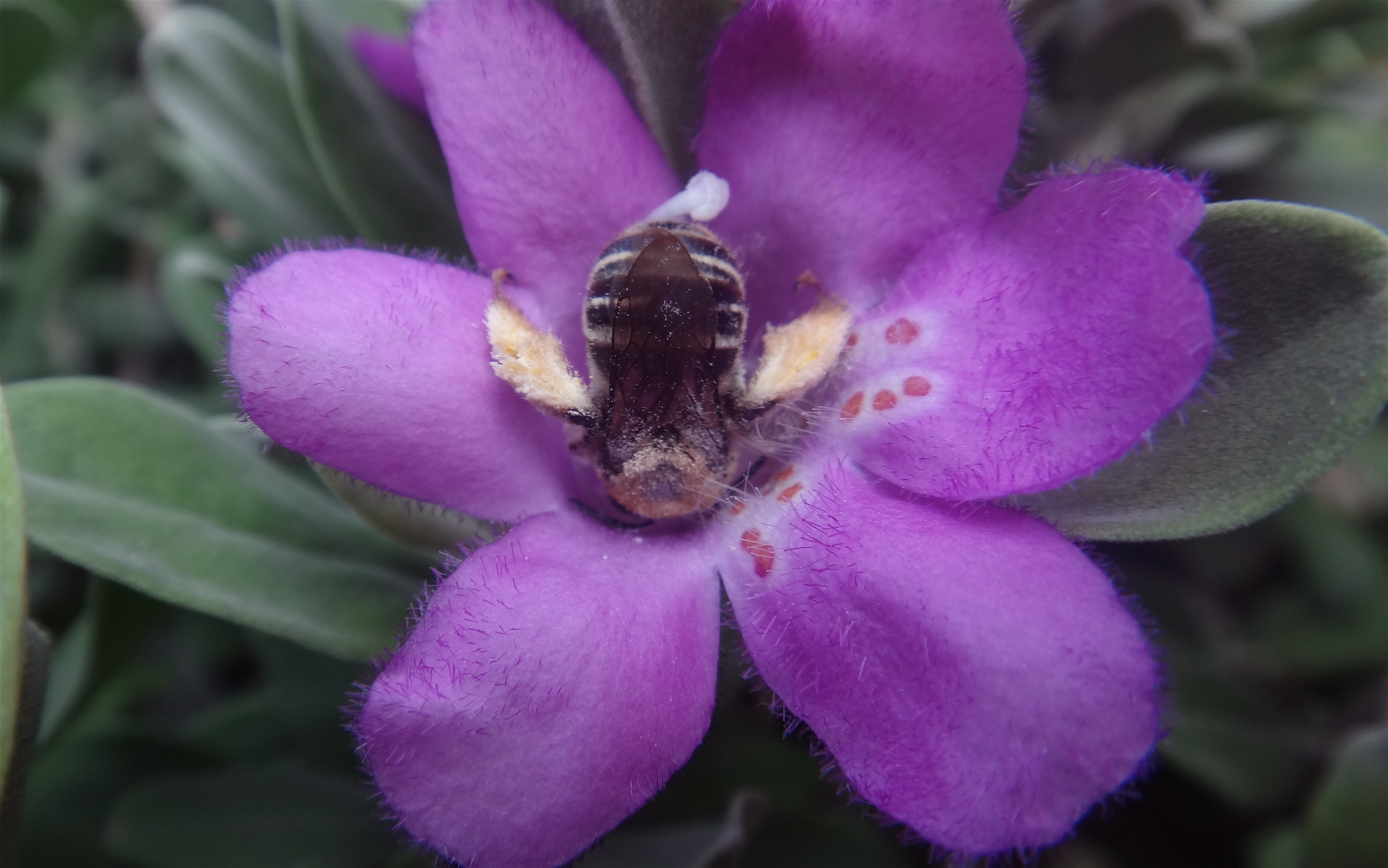 all manner of insects take advantage. The flowers are really unusual looking set against the silver backdrop of the foliage.
Some major events happened this week in the Patch:
 Training wheels came off…
 …and we got a new addition to the family:
 Mmm, not quite,
 but I can see some similarities.
Meet Kumo.

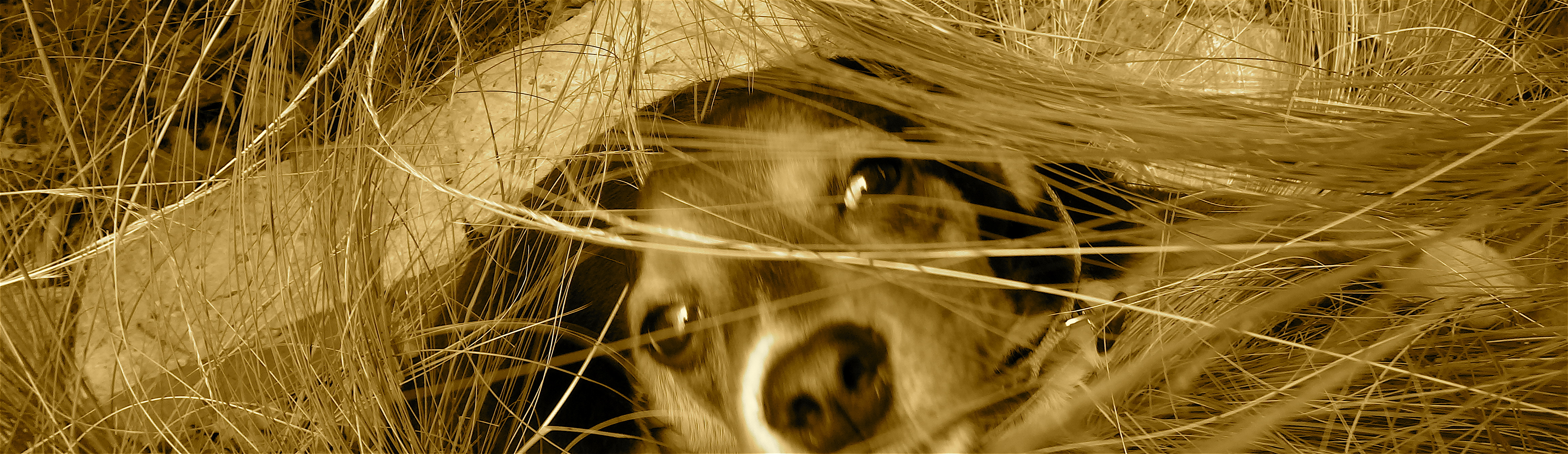
Like me he has an infinity for Mexican feather grasses,
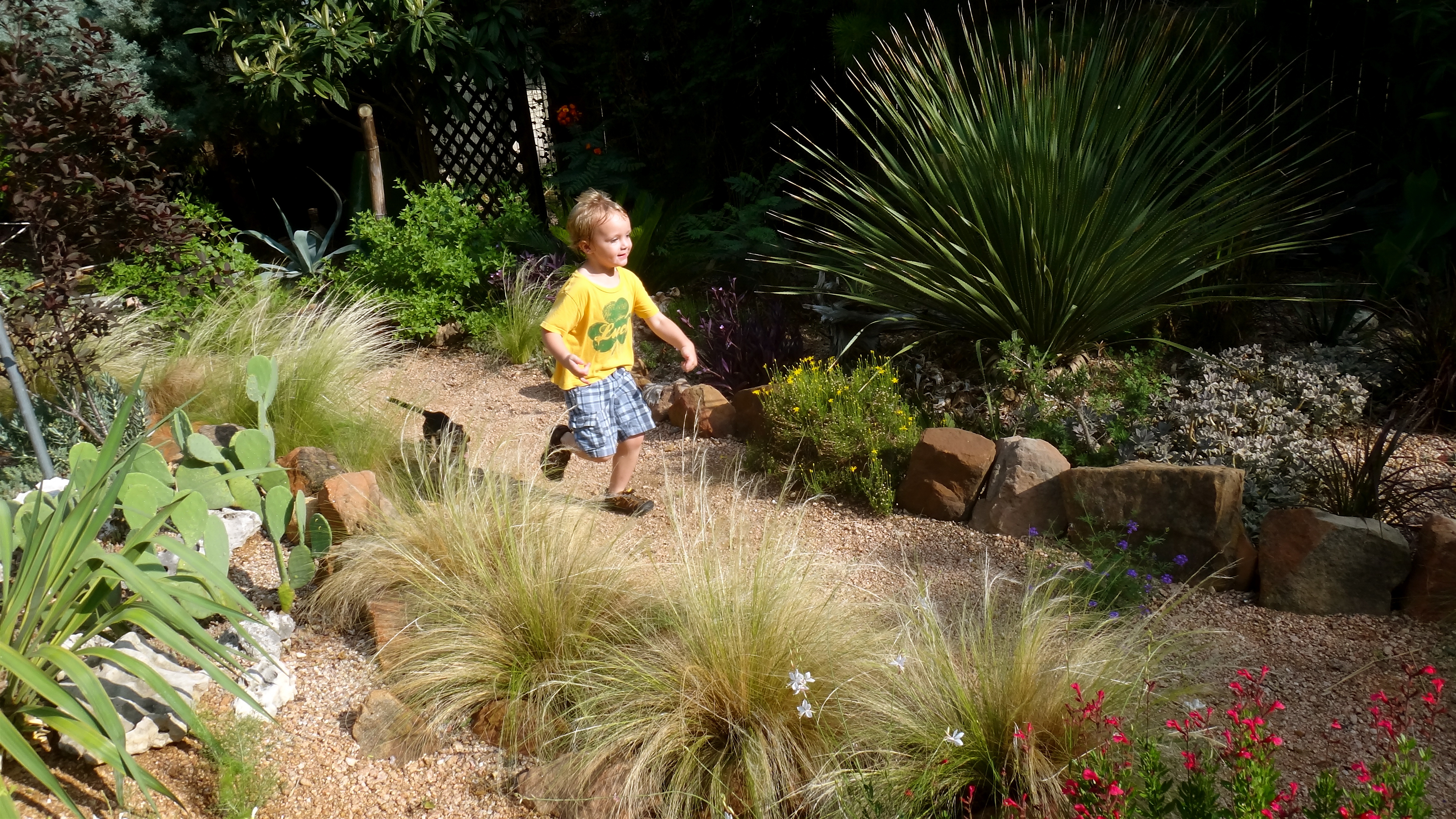 and he is keeping the halflings very, very busy. I cringe every time his dashes across my central bed which houses my barrel cactus.
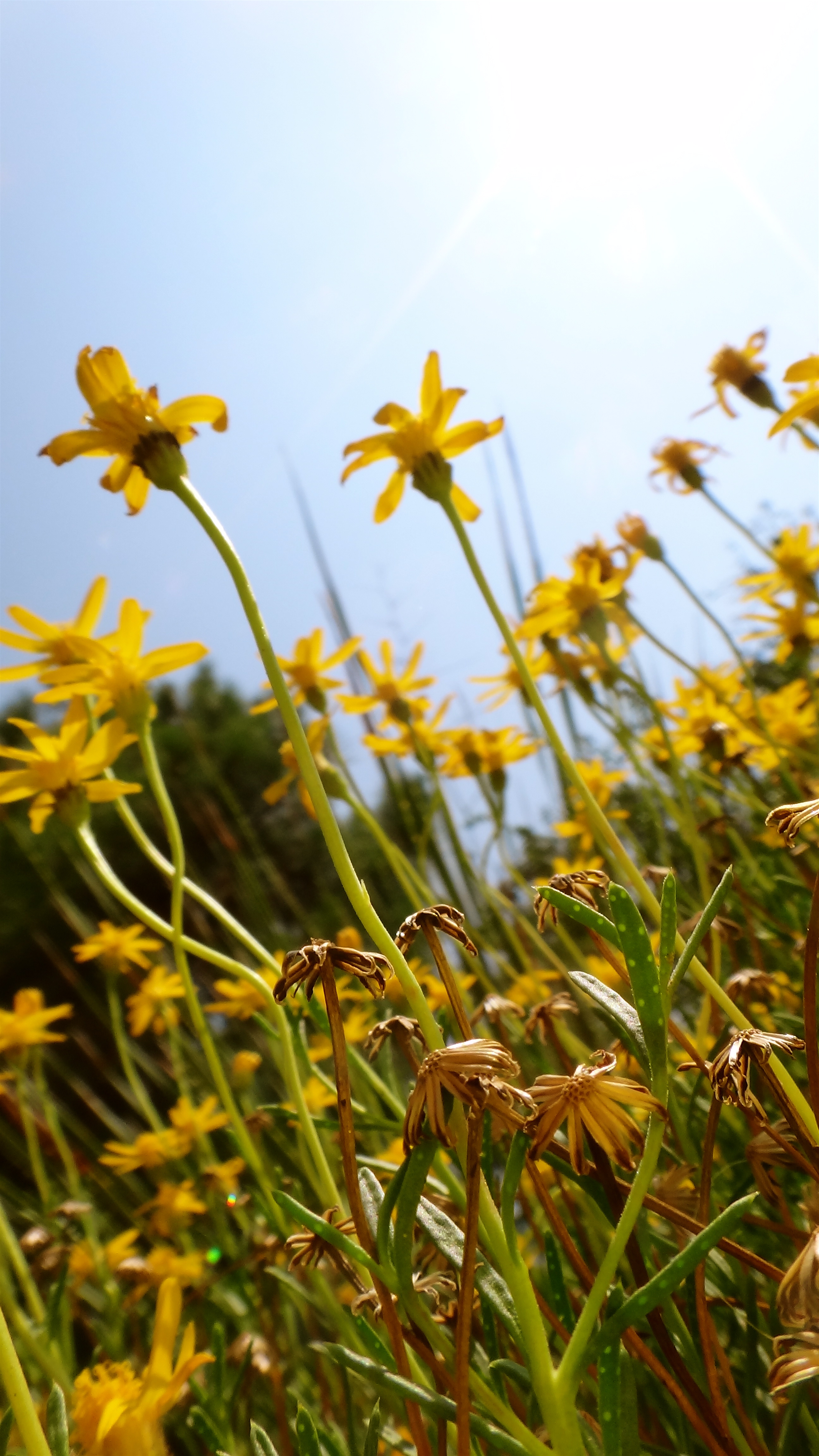
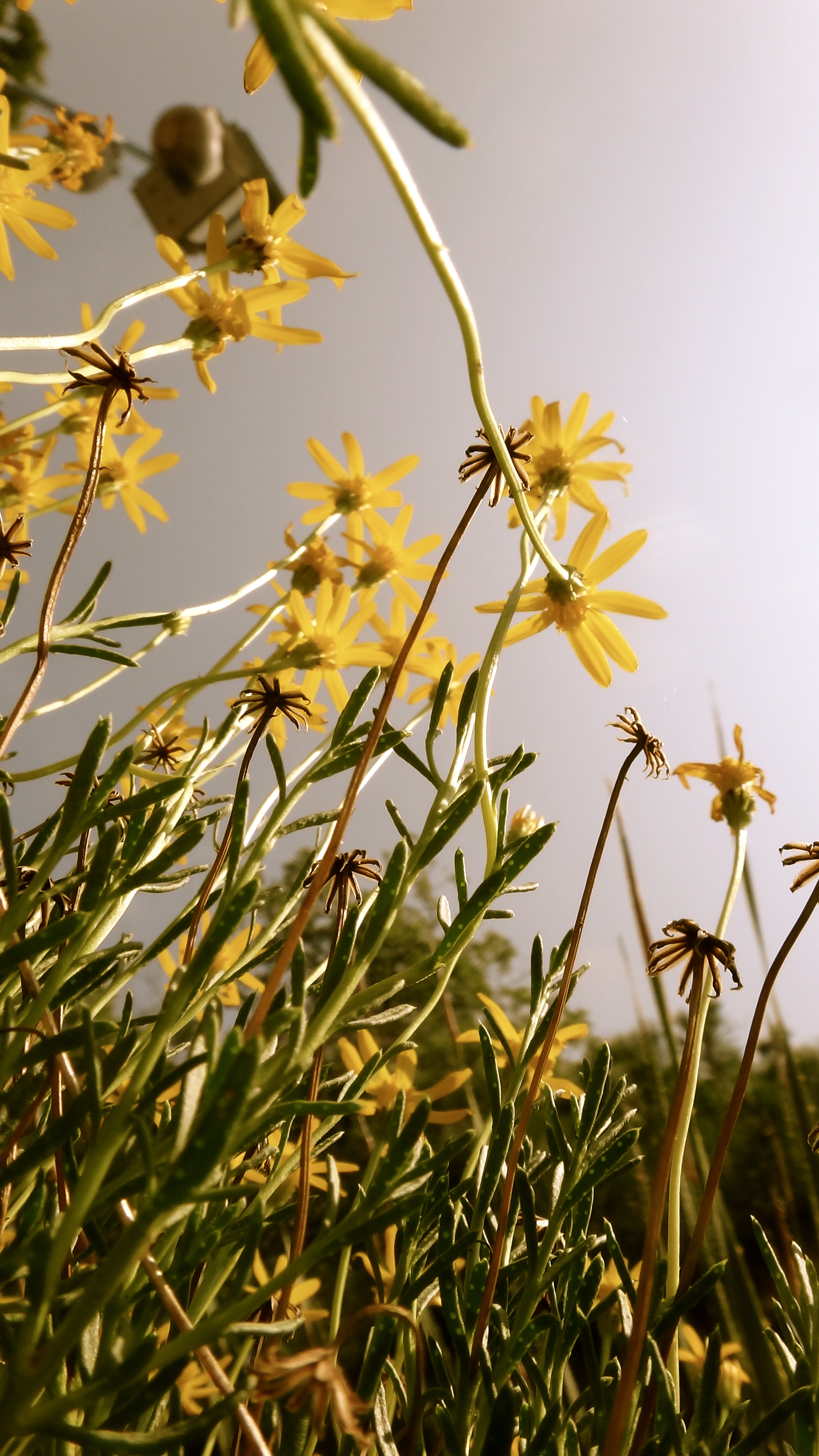
Damianita
Compositae Chrysactinia mexicana
seems to thrive in the current furnace, as you can see it is already on its second wave of blooms. This is a great native evergreen plant with a low mounding growth, the plants aromatic foliage is also a deer and rabbit deterrent.
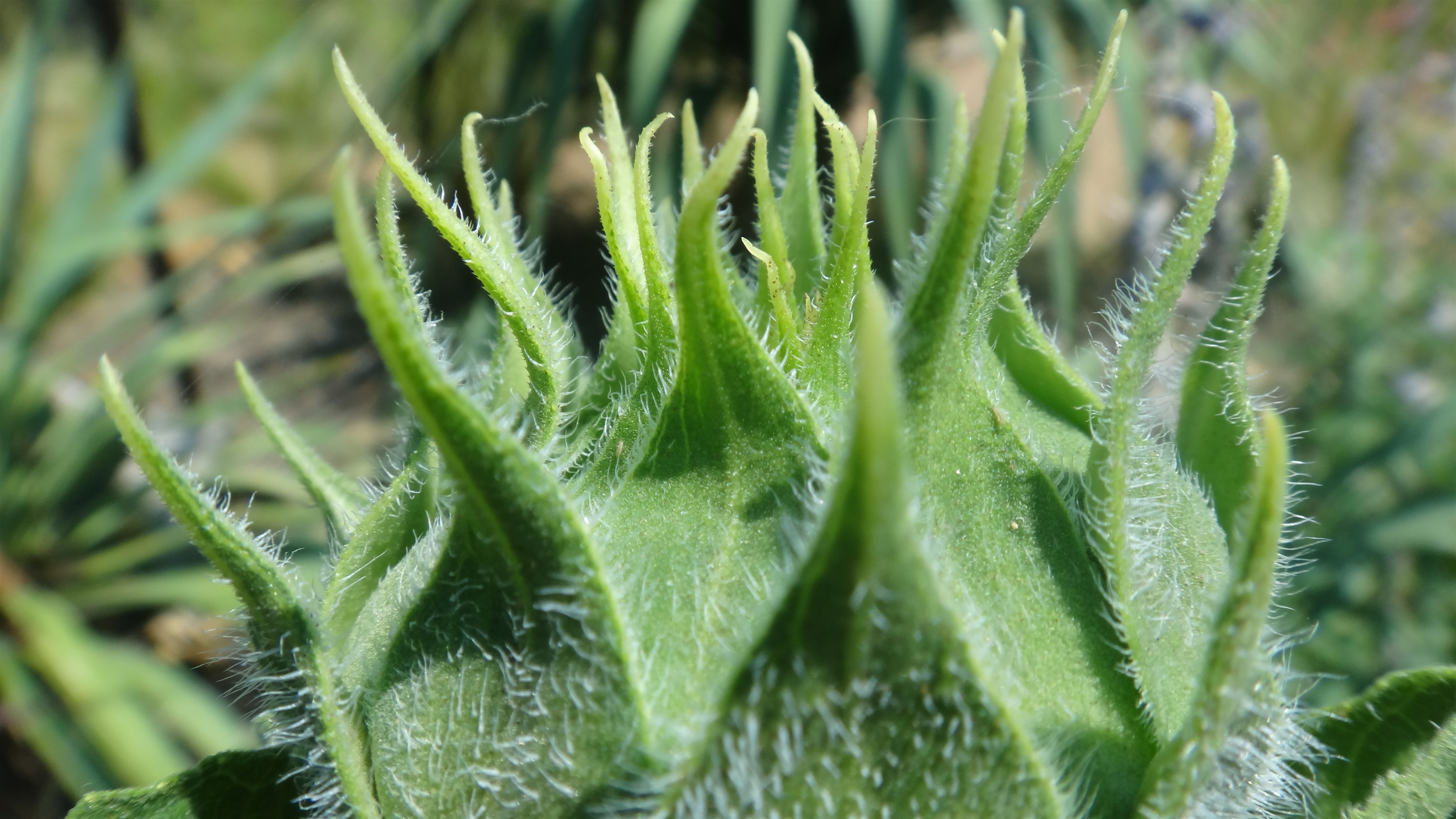 Bristly sunflowers have also started to unfurl and spring into action.
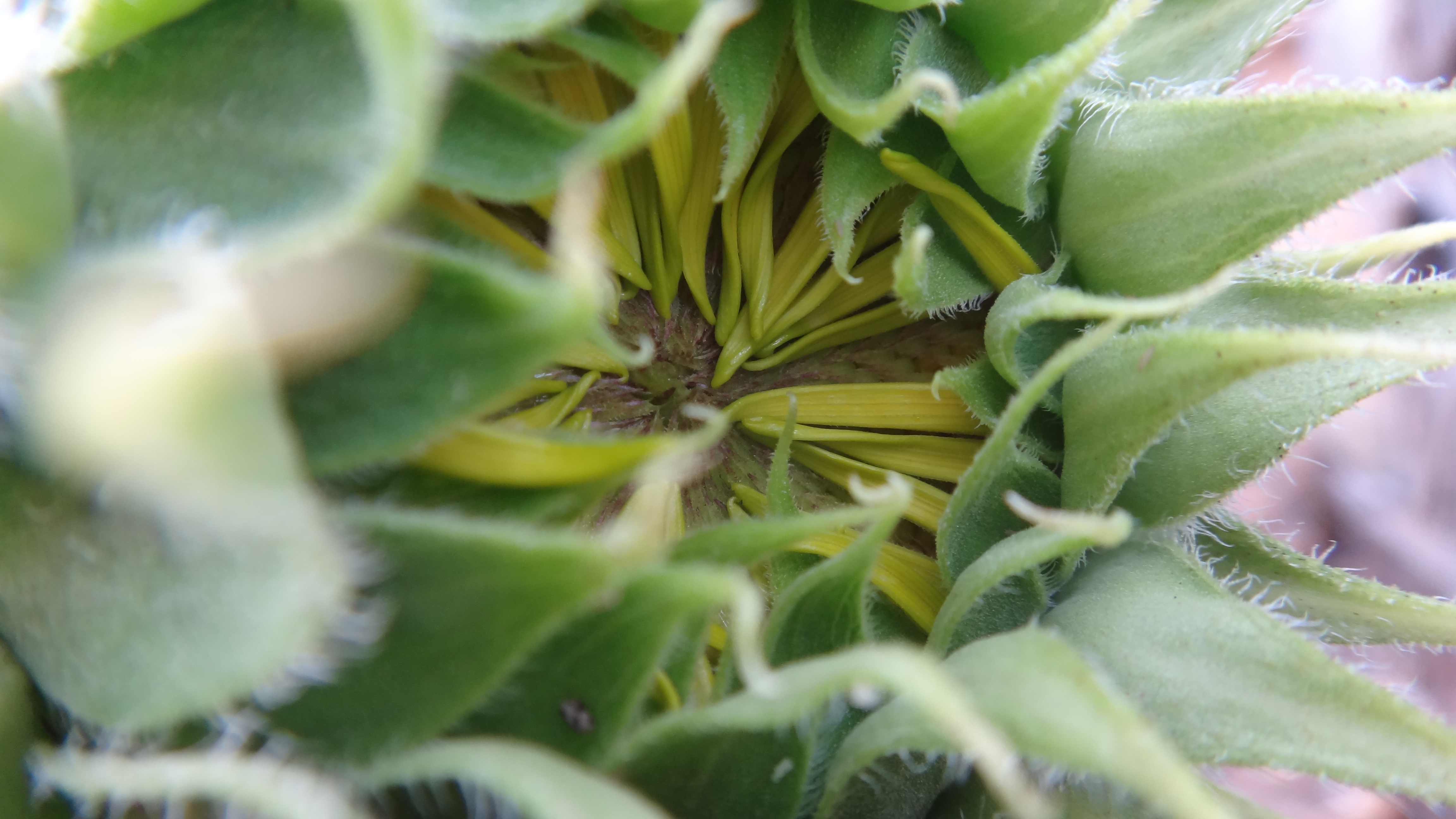 attracting their usual band of garden outlaws:
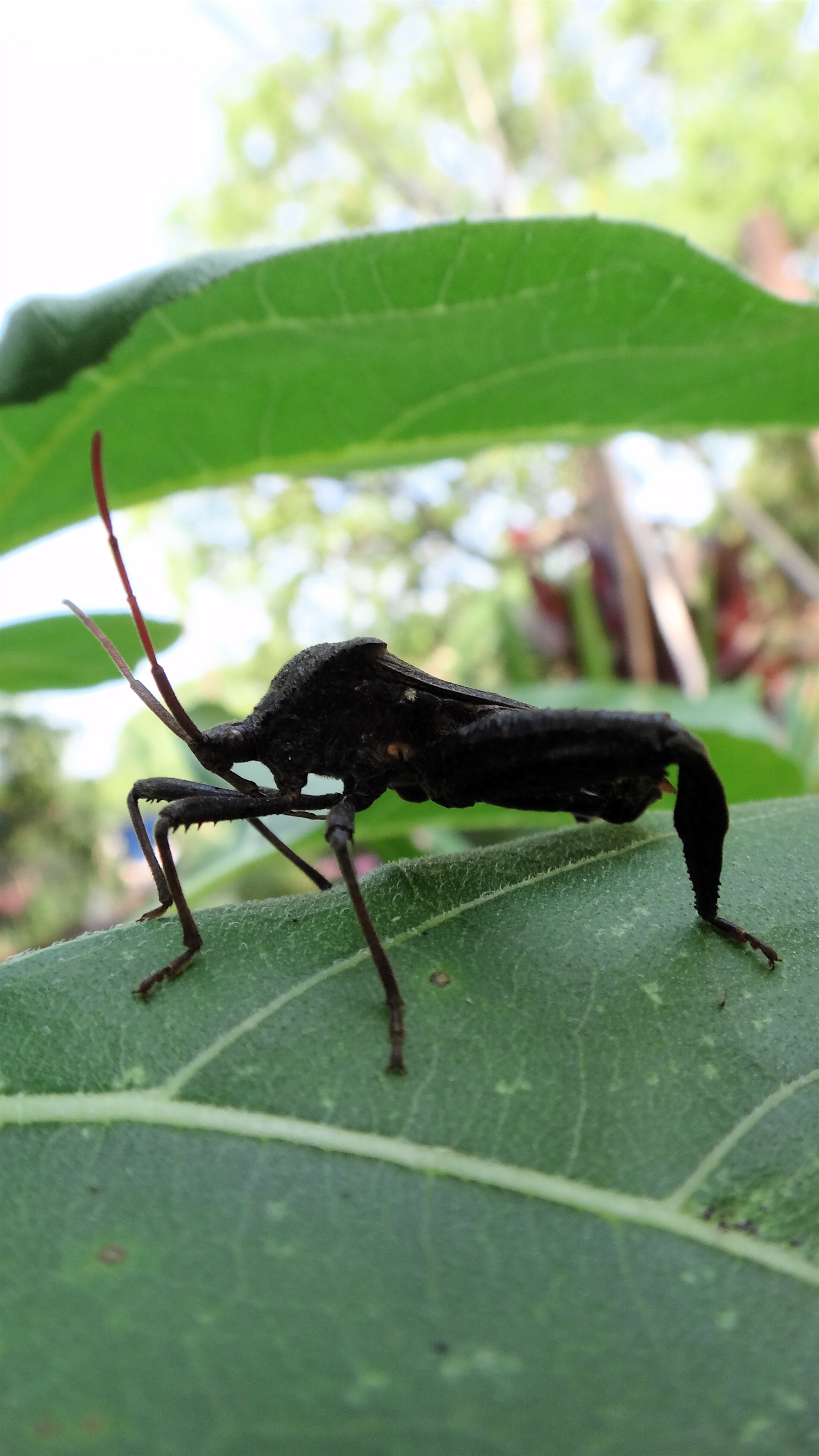 Sunflowers are sometimes planted as trap crops for Stink/leaffooted bugs, providing superior food plants for the bugs while also attracting their natural enemies.
 Umbrellas in combination with a sprinkler have been novelty items this week. Okay if you insist – just one more insect. This one would be perfect for Halloween.
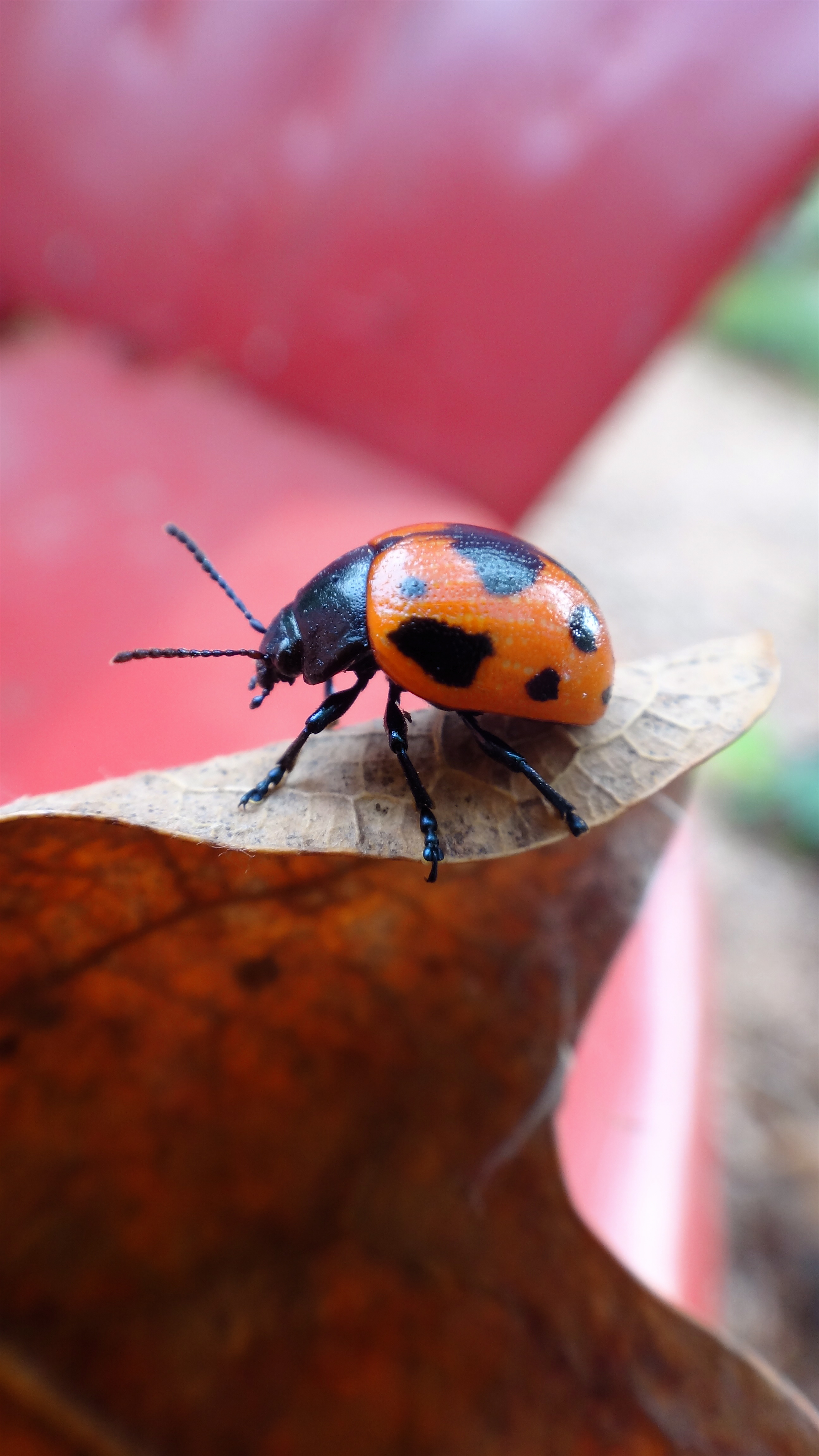 Swamp Milkweed Leaf Beetle,
Labidomera clivicollis
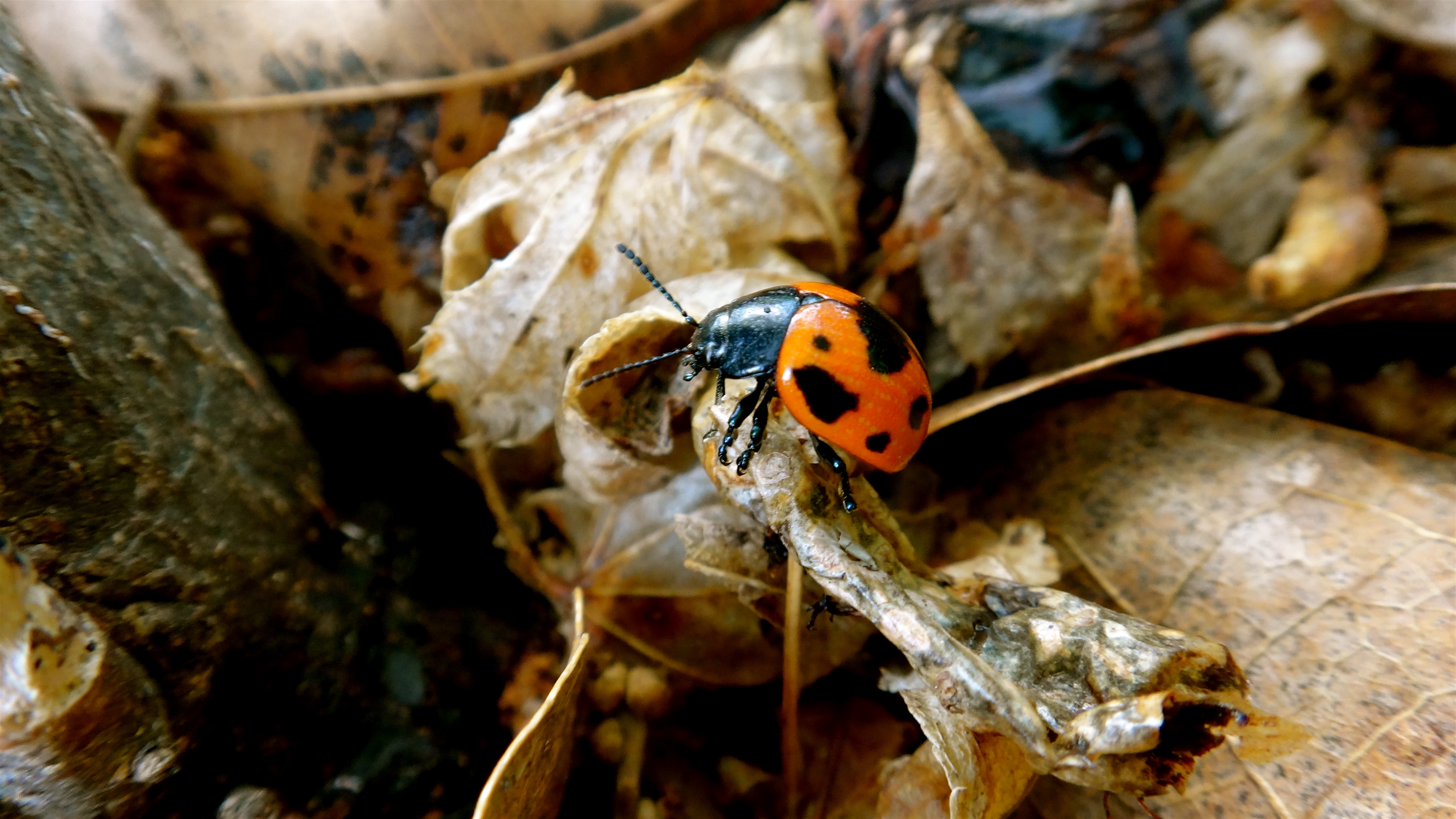 Interesting visitor considering I have no milkweed. Does anyone have any experience with swamp milkweed here in Austin? This beetle comes in a quite a few color variations and looks like a really large ladybug. If you are interested in insects, bugs, snakes etc you should most certainly check out the great photography in this fine Missouri blog: http://mobugs.blogspot.com/
Life in my swamps and ponds has gone berserk of late. I thinned these water lilies out only a week ago and now look at them! They do make for fantastically nutritionally-rich compost bin fodder though, I am not complaining.
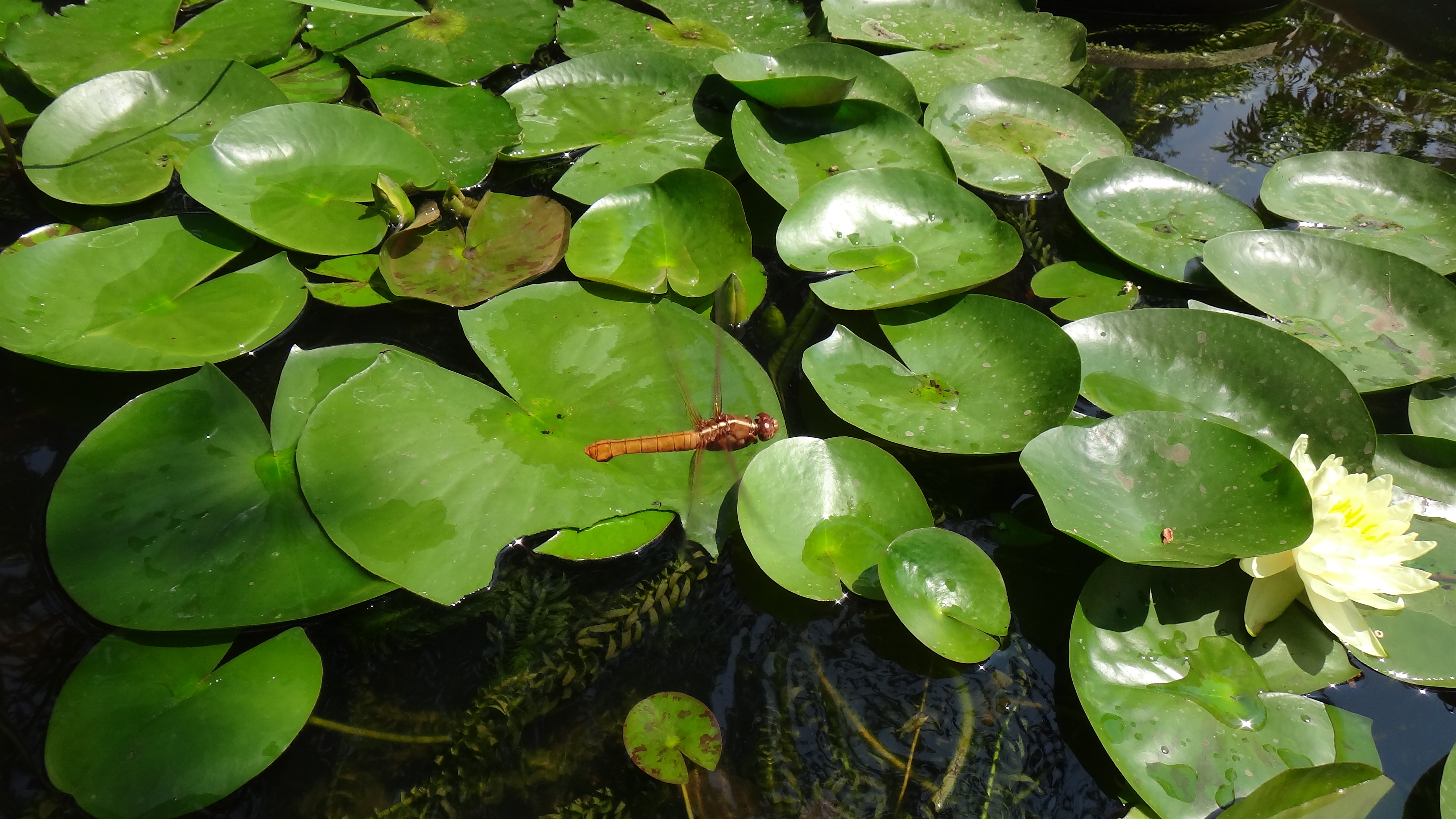
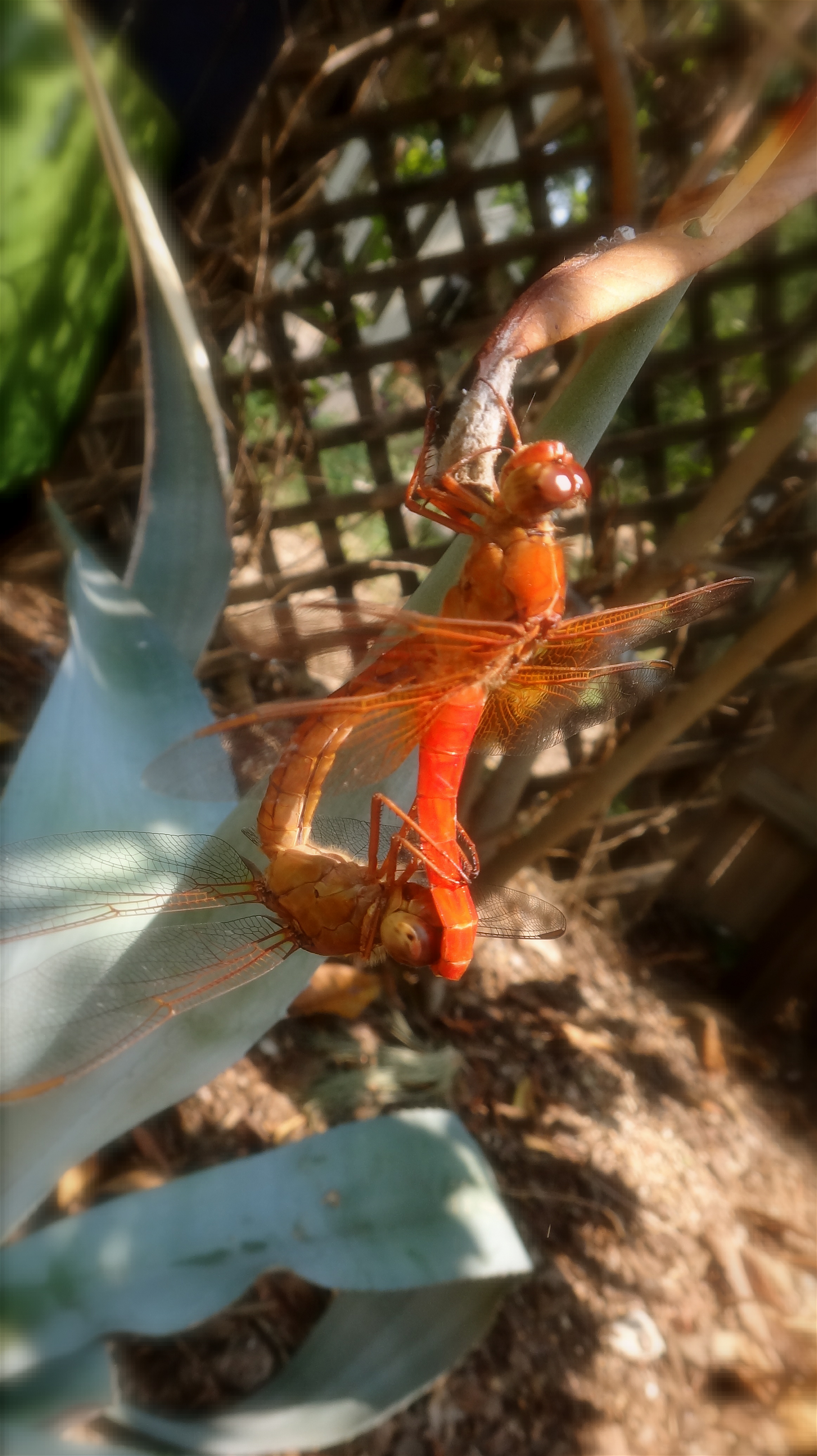 How they continue to fly like this never ceases to amaze me, though I can guess who is probably in charge of navigation.
Inspirational Image of the week:
 Stay Tuned for:
“Oh Yucca”
All material © 2011 for eastsidepatch. Unauthorized
intergalactic reproduction strictly prohibited, and
punishable by late (and extremely unpleasant)
14th century planet Earth techniques.