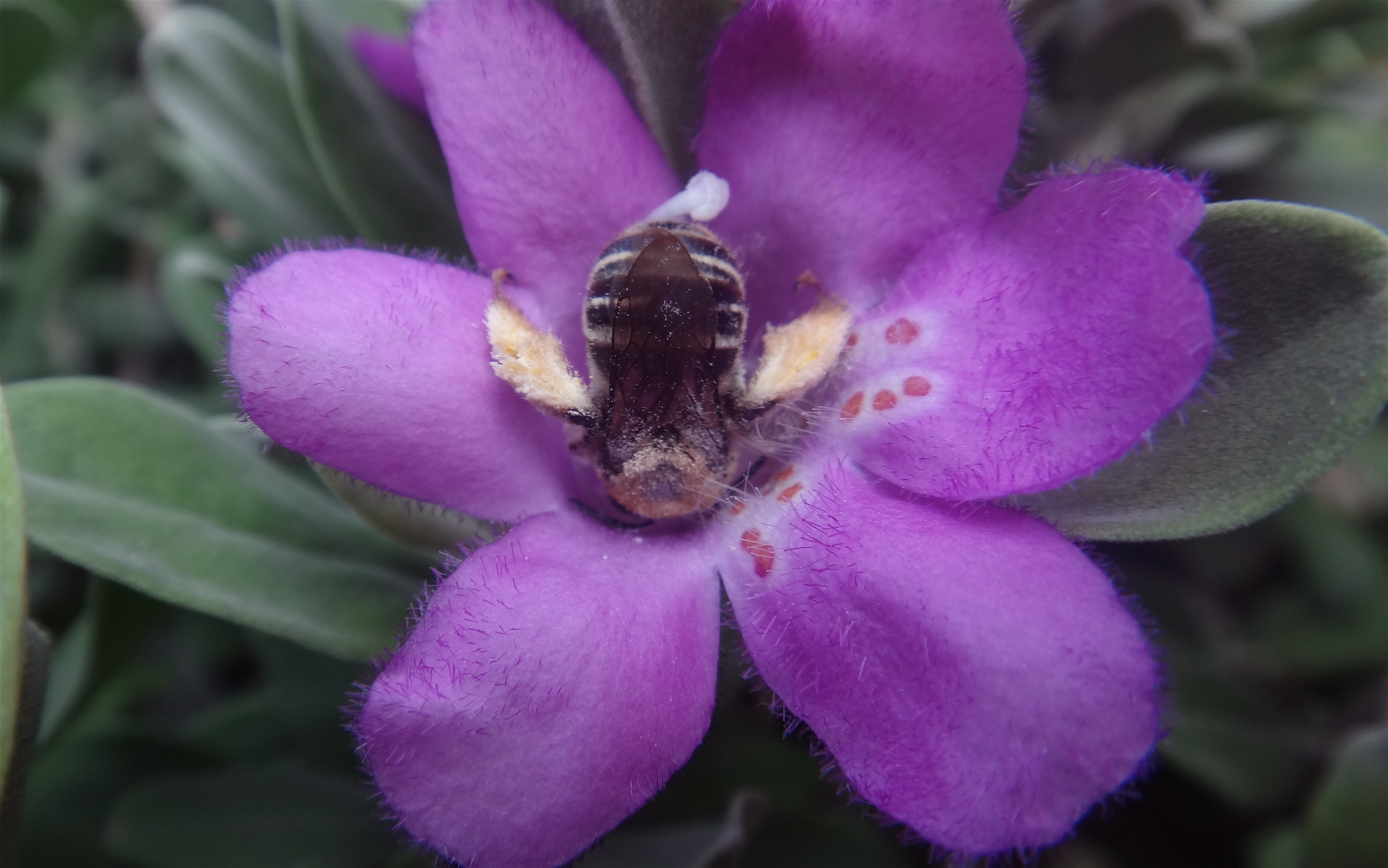
You can see why it is called Texas star hibiscus,
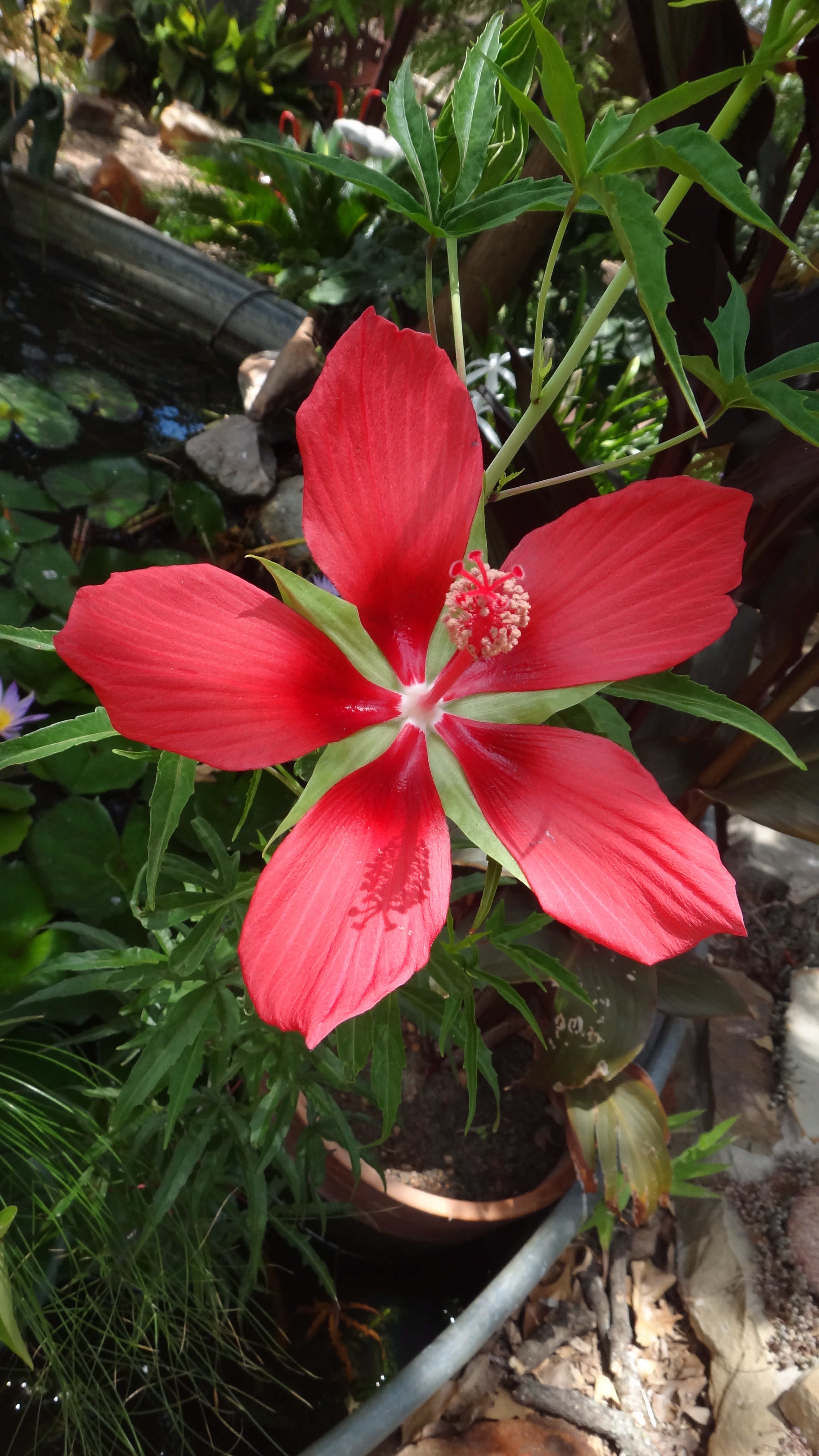
Hibiscus coccineus
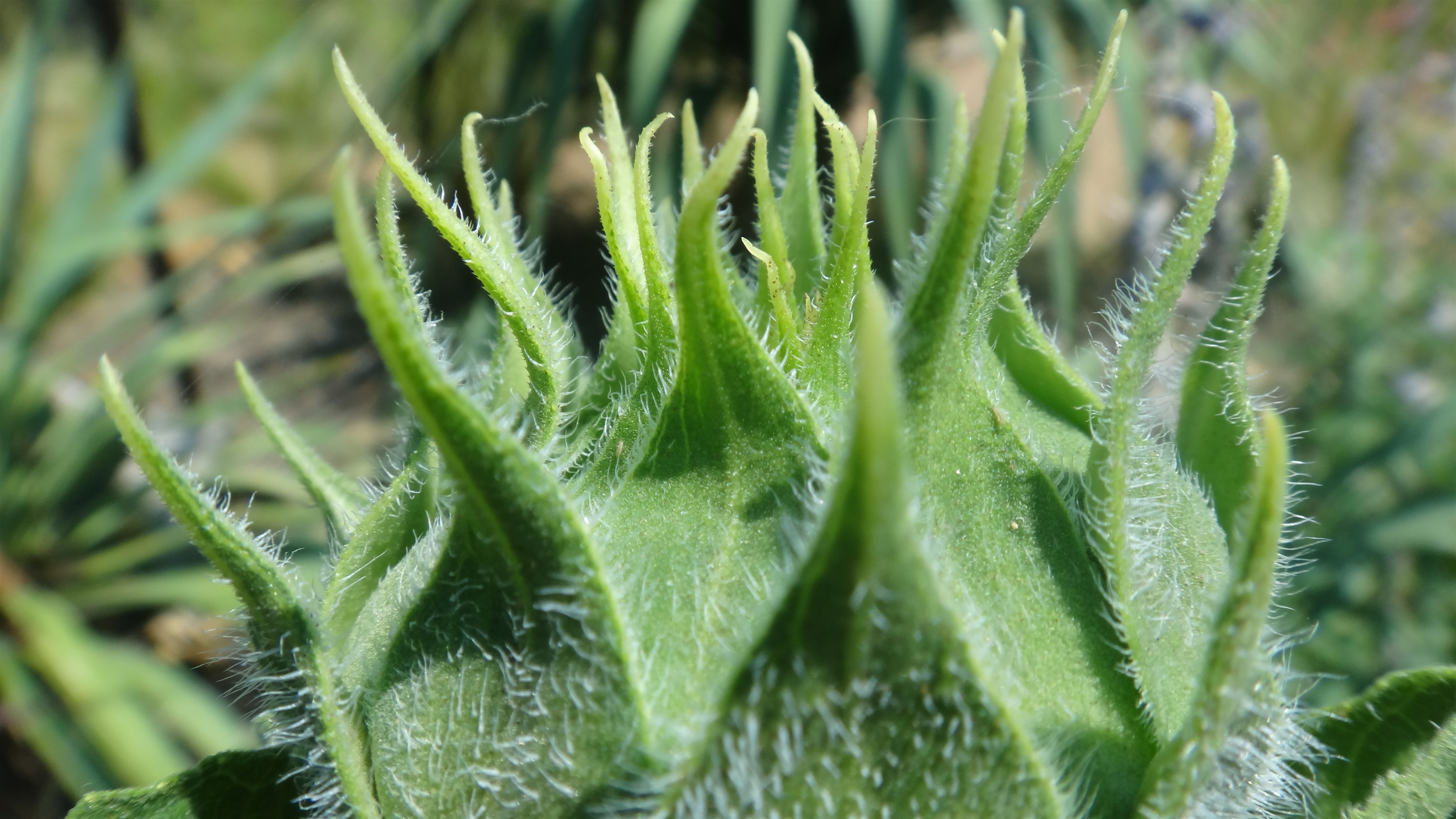
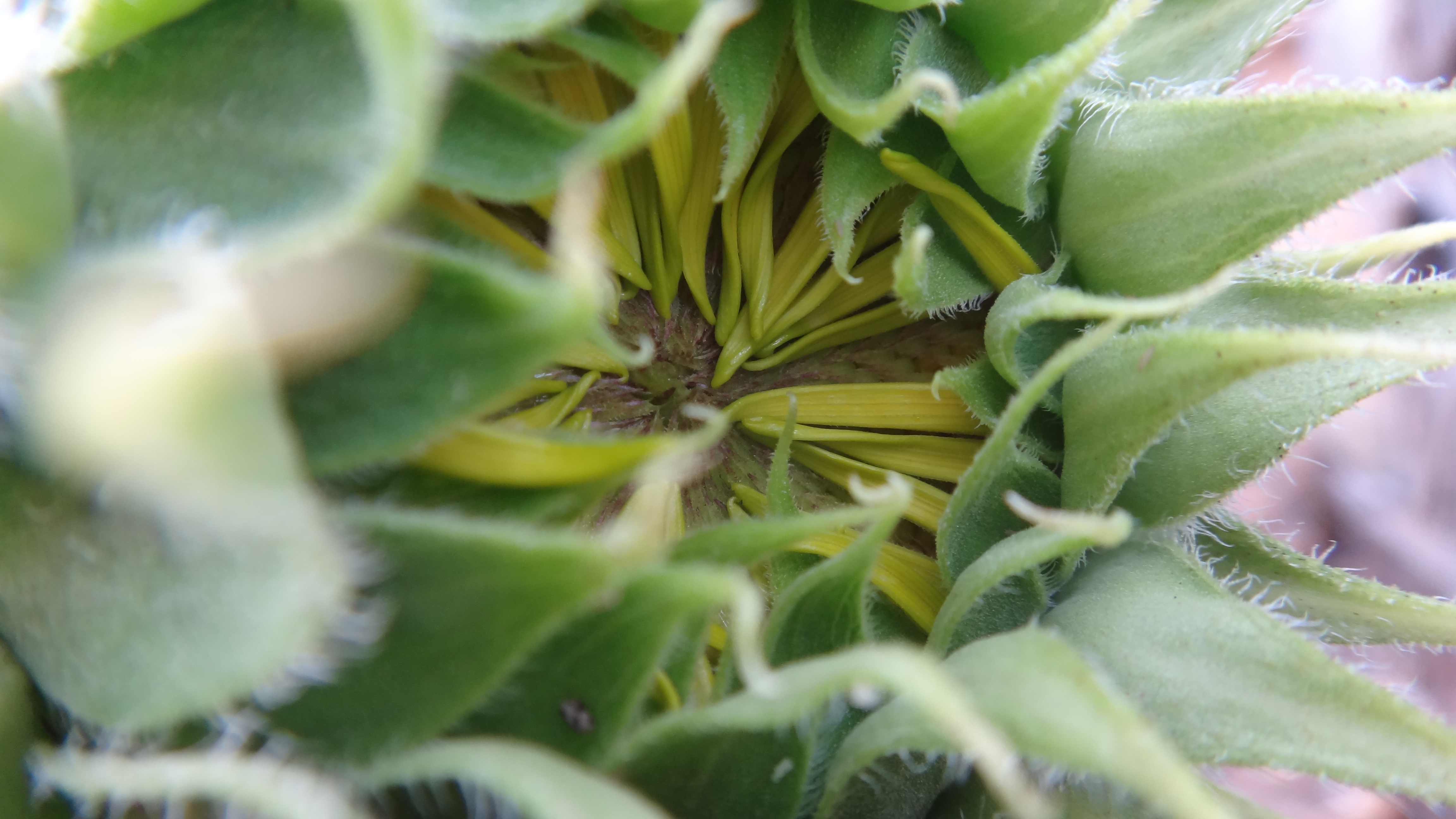
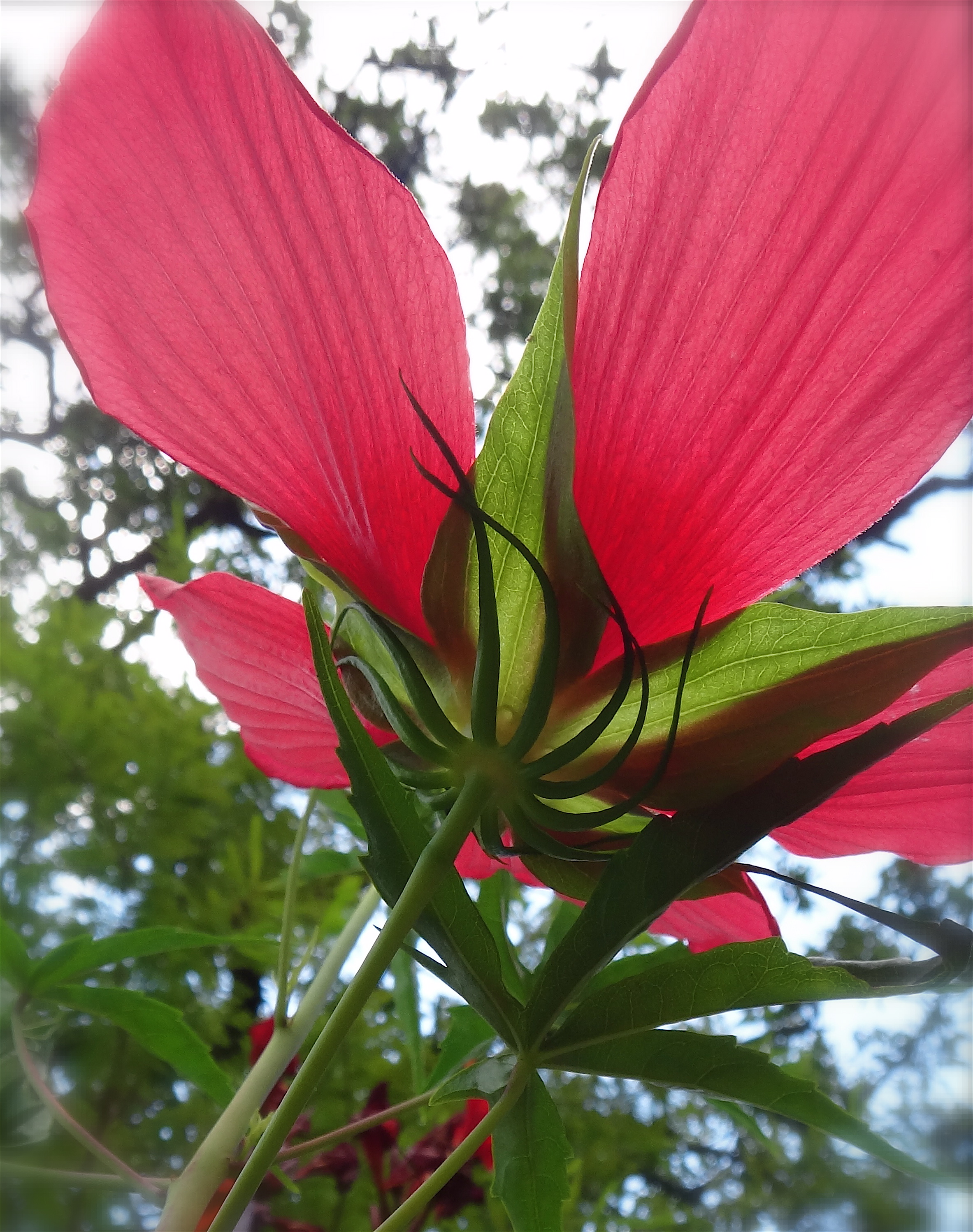 and what an ornate and complex bloom it is, on the subject of blooms, this sunflower has taken on storybook proportions.

I planted a lot of different kinds of large sunflower seeds earlier this year but I think the super-dry conditions or perhaps the birds got to the them before they had a chance to grow. Even though I managed to grow just the one, it was well worth it.
 I came across this intimidating insect next to a patio I am working on. It was large and adorned some serious tribal markings, it was moving at a frenetic pace on the ground.
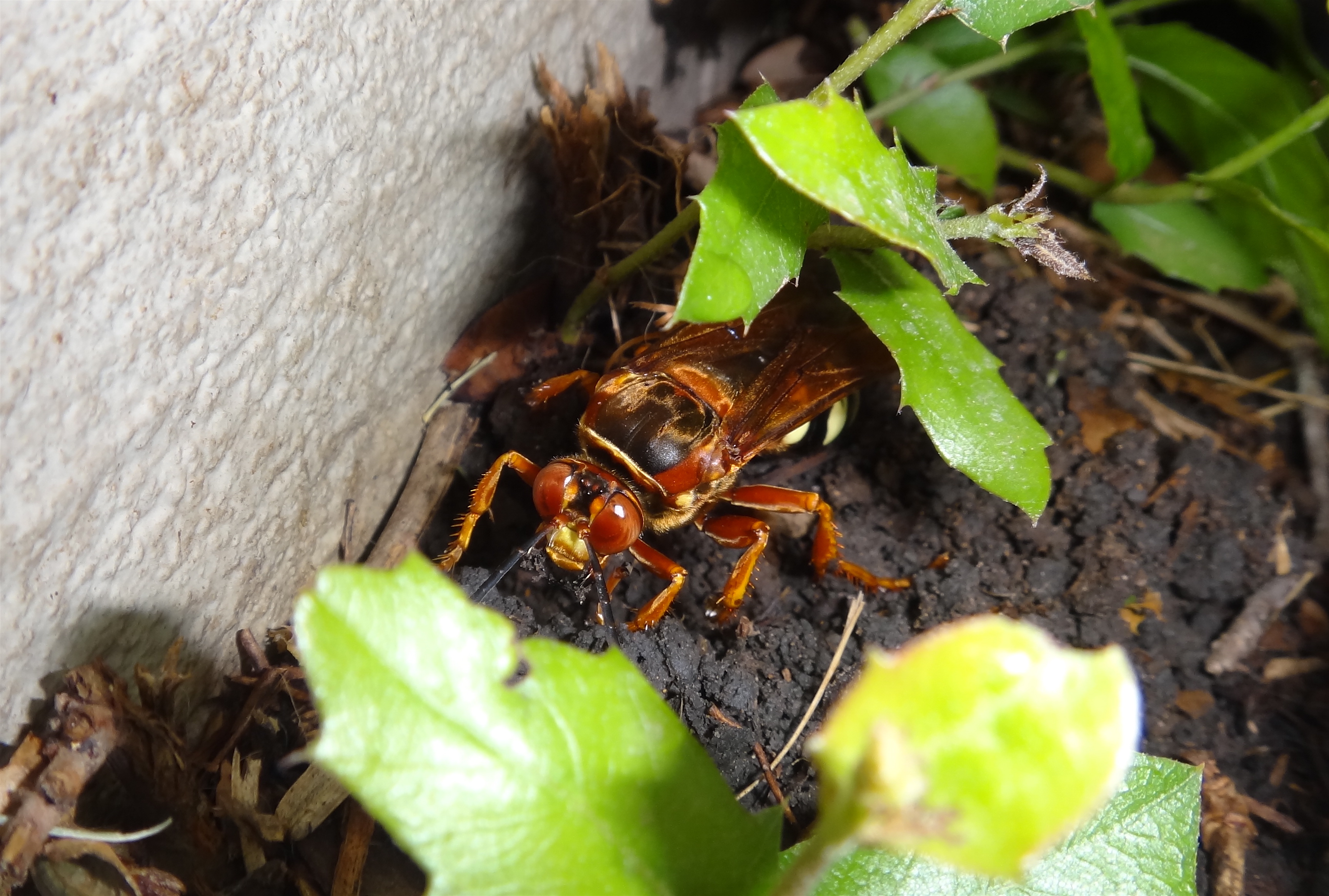
This is a cicada killer wasp,

“Sphecius speciosus”
or sometimes called a sand hornet, this large female was extremely busy digging in the earth.
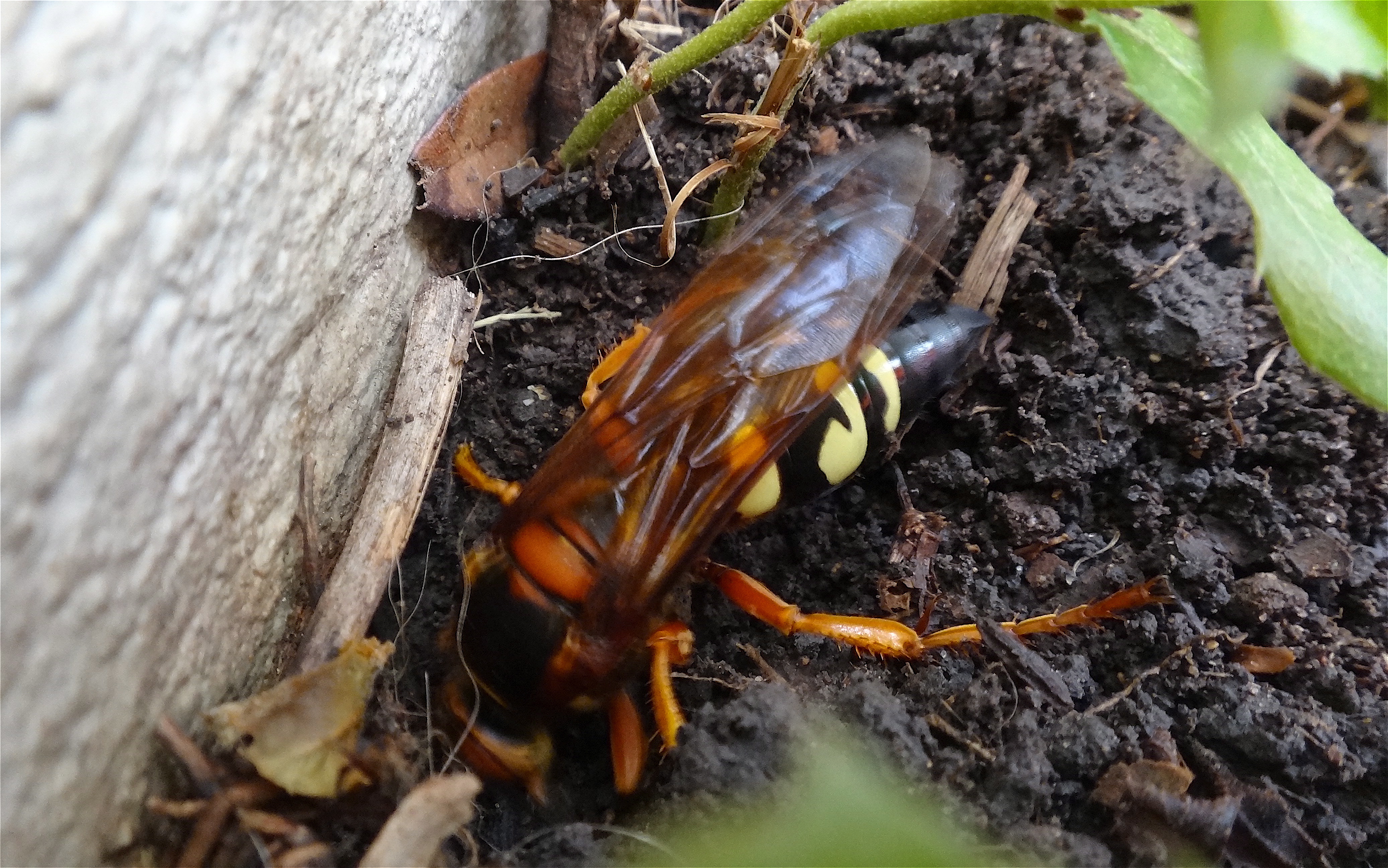
She was digging a burrow beneath a live oak tree, no doubt a good source for future cicada hunting and gathering. Yes folks, I am afraid it is another one of those – I am going to paralyze you, drag you into a dark cave, then my offspring will slowly devour you stories.
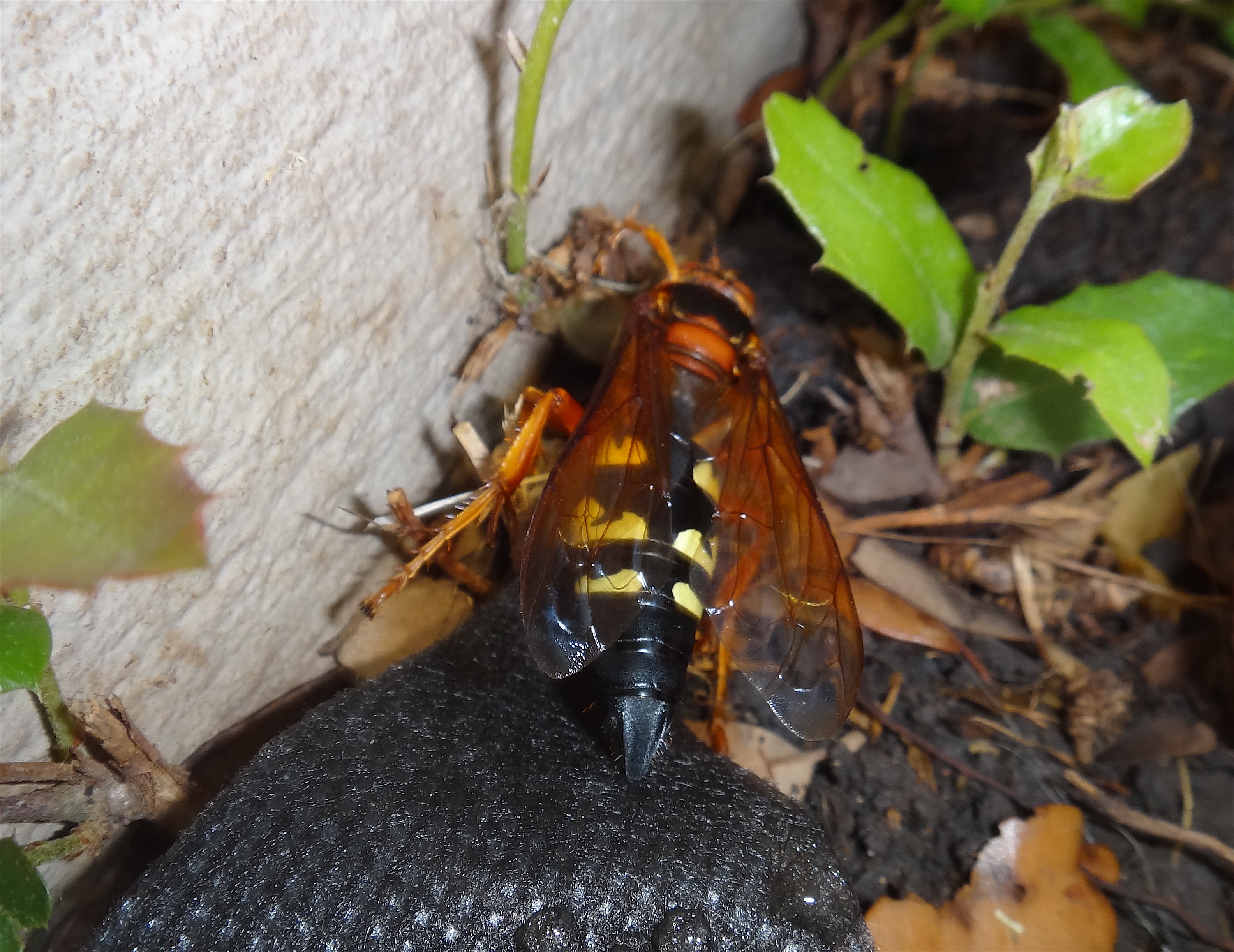
After digging a nest chamber (which have been reported to be over a meter long), female cicada killers capture cicadas, paralyzing them with a sting, the female wasp then straddles it and takes off toward her burrow…

yee-haa!
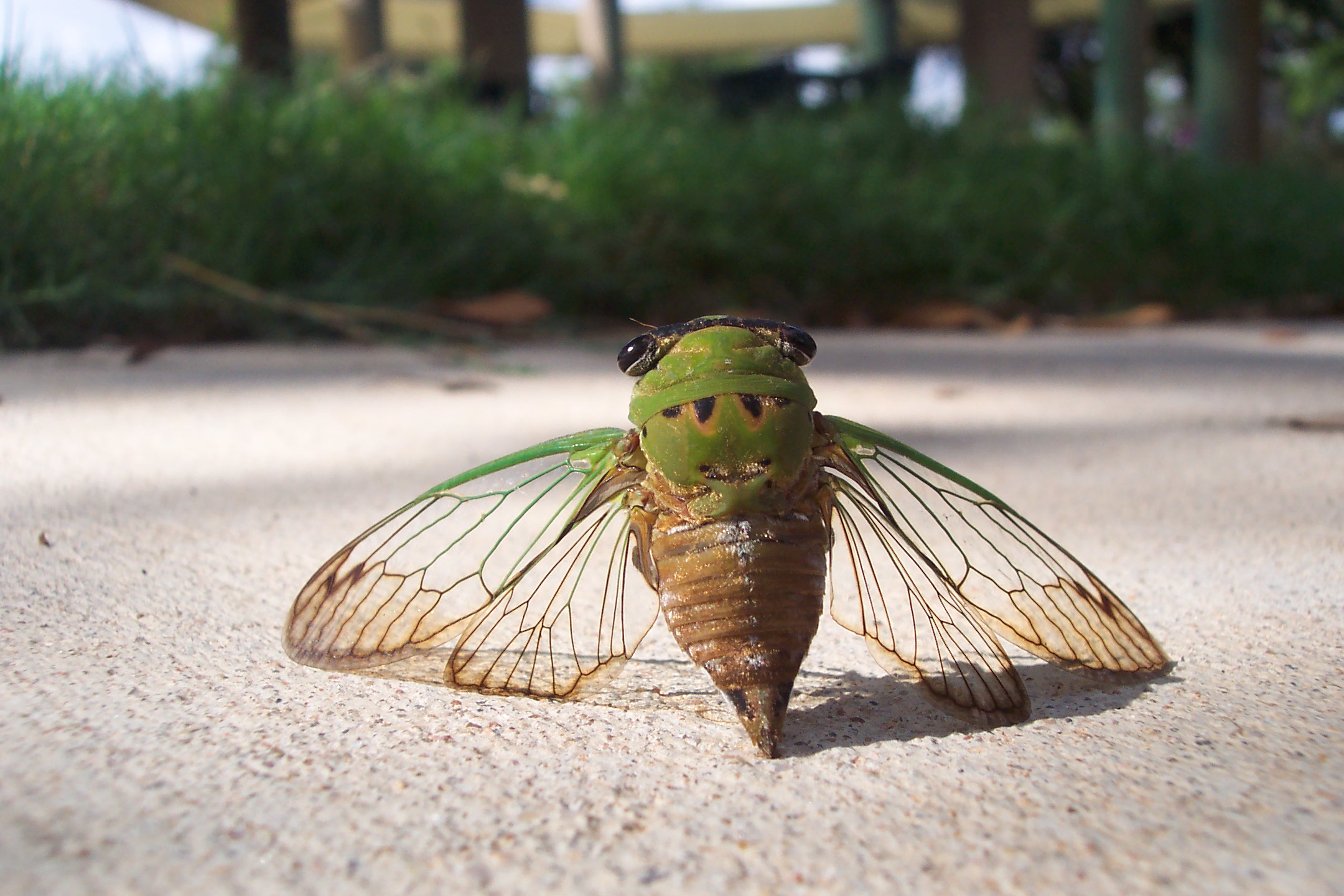 This return flight to the burrow is difficult for the wasp (and I am sure no joyride for the cicada) because the cicada is often more than twice her weight. After putting the cicada in the nest cell, the female deposits an egg on the cicada and closes the cell behind her with dirt…Brrr. On a brighter note, these large wasps are generally non-aggressive towards humans. Still, I was taking no chances photographing this one.
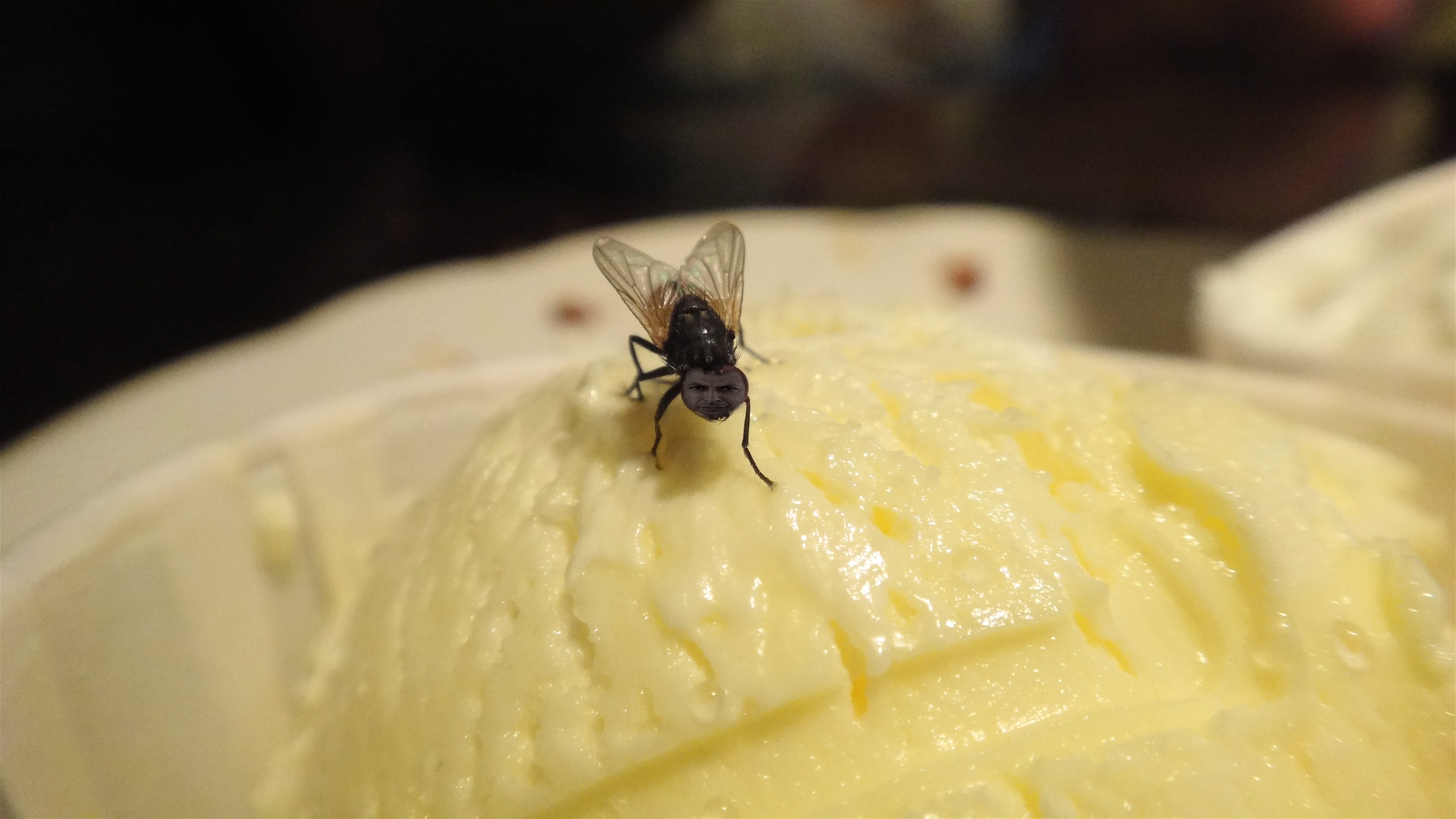 Tiny voice: “Scared of a wasp now ESP?”
Be quiet Jeff and enjoy the ice cream that you are stuck in.
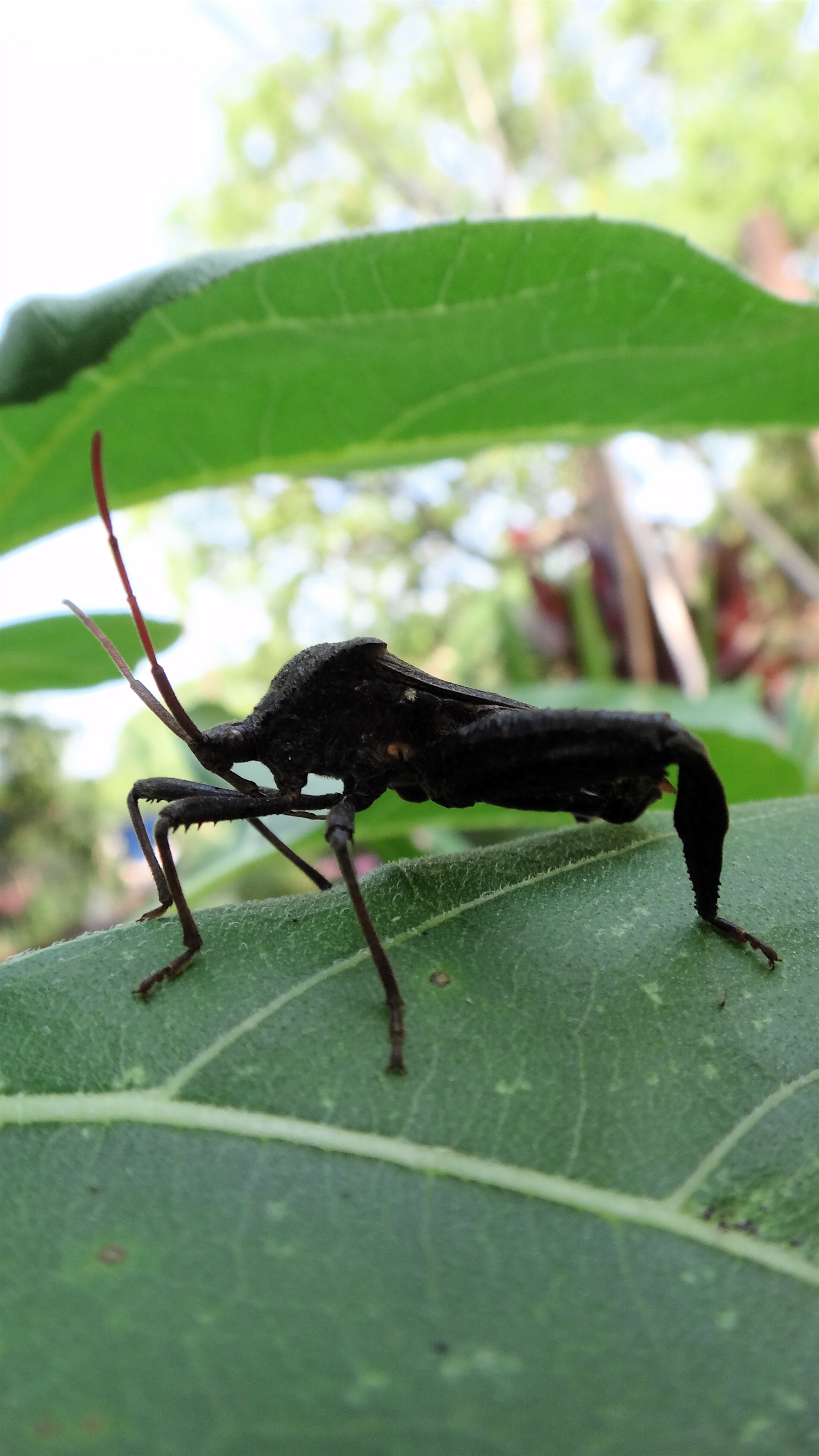
Staying on the subject of rather large insects I unearthed this female
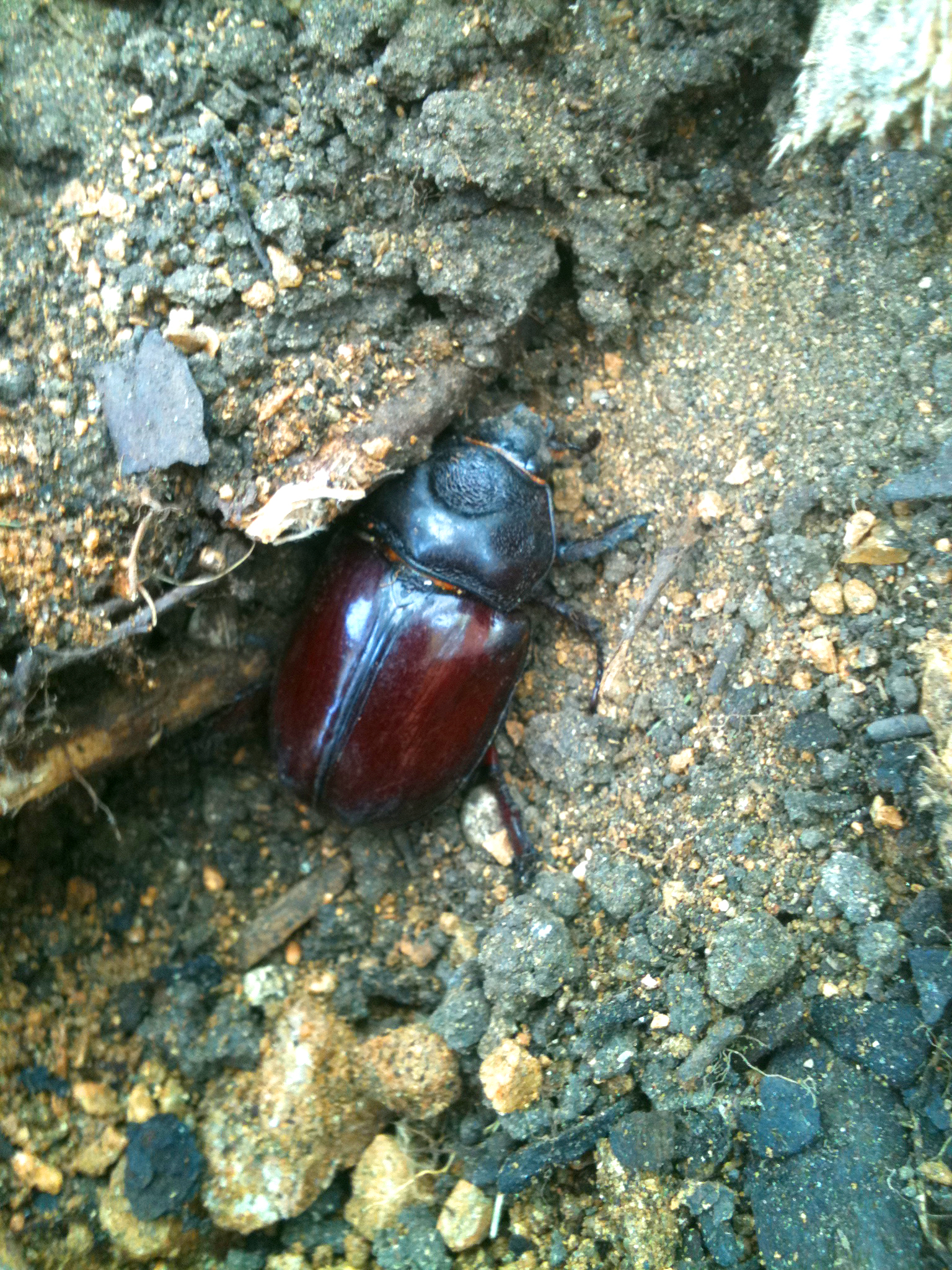
Strategus aloeus julianus
or rhinoceros beetle and it was a monster. I threw a saddle over it and took it for a walk around the garden. These chaps are among the largest of beetles, reaching 60 millimeters in length, but are completely harmless to humans because they cannot bite or sting. Their common names: Hercules beetles, unicorn beetles or horn beetles refer to the characteristic horns borne only by the males of most species in the group. The males use their horns for fighting (usually over food) and impressing a female. If a beetle is feeling threatened and cannot dig itself into the ground, it will make loud hissing squeaks.
 “Scared me to death it did.”
The hissing squeak does not do anything but frighten a predator.
Okay that was bad…moving quickly to birds.
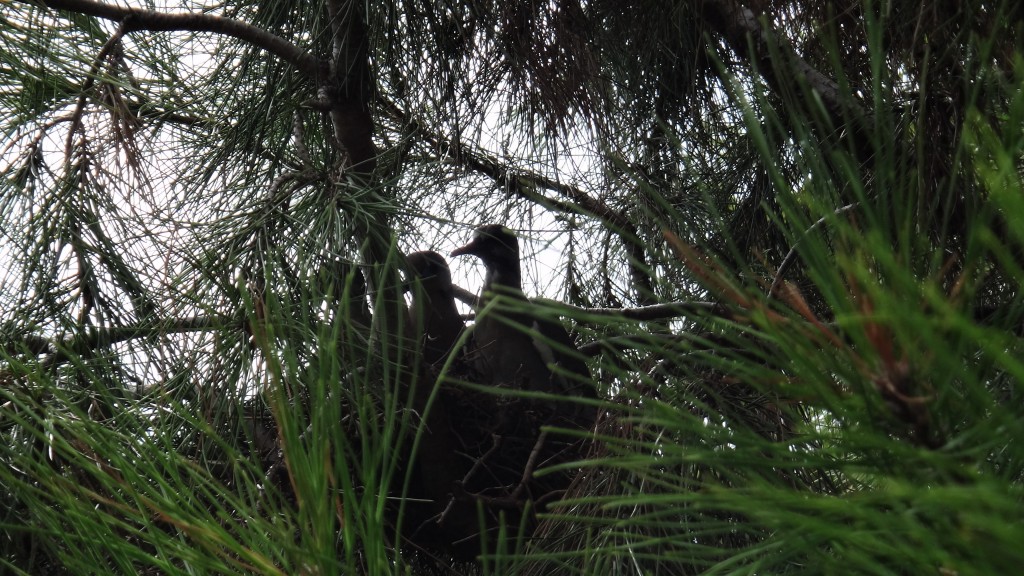
This family of doves perched in their “nest” on my Afghan pine, look totally ridiculous. These birds are not noteworthy for their engineering prowess when it comes to the art of nest-building. Oh no, in fact they appear to be totally rubbish at it, but they seem happy huddled together on their teetering platform. The whole scene is very:

JERRY: You ran over some pigeons? How many?
GEORGE: What ever they had. Miranda thinks I’m a butcher but i-i-it’s not my fault is it? Don’t we have a deal with the pigeons?
JERRY: Course we have a deal. They get out of the way of our cars, we look the other way on the statue defecation.
GEORGE: Right! And these pigeons broke the deal. I will not accept the blame for this!
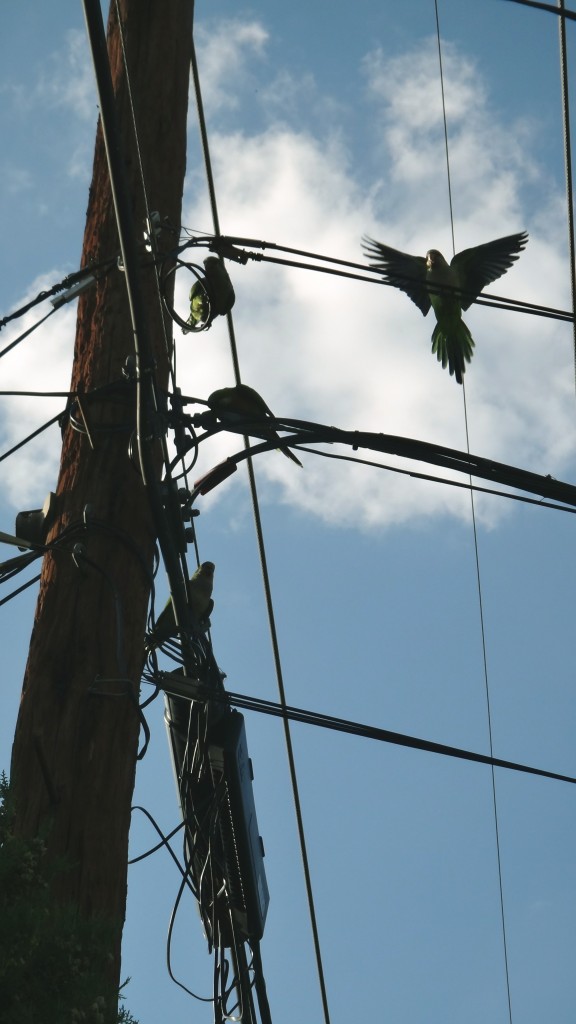
These Monk Parakeets / Quaker Parrots must be nesting somewhere around the Patch as I keep seeing and hearing them squawking and squabbling, and do these birds like to squabble, one carry-on after another. These birds have naturalized in Austin for over twenty years.
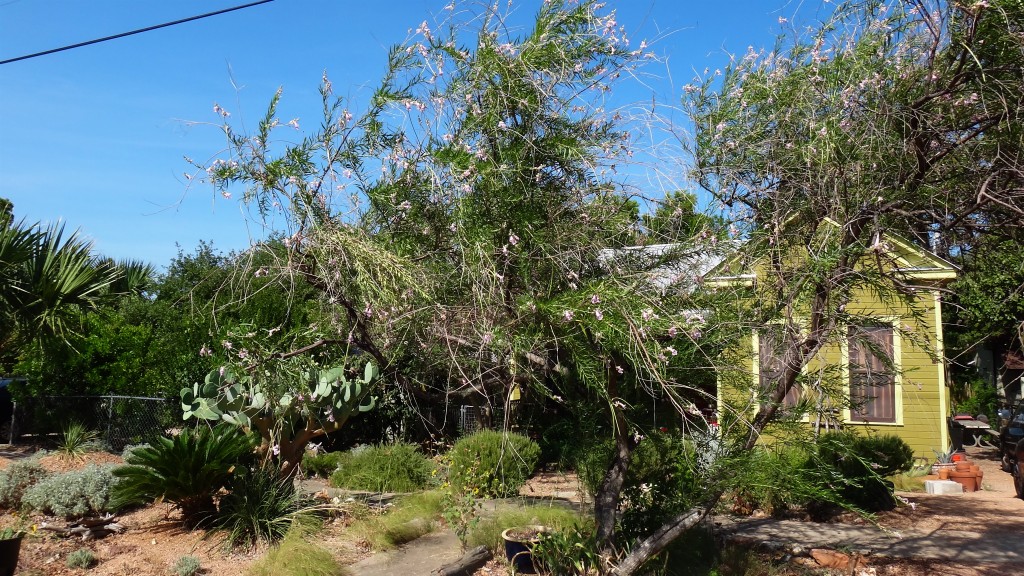 This year is most certainly the year of the desert willow or Chilopsis. The hotter the temperatures, the dryer the drought, and the harsher the conditions the better this tree looks. I have never seen so much foliage and blooms as this year. This tree is actually not a true willow, it is called a willow only due to the shape of its leaves, the tree is actually a member of the Bignonia family.
Hummingbirds love it, and it is perfect for a hell-strip or anywhere that suffers reflected heat.
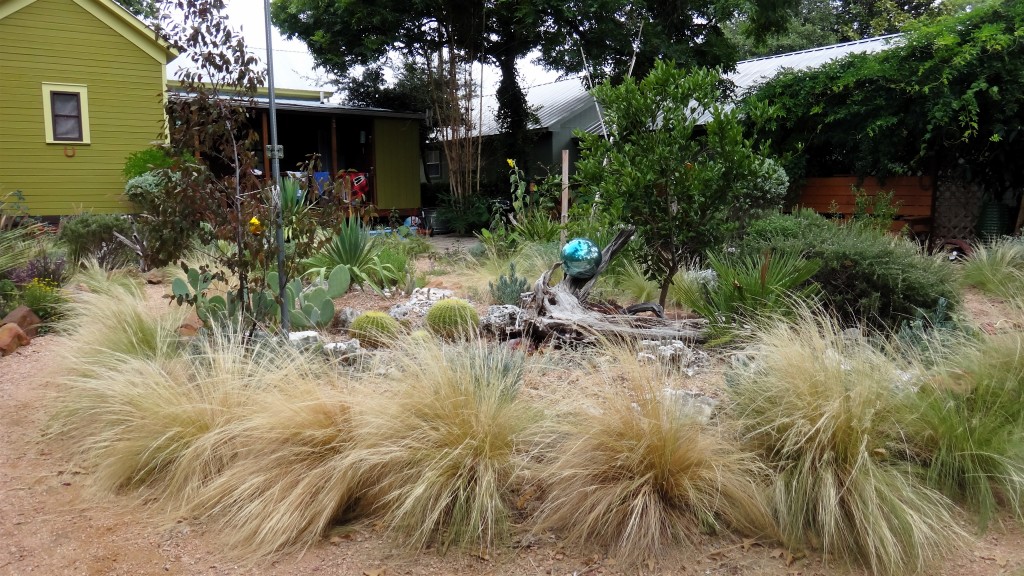
These feather grasses are now up to three years old and still going strong, they are currently in their brown phase awaiting some summer hair combing and trimming.
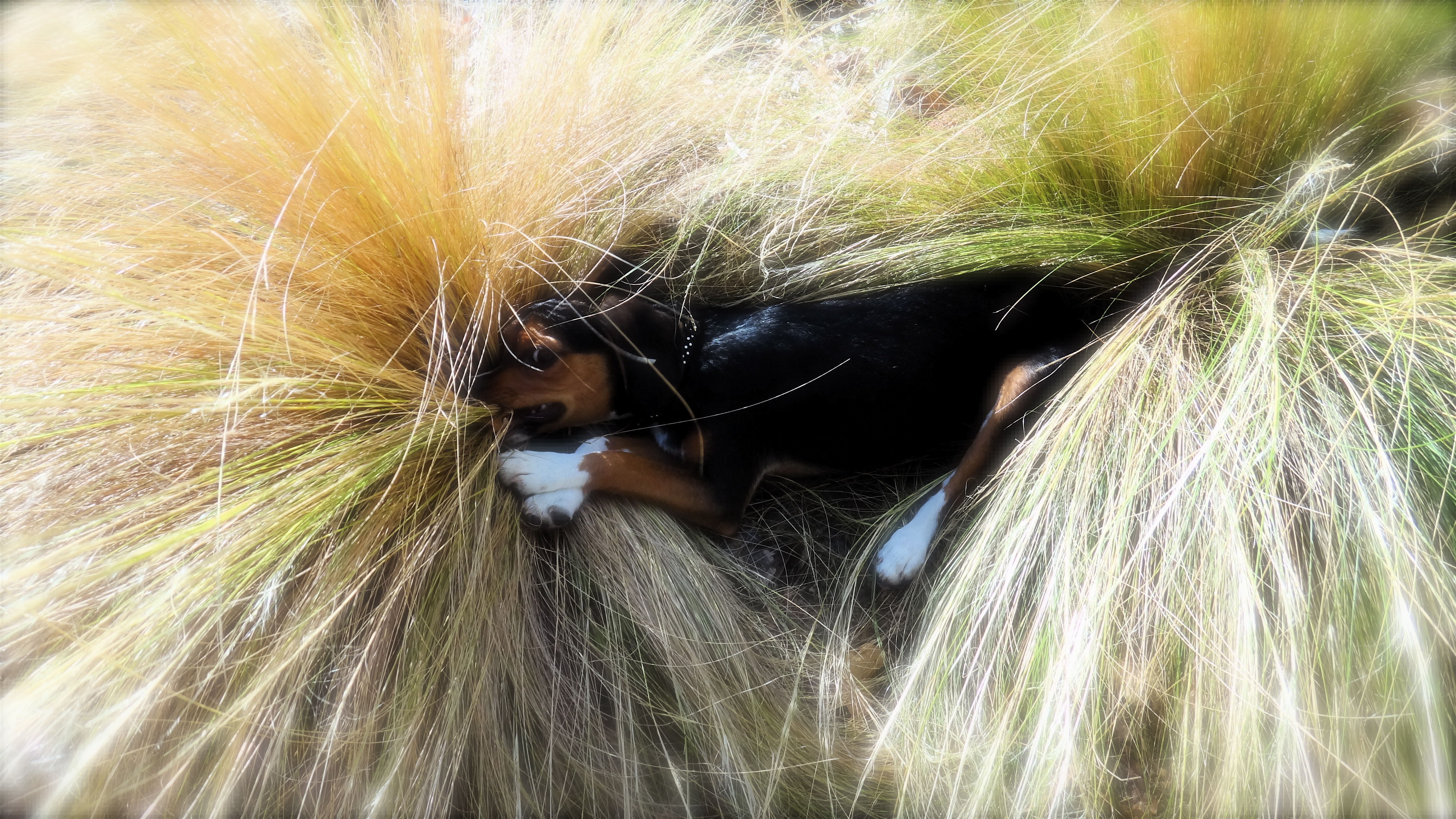
Or perhaps not.
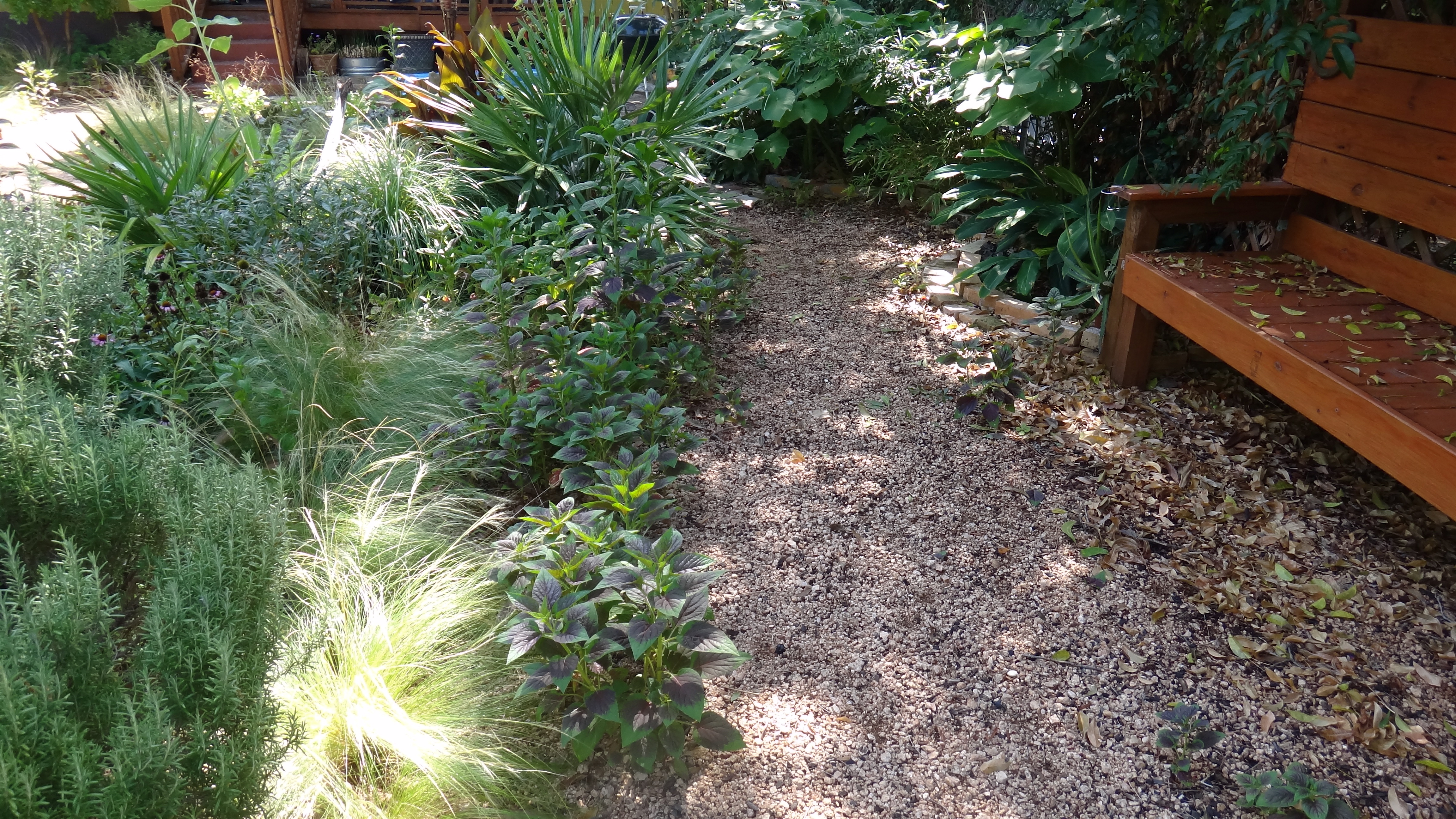
Celosia is now springing up all over the place, this will put on a great fall show, attaining heights of 6+ feet.
Finally:
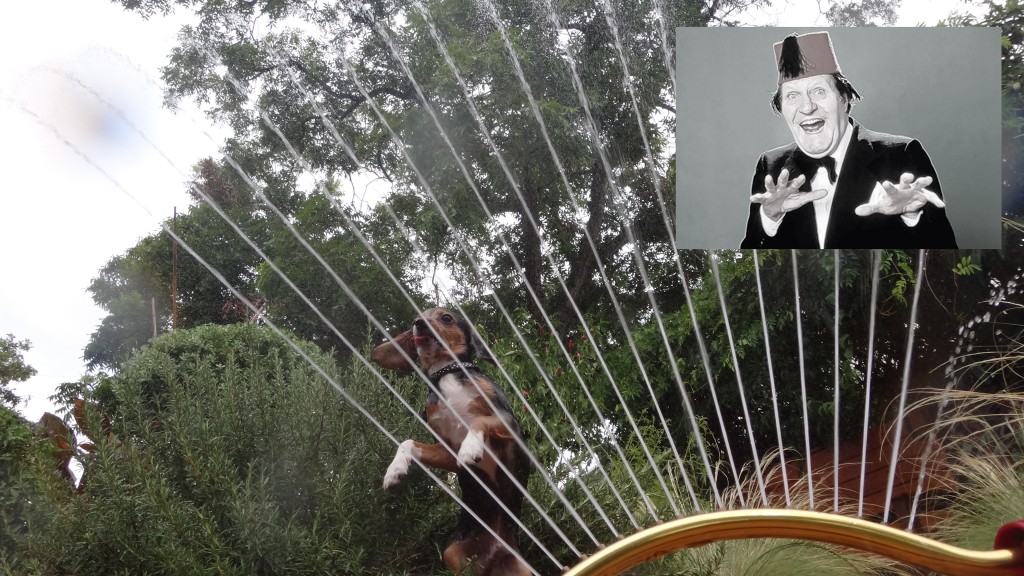 “Just like that, not like that, just like that.”
It is the time of phlox in the Shire.
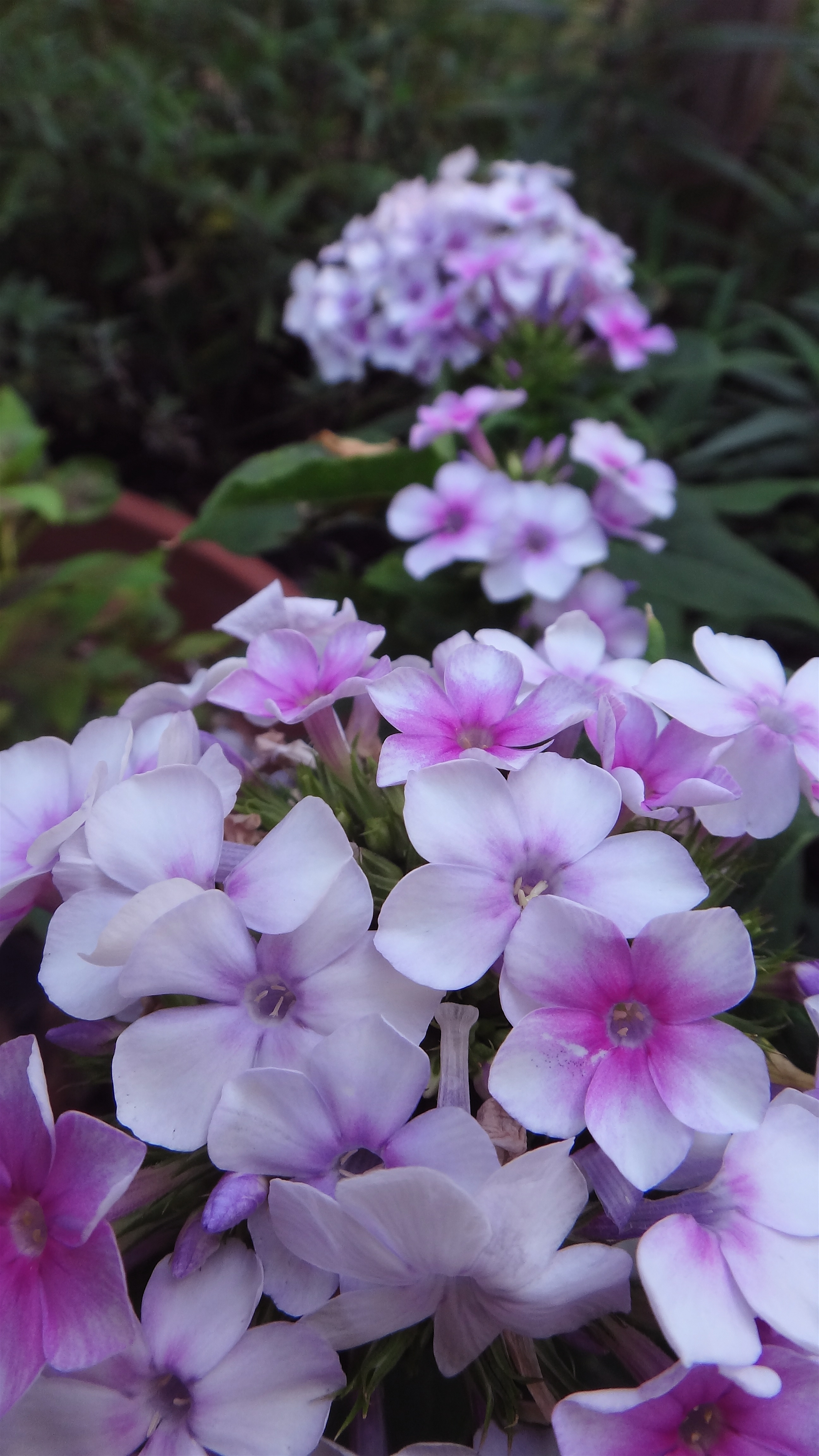
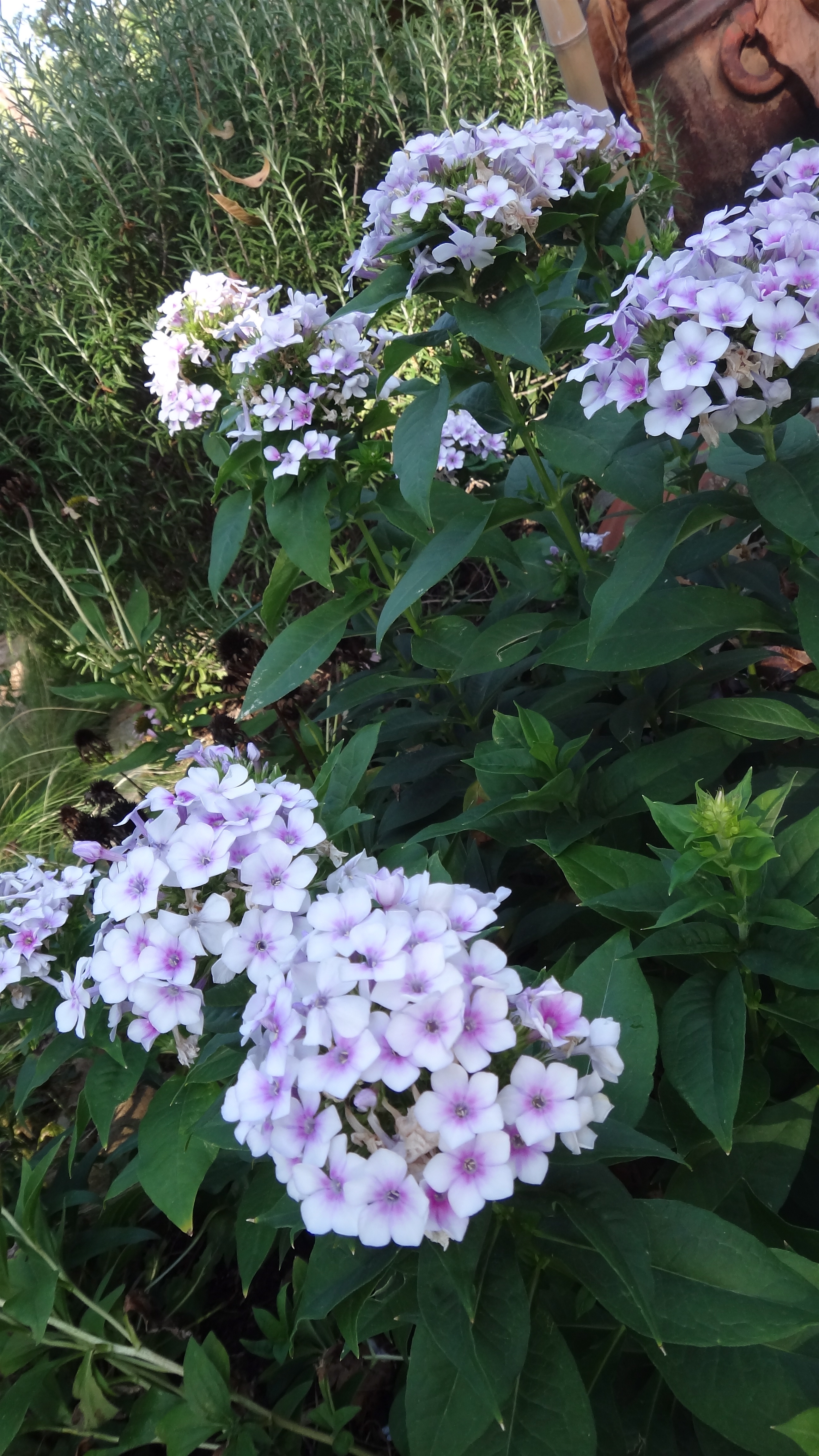
lots and lots of phlox,
what a great word…phlox.
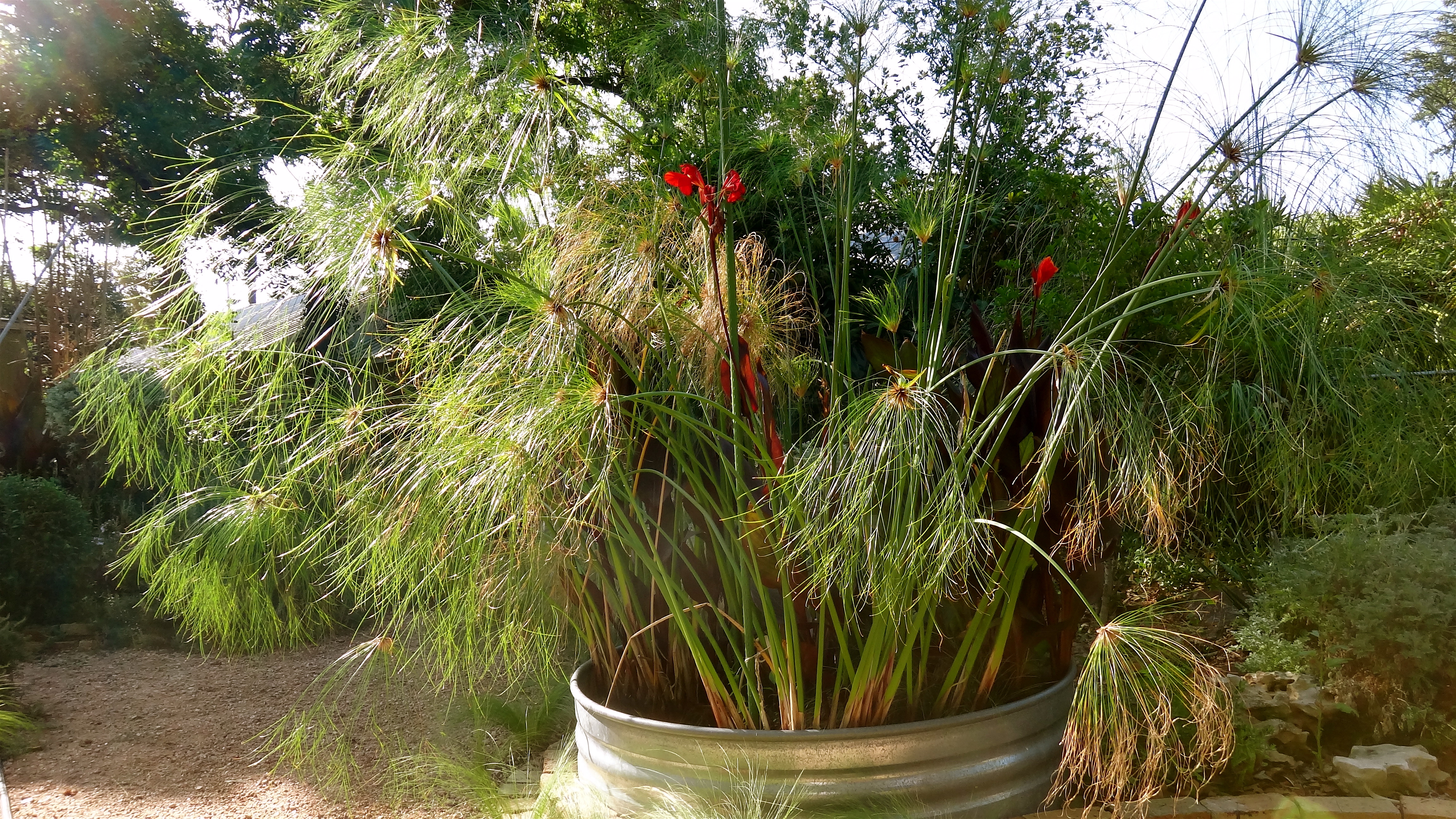
This stock tank planted up with King Tut papyrus and burgundy canna lilies is also relishing the baking heat,
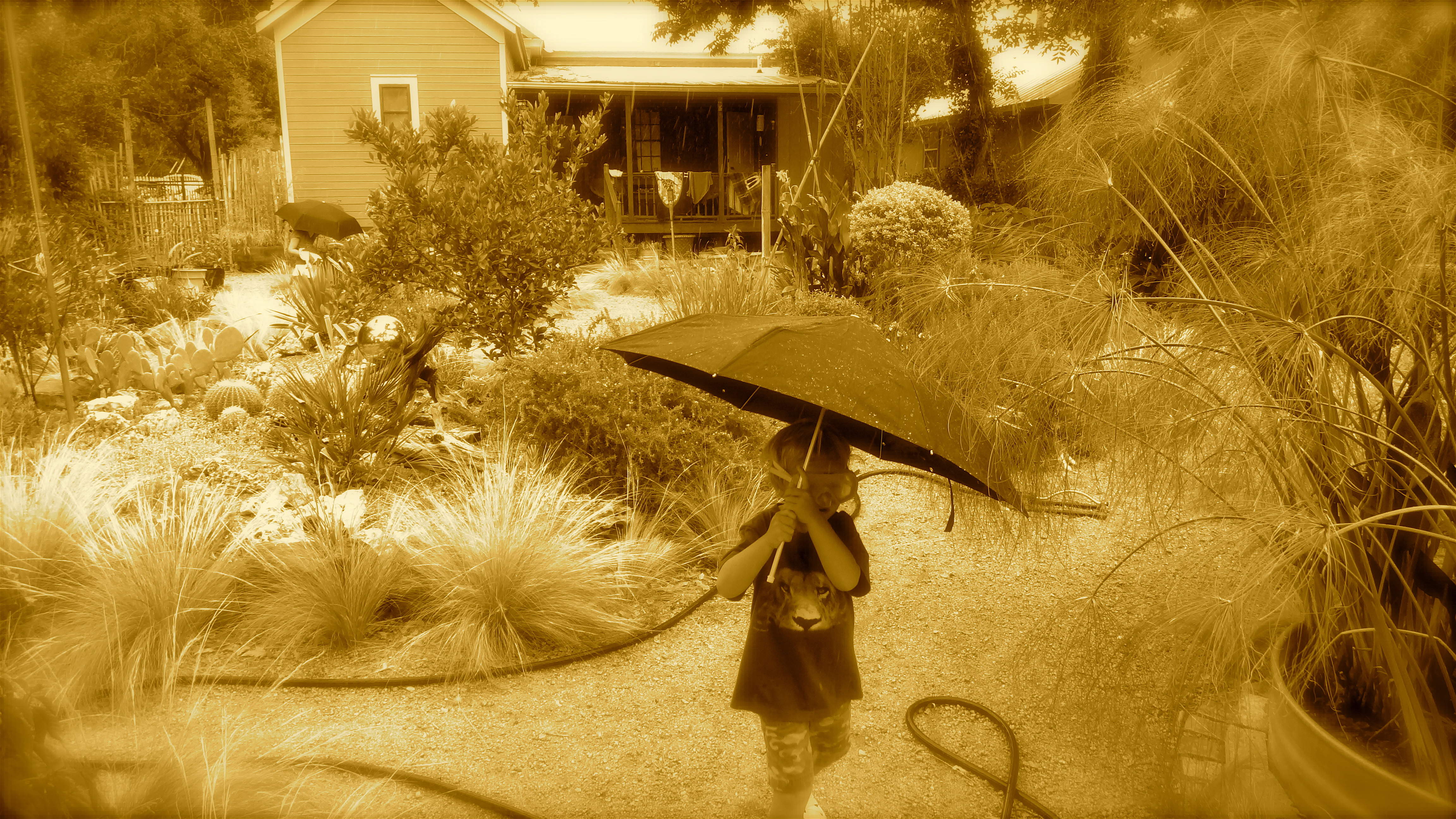 heat that is affecting some of us in some very strange ways.
Stay Tuned for:
“Eviction”
All material © 2011 for eastsidepatch. Unauthorized
intergalactic reproduction strictly prohibited, and
punishable by late (and extremely unpleasant)
14th century planet Earth techniques.
Inspirational image of the week:
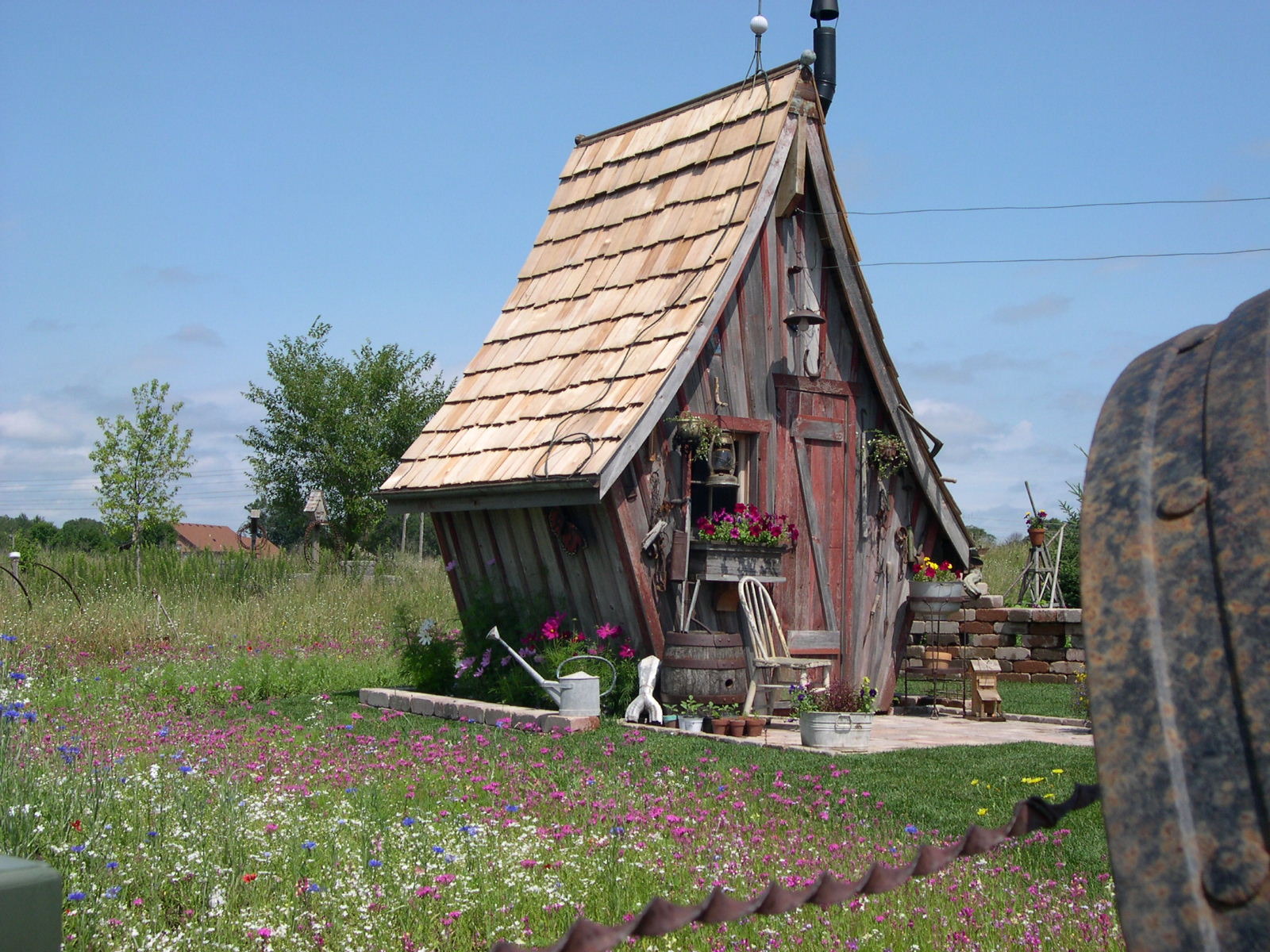
I want this as a guest house at the end of the Patch. It is the phlox!