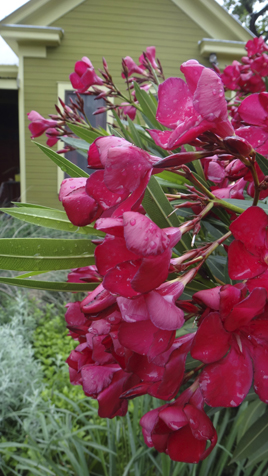
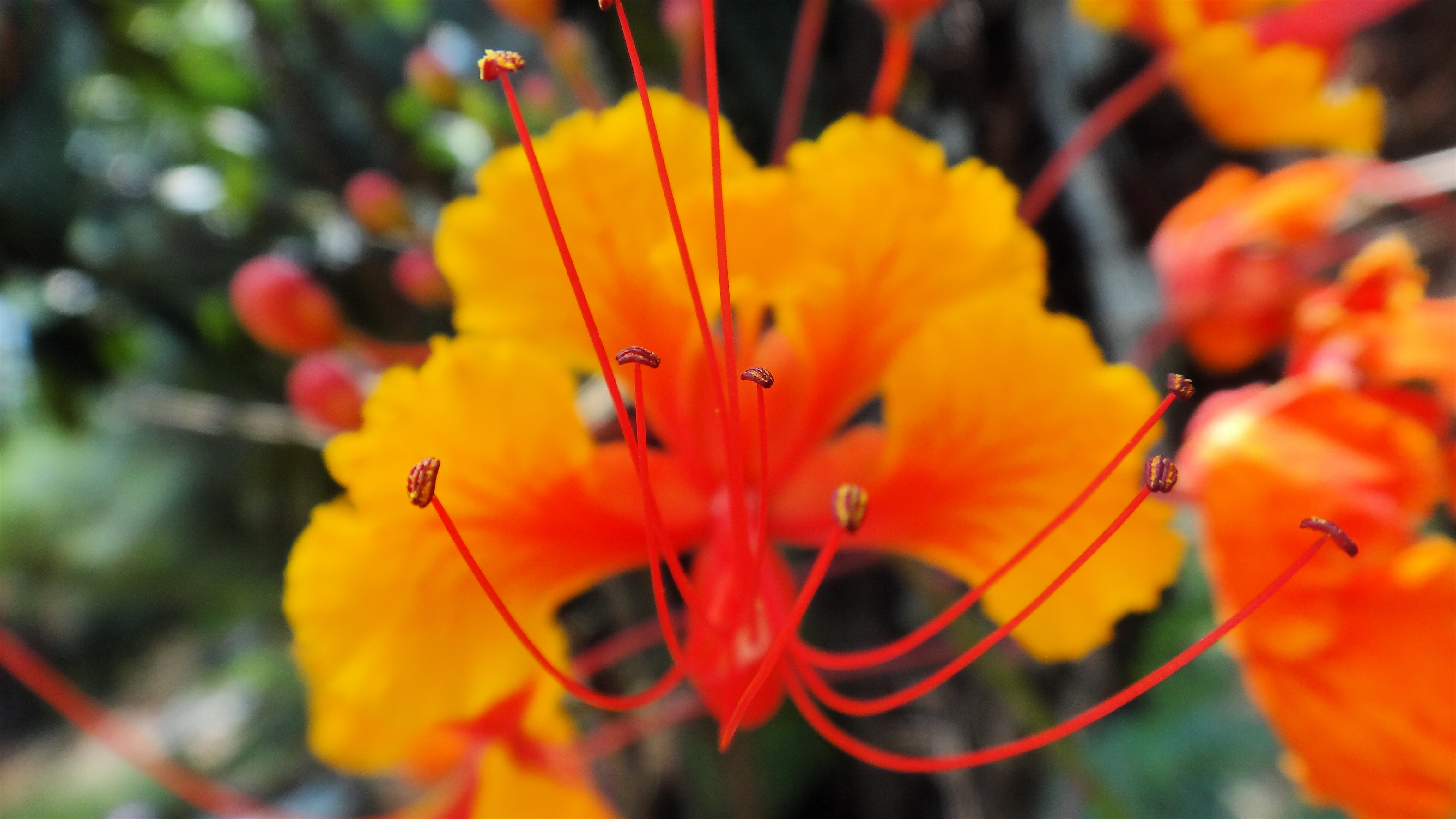
 Temperatures and blooms heat up this week in central Texas, this pride of Barbados responded by wearing its flamboyant carnival outfit,
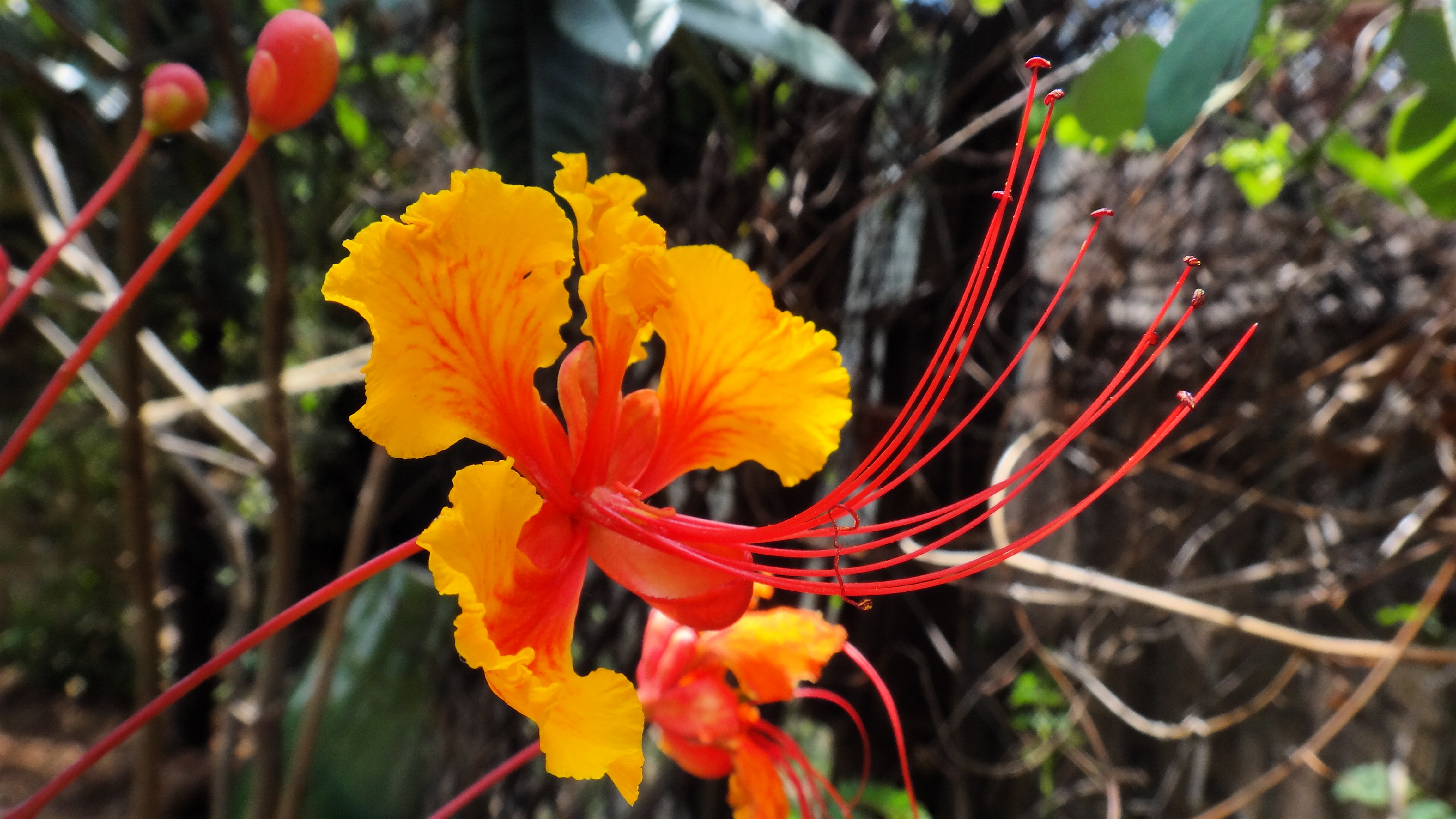 dancing on furnace fueled breezes to a heavy Naboo jungle beat.
The summer temperatures this week have also brought out some magical fluttering creatures,
 like this freshly emerged blue dasher dragonfly (ahem) :
Pachydiplax longipennis
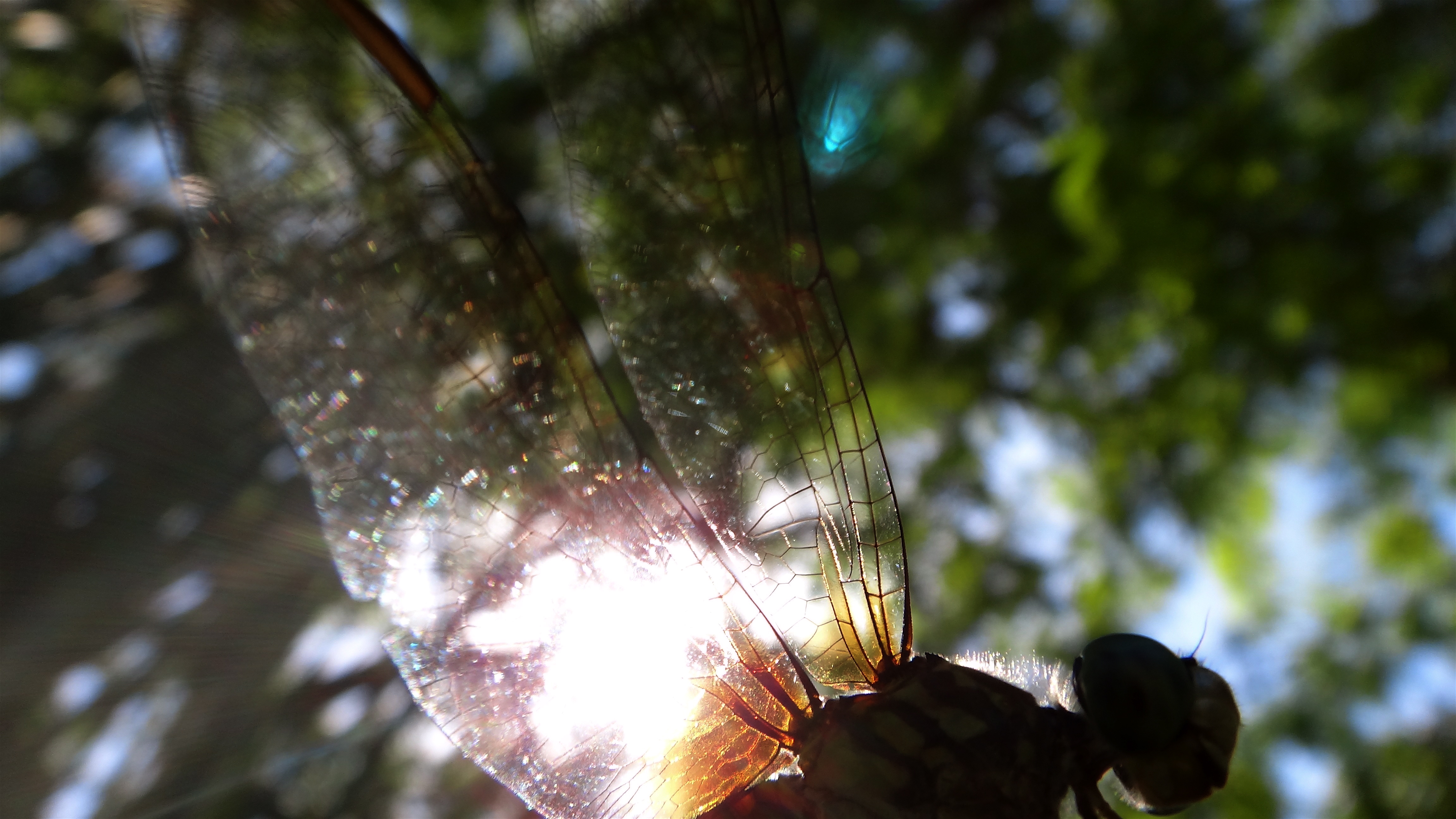
(and I honestly did not position the sun in this particular frame location for added humorous effect.)
 “Aw Behave!”
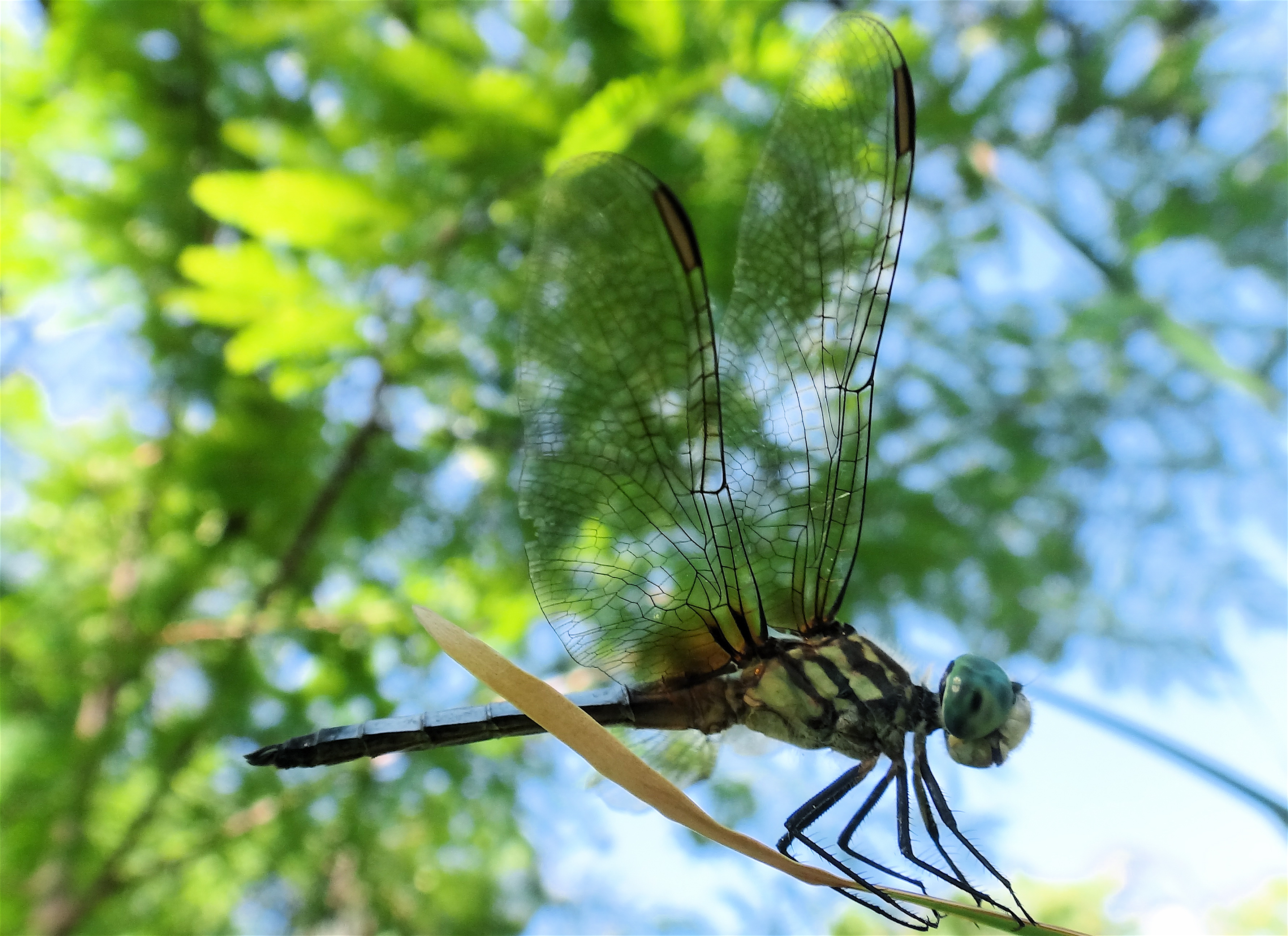 Such nimble feet.
 Much larger dragonflies once existed on earth.
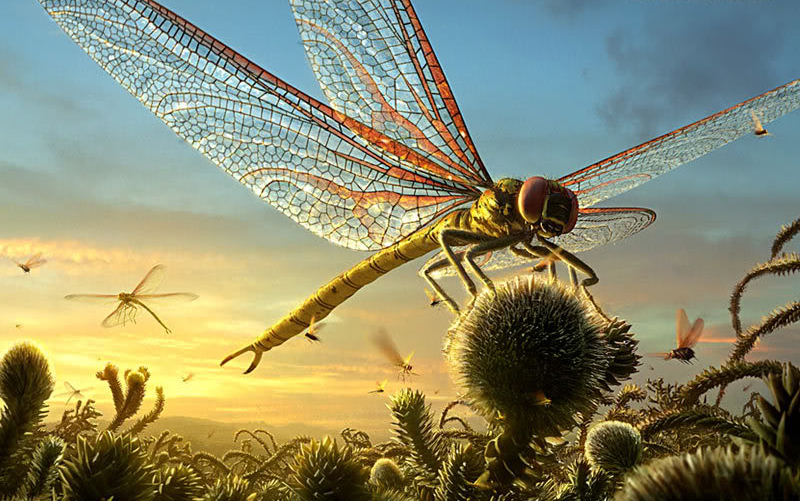 Wikipedia Image � 2007 BBC
The largest found fossil is an extinct Protodonata named Meganeura monyi from the Permian period, with a wingspan (and I repeat wingspan) of 70-75 cm (27.5-29.5 in).
Imagine the sound they would have made as they flew…
What?…It is totally open for speculation.
Some other creatures that have been busy laying hundreds of eggs on the roof of my back porch are the lacewings.
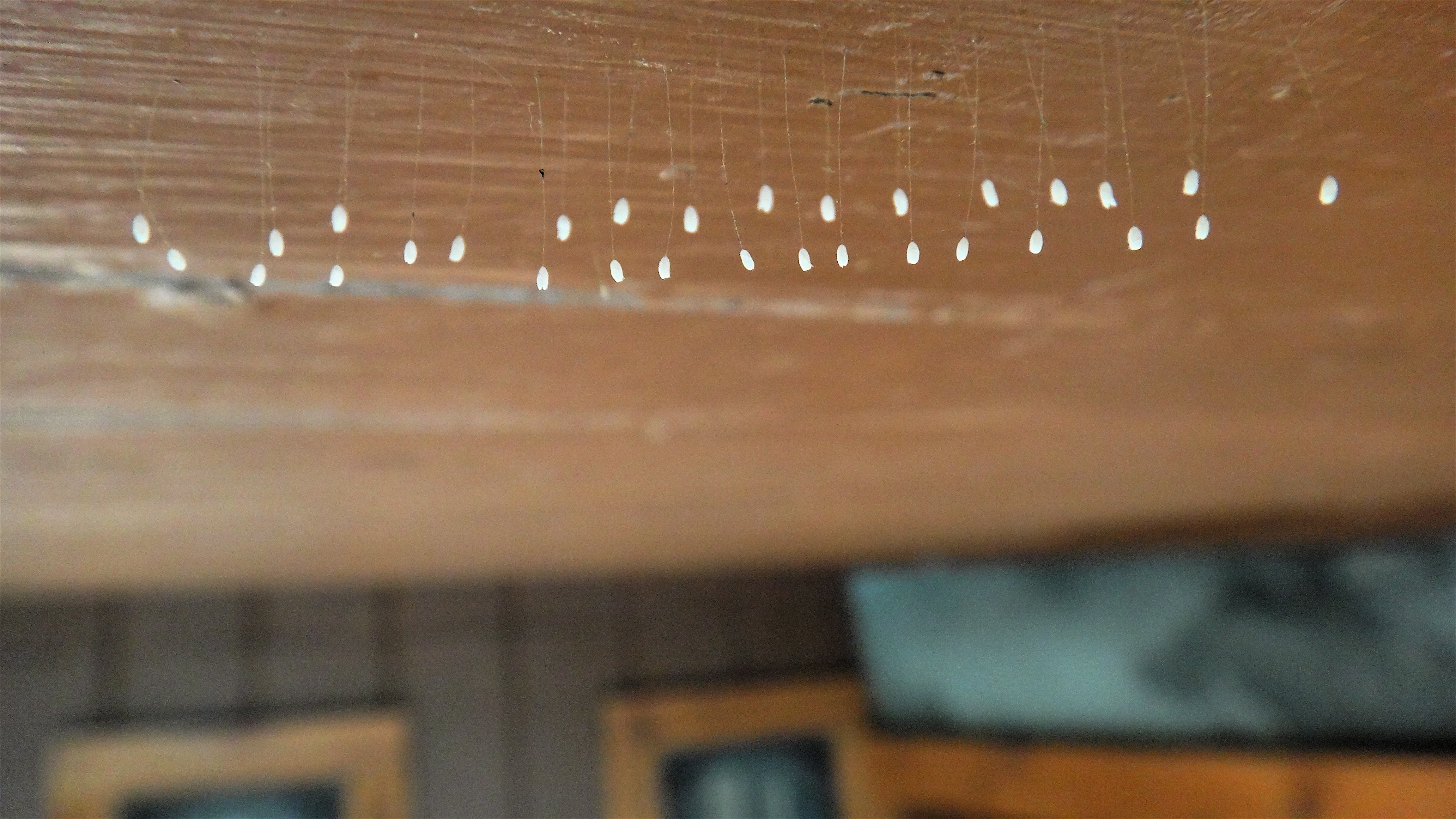 I have groups of these delicate eggs all over the place, I guess they like the fact that it is sheltered.
 Here is an adult common green lacewing on my bathroom mirror.
Chrysoperla carnea
 Adults have tympanal organs that enable them to hear extremely well, so well in fact, some display evasive behavior when they hear a bat’s ultrasound calls. Upon hearing the bat’s transmission, the insect will close its wings (lowering its area detection signature) and immediately drop to the ground…an effective defense mechanism.
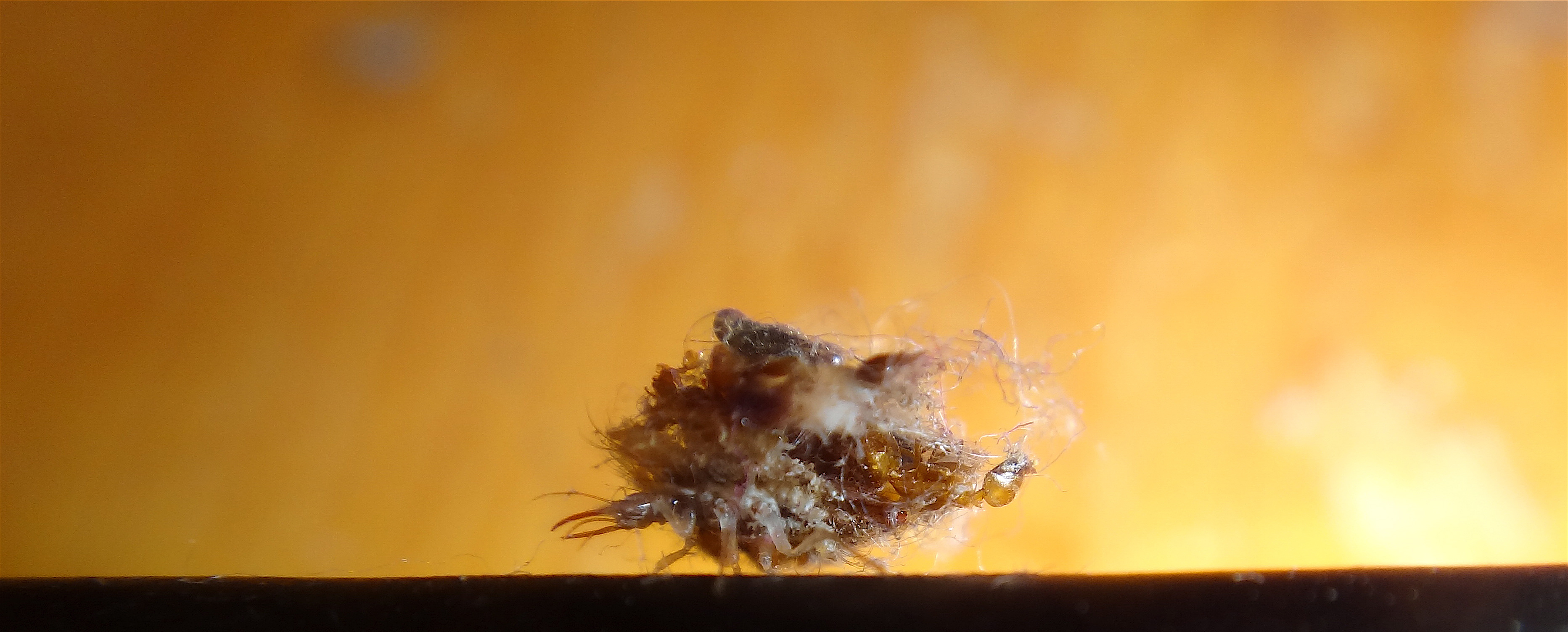
I believe the following image is the larvae pushing around its cart full of trash down one of my computer cables. I can definitely see some of our living room rug woven into the structure and is that part of a gummy bear?…Very bizarre.
 Moving along:
Oh yes, just one more evergreen wisteria bloom (I promise)… in homage to this week’s Rapture madness!
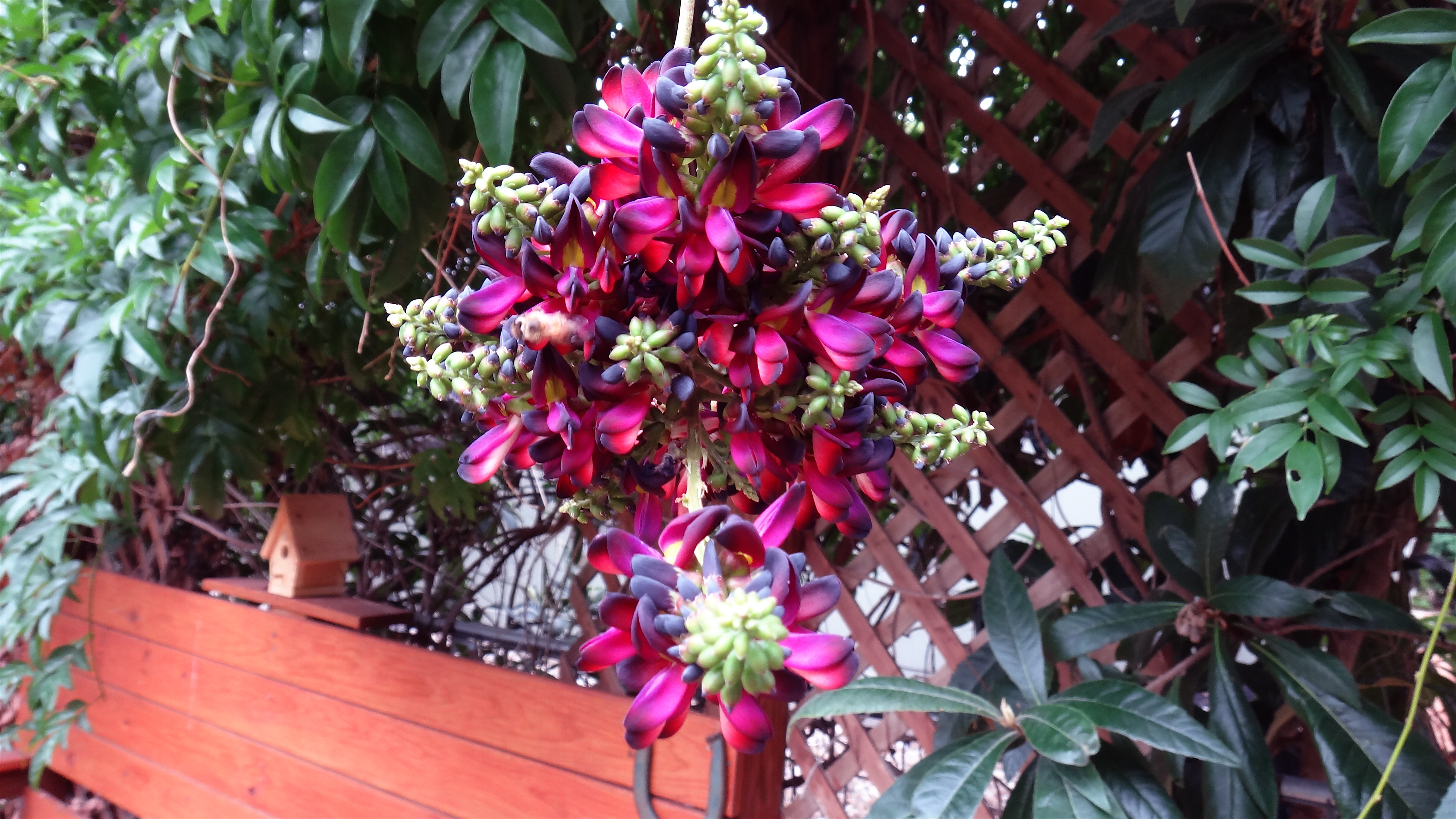

This particular bloom was like a church thurible, the flowers hanging low on an unusually long stalk, waving and wafting out a Gothic nightclub aroma on the breeze.

Okay, perhaps a Gothic nightclub with a little hint of:
 lurking in the subtle undertones of the aroma (like a fine wine, it is complex).
Happenings this week in the ESPatch:
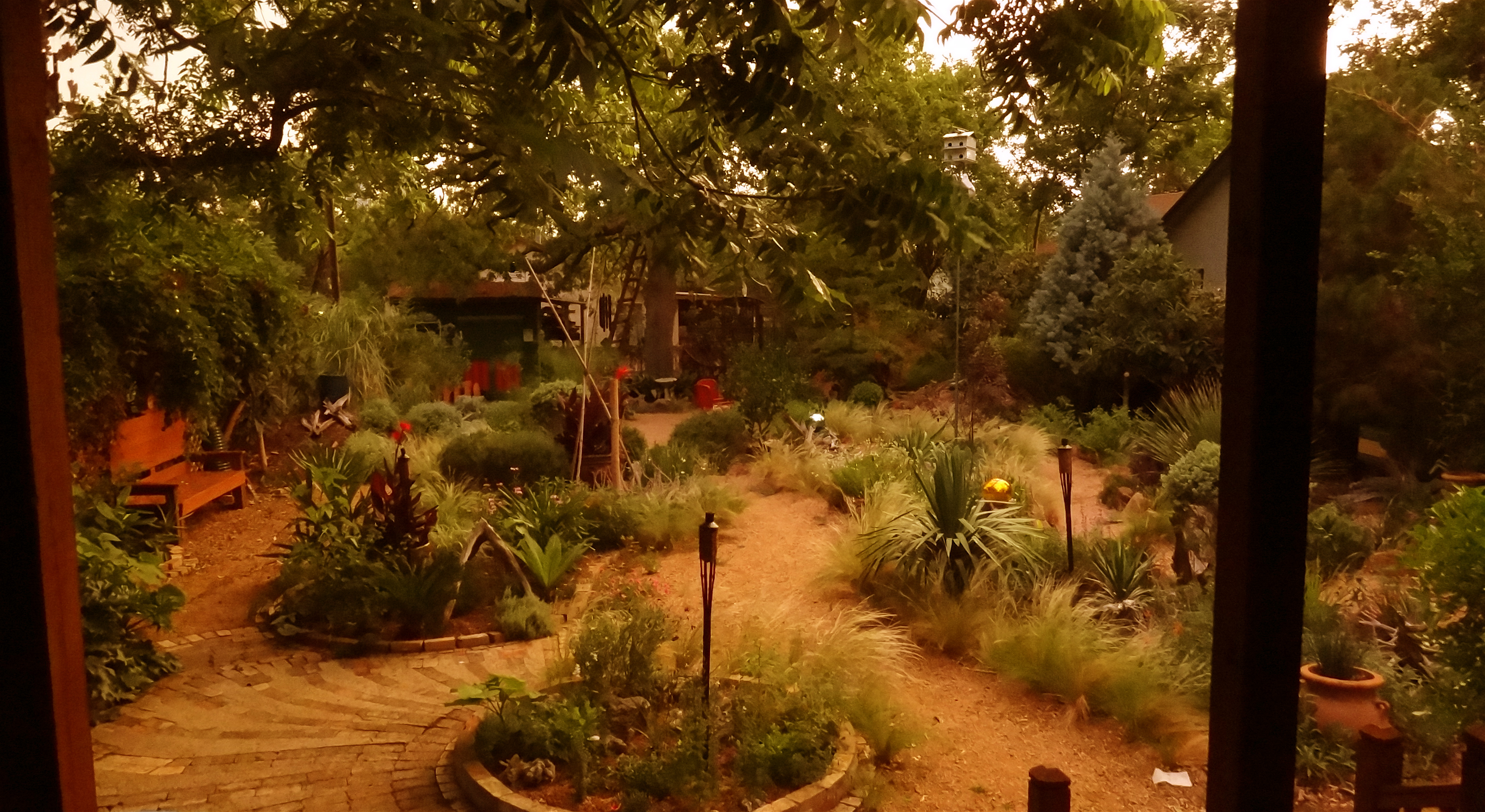 There were some eerie yellow lighting conditions this week as some well-needed storms and rain passed through central Texas.
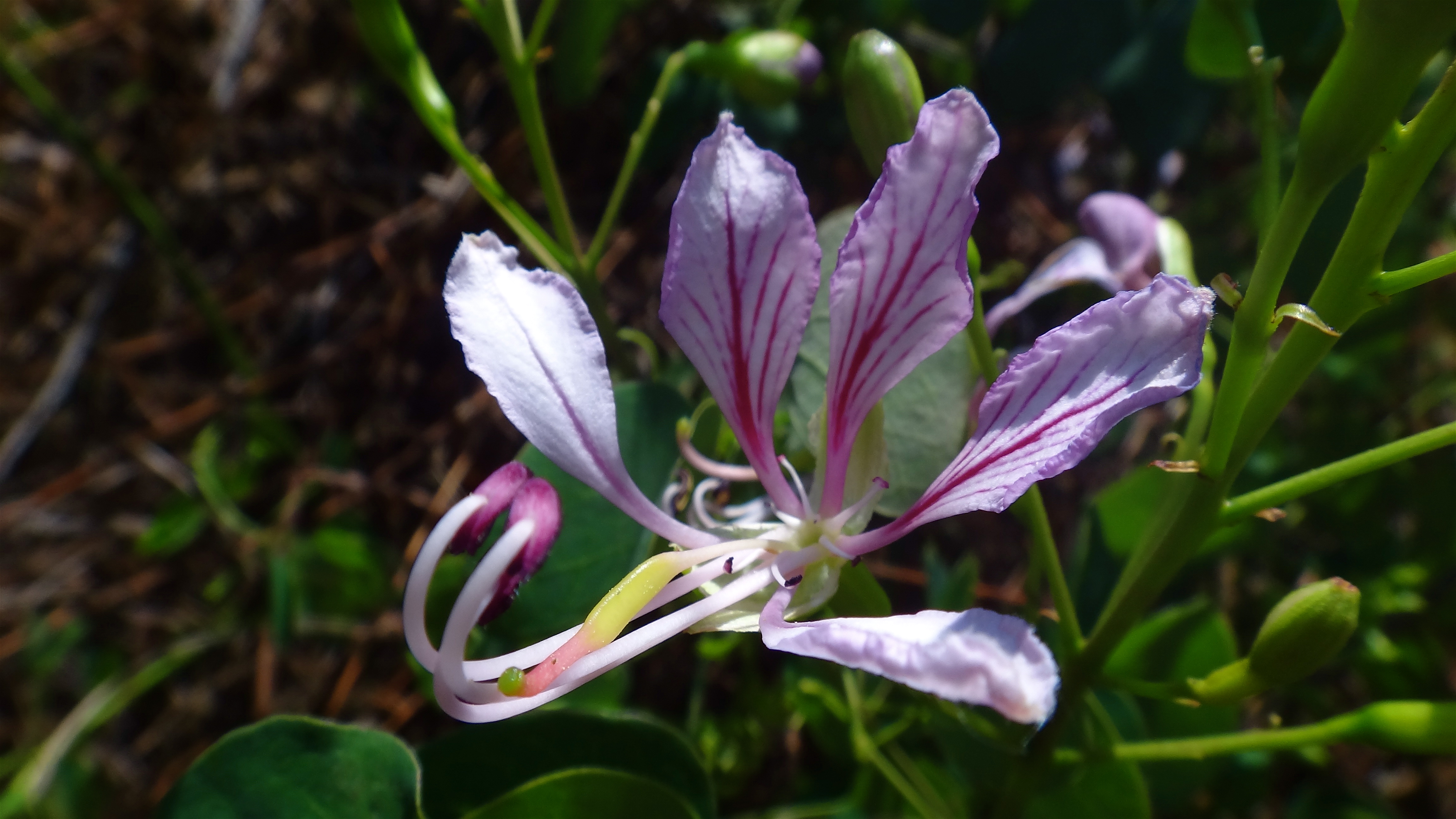 The rare moisture pushed this bauhinia into bloom,
Bauhinia purpurea
and what a bloom it is. I let this vine and the pride of Barbados battle it out for the limelight next to each other. Here is a picture of the two-lobed foliage last year:
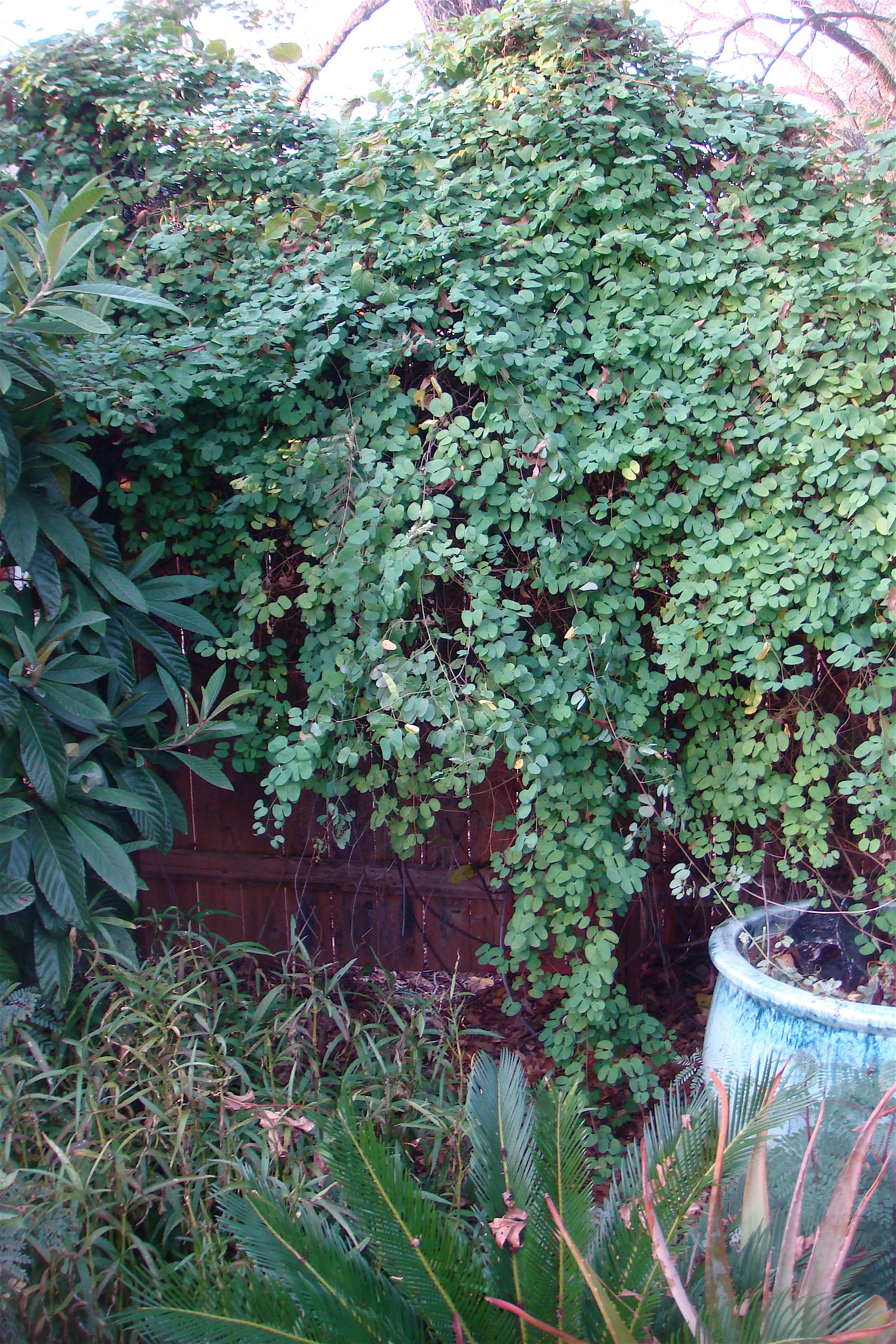 The vine was slow to come back after the winter, I thought I had lost it, but not only did it return, it returned with vigor.

“Aye, a see a strength in this bauhinia”.
This next plant is a bit of a mystery to me as I have no idea purchasing it or planting it, could someone have given me this at one of our monthly get-togethers? Anyway this fiery plant just popped up with an amazing display this year and the hummingbirds are all over it, which is great because hummers have always been scarce in the Patch (at least the flying variety).
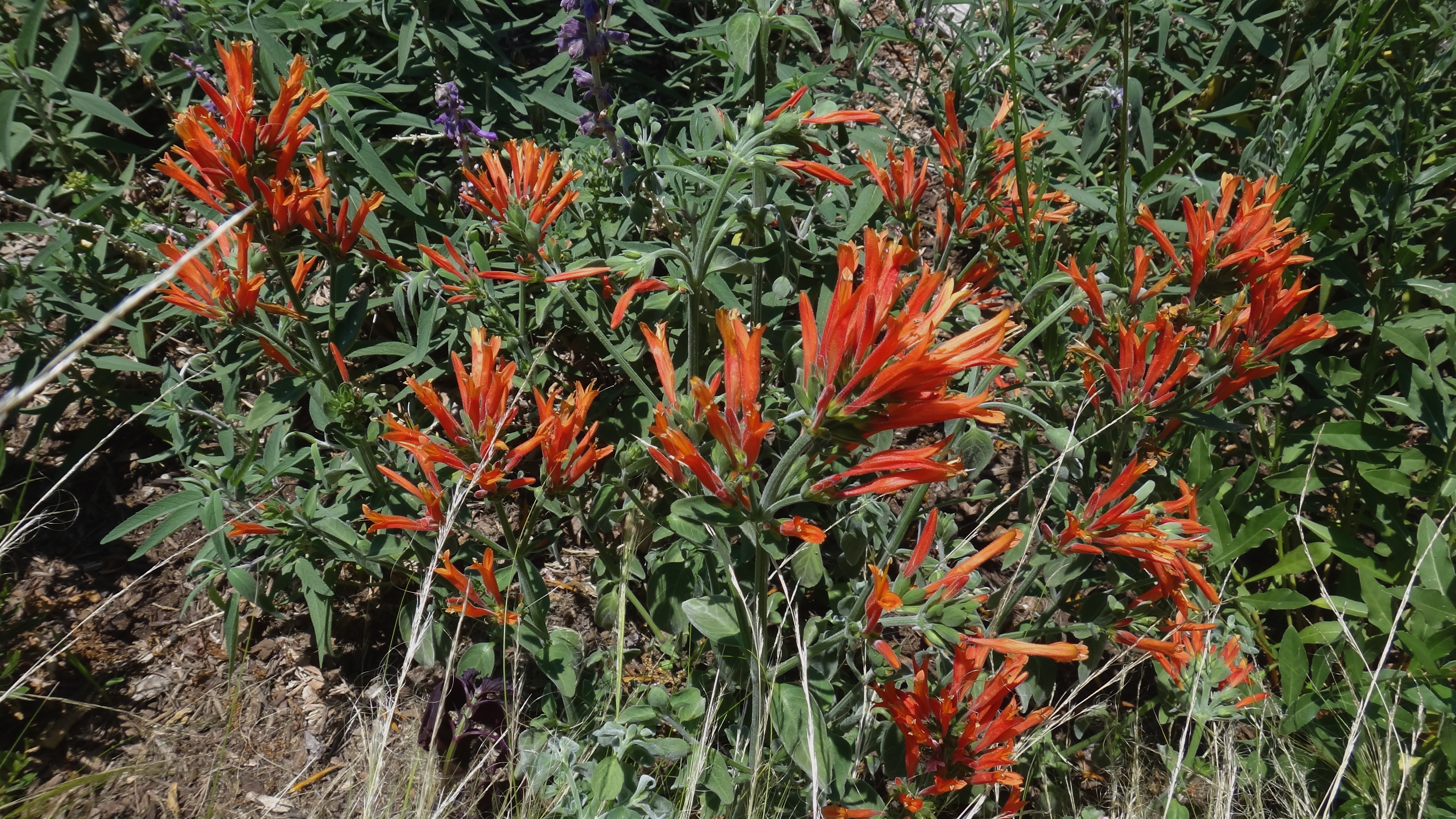
Dicliptera suberecta
(Perennial Hummingbird plant)
The plant has felty grey leaves and comes from Uruguay, it thrives in heat and humidity – perfect for Austin.
Finally:
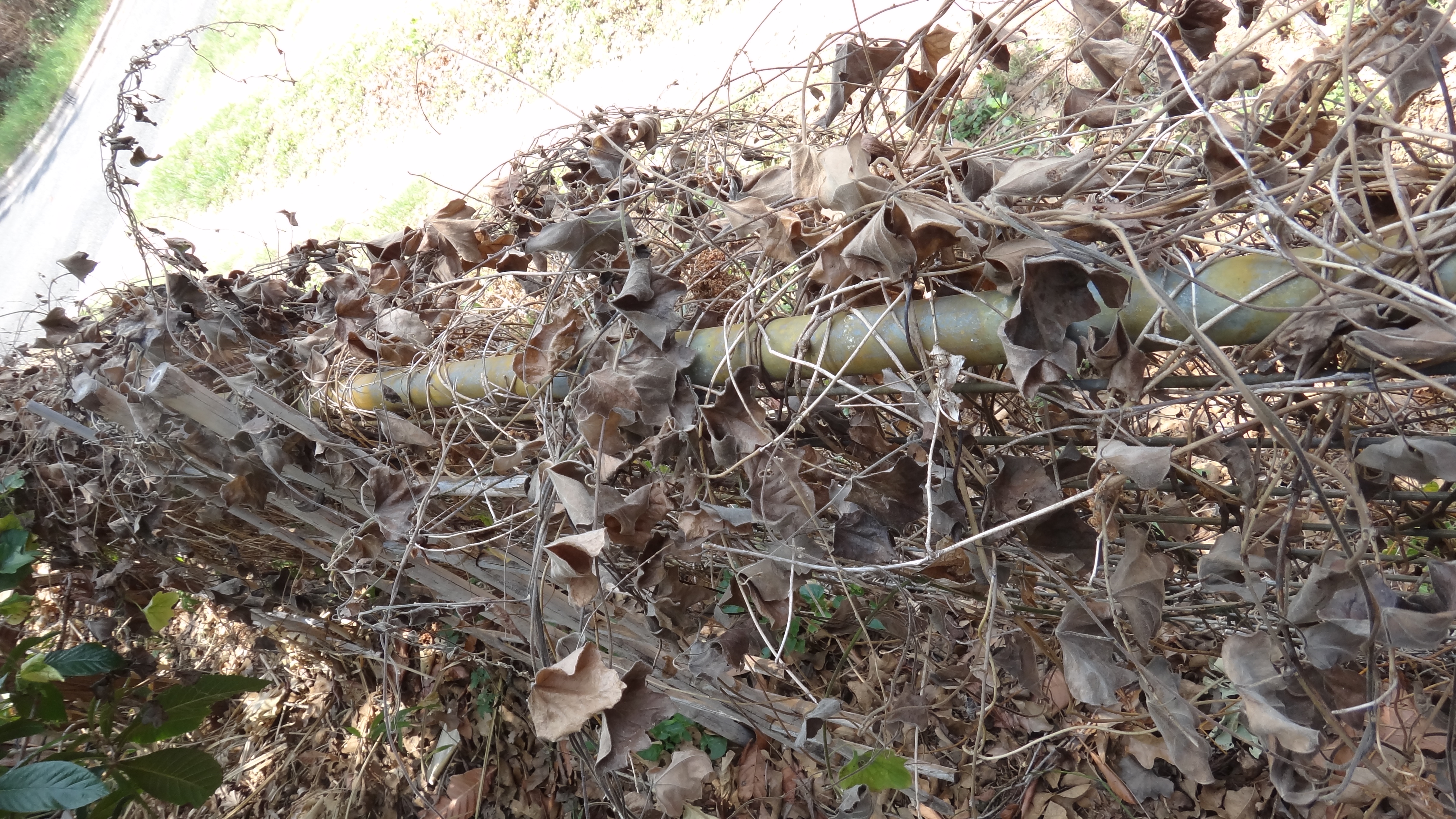
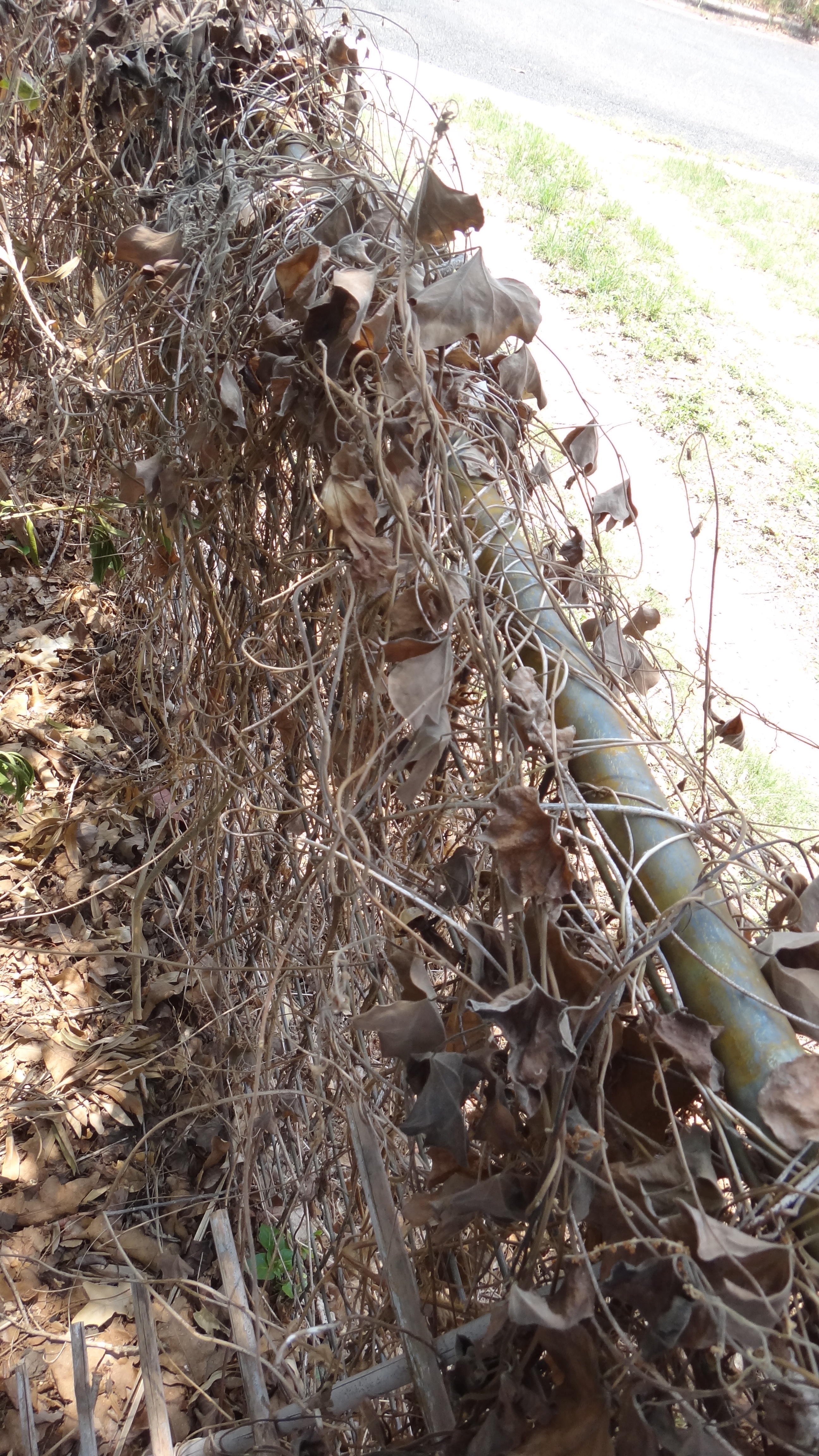 Rikki Ikki Ivy:
War has finally been waged down my back fence line against this potent cocktail of frog and weed vines that have been developing and self-seeding for, oh I would say at least twenty or thirty years. Oh yes, these are not going away without a fight, or overnight. It could conceivably take a couple of years to finally eradicate it all. My neighbor has been hitting these hard from the alley and I keep swabbing them with copious amounts of super concentrated Round Up from my side. It looks like a war-zone.
Like I tell clients, it tends to look worse before it looks better.
Inspirational Image of the week:
 |
 |
flowering photo: Forest & Kim Starr
Agave attenuata: Agavaceae
 These arching snake heads are commonly referred to as lion’s tail, foxtail and elephant trunks – for obvious curved-bloom-stalking-reasons, a trait quite unusual among agaves. Originally from the plateau of central Mexico, it may take up to 10 years to bloom, but unlike other family members this plant does not die after flowering…finally!
Stay Tuned for:
“Bark at the Moon-flower”
All material © 2011 for eastsidepatch. Unauthorized
intergalactic reproduction strictly prohibited, and
punishable by late (and extremely unpleasant)
14th century planet Earth techniques.