What on “earth” was I thinking?
I previously had stopped my hell-strip design escapades selfishly, at the edge of my own property line, and visible line from my front porch…out of sight…out of mind! I quickly realized that it looked totally and completely ridiculous from across the street! Like an 80’s half haircut!
 The house next door to me is currently unoccupied, so I thought mmm? Why not? I trudged to my shed for yet another Hell-Strip onslaught to finally finish what I had started. Like anyone was likely to complain as I removed another swath of weed and rubbish ground? Actually the ground in front of my neighbor’s house, was so much better then the compacted Terra-Firma in front of the Patch. The recent rains once again made it easier to turn over the soil.
http://www.guerrillagardening.org/
Oh yes, I was performing some guerrilla gardening on the East-Side, and my Hell-Strip espionage was in full shoveling swing.


“Hell Strips are no joking matter ESP, remember that dreadful green-finger incident some years ago?”

My Hell-strip continues to grow, maybe I will just continue down the entire street, why stop here?
Oh I will tell you…

that’s why.

While I was nibbling away in here I could not resist pruning up this crepe myrtle and palm, and just why did I do this AFTER big brush pick-up? I continued the mounding into this area also, oh yes… I will have more artemesia mountains.

As I was excavating the site, I unearthed this…a female Boll’s sand roach (thanks for the ID Daniel) at <whatsthatbug.com@gmail.com>
Arenivaga bolliana
The downy females have no wings and burrow in the dust under houses and in natural rock shelters where they feed on packrat droppings, of all the strangest things.
 This female is dragging her oothica or egg case, a behavior pattern characteristic of most cockroaches. My eldest hobbit kept asking…what is it dragging daddy, look it is dragging something, what IS that? (repeat 16 times). Brrrr!
 While I am on the subject of this Hell-strip, I have to warn you about trowels that have these…screws. Have these people never heard of co-molding techniques? I bought this trowel after my old and trusted digging steed (with no screws) mysteriously vanished a couple of months ago, (I suspect it is at the bottom of one of my ponds). After I had gone around the curb to clean out all of the weeds sticking to the edge of the hell-strip, these screws were once again loose, causing the whole trowel to rattle…this gets really, really annoying! The trowel should just come with a small screwdriver already tethered to it.
Okay, calm down, deep breaths…inhale in through the nose, exhale slowly through the mouth…and relax.
Moving on…
 I have been waging war on this Vitex for years now, it is finally turning into the large shrub / small tree, that I always wanted. It sort of looks old-fashioned and fits aesthetically with our 1890’s house. Although it does not compare to the trowel on the annoyance graph, this tree will keep you busy. It always grows up annoyingly from the base (as you can see) and needs a lot of up-pruning to keep it in check and good form. Insects swarm over the subtle purple-blue blooms at this time of year.

This purple verbena has also brought in its fair share of insects and small gazelles into the Patch, what?

Is it a flying rodent? A tiny pony perhaps?
Hemaris diffinis
or Snowberry Clearwing Moth,
These large moths are diurnal, that is, active during the day; they are most often seen nectaring at flowers like this one. They hover and dart about, flying both backward and forward just like hummingbirds, but are actually mimicking bumblebees.

Snowberry Clearwing moths are often mistaken for hummingbirds and bumblebees because of their similarities in size and feeding habits. Adult moths have a long, straw-like “tongue,” called the proboscis, which they keep curled under the head. They use it to suck nectar from the flower. The nectar is rich in sugar, which fuels the energy required for hovering, and avoiding having clear photographs taken of it.

Looking like something from a coral reef the new silver growth on this sago palm develops fast considering how slow the plant grows. While I was taking this picture the little piece of dirt on the front right frond appeared to move, see it?…I moved in closer…

Oh yes it was moving alright, and quite fast considering all of the “junk” it was lugging around in it’s trunk. Oh and tell me that is not a roaming eye at the bottom, peering out from under the trash canopy! I think it is!

“Oh very funny ESP!”

Could this be lacewing larvae?
Things noticed this week in the vegetable Patch

Amaranth is on the rise…
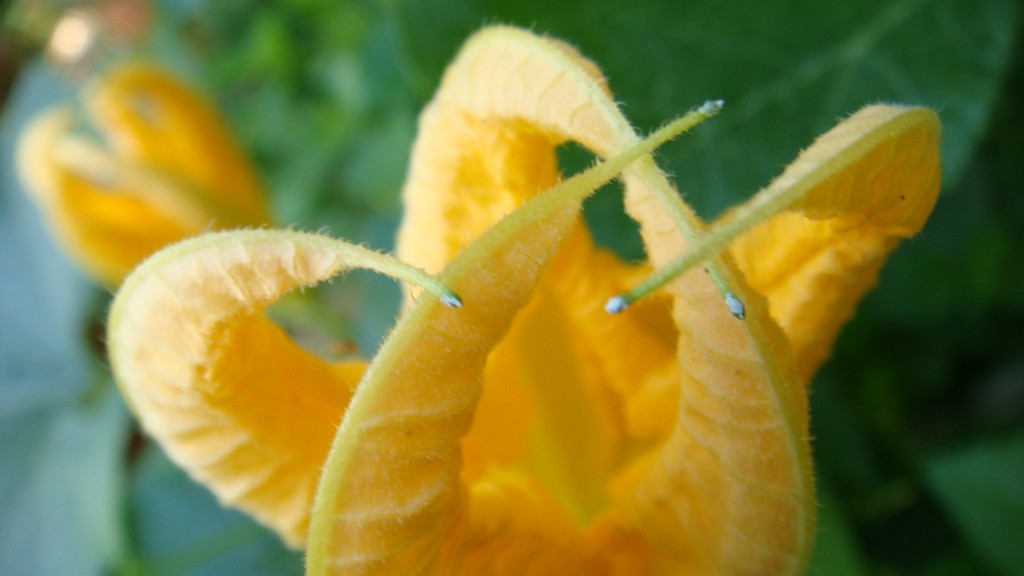

…and court jester squash blooms are all over the place, sneaking over pathways, I am constantly tucking them back into their designated beds.
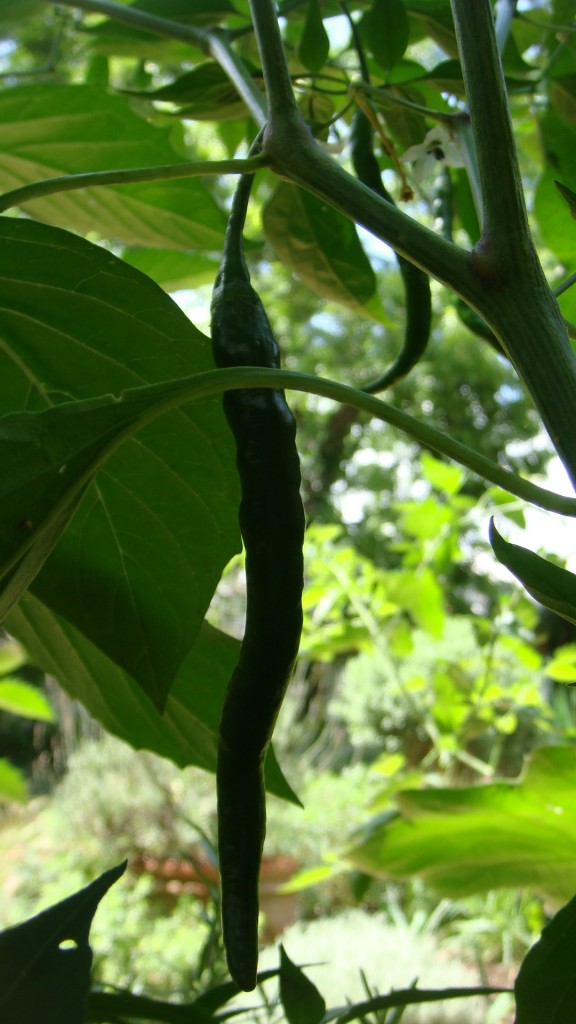
I cannot wait to try these Kungpao peppers.
Finally…

I cut the seed heads from my Gopher plants
euphorbia rigida
today and naturally all of the white blood began to flow. All parts of this plant, including the seeds and roots are poisonous.
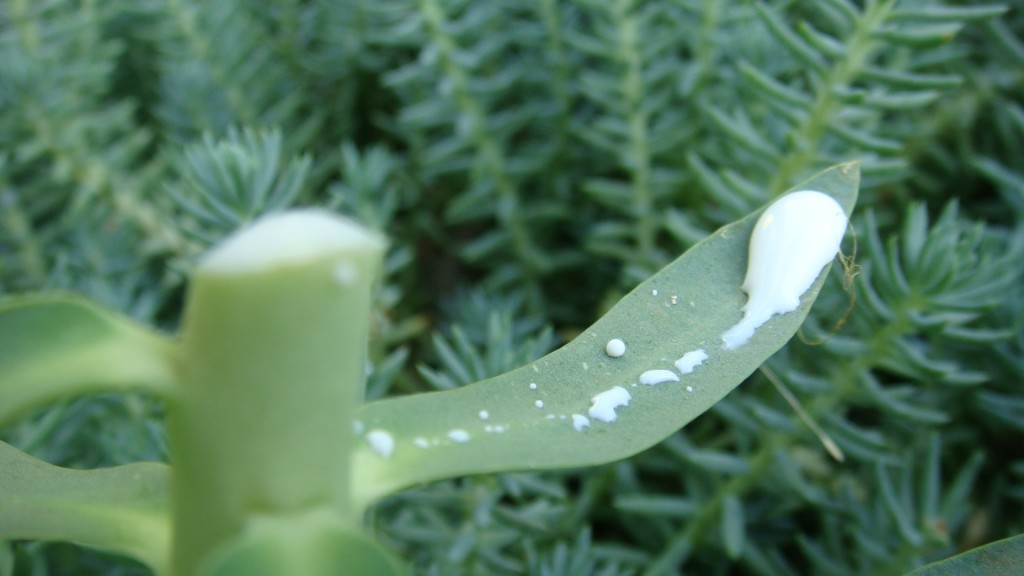

“I would never try zis”
Gophers should not be planted near fish ponds as the sap can be harmful to fish if their white blood is spilled.
 Inland sea oats are in the process of developing their iconic seed heads.
 “Whisper, whisper whisper, Naboo tribe..whisper whisper…The Germinatrix whisper…visiting the Patch…whisper, whisper…photo exhibition in Crimson…how dare you turn your back on me?”
Nothing good can come from this congregation of shiny gossips.

Stay Tuned for:
“I do like to be beside the seaside”
All material © 2010 for eastsidepatch. Unauthorized
intergalactic reproduction strictly prohibited, and
punishable by late (and extremely unpleasant)
14th century planet Earth techniques.