Vines

The large, tender leaves of the Hoja Santa plant, native to Mexico, are traditionally used as a wrapper, much as one might use a corn husk or a banana leaf to cook with. It imparts a subtle though curious flavor that is easily discerned but not so easily described. Hoja Santa (Piper auritum, synonymous with Piper sanctum) is an aromatic herb with a heart-shaped, velvety leaf which grows in tropic Mesoamerica. The name Hoja Santa means “sacred leaf” in Spanish.

A Mexican legend says that the Virgin Mary dried diapers of the infant Jesus on the bush of this plant, hence the name. It is also known as yerba santa, hierba santa, Mexican pepper leaf, root beer plant and sacred pepper.

A great plant, I have three patches of it in various parts of the Patch and cook with it regularly .

root_beer_plant

Here is the plant in its full glory, it grows to 8-9 feet in a season (pic taken at the end of last
Summer). This bed still has Hoja Santa in it as well as three recent additions of Giant Timber
Bamboo – we needed some winter evergreen foliage (the Hoja Santa dies back to the ground
in the winter). The bed is situated under a couple of large Pecan trees with good soil and buried
soaker hoses for the hot Summer months. This plant tells you when it is thirsty, its leaves droop in
a rather overly dramatic manner and with a little water will bounce right back up like nothing
had happened. I grow it in partial shade and full shade.

It is quite invasive but easily controlled.


Hoja Santa and Giant Timber.         Garden Spider and baby having some barbeque in the Hoja hood.


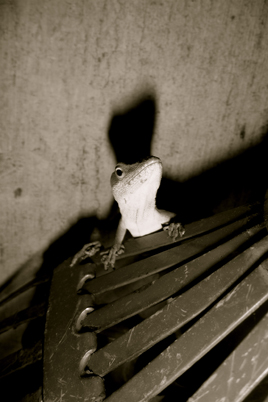
Another local resident doing some hunting beneath the foliage


combos
The bold foliage of Hoja santa offers great contrast in a companion planting with Arizona Cyprus and the lacey, burgandy Japanese Maples.


Here is the main bed of Hoja santa taken today – the leaves are perfect for cooking right now. The stalks
of the plant resemble bamboo. I dry them out and save them every year. Hoja santa looks really bad
after a cold snap, actually, come to think of it, it looks like a whole bunch of soiled diapers or
hankerchiefs draped over old twigs . . . nice!
At this point it is time to get the saw out – unless of course you like that look.

Recipe:

One leaf of Hoja Santa
One filet of Talapia per leaf
One small stalk of lemon grass
One stalk of Cilantro
One finely sliced serrano pepper
Juice of half a lime
(we grow all of the above except the Talapia)
Salt and pepper to taste and a splash of good olive oil

Wash leaf well under gently running cold water, pat dry –  place seasoned Talapia, lemon grass, cilantro and serrano peppers into Hoja Santa leaf, with a splash of oil. Fold leaf into a neat package and secure with toothpicks. Grill indirectly, – it doesn’t take long!.


Leaf detail – the leaf imparts a subtle flavor to the fish.              Another transplanted patch

Other yard heroes right now:


Coneflowers,  Rosmary and Sage


vines
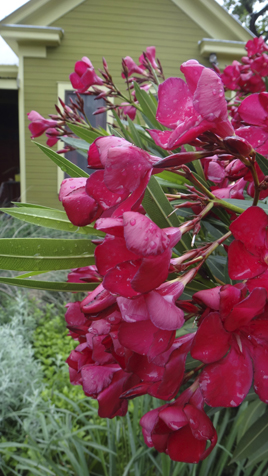
Anyone know what this vine is? I got it at the Big Red in Sun in
Austin 4 years ago – it has done brilliantly.


This is it blooming right now – bees go crazy over it!


Stay Tuned for:

“Wind Chimes and my Post Oak”


All material © 2009 for eastsidepatch. Unauthorized
intergalactic reproduction strictly prohibited, and
punishable by late (and extremely unpleasant)
14th century planet Earth techniques.

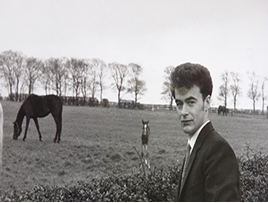
Growing up on a large dilapidated private estate in Scotland (Sprinkell) was somewhat isolating but definitely a magical experience. The forests had ‘dark’ areas in them, we all new them as kids, we gave them names and skirted around them if it was starting to get dark on the walk home. Perhaps these areas had negative energy, or maybe it was purely an aesthetic fear, I am not sure.

The Estate was at one time immaculately tended as well as immense. You could tell this from the nature of the mass plantings and long since covered landscaping and old rope bridges that traversed the river. The now defunct waterfalls, bamboo groves, and vine smothered summer houses were adopted as our playscape in the heart of the forest. My parents rented a cottage on the land while we renovated our future home (a 16th century cottage). We lived in the forest for 5 years in a house aptly called “Outerlands”- (I could write an entire book on the strange happenings in that house!)

The melancholic nature and atmosphere of the estate has stayed with me, the ominous presence of the dark areas is something you really have to ‘acclimatize’ to psychologically or else blind panic kicks in, which of course as kids we took great delight in.

The Mansion on the estate was built in 1734 and enlarged in 1818 by the Maxwell family, proprietors of the Barony of Kirkconnel and Springkell since 1609. In the ruined churchyard of Kirkconnel on the banks of the Kirtle in Springkell estate is the grave of Fair Helen Irving of Kirkconnel Lea of Robert Burns’ poem. (G.R. 250754):

O, that I were where Helen lies!
Night and day on me she cries;
O, that I were where Helen lies
In fair Kirkconnel lees.

O Helen fair! beyond compare,
A ringlet of thy flowing hair,
I’ll wear it still for evermair
Until the day I die.

Curs’d be the hand that shot the shot,
And curs’d the gun that gave the crack,
Into my arms bird Helen lap,
And died for sake o’ me.

O think na ye but my heart was sair,
My love fell down and spake nae mair,
There did she swoon wi’ meikle care
On fair Kirkconnel lee.

I lighted down, my sword did draw,
I cutted him in pieces sma’;
I cutted him in pieces sma;
On fair Kirkconnel lee.

O Helen chaste, thou wert modest
If I were with thee I were blest,
Where thou lies low, and takes they rest
On fair Kirkconnel lee.

I wish my grave was growing green,
A winding sheet put o’er my een,
And I in Helen’s arms lying
In fair Kirkconnel lee!

I wish I were where Helen lies!
Night and day on me she cries;
O, that I were where Helen lies
On fair Kirkconnel lee.

I spent many hours around here, the picture doesn’t do it justice!


The Graveyard on the Estate.

Sprinkell Mansion.

I relay this story to you because I wanted to re-create this sense of the unknown and natural unease in my now much smaller Texas urban landscape, but how to achieve it?. . . hmmm . . . . well, you cannot beat a dark spooky tunnel, can you? 

I built one and who moved in?

                                             The entrance to the tunnel is well guarded!

vines

Here is a view of the back entrance, away from the house – the structure is about 12 feet tall – the vines include Wisteria, Trumpet Vine and Confederate Jasmine.

garden_tunnel

View from the front (tunnel entrance on left)

Tearing the tunnel down was a difficult decision I made at the end of last year – it dawned on me what I had done. I had moved the shed because it blocked a more long distance view of the garden and replaced it with a living structure – Duh!

The tunnel was visually shrinking the yard – oh, and I forgot to add, it was nasty to walk down it, cobwebs, unearthly things falling down your neck etc, my cat at the time used it as her personal bidet!  Nope – you don’t wanna walk down there!

The structure was also creating too much shade – it was time to go. I also dug out the two plumosa ferns climbing the Bamboo poles. I did feel quite pleased that I had attained the ‘spooky’ nature I was looking for and I liked it for a while.

 I looked around for my Sledge Hammer…here we go again.


Stay Tuned for:

“There is a Monkey in my Giant Timber”


All material © 2009 for eastsidepatch. Unauthorized
intergalactic reproduction strictly prohibited, and
punishable by late (and extremely unpleasant)
14th century planet Earth techniques.

1 2 8 9 10