The large, tender leaves of the Hoja Santa plant, native to Mexico, are traditionally used as a wrapper, much as one might use a corn husk or a banana leaf to cook with. It imparts a subtle though curious flavor that is easily discerned but not so easily described. Hoja Santa (Piper auritum, synonymous with Piper sanctum) is an aromatic herb with a heart-shaped, velvety leaf which grows in tropic Mesoamerica. The name Hoja Santa means “sacred leaf” in Spanish.
A Mexican legend says that the Virgin Mary dried diapers of the infant Jesus on the bush of this plant, hence the name. It is also known as yerba santa, hierba santa, Mexican pepper leaf, root beer plant and sacred pepper.
A great plant, I have three patches of it in various parts of the Patch and cook with it regularly .
Here is the plant in its full glory, it grows to 8-9 feet in a season (pic taken at the end of last
Summer). This bed still has Hoja Santa in it as well as three recent additions of Giant Timber
Bamboo – we needed some winter evergreen foliage (the Hoja Santa dies back to the ground
in the winter). The bed is situated under a couple of large Pecan trees with good soil and buried
soaker hoses for the hot Summer months. This plant tells you when it is thirsty, its leaves droop in
a rather overly dramatic manner and with a little water will bounce right back up like nothing
had happened. I grow it in partial shade and full shade.

It is quite invasive but easily controlled.

Hoja Santa and Giant Timber. Garden Spider and baby having some barbeque in the Hoja hood.
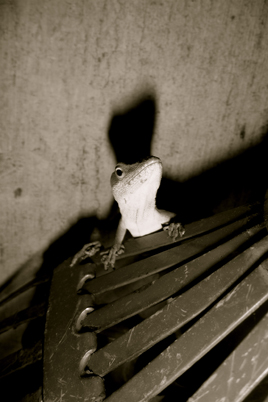
Another local resident doing some hunting beneath the foliage

The bold foliage of Hoja santa offers great contrast in a companion planting with Arizona Cyprus and the lacey, burgandy Japanese Maples.

Here is the main bed of Hoja santa taken today – the leaves are perfect for cooking right now. The stalks
of the plant resemble bamboo. I dry them out and save them every year. Hoja santa looks really bad
after a cold snap, actually, come to think of it, it looks like a whole bunch of soiled diapers or
hankerchiefs draped over old twigs . . . nice!
At this point it is time to get the saw out – unless of course you like that look.


Recipe:
One leaf of Hoja Santa
One filet of Talapia per leaf
One small stalk of lemon grass
One stalk of Cilantro
One finely sliced serrano pepper
Juice of half a lime
(we grow all of the above except the Talapia)
Salt and pepper to taste and a splash of good olive oil
Wash leaf well under gently running cold water, pat dry – place seasoned Talapia, lemon grass, cilantro and serrano peppers into Hoja Santa leaf, with a splash of oil. Fold leaf into a neat package and secure with toothpicks. Grill indirectly, – it doesn’t take long!.
Leaf detail – the leaf imparts a subtle flavor to the fish. Another transplanted patch


Other yard heroes right now:
Coneflowers, Rosmary and Sage

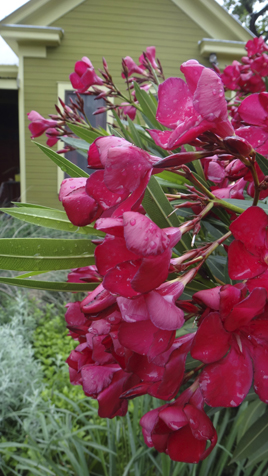
Anyone know what this vine is? I got it at the Big Red in Sun in
Austin 4 years ago – it has done brilliantly.
This is it blooming right now – bees go crazy over it!


Stay Tuned for:
“Wind Chimes and my Post Oak”
All material © 2009 for eastsidepatch. Unauthorized
intergalactic reproduction strictly prohibited, and
punishable by late (and extremely unpleasant)
14th century planet Earth techniques.