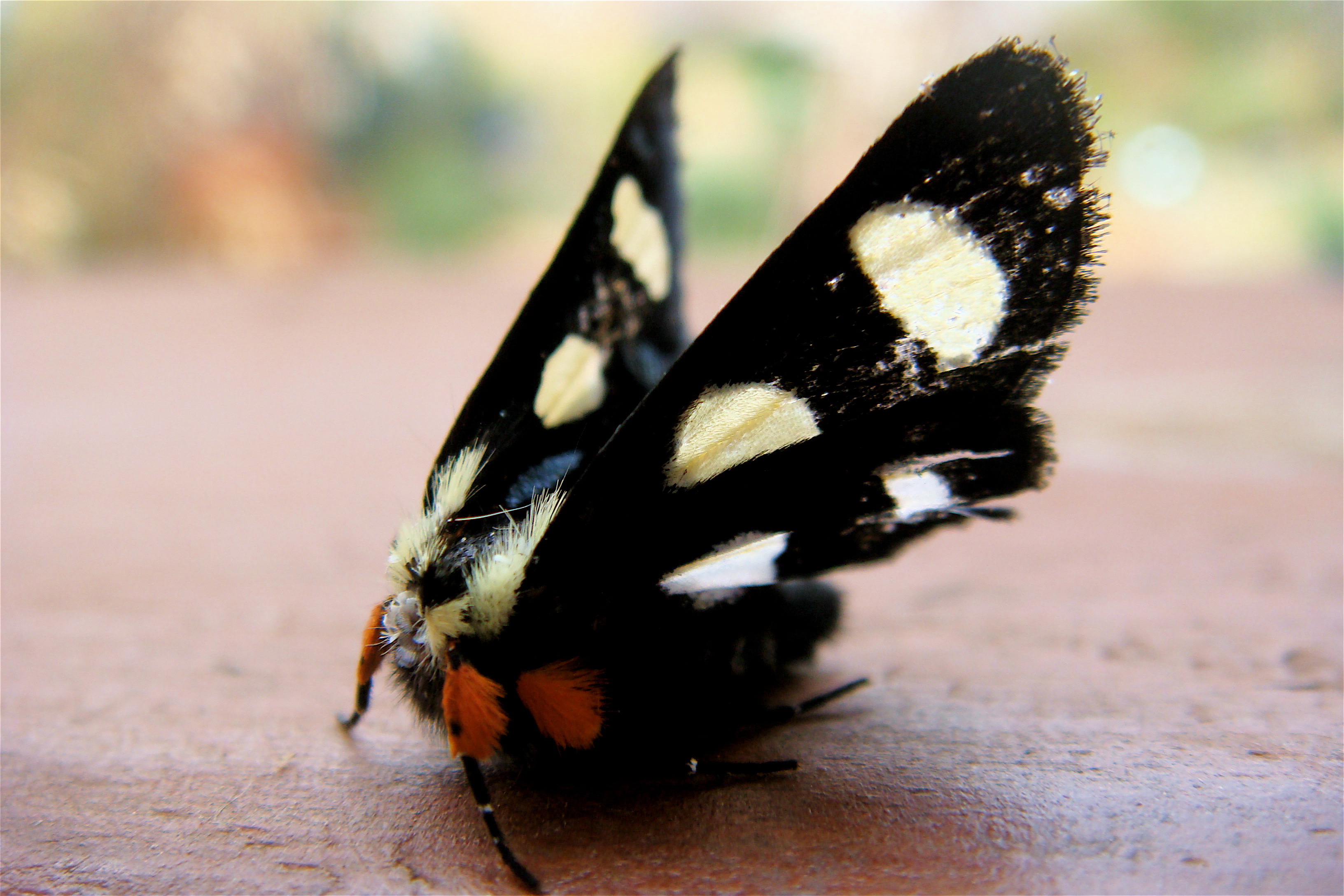
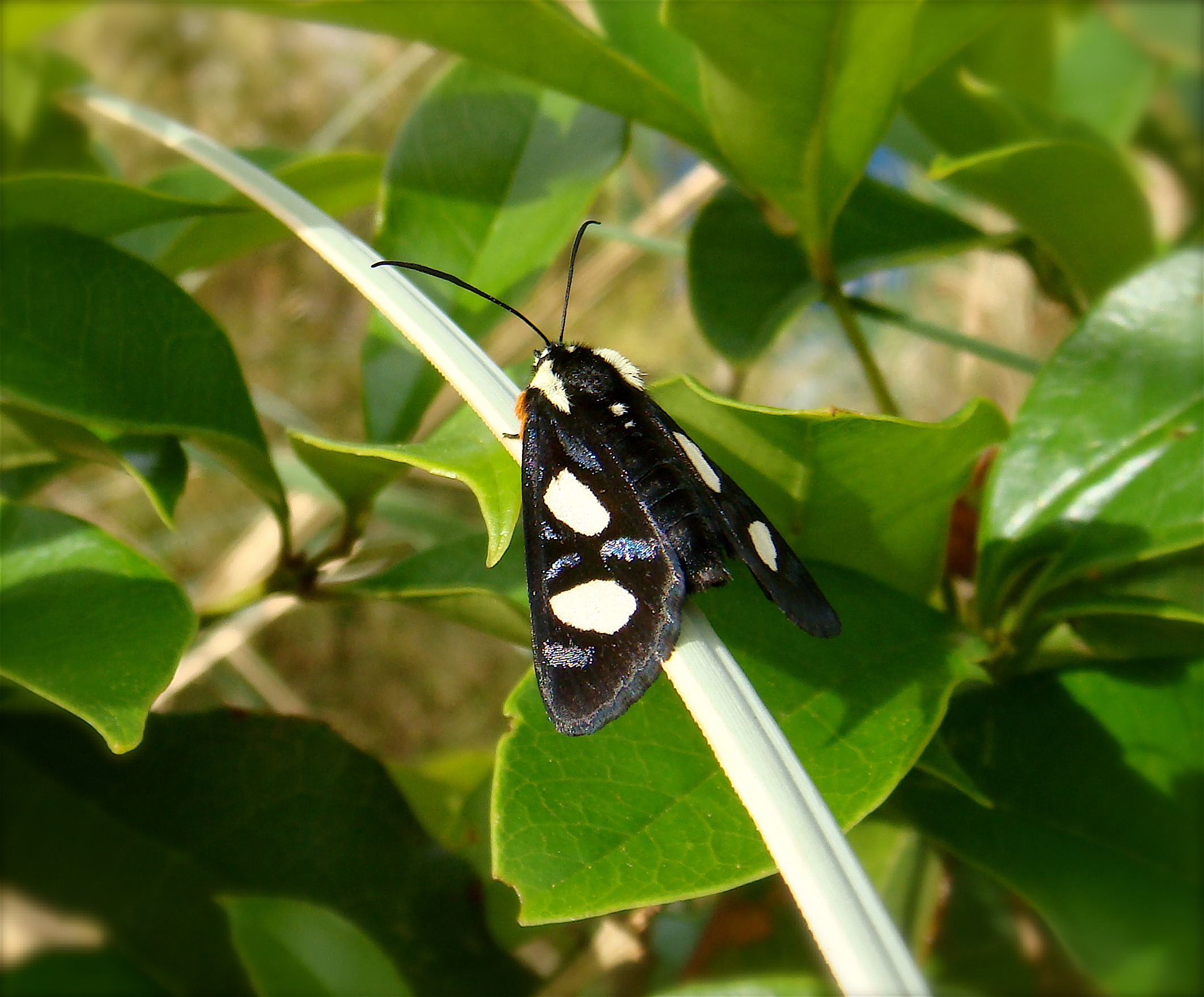
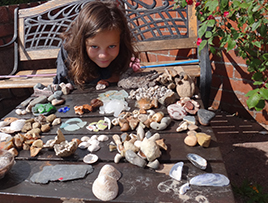
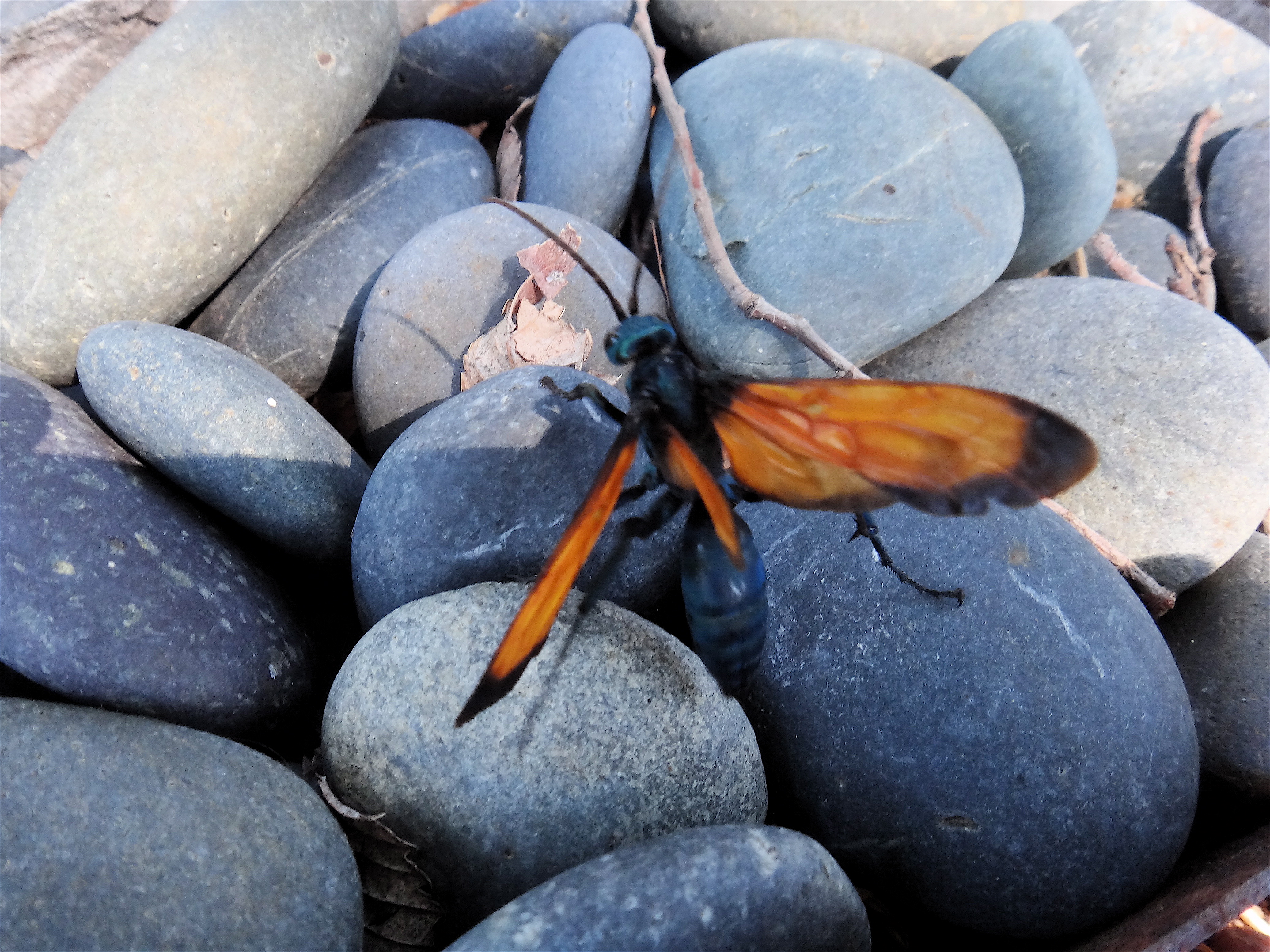
 I have recently posted about daddy long legs and tarantulas, so it was timely apt to find this colorful spider wasp this week at a client’s house, its abdomen and head matching these Mexican beach pebbles almost perfectly.
Genus:
Pepsis
or more commonly known as tarantula hawks or wasps.
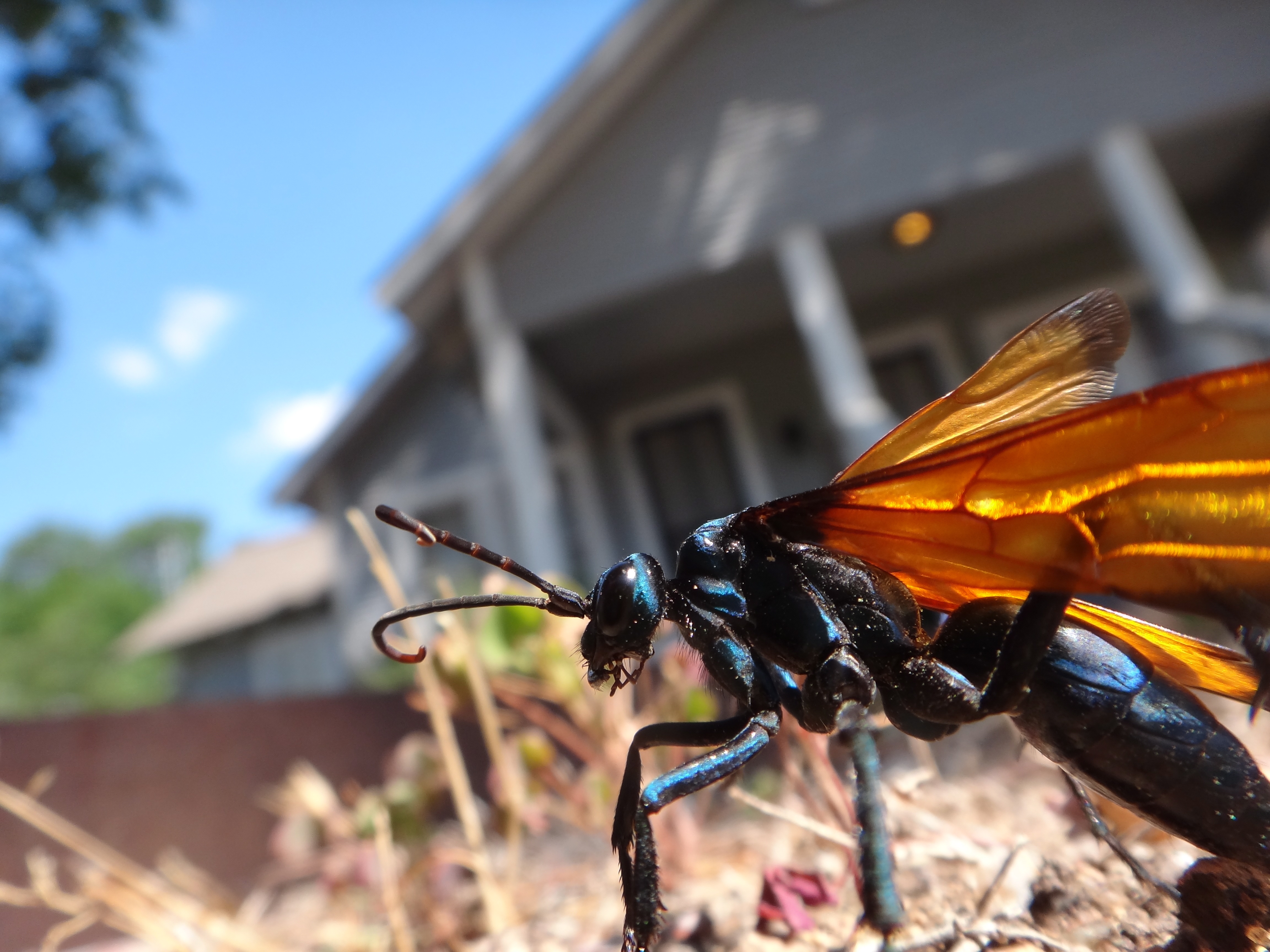 This female (curved antenna) was stunning. (do not look at the mouth part, do not look at the mouth part, do not…) I dare you to zoom in…Brrr!

“Yes, yes, look at the mouth, look at the mouth, it has beautiful twitching mouth parts”.
Okay, that’s quite enough Jeff, how are the nails holding up by the way?
Females seek out tarantulas and their burrows, they then paralyze them and bury them in a burrow, laying a single egg in the spider’s abdomen. On hatching, the young larvae feed on the paralyzed spider, quite disgusting but extremely effective. These fearless wasps enter a tarantula’s burrow and may risk death in the ensuing fierce battle. The wasp usually wins even though the tarantula has poisonous fangs and is much larger than the wasp. Tarantula hawks are also more benignly seen foraging for nectar on milkweed flowers.
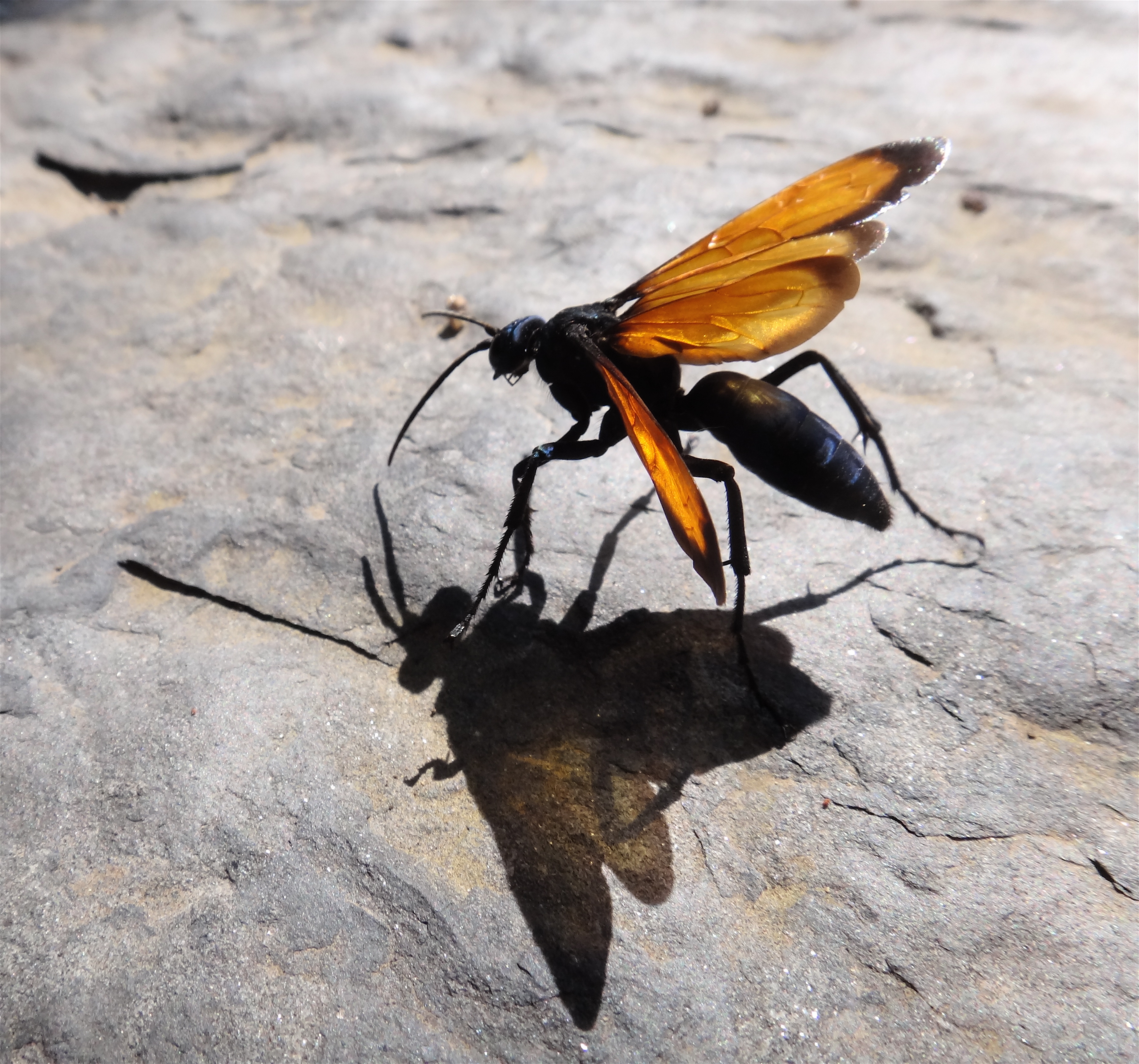 This one may have had such a battle, one of its wings clearly bent out of shape.
 Sorry Ron!
Back in the Patch:
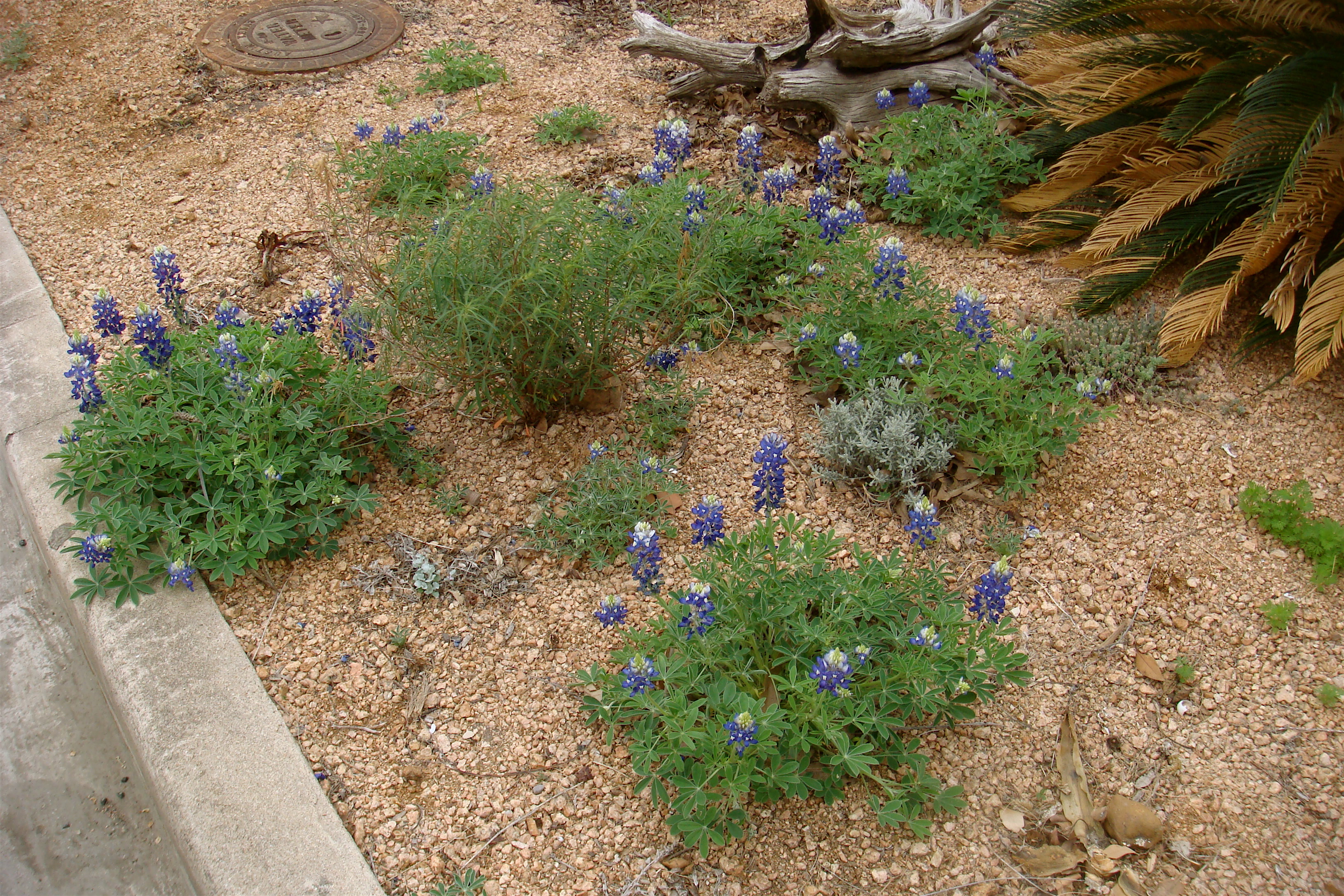
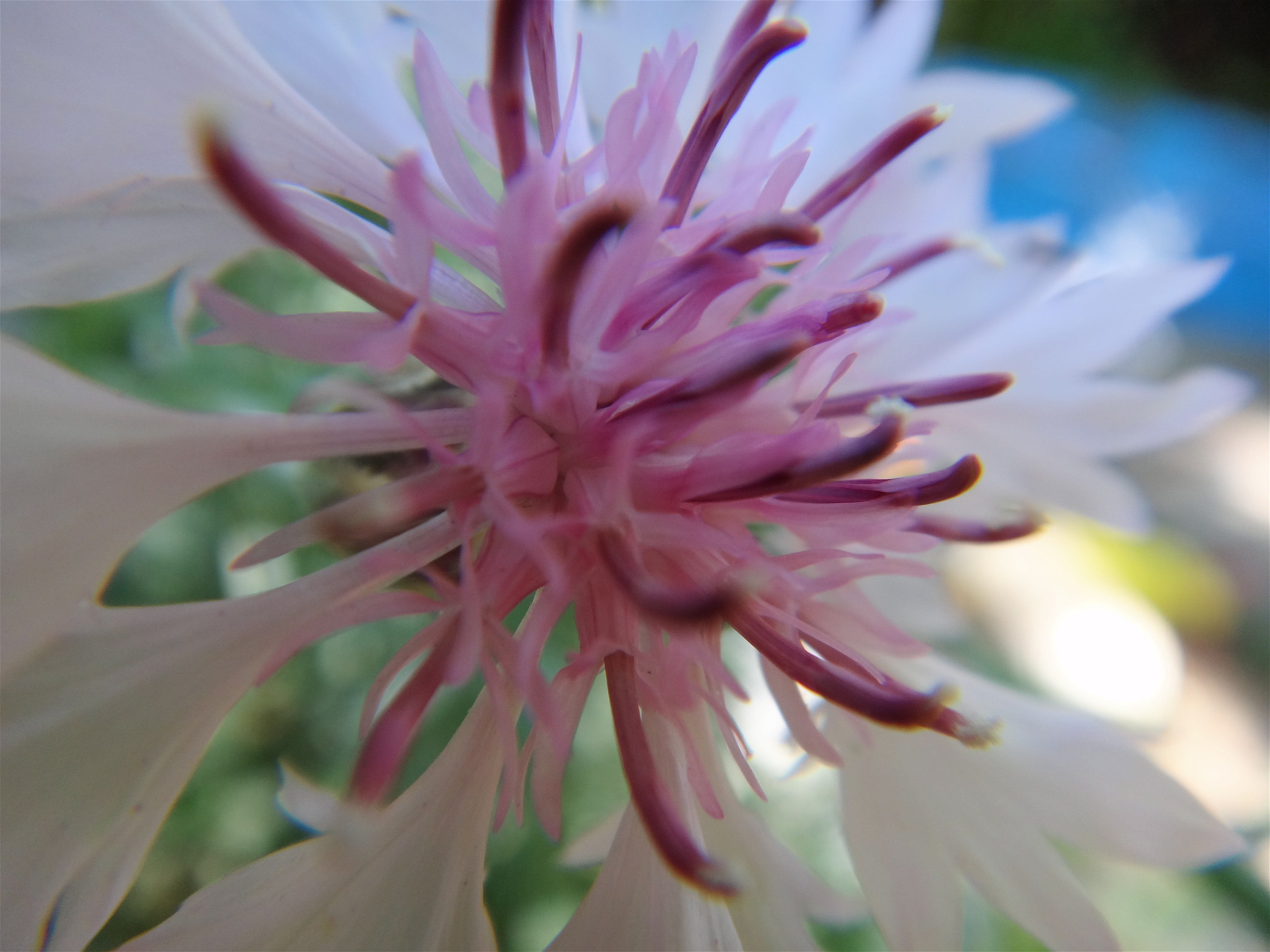 Multi-colored cornflowers are putting on a good show this year,
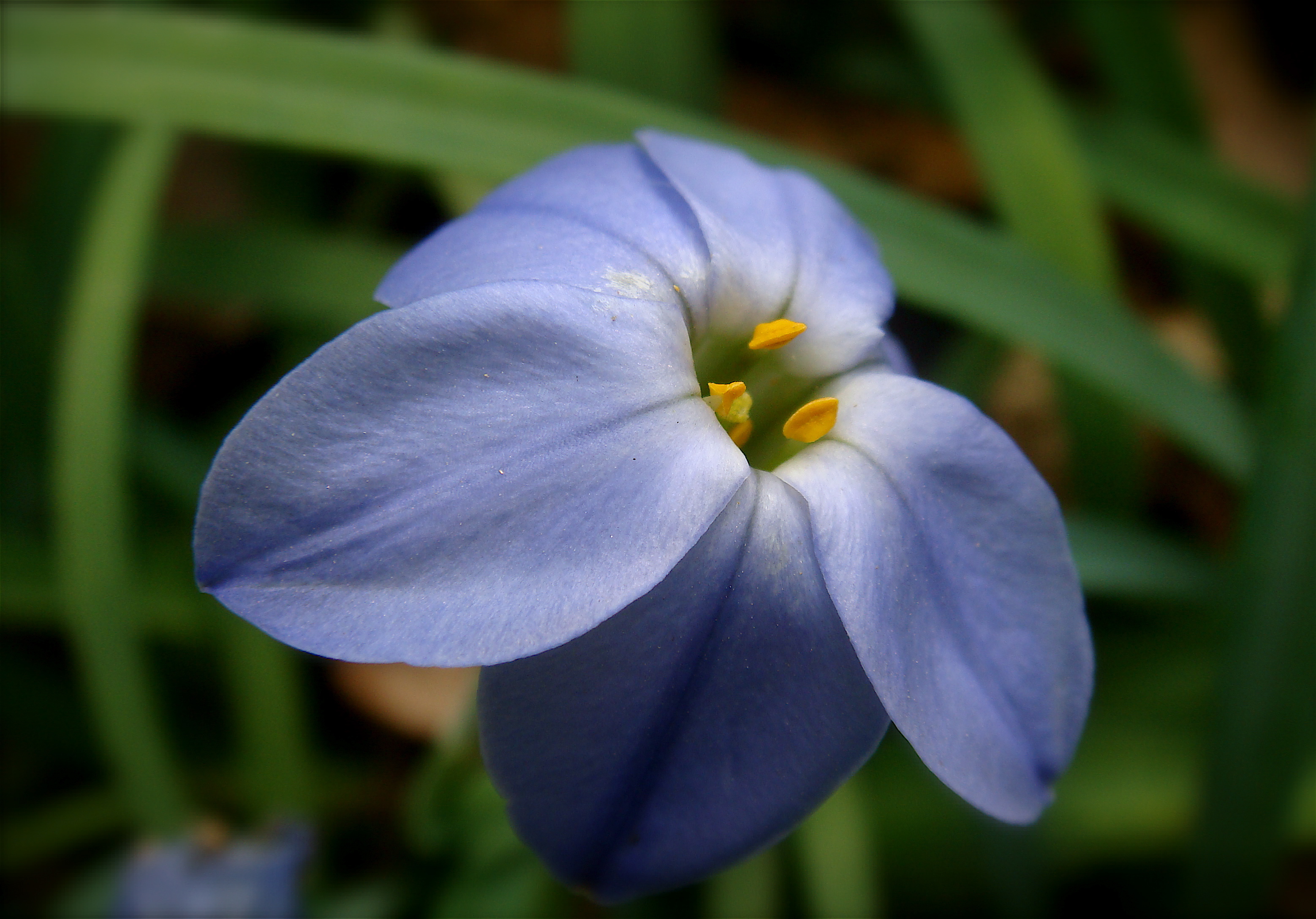
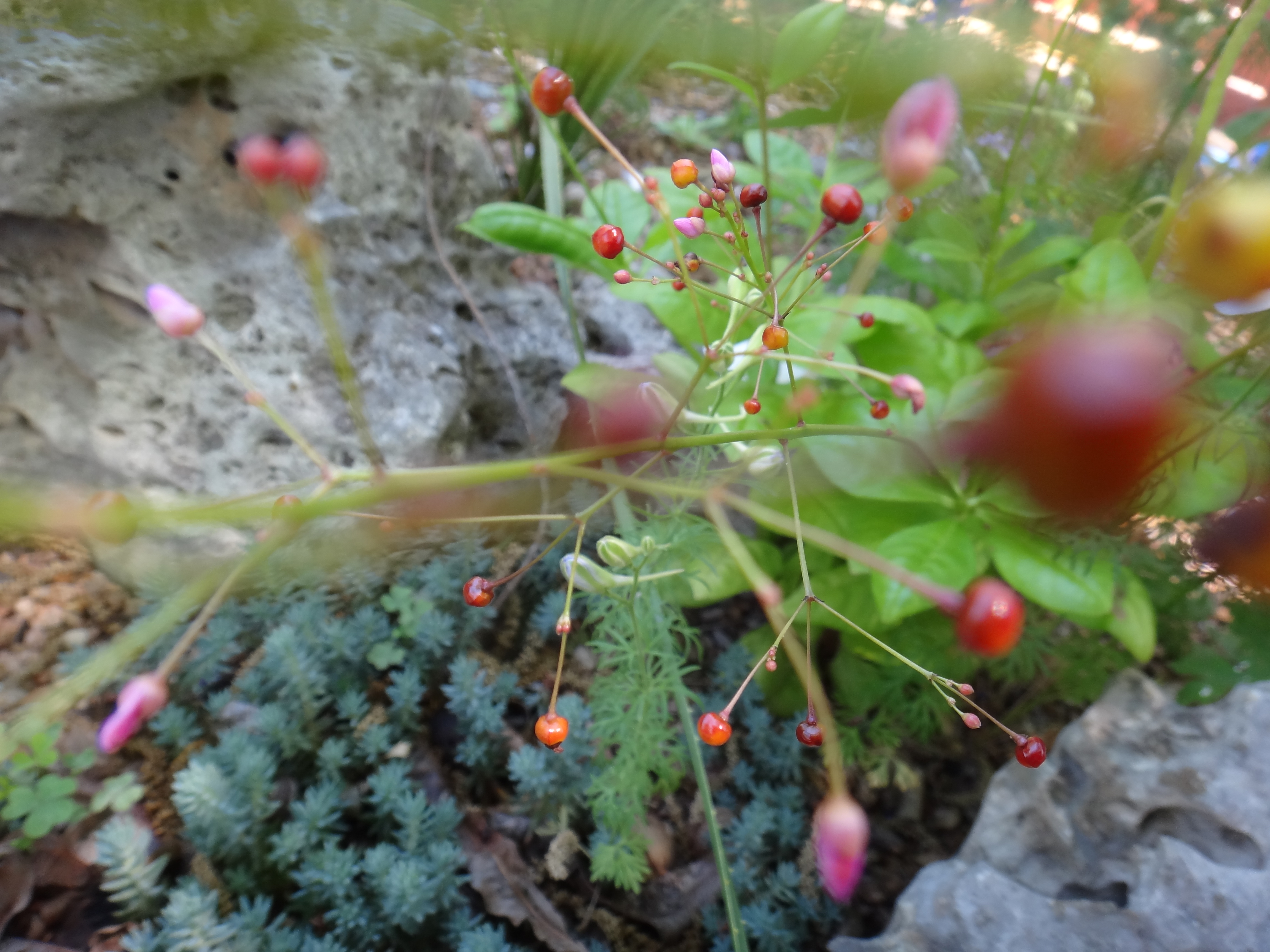 and one of my favorites, jewels of Opar is once again putting out some multi-colored precious gems.
Talinum paniculatum
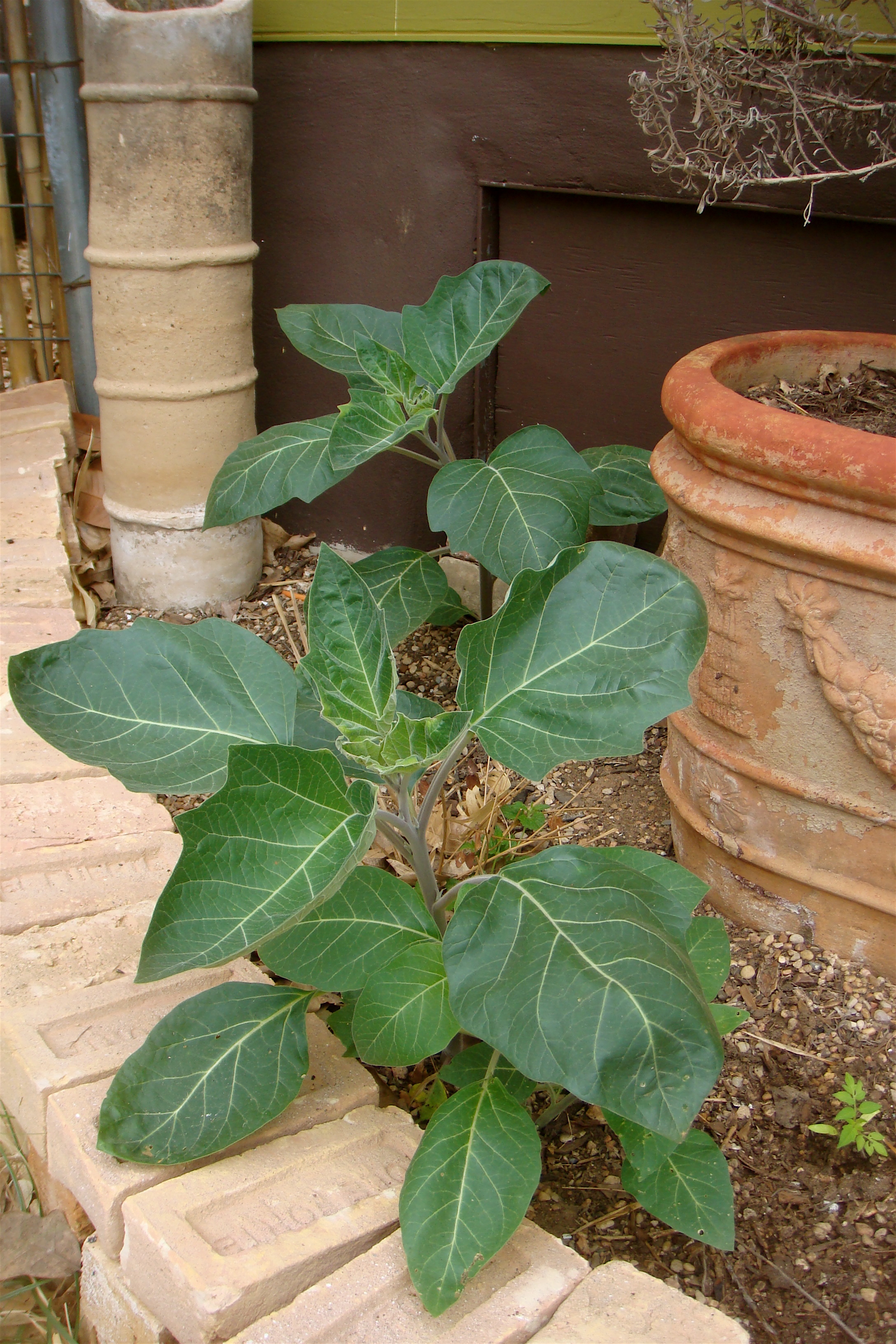
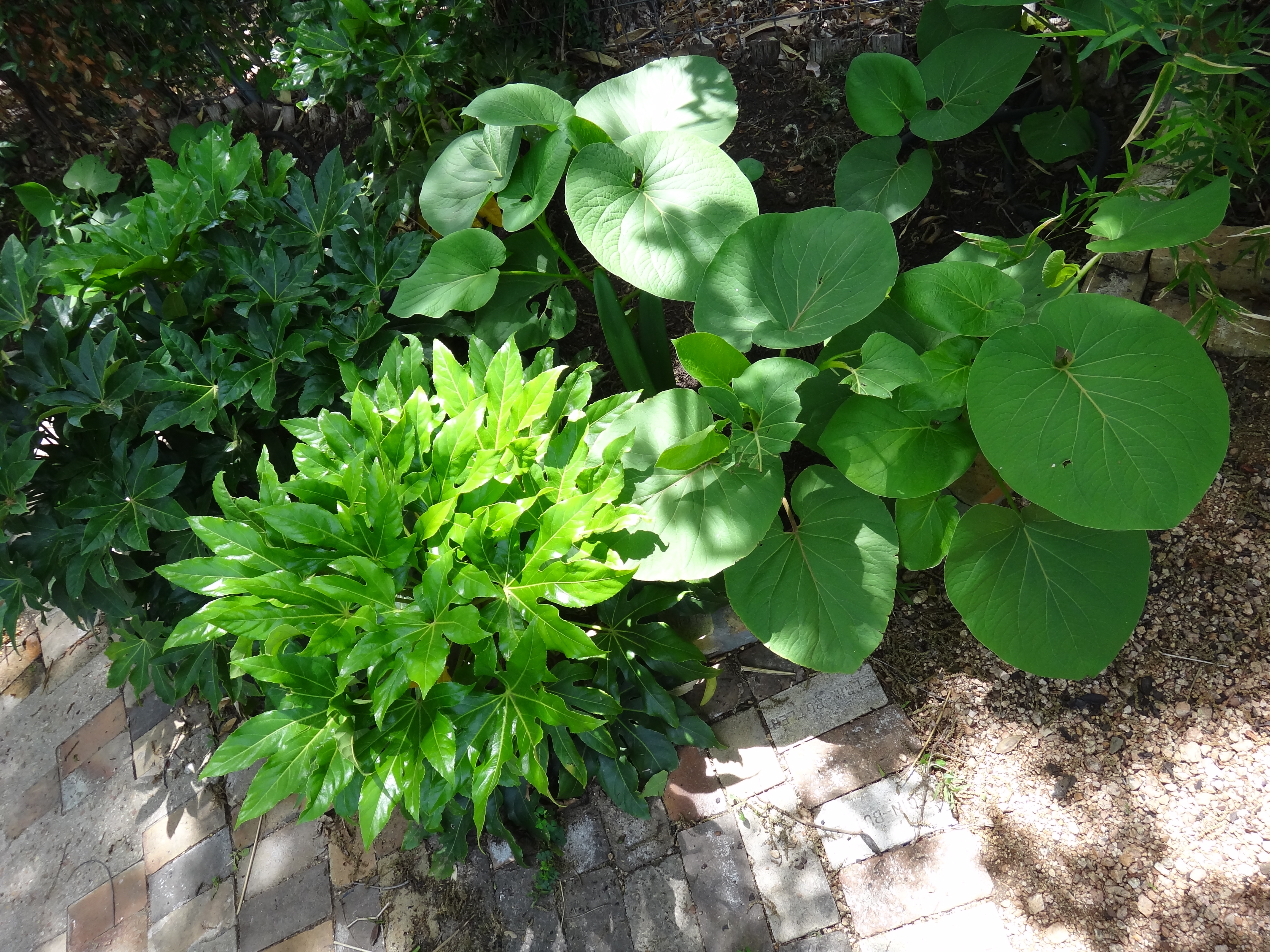 Foliage is also filling in nicely, hoja santa and fatsia Japonica make good companions with the Japonica providing winter interest and the hoja santa height in the summer months.
I witnessed the first dragonfly larvae and the first dragonflies this week,
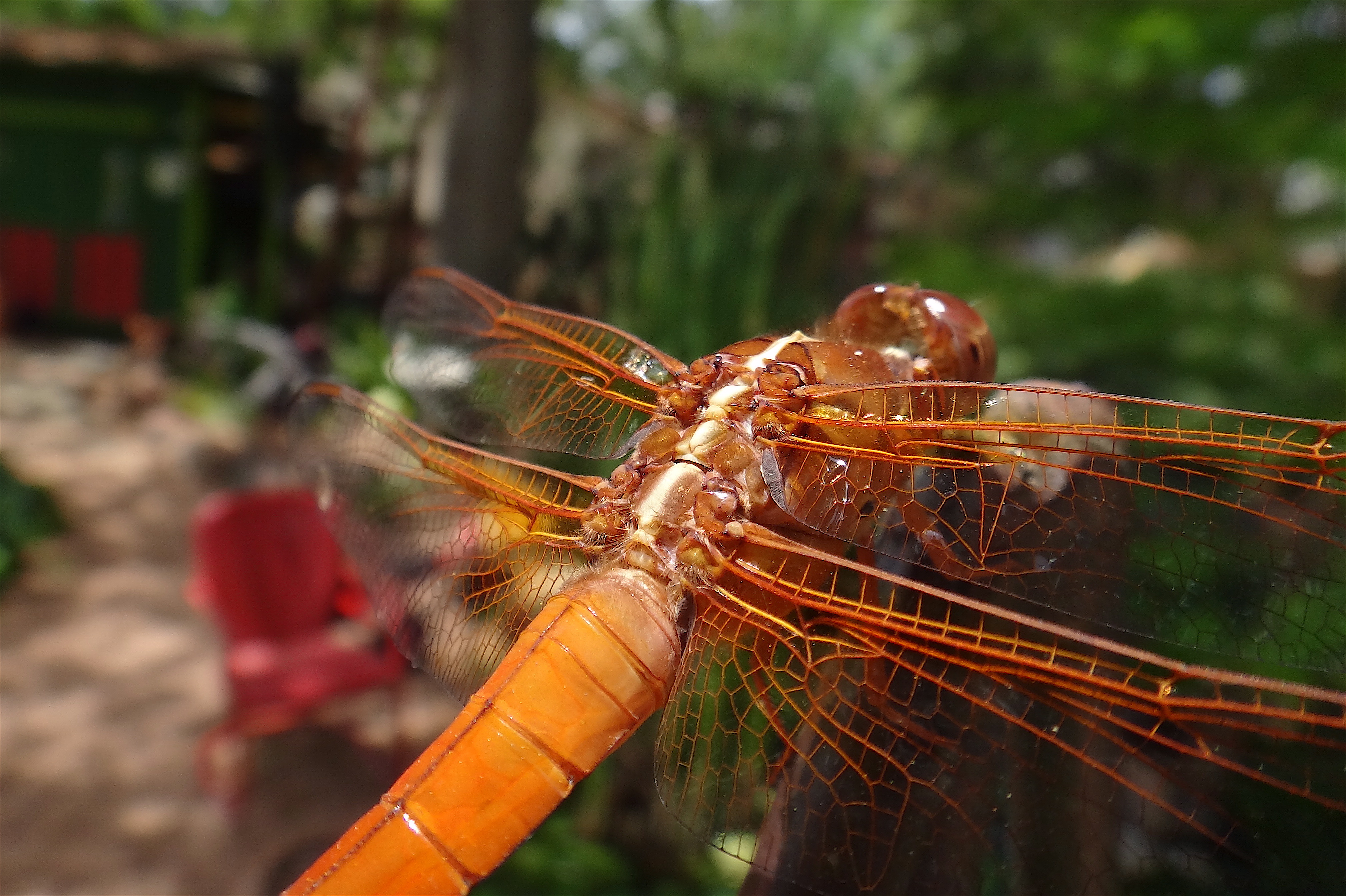 The first flame skimmer found the best perch around my main pond, and it was determined not to move and give up its position,
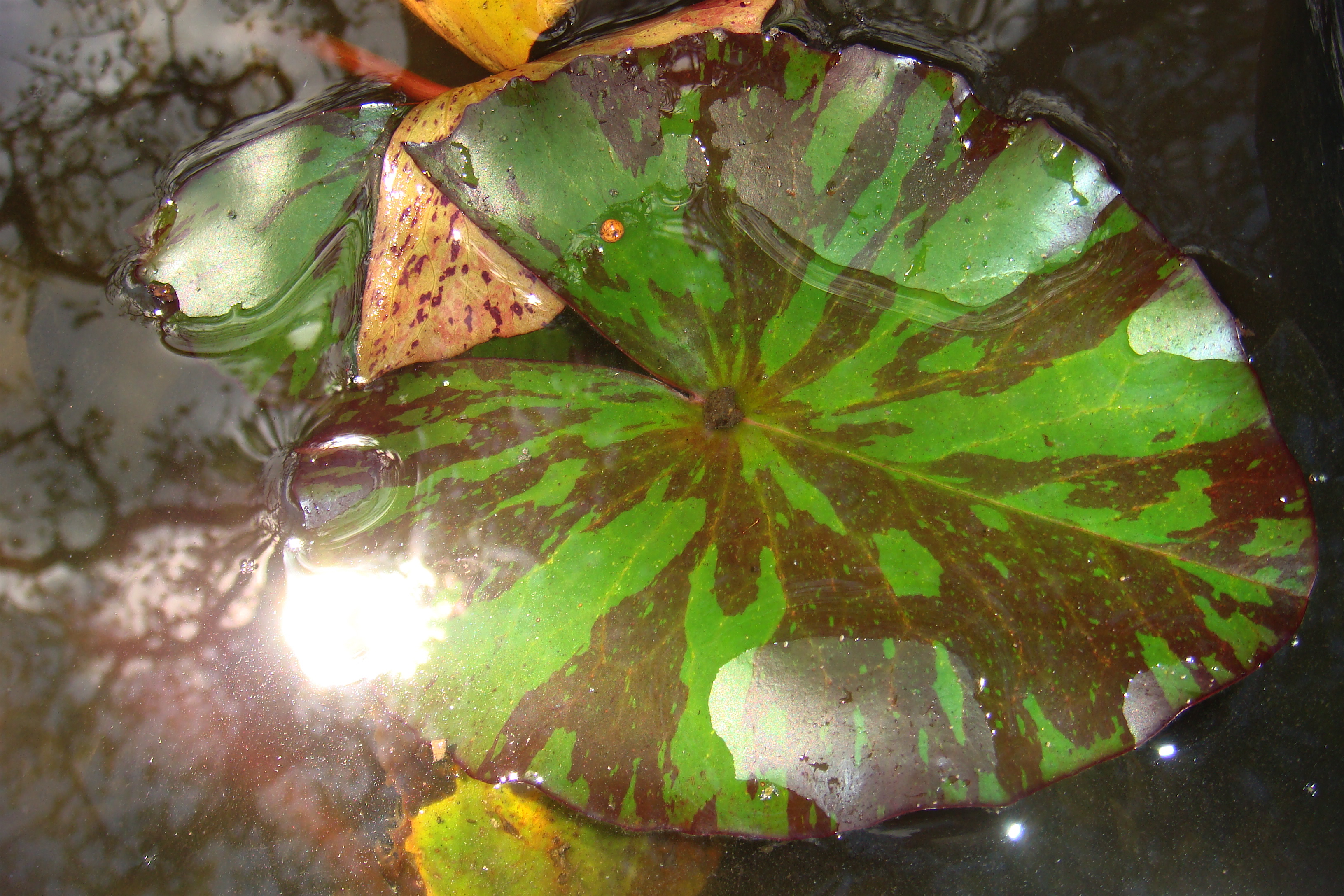
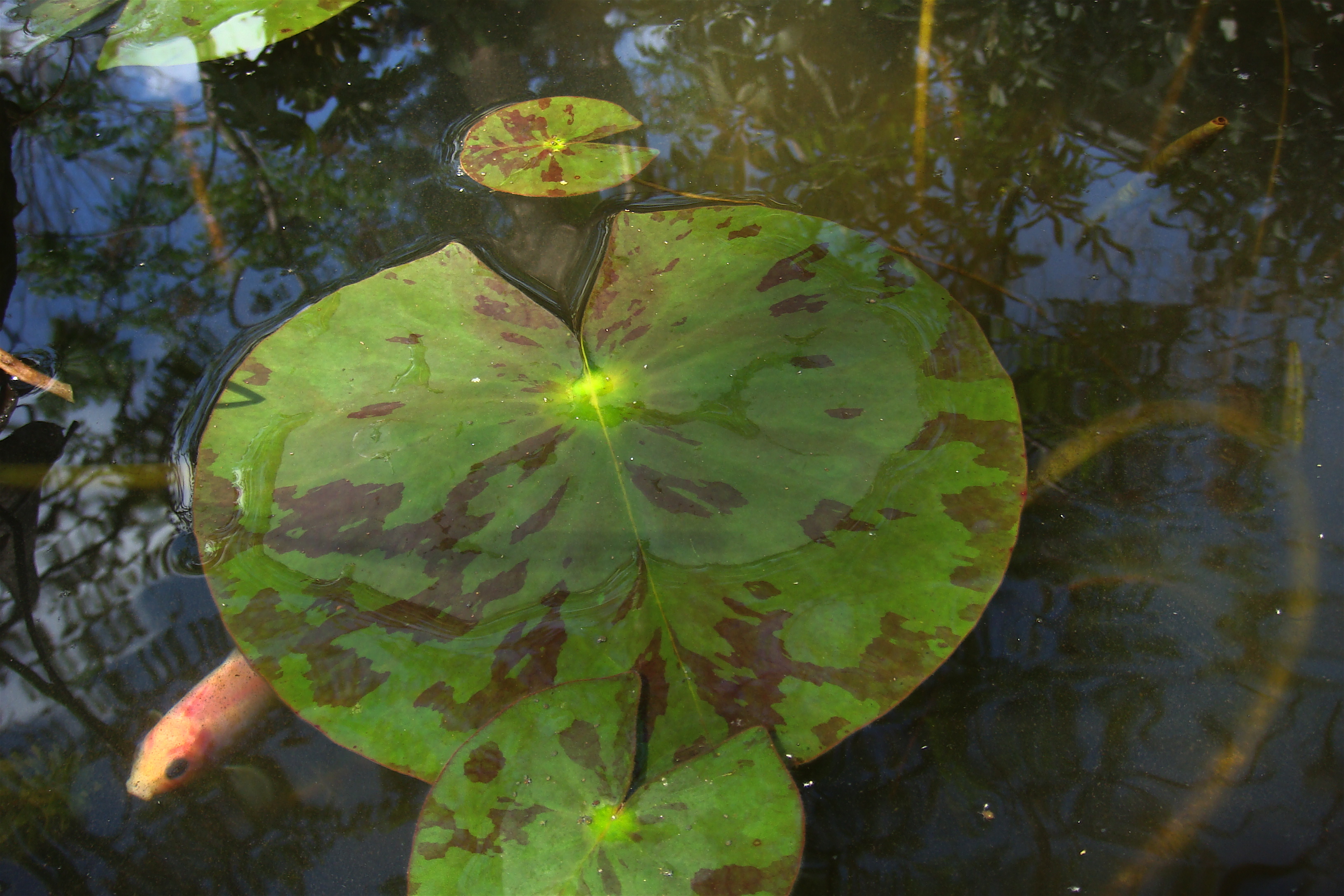
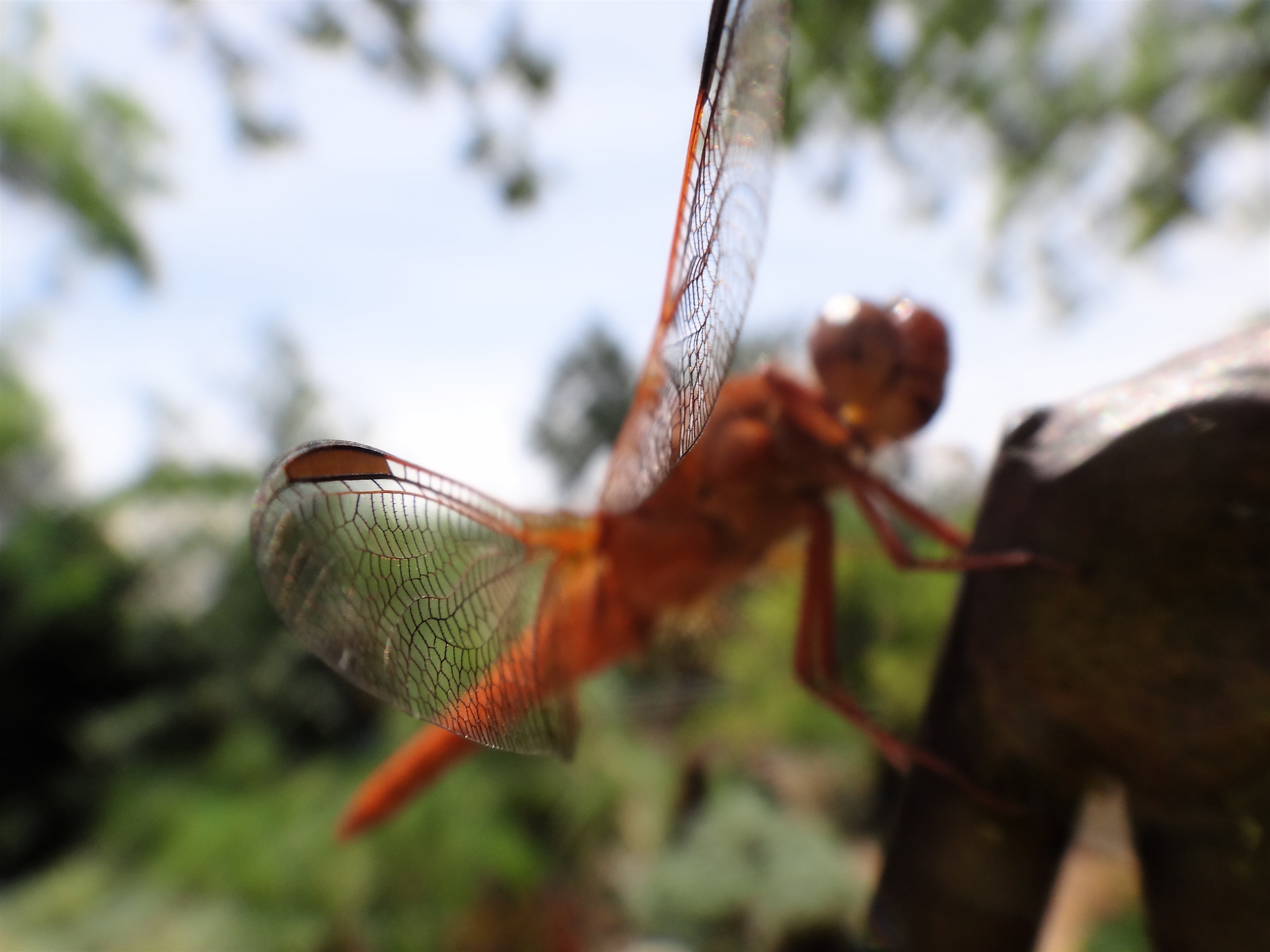 even if it meant its wing-tips brushing my camera lens. While I was quietly shooting this dragon there was suddenly a big splash on the other side of my inland sea oats, I peeped around and saw my neighbors cat once again flailing its way across my pond, the orchestra soared in, the Patch grackle hissed and danced, the cat was clambering desperately on top of my Madame Ganna Walska water lilies and generally causing total mayhem for a few seconds, a total Peter and the Wolf moment. Then all fell quiet once again.
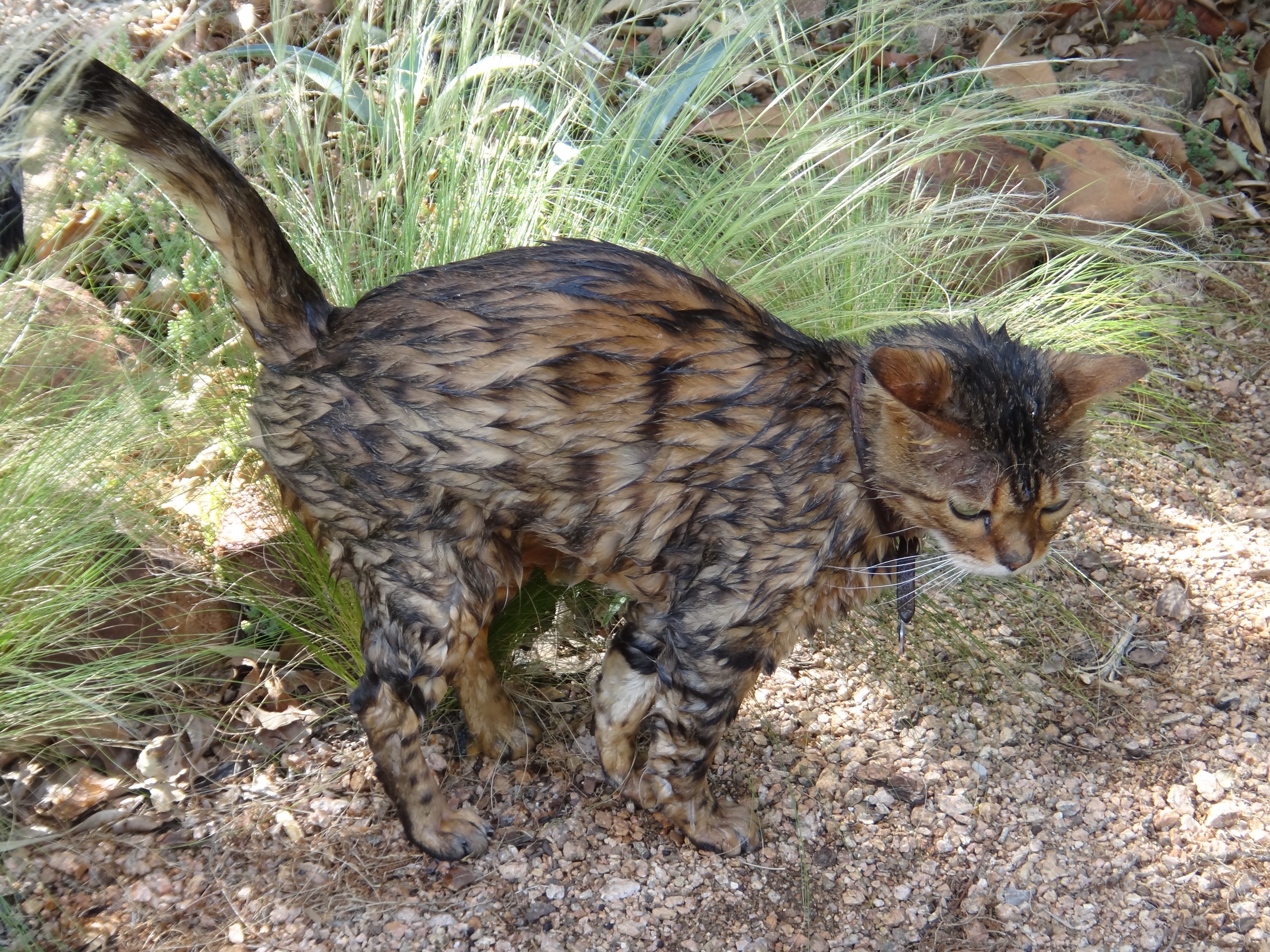
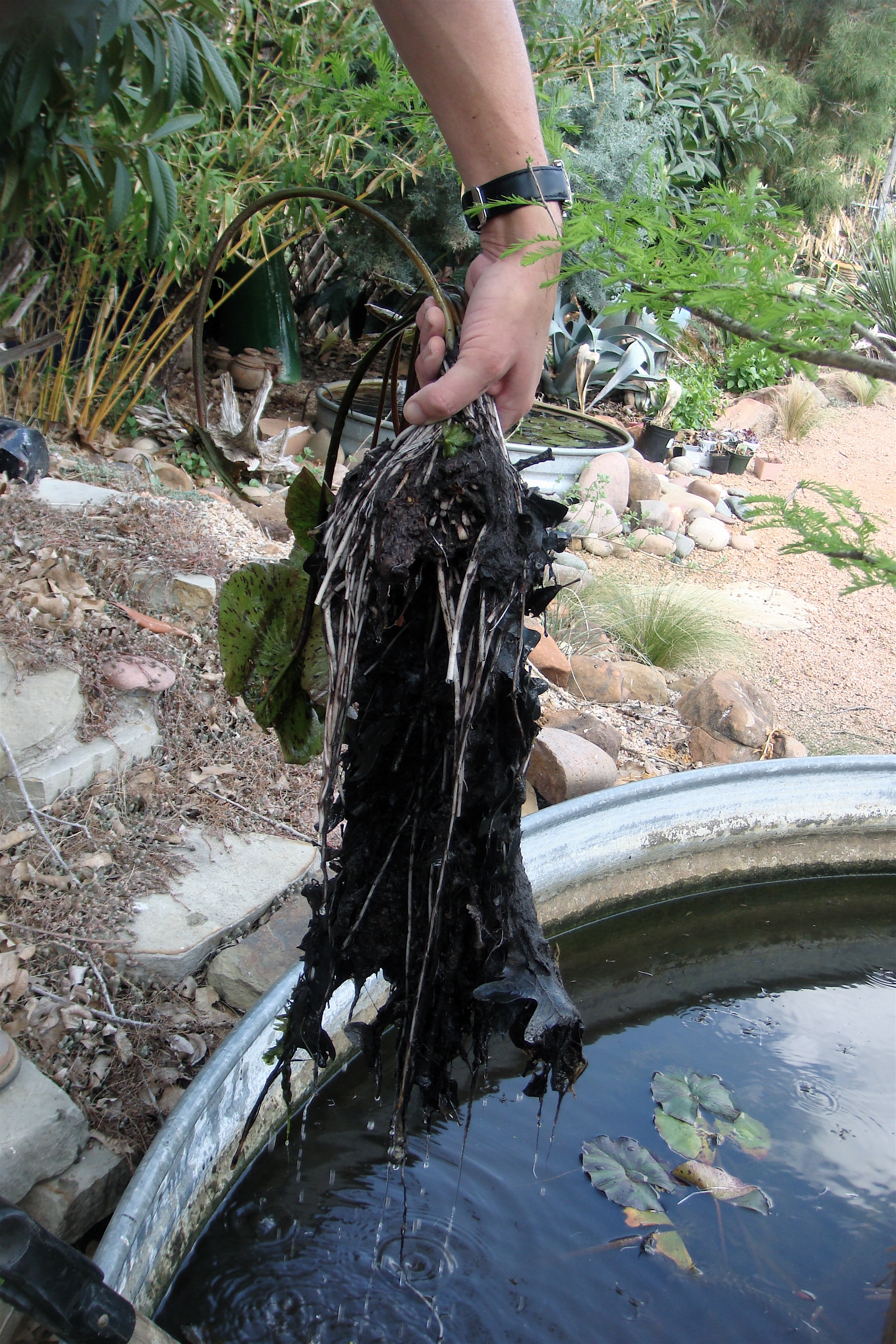
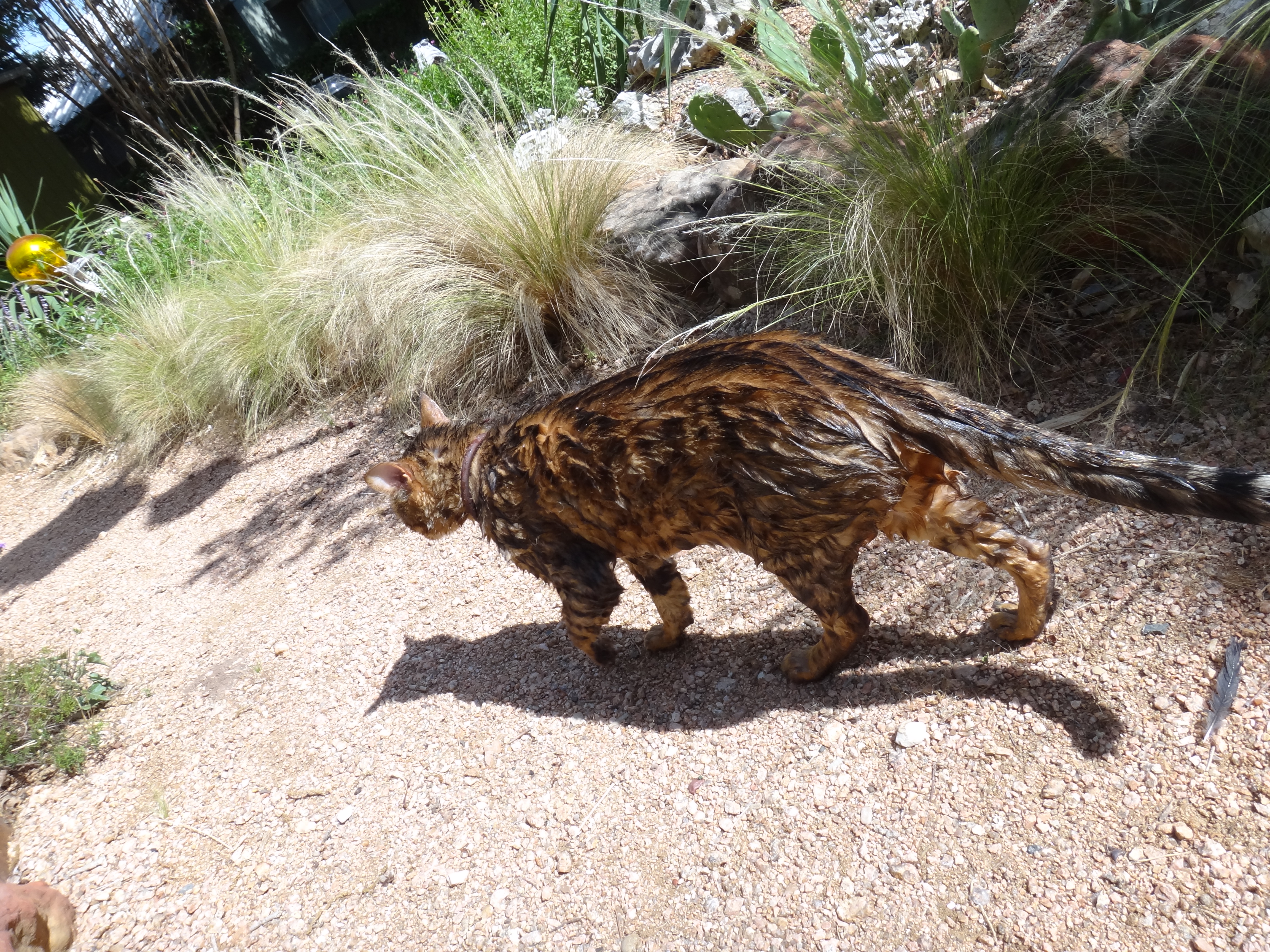 This is one embarrassed feline that never seems to learn that fishing is a dangerous sport when precariously perched on the edge of a stock tank.
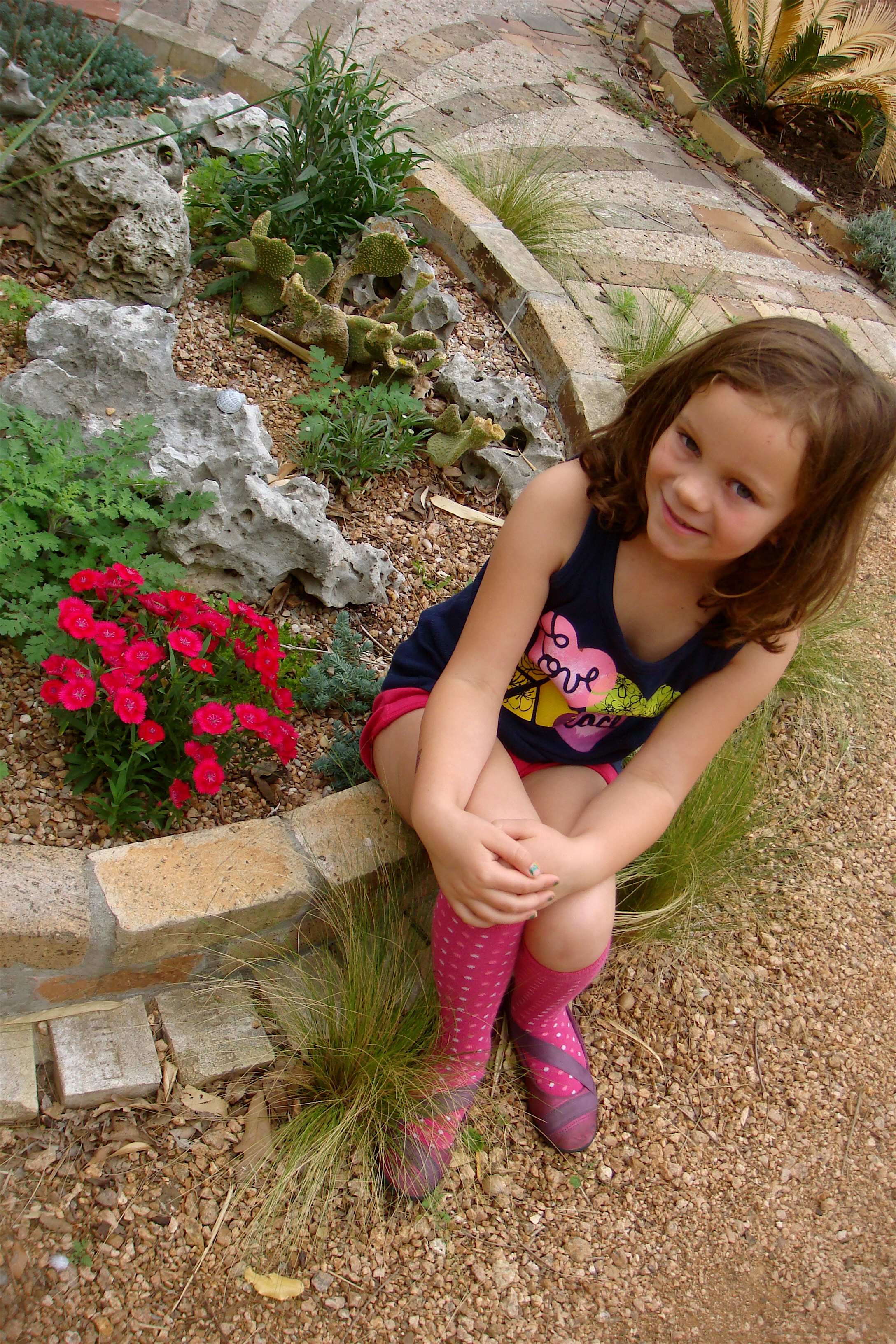
The pond is also entertaining tadpole hunts, she spends ages collecting and chatting to them.
 Another self initiated science project in progress in the Patch involves a large garden snail and some carrots (I knew my carrots would come in useful for something other then for human consumption, which trust me, was not an option). After we told her some time back about Gordon Ramsay preparing and eating his own snails out of his garden, she could not wait to give it a try.
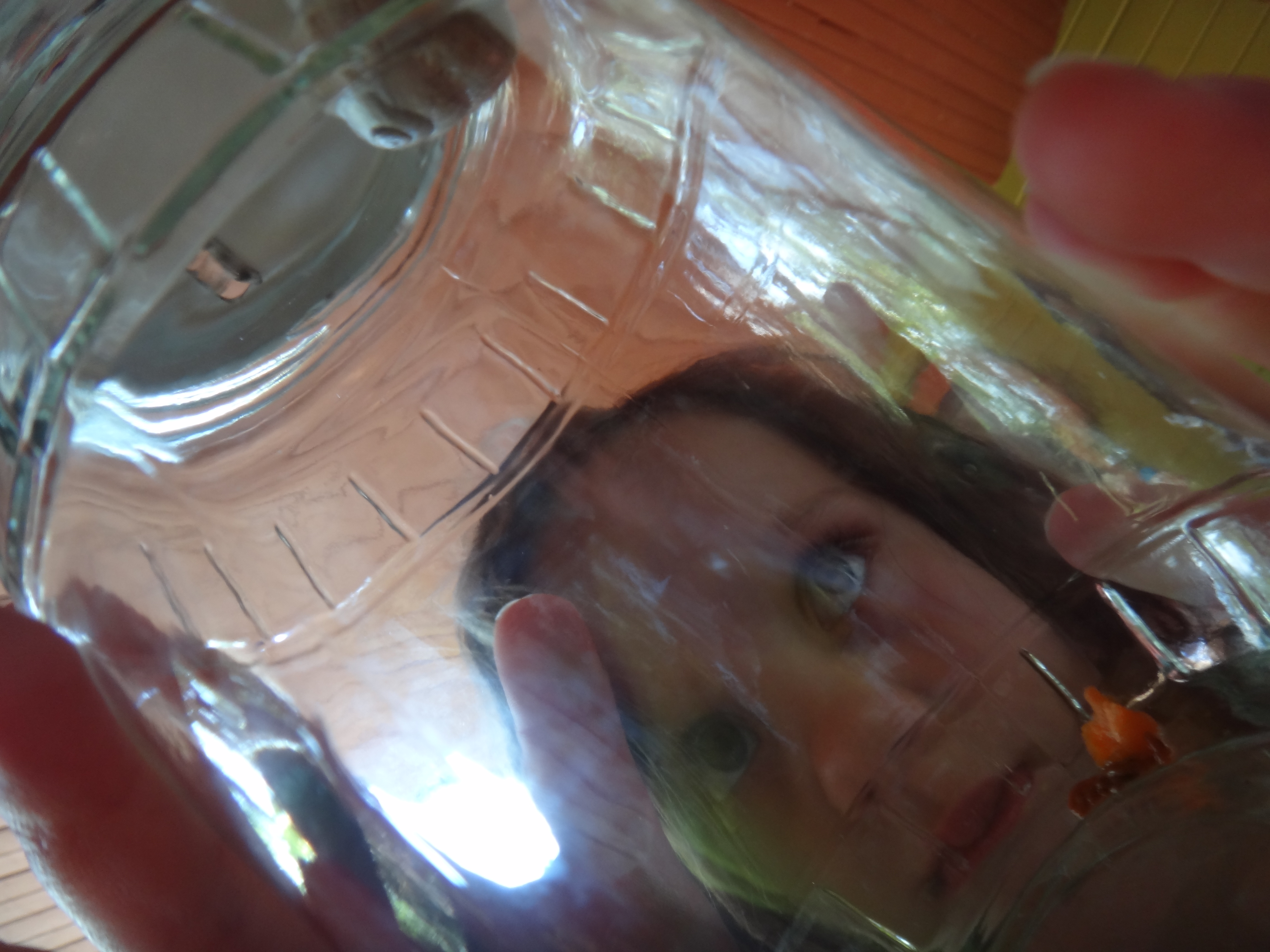 The crazy culinary artist at work.
For the past few days she has been feeding her future ‘petite’ escargot dish with carrots to ensure that the snail was completely ahem, “cleaned out”.
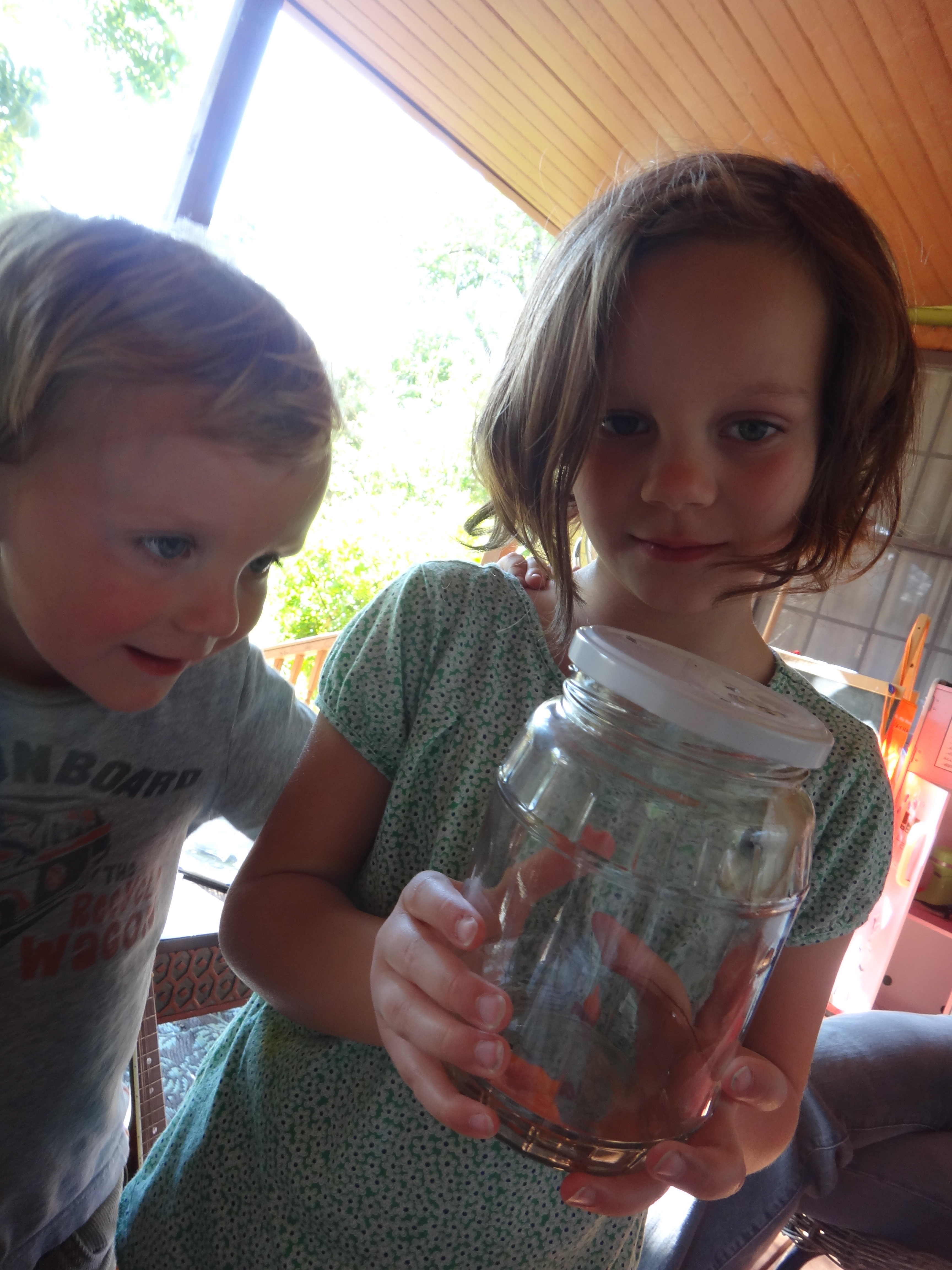 She was delighted the other day to find that the snail’s number 2s were finally an orange color, oh yes it was a momentous occasion, the church bells were ringing, a small street parade etc, it was finally ready, and so was she, she took the snail indoors and then proceeded to…more on this escargot saga next week.
 Finally:
Installment One:
I have just completed a design and install on top of Mount Bonnell in Austin, too big to cover in one post.
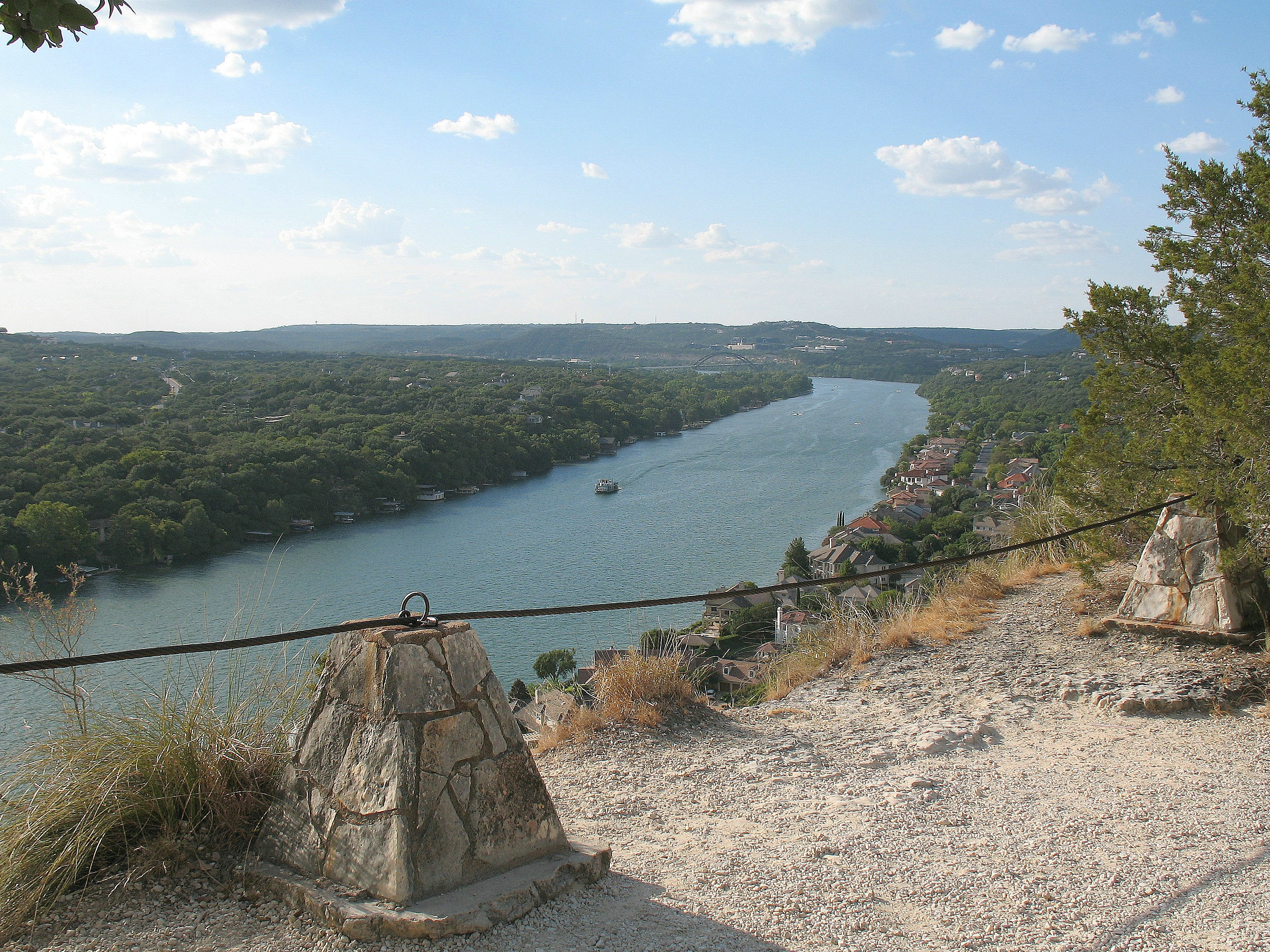 I have decided to break it up into a few installments like the Rime of the Ancient Mariner, here is the first:
This was a most challenging project logistically a) it being on the top of Mount Bonnell with extremely tight access and steep grades for large trucks to circumnavigate b) below a couple inches of soil there was Mount Bonnell and an elaborate labyrinth of sprinkler pipes and low voltage lighting wires to avoid d) the design and install was on a tight schedule (just for a little added pressure!)
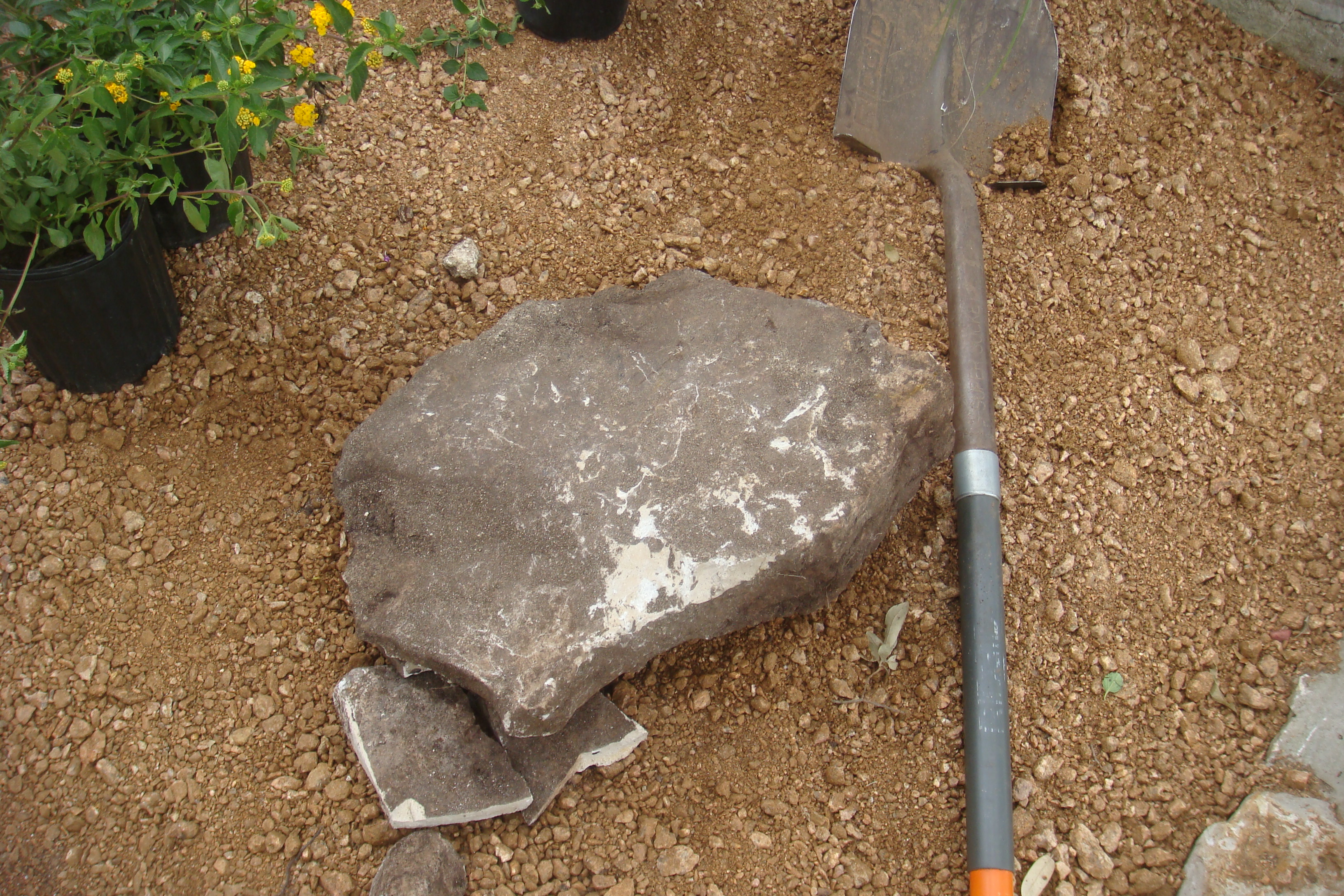 A sample of what was lurking below a thin layer of topsoil. This rock took me a half hour to extract…This one was actually deep enough that I could have planted on top of it but I decided the future night terrors would not be worth it: zzz..mumble…rock below…zzz…planted on top of it, roots sure to be stunted…(eyes fly open).
 Oh no, it had to come out.
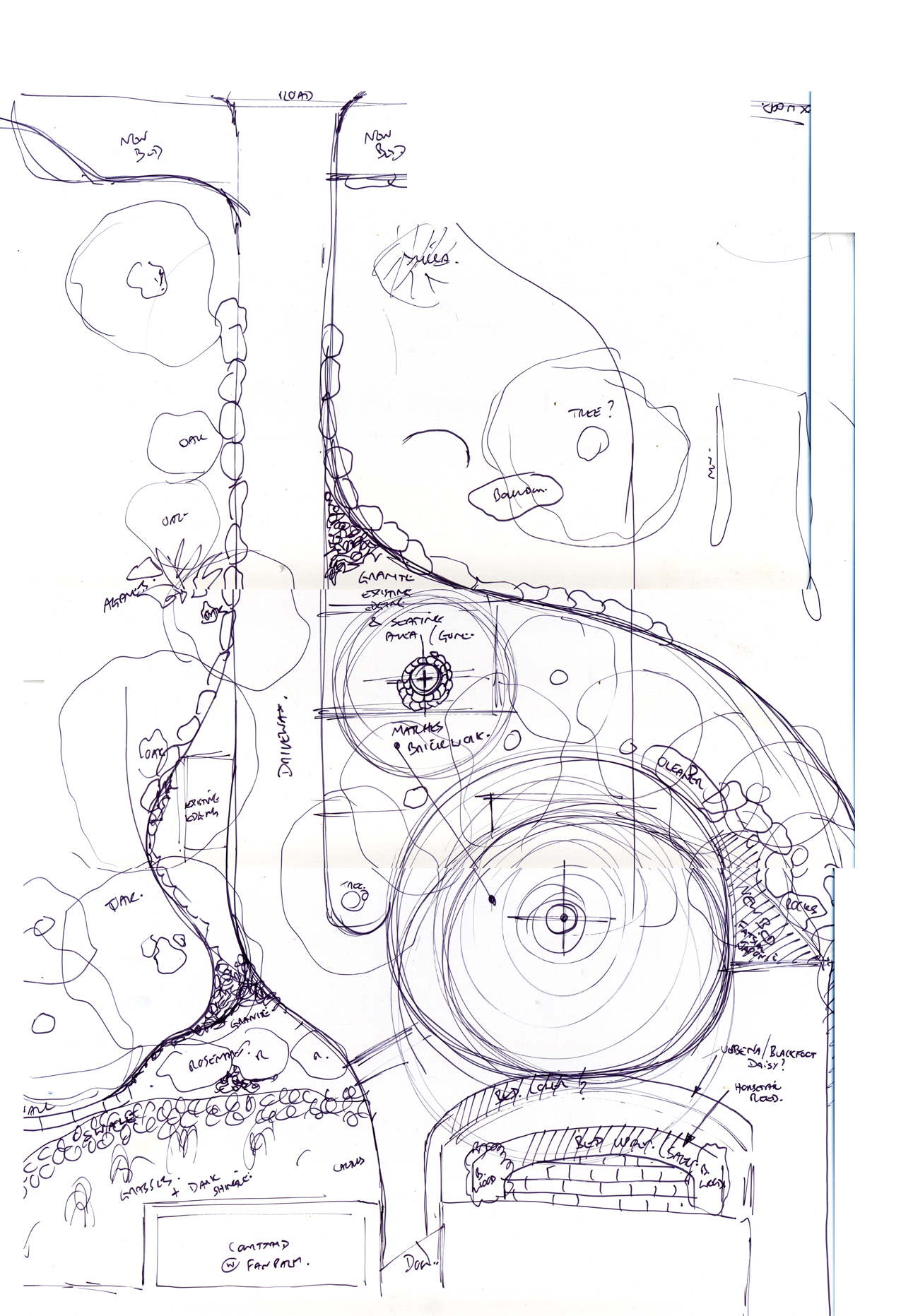
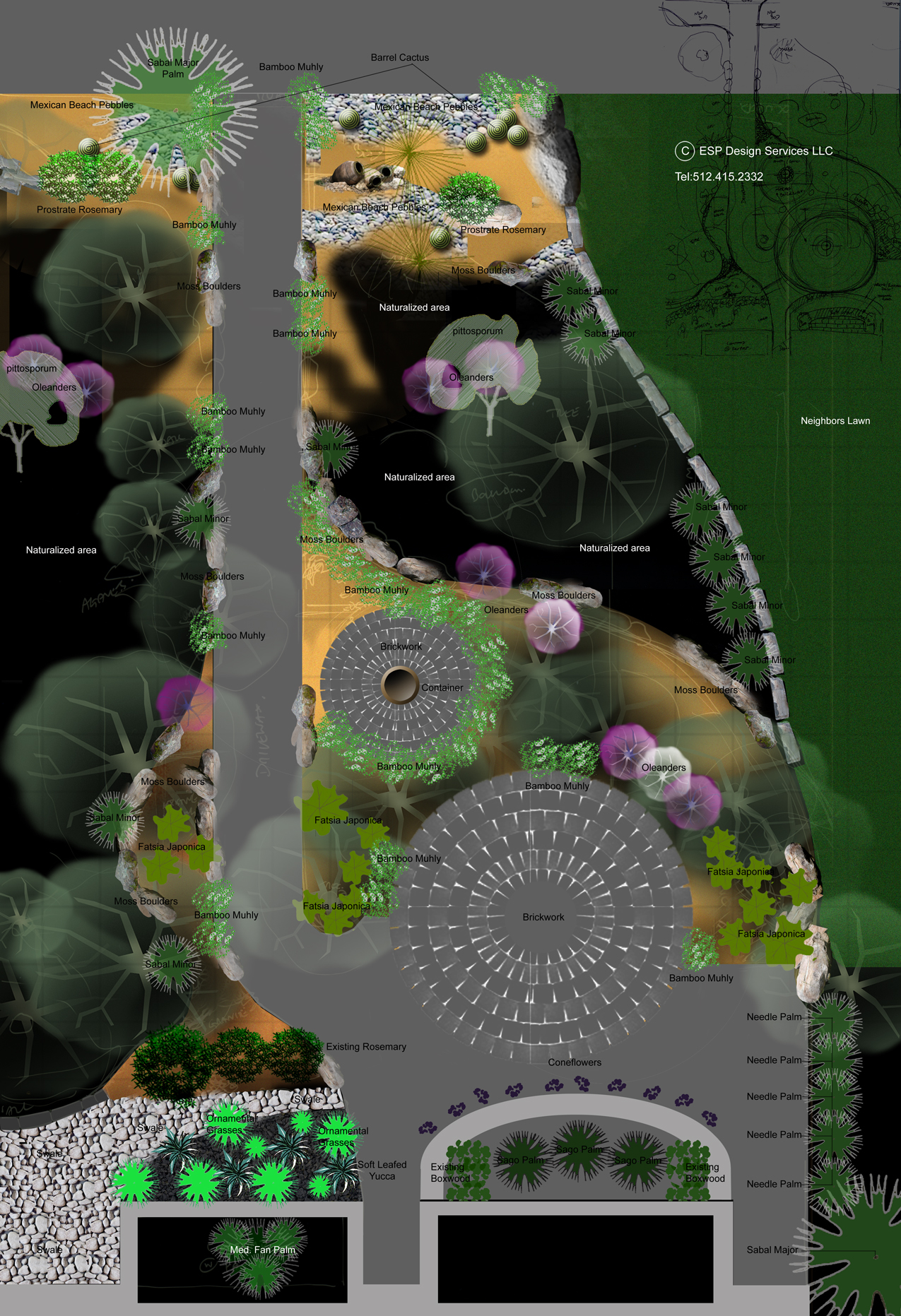 It started with a sketch, which matured into a plan highlighting the areas I was going to tackle in the allotted time frame. The major areas of focus were curbside and up around the house that had some overgrown plantings and structures that had been installed some years back and were now redundant or simply overgrown. My main intent was to provide structure and definition to these areas.
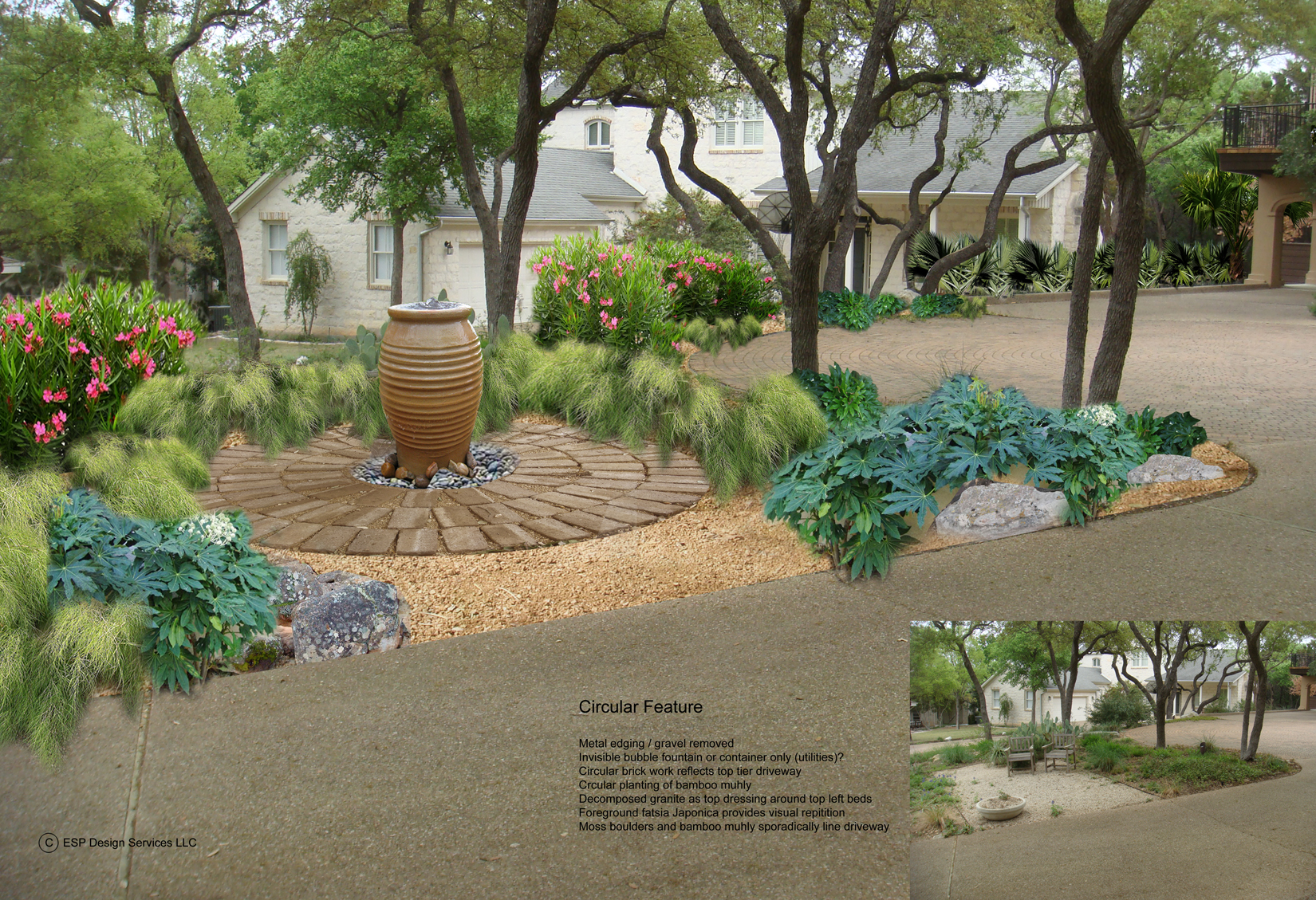 Before shot (bottom right) and rendering of one area of the proposed new design scheme. These chairs were never used by the home owners, the area was too far from the home and the seats were positioned on a downward slope of loose shingle. I found this rectangular intersection very odd with the more organic nature of the surrounding area and lines, my goal here was to naturalize the area.
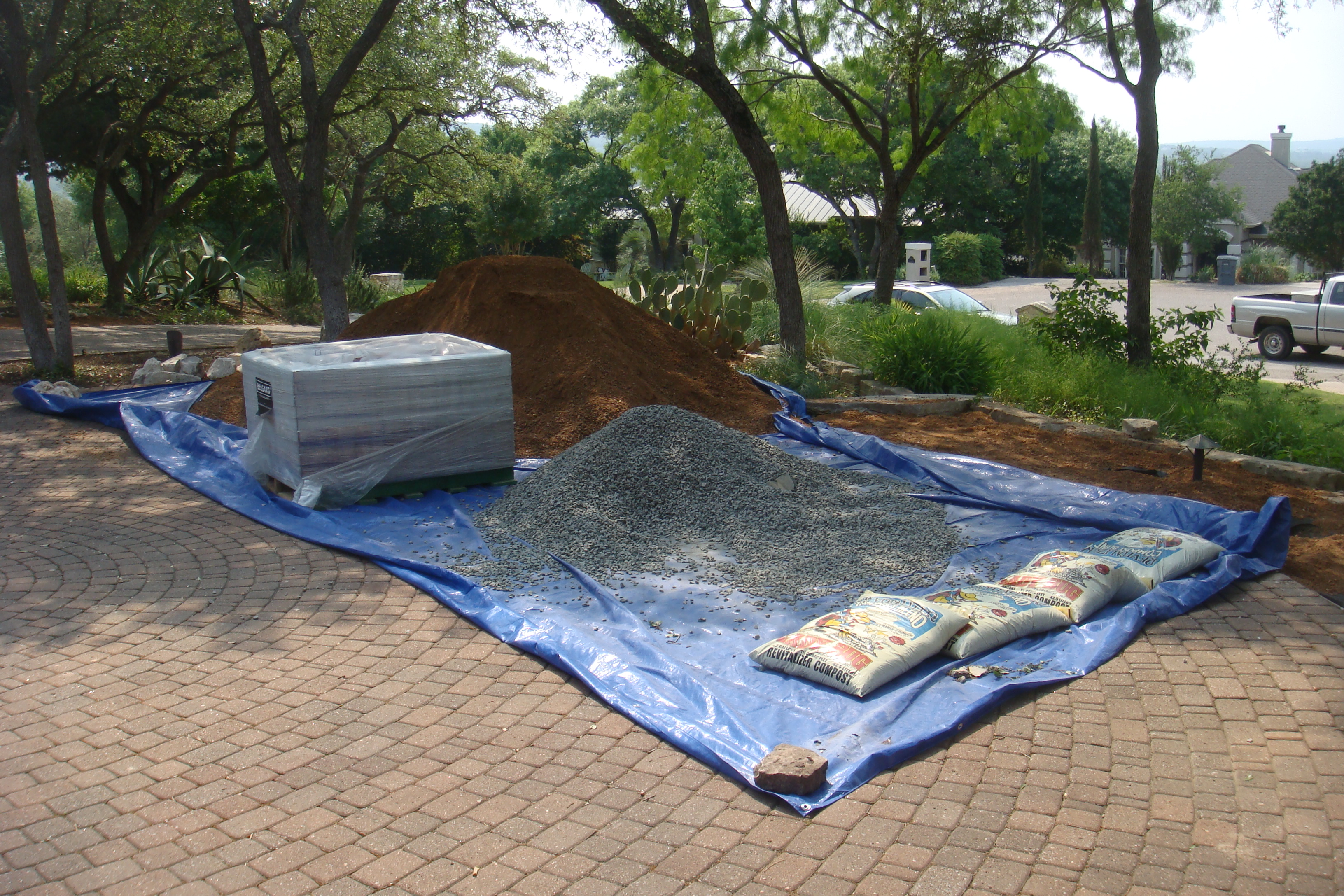
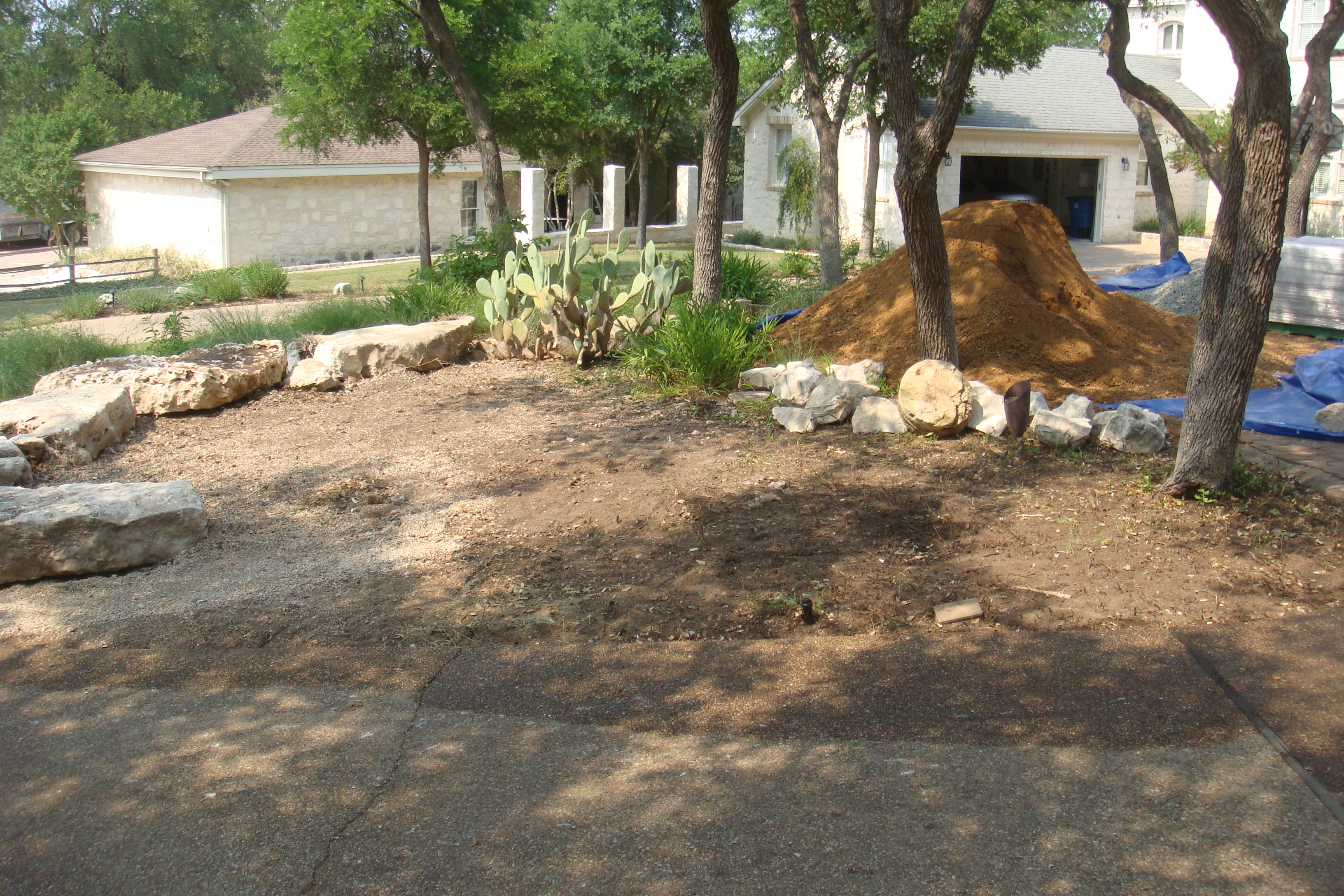 Materials were cautiously delivered with trucks narrowly missing live oak limbs by centimeters, (a most stressful time). Large limestone boulders were maneuvered into position to function as a more naturalistic retaining wall and to level the grade for the future urn. Existing metal siding was removed naturally (thanks Bob) and the area was cleared out. With the opuntia now pruned up, decomposed granite went down, deep against the boulders, swallowing out up the slope.
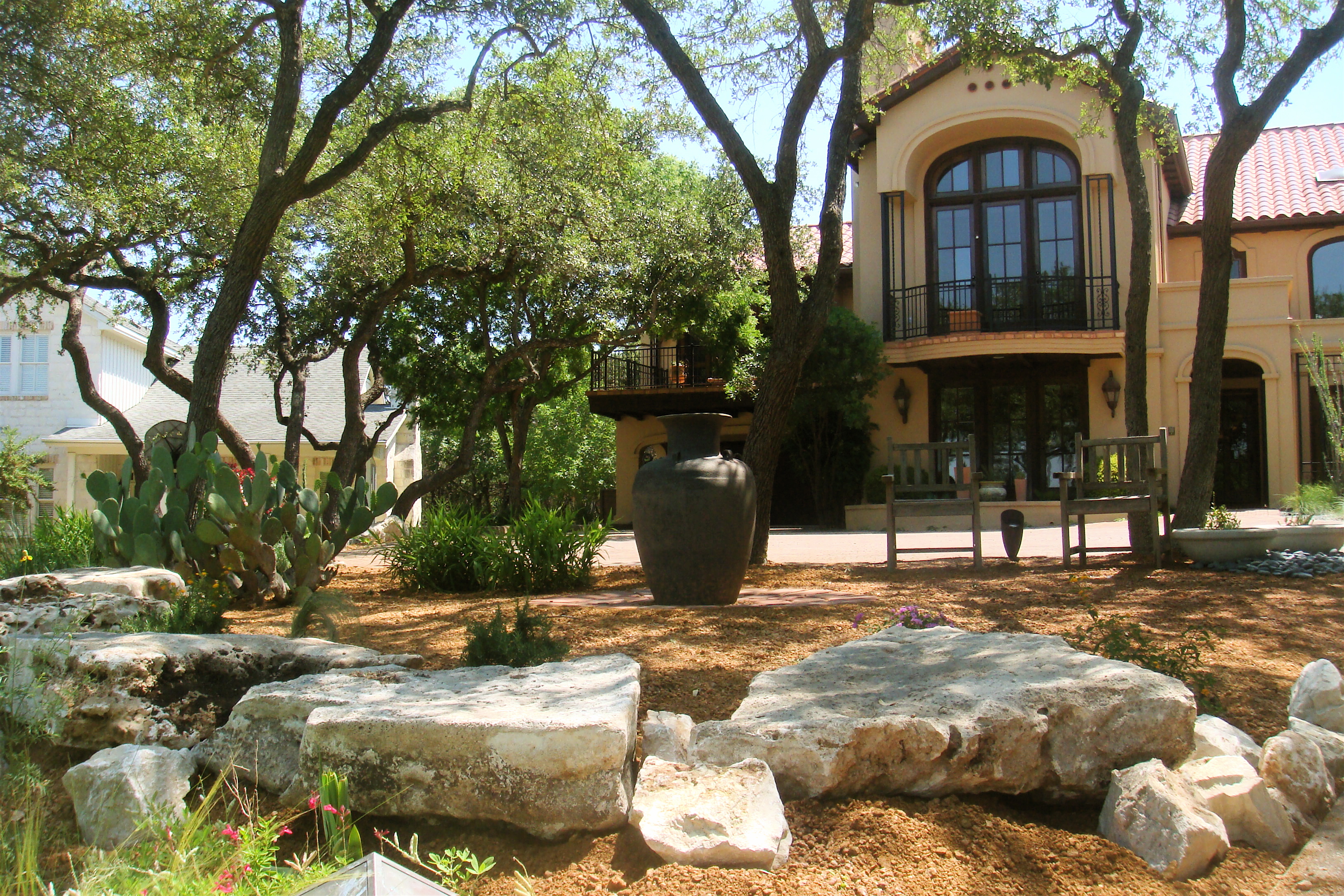
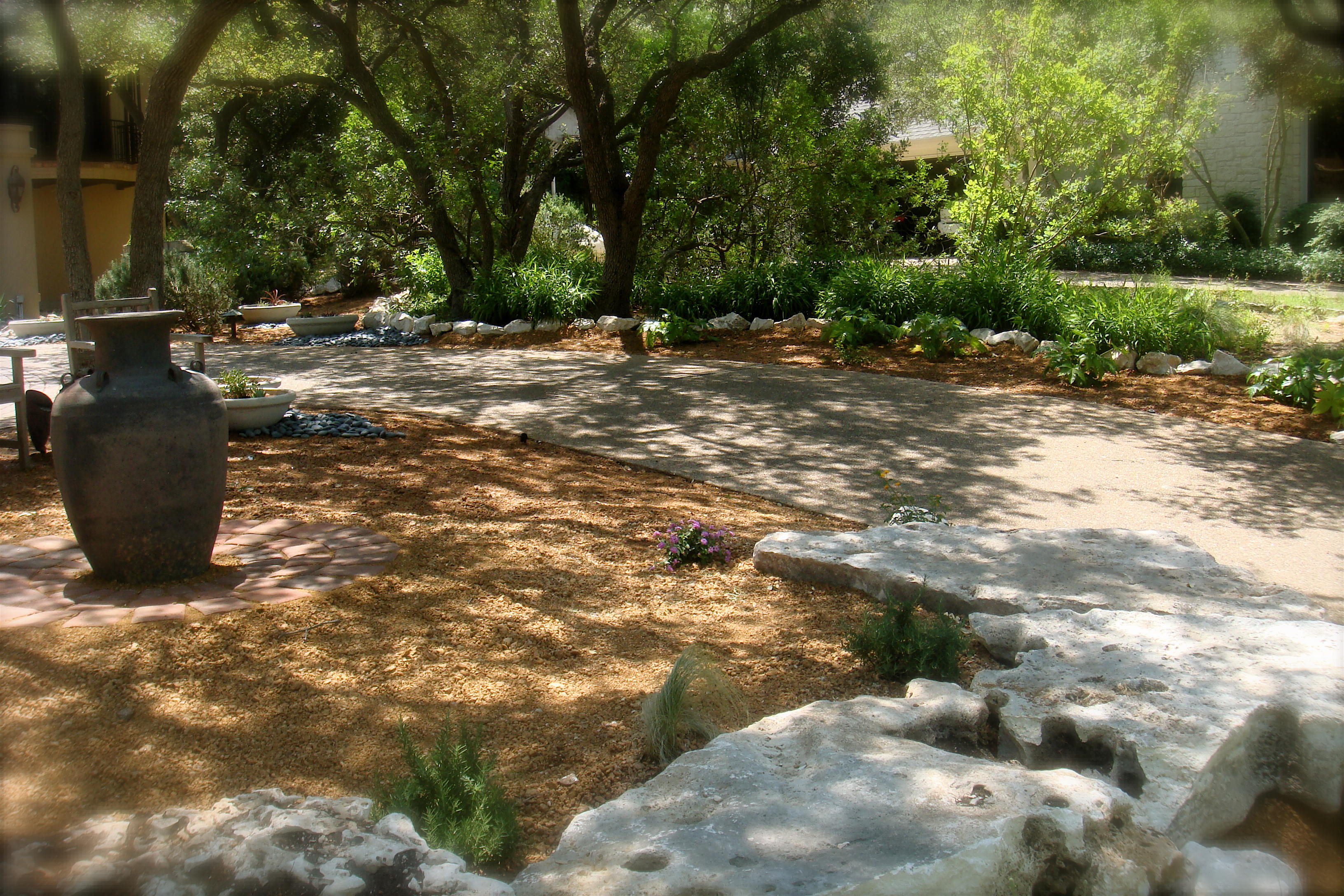 Bricks were laid, the urn was positioned and plants planted, (prostrate rosemary and trailing lantanas). The urn references the Mediterranean architectural style of the house, the color matching the dark trim. The granite will also lighten in time as it dries out, matching the house color. The large limestone boulders now join up a few side planting beds turning once separate areas into one singular sweeping bed, the rear of which I planted with a line of needle palms.
Rhapidophyllum hystrix
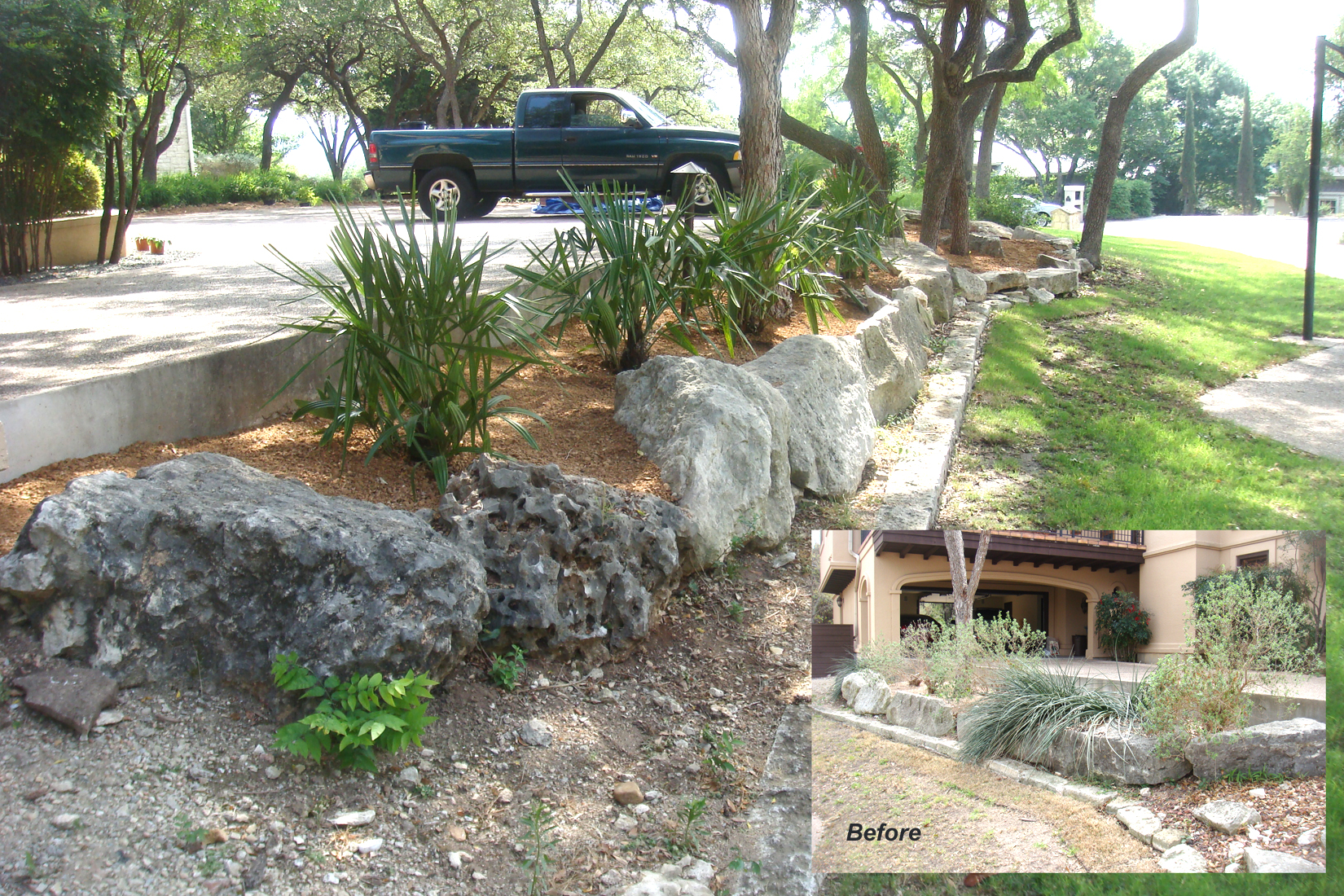
These palms grow very well under live oaks and will get to about 6ft quite quickly if offered some additional irrigation. They are also very rugged and cold tolerant.
Here are the before and after renderings of the other two side beds:

Stay Tuned for:
“The Emperor’s New Tools”
All material © 2011 for eastsidepatch. Unauthorized
intergalactic reproduction strictly prohibited, and
punishable by late (and extremely unpleasant)
14th century planet Earth techniques.
Captain’s Log supplemental: