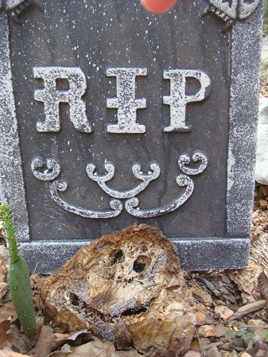
I thought that I would start this post of with a cheerful yet strangely (in these days) controversial “how life started”, shortly before diving into significant amounts of death and continued moaning.
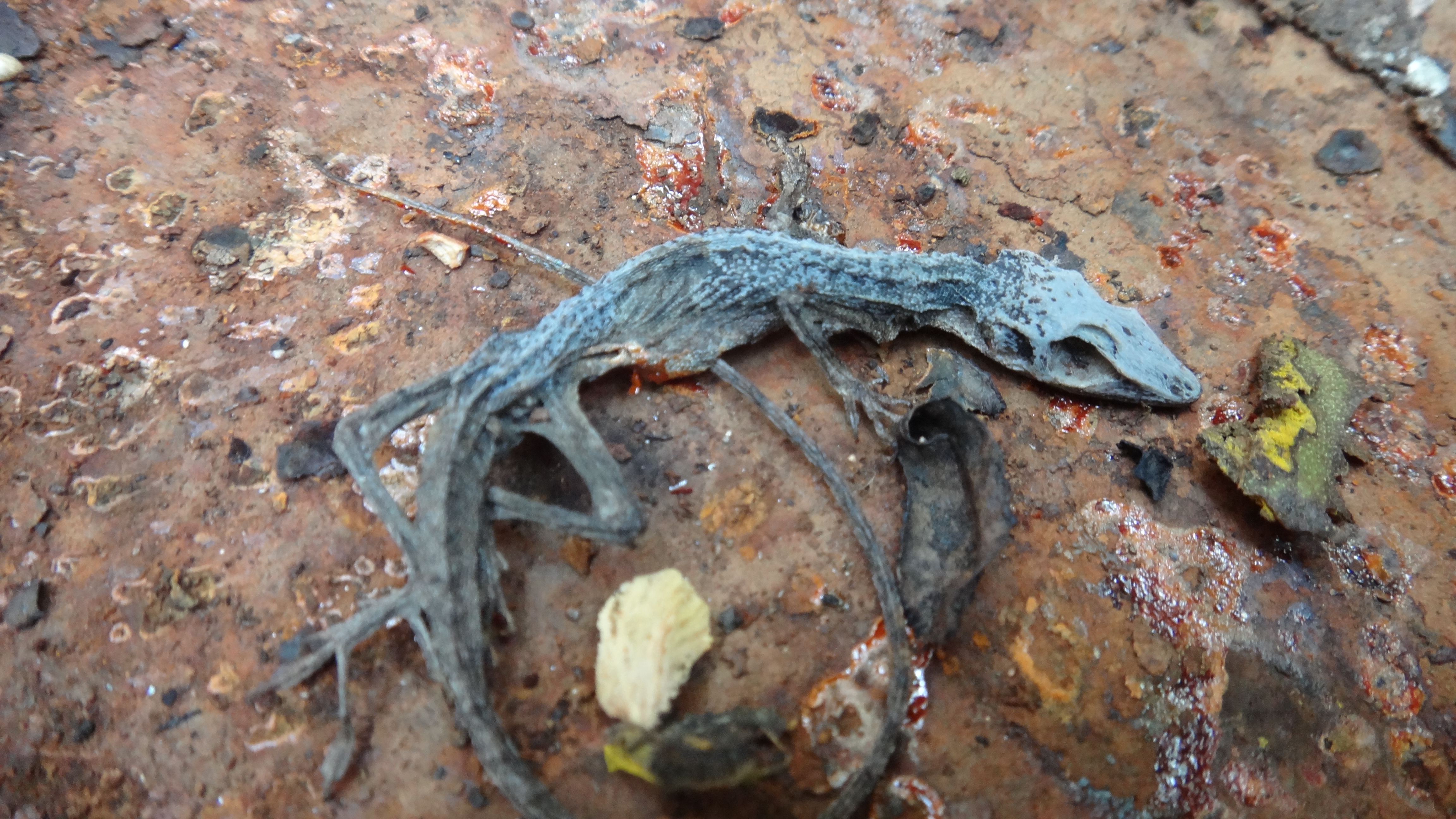
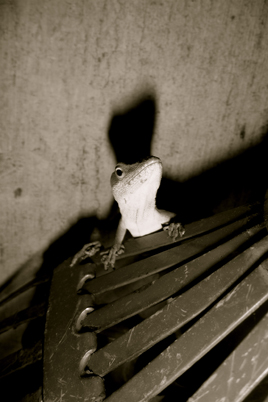
This little anole looks exactly how I feel.
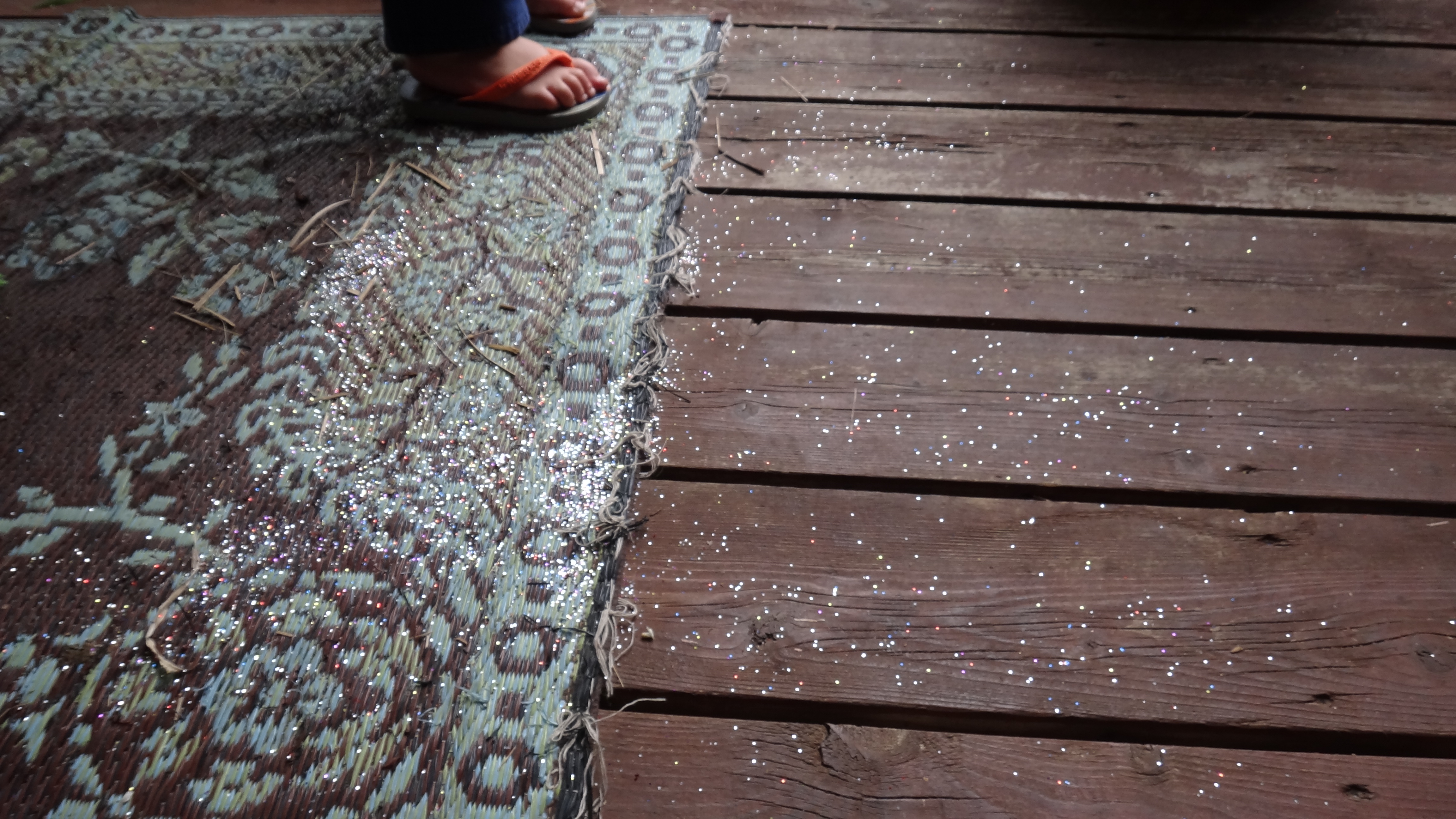
This unfortunate chap was fried in the bottom of my “everything but the kitchen sink” rainwater collection “system”, which has been bone dry for quite some time, in fact it now functions more like a convection oven. I try and check for stray anoles in this tank as much as I can but this one slipped through my vigilance net apparently right onto the scorching galvanized steel griddle base, he did not stand a chance with our Austin temperatures currently comparable to the aftermath of Mount Vesuvius’s eruption.
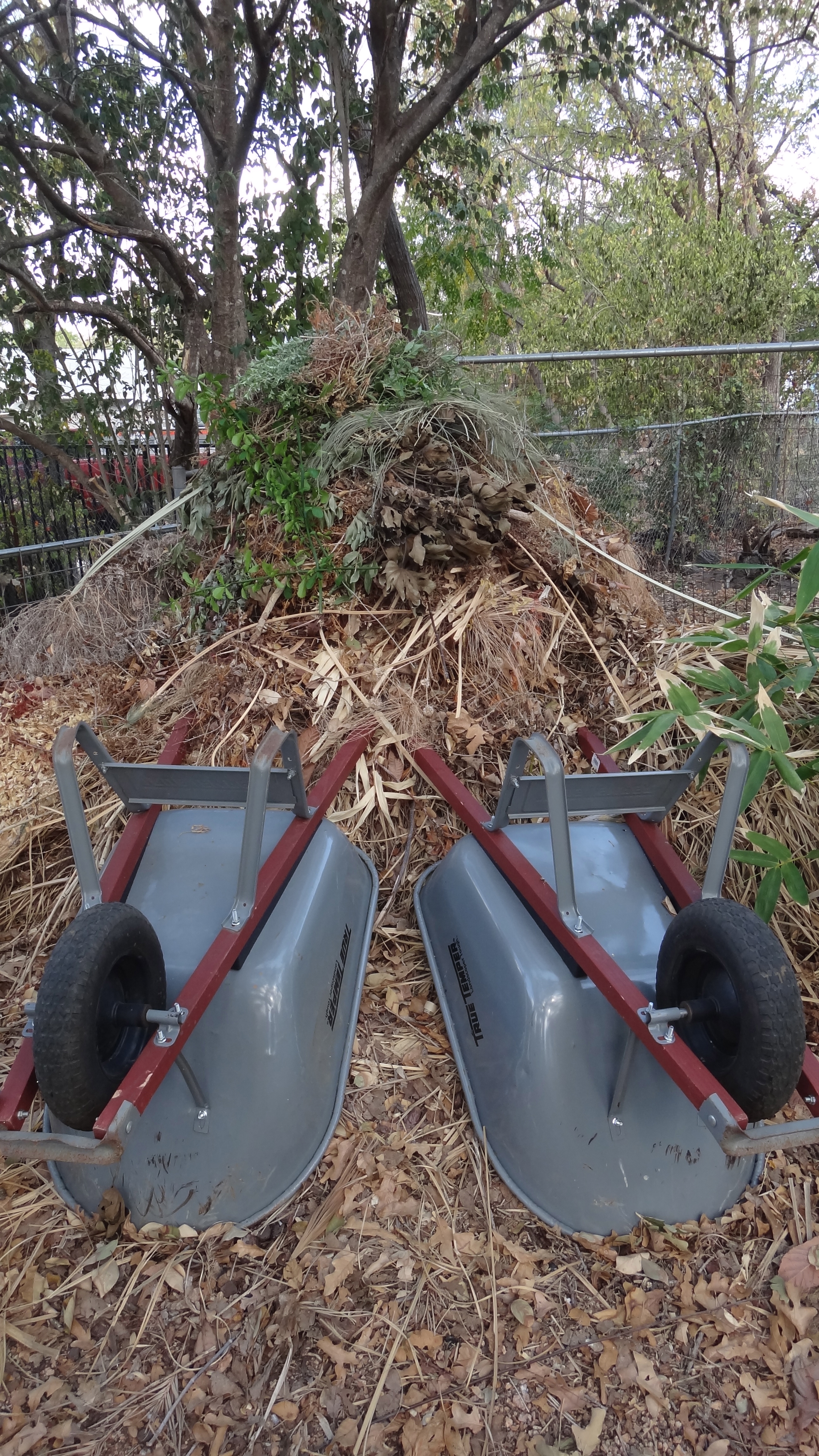
After hearing about some compost piles spontaneously combustion in our area this week…(yes that is how hot it is), I no longer venture close to mine, just in case. I know how much nitrogen is in there!
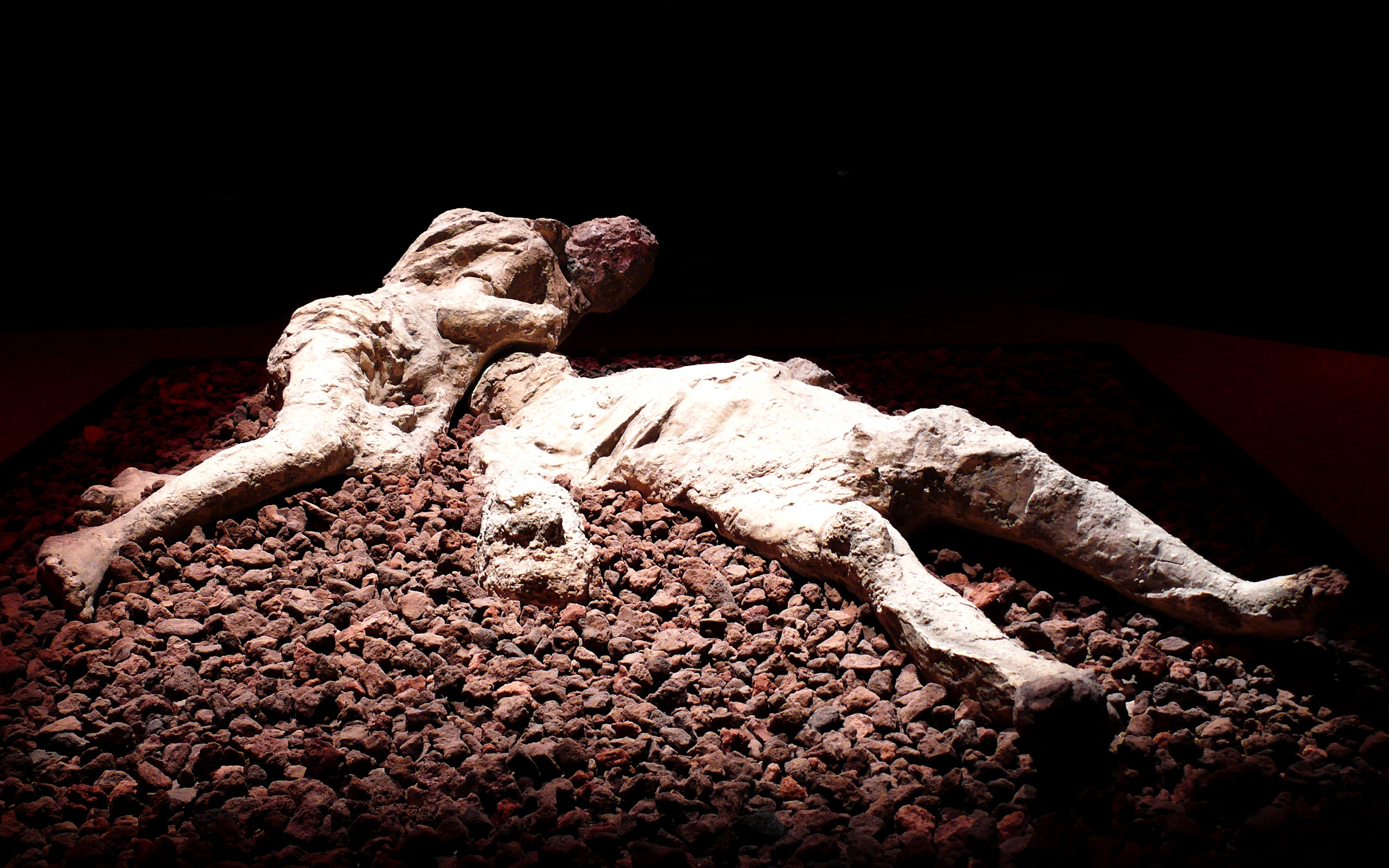
Maggie and Jim, (my neighbors on the other side from poor Ernie), recently emptied some greens into their compost barrel, it was a terrible affair.
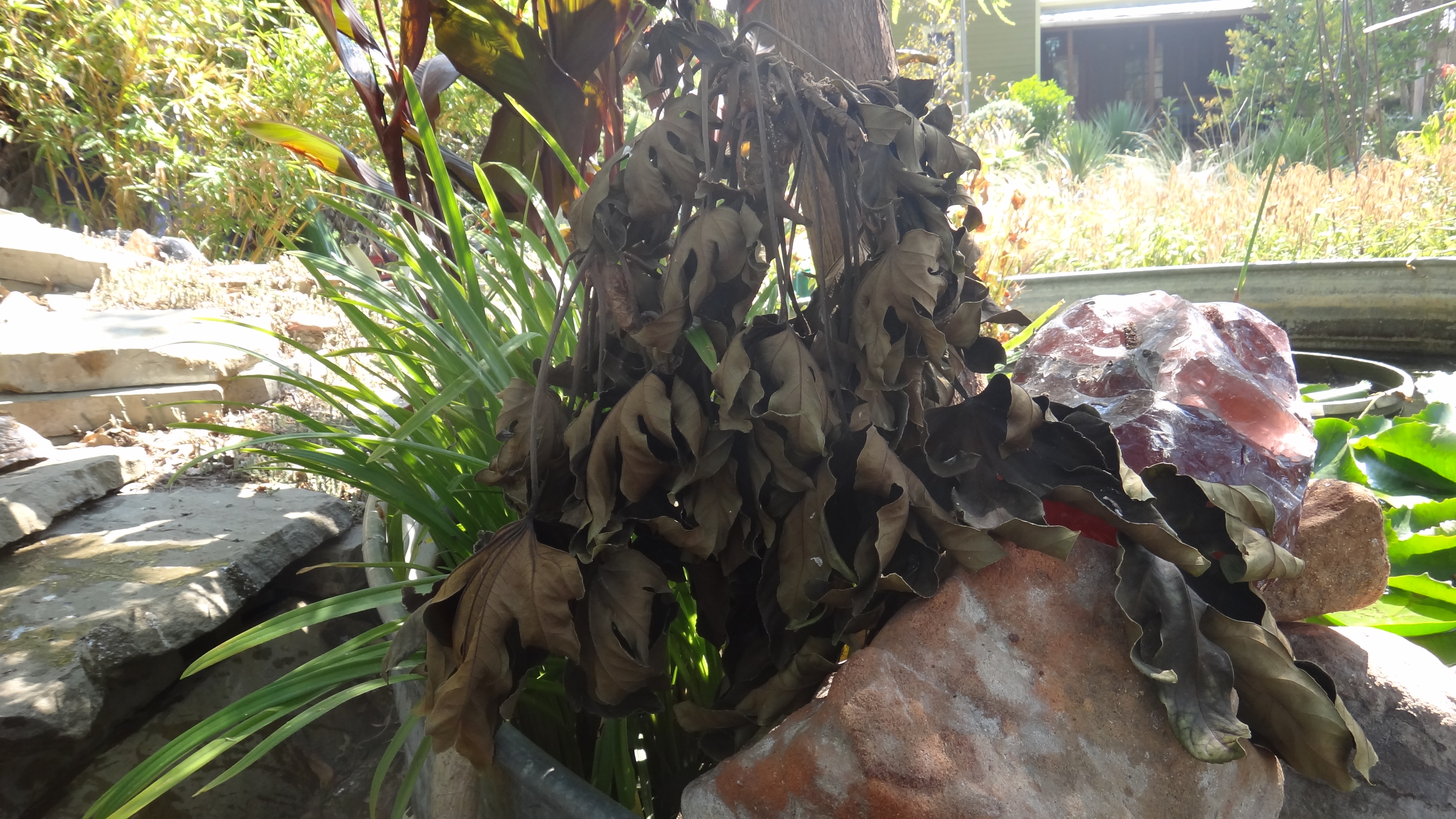
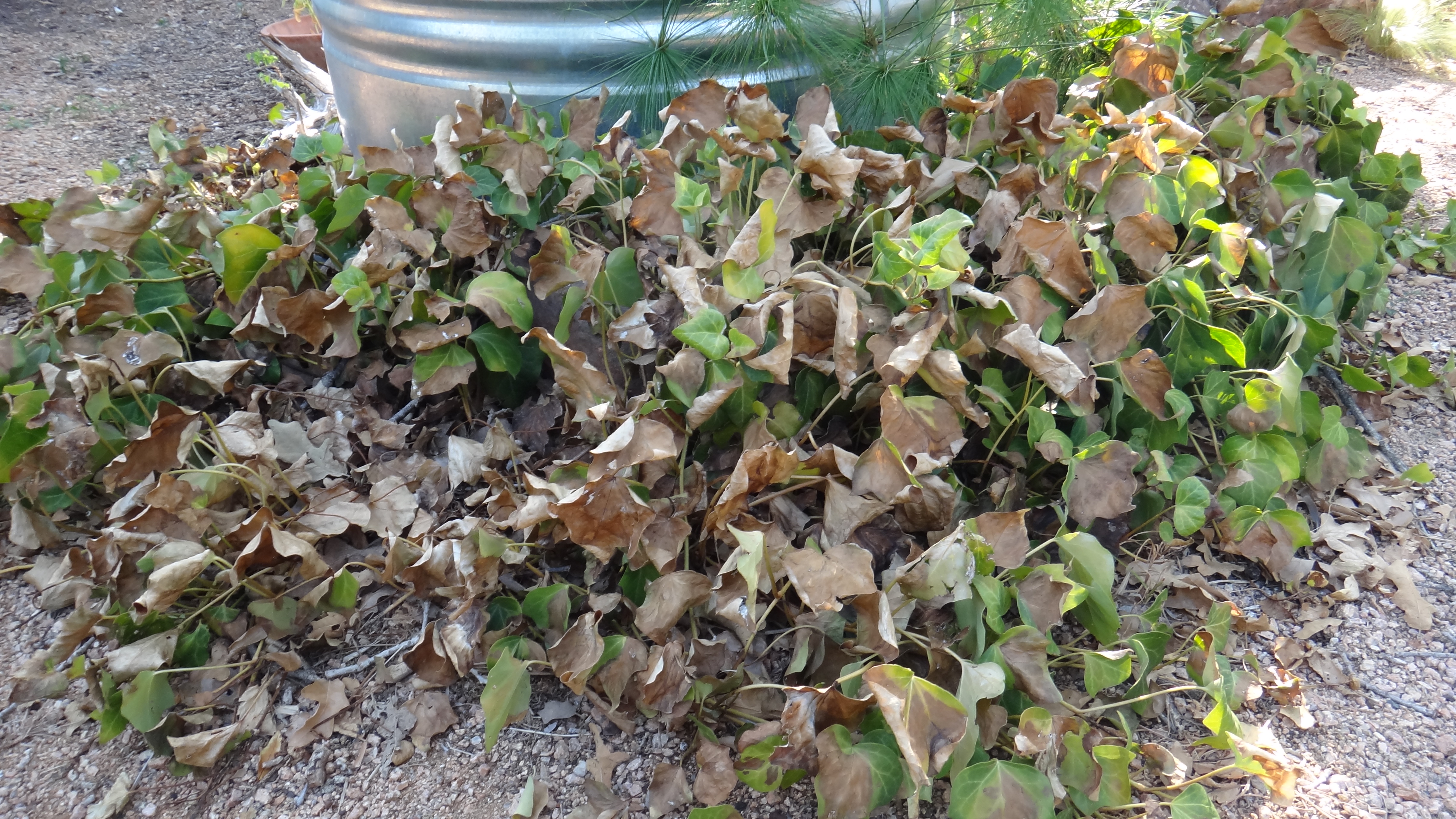
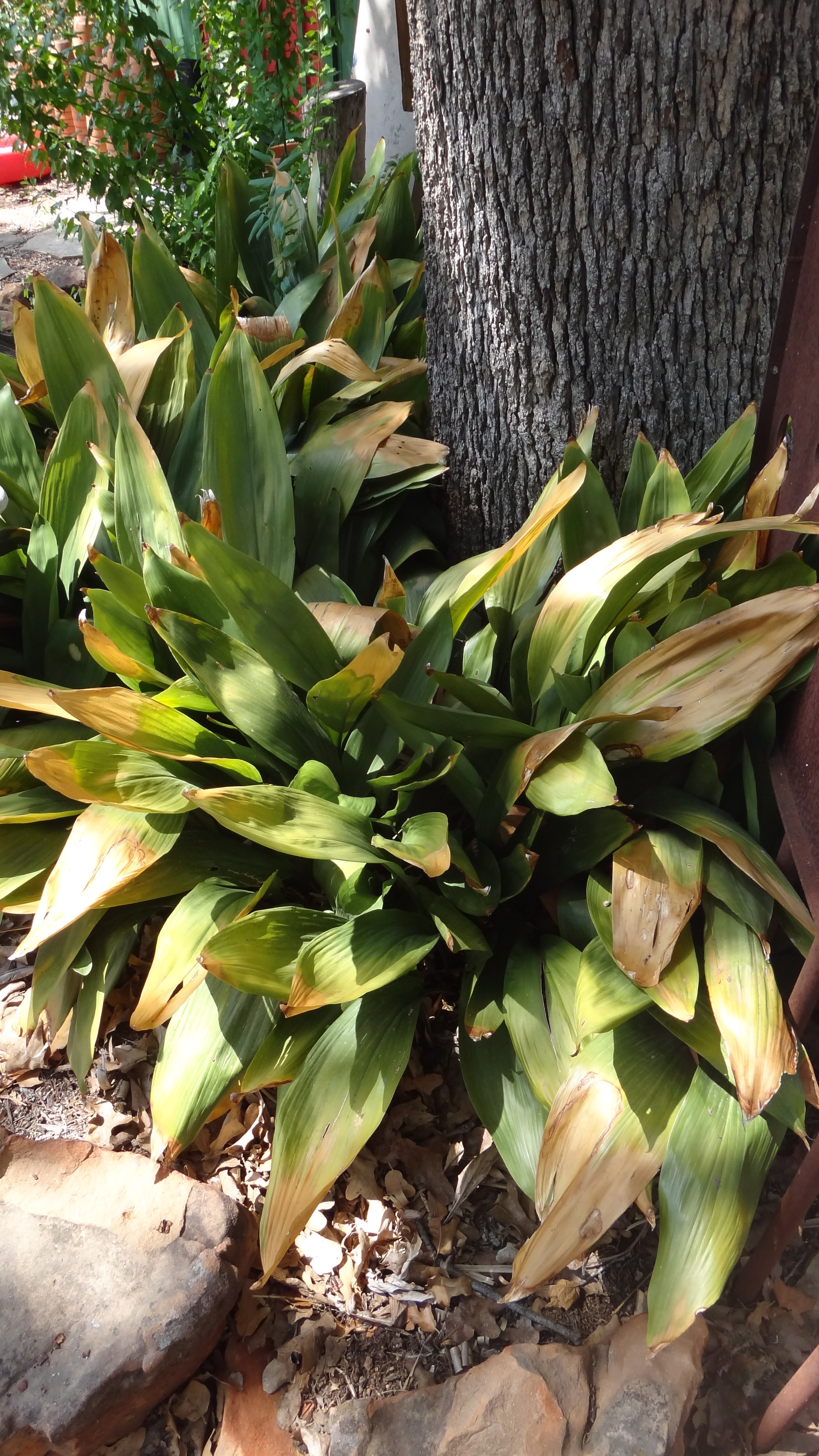
This fatsia japonica also self-combusted this past week. I believe the reflected heat from the stock tank made it croak…all my other aralias are coping just fine.
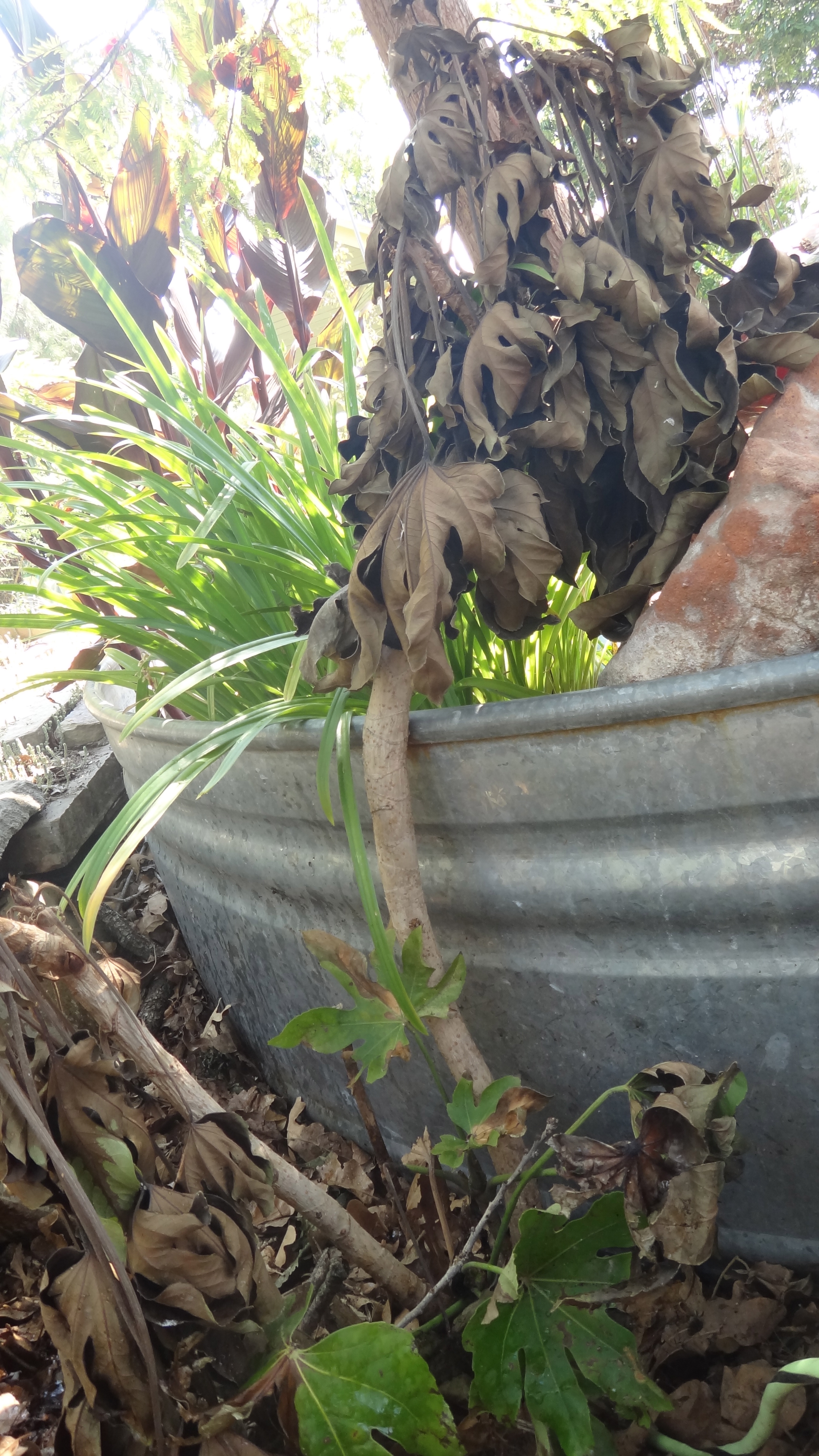
There is still life at the base so my hopes are tentatively high for a full recovery, which is more than I can hope for from my feeder stock tank.
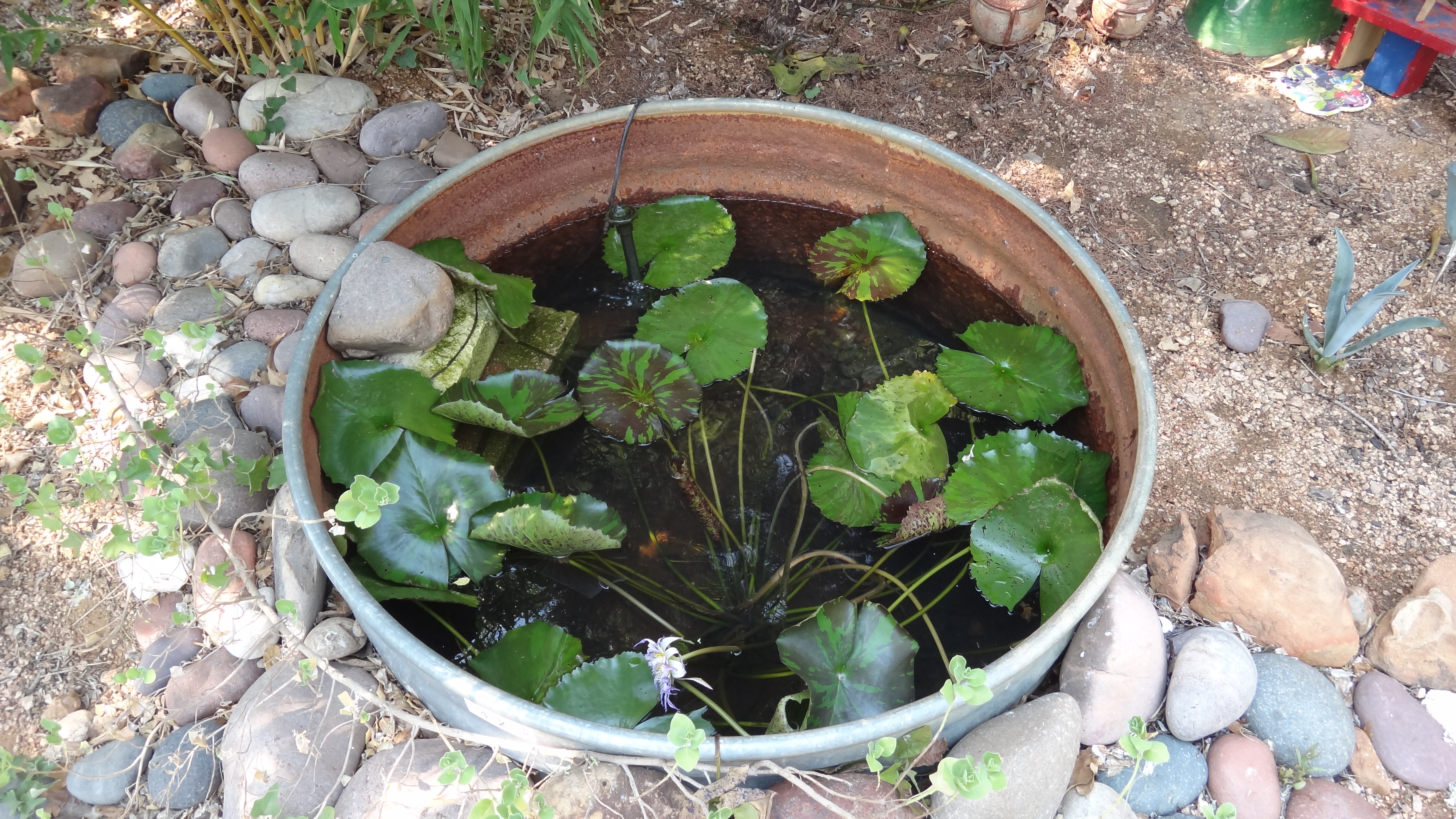 Shortly after topping up this sunken tank that I use to dechlorinate water before I siphon it into my main fish pond, I noticed that it was no longer retaining its contents.
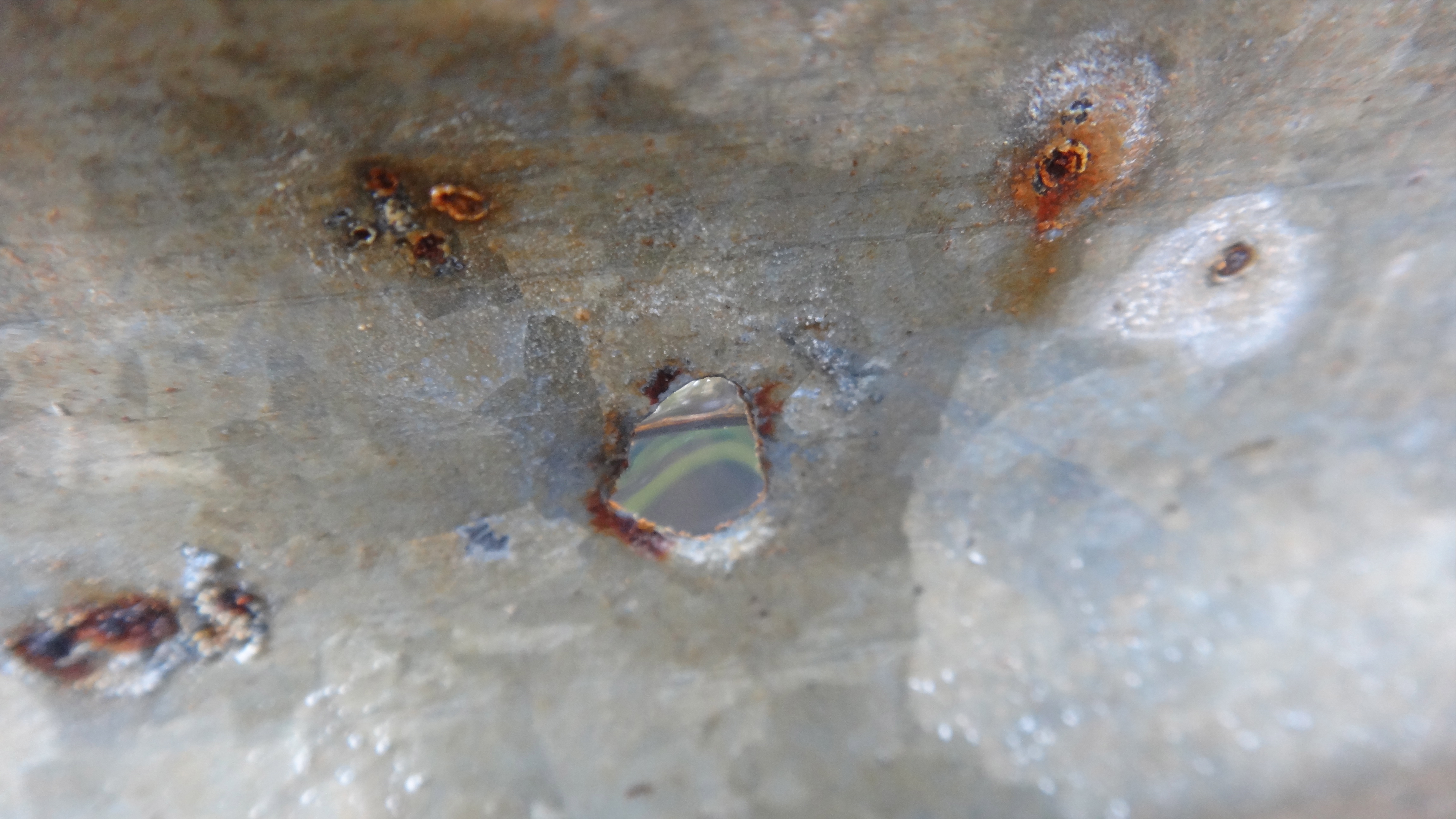
On closer inspection I noticed that it had developed holes in the rust around its perimeter which is really annoying as now I have to dig it out and replace it.
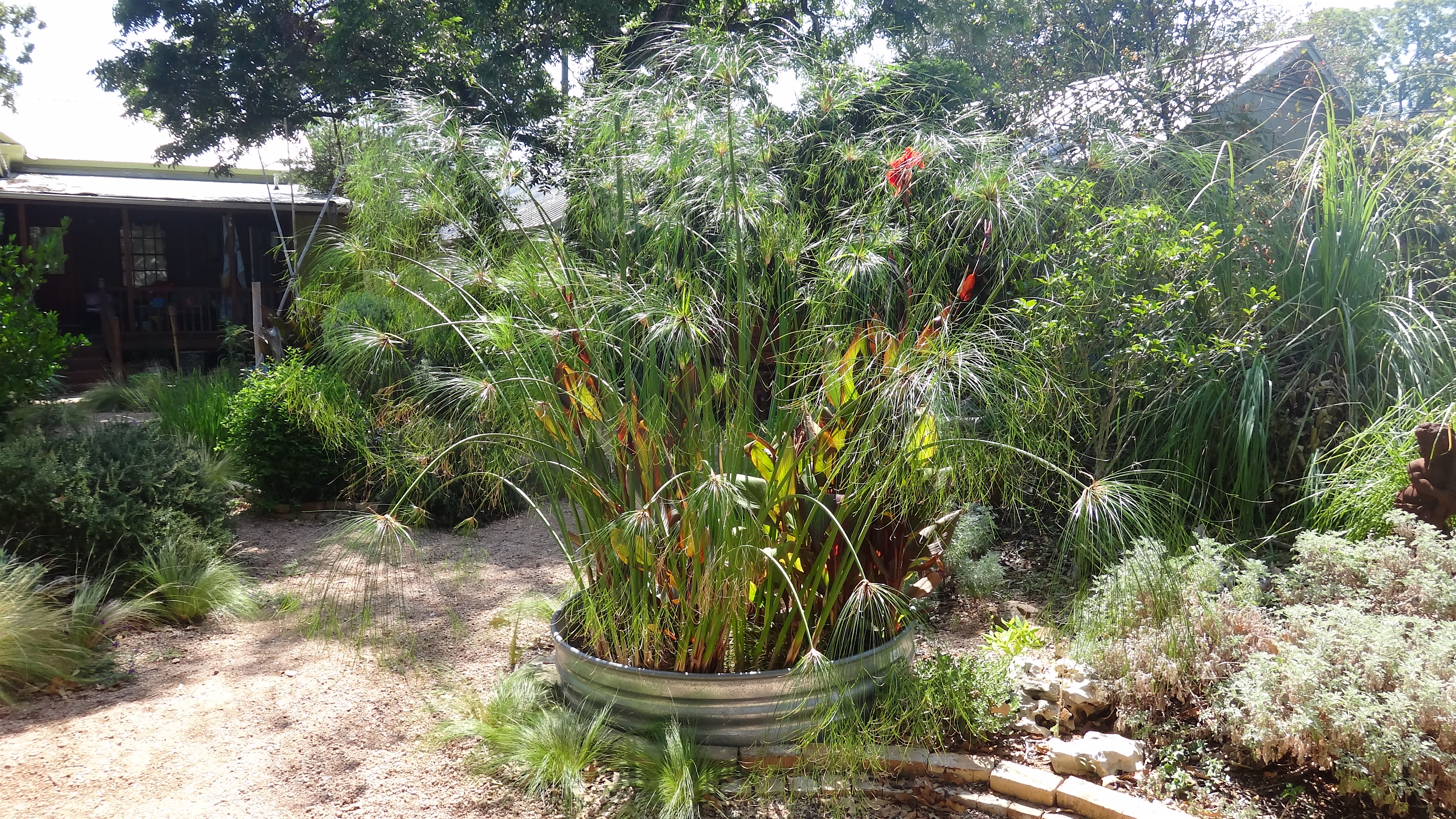
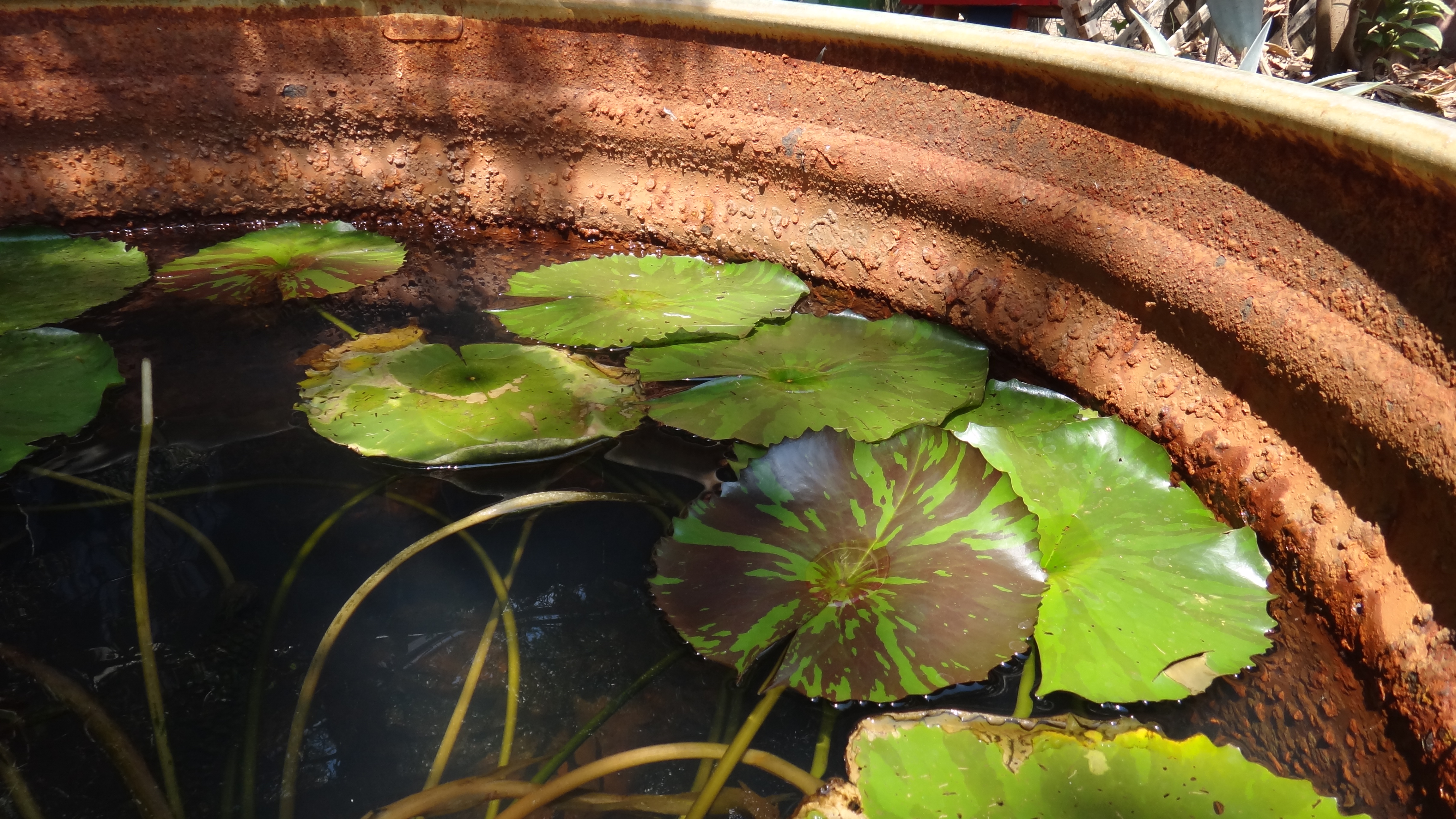 It appears that our Austin tap water, will, over a few years, disintegrate galvanized steel stock tanks, well, that is my theory, any thoughts? My main pond, receiving predominately dechlorinated water is still devoid of any rust and subsequent degradation, it is eight years old and still going strong. This tank will spend its autumn years as another bog pond, well, can you have too many?
While I scurried around the tank hunting for the leak,
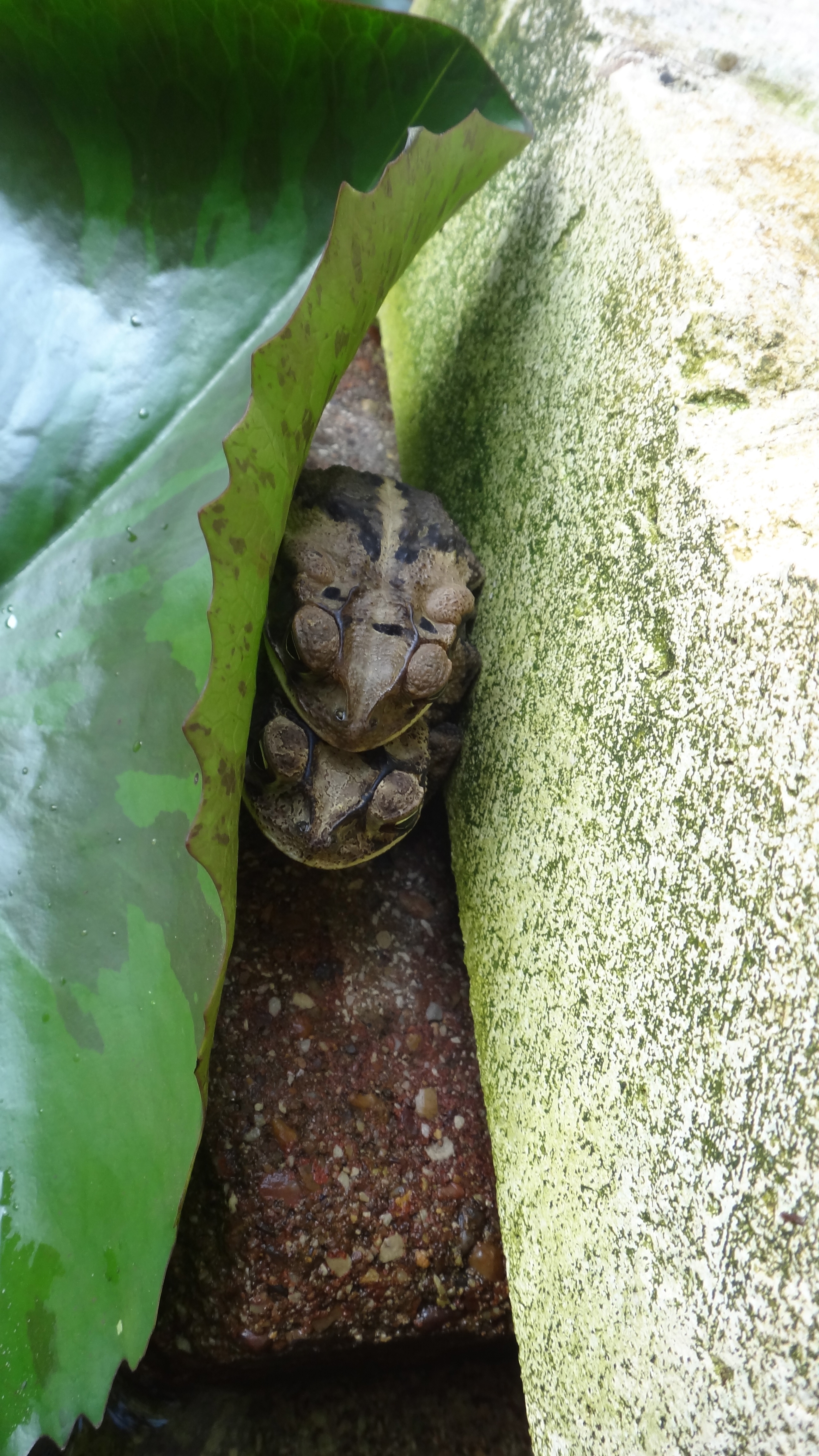
I came face to faces with these two gulf-coast toads under a lily pad.

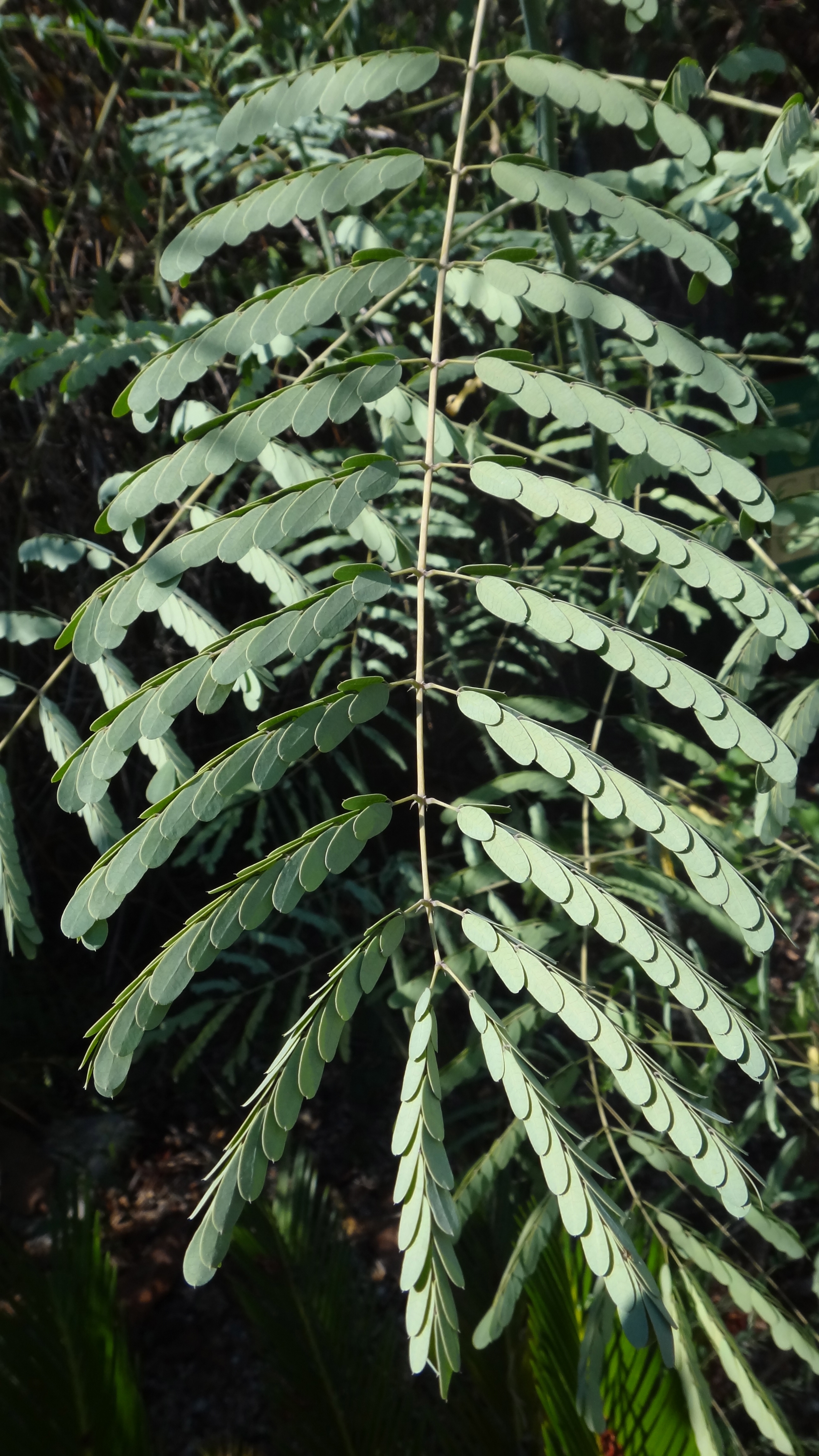
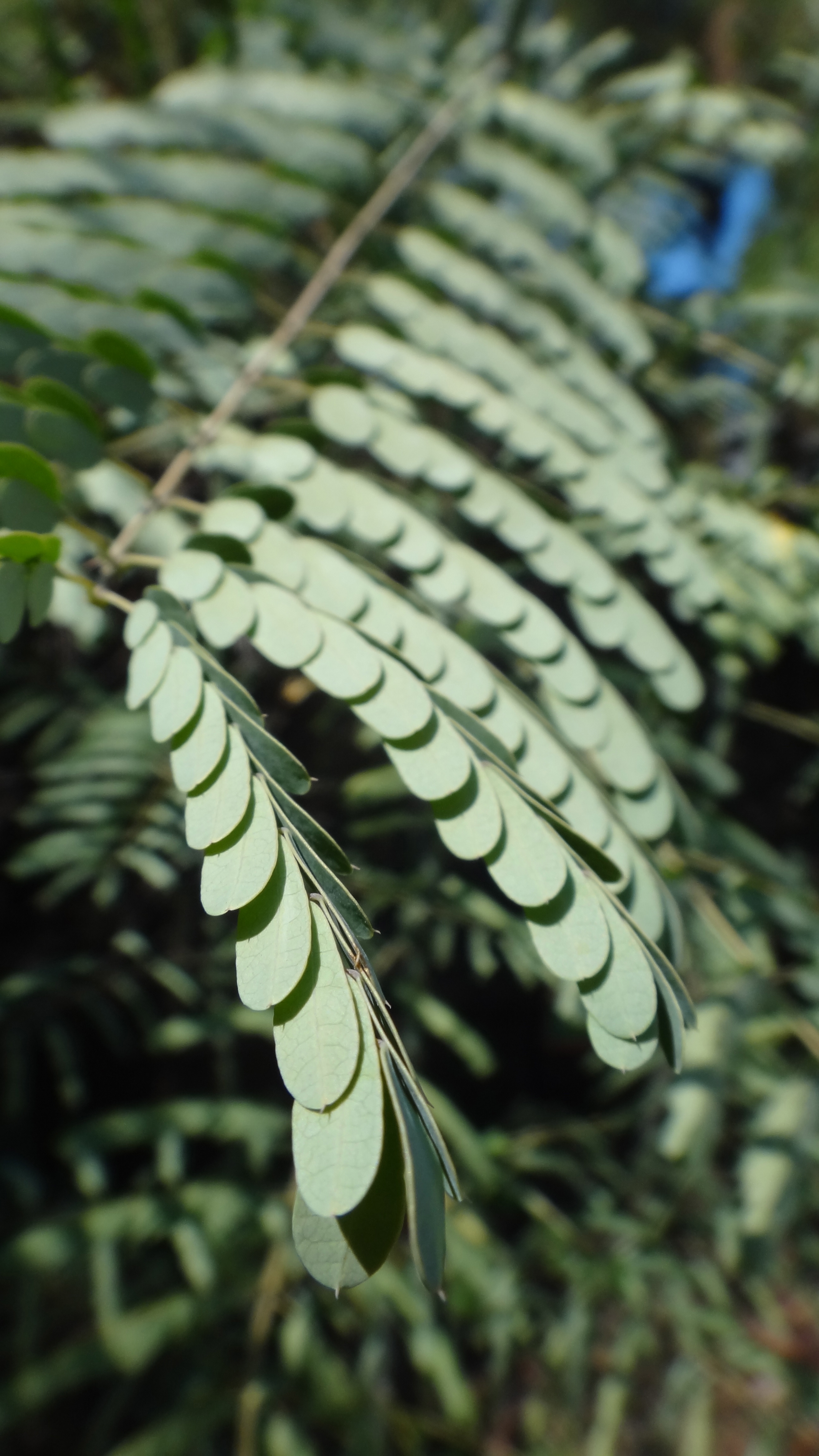
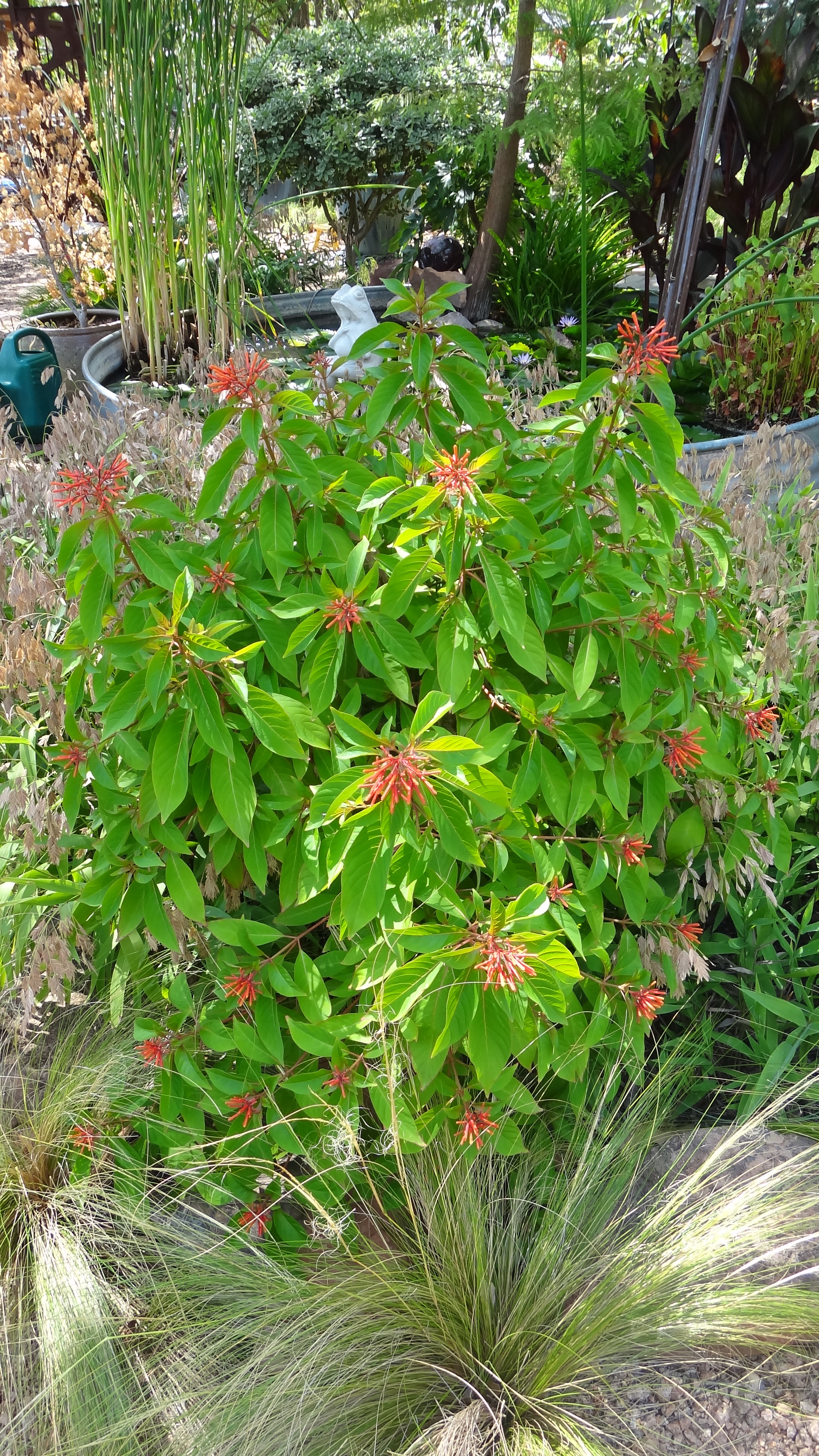
In the heat of the midday sun even the small chain-link leaves on my pride of Barbados close up to reflect the suns deadly rays.
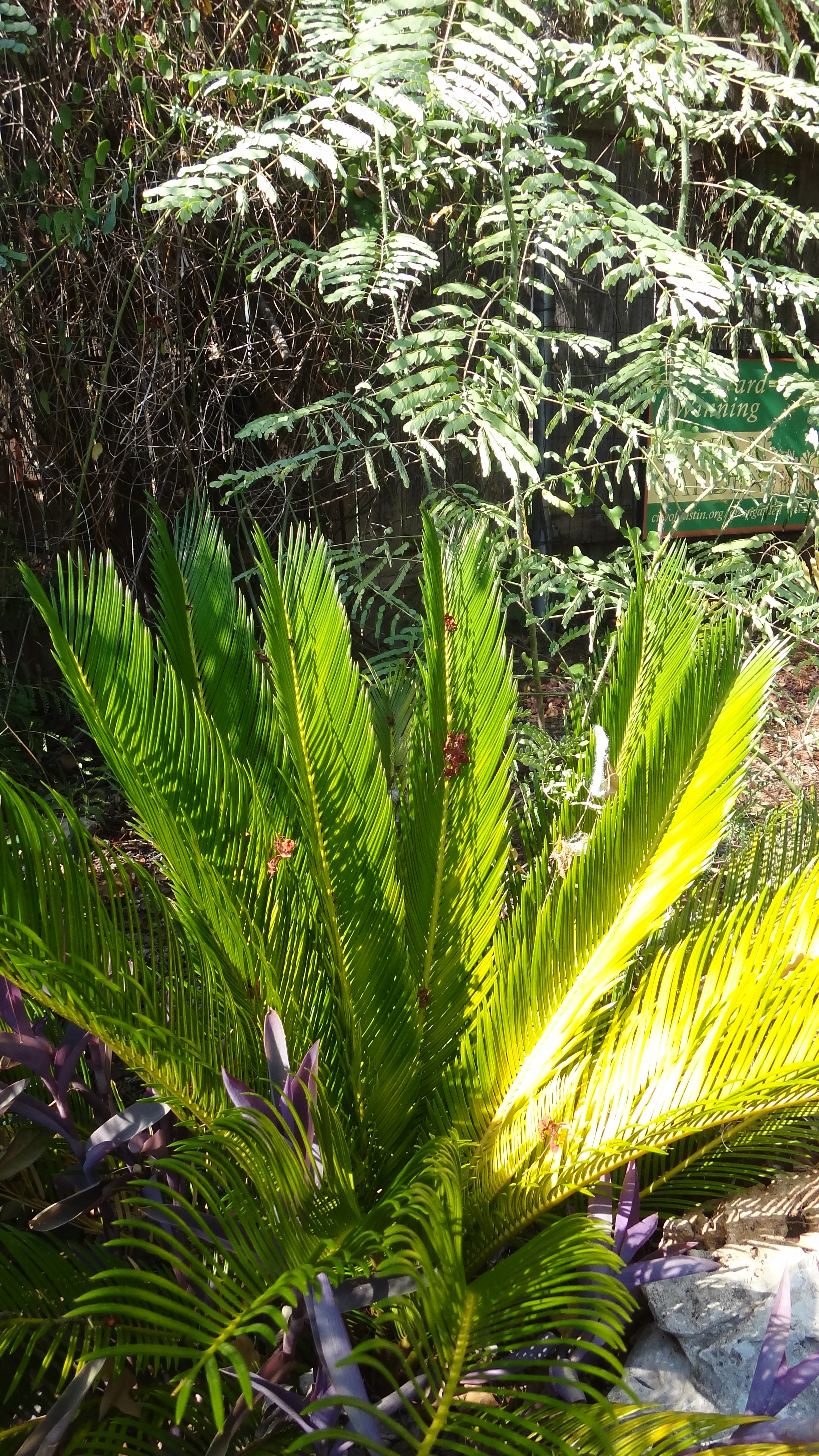
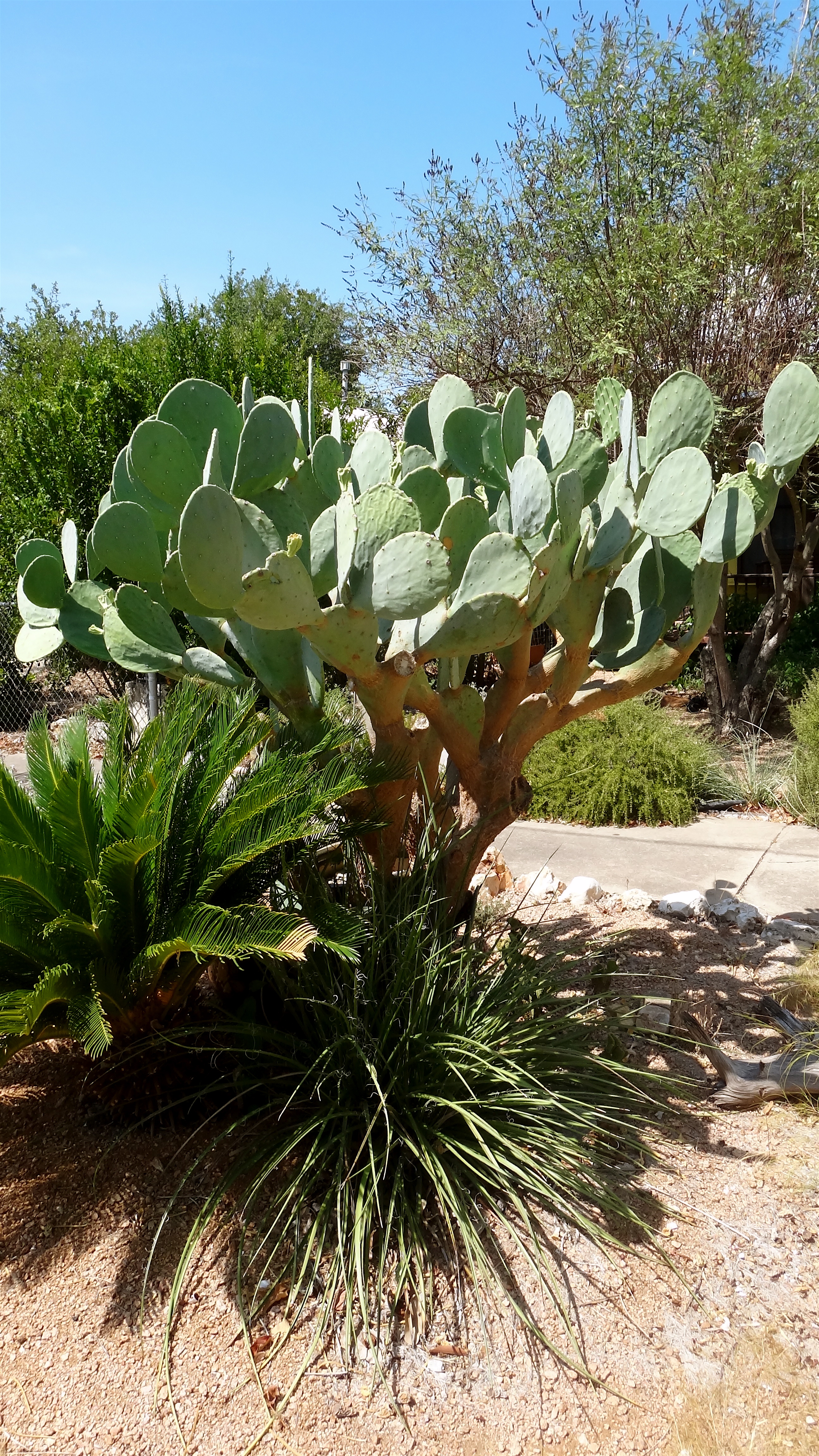
Here it is behind a stressed out sago, still it is not all doom and gloom…
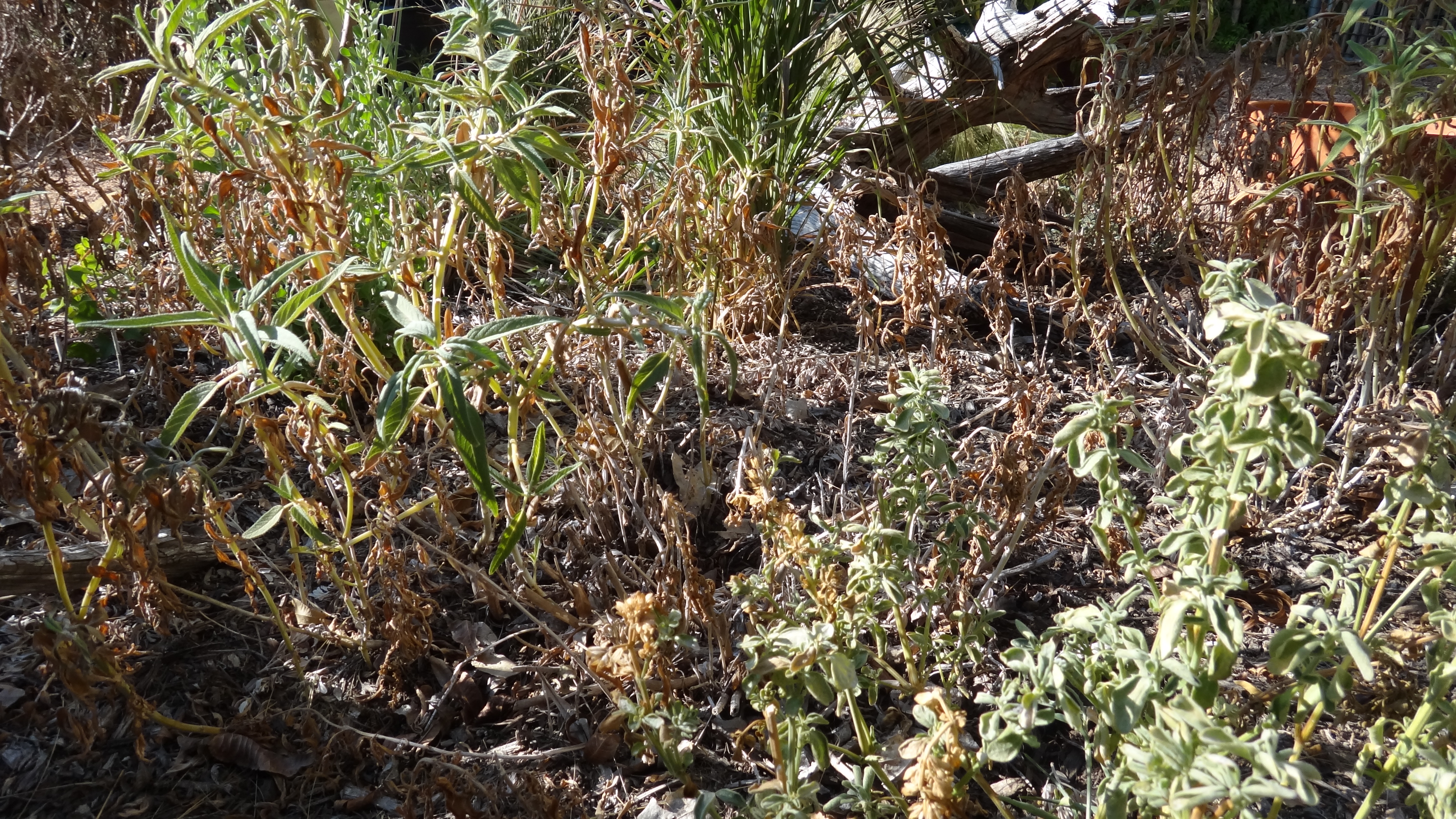
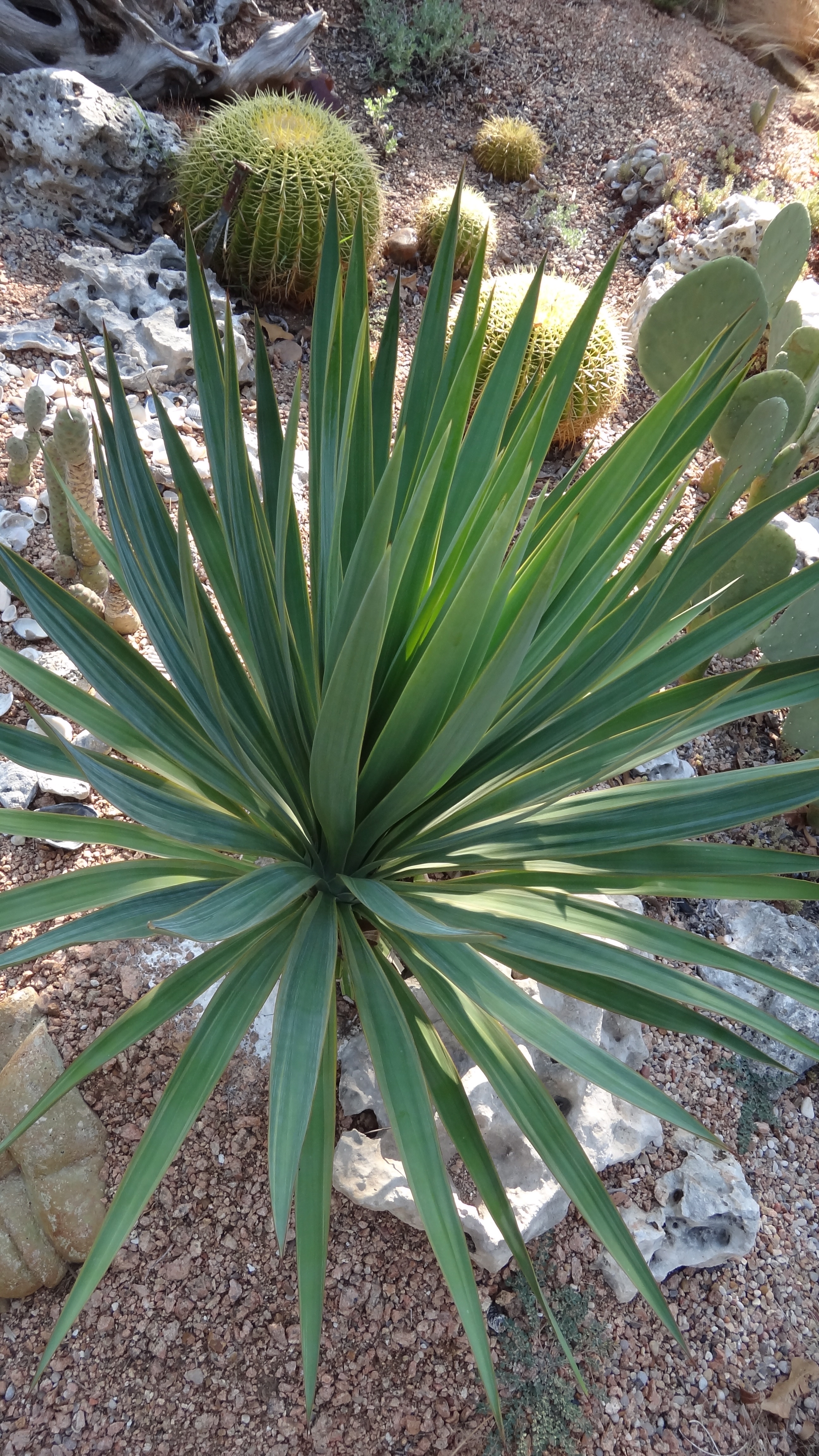
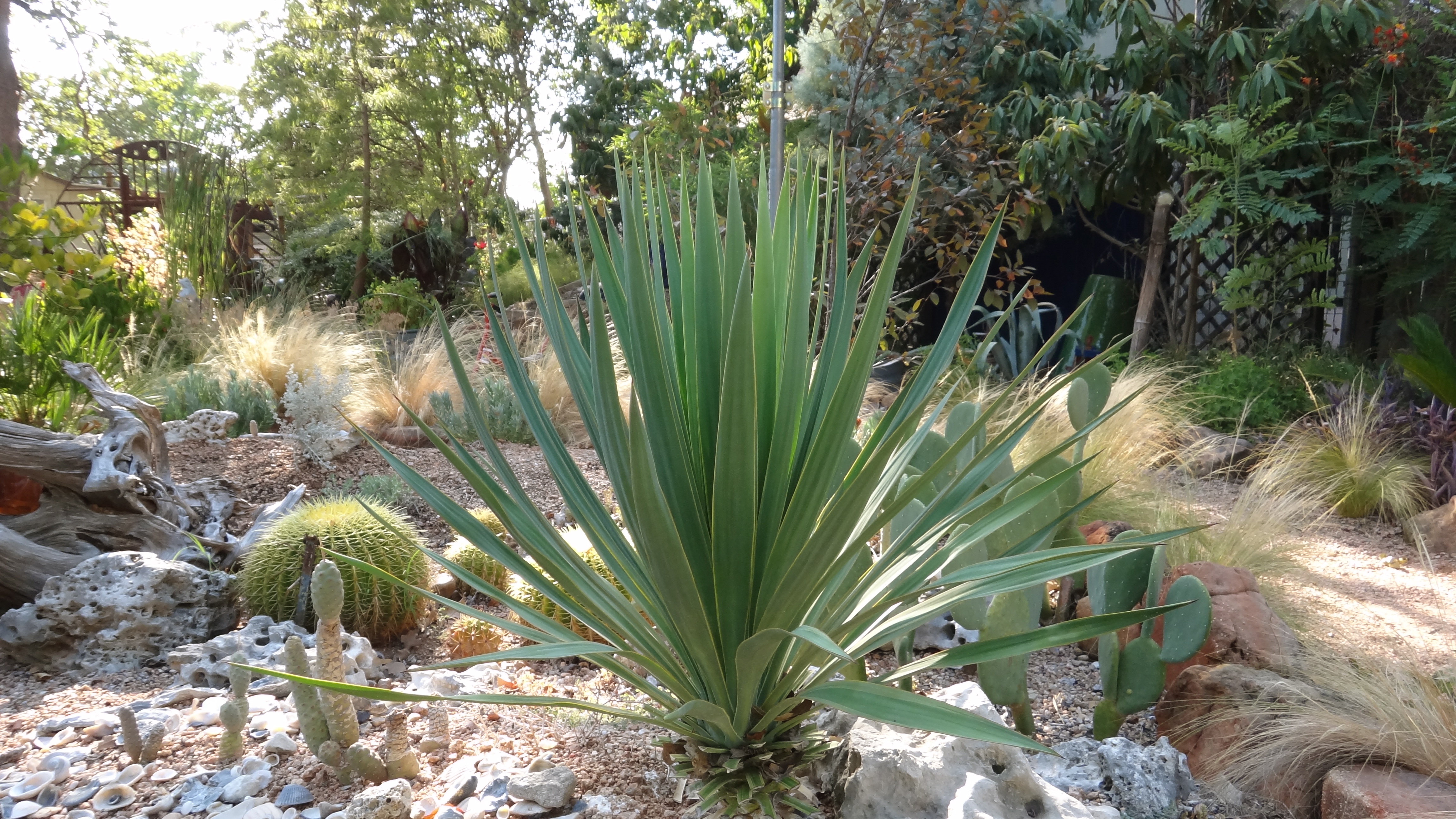
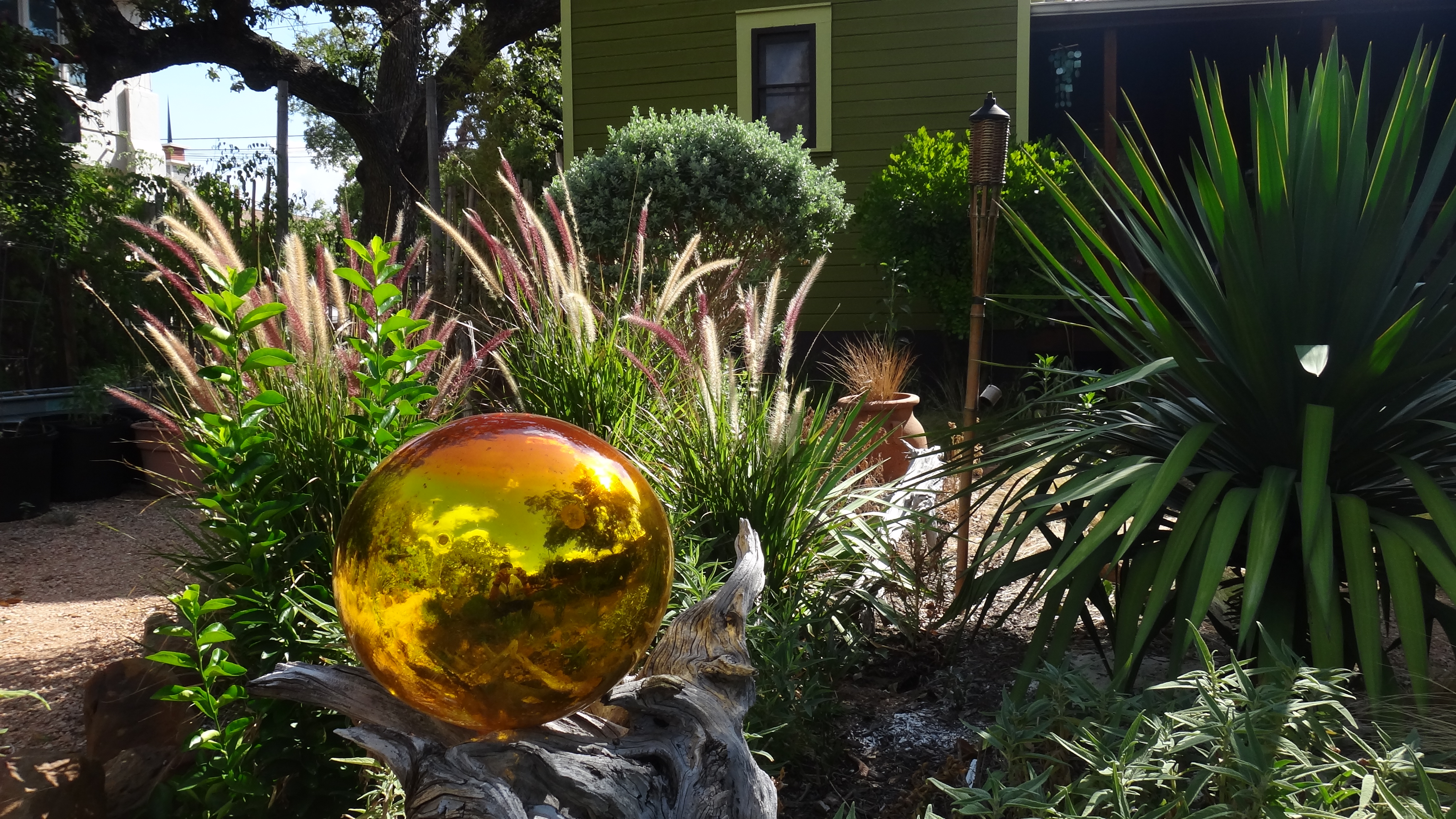 …grasses, yucca, sages and laurels don’t seem to care about the weather. While I was in this neck of the Patch I decided I would replenish the protective ring of Diatomaceous Earth around the base of the soft leaf yucca, in case, along with everything else, it had dried-up and blown-away.
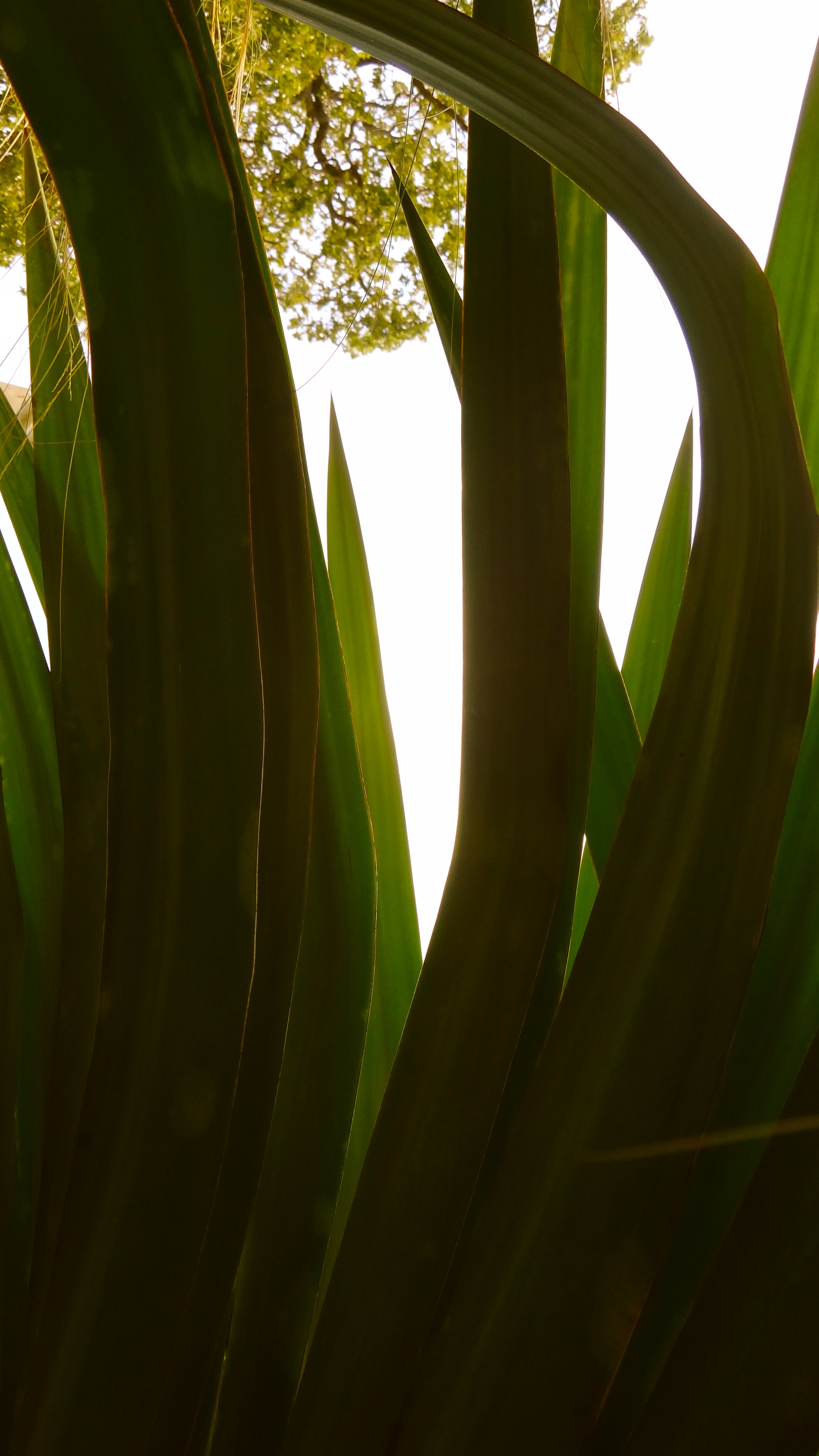
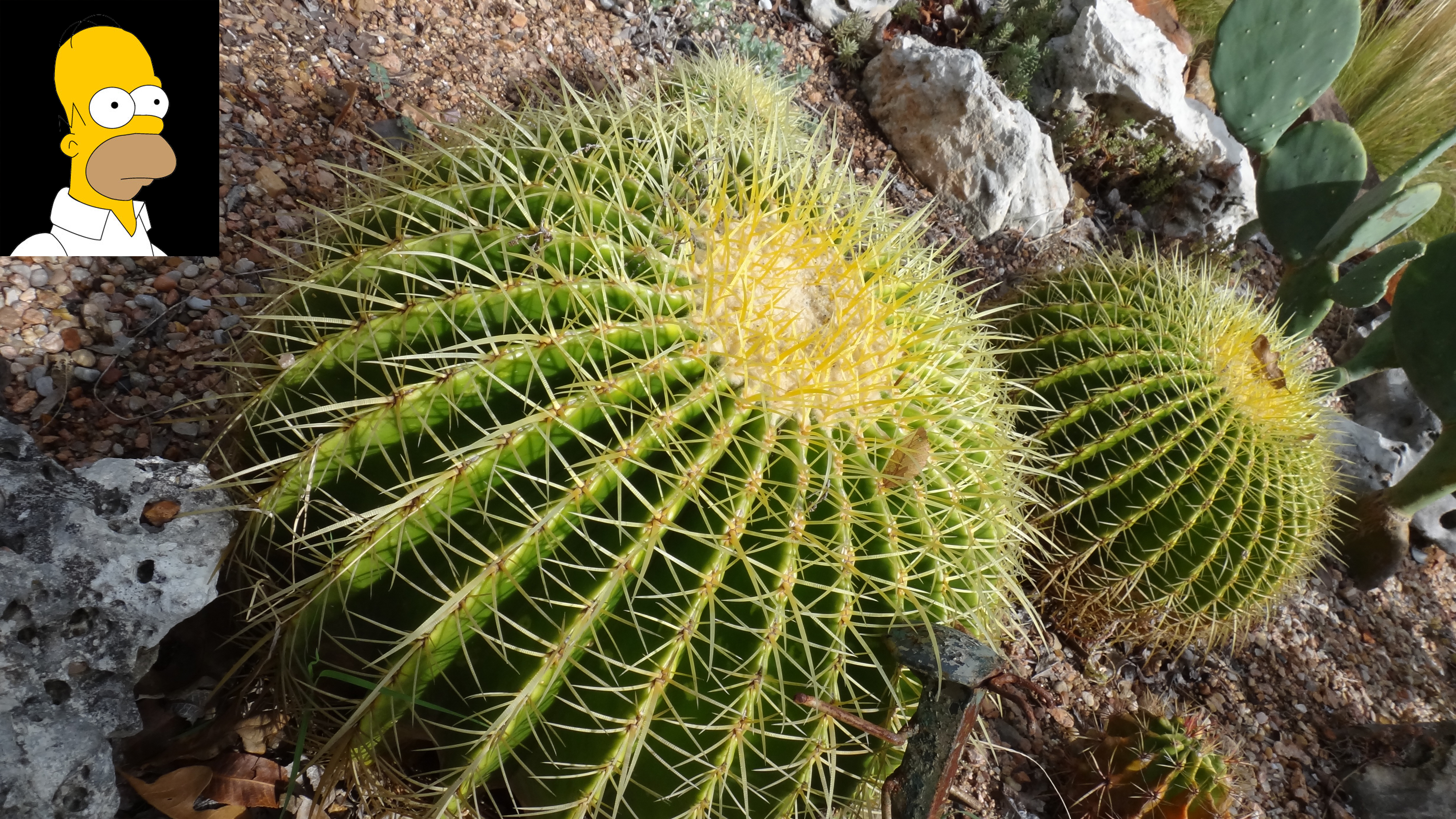
Everone knows that there is nothing soft about soft leaf yucca, and trying to apply a ring of very fine powder around the base of one, in a 111 degree temperatures, ranks up there on the arm stabbing annoyance scale with pruning sotols.
Arm Stabbing Annoyance Scale:


So what is this Diatomaceous Earth anyway?
It is fitting that we started with evolution, skeletons and lots of dead plants as Diatomaceous earth is actually made from fossilized water plants, specifically, unicellular algae-like plants called diatoms. It is believed that 30 million years ago the diatoms built up into deep, chalky deposits of diatomite.
Here are some live ones from Antarctica:
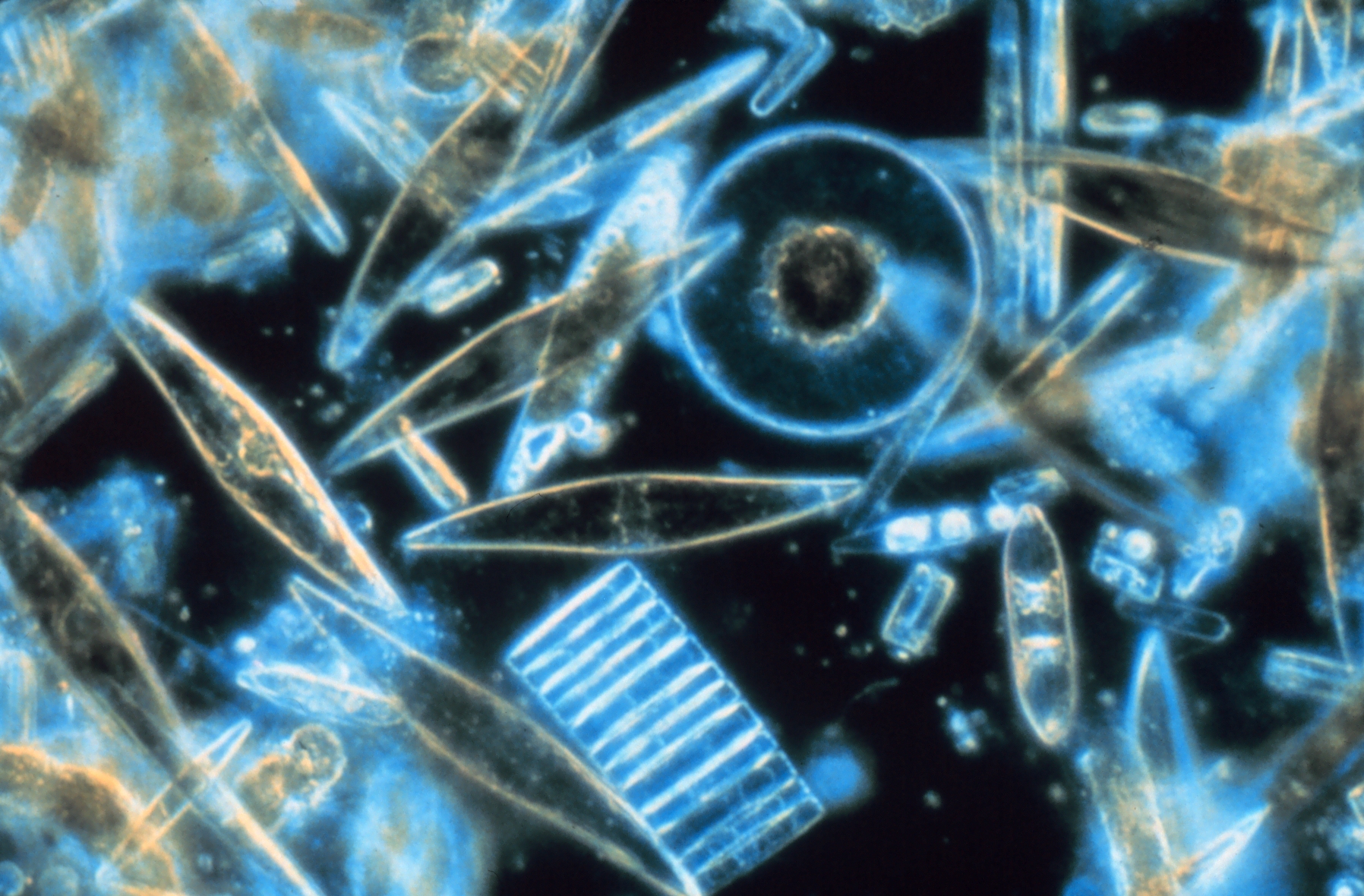
Photographer: Prof. Gordon T. Taylor, Stony Brook University
Credit: NSF Polar Programs
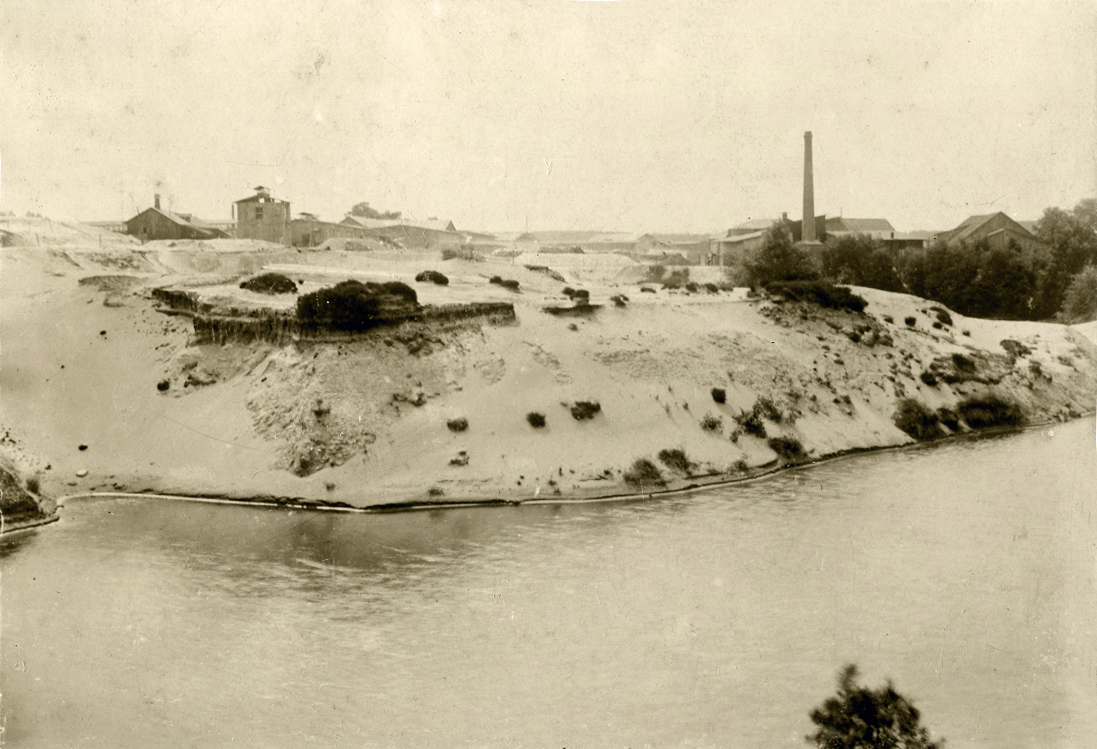 Photo: wikipedia:
The diatoms are mined and ground up to render a powder that looks and feels like talcum powder. It is a mineral based pesticide. The fine powder absorbs lipids from the waxy outer layer of insects’ exoskeletons, causing them to dehydrate and die.
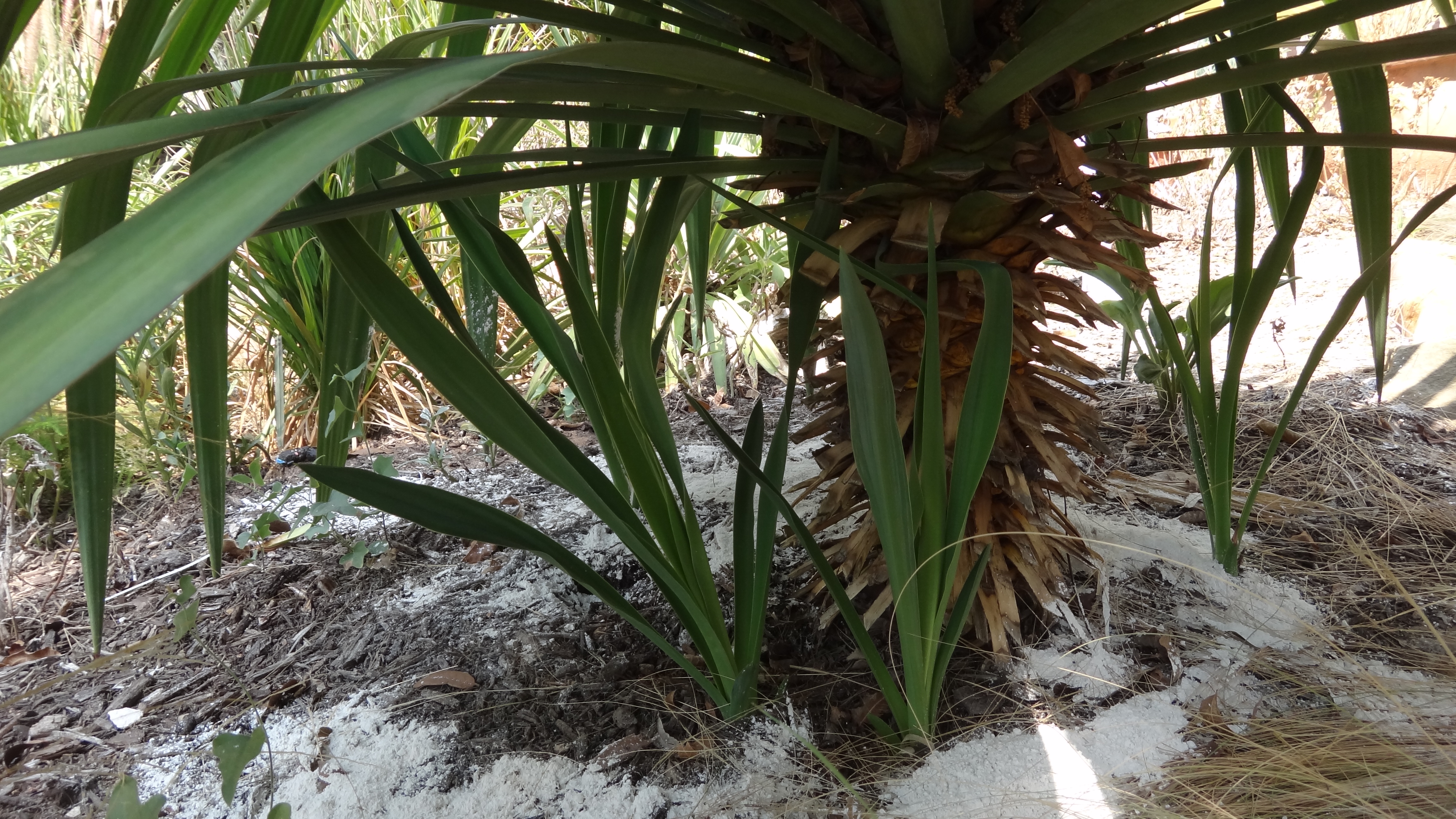
I am using it to protect my agaves and yuccas from the terror that lies below the nose of the evil agave snout weevil, and so far it appears to be working.
I was really happy to find (in-between the puncture wounds and the foul language) that my yucca has had some babies, quadruplets in fact. These will be moved to new pastures as soon as my metal shovel cools down enough to be handled.
Moving on:
 It arrived in a small UPS box that was eagerly ripped open like a Willy Wonka chocolate bar by some little hands, excitement was high with the prospect of discovering precious materials, gems and all manner of other imaginary bounties.
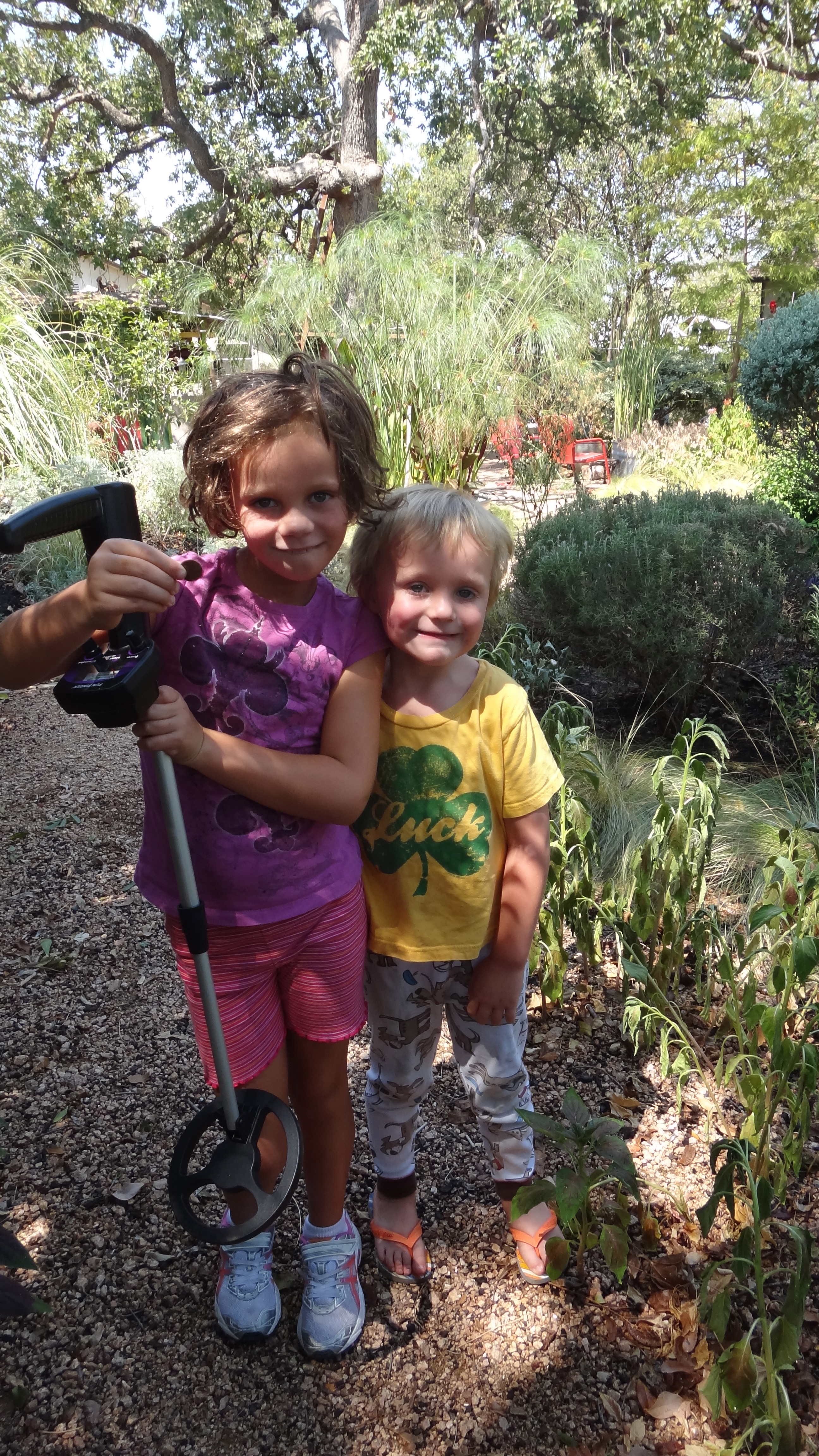
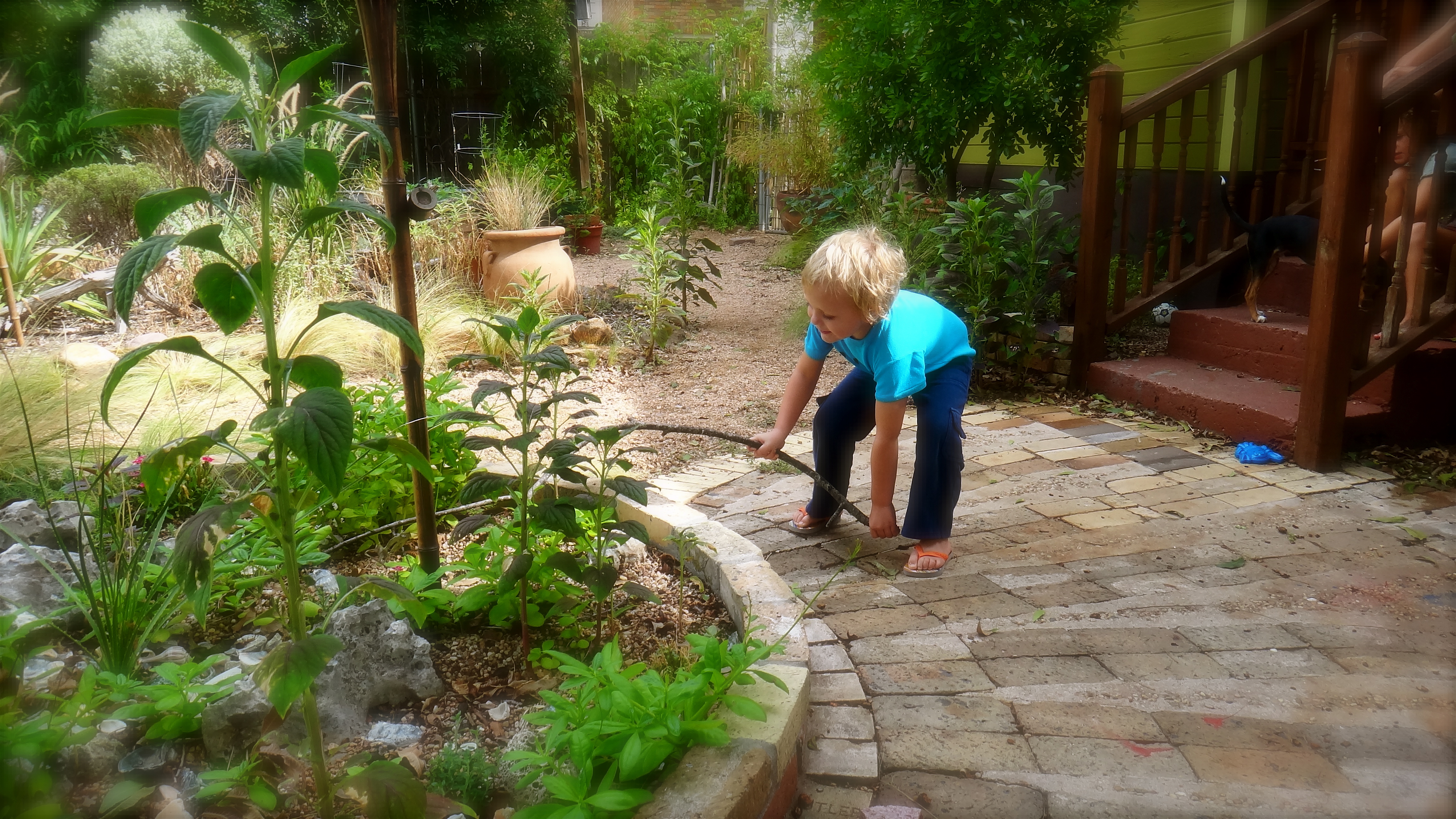
Their junior metal detector had finally arrived. They wasted no time in getting out into the garden (as you can tell from his attire) and within minutes, armed with my garden trowel, dug out a penny. Thus began a treasure hunting obsession and I am sure the demise of my decomposed granite pathways – good thing that I plan on replenishing them in the next few weeks.
It could only be a matter of time before the jackpot was hit, surely.
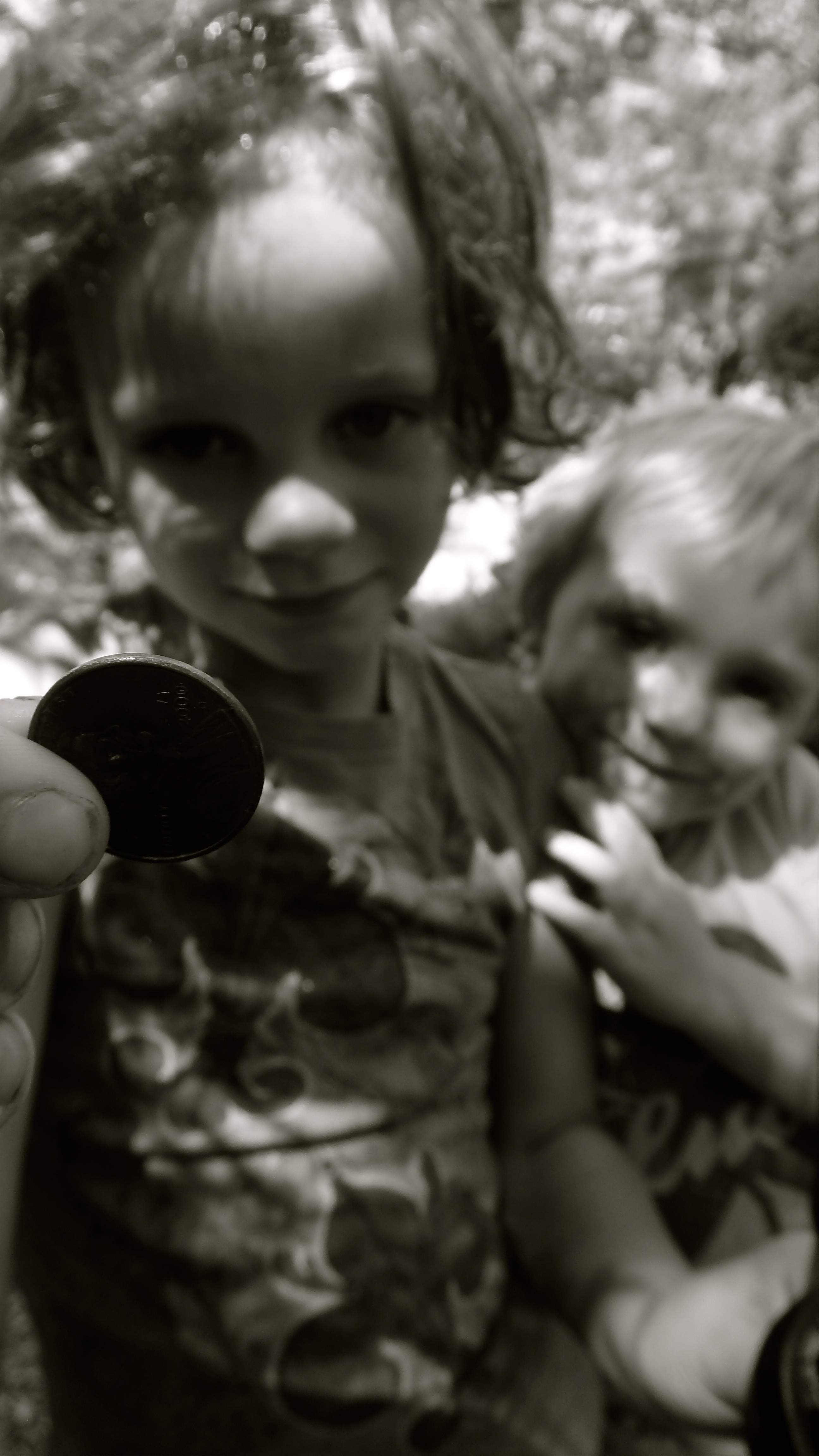
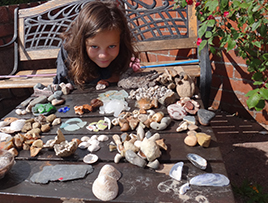
So far the prospectors have successfully found…

mm, not quite…
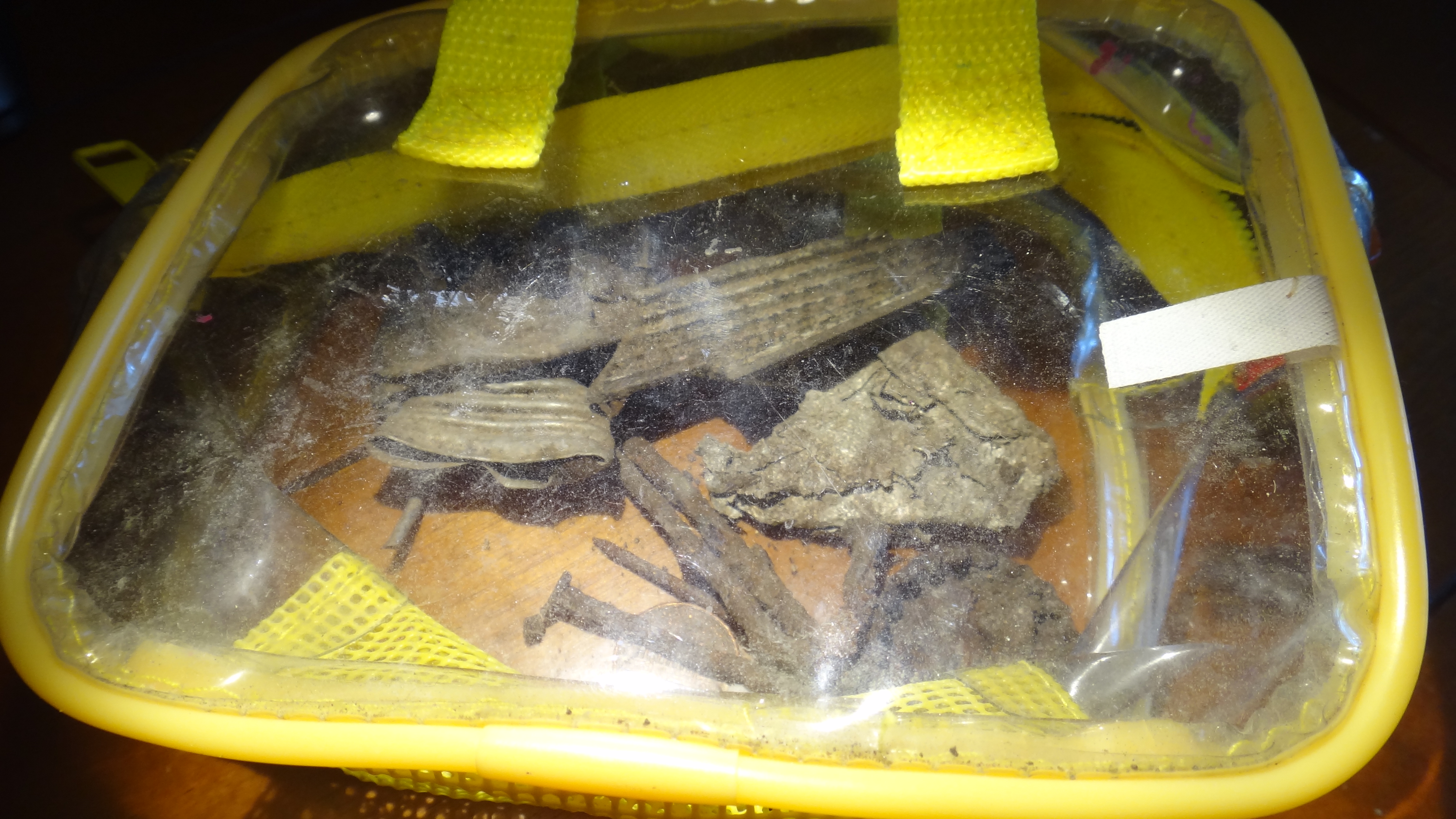 but it is treasure to them.
Inspirational (if rather odd) Image of the week:

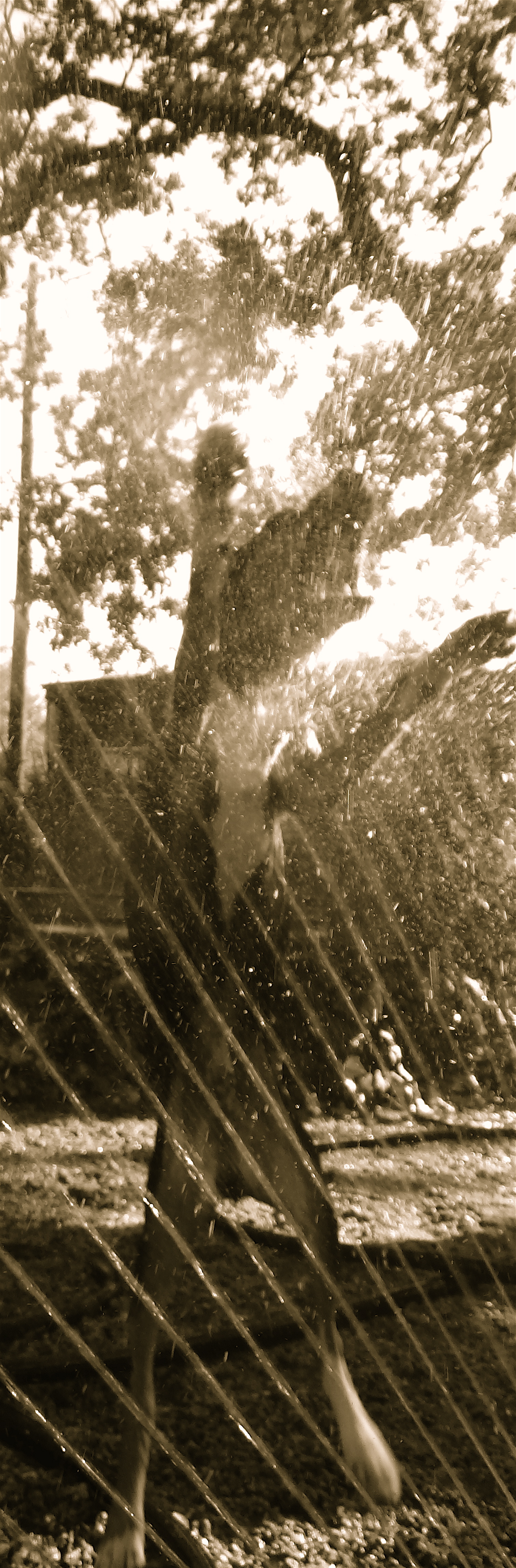
This garden shower by Viteo is an upside down shower. You connect it to your garden hose and by stepping on it 4 meter high water jets cool you down. I want these as weight activated stepping stones all the way down to my shed in preparation for next year’s summer…ahhh.
 Stay Tuned for:
“ Flying Walnuts”
All material © 2011 for eastsidepatch. Unauthorized
intergalactic reproduction strictly prohibited, and
punishable by late (and extremely unpleasant)
14th century planet Earth techniques.