“Time in a Garden”


So this month at:
http://www.gardeninggonewild.com/?p=7073
the workshop topic is the influence of time on our gardens.

I first started this blog almost a year and a half ago, it has taught me
and forced me, in a good way, to learn more details about the plants
and critters that inhabit my habitat, but first and foremost up-keeping
this journal has taught me about the time/space continuum.


“Spock, what IS he talking about”.
“Unclear Captain”.


It has documented once a week, (almost without fail),
the growth of my hobbits, and in parallel, the maturing
of my garden, and my knowledge of the beasts, and
characters that reside in it.
The creatures that call it their home…
and there are quite a few…

William Wallace, Compost Burper, Botox Lady, Nabooboo tribe, Cactus man, and finally the ESP witches, not to mention..


The Intergalactic singer, Bill and Ben the holey rock men and last (and nearly deceased), Cactus Man, – a veritable east-side-cast of motley patch characters.


Unfortunately the sands
of time have not been kind
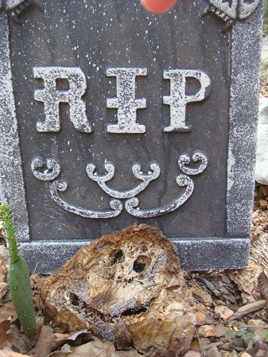
to the poor old “Cactus Man”:


It was quite disturbing to track his demise through the lens of a camera,
I could feel his pain as he took on a rather horrific persona. I felt bad
knowing that I was was the one responsible for his premature aging.
His head finally buckled backward toward the Texas sun,
as he exhaled his final breath, and for no apparent reason,
he screamed in a squeaky cactus voice with a fake Scottish accent…

“Freedom.”


(I think he must have been speaking with William in his final days)!

Note to self:…Next time I will not carve features all the way “through” the paddle.

Gardens take time, and are a lot of work.
The patch seemed insurmountable at
times, but to me, starting was the
hardest part. Then came the frustration
at how futile all the work seemed.
Then came the realization at how long
it was going to take. Then It became
a quest, then a passion, then ultimately
a complete obsession. Gardens
teach about time, because they take time.

Some of the following before and after shots
I have posted before, but they seemed quite
apt for this month’s theme. They highlight how things
have changed over a three year period here,
in the ESP.


You can see the whole left side of the property was obliterated by the
tunnel of trumpet and wisteria vines (left). I thought the tunnel was
an interesting idea when I started it but when the vines matured,
they visually shrunk the garden by about a third from the view on my back deck.
It was also quite nasty to walk through, lots of webs and unmentionables just
waiting to fall down your neck, causing the obligatory physical conniption.
I decided to completely overhaul this whole area to widen the view,
it was beginning to feel claustrophobic, and visually cluttered.


Pulling a pathway around the right side of the small circular bed in the foreground
created a lot more “breathing space” and allowed a more natural angle to exit
the steps down off my back deck.
The left picture shows how it looked before my skinny island “middle” bed
gained any definition. Time has really brought some visual quietness into
the patch through the creation of definition and order.

Here is the island middle bed when I first started in September last year:

Quite the construction site, the soil in here was terrible,
compacted and full of trash. Here it is today. This bed
has endured the central Texas drought with very little
additional water.


Okay, the small Mediterranean
fan palm on the right required a
little bit of the wet stuff
to get it started.


And here is a before and after of my circular bed.

Other East-Side Occurrences this week…

Cnidoscolus texanus
I was ripping up some weeds around one of my pampas grasses
with some gloves on, when I grabbed a swath of this monster. Even
with covered hands these spines went into the top of one of my
fingers, it felt like I had just had some Novocaine injected into my knuckles!
With other common names like Bull Nettle, Tread-softly, and
Finger Rot, you can tell that this is a plant that demands respect.
If any part of the
stem is broken, a milky sap appears,
and some people are allergic to this as well
as the “sting” of the hairs.
Most parts of this vicious plant are covered with hispid or bristly hairs.
But these are not normal hairs, oh no, not normal at all
–  and they really hurt.
Here is how this plant’s effective defense mechanism works:
If the foliage or stems are touched, the glass-like hairs break off in
the skin and act like hypodermic needles. The “needles” release
a toxin (and I can vouch for this) which causes an intense burning
sensation. This effect is a type of allergic response known as contact
urticaria, the reaction can last for several days.
I could not clench a fist due to the sensation of
“pressure” in-between my fingers for 24 hours.

Moving On…


A rare shower in Austin was almost enough to fill my
red-neck tank / everything but the kitchen sink, rain water
collection “system.”  This paper wasp wasted no time in
quenching his thirst.


With the uncustomary moisture, this Mexican Petunia
Ruellia brittoniana responded the next day
with a flurry of blooms. I have this one embedded in a slow draining,
sunken rubber container to contain it and also because it does like some moisture.
Mexican Petunia audibly “pops” when the seed pods
receive a little water, sending seeds jumping all
around the adjacent area. Watch out, they
germinate readily.
It blooms on and off all summer.


Here is the tub in the foreground when this bed was Spot the buried petunia tub?
being created, some years back.
We still had a lot of bermuda grass
back then, as you can see.


Same area matured – image taken toward the end of last year.


I now have TWO curving culms on my Giant Timber Bamboo!
Look at the powder on the new growth, it is apparently good
for the skin? I have no idea what is causing this crazy bamboo
snaking habit,
but I like it!


Did you know that bamboo
was actually the first plant to
re-green after the atomic
blast in Hiroshima in 1945?


And finally…


Amaranth pushing up among the feather grass, getting
prepared for it’s spectacular fall bloom. I always allow
select plants to mature from seed, so long as they are
located in the right position, like these that line the
edge of my pathway.

All material © 2009 for east_side_patch. Unauthorized
intergalactic reproduction strictly prohibited, and
punishable by  late  (and extremely unpleasant)
14th century planet Earth techniques.

Inspirational Image of the Week:


Pierre Haulot and William Boullier have produced
an innovative watch concept where time is viewed
as a ‘progress bar’.

Stay Tuned For:
“Head above Water

"The Cat's Cradle"


Cradled under the safety of my variegated ginger, this cat is
extremely nervous of me and everything that moves in the ESP,
and for good reason. It does not belong to anyone but gets
food from everyone judging from the size of it.
I regularly see it at night, hunting in the Patch,
augmenting his diet.

My now deceased cat was extremely territorial until she got
too old to really care, this cat was her living nemesis.


She once jumped from under this Douglas Fir
onto the back of this cat and “rode” it all
the way down the right side of my
property fence-line. It was one of the funniest
animated things.


What made it even funnier was the way my cat
was having to move “in the saddle”, all jerky,
and un-natural, her head being thrown
around with every panicked stride
from her newly acquired furry “Steed”.
She hung-on like a feline rodeo rider
for a good five seconds.


Beauty and the Beast:


Bougainvillea Glabra is sometimes referred to
as “paper flower” because the bracts are thin and papery. I love the rice-paper
quality of these bracts, they look so fragile, yet they last for ages, on and off the plant.
Bougainvillea is such a cheerful plant, it always reminds me of good times in Mexico,
where it grows in all colors, and is everywhere!


I used to have one of these growing over my front porch,
that is until I scraped my knuckle bone with one of it’s hooked
thorns pruning it. It was painful for months. The thorns are
tipped with a black, waxy substance that I don’t think helped…
oh no, never again, it had to go, but it wasn’t going without a fight.
Bougainvillea is one tough character to extract.


I am lucky in that my neighbor has a fine specimen
climbing up the front of his house, we see it everyday
through our kitchen window, it blooms continuously.
I love seeing it, I just don’t want to deal with it.


My pampas grasses are starting to have that waterfall cascading look to them.
This seems to happen just before the blooms start to shoot up. I get lacerated
on a daily basis trying to turn on and off that faucet (visible in the right picture).
I have developed a sort of hunched over, backside out, shuffling technique to
limit the leg and arm thrashing this plant administers.

A small member of the Nabooboo tribe,
hiding in the grasses, recently shot a
dart in my arse thinking I was
performing an act of tribal aggression
with my rather unorthodox
“maneuvers” in and around this pampas.


Talking of unorthodox behavior, this massive giant timber culm is the
first one I have ever had that apparently struggles with the simple
concept of growing upward. The shrimp plant it is emerging from is
also doing well under the shade of a couple of large pecan trees and
a drip feed from a buried soaker hose.


The culm lurking underneath my mortared brick edging continues to
push north.. “Mind the gap” It has already loosened two bricks,
we will see if it has the strength to “break on through
to the other side”.


“That was just bad man”.


The Hoja Santa in the same bed is also bucking the Texas drought
pretty well. The foxtail ferns performing in the amphitheater

Asparagus densiflorus
are only just hanging in there, somewhat yellowed.


The Mexican bush sage,
yucca and bulbine never even break a sweat.


This trailing lantana needs but an occasional beverage,
this little bed gets a daily roasting.


Anything that was not drought tolerant has long since shriveled and vanished,
I have even lost a dwarf miscanthus this year, outrageous!
Apart from staring out of windows, watering and pulling the occasional
weeds
(it is almost too hot for them also). I have tried to spend as little time as
possible outdoors, but today, everyone in the Patch began to show
distinct “cabin fever” symptoms. It was time to brave the elements,

and go OUTSIDE!
Cabin fever hits the patch!

We ventured to “The Great Outdoors” for a smoothie and a snoop
around the plants. I was not even considering purchasing anything,
but then one of the assistants had to say the four words I did not
want to hear
“Everything fifty percent off”.


AAArrrggghhhhh!


I trudged straight back to the entrance to pick up a cart.


Armed with our drinks we headed straight
over to the agaves via a short
stop at the bamboo section where I picked
up a weeping bamboo for $40…it does not
get any better than that!


Back in the Patch, and now thoroughly resigned to
spending quite a few hours in the blazing heat. I loaded up
a massive drinking vessel of iced water,
put an iced turban on my head and ventured timidly
out into the rays of the day-star to empty my compost bin.
The new plants will need all the help they can get after all!
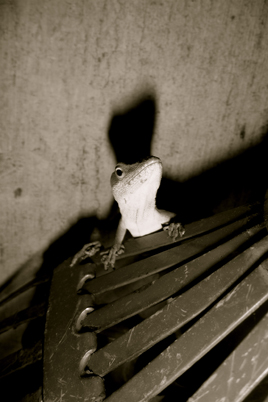
This anole was having a field-day munching on all the
bugs and roaches, he was shortly joined by two of
his friends. I decided to leave them alone to gorge
themselves in the fresh compost for a while. . .
I had a cauldron to get going.


I emptied my compost bin juice catcher to obtain a few pints of the good stuff.
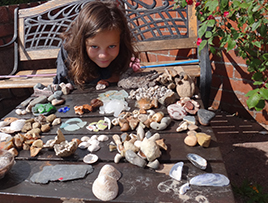
I then added some sea-weed emulsion to this and diluted the “real ale” with
some water…a lethal growing brew.
One of the ESP witches looked on inquisitively at a distance.


I figured if any plants can make it, these can.
They all got a seriously good start with the compost and
stinky tonic water…more on these new additions later.

Other observations this week…

I know I promised not to post any more images of these,
but I lied.


This Sedum nussbaumerianum
continues to grow, albeit extremely slowly.
I really like this succulent and it’s unusual mustard coloring,
great illuminated with a setting sun.


As are these purple fountain grasses
Pennisetum setaceum ‘Rubrum’


Just one more!

And finally…

Crusty cone-flowers and burgundy cannas.


All material © 2009 for east_side_patch. Unauthorized  intergalactic reproduction strictly prohibited, and punishable by  late  (and extremely unpleasant) 14th century planet Earth techniques.

Inspirational Image of the Week:


TM Garden Design

1 2 127 128 129 130 131 171 172